
Morocco’s residential construction boom is changing what people put on their floors, and laminate flooring is winning more of those decisions. Walk through new developments from Casablanca to Marrakech and you see the same shift: homeowners and builders are skipping expensive imports for solutions that handle the climate better. That’s what’s pushing Morocco laminate flooring trends right now.
But not all laminate handles Morocco the same way. Heat, humidity, and dust test how well these floors actually perform. This guide covers what’s moving in the market right now—which finishes designers are specifying most, how waterproof laminate flooring solves climate problems that don’t get discussed enough, and what buyers should check before approving any installation. Consider this your on-the-ground briefing with data.
Morocco Laminate Flooring Market Overview: Size, Growth & Residential Demand Drivers
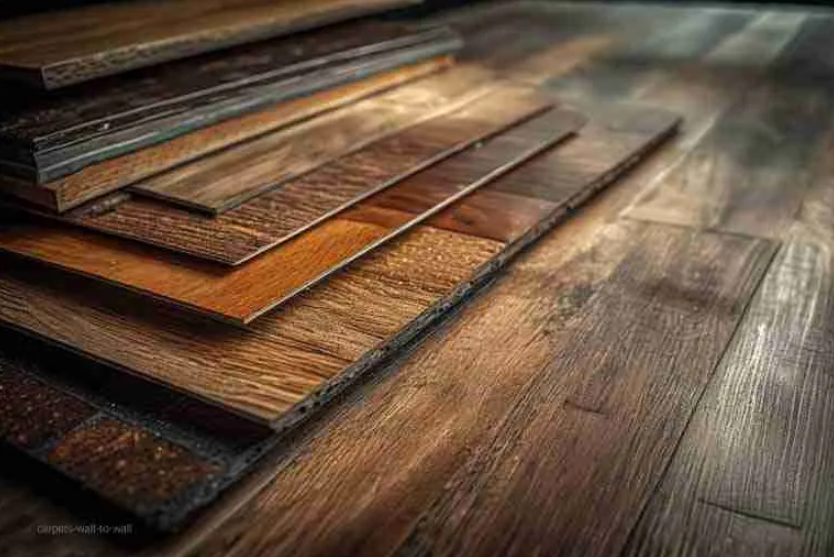
Numbers tell the real story here. Morocco’s wood and laminate flooring market pulled in USD 104.7 million in 2024. By 2030, projections put that at USD 148.2 million. That’s a 6.1% CAGR for 2025–2030 — steady, not explosive, but real growth backed by actual construction activity.
Compare that to the broader picture. The Middle East and Africa wood-and-laminate flooring market hit USD 2,807.7 million in 2023, heading toward USD 4,423.6 million by 2030 at 6.7% CAGR. Morocco is a smaller player in that regional story, but a consistently growing one. Think of it as a compact market with dependable momentum, not a boom-or-bust bet.
What’s fueling this? Residential construction, mainly. Morocco’s urban housing stock reached 8.34 million units in 2024, with about 215,000 additional units added annually over the previous decade, according to Morocco urban housing statistics. Market research consistently flags residential construction as a standout application segment for laminate flooring. New builds, renovations, and interior upgrades all point homeowners toward wood-look, durable surfaces. Add in urban household formation, growing renovation frequency, and furniture-led interior spending, and you get a clear growth engine. Sustainable, eco-conscious building materials are part of that pull too — buyers increasingly want sustainable flooring options that don’t sacrifice performance.
On the supply side, 8mm HDF laminate — sold in standard boxes covering roughly 2.172 m² — dominates retail catalogs. That’s your mid-market residential standard right now.
Import-Driven Supply Chain
Morocco’s laminate market runs almost entirely on imports and distribution networks, not local manufacturing. For buyers looking beyond local distribution, working directly with a qualified laminate flooring supplier can improve control over product specifications, MOQ, and export consistency. Prestige Laminate, headquartered in Tanger with operations in Casablanca, handles wholesale import and export. Meanwhile, GADIMAT (23%), STILL BOIS SARL (17%), and ROBELBOIS (16%) together control 56% of MDF and flooring imports under HSN 4411. A separate group — FANCY WOOD SARL, KRONOJAM, and TAYBA TRADING COMPANY — accounts for 53% of wood/flooring imports.
There are 259 importers and 155 suppliers in the MDF/flooring space, with 79 importers specifically handling wood/flooring HSN 4411 goods. Translation: a handful of distributors control most of what reaches your local showroom.
Eco-Friendly Laminate Flooring: The Sustainability Trend Reshaping Moroccan Homes
Health concerns are rewriting Morocco’s flooring shopping list. Parents picking surfaces for a nursery, or renovators moving into a finished home, want to know what’s in the floor. That shift toward sustainable options is one of the more interesting Morocco laminate flooring trends happening now.
Formaldehyde emissions are the number buyers should check. European standard E1 caps emissions at ≤ 0.124 mg/m³ (per EN 717-1/EN 13986) for residential-grade laminate. The stricter E0 tier pushes that down to ≤ 0.050 mg/m³. Some premium laminate lines test as low as 0.005–0.03 ppm, well under the 0.1 ppm E1 ceiling. That gap matters when you’re specifying flooring for bedrooms or kids’ rooms.
What Signals “Eco-Friendly” in This Market
Certifications carry more weight than claims. Look for FSC or PEFC certification proving the wood came from responsibly managed sources, an EPD for full lifecycle transparency, and formal emissions test reports instead of vague “low-odor” language.
Combined, FSC/PEFC + E1/E0 + EPD is the strongest set of certifications a supplier can offer. Brands like Baier have leaned into this positioning, marketing themselves as “eco-friendly laminate flooring manufacturers” because they carry that bundle – a sign of where Moroccan buyer expectations are heading.
Before signing off on any bulk order, ask suppliers for test results, wood-sourcing proof, and lifecycle documentation. Skip the ones who can’t produce paperwork.
Wood-Look & Oak-Style Finishes: Design Trends Dominating Residential Construction
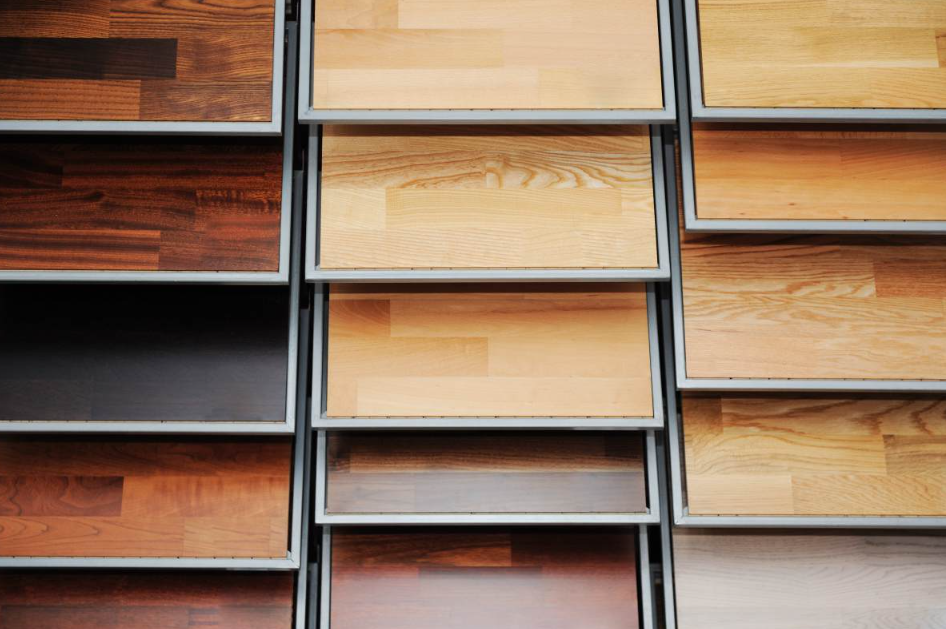
Oak owns this market. Every current flooring trend report points the same direction: oak is the dominant visual across laminate collections, described as capturing “all nuances of nature” in ways other wood species can’t match. If you’re specifying flooring for a residential project right now, oak-style is the safe bet and the popular one.
The color palette is warming up. Cool gray, the default choice for years, is losing ground. Beige and greige tones now lead as the top neutral for residential interiors. Warm dark-brown-to-black woods are climbing too, pulled along by Africa- and South America-inspired interior styling. Gray and red-toned woods are fading out. Beige, honey, sand, and whitewashed finishes are replacing them.
Texture matters more than gloss. Homeowners want floors that look real, not plastic. Oak finishes with visible knots, subtle iridescent variation, hinted patina, and rounded edge structures are trending hard. Design surveys back this up. Over 65% of homeowners now favor natural textures and warm neutrals when remodeling.
Plank size is going bigger, too. Formats like 200×20cm and 60×120cm are becoming the new standard. 10mm thickness is starting to edge out 8mm in premium lines, though 8mm HDF click laminate remains Morocco’s reliable mid-market workhorse. Herringbone has become one of the strongest patterns in oak-style collections, especially for luxury-residential projects.
The Riad-vs-Apartment Split
Morocco’s design language splits cleanly by property type:
- Riads and villas — traditional warm wood tones, honoring heritage interiors
- Modern Casablanca apartments — contemporary grays and clean oak-hybrid finishes
That’s Moroccan heritage meeting international modernism, floor by floor.
Water-Resistant & Waterproof Laminate: Meeting Morocco’s Climate Challenges
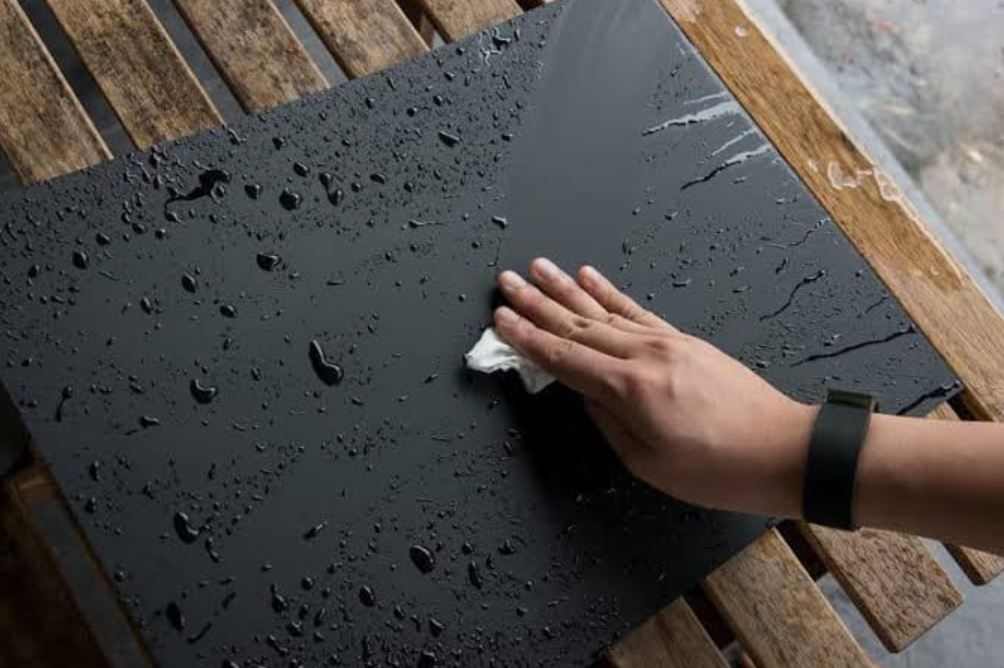
When you’re picking flooring for a Marrakech riad or a Casablanca flat, what wrecks laminate isn’t the heat—it’s the humidity swing. Morocco’s hot, dry summers followed by humid coastal stretches put floors through seasonal moisture cycling, and that cycling causes swelling at joints, edge lift, and plank movement over time. Kitchens, entryways, and ground-floor rooms take the worst of it.
The fix is sealed click joints paired with moisture-resistant HDF, which is why waterproof laminate flooring is increasingly relevant for moisture-prone residential spaces. That combination separates flooring that survives Morocco’s climate from flooring that fails within two years.
What “Waterproof” Means on a Spec Sheet
Not all waterproof claims are equal. Look for real performance numbers:
- AC3/AC4/AC5 wear ratings for residential-heavy traffic
- 72-hour surface resistance claims
- Watertight joints or 100% waterproof cores — language that should show up in test documentation, not just marketing copy
Real products backing this up: Egger Pro Kingsize Aqua+ 8mm (72-hour resistance, swell protection at joints, AC4), Quick-Step Impressive Ultra 12mm (surface and joints watertight, AC4/AC5), AquaStep 4V (claimed 100% waterproof, AC4), and Pergo Sensation with its AquaSafe bevel-sealing tech.
The construction behind these claims: upgraded HDF cores with higher density, surface-plus-bevel sealing at plank edges, and branded joint treatments like HydroSeal or Aqua+ systems.
The Price Gap Between Standard and Waterproof
Waterproof premium laminate runs roughly £22–36/m² at retail. Standard or water-resistant laminate sits at £5–22/m². At sourcing level, factory export listings for 7–12mm AC3/AC4/AC5 waterproof laminate cluster around US$2.30–5.10/m², with MOQs typically landing between 500–3,000 m² — better suited for project-scale builds than small retail top-ups.
Where to Use It (and Where to Skip It)
- Safe zones: living rooms, bedrooms, hallways
- Use waterproof-rated only: kitchens, laundry rooms, ground floors with spill exposure
- Avoid unless fully rated: bathrooms — unless the product is explicitly fully waterproof with perimeter-sealed installation
For Morocco’s climate, the sweet spot is 8–12mm AC4 waterproof laminate, sealed joints, HDF density near 900 kg/m³.
How to Select the Right Laminate Flooring for Moroccan Homes: Practical Buying Guide
Your laminate floor’s lifespan comes down to four specs: AC rating, thickness, lock type, and underlayment. Get those right and everything else like color, finish, and brand is preference. Get them wrong and you will be reflooring in three years.
AC Rating
AC3 covers bedrooms and low-traffic zones, fine but only there. AC4 is the sweet spot for real Moroccan households: living rooms, hallways, kitchens, anywhere daily life happens. AC5 makes sense for rental units or homes with kids and pets running through constantly.
If you are outfitting an entryway, corridor, or a home with heavy foot traffic, skip AC3. Go straight to AC4 or AC5.
Thickness and Lock Type
10–12mm is the practical range. 10mm handles standard residential use fine. 12mm adds a firmer feel underfoot and slightly better long-term stability, making it worth the upgrade for high-use areas.
For laminate flooring installation, prioritize click-lock systems, especially when projects require fast installation and consistent results across multiple residential units. They install faster, seal tighter, and let you swap out a damaged plank without tearing up the whole room.
Room-by-Room Picks
- Living rooms, hallways, entryways — AC4, 10–12mm, click-lock, scratch-resistant surface
- Bedrooms — AC3 works, but AC4 keeps your whole-home spec consistent
- Kitchens and dining areas — AC4 minimum, with attention to moisture resistance at the edges
Maintenance Costs: Where Laminate Wins
Annually, per 500 sq ft, laminate runs $25–50. Hardwood costs $100–300, plus refinishing every 10–15 years at $3–5/sq ft. Tile runs $50–100, mostly from grout sealing and deep cleaning.
Laminate needs vacuuming and the occasional damp mop. No sanding, no grout stains. Buyers can also compare types of laminate flooring by wear rating, thickness, moisture resistance, surface technology, and intended application before finalizing a residential specification.
Installation Non-Negotiables
- Expansion gaps: 8–10mm around walls, doorframes, and fixed cabinetry
- Long runs: add a transition strip past 30–40 ft of continuous flooring
- Underlayment: choose noise-reducing, leveling underlayment, but keep it under 5mm for click-lock systems, or the joints take too much stress
- Concrete subfloors: add a moisture barrier, especially in humid zones
Check AC rating first, confirm thickness, verify click-lock and pre-attached underlayment, then review the warranty and moisture documentation before you sign anything.
Morocco’s Flooring Supply Chain: Import Channels, Distributors & Brand Positioning
Follow the paper trail on any laminate shipment into Morocco, and you keep landing on the same few names. Between October 2023 and September 2024, the wood-flooring category (HSN 4411) counted 79 importers and 42 overseas suppliers, but only 35 importers were active. The gap shows that plenty of companies hold a license, but few are moving product.
Of those active players, three dominate. FANCY WOOD SARL shipped 8 loads for a 25% share. KRONOJAM brought in 6 shipments, taking 19%. TAYBA TRADING COMPANY handled 3 shipments for 9%. Together, that’s 53% of the category riding on three companies.
A neighboring category (HSN 39181090) is even tighter. Only 3 importers were active out of 11 listed. MESSRS STILL LEGNO alone claimed 89%, moving 25 of roughly 28 total shipments.
From Port to Showroom
Once product clears customs, the distribution chain looks like this. Tier-1 importers and agents cluster in Casablanca, Tanger, and Mohammedia, handling clearance and national distribution. Prestige Laminate fits here. City wholesalers are spread across Casablanca, Rabat, Marrakech, and Agadir, supplying retailers and contractors. Then there are specialty showrooms like ABBD (carrying Quick-Step, Pergo, 2tec2, and Orac Decor) and TEKORA, which positions itself around certified, high-end SPC flooring.
Gerflor runs through Solseo Maroc as its residential-floor import partner. Worqbox’s Flooring.ma leans on European-sourced laminate and vinyl. Across all of them, design credibility and certification claims sell faster than price alone. That leaves a gap that sustainable flooring options and moisture-engineered products can fill.
Future Outlook: Morocco’s Residential Laminate Flooring Market (2025-2030)
Wood still leads in total revenue, but laminate flooring is the fastest-growing flooring segment in Morocco through 2030. That’s the segment to watch.
Renovation is driving that curve, not new construction. Official Morocco building statistics provide regional data on building authorizations, built-up area, floor area, and expected construction value. A Casablanca middle-class housing study found homes averaging 2–3 rooms at roughly MAD 8,000–11,000 per m². That’s your renovation-budget benchmark, and laminate’s lower-cost wood-look upgrade beats solid wood on both price and install time.
Green flooring demand jumped over 35% in two years, according to industry commentary. Pair that with retail pricing like 479 MAD per 2.17 m² carton for standard 8mm HDF, and you get a market that rewards brands matching eco-credentials with accessible price points.
For 2025-2030, distributor coverage decides who wins. Start with Casablanca and Tangier partnerships. Build showroom presence next. Everything else follows.
Conclusion
Morocco’s flooring market isn’t slowing down, and it’s not staying simple. Sustainable materials, wood-look finishes that fool even design purists, and waterproof laminate flooring built for real Moroccan humidity—these aren’t passing trends. They’re the new baseline for smart residential construction.
If you’re building, renovating, or specifying materials for a client, choose flooring that performs as well as it looks and works with your climate, not against it.
Baiyer’s range is built for this: durability, authentic wood aesthetics, and moisture resistance engineered for Moroccan homes.
Browse our laminate collections, request Samples, or talk to our team about your next project. Your floors deserve better than guesswork, and so do your clients.