
Walk through a furniture showroom in Casablanca or a joinery workshop in Tangier, and you’ll notice something the spreadsheets don’t capture: the grain, the weight, the way a panel takes a finish. That texture is quietly reshaping Morocco’s industrial landscape.
Behind every cabinet front and fitted wardrobe lies a surging appetite for medium density fiberboard, one tied directly to the country’s fast-expanding furniture and interior manufacturing sectors. Morocco MDF demand signals where North Africa’s wood-based panels market is heading next.
The forces behind that growth — from import dependency to shifting trade policy — matter to suppliers, resin manufacturers, and anyone watching Morocco’s furniture industry take shape.
Morocco MDF Market Size And Growth Trajectory (2024-2026)
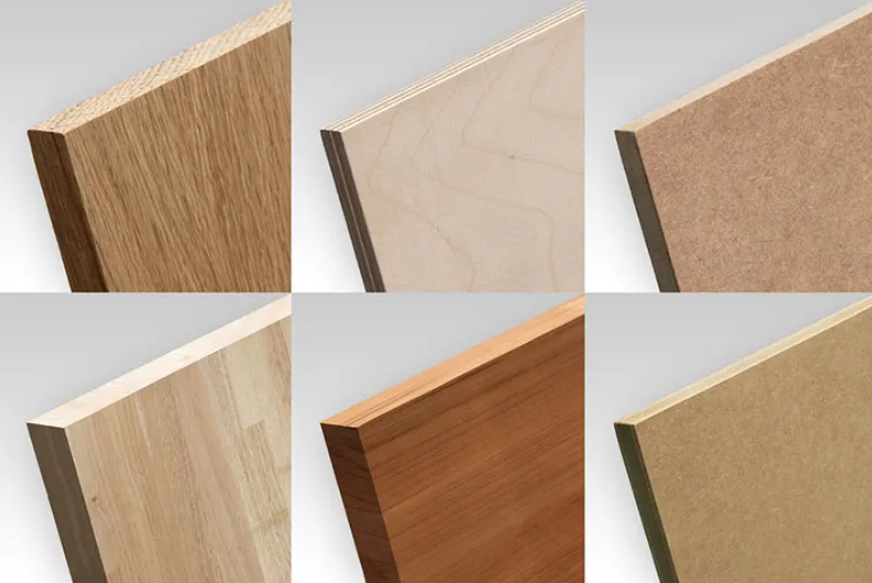
Numbers tell the story spreadsheets were built for. Morocco’s MDF market hit US$148 million in 2024, climbing 14% year-over-year — a peak consumption level after more than a decade of steady expansion since 2012. That’s the sound of an economy building itself, panel by panel.
Two sectors drive this: construction and furniture. Together, they account for over 60% of total MDF use in Morocco. When a joiner in Fez orders another truckload of board, it’s rarely for a one-off project. It’s tied to a housing development, a hotel renovation, a public infrastructure push.
What’s Fueling 2025-2026
The construction industry is projected to grow 4.1% in real terms in 2026, which keeps boards, joinery, and interior fit-outs busy. Morocco’s government isn’t waiting around either — public spending on connectivity and tourism infrastructure equal to 11.9% of 2024 GDP is planned through 2030, covering everything from rail lines to stadiums.
Broader macro signals back this up. GDP growth of 4.2% in 2026, paired with gross fixed capital formation expanding 11.2%, means construction inputs like MDF stay in demand. One construction forecast puts the market at MAD 97.39 billion by 2026, growing 3.3% annually that year alone.
Morocco stands out regionally. Africa-wide MDF trade data shows the country as one of the largest importers by value on the continent — and the fastest-growing among major importers. For suppliers and resin manufacturers watching North Africa, that’s a signal worth noting.
Furniture Manufacturing As The Primary MDF Demand Driver
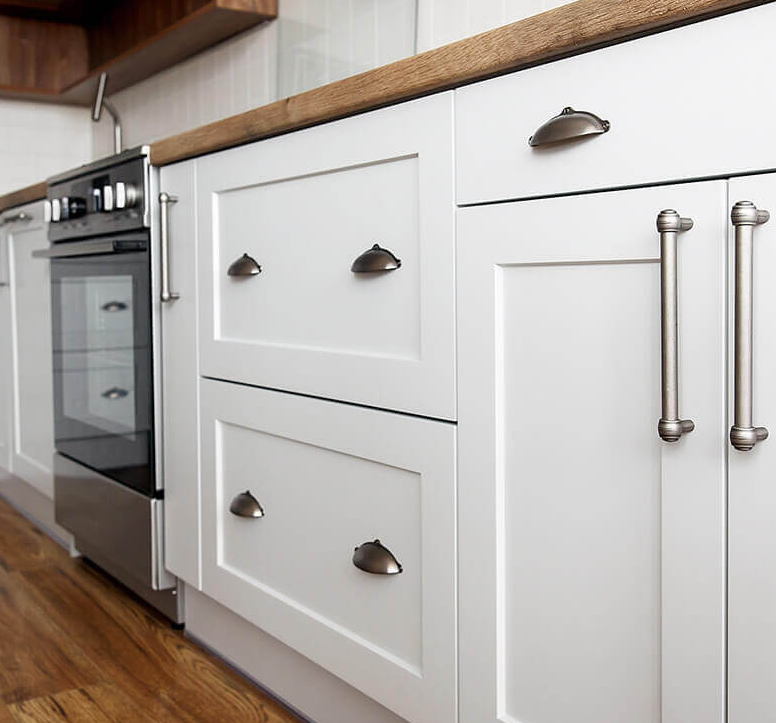
A carpenter in an Ain Sebaâ workshop doesn’t think about market share. He thinks about the panel in front of him — whether it’ll take glue evenly, whether the edge will chip when he routes it. Scale that decision across hundreds of workshops in Casablanca and Rabat, and you get the real engine of Morocco furniture industry growth. Cabinet making and furniture production together account for over 60% of total MDF use in Morocco.
That’s structural. Mdf Applications in furniture — carcasses, doors, backs, drawer fronts — are exactly where the material outperforms solid wood on cost and consistency.
Where The Panels Actually Go
Kitchen cabinets tell the clearest story. Morocco’s cabinet segment is shifting hard toward MDF with finished surfaces, and melamine-faced MDF has become the default choice in modular kitchen work. Fewer finishing steps, faster assembly. For a furniture manufacturer chasing throughput, that math is simple.
The same logic extends to flat-pack furniture, wardrobes, and fitted interior joinery. Wherever production leans toward these formats, medium density fiberboard Morocco demand follows.
Production Is Staying Home
Something shifted in 2024. Local production capacity jumped sharply, and more material stayed inside Morocco’s borders instead of heading to port. MDF exports fell for a second consecutive year. Domestic furniture and interior manufacturing are absorbing panel supply faster than mills can send it abroad.
The export side still hints at underlying scale. Morocco’s furniture, lighting, signs, and prefabricated buildings export category reached US$423.15 million in 2023. That’s a large enough base to keep MDF consumption steady even as raw board exports shrink.
Wooden kitchen furniture exports back this up: US$831.65K in 2024, led by Côte d’Ivoire (US$456.79K), Spain (US$274.02K), the United States (US$33.18K), Guinea (US$32.77K), and France (US$26.81K). MDF itself barely crosses a border. Just 36 cubic meters exported in 2022, mostly to Mauritania. The panel stays home; the furniture built from it travels.
Interior Manufacturing And Fit-Out Sector Demand
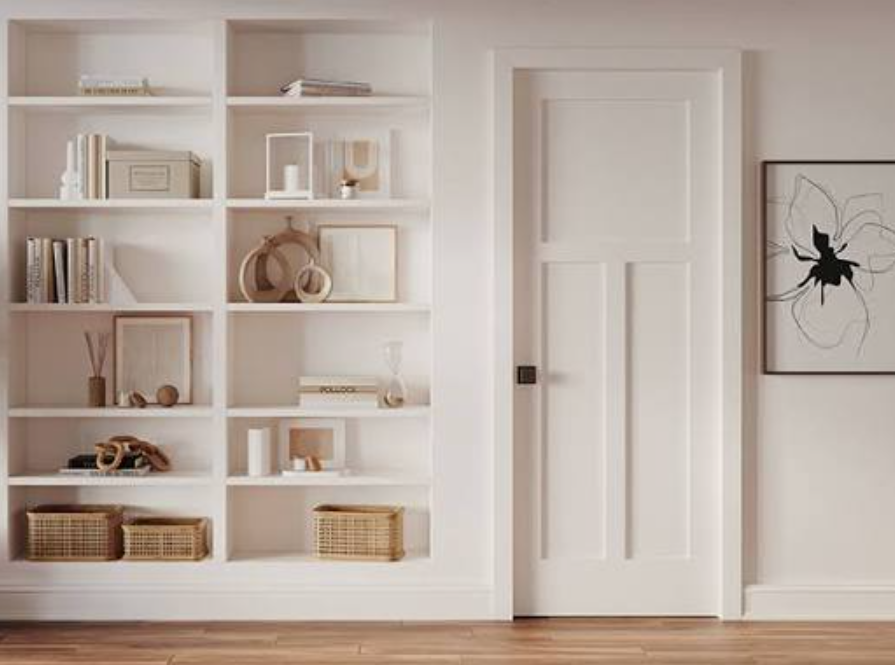
Global MDF demand is climbing at an 8.2% CAGR, from USD 44.96 billion in 2025 to USD 82.24 billion by 2033. Interior decoration sits right alongside furniture as a core driver. Morocco’s fit-out sector is riding that same current, but at a scale that fits its market size.
Globally, decorative panels are forecast to hit USD 39.35 billion in 2026, and decorative MDF wall panels alone are tracked toward USD 9.9 billion by 2027, growing at 6.5% CAGR. Interior decoration now accounts for roughly 24% of global MDF demand, and decorative laminates and digitally printed surfaces have jumped 18% since 2023. Interior design firms reported a 29% rise in MDF-based decorative panels in 2024 alone. For Morocco’s wood-based panels market, this is the segment where riads-turned-boutique-hotels and Casablanca apartment refits are quietly upgrading their material choices.
What Fit-Out Buyers Are Actually Specifying
Residential remains the anchor. It holds 65.91% of global MDF end-use share, which tracks with what’s happening in Morocco’s apartment refurbishment and high-density housing pipeline. Furniture stays the largest volume application at 51.10% — cabinetry, built-ins, wardrobes, modular joinery. These are the exact categories filling Moroccan interior manufacturing lines right now.
Moisture-resistant MDF deserves particular attention. Laminated MR-MDF is finding its way into bathrooms, spa areas, hotel washrooms, and gyms, spaces where Morocco’s tourism infrastructure investment keeps generating fit-out contracts. Most suppliers work toward a technical benchmark of melamine-impregnated paper above 120 g/m², laminated at roughly 200°C and 25–30 bar, for better water-vapor blocking.
For resin manufacturers and MDF suppliers scanning Morocco’s construction materials market, these decorative and moisture-resistant formats represent the higher-margin lane, where adhesive and surface-treatment chemistry actually earns its premium.
Import Dependency And The Shift Toward Local MDF Production
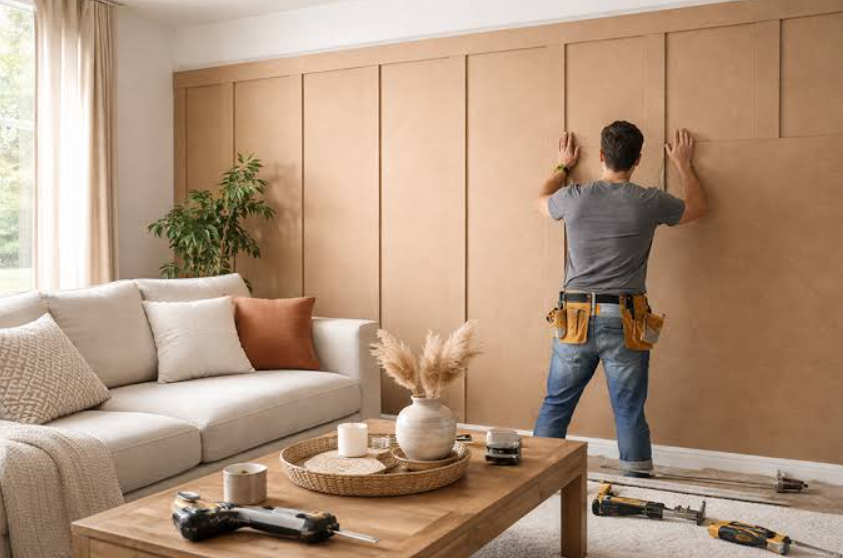
Turkey shipped 109,500 cubic meters of MDF into Morocco in 2022. Spain sent 42,500. Portugal added 19,200, Romania another 7,800. Add it up and Morocco’s timber import bill for MDF alone hit roughly US$110 million against a total volume near 191,000 cubic meters. Those numbers show how far local mills still are from meeting domestic demand.
The Turkey-Spain-Portugal Hierarchy
Value tells a slightly different story than volume. Turkey controlled 69% of import value, Spain held 15%, Portugal trailed at 11%. Between 2019 and 2022, Turkey’s export value to Morocco grew at a 70.4% CAGR — nearly double Portugal’s 30.4% and almost triple Spain’s 24.8%. By 2025, that ranking hadn’t shifted: Turkey first, Spain second, Portugal third, with Turkish supply running at roughly four times Spain’s volume. Spain’s higher value share relative to its volume suggests steadier, possibly premium-grade product moving through that lane. Anyone weighing MDF resin suppliers Morocco might court next should keep that in mind.
Where Local Capacity Is Actually Landing
Local production isn’t starting from zero. MDF Maroc has brought its first production line online, handling both manufacturing and import-export logistics under one roof. Broader panel groups report combined capacity approaching 88 million cubic meters annually as of 2022, with a single MDF/HDF line typically running 250,000 to 520,000 cubic meters per year. Facilities like CEMA Atlas show the more common entry point: 38,000 m³ of plywood, 2 million m² of particleboard, 2.5 million m² of veneer panels. Those adjacent categories often precede a direct MDF build.
Policy is nudging that shift along. projects clearing 200 million dirhams in total investment get customs and VAT exemptions on imported equipment for 36 months. Equipment purchases can draw a 10–15% subsidy, capped near 20 million dirhams through the Investment Promotion Fund. Hot presses, continuous presses, resin systems, drying lines — the capital-heaviest imports sit at the center of that support. And that’s where localization economics get decided.
Trade Policy Impact: Import Duties And Safeguard Quotas
A customs officer stamping a shipment on April 15, 2025, changed the math for every Decorative Panel crossing Morocco’s border. That’s the date a new 1 dirham/kg surcharge on coated MDF took effect, running for three years under HS codes 4411.12 through 4411.94. laminate flooring and wood skirting stay exempt. This targets decorative and coated board.
Morocco saw 145% import growth between 2019 and 2023. Its response is a safeguard quota: 16,000 tonnes in year one, rising to 17,600, then 19,360 by year three, each window closing in mid-February.
Volume inside the quota clears duty-free with a DFD filing. Outside the quota, you pay the flat 1,000 dirham/tonne rate, roughly 20,000 dirham on a standard 20-tonne container, a cost that lands hardest on lower-value board.
For local manufacturers, this narrows the price gap on decorative and cabinet-grade panels. For furniture makers, it means splitting sourcing into quota and non-quota tiers, or shifting toward domestic substitutes before margins absorb the difference.
High-Growth MDF Product Segments For 2025-2030
Not all panels grow at the same speed. Three product types are pulling ahead between now and 2030, and each one tells a different story about who’s buying and why.
Melamine-Faced MDF Leads Modular Kitchens
This is the fastest-moving segment right now. Site-applied laminate needs roughly 24 hours of glue cure before a cabinet can move to the next station. Melamine-faced MDF skips that entirely — producers report 30% faster assembly because there’s no drying step to wait on. Moroccan market commentary puts the benchmark closer to a 24% reduction in assembly time, still enough to make it the standout use case for 2026 among kitchen installers and modern furniture makers. For any operation chasing throughput on repetitive lines — carcasses, doors, drawer fronts — this is the product that removes the bottleneck.
Moisture-Resistant MDF Owns The Coastal Strip
Tangier and the Atlantic coast face a different problem: salt air and humidity that swell ordinary board. A Casablanca supplier markets water-repellent MDF for wet-adjacent environments — kitchen cabinets, wall coverings — across thicknesses from 12mm up to 30mm. The technical bar is a swell rate under 10% in a 24-hour water test. Buyers pay for that protection: MR MDF carries a 15–25% price premium over standard sheets. Demand in humid coastal markets is climbing as much as 27%, making bathrooms, kitchens, and premium hospitality projects the segments where this spec wins by default.
High-Gloss And PET MDF Chase Margin
The third lane is about aesthetics, not structure. PET-based decorative overlays are forecast to top USD 175 million by 2027, driven by demand for varied gloss ranges in kitchen fronts and facings. That matters now because industry-wide margins have compressed to roughly 10%, down from over 20% historically — pushing manufacturers toward decorative, value-added board to rebuild pricing power.
Business Opportunities For MDF Suppliers And Resin Manufacturers
Three buyers control more than half of Morocco’s MDF import market. GADIMAT holds 23%, STILL BOIS SARL 17%, ROBELBOIS 16% — a combined 56% of volume flowing through just three doors. Volza trade data confirms the pattern: 55 shipments between June 2023 and May 2024, spread across 19 buyers and 21 exporters, inside a wider field of 259 importers and 155 suppliers under HS 4411. Concentrated demand, fragmented supply. That gap is where MDF resin suppliers should be looking.
Where The Resin Opening Sits
SCE Chemicals just opened Morocco’s first local MUF resin unit, built for particleboard, plywood, and MDF adhesive systems. “First” is the operative word — local resin supply is still starting up, not saturated. A working formula runs 5% melamine with an F/(U+M) ratio of 1.1:1, tuned for water resistance and low free formaldehyde. Board pricing sits around US$9.18–10.58 per piece for standard 1220×2440×15mm sheets, MOQ near 100 pieces. New entrants can target that price band directly with import-substitute product.
The Practical Entry Sequence
Resin first, panel capacity second. Framework agreements with GADIMAT-tier buyers, paired with tank-truck or bulk-bag resin supply and short lead times, beat sea-freight timelines every time.
Conclusion
Morocco’s furniture and interior manufacturing boom is a structural shift reshaping regional demand for engineered wood. Local production is scaling up to meet safeguard quotas and reduce timber import reliance, and Morocco MDF demand is set to outpace broader North African wood-based panel markets through 2030. For resin manufacturers and MDF suppliers, this opens a rare window into a market where Formaldehyde-based and low-emission adhesive solutions will determine who wins long-term contracts with panel producers and furniture exporters.
Suppliers who move now and position themselves as technical partners will shape pricing power and specification standards for the next decade of Morocco’s construction and furniture growth.
If you supply resins, adhesives, or panel-grade chemicals, now is the time to map Morocco’s emerging producers and initiate conversations before the market consolidates around a handful of preferred partners.