
Talk about Colombia MDF Market, Colombia’s furniture and construction boom is reshaping one of Latin America’s most import-dependent wood panel markets. If you’re sourcing MDF for cabinetry, flooring, or interior fit-outs, the numbers here will surprise you.
Domestic production covers only a fraction of demand, so Colombia leans heavily on international suppliers. That creates pricing pressure—and real opportunity for buyers who know where to look.
This breakdown digs into who’s actually shipping panels into Bogotá and Medellín, which trade routes dominate, and where smart buyers are locking in better freight terms. Whether you’re a distributor scouting new partners or a manufacturer evaluating entry timing, you’ll get a clearer, more actionable picture of what’s driving this market.
Market Size and Consumption Trends

Numbers tell the real story here. After two straight years of decline, Colombia’s MDF market bounced back hard in 2021, growing 21% in a single year. Zoom out further and you’ll see steady momentum: the market’s value climbed at an average 4.6% per year from 2012 to 2021. That’s not explosive growth—but it’s consistent, and consistency is what smart sourcing decisions are built on.
Let’s put actual volume behind these percentages.
Domestic MDF consumption benchmarks:
- Around 2012, total domestic consumption sat at roughly 163,200 m³
- One industry projection pegged the following year’s market at ~180,000 m³
- That’s an implied annual growth rate of about 9.2%—well above the long-term average
So MDF demand in Colombia isn’t linear. It moves in bursts, often tied to construction cycles and furniture manufacturing swings.
Why the Medium-Term Outlook Matters More Than Current Size
Here’s where it gets interesting for anyone evaluating market entry timing. A major panel-industry CEO went on record forecasting that Colombia’s domestic panel market needs to double over the next decade just to keep pace with expected demand.
Doubling. Not incremental growth—doubling.
That’s a massive supply gap opening up, and it’s exactly why import-dependent sourcing strategies make sense right now.
The Broader Panel Category Confirms the Trend
MDF doesn’t operate in isolation. Look at particleboard and MDP—a closely related segment—and you’ll see the same demand pressure building:
- Colombian imports of particleboard/MDP hit US$172.19 million in 2024, up 25.5% year over year
- Import volumes jumped to 199,604 m³ in the first half of 2024, compared to 153,502 m³ in the same period of 2023—a 30% increase
- By the eight-month mark, imports reached 262,742 m³ in 2024 versus 193,678 m³ in 2023
These aren’t isolated blips. They signal a wood-panel market that’s expanding across the board, with MDF positioned as the mid-sized but rapidly growing subsegment inside a much larger import wave.
Colombia’s MDF market is recovering, growing, and structurally under-supplied. For buyers and suppliers watching this space, that combination rarely stays quiet for long.
Import Dependence and Trade Flows
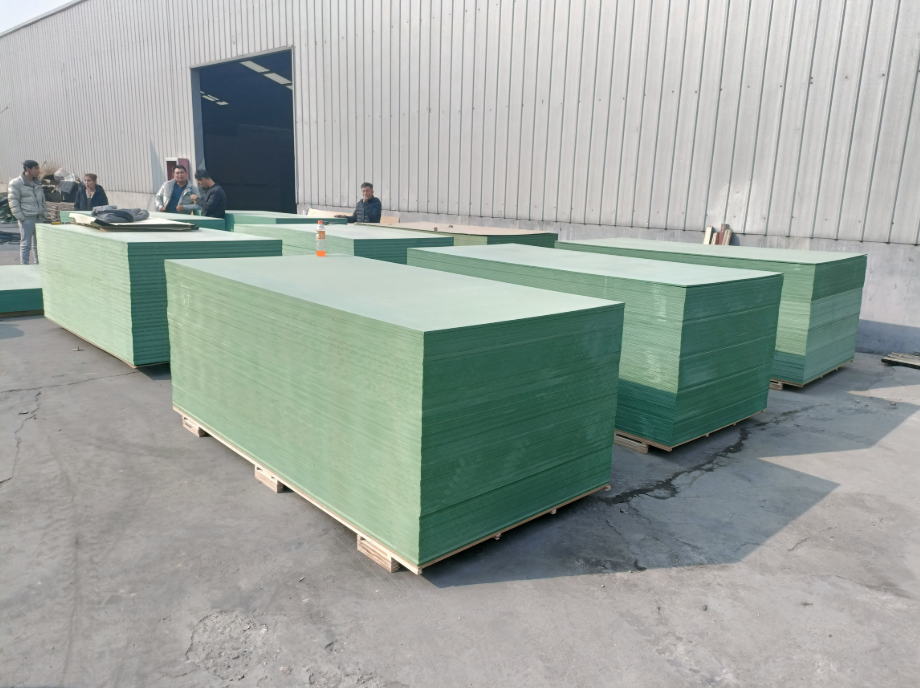
Colombia doesn’t manufacture its way out of MDF demand—it imports its way through it. There’s no significant local MDF production base. Foreign suppliers are the market.
The trade balance shows it directly. In 2023, Colombia imported US$31.9 million worth of wood fiberboard and MDF/HDF products. Exports totaled just US$1.51 million. That gap isn’t small—it’s the whole picture.
Globally, Colombia ranks as the 64th largest importer and 74th largest exporter in this category. Small on the export side, meaningful on the import side.
Volume Growth Tells Its Own Story
Import volumes for MDF/HDF jumped:
- 2019: 59,962 m³
- 2020: 63,807 m³
- 2021: 136,387 m³
More than double in a single year. The longer trend shows average import growth of roughly 1.2% annually from 2012 to 2021, but that modest average hides the volatility. Growth came in sharp spikes, not smooth expansion.
Who’s Supplying Colombia’s MDF Demand
Five countries dominated import value in 2023:
- China — US$8.57M
- Chile — US$6.52M
- Brazil — US$5.72M
- Germany — US$3.54M
- Turkey — US$2.30M
Asian, South American, and European suppliers all compete for the same buyers. That diversity gives buyers room to negotiate better pricing and terms.
On the export side, Colombia’s outbound MDF trade stays regional. Most of that thin US$1.51 million in exports goes to neighboring Latin American markets, not global buyers. Colombia isn’t competing for international export share. It’s focused on absorbing supply, not distributing it.
Key International MDF Suppliers Serving Colombia

Two Chilean companies control half the market.
Arauco leads the pack. Founded in 1979 and headquartered in Santiago, this supplier captured 31% of Colombian MDF imports in a 2012 benchmark. Its product lineup covers MDF, MDP, plywood, and melamine-faced panels. Certifications include ISO 9001, ISO 14001, and FSC CoC, which matter for construction-grade specs. Pricing runs US$200–350/m³ FOB for 12–18 mm raw MDF. Shorter shipping routes through Chilean ports cut lead time compared to Asian sourcing.
Masisa holds the second spot, with 20% market share. The company has been operating since the 1960s and brings a broader decorative range tailored to Andean design preferences, including melamine finishes that match local furniture trends.
Brazil, China, and the Price-Sensitive Buyers
Brazilian suppliers Duratex/Dexco, Berneck, and Eucatec shipped US$5.72M worth of fiberboard into Colombia in 2023. Their FOB pricing sits between US$220–340/m³, comparable to Chilean rates but without the same port-proximity advantage.
China plays a different game. It’s the single largest source country, hitting US$8.57M in 2023. Chinese mills push Standard MDF, thin panels (2.5–6 mm), and laminated boards at US$170–260/m³ FOB—the cheapest tier available. The tradeoff is transit time: 30–45 days versus a fraction of that from Chile.
Germany and Turkey: The Specialty Lane
Germany (US$3.54M) and Turkey (US$2.3M) skip the price war. They compete on E1/E0 low-emission compliance and higher-grade formats, targeting buyers who need certified specs over rock-bottom costs.
Colombia’s importers are concentrated. 34 MDF importers source from 39 global suppliers, but three names—CRUSARDI SAC, Redfred S.A.S., and JAMAR FURNITURE SA—control 47% of total import volume.
Local Distributors and Sourcing Channels
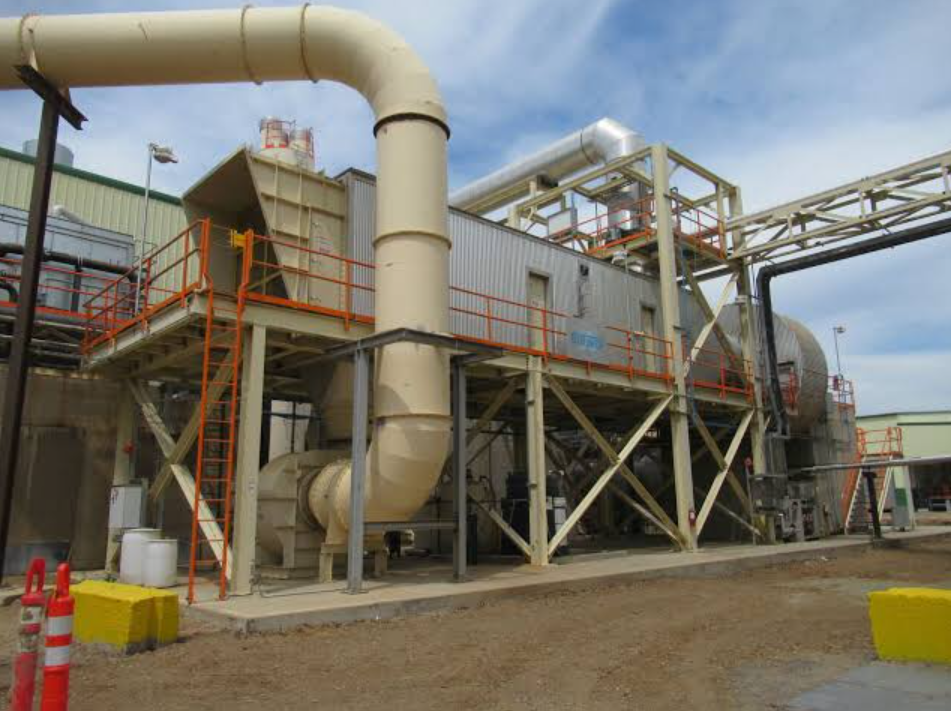
You don’t need to deal with overseas mills to get MDF for your workshop. Colombia has a solid network of distributors that handle that, and knowing which channel fits your order size saves time and money.
Masisa Colombia uses an authorized distributor model. You can’t buy sheets directly from the factory. Every board they sell meets E1 low-Formaldehyde standards, and select lines carry CARB/TSCA EPA Title VI and FSC certification. If you need certified panels, use their “donde comprar” locator or contact form.
Cimca Colombia makes MDF starting at 9mm, with 12mm and 15mm as standard stocked thicknesses, all cut to 2440 × 1850mm sheets. Custom formats are available under consultation—useful if you’re machining or painting for furniture components.
Madecentro is the workhorse distributor for sheet-by-sheet buyers. Based in Medellín with national branch coverage, they handle catalog sales for carpenters and small manufacturers who don’t need pallet-scale orders. Reach them at (604) 444 2893 or via WhatsApp at 313 8891610, Monday through Saturday.
Maderandes SAS in Bogotá follows the classic import-and-resell pattern, moving 1830 × 2440mm sheets in 15mm thickness for cabinet work.
Order Size Determines Your Channel
- Single sheets: distributor/dealer pickup
- B2B pallets: 30–60 sheets depending on thickness
- Truckloads: direct trade sourcing
Request 680–750 kg/m³ density benchmarks and confirm E1/FSC certifications before committing—that’s what separates reliable suppliers from the rest.
Demand Drivers and Growth Projections
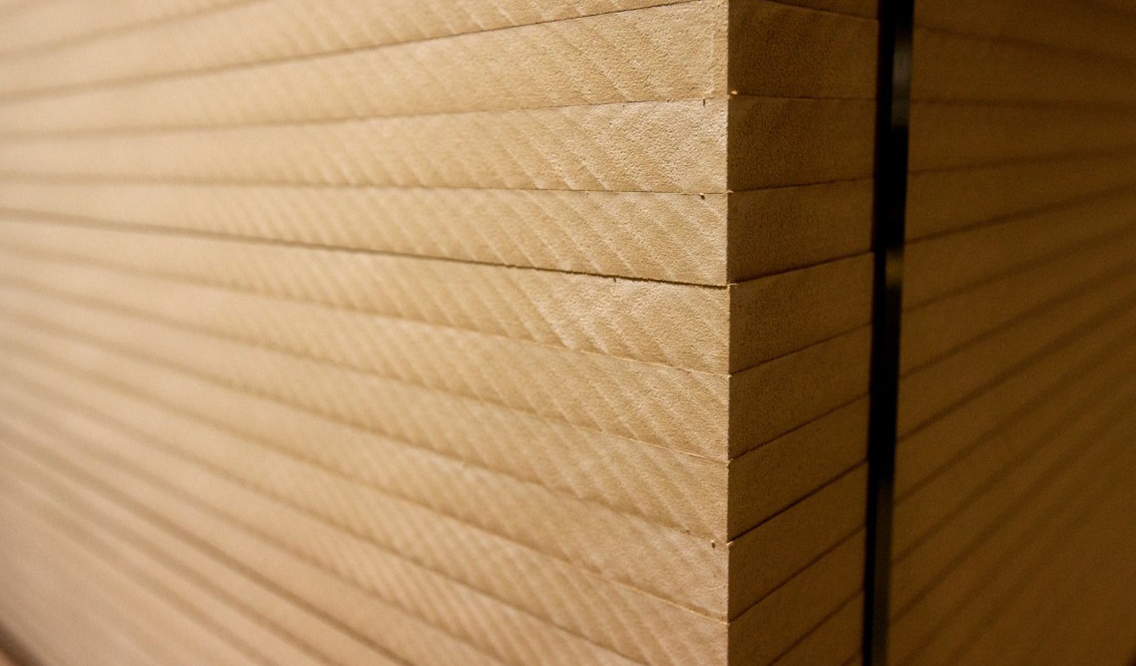
Furniture and construction are the whole engine behind MDF demand. Cabinetry, shelving, wall panels, flooring, decorative elements—every category pulls MDF volume higher. Colombia’s growth mirrors a pattern playing out globally.
Urbanization is the real multiplier. Emerging markets are driving this. India alone adds 35–40 million urban residents every year. That’s sustained pressure on housing, interiors, and furniture supply chains, not a one-time spike. Asia-Pacific already commands 59.90% of global MDF demand in 2025, fueled by furniture and interior decor growth across China, India, and Southeast Asia.
The Substitution Effect Nobody Talks About
MDF keeps stealing share from plywood, particleboard, and solid wood. Lower cost. Smoother finish. Easier customization for RTA furniture and routed components. Industry analysis attributes roughly +0.9% CAGR impact directly to this substitution trend. That’s a structural shift in procurement behavior, not a rounding error.
Add renovation spending into the mix. Post-pandemic refurbishment activity, especially in North America and Europe, adds another +0.8% CAGR on top of baseline demand.
Where the Global Numbers Point
Forecasts converge on a 4.1% to 7.0% CAGR range through the early 2030s, depending on scope. Some projections get more specific: 4.12% for global MDF/HDF shipments, 4.24% for 2025–2032, 4.6% through 2034, 5% by 2031.
The dollar figures back this up. One forecast puts the global MDF market at USD 51.3 billion in 2024, climbing to USD 79.7 billion by 2034. Another projects USD 49.81 billion in 2026 reaching USD 91.58 billion by 2035.
Standard MDF still dominates product mix—55.3% of segment share in 2026—driven by furniture manufacturers chasing price competitiveness over solid wood.
For Colombia’s importers, this global demand curve validates timing. Where local production doesn’t exist, the opportunity sits with furniture factories, joinery shops, and interior contractors needing reliable, moisture-resistant, fire-rated boards—faster than waiting on overseas freight cycles.
Price Benchmarks and Logistics for Colombian MDF Imports
Sticker shock kills more sourcing deals than bad quality does. Here’s what you should expect to pay—and what it takes to get product on a truck in Cartagena.
What MDF Costs
Chinese standard MDF runs US$3.00–10.50 per sheet for common 1830×2440mm and 1220×2440mm sizes. For bulk buyers, the more useful number is US$300–1,500 per CBM. Higher-grade options (18mm melamine-faced boards) jump to US$5.99–30.99 per piece depending on finish and order volume.
Two regional benchmarks matter most for Colombia MDF market trends and sourcing opportunities: China standard MDF at US$170–260/CBM FOB equivalent, and Latin American MDF at US$200–350/CBM FOB equivalent. European E1/E0 premium boards sit above both ranges.
FOB vs. CIF
Colombia’s central bank defines FOB as the origin-port price. CIF adds insurance and transportation. Two real import records show why this distinction matters. One shipment logged US$47,732.03 FOB against US$10,942.43 freight—freight was about 23% of FOB value. Another Tablemac MDF shipment showed US$5,899.19 FOB with just US$1.89 insurance, landing CIF at US$5,901.08.
Build your landed cost as FOB + ocean freight + insurance + port handling + inland trucking. Skip any step and your margin math falls apart.
MOQ Reality
Marketplace listings for Colombia start MOQ at 480 pieces. Use that as your container-consolidation benchmark. Once product hits local distributor stock, pricing shifts to per-sheet.
Ports and Transit Windows
Cartagena and Buenaventura are your primary entry points, with Barranquilla, Santa Marta, and Bogotá inland routes rounding out coverage. China-to-Colombia sea freight runs 30–45 days. Chile and Brazil beat that window significantly due to shorter sailing distances.
Request quotes separately for Cartagena and Buenaventura delivery. Inland trucking costs shift enough to change your total landed price.
Conclusion
Colombia’s MDF market is still growing, and the companies that lock in sourcing early will get the best pricing and supply reliability. Demand from furniture and construction keeps rising. Imports come mainly from Chile, Brazil, and Ecuador. The distribution network is maturing but still fragmented enough to reward buyers who do their homework.
That’s why these sourcing opportunities matter now, not next quarter. Freight costs, tariffs, and supplier lead times are shifting fast. Waiting means paying more later.
Start building relationships with 2-3 verified suppliers today, request current price benchmarks, and map your logistics options before demand spikes further. Buyers who act now won’t just save money. They’ll own the supply chain advantage everyone else will be scrambling for in 2025.