
If you’ve called three suppliers this week and gotten three wildly different quotes for 12mm OSB, you’re not imagining it — the Saudi wood panel market is genuinely that fragmented right now. Between fluctuating international timber costs, import duties that vary by port and origin, and Vision 2030 construction demand pulling supply in every direction, guessing your way through a purchase order is a costly move.
This report breaks down actual OSB prices in Saudi Arabia by thickness and format, so you’re negotiating from data instead of a single salesperson’s number. You’ll get the three real drivers behind recent price swings, a 12-month trend read, a landed-cost comparison for China imports versus buying local, and a supplier screening checklist for buyers who can’t afford to get burned on their next container.
Current OSB Prices in Saudi Arabia by Thickness, Format, and Unit
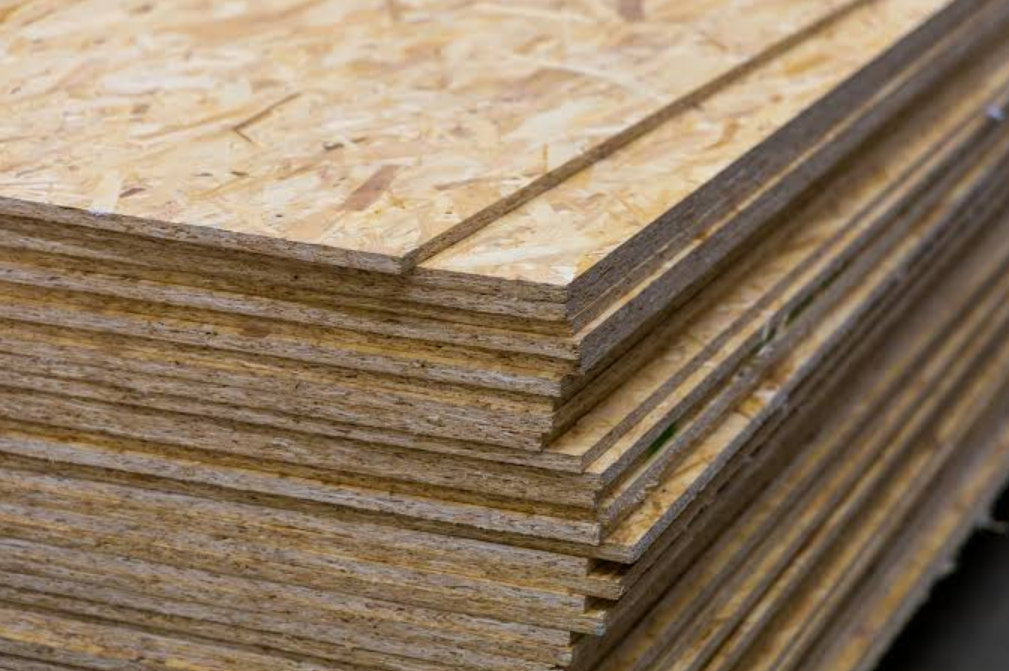
OSB pricing in Saudi Arabia is a range that shifts with thickness, sheet format, and where you’re buying. As of September 2026, here’s the retail snapshot you can use to check a quote against reality.
Riyadh retail pricing (VAT included, home delivery):
-
11mm OSB (1250 × 2500mm): SAR 92.00/sheet
-
18mm OSB P3 (1250 × 2500mm): SAR 126.50/sheet
-
17mm OSB (4 × 8 ft): SAR 60.38/sheet listed, SAR 57.50 unlock price
Notice the format difference matters as much as thickness. A 17mm sheet in 4×8 ft format runs cheaper per sheet than an 18mm sheet in the metric 1250×2500mm format, because you’re comparing different total surface areas, not just thickness.
Sheet Formats and Thicknesses You’ll Find
Saudi suppliers, especially in Riyadh, stock two dominant formats: 122 × 244cm and 125 × 250cm. Thickness options commonly listed run 9, 11, 12, 15, 17, 18, and 22mm.
Working Price Bands by Thickness
If you want a quick benchmark before you start calling suppliers, use this:
-
9–12mm OSB: SAR 55–92/sheet
-
15–18mm OSB: SAR 57.50–126.50/sheet
-
22mm OSB: typically SAR 100+/sheet, sitting near the top of the broader SAR 55–140/sheet Riyadh market range
For context on why Saudi pricing feels steep: Saudi Arabia’s OSB import price hit US$768 per m³ in 2024, more than double the GCC average of US$356 per m³. That gap is the highest in the region, and it’s the first clue to why local sheet prices don’t move in line with global lumber trends alone.
OSB Board Price Saudi Arabia: Grade and Thickness Price Comparison
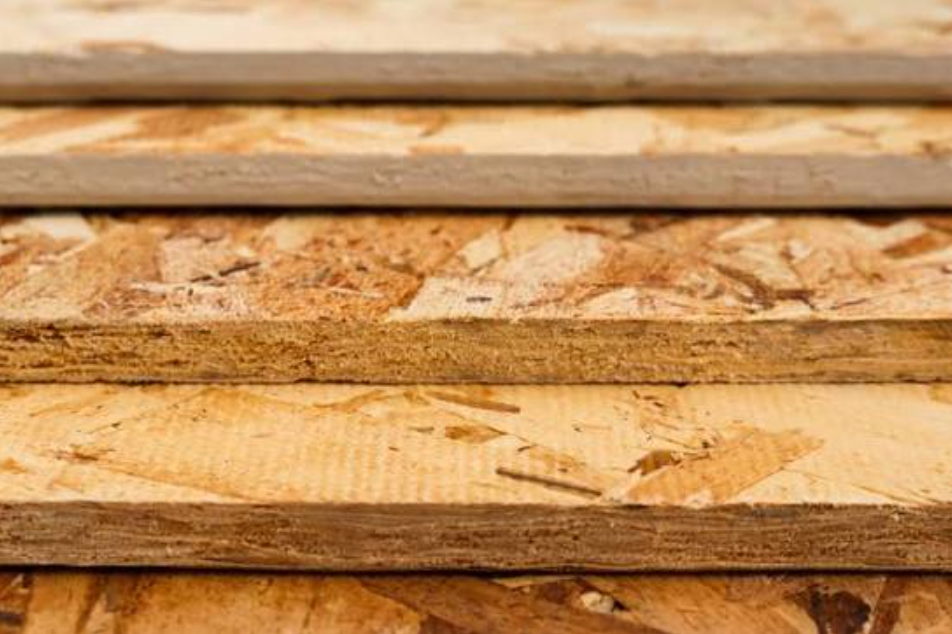
Thickness isn’t a linear cost jump in Saudi Arabia. At Masdar, 15mm OSB (1250 × 2500mm) runs SAR 103.50 including VAT. That puts the 11mm-to-15mm jump at just SAR 11.50 per sheet. But push from 15mm to 18mm, and you’re paying SAR 23.00 more, double the increase for the same 3mm gain. Go from 11mm all the way to 18mm, and the total gap is SAR 34.50 per sheet. The steepest jump in the lineup sits right between 15mm and 18mm, so remember that when you’re deciding whether to overspec a project.
Grade Matters as Much as Thickness
OSB P3 dominates Riyadh retail listings at 18mm × 1250 × 2500mm. For construction-grade sourcing, OSB3 shows up most often, especially in 9mm, 12mm, and 18mm variants sold under MOQ-based export pricing.
If you’re comparing landed imports against local stock, export offers for OSB3 run US$5.90–15.60 per piece for 9/12/18mm at MOQ 200 pieces. Separate wholesale listings quote US$8.96–13.50 per piece for 9.5mm/11mm boards at MOQ 1,000 pieces. Neither reflects KSA shelf pricing; they’re supplier-side numbers, but useful for checking import parity before you commit.
Before you request a quote, ask every supplier to confirm OSB2 vs OSB3 vs P3, edge profile, moisture resistance, density, and the VAT-inclusive delivered price to Riyadh, Jeddah, or Dammam. Skip any of those, and your quote comparison is worthless.
Three Main Drivers of OSB Prices in Saudi Arabia
Three forces are pushing and pulling Saudi OSB prices right now, and none of them are going away in the next two quarters. Understanding each one tells you whether a quoted price is fair, inflated, or about to drop.
Driver 1: Import Landed Costs and Origin Spread
Saudi Arabia paid $768 per m³ for OSB imports in 2024. The GCC average sat at $356/m³. That’s more than double. Compare that to the UAE, which imported at just $270/m³ the same year, and you see Saudi Arabia carrying the highest OSB import cost among major GCC destinations. Origin matters just as much. Some GCC suppliers priced as high as $515/m³, while lower-cost exporters undercut that significantly. If your supplier can’t explain where their board originates, you can’t judge whether their price reflects real freight and duty, or just channel margin stacked on top.
Driver 2: Raw Material and Wood Cost Volatility
Wood and adhesive prices swing the base cost of every sheet. Regional forecasts put wood costs between $300–$400/m³ in the coming months, and that range alone can shift a supplier’s quote by 10–15% without any change in duty or freight. Two suppliers pricing the same 18mm P3 sheet a month apart can land SAR 5–10 apart per sheet, purely on raw material timing.
Driver 3: Construction Demand and Plywood Substitution
Saudi construction and infrastructure activity keeps OSB demand tight against local supply. Wood-based panel demand rises fastest when project pipelines accelerate, and OSB’s cost advantage over plywood pulls even more buyers toward OSB when plywood prices climb. That substitution effect means OSB demand tracks both construction volume and plywood pricing in the same market.
Two separate trade benchmarks tell almost the same story, and it’s not a comforting one for buyers hoping prices will soften soon. The GCC OSB import price hit $356 per cubic meter in 2024, up 4.2% year-over-year. Saudi Arabia sat at the top of that range, importing at $768/m³, the highest of any major GCC destination, with the strongest long-term climb in the region at +4.1% from 2013 to 2024.
A second trade dataset puts different numbers on the table but reaches the same conclusion. That source pegs the 2024 GCC import price at $319/m³, with Saudi Arabia again ranked highest at $515/m³, growing +0.9% annually over the same eleven-year stretch. The absolute figures differ because the datasets pull from different trade samples, but the pattern is the same. Saudi Arabia has paid more for OSB imports than the rest of the GCC, and that premium has been climbing for over a decade.
What This Means for Your Next Purchase
Don’t expect a single, transparent national spot price for OSB in Saudi Arabia. It doesn’t exist. What you’ll find instead is retail pricing that swings hard by thickness and seller, layered on top of an import cost base that’s higher than anywhere else in the region.
That combination explains why calling three suppliers for the same 12mm sheet gets you three different answers. The underlying import cost is trending up at low single digits annually. Retail quotes are seller-dependent. Treat every quote as negotiable.
OSB Supplier Saudi Arabia: Local Procurement Channels
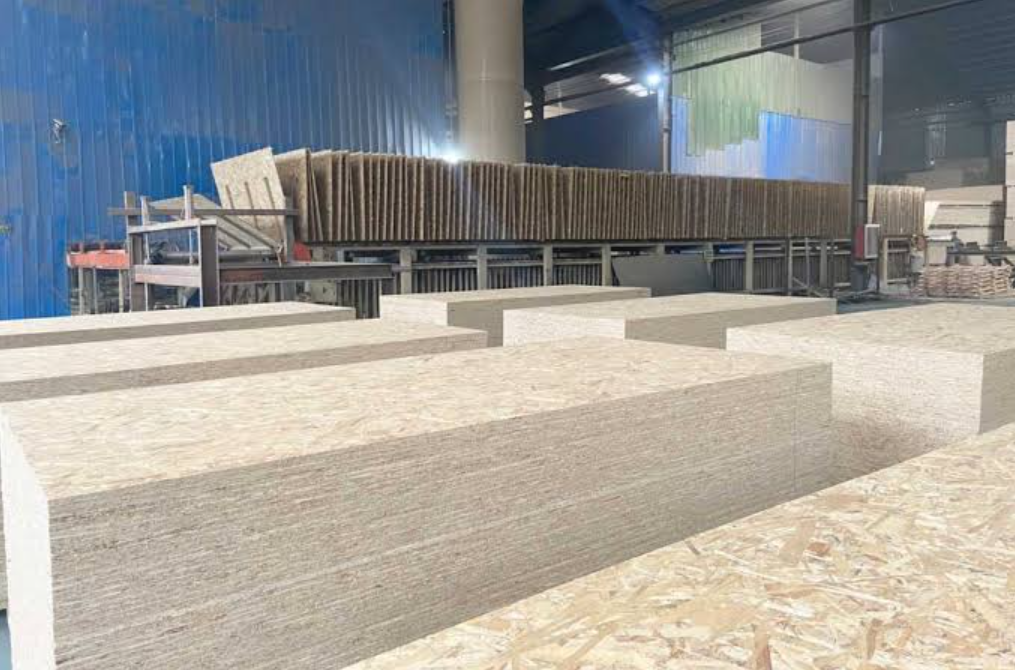
Five sourcing routes can get you OSB in Saudi Arabia, each one aimed at a different buyer.
Nassguard stocks OSB out of Dammam and ships across all regions of KSA. Their boards are for roofing and structural work. The catalog also includes plywood, MDF, HDF, and marine plywood, available in Dammam, Al Khobar, and across the kingdom.
Riyadh Timber offers fast quotes with 24–48 hour delivery to Riyadh job sites. They stock OSB in 9, 12, 15, 18, and 22mm, density 630–680 kg/m³, all OSB/3 humid load-bearing grade, meeting EN 300 and CE marking, aligned to SBC 201.
Masdar lists P3-grade 18×1250×2500mm boards on an industrial marketplace, out of a Riyadh head office.
Asala Wood carries OSB in its broader timber catalog.
And Saudi WoodShow 2026 puts OSB manufacturers and distributors in front of buyers.
Request This Spec From Every Supplier
-
Grade: OSB/3 humid load-bearing
-
Sheet size: 1220×2440mm or 1250×2500mm
-
Thickness: 9, 12, 15, 18, or 22mm
-
Docs: EN 300 certificate, CE marking, data sheet
-
Lead time: same-day pickup or 24–48 hour site delivery
China Import Versus Local Purchase for OSB in Saudi Arabia
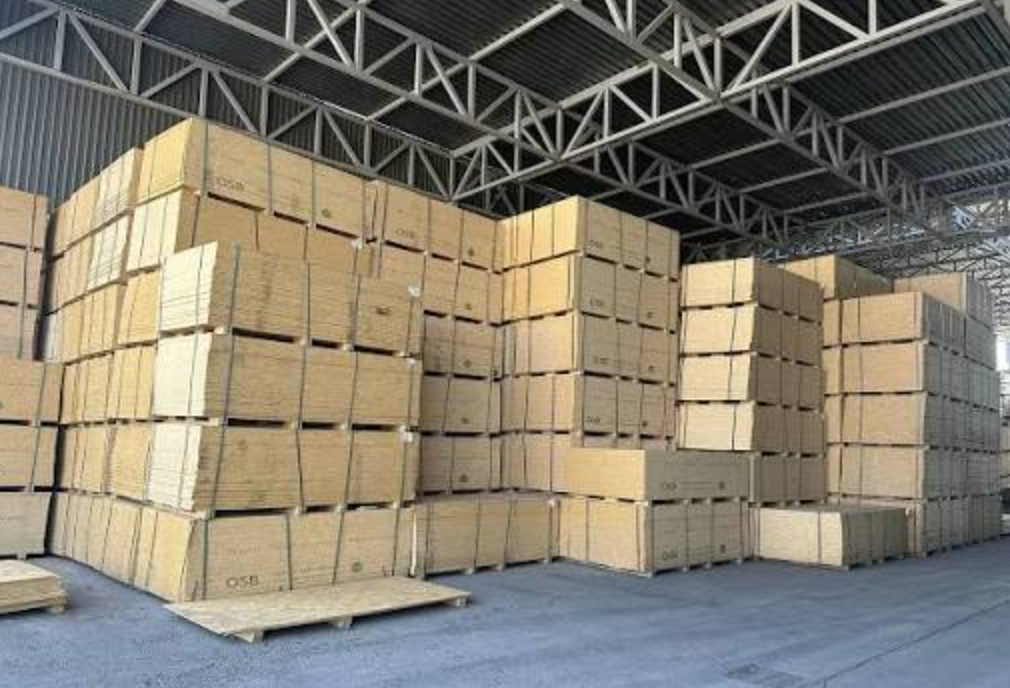
The math looks tempting on paper. Chinese factory listings quote US$5.90–15.60 per board for 9/12/18mm OSB3, with MOQ 200 pieces. Broader marketplace pricing runs US$5.50–18.00 per sheet, MOQ 100–1,000 depending on spec. Onsun Group, a China direct wholesale factory, exports to 52 countries and lists Saudi Arabia specifically. That unit price sits well below Riyadh retail bands of SAR 55–140/sheet.
But that gap shrinks fast once you add real costs. Saudi Arabia charges a 5% import duty on OSB (HS code 441012) from non-GCC origins. Every shipment also needs SABER Product Certification through a SASO-notified body before customs clears it. Once you add ocean freight, inland trucking, and certification lead time, your “cheap” China quote stops looking cheap.
Before comparing China and local, price out the 5% duty on declared value, SABER certification cost and processing time, freight to Jeddah or Dammam port plus inland delivery, and whether the MOQ fits your actual project volume.
Local wholesalers like Tarik AlZahid Holding, DM Trading, and Gulf Gates Trading already carry landed stock. For small-to-mid orders, that beats waiting weeks on a container.
Saudi Arabia OSB Import Price: Landed-Cost Calculation
Here’s a cleaner rewrite that keeps the formula example and budget list intact:
You guys love numbers, so here’s a rough landed-cost estimate for importing OSB into Saudi Arabia.
Saudi Arabia OSB Price: CIF + Duty + VAT Breakdown
Here’s the number most people quote: a 5% customs duty. But Saudi Arabia also applies 15% VAT on the CIF value. Until you run both numbers together, you’re comparing a fantasy FOB price, not a real landed cost.
Am I overcomplicating the tax treatment? Not at all.
The formula:
– Customs duty = 5% × CIF
– VAT = 15% × (CIF + duty)
– Total landed cost = CIF + duty + VAT + port/insurance/anything else… (you get the idea).
Worked example, using $1,000/m³ CIF:
– CIF: $1,000/m³
– Duty: $50/m³
– VAT: $157.50/m³
– Landed cost: $1,207.50/m³
(Your number may be lower if you claim duty/VAT credits.)
The $1,207.50/m³ number is duty-inclusive and VAT-inclusive. A customs-heavy or VAT-heavy comparison is a warning sign.
Want an edge on true landed costs? That’s before you add terminal handling, customs clearance, freight forwarding, inspection, and trucking to your warehouse or jobsite.
Budget for these line items on every import quote:
– Port/terminal handling
– Customs clearance / broker fee
– Cargo service fee
– Inspection charges
– Inland trucking to warehouse or job site
That’s the total. Let me know if you want it as a spreadsheet.
Quick note: the original opening mentioned “South Africa” — I adjusted it to Saudi Arabia since you described it as a post about importing OSB into Saudi Arabia. If that was intentional, just swap the country back.
OSB Supplier Screening Checklist for Saudi Buyers
Cheap quotes fall apart the moment customs asks for paperwork. Every OSB shipment into Saudi Arabia requires SABER Product Certification from a SASO-notified body, under the Technical Regulation for Building Materials – Part 2. Skip this check, and your container sits at port.
Demand this document pack before quoting:
-
SASO-compliant test report from an accredited lab
-
Factory audit acceptance
-
EN 300 grade marking (OSB/2, OSB/3, or OSB/4) on pallet labels
-
Declaration of performance and origin documents
-
Commercial Registration (CR) and Chamber of Commerce membership
Spec fields to confirm every time:
-
Thickness: 9, 11/12, 15, or 18mm
-
Sheet size: 1220×2440mm, 1250×2500mm, or 590×2440 T&G
-
Resin system: PMDI or MUF
-
Moisture content: 2–8% at dispatch
-
SBC 201 structural compatibility
Missing grade marking, no SABER-ready dossier, or inability to name their accredited lab are instant rejection triggers. If a supplier hesitates on any of these, keep calling.
OSB Procurement Timing and the Next Three to Six Months
Buy to need. That’s the global signal. North American OSB demand stayed soft heading into 2026, and producers are still balancing supply rather than chasing a rebound. Prices showed downward pressure late in 2025, with only moderate growth in Q1 2026. Europe is different: steady upward movement in the same window, meaning regional freight and mill capacity, not just global timber prices, are driving the Saudi numbers you’re seeing.
Producer guidance backs this up. West Fraser held North American OSB shipment guidance at 5.9–6.3 billion square feet after mill curtailments—a supply discipline move. Louisiana-Pacific’s own math is blunter: if Random Lengths OSB prices stay flat at July 2026 levels, LP projects a full-year OSB Adjusted EBITDA loss of $120 million. That’s a producer telling you prices aren’t racing anywhere.
Global benchmark spread (June 2026):
– Canada: $343/MT
– China: $457/MT
– Brazil: $363/MT
– Germany: $570/MT
– Spain: $604/MT
One 2026 forecast pegs North American structural OSB near $250 per 7/16-inch panel, ticking up to just $255 in 2027. That’s a low-growth ceiling.
The Tactical Move for the Next Two Quarters
Skip large forward buys.
Watch for mill curtailment announcements. They create short windows of firmness worth buying into, before weak housing demand caps the increase.
Track new supply coming online in H1 2026. Added capacity risks tipping into oversupply even after curtailment-driven firmness.
Run staged purchases in shorter windows rather than locking one large volume.
Hold dual quotes from at least 2–3 mills or distributors with 4–8 week validity.
Compare delivered cost per thousand square feet. Freight and regional spread are doing most of the price movement this year, and that’s where you have room to negotiate.
Conclusion
OSB prices in Saudi Arabia follow three predictable levers: raw material costs, Vision 2030 construction demand, and import logistics. Buyers who track these will out-negotiate those who don’t. Stop calling five suppliers for quotes and use the checklist above to filter them in ten minutes flat.
Right now, the data points to a stabilization window over the next quarter, which means mid-size contractors and distributors have a real opportunity to lock in rates before Q3 construction activity pushes demand and prices higher again.
Pull the thickness-specific price ranges from this report, run them against your last three supplier quotes, and flag any that don’t add up. If you’re still unsure whether local sourcing or China import makes more sense for your volume, use the landed-cost calculation as your starting point.