
If you’ve been eyeing SPC flooring for your next renovation but keep hesitating because “it used to be expensive,” you’re working off old information. SPC flooring is becoming more affordable in America, and the shift is bigger than most homeowners realize. Back in 2021, prices were sky‑high. Today, the SPC flooring price per square foot has dropped in ways that actually change the math on your project budget.
Not all “cheap” SPC flooring is created equal, and knowing why prices fell matters just as much as knowing that they fell. We’ll look at the real numbers, the real reasons behind them, and how to buy smart, not just cheap.
2023–2024 U.S. SPC Flooring Price Snapshot
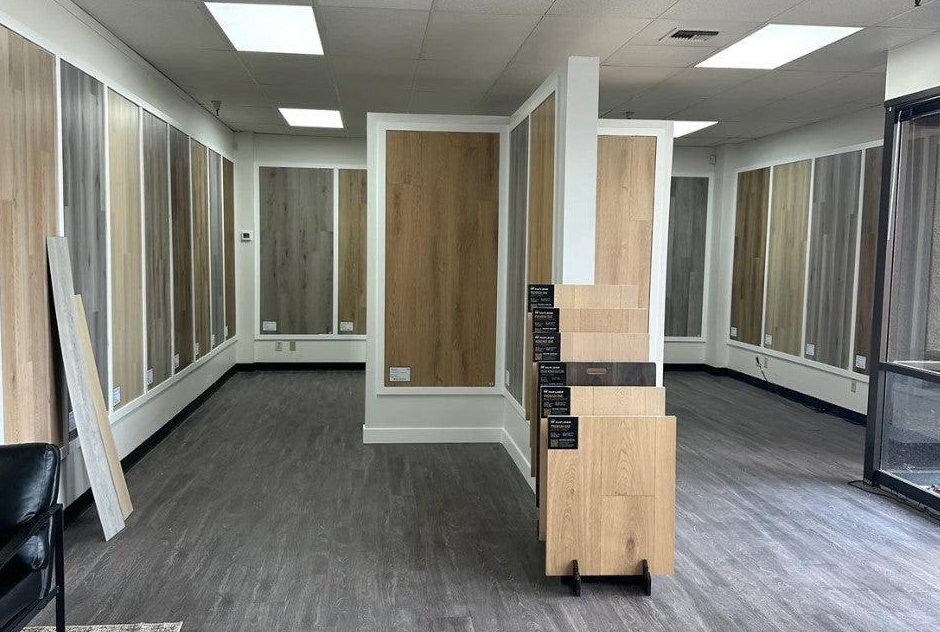
In 2021, SPC flooring was at its most expensive—about $1.85 per square foot from the manufacturer. That was the peak, when everyone was scrambling for materials. By 2023–2024, wholesale pricing has dropped to about $1.60 per square foot at the mill level. That’s a real, measurable drop in what manufacturers charge before the product even reaches a warehouse.
For you as a buyer, what matters is the retail price. For standard mid-range SPC, you’ll find prices from $2.50 to $4.50 per square foot for the material alone. That’s what most homeowners end up paying.
Budget SPC: $2.00–$3.00 per sq ft, usually with a thinner 6–12 mil wear layer. Ideal for rental properties or low-traffic rooms where saving money matters more than durability.
Mid-range SPC: $3.50–$5.00 per sq ft, typically with 12–20 mil wear layers. This is where quality and affordability meet. Most buyers should be shopping here.
Premium SPC: $5.00–$7.00 per sq ft, often with 20+ mil wear layers, thicker cores, attached underlayment, and texturing that mimics real hardwood or stone.
Don’t forget installation. The total installed cost for material and labor runs from $5.50 to $15.00 per square foot. For most standard residential projects, you’ll land between $4.50 and $9.50 per square foot, depending on subfloor prep and local labor rates.
SPC Flooring Price per Square Foot by Thickness, Wear Layer, and Product Tier
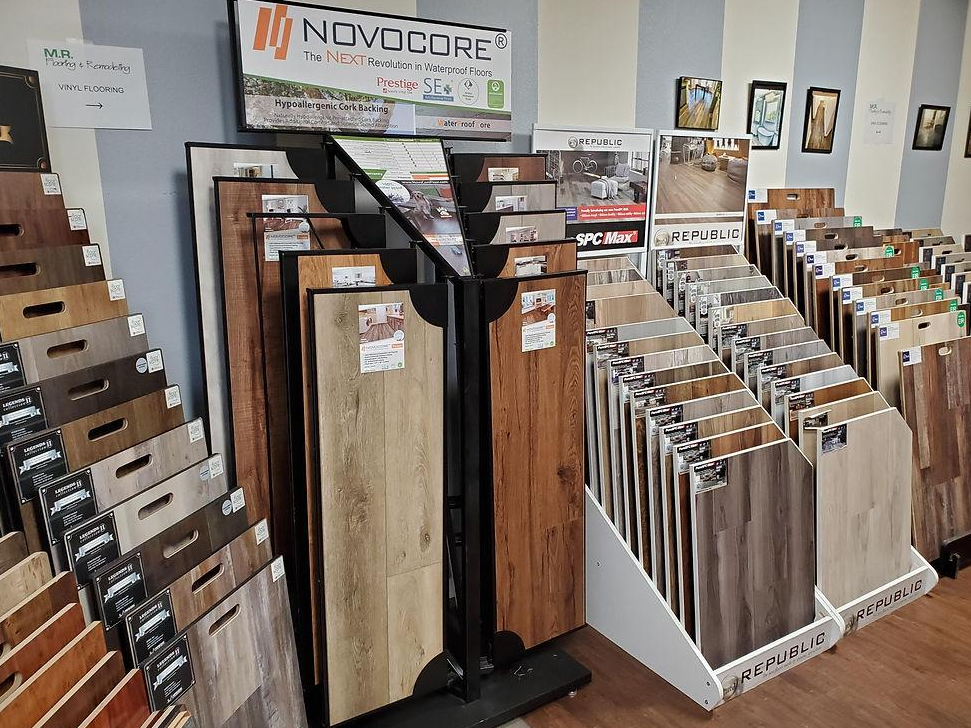
Thickness and wear layer drive the price more than any marketing label. Here are the real numbers so you can shop with confidence.
The thickness/wear-layer price ladder looks like this:
4mm core + 6–12 mil wear layer: $1.50–$3.00/sq ft — your entry-level, budget-friendly option
5mm core + 15–20 mil wear layer: $2.50–$5.00/sq ft — the core mid-market sweet spot
6–7mm core + 20–28 mil wear layer: $4.00–$7.00/sq ft — premium territory for busy households
7–8mm core + 28–40 mil wear layer: $6.00–$9.00/sq ft — ultra-premium, designer-level flooring
Notice the pattern? As thickness and wear layer go up, so does your investment. But here’s what matters more: the most common market benchmark right now sits around $3.00–$4.50 per square foot for 5mm/20 mil SPC. That’s the combination most homeowners with busy families need.
Want brand-specific numbers? Here’s how popular names stack up:
LifeProof (Home Depot): $2.69–$3.99/sq ft, 12–22 mil, 5–7mm
SmartCore (Lowe’s): $2.49–$4.29/sq ft, 12–20 mil, 5–6.5mm
COREtec: $3.50–$6.50/sq ft, 20–28 mil, 5.5–8mm
Shaw Floorte: $3.00–$5.50/sq ft, 12–28 mil, 5–7mm
Mohawk SolidTech: $3.25–$5.75/sq ft, 12–28 mil, 5–7mm
Cali Vinyl Pro: $3.49–$4.99/sq ft, 20 mil, 5.5mm
For most homes, 5mm and 20 mil is your best value zone. Renting out a property? Stick with 4mm and 6–12 mil. Heavy foot traffic or a commercial-style space? Move up to 6mm+ with 22–28 mil. Match the flooring to the job, not the flashiest price tag.
SPC Flooring Cost Compared with Laminate, Tile, and Hardwood in America
SPC flooring isn’t trying to be the cheapest flooring in the room. It’s trying to be the smartest investment. Here’s where it actually lands.
Installed cost, side by side:
-
Laminate: $3–$8/sq ft installed — the lowest upfront cost, period.
-
SPC: $5–$13/sq ft installed, with mid-grade rigid-core options commonly at $7.50–$9.25/sq ft.
-
Tile: $5–$15/sq ft installed (some guides push $9.50–$14 depending on prep work).
-
Engineered hardwood: $6–$18/sq ft installed.
-
Solid hardwood: $8–$25/sq ft installed.
For a typical 1,000 sq ft room, that works out to $5,000–$13,000 for SPC, versus $3,000–$8,000 for laminate, $5,000–$15,000 for tile, and up to $25,000 for solid hardwood.
Yes, SPC usually runs $0.50–$2.00 more per square foot than laminate. But once you add underlayment and labor, it beats tile on total installed cost. And it’s well below hardwood, full stop.
The bottom line: SPC sits in the sweet spot. The recent drop in flooring material prices puts real waterproof, durable performance within reach, without hardwood’s price tag attached.
Five Reasons SPC Flooring Prices Declined After 2021
The 2021 price tag was never the real price. It was a fluke, a perfect storm that wasn’t built to last. Smart buyers understand this so they don’t overpay out of fear.
1. The 2021 spike was artificially inflated
Average SPC selling price rose from $1.59 per sq. ft. in 2020 to $1.85 in 2021. That was panic buying, supply chain chaos, and everyone scrambling for material at the same time. Prices that spike that fast almost always come back down. And they did.
2. Manufacturers got stuck with excess inventory and had to unload it
By 2023, wholesale prices dropped to $1.68 per sq. ft., and FCNews tied that decline directly to companies “seeking to sell off excess inventory.” Warehouses were full, buyers slowed down, so price had to move.
3. Cheap imports flooded the U.S. market
FCNews reported that rigid core—especially SPC—has been “inundated with cheap imports.” No flooring category faced more pressure on average selling price. China’s SPC flooring export price kept dropping, and that reshaped the entire SPC flooring supply chain here in America.
4. Raw material and manufacturing costs cooled off
Broader building-material inflation eased fast. NAHB data shows monthly price increases averaged just 0.2% in 2023, compared to 1.5% in 2021. That’s a massive slowdown. Lower manufacturing costs meant manufacturers didn’t need to charge as much to stay profitable.
5. Post-pandemic demand normalized
The 2021 rebound was unusually strong. Everyone was renovating at once. That pace couldn’t hold. As demand settled into a normal rhythm, so did pricing.
In 2023, SPC volume was down only 5.9%, while dollars were down 12.4%. People kept buying SPC flooring—they just paid less for it. By 2024, prices fell again to $1.60, and by 2025, to $1.61, landing right back near 2020 levels.
How the SPC Flooring Supply Chain Affects the Final U.S. Price
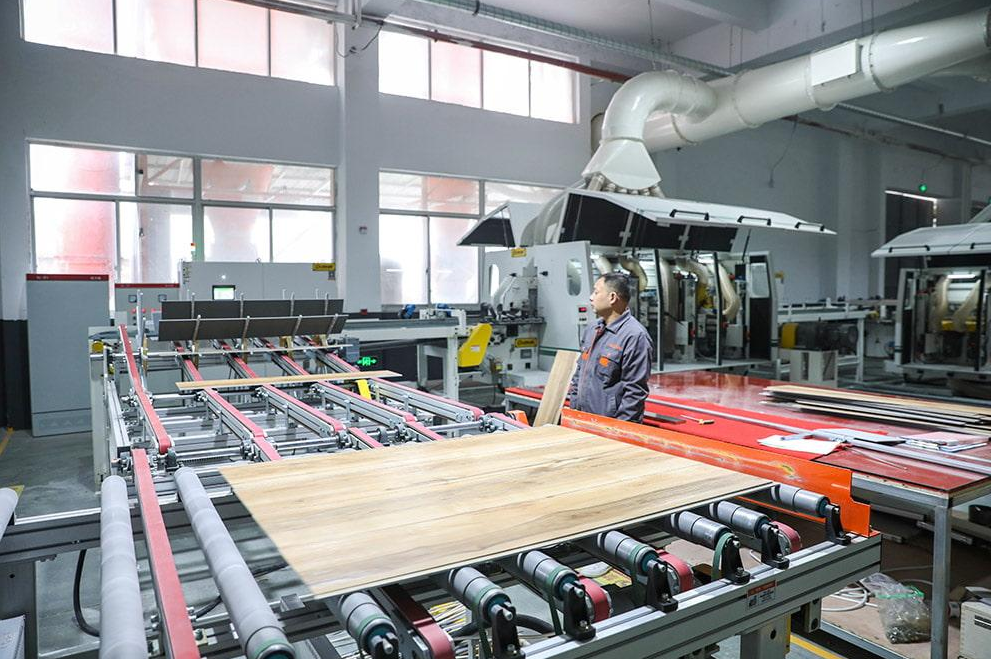
The price tag at Home Depot has almost nothing to do with what the flooring costs to make. It’s the journey that gets expensive.
Start at the factory. A 20ft container of 6mm SPC click flooring runs about $6.18/m² FOB at the source. That’s the factory-direct price before anything else gets added. Thinner, lower-spec planks (4.5mm, 6 mil wear layer) can be sourced even cheaper—as low as $2.00–$2.80/m² FOB.
Then reality sets in.
Ocean freight adds roughly $2.49/m² on average. Since SPC is dense and heavy, a 20ft container only holds about 1,800–2,200 m² at standard thickness (less if you’re shipping 6mm). Less product per container means freight costs more per square meter.
Next comes the tariff stack. China-origin SPC currently faces a 5.3% MFN base duty, plus a 25% Section 301 surcharge, plus a 10% Section 122 baseline. Stacked together, that’s roughly 40% ad valorem on top of the import value.
So by the time a $4.00/m² FOB plank clears customs, it’s landed at a dramatically higher number—before distributor markup, before retail margin, before installation.
That’s why the true SPC flooring supply chain math is:
FOB price + ocean freight + stacked duties + inland logistics + distributor markup + retail margin + installation = your final price.
The biggest swing factors are duty burden, freight per m², and which spec tier you’re buying. Understand that stack, and you’ll know exactly why prices move—and where the real savings are hiding.
When SPC Flooring Is Most Affordable to Buy in the United States
With SPC flooring, timing matters a lot. Retailers discount most when they’re clearing old inventory or making room for new lines—and that pattern is predictable.
The deepest discounts come during Black Friday and Cyber Week in late November, with 30–50% off remaining inventory or select product lines. January and February post-holiday clearance often matches those Black Friday numbers, giving you 15–30% off or more on leftover stock. May and June and September bring strong Memorial Day and Labor Day promotions, and September has an extra advantage: contractor schedules are lighter than in peak spring.
Avoid mid-summer. July through mid-August is the weakest discount window, with fewer aggressive deals and less flexibility.
For the absolute lowest price, shop January or late November. For better selection with solid savings, target September.
How to Spot Quality Problems in Cheap SPC Flooring
Low price isn’t the issue. Low price hiding poor quality is.
Two SPC planks can look almost identical on the shelf and then perform very differently once they’re in your home. The difference comes down to numbers most buyers never think to ask about, so here’s what to check.
Red flags that matter:
-
Wear layer mismatch. The listing says 0.5mm, but the product that arrives measures 0.3–0.4mm. This happens more often than you’d expect. Standard commercial grade sits at 0.5mm; premium hits 0.7mm.
-
Low core density. A solid SPC core should measure around 2.0 g/cm³. Anything noticeably lower dents more easily, and the locking mechanism wears out faster.
-
Weak indentation resistance. Commercial-grade planks handle at least 2000N of pressure. Weaker options buckle under furniture and foot traffic.
-
Poor dimensional stability. Premium SPC stays within 0.05% dimensional change. Budget planks can drift to 0.15%, which leads to warping after heat exposure.
-
VOC and formaldehyde risk. Ask for FloorScore, GREENGUARD Gold, or EN 717-1 E1 certification. If they can’t show the paperwork, don’t buy.
Quick inspection checklist:
-
Request a cut sample and measure the actual wear layer yourself.
-
Ask for batch-specific test reports that match the lot number, not a generic brochure.
-
Get density and indentation data in writing.
-
Make sure emissions documentation arrives before the shipment goes out.
Thresholds to remember: residential needs a minimum of 0.3mm wear layer, light commercial requires 0.5mm, and heavy-traffic areas deserve 0.7mm or more. Anything below that, you’re gambling with your floor.
SPC Flooring Purchasing Checklist for Homeowners, Landlords, and Small Contractors
Start with the wear layer thickness—match it to how the floor gets used, and the rest of the decision gets easier.
Choose by wear layer:
– 0.3mm (12 mil): light residential rooms
– 0.5mm (20 mil): standard homes and light commercial spaces
– 0.7mm (28 mil): rentals with high turnover or small-contract jobs
Total thickness typically runs 3.5–7mm, with 4mm, 5mm, and 6mm as the most common export formats. Check the core too—rigid SPC should be calcium-carbonate-filled PVC, ideally 50–70% CaCO₃ by weight. That ratio affects density and durability. If there’s an attached IXPE or EVA underlayment (usually 1–2mm), that’s a bonus for comfort and noise reduction, but it’s not a substitute for proper subfloor prep.
Before you buy, request:
– Wear-layer thickness (mm/mil) and total thickness
– Core density and click-joint pull-apart strength
– Expansion rating at 80°C and slip rating (R10/R11 or DIN 51130)
– FloorScore, CE, SGS/TÜV testing, and ISO 9001/14001 documentation
Landlords: prioritize 0.5mm wear layer, verified waterproof construction, and clear warranty terms—thicker wear layers usually come with longer coverage.
Small contractors: confirm SKU and lot number, then document subfloor moisture, site humidity, and temperature at installation. That protects your warranty claim later.
Quick reference:
– Homeowners: 0.3–0.5mm wear layer, 4–5mm thickness, attached pad, FloorScore certified
– Landlords: 0.5mm wear layer, strong locking system, documented waterproof testing
– Contractors: 0.5–0.7mm wear layer, full certificate pack, traceable lot numbers
Conclusion
SPC flooring is getting more affordable in America. Prices have dropped from 2021 peaks to $2.50–$4.50 per square foot, driven by easing tariffs, falling PVC costs, and fierce competition among manufacturers. That’s real money back in your renovation budget.
But affordable doesn’t mean you skip the homework. The smartest buyers know their wear-layer thickness, compare at least three suppliers, and time purchases around seasonal slowdowns to negotiate harder.
Your next step is to pull out your purchasing checklist, get quotes from two or three verified dealers this week, and ask pointed questions about wear layers and core density before you commit. To see a manufacturer’s background and supply chain, check out BAIER’s company profile.