
You’re standing in a flooring showroom, calculator app open, trying to figure out if $2.49 or $4.99 per square foot is the right price. It doesn’t matter, because the shelf tag number has almost nothing to do with what you’ll actually pay once you factor in installation, underlayment, and that one closet with the weird angle. If you’re on the procurement side, you’re watching tariff headlines and wondering whether to lock in inventory now or wait out the volatility.
Real numbers fix both problems. This breakdown walks through actual 2024–2026 laminate flooring price bands by grade, what’s really driving the U.S. laminate flooring market trends heading into 2026, and a straight-up “buy now vs. wait” cost comparison so you’re not guessing with your budget.
2024–2026 U.S. Laminate Flooring Prices by Grade
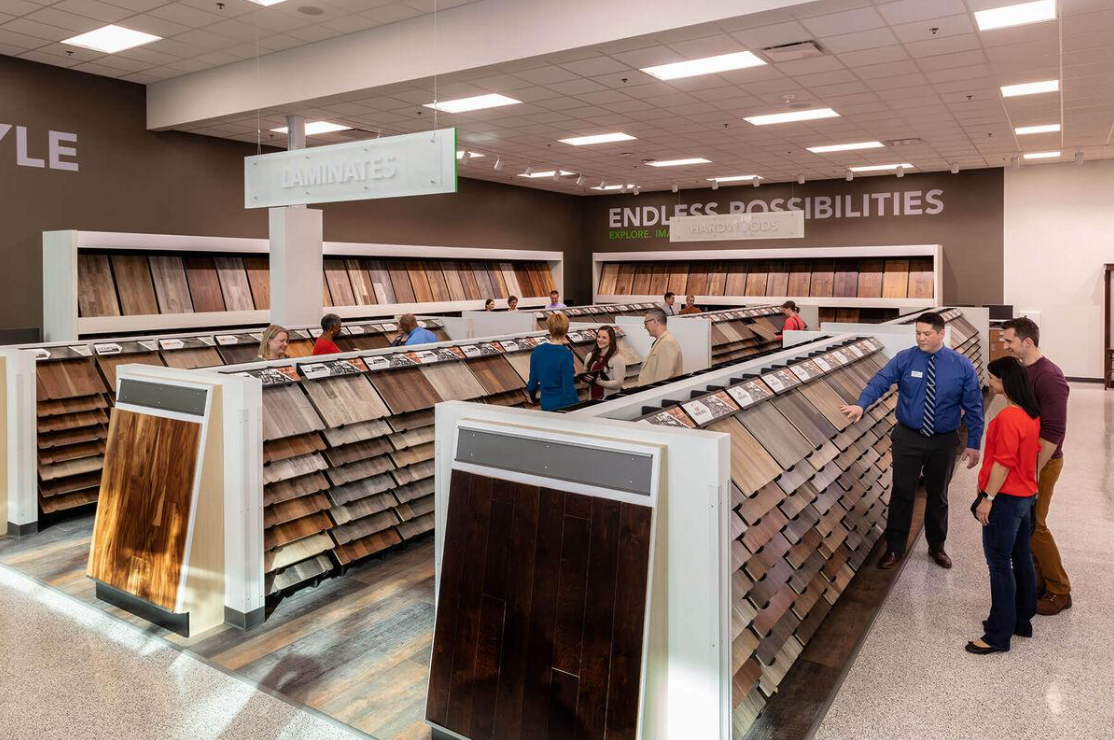
Four grades control this market. Everything else is marketing noise. A $0.89/sq ft plank and a $5.50/sq ft plank are separated by grade, and that gap matters more than the sticker price.
Material Cost by Grade
|
Grade |
Price/Sq Ft |
Thickness |
AC Rating |
|---|---|---|---|
|
Buider/budget |
$0.50–$1.50 |
6–8mm |
AC1–AC3 |
|
Mid-range |
$1.10–$3.50 |
8–12mm |
AC3–AC4 |
|
Premium |
$2.00–$5.00 |
10–12mm |
AC4–AC5 |
|
Commerial |
$7.00–$10.00 |
Heavy-wear core |
AC6 |
The 2026 retail benchmark across the U.S. lands between $1.00–$5.49/sq ft, with a median of $3.11/sq ft. Strip out installation and labor, and material-only pricing settles into $0.70–$3.50/sq ft. That’s the number to use for per-box math once you multiply by coverage.
Installed Cost Reality
Installation doesn’t scale evenly across grades:
Budget installed: $3–$5/sq ft
Mid-grade installed: $5–$7/sq ft
Premium/waterproof installed: $7–$10/sq ft
Total U.S. laminate flooring installation cost runs $2.50–$8.00/sq ft depending on subfloor prep and wear layer.
Brand-Level Pricing
Shoppers comparing the best laminate flooring brands in 2026 will find TrafficMaster at $0.89–$1.50, LifeProof at $1.50–$3.50, Pergo at $2.49–$4.99, Shaw at $3.00–$5.50, and Quick-Step topping out near $6.00. Commercial laminate flooring pricing from U.S. manufacturers lands in the AC5–AC6 bracket. High traffic demands it.
Laminate Flooring Cost per Square Foot: Material, Installation and Add-Ons

Materials alone don’t tell the whole story. The number you need is the fully-loaded cost — what leaves your bank account once labor and add-ons are included.
Break it down by thickness and a pattern emerges. 6–7mm planks run $0.69–$0.99/sq ft for materials. 8mm climbs to $0.99–$1.79/sq ft. 10mm jumps to $1.99–$3.99/sq ft, and 12mm tops out at $2.29–$5.99/sq ft. Thickness drives price more predictably than brand.
The Full Installed Cost Breakdown
Here’s the formula pros use for bids and sourcing:
Materials: $1–$4/sq ft (average around $2.50/sq ft)
Professional installation labor: $4–$8/sq ft
Underlayment: $0.29–$0.79/sq ft
Add it up and you get $5–$12/sq ft installed for a standard project. Some 2026 market guides push that range wider — $3–$13/sq ft, with premium waterproof laminate hitting $14/sq ft in high-cost regions.
Materials make up 50%–70% of the total installed cost. Labor eats the rest.
What a Real Room Costs
A 200 sq ft room — standard bedroom or home office — lands around $1,000–$2,400 installed using the $5–$12/sq ft range. That’s the number to bring to a contractor bid, not the shelf price you saw at the big-box store.
Budget-tier laminate ($2–$3/sq ft materials, $2–$4/sq ft labor) totals $4–$7/sq ft installed. Waterproof laminate ($3–$7/sq ft materials, $2–$5/sq ft labor) runs $5–$12/sq ft installed — nearly double at the low end.
200-Square-Foot Room Cost Scenarios for U.S. Homeowners
Flooring is rarely the biggest line item. If you’re budgeting a full 200 sq ft room, not just re-flooring an existing one, you need to see how laminate fits into the larger construction picture before comparing it against a $2.49/sq ft plank price.
National benchmarks put a basic 200 sq ft room addition at $80–$200/sq ft, or roughly $16,000–$40,000 total. Second-story additions climb to $300–$500/sq ft, which is $60,000–$100,000 for the same footprint. Broader market data averages $125–$250/sq ft, landing most projects at $25,000–$50,000.
Room type shifts the number further:
Standard bedroom: $26,000–$36,000
Family room: $28,000–$50,000
Sunroom: $20,000–$40,000
Master suite: $40,000–$70,000
Plumbing, HVAC extension, and structural framing push costs into the $200–$300+/sq ft range fast.
Here’s the takeaway for anyone comparing quotes: even premium laminate flooring installation cost ($1,000–$2,400 for 200 sq ft) accounts for under 10% of a full room build. Materials sourcing decisions matter, but they’re not where the real budget risk lives.
U.S. Laminate Flooring Market Size, Demand and 2026 Outlook

The category shrank in 2025, and the numbers don’t hide it. U.S. laminate flooring sales hit an estimated $984 million at mill sell, down 5.4% year over year, according to FloorDaily. Measured at first point of distribution, Floor Covering News puts the figure at $1.11 billion, off 3.2%. Volume tells a milder story: Catalina Research tracked 734 million sq. ft. sold in 2025, down just 0.7%. Laminate now holds 2.8% of dollar sales and 2.9% of square-foot sales across all floor coverings — a sub-3% share segment, but still the value anchor against pricier waterproof rigid-core products.
The 2026 outlook skews cautiously optimistic. Industry executives are calling for low-to-mid single-digit growth, tied to easing interest rates and stronger remodeling activity. Mordor Intelligence’s broader model pegs the global laminate flooring market at $3.67 billion in 2026, climbing to $4.39 billion by 2031, with North America growing at a 3.80% CAGR over that window. The base case for U.S. laminate flooring manufacturers is flat to 3–5% growth, contingent on housing turnover. Pet-owning households chasing scratch resistance remain a quiet but steady demand driver.
Laminate Flooring Wholesale Pricing and U.S. Supply Chain Costs
Retail tags hide the real story. Buyers, dealers, and contractors work off a completely different number sheet.
Wholesale Price Bands
Laminate flooring wholesales in three tiers:
Budget-grade: $0.75–$1.50/sq ft
Mid-range: $1.50–$2.75/sq ft
Premium waterproof/12mm+: $2.50–$4.00/sq ft
Live trade listings confirm this. One U.S. wholesale seller prices product at $1.89, $2.29, and $2.89/sq ft across grades. A separate buyer-facing guide averages 12mm boards at $1.75/sq ft and 8mm at $1.40/sq ft, with plank pricing spanning $0.99–$2.60/sq ft overall. Per-case, 12mm laminate wholesales at $28–$70 for 20–25 sq ft of coverage.
Add-Ons and Landed Costs
Underlayment adds $0.15–$0.35/sq ft, moisture barrier $0.08–$0.15/sq ft, and adhesives run $6–$25 per case. Delivery ranges $0–$200 depending on distance and volume; small orders can carry a $0–$150 minimum-order surcharge.
Tariffs matter less than expected. Laminate flooring is excluded from Section 232 tariffs, though country-specific reciprocal tariffs still apply. Customs classification falls under HTSUS 4411.13.2000 or 4411.14.2000, carries a duty of 1.9 cents/kg plus 1.5% ad valorem. To estimate landed cost, start at $1.50–$2.75/sq ft ex-works, then add drayage, delivery, and duty.
Four Variables That Could Move Laminate Flooring Prices in 2026
Nobody can call an exact number for next year’s laminate flooring market trends. But four levers explain almost all the swing, and each one is measurable right now.
1. Product spec mix. This is the biggest driver. As sales shift from basic HDF-core toward waterproof rigid-core, wider planks, and higher AC ratings, material pricing climbs from roughly $2–$4/sq ft into the $6–$10/sq ft zone. Spec creep moves the average, not inflation.
2. Retail vs. contractor channel. Trade pricing runs well below retail — a $0.9–$1.4/sq ft gap at the median ($2.18 trade vs. $3.11 retail in 2026 data). Buyers who shift volume into contractor channels realize savings fast without waiting on the broader laminate supply chain to loosen. Sourcing directly from a trusted laminate flooring supplier can help capture that gap sooner.
3. Installation and labor. Job complexity adds $1.50–$4.00/sq ft on top of materials. That pushes all-in totals from $3–$8/sq ft into premium-install territory above $10/sq ft.
4. Tariffs and origin mix. Laminate dodged Section 232 tariffs, but reciprocal, country-specific tariffs still apply. Sourcing origin stays a direct pricing lever heading into 2026.
Budget programs land at $0.65–$2.80/sq ft trade. Mid-market moisture-resistant AC4 product runs $3.50–$6.00/sq ft. Premium waterproof or commercial-grade laminate hits $6.00–$10.00/sq ft. Plan installs at $4–$9/sq ft. Premium jobs break $10.
Regional Differences in Laminate Flooring Installation Costs
Zip code moves the price tag more than most homeowners expect. The national installed range sits at $3–$13/sq ft, but most projects cluster near $4–$8/sq ft — until you land in a high-cost metro.
Where Labor Rates Bite Hardest
Northeast (NY/NJ/CT/MA): $5–$13/sq ft installed, labor $2.25–$4.50/sq ft
West Coast: $5–$12/sq ft in the Pacific Northwest, $4.50–$15/sq ft in California; labor $2.00–$4.25/sq ft
Midwest: $4–$10/sq ft, labor $1.75–$3.75/sq ft
South/Southeast: $3–$9/sq ft, labor $1.50–$3.50/sq ft
Rural jobs average $2.20–$4.00/sq ft. Urban coastal markets run $2.80–$7.20/sq ft. Hawaii and Alaska top the state list at $4–$17/sq ft, with California and Massachusetts close behind at $4–$16/sq ft. Texas and Florida stay tame at $2.75–$10/sq ft.
Cost guides apply rough multipliers. Northeast runs +15–25%, West Coast +20–35%, and Mountain West +5–10%, while Southeast and Midwest run 5–15% below the national average. In expensive metros, union labor, subfloor prep, and logistics push totals 20–40% above the national baseline.
Laminate Flooring vs. Vinyl Flooring Price in 2026
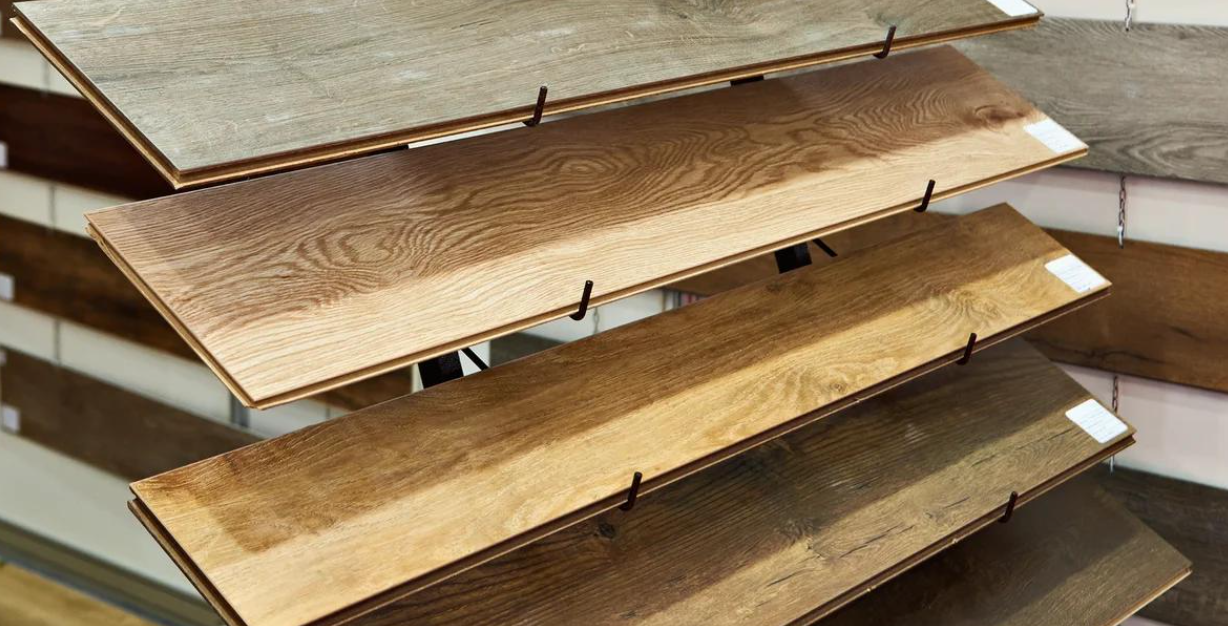
Comparing laminate and vinyl flooring prices trips up more buyers than any other decision in this market. Both fall into similar installed price ranges, so the real choice comes down to construction type and where you’re installing.
Installed Cost, Side by Side
Laminate flooring installed cost runs $4–$14/sq ft, putting a 150–200 sq ft room at $890–$2,600. Vinyl runs $4–$12/sq ft installed, with a 200 sq ft room landing at $600–$2,400. A typical vinyl project averages $2,500 total, or $1,000–$4,500 ($2–$7/sq ft).
Material-Only Benchmarks
Traditional laminate (AC4): $2.80–$4.20/sq ft
Premium laminate (AC5): $4.50–$6.50/sq ft
LVT (basic vinyl tile): $2.50–$4.00/sq ft
WPC vinyl: $4.00–$5.80/sq ft
SPC vinyl: $4.50–$7.50/sq ft
Where the Two Diverge
At the budget end, basic laminate and basic LVT sit close together — material cost of $2.5–$4.2/sq ft, hard to tell apart. In mid-range, laminate lands $4–$7 installed, while vinyl runs $4–$12 depending on whether you go LVP, SPC, or WPC construction. At the premium end, rigid-core vinyl (SPC/WPC) tops the market at $5–$13 installed, and waterproof laminate tracks close behind at $5–$12.
Bottom line for budgeting: laminate prices near mid-range vinyl and just under premium rigid-core vinyl. Cheapest realistic install for either product: $4–$6/sq ft. Typical mid-range job: $6–$9/sq ft. Premium waterproof upgrade: $10+/sq ft.
Now vs. Waiting Until 2026: Laminate Flooring Purchase Cost Scenarios
Manufacturer selling prices already peaked and softened. They climbed from $0.99/sq ft in 2020 to $1.27 in 2023, then eased to $1.21 in 2024 and $1.20 in 2025. That’s a two-year cooling trend, not a crash, and it changes the calculus on timing.
Buy now if:
– Your project is time-sensitive
– You’re targeting midrange or waterproof laminate
– You want to sidestep tariff-driven cost creep (laminate dodges Section 232, but reciprocal, country-specific tariffs still hit landed cost)
Wait if:
– You can catch a retailer promo cycle
– You expect softer installation labor pricing in your region
– You’re not counting on material deflation — the data doesn’t support a meaningful drop
What the Numbers Say About 2026
Industry sentiment points to gradual, uneven improvement, not a sharp rebound. A 150–200 sq ft room runs $890–$2,600 installed today. A 450 sq ft area lands at $1,462–$5,950 in current cost models. Use $5–$10/sq ft installed as your 2026 planning benchmark.
The market has already flattened. Waiting buys you promo odds, not guaranteed savings.
Three Real-World Ways to Reduce Laminate Flooring Buying Costs
Three levers actually move your total spend. Everything else is noise.
Way 1: Skip the middle tier, buy on purpose. Basic 6–7mm laminate costs $2–$3/sq ft for materials and $4–$7/sq ft installed. For dry, low-traffic rooms, that’s the smart buy. Waterproof 8–12mm jumps to $3–$7/sq ft materials and $5–$12/sq ft installed. On a 500 sq ft job, choosing basic over waterproof saves $500–$2,000 in materials alone, before you even pay labor.
Way 2: DIY the install if it’s a floating-lock system. Labor adds $2–$8/sq ft on top of materials that run $1–$5/sq ft. On 400 sq ft, skipping the installer saves $800–$3,200. That’s real money for a system that clicks together without glue or nails.
Way 3: Keep the job boring. Complex transitions and subfloor prep push installed pricing into the $6–$14/sq ft range. Underlayment upgrades alone add $0.29–$0.79/sq ft. Skip them on 600 sq ft and you save $174–$474.
Best value target: $1–$2/sq ft materials, $2–$4/sq ft labor, $3–$6/sq ft installed. AC4/AC5 grades at $3.50–$5.00/sq ft only make sense if performance is the goal, not savings.
Laminate Flooring: What That Box Price Actually Means
That box price on the shelf tag is a trap dressed up as a discount. Most laminate flooring boxes run $25–$70, with mid-range products clustering around $40–$55. Budget boxes drop to $25–$35; premium waterproof boxes climb past $55–$70+. Coverage is the number that matters.
Do the Math Before You Buy
Sam’s Club listings show a $20.60 box covering 12.34 sq ft that actually costs more per foot than a $29.99 box covering 17.18 sq ft. Same shelf, opposite math. Divide box price by box coverage to get the effective cost per sq ft. Boxes typically cover 15–24 sq ft, most commonly 18–22 sq ft, so that gap matters.
Three Traps to Skip
Buying box price alone — coverage swings the real cost
Ignoring AC rating — budget boxes often run AC1–AC2 at 7–8mm; mid-grade sits at AC3–AC4, 10–12mm
Underestimating waste — budget 8% on straight lay, 12–15% diagonal, 15–20% herringbone; buy one extra box from the same lot to avoid pattern mismatch on repairs
Residential and Commercial Laminate Flooring Specification Targets
Spec sheets get ignored until a floor fails early, and by then the return window has closed. AC rating, thickness, and load resistance are the actual contract between what you buy and how long it lasts.
Match the AC Rating to the Room, Not the Sale Price
AC2, 6–8mm: bedrooms, dining rooms — low-traffic only
AC3, 8–12mm: living rooms, kitchens, hallways — the baseline for most homes
AC4, 8–12mm: offices, boutiques, cafes, or busy households needing extra durability
AC5, 10–12mm: heavy commercial — public buildings, department stores
Static Load and Certification Benchmarks
Residential and light commercial floors target 6 MPa (870 psi) static load resistance under NALFA LF-01. Heavy commercial specs push that to 8 MPa (1160 psi). Certification basis also matters. EN 13329 governs AC ratings, while ASTM E648 and ASTM F2199 cover fire and dimensional stability on commercial spec sheets. Ask for these numbers before you sign a purchase order.
Conclusion
The laminate flooring market isn’t waiting for anyone. Prices are climbing—not dramatically, but steadily enough that “wait and see” is a costly strategy for most homeowners. Our price-per-box analysis and grade-by-grade breakdown show economy laminate holding steady while mid-tier and premium lines absorb tariff and freight pressure faster than buyers expect. To see how a full-scale laminate flooring manufacturer prices and sources these grades, explore BAIER’s product lineup.
If you’re renovating in 2025, the math favors locking in pricing now rather than betting on a 2026 dip—tariffs, lumber costs, and housing demand are all pointing the same direction. For contractors and buyers managing volume purchases, this is the moment to negotiate wholesale terms before Q4 restocking cycles push prices up again. Buyers vetting a supplier’s manufacturing history before committing can review BAIER’s wholesale supplier background first.
Don’t guess your way through this decision. Pull the price ranges from this report, match them against your square footage, and get quotes locked in before seasonal demand shifts the numbers again. The window to buy smart is closing—not gone, but closing.