
A 10% swing in PVC resin prices hits your SPC and LVT flooring margins directly, often before you have time to adjust your own quotes. Most B2B buyers and flooring brands are caught in that gap today, squeezed between volatile upstream petrochemical pricing and downstream customers who expect stable rates. Here is where PVC resin prices moved over the past 6-12 months, what percentage of your total flooring cost resin accounts for, and how quickly price shocks reach your wholesale sheet. You will also find practical procurement tactics covering lock-in timing, supplier diversification, and inventory thresholds to help you decide whether to buy, wait, or renegotiate.
PVC Resin Prices: 6–12-Month Market Range, Current Benchmarks, and Key Drivers

Pricing data tells a clearer story than market sentiment. Polyvinyl chloride resin prices show a wider regional spread right now than most buyers expect, which helps explain why SPC flooring prices vary so much between suppliers.
Regional Benchmarks (Latest Data)
|
Market |
Latest Benchmark |
6–12-Month Range |
|---|---|---|
|
United States |
US$644/MT |
US$620–700/MT |
|
Japan |
US$609/MT |
US$590–670/MT |
|
Germany |
US$946/MT |
US$900–1,020/MT |
|
India |
US$834/MT |
US$790–880/MT |
|
Brazil |
US$455/MT |
lowest-cost region, narrowing risk |
|
China |
CNY4,890/MT (~US$680/MT) |
CNY4,494–5,000/MT forecast |
Q3 2026 reference data reflects that spread, with Brazil at US$546/MT, India at US$964/MT, Germany near US$959/MT, and the US at US$700/MT. For global procurement teams, the practical supply chain band sits at US$600–900/MT for standard suspension resin, before factoring in freight, duties, or specialty grade premiums.
What’s Driving the Range
Three forces set the floor and ceiling:
-
Feedstock split. Ethylene-route production (crude oil, naphtha) behaves differently from China’s carbide-route output (coal, calcium carbide), which makes up 70% of Chinese supply.
-
China’s operating losses create a price floor. Carbide-route producers lose around CNY471/MT, while ethylene-route losses run closer to CNY783/MT. Those negative margins force plant shutdowns that tighten supply over time.
-
Germany stays expensive. High energy and compliance costs keep German output anchored at the upper end of the global range.
Upside risk: Crude, freight, or chlorine costs spike, or outages cut into supply.
Downside risk: Weak construction demand and Chinese export pressure keep prices pinned near US$600/MT.
For buyers tracking raw material costs across the flooring industry, the base case stays range-bound.
PVC Resin Cost Share in SPC and LVT Flooring Formulations
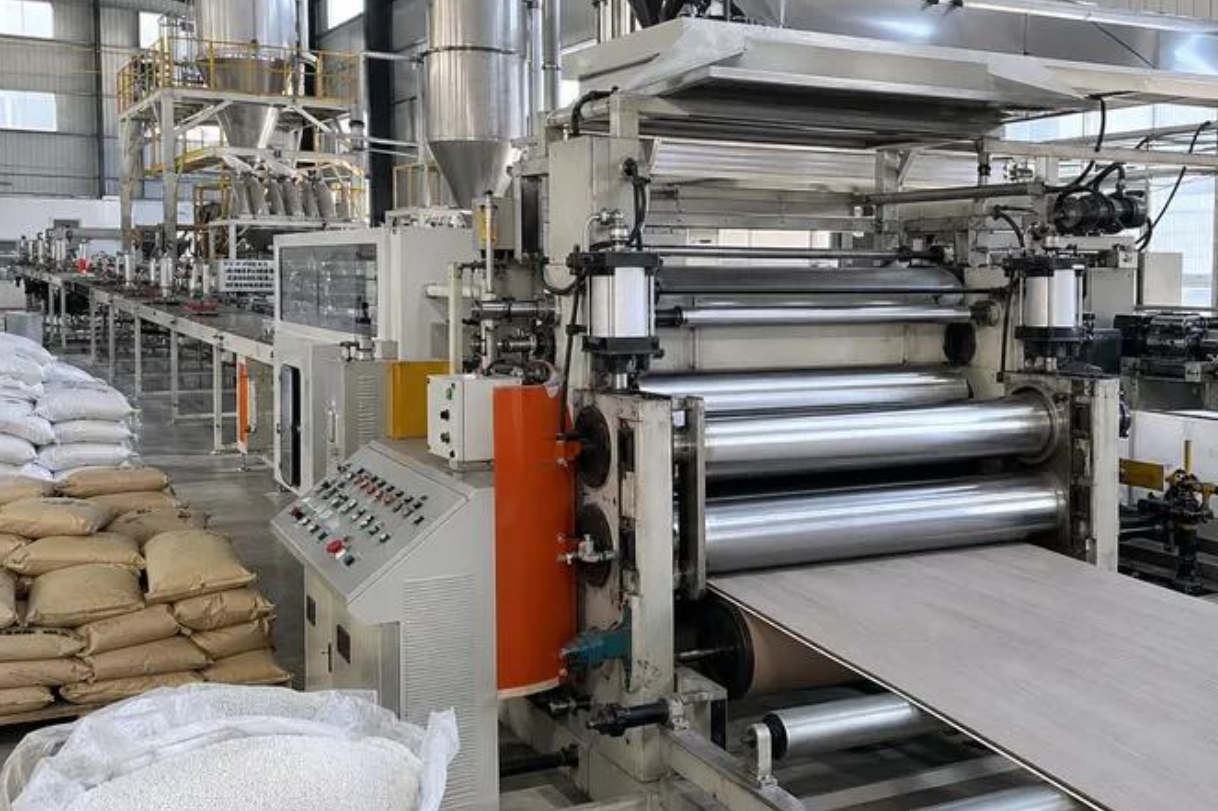
Weight share and cost share are two different numbers, and buyers who confuse them underprice their risk. Calcium carbonate dominates SPC and LVT formulations by weight, but PVC resin dictates the cost.
By weight:
– SPC rigid core: 15–40% PVC, 50–83% CaCO₃ (commercial benchmarks run 15–18% PVC / 80–83% CaCO₃; higher-polymer formulations hit 30–40% PVC)
– LVT, 3.2 mm: 25–30% PVC, 65–70% limestone flour
– LVT, 2.5 mm: 10–15% PVC, 65–70% limestone flour
By raw-material cost (using a 5:1 PVC-to-filler price ratio):
|
Formulation |
PVC Weight Share |
PVC Cost Share |
|---|---|---|
|
SPC, 15% PVC |
15% |
~45–55% |
|
SPC, 18% PVC |
18% |
~50–60% |
|
SPC, 20–25% PVC |
20–25% |
~55–70% |
|
SPC, 30% PVC |
30% |
~65–75% |
|
LVT, 10–15% PVC |
10–15% |
~35–50% |
|
LVT, 25–30% PVC |
25–30% |
~60–75% |
This cost sensitivity directly shapes procurement budgets. In an 18% PVC formulation where resin represents 55% of material cost, a 10% increase in PVC resin price drives total dry-compound cost up by 5.5%. Moving to a 25% PVC recipe (the standard 100-parts-PVC to 300-parts-CaCO₃ SPC ratio) raises resin consumption per unit by roughly 39%, compounding that pricing exposure. Treat PVC resin as your largest single line-item cost driver when modeling rigid core flooring prices.
How a 10% PVC Resin Price Change Affects SPC and LVT Flooring Cost
Ten percent at the resin level never translates to ten percent at the factory gate. That calculation assumes PVC makes up your entire bill of materials. Real cost pass-through depends on resin’s share of the product, along with shifts in freight, labor, and supplier margins.
SPC math: With resin at 20–30% of factory cost, a 10% price jump adds 2.0–3.0% to SPC bare-board cost.
|
SPC FOB cost |
2% impact |
3% impact |
New cost range |
|---|---|---|---|
|
$3.50/m² |
$0.07 |
$0.11 |
$3.57–$3.61/m² |
|
$4.50/m² |
$0.09 |
$0.14 |
$4.59–$4.64/m² |
|
$5.50/m² |
$0.11 |
$0.17 |
$5.61–$5.67/m² |
LVT math: LVT uses more PVC, so the same 10% increase adds 3.0–4.5% to factory cost.
|
LVT FOB cost |
3% impact |
4.5% impact |
New cost range |
|---|---|---|---|
|
$2.13/m² |
$0.06 |
$0.10 |
$2.19–$2.23/m² |
|
$2.50/m² |
$0.08 |
$0.11 |
$2.58–$2.61/m² |
|
$2.87/m² |
$0.09 |
$0.13 |
$2.96–$3.00/m² |
Click and flexible-core LVT climb even higher, often 3.5–4.5%, because resin can reach 45% of factory cost in those constructions.
Resin grade matters more than resin price. Virgin PVC can run $0.30–$0.60/m² higher than recycled resin in LVT production, which exceeds the effect of most 10% market swings. Before accepting any surcharge, demand a line-item breakdown covering the supplier’s resin percentage, virgin-to-recycled ratio, and wear-layer thickness. Never pay for a market shift when the factory altered the formulation.
PVC Resin Price Transmission to Flooring Wholesale Prices and Customer Quotes
Resin price swings rarely hit your final quote dollar-for-dollar. North American suspension PVC rose $0.01/lb in March 2025 after a $0.02/lb jump in February, yet full-year 2024 net pricing still finished $0.04/lb lower.
The math starts with resin weight per square meter. A standard LVP/SPC product uses 0.8–1.5 kg of PVC resin per m², depending on thickness and filler loading. A $0.01/lb move equals about $22.05/metric ton:
|
Resin Use |
Cost Impact per $0.01/lb Move |
|---|---|
|
0.8 kg/m² |
$0.0017/ft² |
|
1.2 kg/m² |
$0.0024/ft² |
|
1.5 kg/m² |
$0.0031/ft² |
A short-term $0.05/lb resin spike adds $0.009–$0.016/m² in raw material cost before freight, conversion, and margin stack on top.
Quotes move differently than resin because resin is only one piece of the formulation. Plasticizers, calcium carbonate filler, stabilizers, wear-layer coatings, labor, energy, and exchange rates all shift independently. High mineral loading in rigid SPC dilutes resin’s per-square-meter share, whereas flexible PVC and homogeneous sheet goods transmit price swings more directly.
Commercial pass-through typically runs 50–80% of the direct resin-cost change in the next quote cycle. Suppliers absorb the rest temporarily or balance it against other inputs.
A Worked Quote Example
-
Base quote: $1.85/ft²
-
Resin: 1.2 kg/m², up $44.10/ton
-
Direct increase: $0.0049/ft²
-
At 70% pass-through: +$0.0034/ft²
-
Revised quote: ~$1.853–$1.855/ft²
On a 1,000 m² order, that scenario adds $37–$40 total—a rounding error compared to freight or currency moves.
Set Surcharge Triggers, Not Reactive Pricing
-
Revise quotes only when PVC moves at least $0.03–$0.05/lb
-
Use monthly or quarterly averages instead of single spot prices
-
Shorten quote validity to 7–15 days in volatile markets, and hold at 30 days when resin trades within a steady band
-
State your basis clearly: “Pricing based on PVC resin at $X/ton; moves beyond ±$Y/ton pass through at resin-content rate”
Check your wholesale floor against current market benchmarks. Entry-level 12-mil LVP runs $0.39–$1.00/ft², mid-range 20-mil/SPC sits at $1.99–$2.79/ft², and premium 20–22-mil product clears $2.99/ft² and up. Know where your surcharge lands before your buyer pushes back.
SPC vs LVT Flooring Cost Exposure During PVC Market Volatility
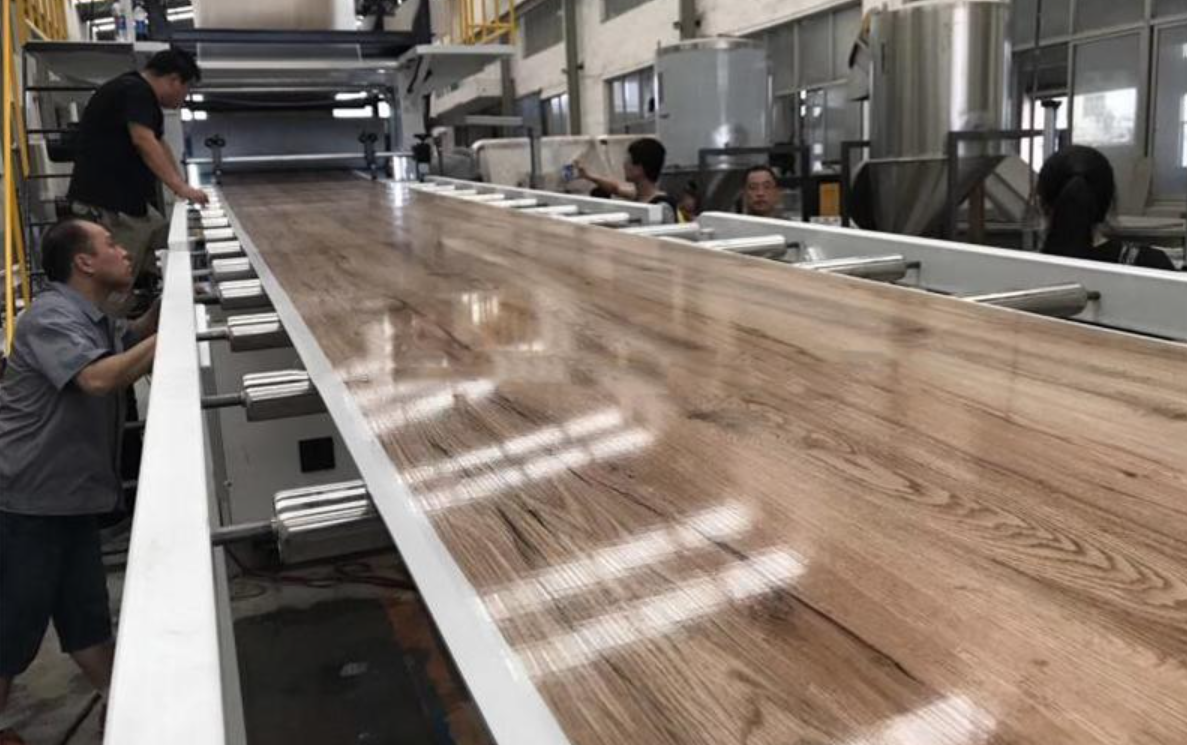
Flooring products do not bleed the same when resin prices spike. Flexible LVT takes the heavier direct hit because its core is mostly flexible PVC, with 30–40% limestone filler diluting that exposure. SPC sits on the other side of the ledger. Minerals dominate the board, often 50–70% calcium carbonate, and one manufacturing breakdown puts CaCO₃-plus-PVC combined at 65–75% of the core. SPC is not PVC-free, though. Resin still shows up in the wear layer, decorative film, and stabilizer package, so lower exposure does not mean zero exposure.
Quantifying the Gap
A flooring raw-material supplier tracks PVC resin swings running ±15% quarter over quarter during oil and petrochemical market shifts. Run that through each product’s cost structure:
|
Scenario |
Flexible LVT |
SPC |
|---|---|---|
|
B2B/OEM price range |
$6.50–$12.00/m² |
$7.80–$14.00/m² |
|
PVC share of product cost |
35–50% |
20–35% |
|
Cost impact from 15% resin spike |
+5.3–7.5% |
+3.0–5.3% |
|
Dollar impact at midpoint |
+$0.49–$0.69/m² |
+$0.33–$0.58/m² |
What This Means for Your Sourcing Mix
SPC’s lower resin sensitivity does not make it cheaper after a shock. It carries a 10–30% installed-cost premium over LVT to begin with, so a resin spike narrows the price gap instead of flipping the economics. Choose SPC when minimizing resin exposure and rigid-core performance outweigh upfront cost. Choose LVT when low material cost and install flexibility matter more than quarterly PVC volatility. Either way, model landed cost—including freight, installation, and adhesive, rather than ex-factory price alone—before locking a formulation decision.
PVC Resin Supplier Routes, Grade Differences, and Delivered-Cost Comparison
A US$500/t FOB quote on paper rarely matches what lands at your dock. Where you source, how the resin travels, and the grade you specify can swing that final number by hundreds of dollars. This is similar to understanding price differences between Chinese suppliers beyond raw materials, where sourcing details matter as much as the material itself.
Sourcing Routes
|
Route |
Key Detail |
Price/Timing Impact |
|---|---|---|
|
China coastal (Shandong, Hebei, Jiangsu, Hunan via Qingdao/Shanghai/Tianjin) |
EXW/FOB/CFR/CIF/DDP, 25 kg bags |
SG-5 FOB US$540–850/t; virgin material US$630–800/t |
|
China inland (Xinjiang, Inner Mongolia) |
Rail via Tianjin/Lianyungang |
+US$30–60/t, +7–10 days vs. coastal |
|
Iranian (Arvand, Ghadir, Bandar Imam, Abadan) |
S57/S60/S65 via Bandar Abbas |
FOB/CFR/CIF terms |
|
Direct manufacturer |
Hebei Changsheng SG US$630–700/t (1–25t MOQ); Hunan Mingray US$600–1,000/t (25t MOQ) |
MOQ drives price spread |
|
Small-lot |
10t at ~US$850/t; 17t at US$700–1,000/t |
Well above container-scale pricing |
Grade Mismatch Risk
SG-5/K67 is your benchmark grade for pipe, profile, and general extrusion. SG-3 (K71–72) delivers higher impact performance at a price premium. S57, S60, and S65 fit medical, hose, and uPVC profile applications, so verify the formulation before substituting them for pipe-grade resin. Paste and emulsion grades like P440/P450 (used in flooring plastisol) run on a different polymerization route and will not work as dry-blend substitutes, despite listings spanning US$200–1,000/t.
The Delivered-Cost Formula
Delivered cost/t = FOB price + freight + insurance + port/documentation charges + customs duty + inland delivery + financing/inventory cost
That US$500/t FOB quote can easily exceed US$700/t landed once demurrage, duties, and a single rejected 25t lot each shift the total cost by 5–10%. Before comparing suppliers, demand identical terms: 25t volume, same grade/K-value, 25 kg bags, CIF destination, and DDP factory.
Procurement Actions to Protect SPC and LVT Margins During Price Fluctuation
Margin protection starts well before the next resin quote lands in your inbox. Treat PVC resin prices as a managed exposure.
Build the exposure model first. PVC represents 40–50% of SPC and LVT raw-material costs. SPC cores hold 25–30% PVC resin against 60–75% calcium carbonate. Track these figures monthly by product, supplier, and region.
Contract structure matters more than negotiating hard on spot price:
-
Index-link your purchases. Tie resin adjustments to a PVC or ethylene index with a fixed conversion adder and quarterly resets. Between 60% and 70% of bulk PVC trade already runs this way.
-
Set a price collar. Apply the formula: flooring price adjustment = PVC-index movement × PVC cost share, with a ±5–10% band before renegotiation triggers.
-
Split contract and spot. Lock 60–80% of forecast demand under index contracts. Keep 20–40% on the spot market, where prices swing 5–15% off contract and drop 10–20% during producer destocking.
-
Negotiate volume tiers. Push for 5–15% discounts above 50 MT, and secure 10–15% off list through annual-volume commitments.
Protect inventory without overexposing cash. Use call-off agreements instead of storing bulk physical stock. Keep 4–8 weeks of coverage on hand, and qualify a second supplier before inventory falls below 3 weeks. Dual-source every PVC resin supplier, stabilizer, and CaCO₃ source across separate regions.
On formulation, standardize grades, pre-approve alternate recipes, and blend recycled PVC into non-premium SKUs to cut $0.30–$0.60/m² off your LVT costs.
Shorten quote validity to 15–30 days, and add customer-facing escalation clauses with a ±3–5% no-adjustment band.
Purchase-or-Wait Decision Using PVC Resin Price and Inventory Data
Supply gluts do not last forever, but this one has legs. Current market signals point to buying coverage volumes as needed rather than committing to a forward position.
Market data backs up that call:
-
U.S. resin runs around $644/MT (June 2026), compared to $609/MT in Japan, $946/MT in Germany, $834/MT in India, and $455/MT in Brazil.
-
U.S. inventories rose 48 million lb in May to 735 million lb, while domestic sales grew only 4%. That marks three straight months of inventory builds during peak construction season, with demand trailing 2025 levels.
-
Days of supply reached 20 days, signaling comfortable material availability.
-
China’s spot market sits near two-decade lows. Sample inventories dropped 2.17% month-over-month to 891,700 MT by October 15, with futures trading near CNY 4,907/MT.
When to Act Instead of Wait
|
Inventory Position |
Recommended Action |
|---|---|
|
Above 45 days coverage |
Wait; buy maintenance volume only |
|
30–45 days, prices near benchmark |
Split purchase; skip full commitment |
|
15–30 days, normal lead times |
Buy 30–50%, monitor weekly |
|
Below 15 days or allocation risk |
Buy full production coverage now |
Reversal triggers to watch include lead times stretching out, two consecutive periods of falling U.S. inventory, days of supply slipping below 15, simultaneous plant outages, or offers climbing 3–5¢/lb (an increase already seen once in 2026 following a supply disruption).
Stagger purchases into three stages: one-third now, one-third in 2–4 weeks, and one-third held back. Request short-validity quotes tied to benchmark pricing while the market remains soft but prone to sudden outages.
Conclusion
When PVC resin prices move 10%, your SPC flooring manufacturing cost shifts by 6-7%, and that pressure hits quotes within 30-60 days whether you are ready or not. Resin accounts for 60-70% of your bill of materials, and suppliers who manage it as their primary cost driver are the ones protecting margin right now.
Act on the numbers instead of watching from the sidelines. Lock pricing with at least two suppliers before the next OPEC+ meeting reshuffles crude benchmarks, and build a 45-day buffer stock during confirmed dips. Stop quoting customers on 90-day-old resin assumptions, because rigid core flooring pricing that lags the market by a quarter bleeds distributor profits dry.
Negotiate from a position of strength before the next spike hits. Run your numbers this week. To learn more about Baier’s background as a flooring supplier, visit our About Us page.