
Supplier quotes for LVT flooring in Australia vary by 40%. That makes it hard to tell whether a low price reflects quality or just a race to the bottom. If you’re a flooring distributor, contractor, or project manager trying to nail down a realistic budget while protecting your margins, you already know that “cheap” and “reliable” rarely show up in the same quote.
This guide breaks down what’s driving luxury vinyl tile flooring prices across the Australian market right now, from raw material costs to import logistics, and what that means for your next bulk order. We’ll also walk through how to vet manufacturers, what compliance details often get overlooked, and how LVT stacks up against SPC and laminate when the numbers matter most—so your next procurement decision is based on data.
LVT Flooring Price Guide for Australia Projects
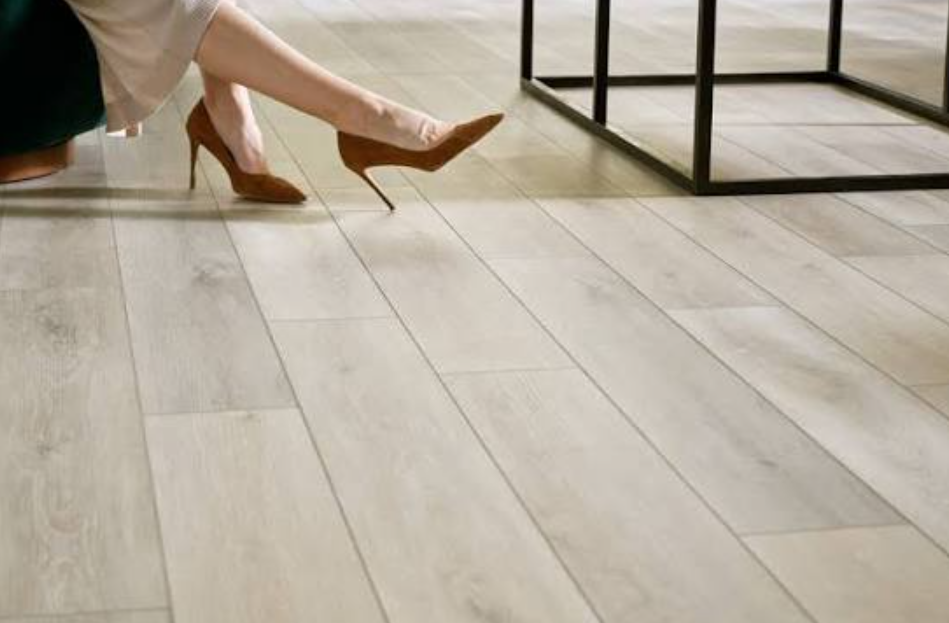
Numbers tell the story better than adjectives here. Across the Australian market, LVT flooring for Australian projects lands between A$20 and A$80+/m², with three clear tiers: budget vinyl plank at A$25–A$35/m², mid-range luxury vinyl tile at A$35–A$50/m², and higher-spec or hybrid lines at A$48–A$70+/m².
Real listings back this up. Timba Touch’s 4.5mm premium vinyl retails at A$49.95/m²; some sale pages push featured lines to A$139.36. The Flooring Guys prices 2.5–3mm products at A$25/m², with 4.5–5mm lines ranging A$35–A$49/m². National Tiles’ Karratha Spotted Gum vinyl plank sits at A$48.85/m², while Western Distributors discounted a comparable 4.5mm item from A$43.00 down to A$36.87/m². AFO’s Cascade 4.5mm plank comes in at A$48/m² inc GST (A$133.92 per 2.79m² box), and Evolved Floors offers similar specs at A$38.50–A$46.95/m² inc GST.
What Actually Moves the Price
Several factors shift the per-square-metre figure. Wear layer thickness: 0.3mm is entry-level, while 0.5mm is the benchmark for light-to-medium commercial duty. Overall thickness matters too—4.5–5mm outperforms 2.5–3mm in both price and durability. Rigid-core construction gives better stability and impact resistance, and runs A$45–A$70+/m². Waterproof backing and acoustic layers are common in apartment and office renovation projects, and they add real cost. Click lock vinyl flooring systems are easier to install, but the premium engineering pushes pricing up. Freight and location: metro delivery is cheaper per m² than regional, and small orders inflate landed cost fast.
Retail vs. Bulk: Where the Real Savings Are
Retail pricing clusters around A$38.50–A$49.95/m². Bulk or trade-account buyers negotiate 10–25% below retail, putting standard 4.5mm project quotes closer to A$30–A$45/m², and premium rigid-core lines around A$45–A$60+/m².
For budgeting, material-only costs for mainstream LVT run A$35–A$55/m², premium/commercial-grade climbs to A$50–A$80+/m², and total installation cost—once substrate prep, trims, and labour are factored in—almost always lands above the material price alone.
Australia LVT Flooring Market Insights & Trends
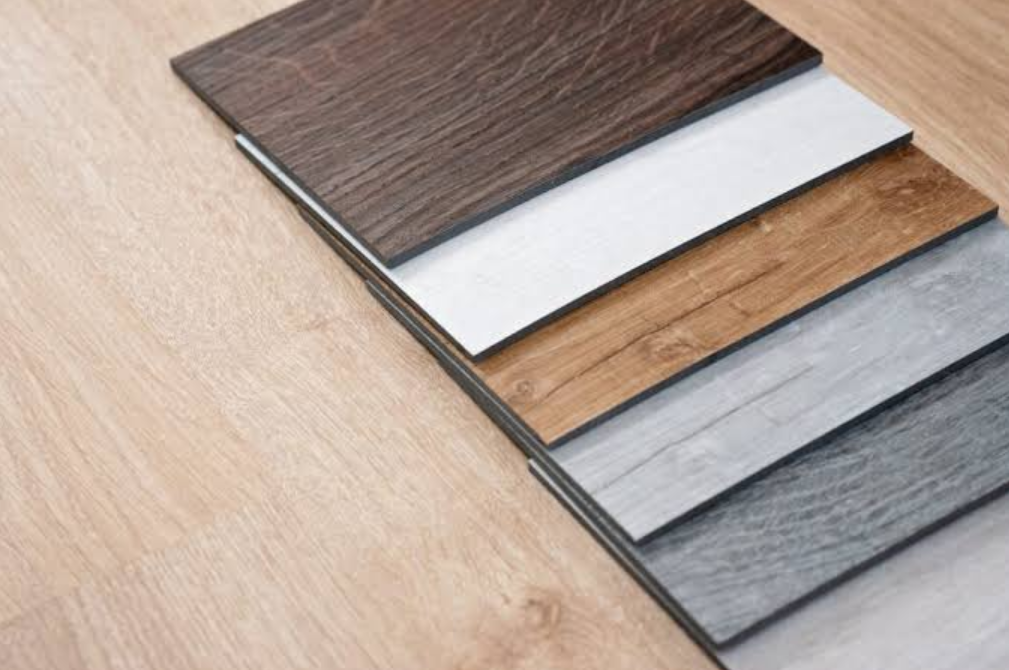
Two credible 2025 reports peg the Australian LVT market at US$397.7M and US$458.84M—a US$61.1M gap, or roughly 15%. That’s not sloppy research. It’s a reminder that “LVT flooring for Australia” gets measured differently depending on scope, exchange rates, and whether adjacent vinyl products get folded in. A broader vinyl-flooring report lands at US$1.22B for 2025, ballooning to US$5.699B by 2034. Same country, wildly different numbers—because they’re measuring different things.
Where the Growth Is Coming From
Volume tells a cleaner story. One model projects Australian flooring demand climbing from 101.5M sqm in 2025 to 134.5M sqm by 2032. Average selling price rises too, from US$47.78/sqm to US$51.76/sqm over that stretch. That’s not inflation—it’s mix-up. Buyers are trading toward better product.
The demand isn’t just new-build driven. Renovation, commercial fit-out, and institutional refurbishment all show up as distinct demand buckets in the forecast models. If you’re sourcing LVT flooring for renovation projects, you’re riding a real, separately-tracked wave—not a footnote to housing starts. Commercial fit-out (retail, hotel, institutional) leans hard on LVT for durability and fast turnaround, which matters if you’re quoting commercial LVT flooring jobs on tight timelines.
The Shift Toward Rigid-Core and Waterproof
Rigid Core LVT dominated the Australian market in 2025 by contribution. Waterproof vinyl flooring isn’t a niche upsell anymore—it’s becoming the baseline expectation. Wear-layer benchmarks back this up: 0.3mm for general residential, 0.5mm for heavy residential or light commercial, 0.7mm+ for full commercial use. Rising share of that 0.5–0.7mm+ tier usually signals stronger pull from rental, hospitality, and retail buyers who need floors that outlast a standard lease cycle.
Retail pricing reflects that premium shift too. One benchmark lists LVT at A$50–A$95/m², well above entry-level vinyl plank flooring Australia buyers might expect. Rising freight and raw-material costs likely reinforce this: suppliers defend margins with better wear layers and rigid-core builds rather than racing to the bottom.
How to Choose a Reliable LVT Flooring Supplier in Australia
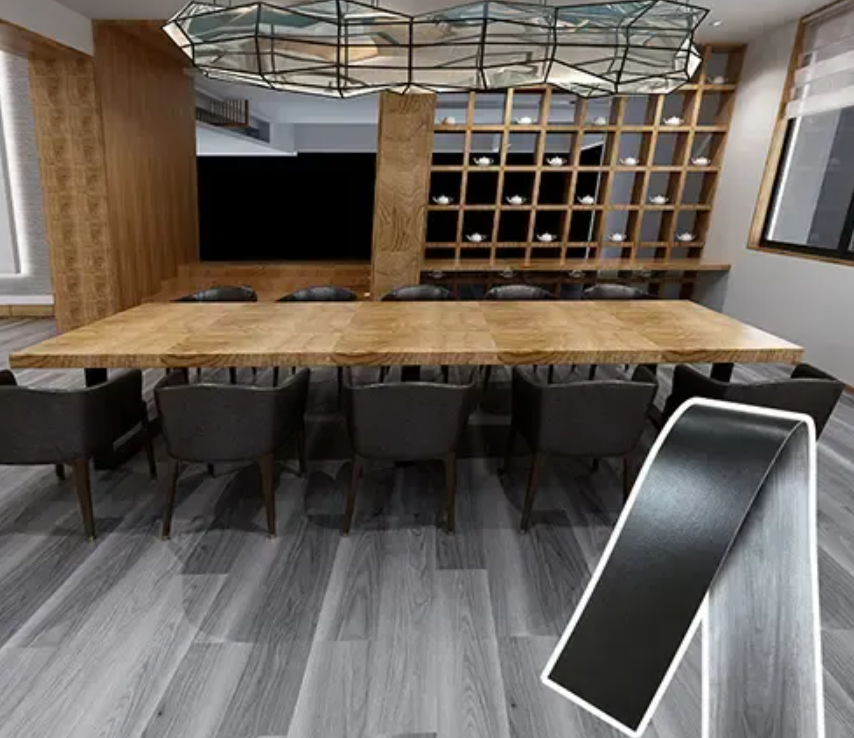
Three questions separate a solid supplier from a risky one: are they a manufacturer, importer, or distributor? Can they produce AS 1884:2021 compliance documentation? And will they actually support your project once the order ships? Get those answered before you talk price.
Start With Identity, Not Price
Ask whether you’re dealing with the factory, the importer, or a local distributor. Each has different strengths. Australian-based suppliers like Dunlop Flooring, Kenbrock, and Proline typically offer steadier lead times and easier restocking. Imported ranges—often from an LVT flooring manufacturer in China—tend to win on design variety, price flexibility, and custom project runs. Neither is automatically better; they solve different problems.
Confirm the factory location, brand ownership, and whether they hold Australian warehouse stock. That detail affects your entire installation cost, because freight delays on vinyl flooring import Australia orders can blow a project timeline fast.
Documentation That Actually Protects You
At minimum, request:
- AS 1884 installation compliance for the product range
- Slip-resistance data (projects often specify R10 minimum under HB 197:1999)
- Wet-area compliance path—vinyl planks and hybrid planks aren’t treated the same as sealed-joint sheet vinyl for wet zones
- Full technical data sheet: thickness, wear layer, backing, click lock vinyl flooring compatibility
- VOC and environmental statements if it’s a commercial LVT flooring job needing EPD or FloorScore equivalents
Run a Fair Comparison
Quote 2–3 suppliers against the same project brief: area, subfloor condition, wet zones, load requirements. Ask each to break pricing into material, labour, and freight per m², plus MOQ, lead time (stock, custom, and reorder separately), and warranty terms. A simple line works: “Please confirm whether you’re the manufacturer, importer, or distributor for this range in Australia, and provide AS 1884 and wet-area documentation.” Suppliers who answer cleanly are usually the ones worth a long-term relationship.
Project Procurement Checklist: Specs & Compliance
Print this section out and pin it above your desk. Every spec here is something a supplier can dodge if you don’t ask directly, and every one of them ends up in a claim or a callback if it’s wrong.
Lock Down the Technical Minimums
Before you sign anything, check these against the product data sheet:
- Wear layer: 0.55mm for standard commercial LVT flooring, 0.70mm for heavy-traffic zones, 1.0mm for airports, hospitals, or shopping centres. Anything under 0.3mm belongs in a house, not a project.
- Total thickness: 5–6mm for light commercial, 6–7mm for heavy commercial.
- Slip resistance: R10 minimum for offices and retail, R11–R12 for wet or high-traffic areas.
- Fire rating: Bfl-s1 is the baseline for commercial spaces.
- Dimensional stability: 0.15%–0.40% is acceptable. Premium ranges tighten that to 0.10% or less.
Match Warranty to Actual Use
Don’t just glance at the number of years. Ask what the warranty covers—commercial scope, exclusions, moisture limits, and how fast you can get replacement material if a batch fails.
Negotiate Like You Mean It
For bulk orders, push on:
- Coverage per box and pallet, plus a 3–8% wastage allowance
- Tiered pricing at 500m², 1,000m², 3,000m², and 5,000m² breaks
- Freight terms—FOB, EXW, CIF, or DDP—locked before you commit
- Reorder guarantees: same batch colour matching, 12 months of continued supply, and 5–10% held back for repairs
A tender-ready minimum spec looks like this: 0.55mm wear layer, Bfl-s1 fire rating, R10+, dimensional stability under 0.40%, five-year commercial warranty. Anything less, and you’re negotiating from a weaker position.
LVT vs SPC vs Laminate: Which Fits Your Project
Three materials, three very different jobs. Pick the wrong one and you’ll be fielding callback complaints within a year. Here’s how the numbers and the physical differences actually break down for Australian projects.
Where Each Material Wins
SPC is the rigid-core workhorse. It resists dents, tolerates moisture, and forgives a slightly uneven subfloor better than the other two. That’s why it’s the default for retail floors, hospitality lobbies, healthcare corridors, kitchens, laundries, and anywhere with rolling carts or heavy foot traffic. Commercial SPC in Australia runs roughly $35–$75/m² supply-only, climbing to $60–$110/m² installed. Some benchmarks even push flexible SPC to $39–$85/m².
LVT wins on comfort and looks. It’s softer underfoot, quieter, and generally delivers more convincing wood or stone visuals—which matters for living rooms, boutique offices, and show suites where clients notice texture and sound. Flexible LVT in AU retail listings starts around $25/m², with most projects landing in the $25–$43/m² range. But it needs a flatter substrate than SPC to perform properly.
Laminate is the budget play. Supply cost sits at $20–$50/m², installed totals reach $35–$80/m², and premium water-resistant laminate can climb to $65–$90/m² supply or $90–$130/m² installed. It works fine in dry, cost-sensitive fitouts—rental stock, fast-turn refurbishments—but it’s the weakest performer near standing water because joints and edges are vulnerable.
Acoustic Performance
Quality underlay matters more than people expect. Laminate typically hits 17–19 dB ΔLw, SPC with attached pad reaches 18–21 dB ΔLw—useful numbers if your spec includes noise-sensitive tenancies.
Go with SPC for water risk or heavy traffic, LVT for comfort and premium finish, and laminate for dry, budget-tight projects.
Practical Buying Strategy: From Spec Comparison to Final Negotiation
Most first-time bulk buyers ask five suppliers for a price and pick the lowest. That’s backwards. Compare specs first, then prices. A quote 20% cheaper on paper can cost you far more once rework, delays, and warranty gaps enter the picture.
Build the RFQ before you ask for price. Put product specs, quality standards, delivery timeline, payment terms, and warranty in one document and send it to every supplier at once. This lets you compare like-for-like. Lock down specification, quantity, delivery location, lead time, packaging, unit price breakdown, MOQ, payment terms, freight and local charges, warranty, penalty clauses, acceptance criteria, and certification requirements.
Skip the single-column price comparison. Use weighted scoring. Price, quality, delivery reliability, supplier stability, compliance, and service responsiveness each get a number. A low price only matters if capacity, quality history, and delivery track record hold up. Suppliers who cut corners on material, process, or service to protect margin tend to show up later as rework, missed deadlines, downtime, and claims. The total cost lands higher than the mid-priced quote you passed over.
Work through leverage points in sequence. Lock the spec first, then negotiate volume tiers. Larger orders, annual framework volumes, and staged commitments pull unit price down. Confirm MOQ, lead time, and payment milestones before discussing price breaks. Press freight terms including EXW, FOB, CIF, DDP. A low unit price with high landed cost isn’t a win. Push on local delivery fees, loading, packaging, and transshipment charges too. Negotiate warranty length. 12 or 18 months is standard, though 24–36 months shows up on larger equipment-style orders, often paired with spare parts, priority repair, or failure replacement. Settle payment terms last. A common split is 30% deposit, 40% during production, 30% after inspection. Once trust builds, push toward net 30/60, and hold back 5–10% until acceptance or warranty period ends.
Before scaling to full production, run Samples, then a small trial order, then volume. Confirm consistency at each stage before committing to the next.
Conclusion
When you source LVT flooring for Australia projects, the winning strategy is chasing the smartest value. Get the price ranges right and understand what’s actually driving Australia’s shift toward waterproof, click-lock vinyl plank flooring, and you’re already ahead of most buyers still guessing at quotes.
The suppliers who last are the ones who show their homework: compliance certificates, real production capacity, samples that match what ships. That’s your filter, every time.
Pull together your project specs, run them past two or three qualified LVT flooring manufacturers, and ask the harder questions upfront about wear layers, lead times, and after-sales support. The extra hour of due diligence now saves weeks of headaches later.