
Timber prices across Australia, New Zealand, and the Pacific Islands are shifting fast. Procurement teams who aren’t tracking the numbers closely are already overpaying. Currency swings, freight bottlenecks, and tightening tariff structures have reshaped landed costs for everything from hardwood flooring to MDF panels over the past eighteen months. That has caught more than a few importers off guard.
This Oceania Flooring & Wood Panel Price Guide breaks down where prices stand right now, category by category, and what’s driving the divergence between markets that once moved in near lockstep. We’ll walk through current pricing benchmarks, unpack the real cost structure behind timber import tariffs Australia buyers face, and flag the demand signals shaping 2026 forecasts. That’s the kind of intelligence that turns a routine purchase order into a strategic sourcing decision.
Oceania Flooring & Wood Panel Market Size and 2026 Overview
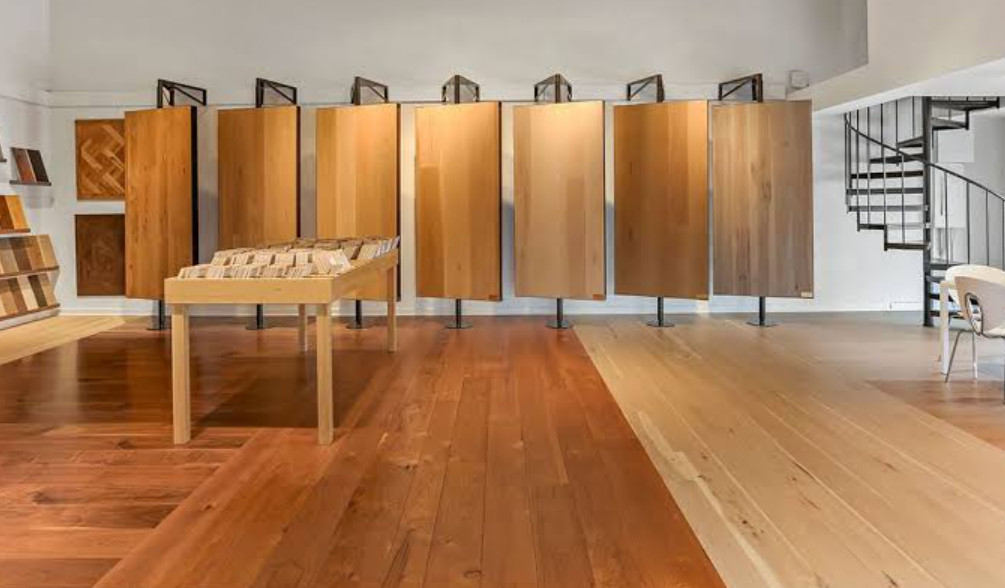
Australia carries the entire Oceania flooring sector. The Australian market hits USD 5.107 billion in 2026, growing 5.30% year-on-year. That works out to 105.7 million square meters moving through the supply chain at an average selling price of USD 48.32 per square meter. That price point matters. It is your benchmark for negotiating with hardwood flooring suppliers – if quotes land materially above that figure, you are paying a premium.
Retail channel data backs this up. Floor covering retailing alone is worth USD 3.7 billion in 2026, spread across 2,049 businesses. Do the math and retail represents roughly 72% of total flooring market value. That is a fragmented, merchant-heavy distribution structure – good news if you are hunting for competitive laminate flooring wholesale price quotes, since no single retailer controls pricing power.
Growth Trajectory Through 2035
The market is projected to reach USD 6.93 billion by 2035 (roughly AUD 10.57 billion), a 3.03% CAGR. Three forces are driving it: renovation and replacement cycles, premiumization toward high-end finishes, and a sustained shift toward sustainability-certified products.
New Zealand and the Pacific Islands lack equivalent granular data. The closest verified anchor is the combined Australia-New Zealand flooring market – USD 4.40 billion in 2023, climbing to USD 6.30 billion by 2030 at 5.3% CAGR. For smaller Pacific markets, sourcing teams should model spend using per-capita flooring expenditure, construction activity, and import dependence as proxies – these markets typically register as a low-single-digit share of Australia’s total value.
Wood Panel & Flooring Price Guide by Product Category
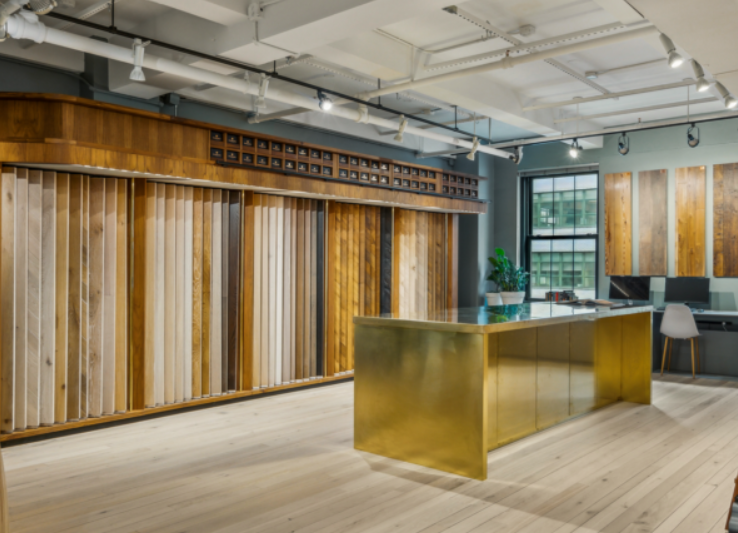
Price ranges in this market don’t move in neat, predictable bands. They fracture by product type, by spec, by grade, and by channel, sometimes within the same product line. The breakdown below is organized category by category.
Solid Hardwood Flooring
Material cost runs US$5–14 per square foot. Add installation and you’re looking at US$9–25 per square foot landed and laid. That’s the widest spread in this category list, and it’s driven almost entirely by species selection and finish grade.
Engineered Hardwood Flooring
Engineered hardwood is the segment most Australian and Kiwi buyers transact in. Material-only pricing sits at US$4–10 per square foot, with installed cost climbing to US$6–20 per square foot. Mid-tier product clusters around US$5–10 per square foot. Premium lines with thicker veneer, plywood core, multi-layer construction, and refinishable surfaces push into the US$10–16 per square foot bracket. If a supplier quotes above that ceiling without a clear FSC or CARB Phase 2 justification, push back.
Laminate Flooring
Laminate is the value play. Material pricing runs US$1.50–5 per square foot, with entry-level stock as low as US$1–2. Mid-range product lands at US$3–7 per square foot. Fully installed, expect US$3–13 per square foot. laminate flooring wholesale price shopping delivers the biggest margin gains here; the gap between low-end and mid-tier is almost entirely spec-driven.
Plywood
Structural and engineered-grade plywood panels run ₹90–220 per square foot in comparable Asia-Pacific benchmarks. Structural pine plywood, in a standard 2400 × 1200 × 18mm panel format, prices out at US$85.51–103.47 per sheet depending on order volume. Plywood price trends are heavily tiered by batch size.
MDF Panels
MDF panel market price benchmarks sit at ₹45–190 per square foot, one of the widest category spreads on this list. The gap here is almost entirely about density grade and moisture resistance rating.
New Zealand Pine Multi-Use Panels (SpecRite Benchmark)
For New Zealand wood panel imports, SpecRite pine multi-use panels give a clean, size-indexed reference point:
- 1200 × 405 × 18mm: NZD 37.00
- 1200 × 600 × 18mm: NZD 45.00
- 2200 × 600 × 26mm: NZD 99.00
Some channel listings show the smaller panel dropping to NZD 35.00 during promotional periods. Identical specs can carry different price tags depending on retailer and timing.
Hardwood Flooring Market Reference Point
A useful median anchor for hardwood Flooring Supplier pricing conversations is NZD 71.27 per square meter, which converts to about NZD 6.62 per square foot. Use this figure to sanity-check quotes before negotiating.
Why Prices Fragment and What to Do About It
Four layers drive the spread: product type, panel dimensions, grade/core structure, and sales channel. Practical takeaways:
- Normalize to one unit: compare everything in US$/ft² or NZD/sqm before judging “cheap” versus “expensive.”
- Separate material cost from installed cost: installation can add 40–70% to the final bill.
- Check volume tiers: batch pricing on plywood and panels can swing 5%–20%+ between single-sheet and bulk-pallet rates.
- Verify certification: FSC and CARB Phase 2 labels are the fastest way to tell premium grade from premium markup.
Regional Price & Market Comparison: Australia vs New Zealand vs Pacific Islands
Three markets, three different pricing logics. Australia sells on spec and brand story. New Zealand sells on published sqm rates you can actually screenshot and compare. Fiji and the wider Pacific Islands sell on whatever the freight invoice says that week. Treat them the same at your peril.
Australia: Spec Wars
Sydney retail benchmarks for supply plus install: hybrid $55–110/m², laminate $50–100/m², engineered timber $100–250/m², carpet $40–250/m². A 100 m² job lands around A$6,000–8,000 for laminate, A$6,500–8,500 for hybrid, and A$14,000–18,000 for engineered timber, before removal or subfloor prep. Hybrid, engineered timber, and premium wood-look products dominate demand. Negotiate on wear layer thickness, acoustic underlay, water resistance, and install package, not just the headline rate.
New Zealand: The Transparent Market
New Zealand wood panel imports and flooring pricing are far easier to benchmark. Engineered timber runs NZ$250–350/m² mid-range, premium NZ$385–480+/m². Solid timber sits at NZ$350–500/m², with premium grades exceeding NZ$550+/m². Pine T&G retail listings show NZ$7.00/metre for standard 135x12mm boards, NZ$10.00/metre for 135×19mm, and NZ$20.95/metre for Kahikatea/White Pine 128x19mm. Laminate ranges show clean sqm pricing at NZ$39.00–50.00/m². Because prices are published, push for match-or-beat quotes on identical product codes.
Pacific Islands / Fiji: Landed Cost Is Everything
Fiji tariff schedules list floor coverings at 15% in one classification and 5%/9% in another, depending on HS code and revision. Quoted ex-warehouse prices mean little without freight and duty separated out. Demand fully broken-down landed quotes: FOB price, ocean freight, duty, port charges, inland delivery, buffer stock.
| Dimension | Australia | New Zealand | Pacific Islands / Fiji |
|---|---|---|---|
| Price visibility | High | Very high | Low |
| Benchmark | Hybrid A$55–110/m² | Engineered NZ$250–350/m² | Duty-driven, no fixed benchmark |
| Risk | Spec competition | Product transparency | Freight/tariff exposure |
No Fiji benchmark. Use Australian hybrid/engineered rates plus duty and freight uplift, or New Zealand pine T&G pricing as a timber proxy.
Import Cost Breakdown: Tariffs, Freight & Landed Cost Calculation for Wood Panel Imports
Landed cost is where quoted prices stop meaning anything. Procurement teams need to memorize the formula: Landed Cost = Base Product Price + Ocean Freight/Insurance + Import Duty/Tariff + GST/VAT + Port Handling/Storage/Compliance Fees + Currency Fluctuation Cost. Skip any one of those and your budget is fiction.
GST and VAT: The Baseline Everyone Pays
Three jurisdictions, three different tax bites. Australia charges 10% GST on imported timber import tariffs Australia shipments, calculated on landed value. New Zealand charges 15% GST, also on landed value. Fiji charges 15% VAT, and can stack a 5% Fiscal Duty on top depending on the tariff line.
Australia: Tariff Codes That Actually Matter
Plywood under HS code 4412.99.20 carries a 5% base tariff. MDF with density above 0.8 g/cm³, filed under 4411.12.10, is duty-free. Fibreboard and particleboard composite panels under Chapter 68, code 6808.00.00, sit at 5%. There’s also a forest products import levy: 15 cents/m³ on plywood and veneer logs, 10 cents/m³ on wood panel pulplogs. It’s more relevant to raw material shipments than finished panels, but worth flagging.
Tariff Concession Orders (TCOs) can wipe out that 5% entirely. MDF fire-rated board qualifies at 10–80mm thickness with density ≤0.8 g/cm³. Plywood qualifies at density ≥700 kg/m³, thickness 12–35mm, length 2400–3100mm, width ≤1250mm. Check your spec sheet against these before assuming you owe the full rate.
New Zealand: FTA Rules Change Everything
New Zealand runs on MFN rates by default, but Tariff Finder shows many categories drop to 0% if the origin country has an FTA and meets rules-of-origin requirements. Declaration paperwork explicitly covers plywood, particleboard, OSB, fibreboard, veneer, chipboard, and MDF. These are flagged compliance categories, not afterthoughts.
Fiji: Stack the Duties Correctly
Fiji applies 5% Fiscal Duty, 0% Import Excise Duty, and 15% VAT. Check the Fiji Trade Portal for rates by HS code with effective dates before quoting a client.
Worked Comparison: Plywood vs. MDF
Take identical goods valued at AU$100 with AU$20 freight/insurance:
- Plywood: 5% duty ($5) → GST base of $125 → 10% GST ($12.5) → landed total ≈ $137.5
- Duty-free MDF: $0 duty → GST base of $120 → 10% GST ($12) → landed total ≈ $132
Plywood costs roughly 4.2% more landed than duty-free MDF on the same base value. The gap comes entirely from that 5% tariff expanding the GST base.
Calculation Sequence
- Lock the HS code (4412, 4411, or 6808)
- Check base duty and TCO eligibility
- Fold freight/insurance into landed value
- Apply GST/VAT (10% AU, 15% NZ, 15% Fiji)
- Add port handling, clearance, storage, and compliance costs. MPI wood product documentation is the most common cost trigger in New Zealand shipments.
2026 Design & Demand Trend Signals in Oceania Flooring Market
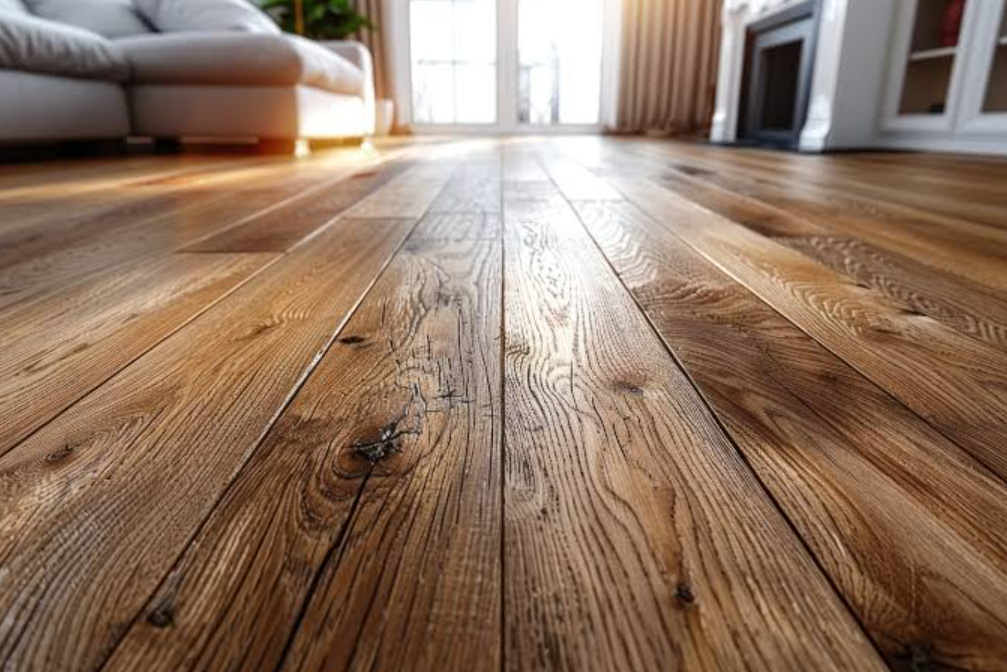
Walk into any Australian showroom right now and the plank width tells you everything. 180–220mm hybrid flooring has become the default, with 240mm+ boards pushing into serious volume territory for the first time. That old 150mm standard? Buyers now treat it as last-generation stock. This is a spec shift procurement teams need to price into 2026 orders, not cosmetic drift.
Herringbone is the other signal worth watching. Wide-board herringbone hybrid flooring has moved out of the “design flourish” category and into core premium territory — living rooms, entryways, open-plan renovations. Market expectations point to broader mainstream adoption within roughly two years. If you supply the premium renovation segment, this is your upsell SKU.
Color preference has settled too. Warm, natural wood tones dominate — oak, blackbutt, spotted gum. The logic is simple: buyers want something that reads as real timber but skips the maintenance burden.
Cost Pressure Is Reshaping Buyer Priorities
Australian building material input prices sit 38.3% above early-2020 levels. Q1 2026 saw residential construction material inputs up 2.5% year-on-year, 0.6% quarter-on-quarter. By Q2 2026, that accelerated — 2.1% quarter-on-quarter, 3.8% year-on-year. House construction output prices climbed faster still: +4.1% YoY in Q1, jumping to +5.9% YoY by Q2.
Timber, board, and joinery eased 0.2% in Q1 but remain up 2.8% annually — while steel, copper, and concrete stay under heavier pressure.
The direct implication: buyers are choosing durable, low-maintenance, high-wear-layer hybrid and engineered options over high-maintenance solid timber. If costs hold at +2%–6% YoY through 2026, expect premiumization — 240mm+ planks and herringbone absorbing cost pressure through higher unit price, not broad discounting.
Sourcing priorities: 180–220mm hybrid for volume, 240mm+ for margin, warm oak/blackbutt/spotted gum tones as core palette, and FSC-equivalent certification as a non-negotiable procurement gate.
2026 Price Forecast & Risk Factors for Oceania Timber Trade
Nobody expects a price crash in 2026. Nobody expects a rally either. The safest read on Australian sawlog prices is stable-to-firm: nominal prices rise while real prices flatten out. That’s not exciting, but it’s actionable. Lock your budgets around “steady” rather than betting on a discount window or a spike.
New Zealand’s log market is already showing the cracks in that stability. August NZ A-grade export logs dropped roughly NZD 9/m³ at the wharf gate, driven by a USD 4/JAS decline in China CFR prices combined with a USD 1.30/JAS rise in shipping costs. Two forces pulling in opposite directions, netting out to a price cut. That’s the kind of volatility procurement teams need to model, not ignore.
IBISWorld’s domestic benchmarks stay tame. New Zealand timber climbs 1.7% in 2025–26 to $134.5, then 0.4% in 2026–27 to $135.0. Australia moves similarly: 1.9% to 179.5 index points, then 1.2% to 181.6. Australian wood product imports grow 2–3% annually through 2028, pushing total import value from $2.8 billion to roughly $3.0 billion. Plywood volume already crossed 500,000 m³ in January 2026, up 21.8% year-on-year, with China supplying 43.8% of Australia’s $3 billion import bill.
Three Risks That Move the Needle
Freight volatility. Timber is bulky, low-value-per-weight cargo, so small freight moves hit landed cost hard, especially on Australia-to-Pacific and Asia-to-Oceania lanes.
FX swings. A weaker AUD or NZD helps exporters but hurts importers. Combine currency weakness with a freight spike and landed costs inflate fast for buyers running thin inventory.
Tariff policy shifts. Manufactured wood products, biomass, and charcoal carry the highest exposure. Finished goods get hit harder than raw logs because duty and freight sensitivity compound.
Lock in these hedge moves now: fix 3–12 month pricing on core SKUs, split sourcing across 2–3 origins, hedge currency on large monthly programs, and always benchmark to full landed cost, not FOB.
Procurement Strategy: How to Optimize Wood Panel Sourcing Costs in Oceania
A single number tells you where to shop first. Australia’s weighted-average import price for wood panels hit AUDFob382.75/m³ in April 2025 — a 35.2% drop from the prior month. Plywood ran hotter across the full year, averaging AUDFob869.80/m³. Compare that to Bunnings retail: 18mm MDF at A$53, 12mm at A$45, 16mm at A$49, 25mm at A$99, 32mm at A$138. If landed import cost sits near or above those local shelf prices, buy local. If import pricing beats retail by a wide margin and your logistics chain is reliable, import.
MDF vs. plywood is a cost-exposure choice. New Zealand’s 5–9mm MDF import price jumped 122% year-on-year to roughly US$893/m³. That kind of swing means MDF buyers need locked pricing or staggered orders, not spot-market bets. Plywood costs more upfront but resists warping and rework, which matters in high-humidity or high-damage freight lanes.
Three levers compress landed cost:
- Consolidate freight into full containers instead of scattered small orders
- Standardize on high-turnover sizes (2440×1220, 2400×1200) to cut custom-cut waste
- Negotiate by cubic meter or full panel count, never retail sheet price
Push suppliers to disclose thickness tolerance, moisture content, glue grade, and E0/E1 or CARB Phase 2 status before comparing quotes.
For Pacific Islands sourcing: route through regional distributors with local warehousing, hold high-frequency stock sizes only, and build port-congestion clauses into every contract. Islands markets routinely show low factory price, high landed price — plan for that gap upfront.
Conclusion
The numbers tell a clear story: Oceania’s timber and flooring market in 2026 will reward the prepared and punish the reactive. Engineered wood flooring costs are climbing unevenly across Australia, New Zealand, and the Pacific Islands, while shifting tariffs and freight volatility are quietly reshaping landed costs more than most procurement teams realize. This Oceania Flooring & Wood Panel Price Guide is built to be used at the negotiating table, in budget forecasts, and in supplier scorecards.
Buyers who understand regional price gaps and import cost structures now will lock in better terms before Q1 2026 pricing resets hit. Don’t wait for your supplier’s next quote to tell you what the market already knows. Pull the regional comparison data, run your landed cost calculations, and start renegotiating this quarter, before the window closes.