
MDF prices in Australia have been anything but predictable lately, and if you’re sourcing sheets for a construction project or restocking inventory for your distribution business, guessing wrong on timing can cost you thousands. Most buyers make purchasing decisions with incomplete market data, relying on quotes from one or two suppliers instead of understanding the bigger picture of the Australia MDF market.
This guide gives you the intelligence typically reserved for industry insiders. It covers real MDF sheet price trends across 2024-2026 and a side-by-side comparison of local distributors versus import sources. Whether you’re weighing bulk orders, evaluating overseas manufacturers, or simply trying to time your next purchase right, you’ll walk away knowing exactly where the smart money is moving.
Australia MDF Market Size & Growth Outlook
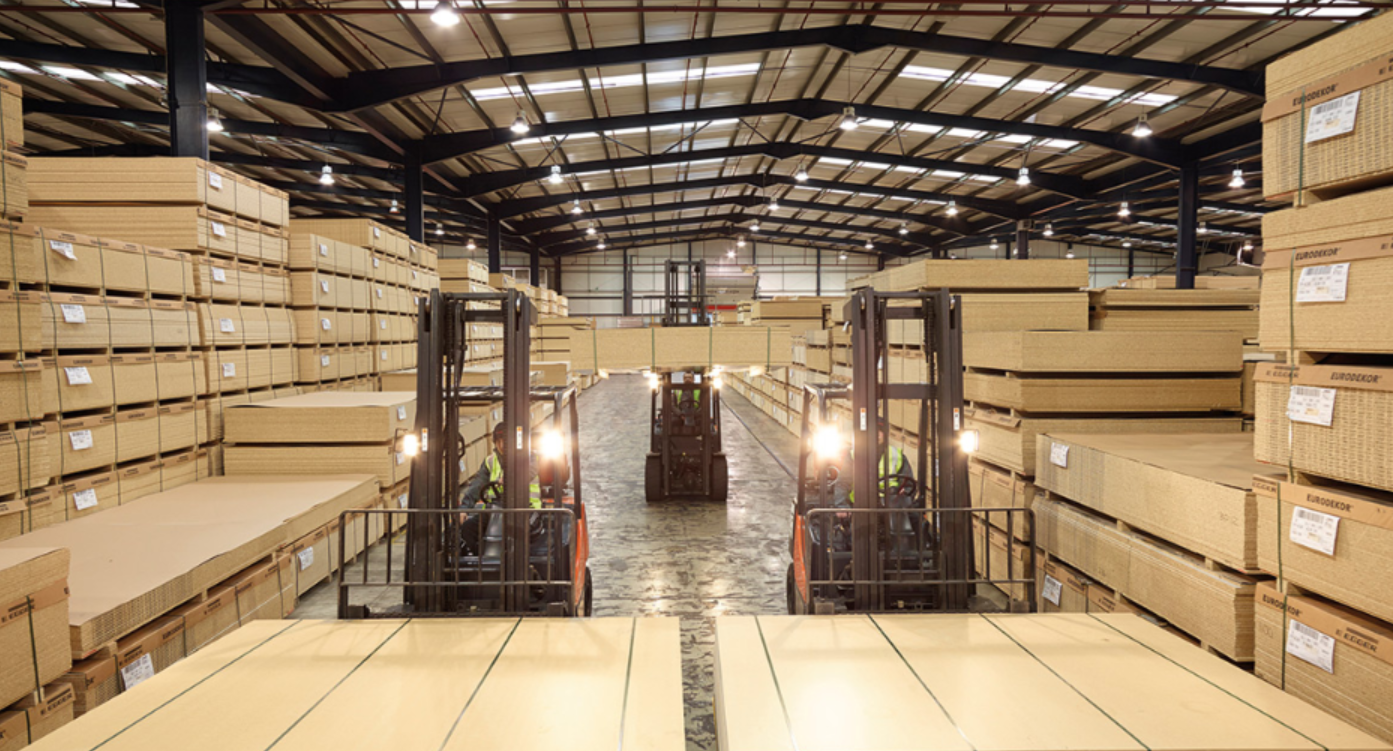
The Australia MDF market hit USD 546.0 million in 2024. By 2033, it’s projected to reach USD 895.4 million. That’s a 5.65% CAGR, and it’s outpacing the broader wood-based panel market by a wide margin.
If you’re sourcing MDF sheets right now, growth this steady usually means one thing: tightening supply relative to demand.
What’s driving the growth:
Urbanization and rising construction activity across residential and commercial sectors
Australia’s housing pipeline is aggressive — the National Cabinet has set a target of 1.2 million well-located homes over five years (July 2024 to mid-2029)
NSW alone needs roughly 377,000 homes by 2029
Prefabricated construction is exploding too, forecast to grow from AUD 14.57 billion in 2024 to AUD 22.28 billion by 2028 (11.2% CAGR)
More housing starts and modular builds mean more demand for MDF in wall linings, cabinetry, wardrobes, doors, and furniture substrates. This isn’t speculative — it’s a direct pipeline.
Now here’s the supply problem.
Local MDF production data from 2015/16 shows Australian plants produced 615,708 m³, representing 100% of domestic output at the time. Compare that modest production base to a market value climbing toward USD 895.4 million. The math doesn’t add up without help.
Even the particle board market, MDF’s close cousin, is growing slower — from USD 476.0 million to USD 636.99 million by 2033 at just 3.29% CAGR. MDF is outpacing it.
Translation for buyers: domestic capacity likely can’t keep pace with demand. That gap gets filled one way — imports. Understanding this now puts you ahead of buyers who’ll be scrambling later.
Current MDF Price Trends in Australia (2024-2026)
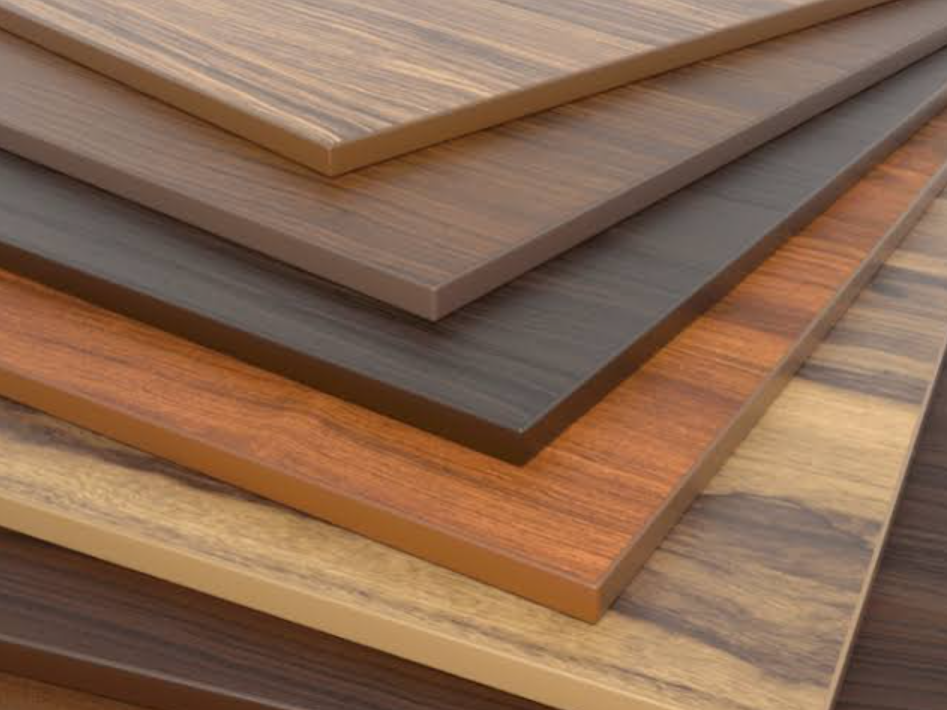
The Australia MDF market is steady right now.
Regional import prices averaged USD 525/m³ in 2024, while export prices sat around USD 358/m³, a gap of roughly USD 167/m³ or 46.6% higher on the import side. If you’re buying in bulk or going direct-factory, that gap gives you negotiating room. Aim for FOB pricing near USD 358 instead of accepting landed import rates at face value.
2026 pricing is flat. Import prices held constant year-over-year, even as import volume dropped to 125,752 m³, down 8.8%. Lower volume without a price spike signals a balanced, low-elasticity market. That means no panic-buying required, but no reason to wait either.
Sheet-Level Pricing You’ll Pay
At retail, thickness drives cost:
12mm: ~AUD 47.81/sheet
18mm: ~AUD 71.43/sheet
32mm: ~AUD 141.05/sheet
Big-box retailers confirm this. Bunnings prices 18mm 2400×1200mm MDF at AUD 53/sheet (~AUD 18.40/m²), while the larger 3600×1200mm sheet runs AUD 125.50 (~AUD 29.05/m²). Brisbane Building Materials lists 18mm Standard MDF from AUD 58.87, but that’s Ex GST. Add 10%, and you’re at AUD 64.76.
Wholesale looks different. September 2024 pricing shows Standard Thick “E0” MDF at $10.75/m² for 9mm packs and $11.50/m² for 12mm, meaning retail can run 2.5–3x wholesale on an area basis. MR-grade and melamine-faced boards command a further premium over standard grade.
Lock 18mm supply in batches now, layer your stock by thickness, and treat retail markup as your ceiling.
Australia MDF Supply Landscape: Local Distributors vs Import Sources
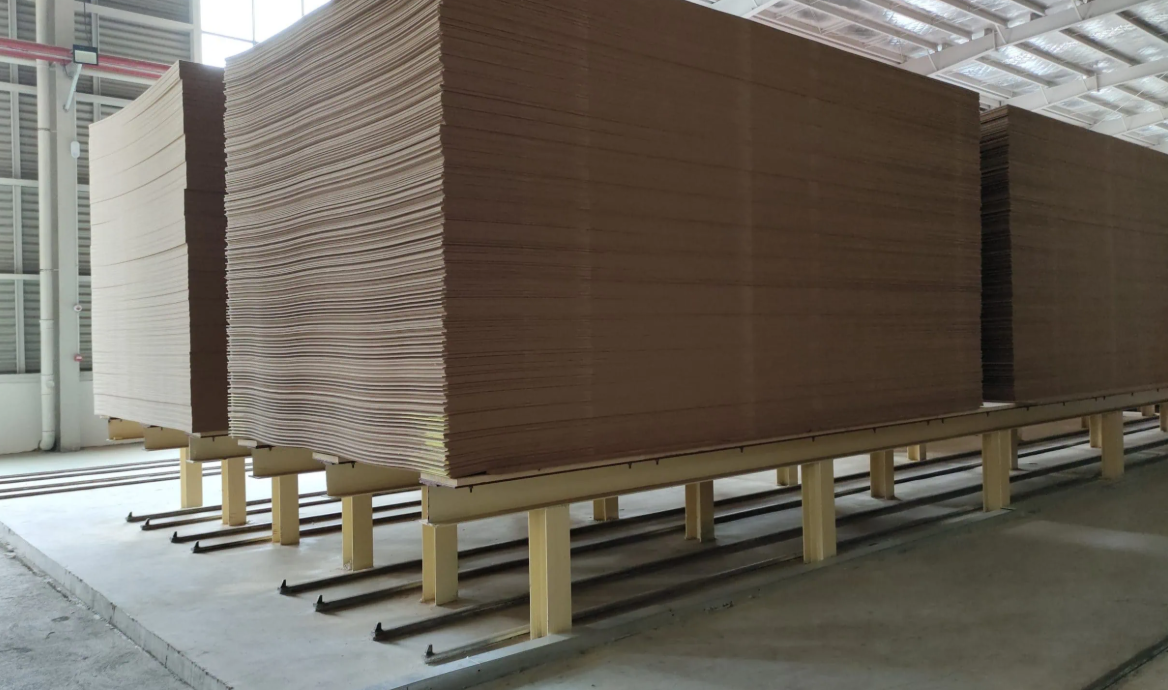
Not all MDF suppliers play the same game. Some win on speed, others on price. Knowing which is which saves you money and headaches.
Local distributors dominate the east coast. DMK Forest Products has run for 50+ years and stocks depots in Sydney (Brookvale), Brisbane (Banyo), and the Gold Coast. That spread means fast, freight-efficient delivery across NSW/QLD. Plyco sells MDF online but often requires manual freight quotes, so budget extra lead time. Bunnings remains the national go-to for small-to-mid volume standard sheets, not specialist grades. Bord Products and Viking Woodworks lean trade and joinery. Brisbane Building Materials fits regional procurement where stock-on-hand matters more than price.
Standard MDF sits cheapest at $10–$15/m² pack pricing, your baseline for cabinet carcasses and general joinery. MR MDF (moisture-resistant) jumps to $90–$120/m² for common thicknesses. Fire-rated MDF runs $38–$95/m² depending on thickness and whether you buy pack or loose sheet. Decorative and melamine MDF sheet options, full gloss, satin, embossed, sit highest again due to finishing costs. Fire-rated and decorative boards can cost 2–4x standard commodity MDF, driven by resin additives and surface treatment, not raw material.
Where Import Sources Fit In
China supplies 43% of Australia’s engineered wood import volume, with the top source band covering 68% of total volume. That’s a massive opening for buyers chasing lower landed cost, container-load supply, and broader sheet-size availability.
Best-fit import segments are standard MDF, MR MDF, and pre-finished/furniture grade MDF, where a reliable Mdf Manufacturer offering E0/E1 or CARB certification competes on price plus scale. Local yards still win on urgent pickup and small-order flexibility, but for volume buyers in the timber industry Australia relies on, import sourcing closes the supply gap domestic production can’t fill alone.
How to Choose the Right MDF Type for Your Project
Wrong grade, wrong outcome. Treat furniture-grade MDF, moisture-resistant boards, and fire-rated panels as interchangeable, and you’re risking costly rework or compliance failures. They aren’t interchangeable, and mixing them up costs you money.
Match the type to the application:
Standard MDF is for furniture, cabinetry, wall panels, and interior substrates. Common thicknesses are 6, 9, 12, 16, 18, and 25 mm, with some suppliers offering 2.5–32.8 mm. Standard sheet sizes are 1830×2440 mm or 2400×1200 mm.
Moisture-resistant (MR) MDF is for kitchens, bathrooms, and laundries. Check the 24-hour thickness swell rate before ordering. Target under 4%; some suppliers list higher thresholds (12–17%), but lower swell means better long-term performance in wet zones.
Fire-rated (FR) MDF is for fire-compliance projects, commercial fitouts, and public spaces. Confirm ratings like ASTM E84 Class A, CAN/ULC-S102, or Group 1 fire rating documentation.
Formaldehyde Grade: Don’t Accept Vague Labels
E1 caps at ≤9 mg/100g under EN 622-1, a reasonable baseline for most interior work. E0 goes lower, and suppliers should back it with EN 717-1 testing, often around 0.05 ppm depending on market standards.
Never accept “low formaldehyde” as a spec. Your purchase order should list formaldehyde grade (E0/E1), test standard (EN 717-1, EN 120, CARB, or TSCA Title VI), limit value, and a third-party report number.
Fields That Belong on Every RFQ
Include these on every RFQ: MDF type (Standard, MR, or FR), thickness (9, 12, 15, 18, or 25 mm), sheet size (2440×1220, 2400×1200, 2700×1200, or 3000×1200 mm), Formaldehyde grade with test report, moisture performance (24h swell target), and fire rating standard and class if applicable.
Also check density. Most MDF sits between 720–764 kg/m³, which affects screw-holding strength and machining behavior. For high-frequency use like cabinet doors, a stable density range matters more than price per sheet.
Key Checklist Before Placing an MDF Order
One missing line item on a purchase order can turn a “great deal” into a budget disaster. Before you sign off on any MDF sheet price quote, run through this checklist.
Confirm specs and certifications in writing. Get the supplier to state clearly whether it’s Standard, MR, FR, or dual-certified FR+MR MDF, then request the test documents. Fire ratings vary. Group 2 is common under NCC/AS-NZS frameworks, while B-s2,d0 shows up on EN 13501-1 spec sheets. Don’t accept “fire-retardant” as a standalone claim. Ask for actual numbers: standard MDF typically tests at Ignitability 15, Spread of Flame 7–8, Heat Evolved 6–9, Smoke Developed 3–5 under AS/NZS 1530.3.
Know the moisture-resistance limits. MR MDF is labeled “moisture resistant” or “water-resistant resin throughout,” but it’s interior-use only, not waterproof. It handles intermittent humidity (kitchens, laundries, bathrooms), not standing water.
Separate GST from your comparisons. Australian quotes mix ex-GST and inc-GST pricing constantly. Insist on one quote showing unit price, GST, freight, and offload fees together. Compare everything on a tax-inclusive total, especially when mixing retail and wholesale sources.
Pack vs. Loose Pricing Gaps
Pack pricing beats loose pricing every time, but the spread is bigger than most buyers expect:
- 9mm: Pack $12.90/m² (60 sheets) vs. Loose $16.00/m²
- 18mm: Pack $18.50/m² (40 sheets) vs. Loose $25.00/m²
- 25mm: Pack $29.00/m² (20 sheets) vs. Loose $39.00/m²
That’s a 22%–31% swing depending on thickness. Ask suppliers for pack qty upfront. It changes your per-sheet math fast.
MOQ Isn’t One Number
MOQs run per thickness, not per order. A typical breakdown looks like: 12mm at 60 sheets, 16mm at 40 sheets, 18mm at 40 sheets, and 9mm at 60 sheets. Some import suppliers push further, requiring a full 1×20ft FCL or a 5 MT minimum per category. If you’re mixing thicknesses in one order, confirm each MOQ separately before committing.
Lead Time Needs a Real Answer
“How long will it take?” isn’t specific enough. Ask instead: is this ex-stock or a production order? Real-world numbers from active suppliers show ex-stock running 1–2 weeks, while production orders stretch 3–5 weeks. Some catalogs list a flat 25 days regardless of stock status. Get this in writing before you plan around it.
Watch for Hidden Freight Charges
Board price is rarely the full price. Confirm whether freight, crane/offload fees, pallet deposits, or split-delivery charges apply separately. One supplier catalog added a flat NSW freight surcharge of $1.00/m², enough to shift your landed cost calculation if you missed it.
Convert Everything to AUD/m² Before You Compare
This is where most buyers lose money without realizing it. Use this formula:
AUD/m² = price ÷ sheet area, where sheet area (m²) = length (mm) × width (mm) ÷ 1,000,000
So a 2400×1200mm sheet = 2.88 m², and a 3600×1200mm sheet = 4.32 m². If your quote is per-sheet, divide by area first. If it’s already per-m², check whether GST and freight are included.
The five-point comparison template: AUD/m² + GST + freight + MOQ + lead time. Run every quote through these five fields before deciding. Skip this step, and you’ll end up comparing big-sheet pricing against small-sheet pricing, or pack rates against loose rates, and drawing the wrong conclusion.
Documents to Request Before You Order
- TDS/PDS (technical/product data sheet)
- Fire test report (Group 2, B-s2,d0, or AS/NZS 3837 as applicable)
- Moisture resistance documentation (MR grade, E0 formaldehyde level, approved use environment)
- Full sizing breakdown (thickness, sheet dimensions, pack quantity — e.g., 12mm at 60 sheets, 18mm at 40 sheets)
Get all four before you place the order, not after the container ships.
Cost Control Strategies for Bulk MDF Buyers
A $27.55/m² quote and a $32/m² quote for the same 16mm MR MDF sheet aren’t comparable until you run both through a landed-cost formula. Sheet price is just the entry point. Freight, GST, and surcharges decide what you actually pay.
The landed-cost formula:
Landed AUD = goods subtotal + freight + surcharges + GST (10%)
Here’s a worked example. Order 100 sheets of 16mm MR MDF at $27.55/m²:
- Goods: 100 × $27.55 = $2,755
- Freight: $180
- Taxable base: $2,935
- GST (10%): $293.50
- Landed total: $3,228.50
- Landed cost per m²: $10.84 (on a 2440×1220mm sheet at 2.9768 m²)
That per-m² figure, not the sticker price, is what you negotiate against.
Request a Real Trade Price List
Don’t accept a single quote line. Ask your Mdf Manufacturer for pricing broken out by thickness, grade, and sheet size, covering standard MDF, MR MDF, white melamine MDF sheet, fire-rated boards, and edge-banding. Get both $/sheet and $/m², plus MOQ, pack vs. loose pricing, pallet quantity, price validity, and freight zone tables.
Use Public Pricing as Negotiation Anchors
Public price lists show real spread. Thin standard MDF can run as low as $3.25/m² on pack pricing versus $5.00/m² loose for similar 3mm E0 stock. A white MDF sheet at 2440×1220×3mm has listed between $7.95–$9.00 depending on volume band. Push for breaks at 50, 100, and 200 sheets, then compare only landed AUD/m² — never ex-works price.
Import Opportunity Analysis: When to Source from Overseas Suppliers
Timing beats price on import decisions. The math tells you when overseas sourcing pays off.
The 20% rule. If your landed import cost per m³ sits 20%+ below the local trade-list price, overseas sourcing wins for standard, repeatable MDF sheet specs. Under 10%? Stick local. The lead time and claims risk aren’t worth chasing a marginal discount.
Calculate Import Advantage % as (Local Trade List Price − Landed Cost) ÷ Local Trade List Price × 100. A local trade list showing A$44–A$49 for a 2400×1200mm sheet against a landed import cost of A$32–A$38 gives you a 13–35% saving before stockholding risk. Push landed cost above A$41–A$44, and that advantage collapses fast.
Supply pressure is real. Domestic sawnwood capacity caps out around 3.6–3.8 million m³/year. Recent import growth breaks down as 59% driven by demand and 41% by domestic supply constraints. Imported timber has landed at half of domestic pricing in some 2026 reports, some as low as A$404/m³, about 56% below local benchmarks.
When Overseas Sourcing Makes Sense
- Order volume hits 25–30m³+ per shipment, one full container
- Procurement can tolerate 4–8+ weeks for transit, customs, and inland delivery
- Consumption is stable and monthly, not one-off
- Specs are standardized (E0/E1, thickness, moisture resistance)
- Local suppliers show allocation pressure or price spikes
If the gap is 10–15%, run dual-source instead of betting everything overseas.
MDF Supplier Segments in the Australian Market
Not every MDF manufacturer deserves equal attention. Four supplier segments deliver better margins and lower risk for buyers sourcing furniture grade MDF or specialty panels.
Segment 1: E0/ENF low-emission mills. E1 caps at ≤0.124 mg/m³ under EN 717-1, the regulatory floor. Premium China mills push further, hitting E0 (≤0.050 mg/m³) or ENF (≤0.025 mg/m³). Use these for children’s furniture, green-label export, and health-sensitive projects. Verify test method, resin formulation, and batch consistency before committing.
Segment 2: Moisture-resistant specialists. Skip suppliers who just slap “MR” on a spec sheet. Demand ASTM D1037 water absorption and thickness swelling data. These work best in kitchen/bathroom cabinetry, hotel FF&E, and tropical-climate builds.
Segment 3: Fire-rated producers. Class C / Flame spread 120 is a real benchmark. Confirm which thickness range was tested and whether coating systems hold rating. Good for commercial fit-outs, hospitality corridors, and public buildings.
Segment 4: Decorative veneered/laminated converters. Green-building mandates are pulling 5–8% growth here. Value comes from color repeatability, scratch resistance, and install speed.
Match your project risk to the right segment, and you’ll pay for performance.
Conclusion
The Australia MDF market isn’t slowing down, and rising demand means buyers who wait for “perfect timing” often end up paying more. What we’ve covered boils down to three things. First, MDF sheet price volatility is real, but predictable if you track import cycles and raw material costs. Second, local supply alone won’t cut it for bulk furniture grade MDF or melamine MDF sheet orders—diversifying toward vetted overseas manufacturers is where the real savings live. Third, a solid supplier checklist protects your margins far better than chasing the lowest quoted price.
You now have the market intelligence most competitors are still guessing at. Don’t sit on this data—use it. Reach out to a supplier who can back these numbers with real product Samples, certifications, and pricing transparency. Smart sourcing decisions start today, not next quarter.