
MDF board prices in Saudi Arabia have moved more in the past 12 months than most procurement managers realize. If you’re pricing out a project right now without checking the current spread across 12mm, 15mm, and 18mm sheets, you’re guessing at your budget. Vision 2030 megaprojects, NEOM’s construction pipeline, and shifting import costs from China, Malaysia, and Europe have pushed local wood panel prices in different directions at different times. Locking in a rate at the wrong moment can cost you thousands on a single order. This breakdown covers the real price ranges by thickness and grade, the three factors driving those numbers, and a quick test to tell you whether now is the right time to buy or wait. No fluff, just the data you need before your next quote.
Current MDF Board Prices in Saudi Arabia by Thickness, Size, and Grade

MDF board prices in Saudi Arabia currently range from SAR 28/sheet on the low end to SAR 140/sheet on the high end. That’s a 5x spread. If you don’t understand why that gap exists, you’ll either overpay or end up with a board that fails on your project.
The standard sheet size across the Saudi market is 1220 × 2440 mm, with thicknesses from 2.5 mm to 30 mm. But most contractors and furniture manufacturers work within a narrower band. Thickness affects price. 6 mm MDF costs SAR 35–55/sheet, 18 mm standard MDF (244 × 122 cm) costs SAR 80–120/sheet, and 18 mm moisture-resistant (MR) MDF costs SAR 100–150/sheet.
Riyadh stockists typically carry 6, 9, 12, 15, 18, and 25 mm sheets in 183 × 244 cm format, with density specs of 720–780 kg/m³ and bending strength around 23 N/mm². Most meet E1 / CARB-P2 emissions standards — worth confirming if you’re supplying to projects with sustainability requirements tied to Vision 2030 contracts.
Grade and origin affect price. Chinese-origin MDF starts around SAR 28/sheet, plain/local Saudi MDF is SAR 45–48/sheet, Egyptian MDF around SAR 55/sheet, German high-density MDF around SAR 65/sheet, Turkish high-quality MDF around SAR 89/sheet, and thick, high-density premium MDF up to SAR 140/sheet.
Retail pricing including VAT generally settles between SAR 51.75 and SAR 109.25 per sheet, which lines up with what suppliers like Al Zaben are quoting on their MDF category listings.
Don’t get quoted a single “average price” and assume it applies to your order. Origin, thickness, and moisture resistance can shift your cost by 3x or more on the same size sheet. This is one reason MDF prices vary so much across Saudi suppliers.
MDF Board Price Movement Over the Last 12 Months

Global MDF benchmarks show where Saudi prices are headed. The Kingdom imports a huge share of its board from the very regions these indexes track.
In the U.S., the price index for prefinished particleboard and MDF made from purchased materials jumped 14.69% year-over-year. That’s supply chain pressure. The upstream Producer Price Index for reconstituted wood products hit 251.541 as of July 2025, confirming raw material costs are still climbing.
Europe and Asia, Saudi Arabia’s two biggest MDF import sources, show the same pattern at different speeds:
-
Europe: 18mm MDF priced at 361.15/m³, up 9.4% year-over-year and 0.6% month-over-month
-
Asia: 18mm MDF priced at 326.59/m³, up 7.8% year-over-year and 0.8% month-over-month
Neither trend has flattened yet. Market trackers project European FOB prices climbing another 2–4% and Asian FOB prices another 3–5% through the second half of 2026, before any leveling off in Q1 2027.
If you’re sourcing Chinese or Malaysian MDF, you’re riding the Asia curve. If you’re pulling from European mills, you’re riding the steeper Europe curve. Either way, prices are going up. Saudi landed prices will follow with a lag, with no discount.
The Three Main Drivers Behind MDF Price Changes in Saudi Arabia
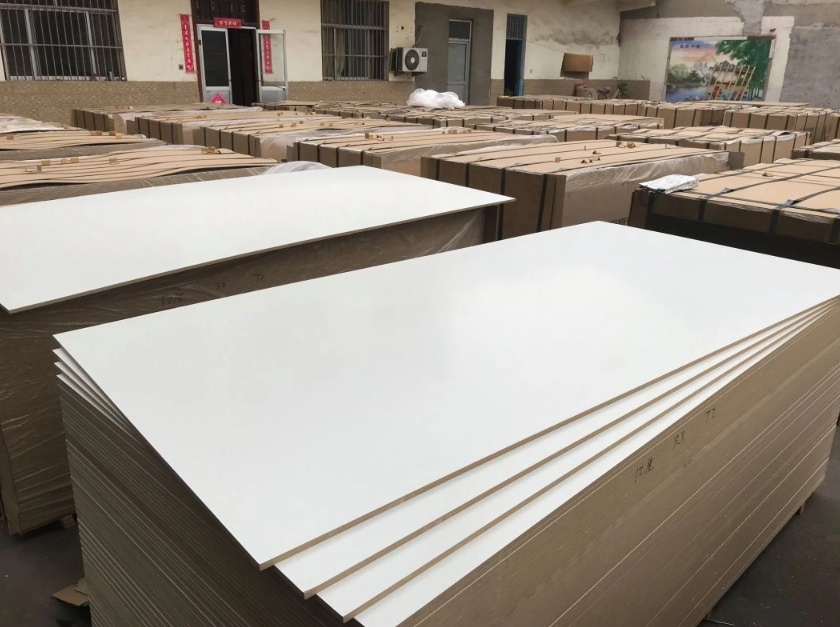
Three forces are pulling Saudi MDF prices in different directions right now, and understanding them tells you more than any single “market average” ever will.
Driver 1: Raw material and resin costs. MDF is wood fiber bonded with resin under heat and pressure. When those two inputs get expensive, every sheet gets expensive. Saudi market reports put wood fiber import costs up 15% in 2023, with resin prices climbing 12% in the same window. Those increases are baked into every quote you’re getting today.
Driver 2: Freight, port, and inland logistics. GCC-wide MDF pricing swings hard on container availability, bunker fuel costs, port congestion, and shipping reroutes. Once a sheet lands at Jeddah or Dammam, it still has to travel inland. Saudi Arabia’s geography makes trucking costs a real line item, not an afterthought. This is a big reason building material import pricing in Saudi Arabia rarely matches the FOB number quoted overseas.
Driver 3: Construction and furniture demand tied to Vision 2030. Saudi construction industry demand is different from most markets right now. One forecast ties MDF consumption growth to more than 1.2 million new residential units planned under housing initiatives — all of which need cabinetry, wall panels, and flooring.
GCC MDF import pricing dropped to around $280 per m³ in 2024, a 30% year-over-year decline from the 2023 peak of $401 per m³. Saudi Arabia’s average import proxy landed near 0.34k USD per ton in the 2025–2026 window. Input costs are rising, but import pricing has been easing. That gap is worth watching closely.
Numbers tell the story better than any headline. Saudi Arabia’s construction market sits at roughly USD 78.6 billion in 2025, with forecasts pushing that to USD 98–101.8 billion by 2030–2031. The market is accelerating, and every square meter of new build needs cabinetry, wall panels, or flooring, which means MDF.
Contract awards tell a mixed story. 2024 saw USD 36 billion in Saudi construction contract awards. By end-August 2025, year-to-date awards sat at USD 15.5 billion, a softer pace on paper. Execution tells a different story. The value of projects actually moving into construction hit USD 196 billion in 2025, up 20% from 2024. Projects are building.
The five official giga-projects alone awarded about USD 18.2 billion in contracts in 2024, with USD 9.3 billion tracked by August 2025. Housing adds another layer: Knight Frank puts annual residential demand at 115,000 units just to keep pace. Construction output is projected to hit USD 191 billion by 2029, roughly 29% above 2024 levels.
What This Means for MDF Board Supply
Demand is showing up directly in trade data. Saudi Arabia imported 1,446 MDF wood shipments between April 2024 and March 2025, a 30% jump over the prior 12 months. That volume moved through 96 exporters supplying 70 Saudi buyers, with 256 registered MDF importers and 284 global suppliers active in the market.
Sourcing is concentrated. Vietnam, India, and China accounted for roughly 99% of Saudi MDF wood imports in one dataset; another tracker shows Vietnam, India, and Turkey covering 100%. Either way, Asia dominates the supply chain.
The average import price landed near USD 285 per cubic meter in 2024, down sharply year-over-year. That combination of rising volume and falling landed cost sets up the buying window covered next. Residential, office, hospitality, and mixed-use projects remain the clearest demand pools driving this.
Imported MDF Versus Locally Available MDF in Saudi Arabia
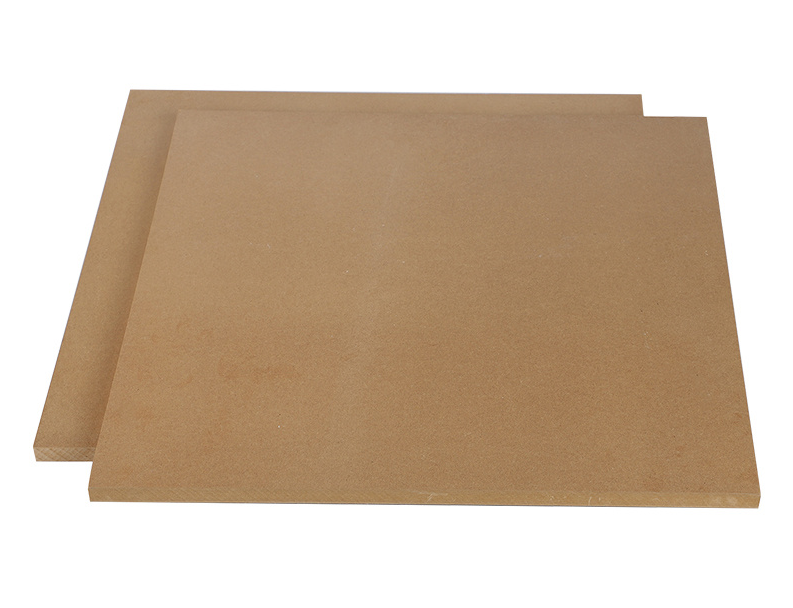
Saudi Arabia is the biggest MDF import market in the entire GCC. GCC MDF import value topped $620M in 2024, and Saudi Arabia alone accounted for $310M of that, ahead of the UAE’s $287M. That single fact should shape how you think about sourcing.
Imported MDF comes from a supply base spanning 88+ countries, but Vietnam, India, and China dominate. One trade dataset shows them covering roughly 99% of imports; another puts Vietnam, Indonesia, and China at a full 100% for HSN 94036090 board imports. Big-name international players like Kronospan, EGGER, Swiss Krono, and Arauco also serve the market, mostly through import channels.
Locally available MDF comes from a smaller domestic base. Three names show up repeatedly: TAJCO (Saudi Wood Industries) in Jeddah, producing melamine MDF and chipboards; Sidco in Dammam, running since 1984 with ISO-certified standard and melamine-faced MDF; and Al-Arak Wooden Industries, also in Jeddah since 1995, offering plain, melamine-faced, and HDF options.
Imports give you moisture-resistant, fire-retardant, and decorative grade variety. Local suppliers give you faster delivery and Saudi compliance out of the gate. With the domestic MDF market valued at USD 81M in 2025 and projected to hit USD 118M by 2034, local capacity is growing — but it still isn’t replacing import dependency anytime soon.
MDF Board Cost in Riyadh, Jeddah, and Other Saudi Delivery Locations
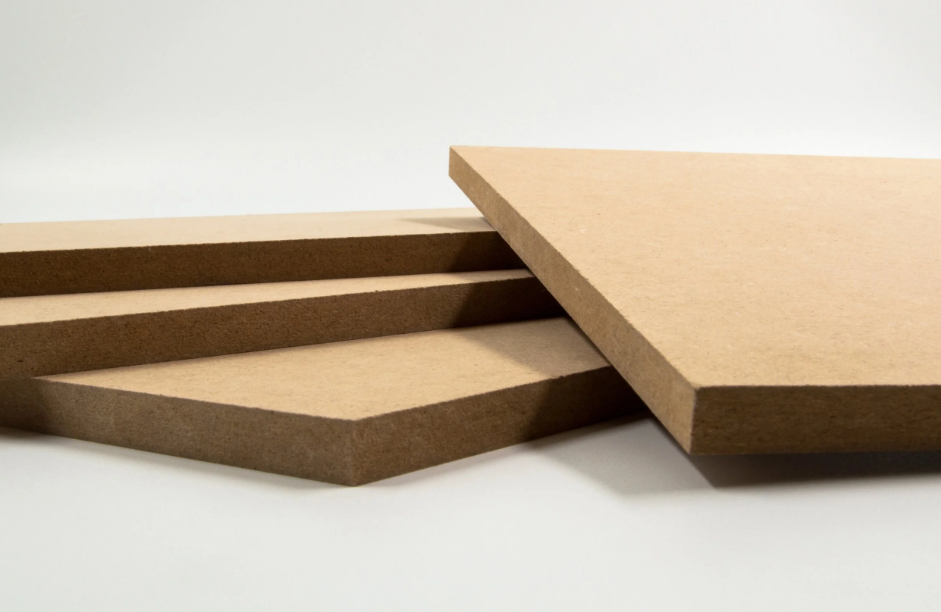
Delivery location affects the price directly.
Riyadh suppliers list MDF sheets (183×244 cm, 6–25 mm thickness) at SAR 45–130 per sheet, depending on grade. The national marketplace benchmark is useful here: standard MDF starts at SAR 18.11 and moisture-resistant MDF at SAR 36.23. Keep those numbers in mind when a supplier’s quote feels inflated.
Delivery timing shifts by zone:
-
Greater Riyadh: 24–48 hours from local stockists
-
Jeddah, Dammam, Khobar, Mecca, Medina: 3–5 working days from Riyadh-based suppliers
If your project sits outside Riyadh, build that lag into your schedule. A tight construction timeline tied to a Vision 2030 deadline can’t absorb a surprise five-day wait.
Riyadh Timber applies wholesale pricing on orders above 50 m³, with unit price and delivery cost quoted separately by location. Ask every MDF board supplier in Saudi Arabia to separate those costs — bundled pricing hides where your real money is going.
Jeddah has its own production base. Al-Arak Wooden Industries, headquartered in Jeddah’s Third Industrial City since 1995, runs additional branches in Riyadh, Makkah, Tabuk, Khamis Mushait, and Manama. Al-Arak’s footprint shortens delivery windows regardless of where your project sits.
Three-Minute MDF Procurement Timing Test for Saudi Buyers
Three minutes is all you need. Run these checks before you commit to any purchase order.
Check 1: Stock availability. Ready-stock MDF from Riyadh Timber, Nassguard, Wood Panels Co., Al-Arak Wood Industries, or CTTWOOD moves in 24–48 hours (Greater Riyadh) or 3–5 days (Jeddah, Dammam, Khobar). If you need boards this week, buy now — don’t wait for a falling price that hasn’t dropped yet.
Check 2: Quote speed. Most Saudi sellers return formal quotes within 4 working hours of sharing thickness and delivery site. No response that fast? Move to the next supplier.
Check 3: Import math. CIF Jeddah/Dammam runs roughly USD 20–22 per 18mm sheet versus USD 15 FOB. If your timeline allows 4–8 weeks sea freight, importing beats local pricing, but only if your project can absorb the wait.
Check 4: Order size. Custom orders take about 5 weeks. Container-scale China orders (1×20’GP MOQ) ship in 10–20 days after deposit.
If three of four checks favor buying now, lock your price today.
MDF Board Supplier and Distribution Channels in Saudi Arabia
Three cities run the entire show. Riyadh, Jeddah, and the Dammam/Eastern Province corridor feed almost every MDF board sale in the Kingdom, and the buyers range from contractors to furniture shops to fit-out crews. For a closer look at leading MDF board suppliers in Saudi Arabia, see our supplier comparison guide.
Riyadh has the deepest bench. CTTWOOD stocks standard and moisture-resistant MDF alongside veneer, plywood, and PVC foam for joinery and shopfitting work. Nassguard Trading covers MDF, HDF, plywood, marine plywood, OSB, and structural panels. Reach them at [email protected] or +966 50 666 8342. K.C.W. (Al-Khashab Charki Walgerby) lists plain, melamine, and veneer MDF plus edge banding, contactable at +966 567313972.
Jeddah runs its own supply base. Asala Wood ([email protected], 0532748803) sells locally, while Arak Wood Industries, based in Jeddah’s Third Industrial City, ships through branches in Makkah, Riyadh, and Tabuk. Al Baraka Timber Co. manufactures premium MDF directly for furniture makers and interior designers.
For online sourcing, Benna’s B2B marketplace lists MDF categories with [email protected]. Most buyers still favor local stockists with rapid delivery over factory-only ordering — that model wins on speed every time.
MDF Versus Plywood Price Comparison for Saudi Construction Projects
Price alone won’t tell you which board to buy. MDF runs 28–140 SAR per sheet in current Saudi listings. Plywood runs 55–144 SAR+, with veneered plywood climbing past 300 SAR at some Riyadh timber sellers. That’s a real gap, and it matters for your budget.
MDF vs plywood price comparison, broken down:
-
Melamine MDF: 24.15–50.72 SAR/sheet on decorative board listings
-
Standard MDF: 28–140 SAR depending on origin and density
-
Ordinary plywood: from 54.99 SAR
-
Veneered plywood: 95–320 SAR/sheet
For formwork work, don’t compare against decorative plywood. Benchmark against 18mm film-faced plywood instead. That runs USD 21–30/m² landed after freight and duties, versus USD 18–25/m² FOB China.
Where each board fits your project:
-
MDF: partitions, cabinetry, painted joinery, non-load-bearing fit-out
-
Plywood: shuttering, moisture-exposed carpentry, structural panels, higher-durability work
Before you bid on price alone, compare sheet size, thickness, glue grade, and moisture resistance. For bulk construction tenders, ask every MDF board wholesale price quote to include VAT, delivery to site, and quantity breaks – that’s where the real cost difference shows up.
Saudi MDF RFQ Data Required Before Accepting a Price
A quote without specs attached is just a number. Before you accept any price, your RFQ needs seven fields locked: thickness, sheet size, density, formaldehyde class, surface finish, moisture resistance, and certified test reports.
Sheet size and thickness matter more than most buyers realize. The Saudi market runs on 183 × 244 cm sheets in 6, 9, 12, 15, 18, and 25 mm. Import formats add 1220 × 2440 mm and 1220 × 3050 mm, from 2.5 mm up to 25 mm.
Density and mechanical specs separate real quotes from guesses. Standard MDF on Saudi retail listings sits at 640–680 kg/m³, sometimes 670–800 kg/m³. Request internal bond ≥ 0.60 N/mm², modulus of elasticity around 2,700 N/mm², and 24h thickness swell ≤ 12%.
Emissions class isn’t optional. Ask for E1 minimum, E0 for low-VOC work, CARB-P2 as a benchmark. Reference EN 622-5, ANSI A208.2, SBC 201, or SBC 801 — and demand the exact test report for that batch.
Price ranges without context mean nothing. SAR 30–130 per sheet spans stock lines and grades. Ask for price per sheet and per m³, delivery terms, VAT, and mill-of-origin certificates before you sign anything.
Conclusion
MDF board prices in Saudi Arabia track three things: raw material costs, import duties, and the Vision 2030 construction surge pulling demand across NEOM and residential housing projects. If you’re buying 12mm or 18mm sheets this quarter, the price gap between imported and locally-produced MDF is your real negotiating leverage.
Don’t let a single quote define your budget. Run the three-minute procurement timing test we outlined, pull RFQs from at least three MDF board suppliers in Saudi Arabia, and compare landed costs across Riyadh and Jeddah before you commit.
The contractors who win on margin aren’t the ones who buy fastest—they’re the ones who buy with data. Lock your price when the drivers point down. Wait when they don’t. Learn more about Baier Floor’s manufacturing background on our About Us page.