
MDF price looks simple on a quotation sheet — until your shipment arrives with swollen panels, machining defects, or unexpected cost overruns. Many buyers focus on unit price and ignore the variables behind it. The result? Budget overruns, production delays, and supplier disputes that could have been avoided.
This guide breaks down exactly what drives MDF price differences — from density and resin quality to freight and regional sourcing — so you can compare quotes correctly, avoid hidden costs, and make decisions that hold up in real projects.
Why MDF Prices Differ by 30–50% for the Same Specification
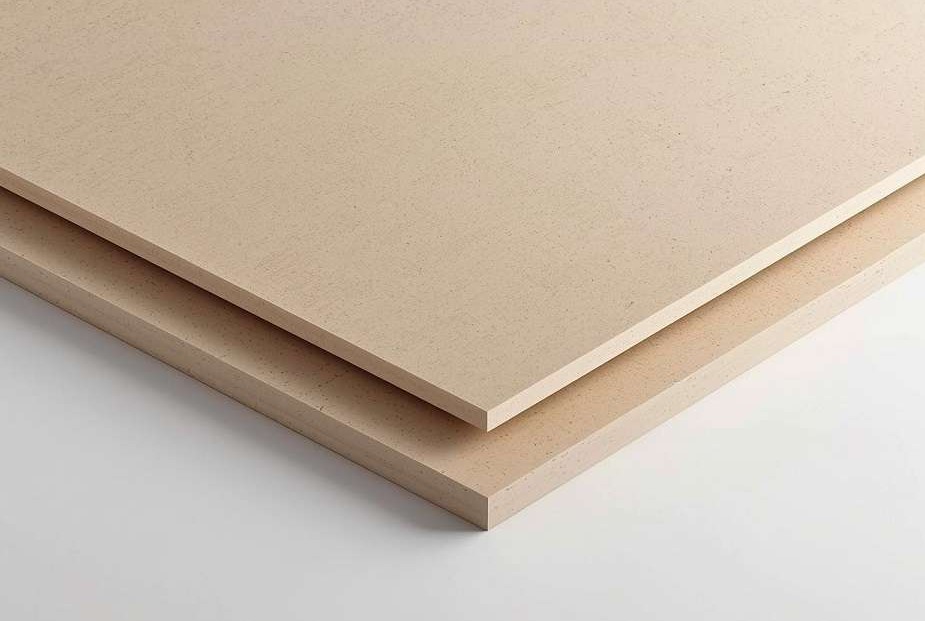
Here’s a number that should stop you cold: the same spec MDF board can cost 30–50% more depending on where you buy it.
That’s not a rounding error. That’s budget-wrecking money left on the table — and most buyers never see it coming.
The reason? MDF price is built in layers. Raw materials alone account for 40–60% of total cost. Production specifications add another 20–30%. Market conditions cover the remaining 10–20%. Those three layers don’t move on their own. They interact. And that interaction is where the real price swings happen.
The Specific Variables Costing You Money
Density and thickness are the most underestimated levers.
Standard MDF runs at 600–700 kg/m³. Step up to high-density (700–800 kg/m³) and you’re paying a 20–30% cost premium. But you also get a board that lasts two to three times longer under load. Thickness adds to this: every millimeter increase adds 5–10% to unit cost. That comes from higher material use and longer processing time. An 18mm board doesn’t just cost a little more than 6mm — it costs two to three times more.
Most buyers compare price per sheet. They should be comparing price per year of performance.
Finish and coating upgrades hit harder than buyers expect.
Moisture-resistant, fire-retardant, or pre-primed surfaces add 25–40% to the base MDF price. Specialized eco-certified grades like HDFWR carry a 30% premium on top of that. These aren’t arbitrary markups. They reflect real process complexity. But many buyers who don’t need those specs end up paying for them anyway — because they didn’t ask. Ask before you order.
Custom dimensions create hidden waste costs.
Standard 8×4ft is your baseline. Move to a custom or oversized cut — say, 12×6ft — and you absorb an additional 15% in handling, energy, and material waste. That cost won’t show up as a line item. It just inflates your per-unit number without you noticing.
The Knowledge Gap That Keeps Buyers Overpaying
The China-to-Germany price spread tells the whole story. In Q4 2023, Chinese MDF traded at $559/MT. German MDF hit $964/MT. That’s a 73% premium driven by regulatory compliance, regional demand, and logistics — not product quality alone.
Treating those two quotes as equal is a $405-per-metric-ton mistake.
The fix isn’t complicated. You need to know which variables to question before you sign a purchase order — not after the sheets arrive. Get clear on density, thickness, finish specs, and sourcing region upfront. That’s where the overpaying stops.
How Thickness Impacts Total MDF Cost (Not Just Price per Sheet)
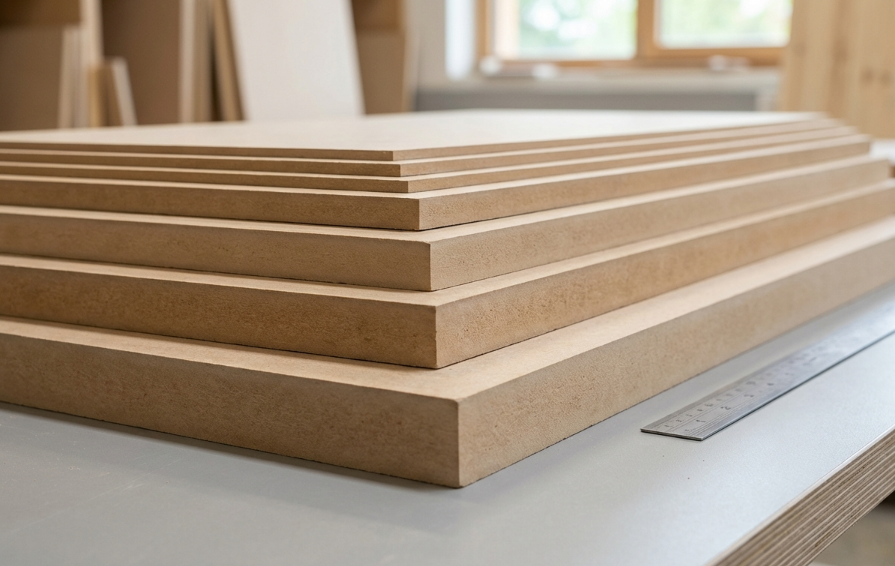
Thickness is the single most predictable cost driver in MDF pricing — and most buyers still get it wrong.
Here’s the data. A standard 4×8 ft sheet priced by thickness:
6mm: $10–$20 per sheet
12mm: $20–$35 per sheet
18mm: $25–$45 per sheet
25mm: $35–$60+ per sheet
That’s not a linear climb. Going from 6mm to 25mm doesn’t double your cost — it can triple it. The reason is simple once you see it.
Three Hidden Cost Multipliers Inside Every Extra Millimeter
Material consumption compounds fast. A 12mm sheet uses about twice the fiber and resin of a 6mm sheet. That ratio doesn’t shrink as you go thicker — it stacks.
Press time drives up production cost. A 25mm board requires 1.5–2x the press cycle of a 6mm board. That means more machine time, more energy, and more labor. You absorb all of it in your per-sheet price — whether the invoice breaks it out or not.
Weight inflates shipping cost. A 25mm sheet weighs 80–100 lbs. A 6mm sheet? 30–40 lbs. Same footprint, but freight cost per unit more than doubles.
Match Thickness to Load — Not to Assumption
This is where buyers lose real money. Ordering thicker sheets than you need is a quiet budget drain. You pay more per sheet, more to ship it, and more to handle it — with zero performance gain.
- Non-load-bearing applications (cabinet backs, decorative panels): 6–12mm is enough. You save 40–70% compared to 25mm.
- Light-load applications (shelving, furniture carcasses): 12–18mm covers 80% of standard projects.
- Structural applications (load-bearing surfaces exceeding 50 psf): 18–25mm is where the extra cost is justified.
MDF price per sheet only makes sense against what that sheet needs to do. Buying 18mm for a decorative back panel isn’t caution — it’s waste. Buying 12mm for a structural shelf isn’t savings — it’s a failure waiting to happen.
Check your actual load requirements before you order. That one step saves 30–40% on material costs — with no drop in performance. In flooring applications, thickness decisions also affect installation performance and long-term stability, like how MDF in wood flooring, like laminate flooring behave under load.
How to Choose the Right MDF Density Without Overpaying
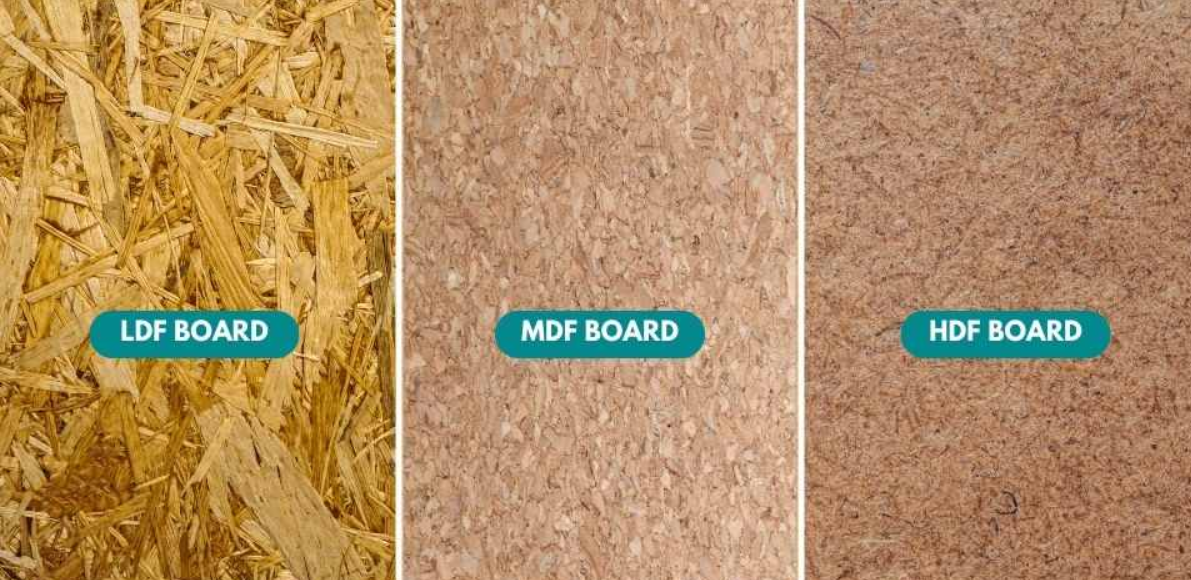
Density is the spec most buyers skip. It’s also the one that determines whether your project holds together or falls apart. Understanding MDF density is critical when evaluating suppliers, especially when comparing different production standards like those outlined in MDF board manufacturing specifications.
Standard MDF sits at 650–750 kg/m³. High-density MDF starts at 800 kg/m³ and pushes past 1,000 kg/m³ on the upper end. That gap in numbers creates real performance differences you’ll feel on the job.
What the Density Difference Does
Edge strength increases by 20–30%. A high-density board handles 5kg of load on a 3mm edge without chipping. Standard MDF fails between 3–4kg. Tight edge machining or exposed edges over 2 meters? That difference isn’t marginal — it’s structural.
Screw-holding capacity jumps 50–75%. A #8 screw in 18mm high-density MDF holds up to 100kg of pull-out force. The same screw in standard MDF holds around 60kg. For cabinet builds and hardware-heavy installations, that gap shows up every day the piece is in use.
Surface finish gets noticeably better. High-density MDF achieves surface roughness below Ra 5μm. Standard boards run Ra 8–10μm. That 40% drop in surface irregularity means smoother veneer adhesion, fewer sanding passes, and a cleaner final coat.
Is High-Density Worth the Price Premium?
The premium runs 60–80% over standard. That’s real money. Don’t pay it unless your project genuinely demands it.
Pay for high-density when:
– Screw loads exceed 50kg/m²
– You’re machining edges or routing complex profiles
– The installation environment runs above 70% relative humidity
Stick with standard MDF when:
– Panels are painted and under 1.5 meters
– The board is non-structural and won’t carry hardware load
How to Verify Density Before You Buy
Suppliers throw the term “high-density” around without much precision. Don’t take their word for it.
Use this verification checklist:
Check the datasheet — demand a confirmed density figure of ≥750 kg/m³ for standard grade, ≥850 kg/m³ for high-density
Weigh a sample — a 300×300×18mm piece should hit at least 4.2kg for genuine high-density board
Request the density profile graph from the supplier’s lab report — core density should match the claimed average
Walk away from anything below 700 kg/m³ on structural projects — no exceptions
A vague “high-density” label without test documentation is a red flag, not a selling point. The price difference between grades is only justified by verified specs — not just claimed ones.
When Specialty MDF (Moisture / Fire / Primed) Is Worth the Cost
Specialty finishes are where MDF pricing slips past buyers who aren’t watching closely.
The board gets scrutinized. The finish? Most buyers treat it as an afterthought — until the invoice lands. That’s an expensive habit. Specialty coatings and treated grades add 15–40% to your base MDF cost. They do it without warning, and without showing up clearly on the front end.
Here’s what each category costs you.
Moisture-Resistant Finishes
Basic chemical-clean moisture prep runs $0.40–$0.75/sq ft. A full waterproof membrane system pushes that to $4.00–$12.00/sq ft. That’s a 10x price swing based on application environment alone.
The trap is common. Buyers order moisture-resistant MDF for dry interior spaces where standard grade does the same job. That upgrade costs 10–20% more and gives you nothing extra in return. Save moisture-resistant grades for spaces that need them:
Bathrooms
Commercial kitchens
Exterior-adjacent installs
High-humidity environments justify the cost. Dry interiors don’t.
Fire-Retardant Grades
Fire-retardant MDF carries a 30%+ premium over standard board. Applied costs land at $8.00–$25.00/sq ft. In regulated environments, fire-safety compliance adds another 5–20% to total project cost on its own.
There’s a key distinction to know: mandated vs. recommended.
Mandated specs are non-negotiable. Budget for them, full stop.
Recommended specs are often not required at all.
Confusing the two triggers a 10–25% cost hike your project didn’t need. Check the spec sheet before you commit.
Pre-Primed and High-Performance Primers
Standard primer runs $0.75–$1.25/sq ft. Specialty options — stain-blocking, low-VOC — climb to $1.00–$3.00/sq ft. Low-VOC compliance adds a 10–25% material premium on top of that, plus 5–15% in extra equipment costs.
There is a real upside here. Pre-primed MDF cuts labor on the back end. Low-quality unprimed board often needs two or more paint coats. That doubles your application time. The higher upfront cost tends to pay for itself once you account for total labor.
What Buyers Get Wrong
Over-specifying is the most common mistake in finish selection. A mid-sized 10,000 sq ft job can reach $27,867–$83,602 CAD once specialty premiums stack up. Compare that to $3.50–$6.00/sq ft for standard commercial work. That gap comes from buyers defaulting to “better safe” without checking whether the spec is required in the first place.
Before approving a finish upgrade, ask one question: does the application environment demand it? No clear yes means standard grade is your answer.
How Raw Materials (Resin & Fiber) Affect MDF Pricing Stability
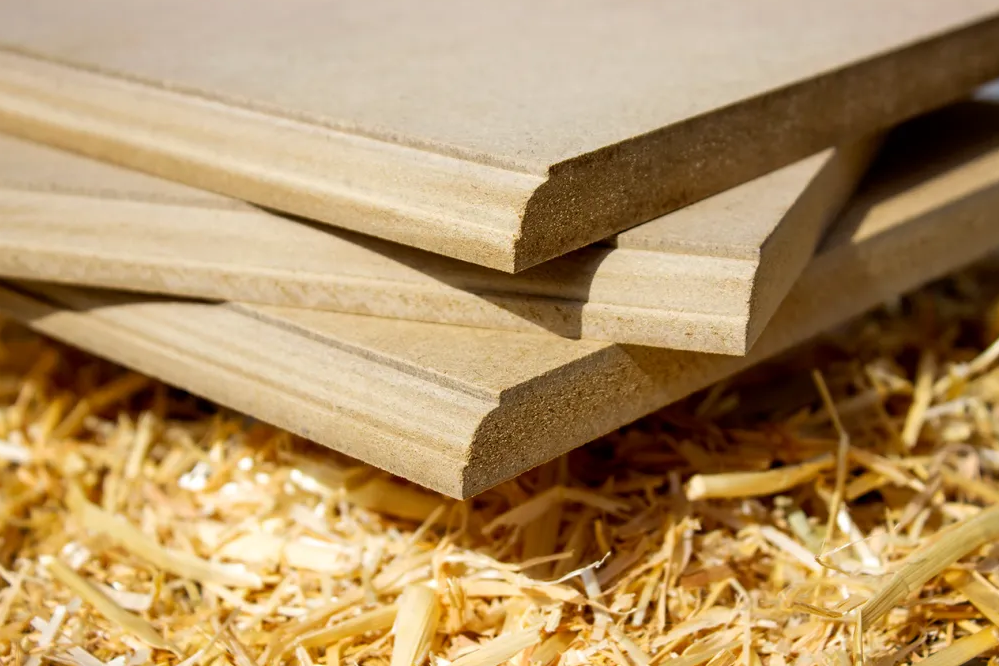
Wood fiber and resin make up most of what you pay for in every MDF sheet. And those two inputs are far from stable.
Hardwood fiber prices climbed 44% between 2020 and 2023, hitting a 10-year high of $113/BDMT in summer 2023. Softwood wasn’t far behind — up 5–20% worldwide over the same period. Canadian and Nordic suppliers posted some of the sharpest increases. Raw material costs move that fast. Manufacturers don’t absorb the difference. You do.
Virgin vs. Recycled Fiber: The Cost Trade-Off
Most buyers miss this distinction. Virgin roundwood and chip costs have held fairly steady over the past eight years. Recycled fiber (OCC) is the volatile one — swinging between $27 and $180 per ton of pulp produced.
The efficiency gap matters too. One ton of pulp requires 3.5 tons of virgin wood to produce. OCC converts at close to a 1:1 ratio. So OCC carries a built-in cost edge — until prices spike. At that point, the efficiency advantage vanishes fast. Boards using recycled fiber content get repriced to match.
Ask your supplier before your next order: what fiber source is in this board, and where does it come from? That one question can explain a price difference you’d never track down otherwise.
Brand vs Local Supplier: When Higher Prices Are Justified
The price gap between branded MDF suppliers and local alternatives has grown 38% since 2019. That’s not a small shift. That’s a structural change in how you need to think about sourcing.
Here’s the uncomfortable truth: the gap isn’t always justified.
National brands carry higher manufacturer markups by default. They also benefit from scale and vertical integration. That means they often produce at lower physical cost than local suppliers, yet charge more at the point of sale. That spread goes straight to margin — not material quality.
Where Local Suppliers Win
Local MDF suppliers face the same inflation pressures as national brands — wages, energy, raw materials, inventory. The cost base is close to identical. What’s different is the markup layer on top.
For standard-grade MDF in non-specialty applications, a local supplier quoting 15–20% below a national brand is often giving you the same board. The brand premium buys you marketing, not performance.
Where the Brand Premium Is Worth Paying
Three situations justify paying more for a recognized brand:
Consistency requirements — 24% of buyers cite quality and consistency as their primary concern with local suppliers. Your project may demand tight density tolerances across multiple production runs. A certified brand with documented QC processes cuts that risk significantly.
Specialty certifications — Fire-retardant and moisture-resistant grades require verified compliance documentation. Established brands maintain clear audit trails. Many local suppliers don’t.
Large-volume contracts — National brands offer supply chain reliability at scale. A local supplier that can’t guarantee consistent volume on a 500-sheet order each month is a liability, not a bargain.
The decision isn’t brand vs. local. It’s what you need vs. what you’re being charged for.
How Transport and Location Change Your Final Landed Cost
Geography is one of the most expensive factors in your MDF purchase — and it never shows up labeled that way.
Where your board gets made matters. How far it travels to reach you matters just as much. Together, they can swing your landed cost by 20–40%. That’s before a single tariff or port fee hits the bill.
Regional Price Floors Are Not Equal
Start with the baseline. India has a regional supply surplus. That pushes MDF prices 20–30% below global averages. China averages $450–$500/ton. Europe runs $550–$650/ton. Raw material costs, tighter demand, and regulatory overhead drive that gap — adding a 15–25% premium over other regions.
Same product category. Different cost floors entirely. Your sourcing region alone creates that spread.
Every Kilometer You Ship Costs Real Money
Here’s the freight math most buyers skip upfront:
| Distance | Truck Add-On | Rail Add-On |
|---|---|---|
| 100 km | $15–25 (2–5%) | $10 (1–3%) |
| 500 km | $75–125 (10–20%) | $25–50 (5–10%) |
| 1,000 km | $150–250 (20–40%) | $50–100 (10–20%) |
Take a single 4×8 sheet hauled 500km by truck. That adds $50–$100 to your unit cost right there. Scale it across a 20-ton order, and freight alone adds $1,000–$2,000 — that’s 5–10% on top of a $20,000 base.
Ocean freight makes it worse. Shanghai to the US West Coast ran $3,000–$5,000/TEU in 2024. That’s up 115% from pre-pandemic levels. Red Sea disruptions pushed China’s containerized freight index up 148% between October 2023 and June 2024. Those aren’t small swings — they change your total cost in a serious way.
The Landed Cost Formula You Need
Before you approve any overseas quote, run this calculation:
FOB price + distance-based freight + applicable tariffs + insurance (1–2%) + port fees ($200–$500) + inland delivery
US buyers importing MDF face 25% tariffs. Add $2,000–$4,000 per 40ft container in freight on top of that. The total add-on reaches 30–50% over domestic pricing. Your landed cost running more than 15% above a comparable domestic quote means the import math doesn’t hold up.
Run the numbers before you commit. That “cheaper” overseas board picks up a lot of extra cost by the time it reaches your door.
The Buyer’s Pre-Purchase Checklist: 7 Things to Verify Before You Commit
Seven checks. That’s all that separates a confident MDF purchase from an expensive mistake.
Run through this list before you approve any order — no matter how good the MDF price looks on paper.
1. Match spec to application.
Confirm thickness and density against your actual use case. Cabinetry needs 3/4″. Flooring underlay works fine at 1/2″. Furniture projects call for 32–40 lb/ft³. Decorative panels need 45+ lb/ft³. Structural applications need load-bearing capacity above 500 psi. Guessing here means rework.
2. Inspect physical quality before accepting delivery.
Check for uniform density across the cross-section. More than 5% variation is a rejection-level defect. Zero core voids larger than 0.1″ in diameter. The face should be smooth with no fiber clumps above 2mm. Run a peel test. Delamination risk should sit below 1%.
3. Calculate total landed cost — not unit price.
Unit price is just the starting number. Add cutting waste (10–20% for custom dimensions), transport ($0.50/sq ft), and finishing ($2–5/sq ft). A board at $18/unit with 15% waste lands at $21 effective. A premium board at $22/unit with just 5% waste runs $23.10 total. The cheaper board ends up costing more. Run the math every time.
4. Demand supplier certifications.
CARB2 Phase 2, FSC, and ISO 9001 are non-negotiable for serious projects. Ask for batch consistency data. Density variance should stay under 3% across five production lots. For any order above 100 sheets, require sample testing: three to five panels, bend test above 2,000 psi.
5. Time your purchase against market cycles.
Resin prices spike up to 15% at peak demand. Energy costs swing 10–20%. Index prices drop 5–10%? Build buffer stock — order 20% above your immediate need. Post-peak pricing softens 8–12%. That window is real money if you’re ready for it.
6. Verify your shipping terms are fully priced in.
FOB and CIF are not interchangeable numbers. Make sure freight, tariffs, insurance, and port fees all land in your cost calculation before you compare quotes. A lower FOB price from an overseas supplier can flip negative once logistics stack up.
7. Confirm certifications match your project’s compliance requirements.
Fire-retardant and moisture-resistant grades carry 15–40% premiums. Check whether those specs are mandated by code or just recommended. Paying for compliance you don’t need is a quiet budget drain. It shows up after the invoice — not before.
Work through all seven before you commit. MDF price shopping without this checklist isn’t buying smart — it’s guessing with a budget on the line.
MDF vs Plywood vs Particleboard: Which One Actually Saves You Money
Three materials. Three different price floors. Most buyers treat them as interchangeable options on a quote sheet. Buyers comparing MDF with other panel products should also understand how finished flooring systems behave in real applications
They’re not. Comparing MDF price against plywood or particleboard without looking at the application is like comparing a pickup truck to a sports car on fuel cost alone. The number is real, but without context, it means nothing.
Here’s the actual price stack:
Particleboard: $0.68/sq ft
MDF: $0.94/sq ft
Premium plywood: $1.25/sq ft
MDF sits in the middle — and that’s where its value lives. It runs 20–40% cheaper than quality plywood per sheet. Plus, it delivers something particleboard can’t: a smooth, paint-ready surface that needs little prep work.
Where Each Material Wins
Particleboard makes sense if budget is your main driver. It undercuts MDF by 20–40% per sheet. For disposable furniture, basic shelving, or back-end contractor work that clients never see, that’s real savings.
But know the limits. Particleboard sags under long-term load. It swells in humidity and breaks down in wet environments. Use it in the wrong spot and that low unit price turns into a costly replacement cycle fast.
MDF is the right call when surface finish and edge detail matter. Think cabinets, moldings, and interior furniture. MDF’s density — 700–850 kg/m³ — gives you better load distribution. The surface takes paint and veneer without issues. The long-term numbers also favor MDF over particleboard. Factor in less sanding, fewer hardware inserts, and a longer service life, and you get 30–50% better lifespan per dollar spent.
Plywood earns its higher price point in demanding conditions. Screw-holding strength, outdoor exposure, high-humidity spaces — no other panel product performs at that level. You pay more, but you get performance that the others can’t match.
Start with the application requirement, not the unit price. That’s the comparison that holds up.
Buyer Mistakes That Lead to MDF Overpaying and Project Failure
| Mistake | Description | Result |
|---|---|---|
| Mistake 1 | Comparing price per sheet instead of performance per lifecycle | Cheaper boards fail earlier, increasing replacement cost |
| Mistake 2 | Over-specifying thickness or density | 20–50% unnecessary material cost increase |
| Mistake 3 | Paying for moisture/fire resistance without real need | +15–40% cost with zero benefit |
| Mistake 4 | Ignoring freight and landed cost | Imported MDF becomes more expensive than local supply |
| Mistake 5 | Trusting “high-density” claims without verification | Structural failure or machining defects |
Conclusion
Decision Guide: How to Choose the Right MDF Specification
Use this decision logic before placing an order:
Decorative / non-load panels → 6–12mm standard MDF
Furniture / cabinetry → 12–18mm medium density MDF
Structural / heavy load → 18–25mm high-density MDF
High humidity environment → moisture-resistant MDF
Compliance-required projects → certified fire-retardant MDF
If your application does not clearly require an upgrade → do not pay for it
| Factor | Cost Impact | When It Matters | Buyer Action |
|---|---|---|---|
| Thickness | +5–10% per mm | Structural load | Match to load requirement |
| Density | +20–80% | Hardware / machining | Verify with test data |
| Finish | +15–40% | Humidity / fire compliance | Only if required |
| Freight | +20–50% | Import orders | Calculate landed cost |
| Region | 25–70% difference | Global sourcing | Compare by region |
MDF price isn’t just a number on a supplier’s quote. It’s shaped by thickness, density, finish type, raw material quality, and where you’re buying it.
The buyers who get burned aren’t the ones who spend too much. They compare prices without comparing specs. Then they wonder why the cheaper sheet warped, chipped, or failed inspection.
Expert Opinion:
“I’ve spent years sourcing MDF for large commercial and residential projects. Here’s what I know: buyers who stay on budget are not the ones hunting for the lowest unit price. They’re the ones who understand total cost of ownership. A 30–50% price gap between identical specs is not a market fluke. It happens because buyers compare surface numbers without asking what’s behind them. The real cost lives in density tolerance, fiber source, resin grade, and landed freight. Build those variables into every quote comparison. Until you do, you’re not evaluating MDF price — you’re just reacting to it.“
———— Liu , Senior Materials Procurement Specialist with 18+ years of experience in wood-based panel sourcing From Chinese MDF Factory