
Egypt’s growing furniture industry is driving demand for MDF, while local MDF supply is struggling to keep pace. That gap is showing up in longer lead times, higher prices, and shifting sourcing strategies across the region.
As furniture production scales to meet both domestic demand and export orders, buyers are finding out that Egyptian board manufacturers can’t yet cover the volume. So imports are climbing, and traders are taking on more currency risk and freight bottlenecks.
Understanding Egypt’s MDF supply trends now means the difference between locking in stable panel pricing and scrambling for alternative suppliers when the next shortage hits. The following breakdown covers where wood-based panel capacity stands today, what’s driving furniture-sector demand, and where the real gaps and opportunities are opening for manufacturers and traders willing to move early.
Egypt MDF Market Size And Growth Trajectory (2024-2033)
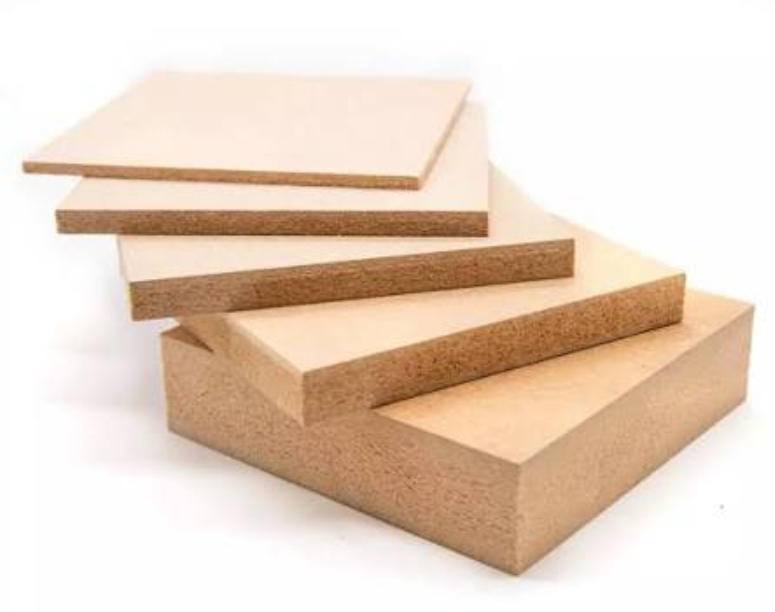
Egypt’s MDF market sat at USD 308.7 million in 2024. By 2033, that figure is projected to hit USD 669.5 million. Do the math: a 9.7% CAGR from 2025 through 2033, plus an absolute gain of USD 360.8 million over the forecast window. That’s more than double the market’s current size, a 2.17x growth multiple in less than a decade.
Compare that to what’s happening across the rest of the region. Egypt starts to look less like a typical market and more like an outlier.
How Egypt stacks up against regional wood-based panel growth:
- Middle East wood-based panels: 0.6%-0.7% CAGR (2024-2035), reaching roughly 25M cubic meters and USD 11.3B by 2035
- MENA wood-based panels (first estimate): 1.5% volume CAGR / 2.1% value CAGR, moving from 22M cubic meters / USD 9.6B in 2024 to 26M cubic meters / USD 12B by 2035
- MENA wood-based panels (second estimate): 1.2% volume CAGR / 1.7% value CAGR, projecting 28M cubic meters and USD 13.6B by 2033
Egypt’s growth rate isn’t just ahead of these benchmarks. It’s several times higher. For furniture manufacturers and board traders evaluating where to place long-term bets, this gap matters. A market growing at nearly ten times the regional average signals sustained demand pressure, not a temporary spike tied to one project cycle or export order.
That positions Egypt as a premium growth opportunity within the wider MENA wood-based panel industry. For suppliers weighing where to expand distribution or lock in production capacity, the case for prioritizing Egypt over broader Middle East plays gets stronger with every data point. The construction material demand feeding into this — new housing, commercial fit-outs, hospitality builds — keeps compounding the furniture sector’s appetite for board supply that local mills alone can’t satisfy.
Egypt MDF Supply Trends: Local Production vs Import Dependency
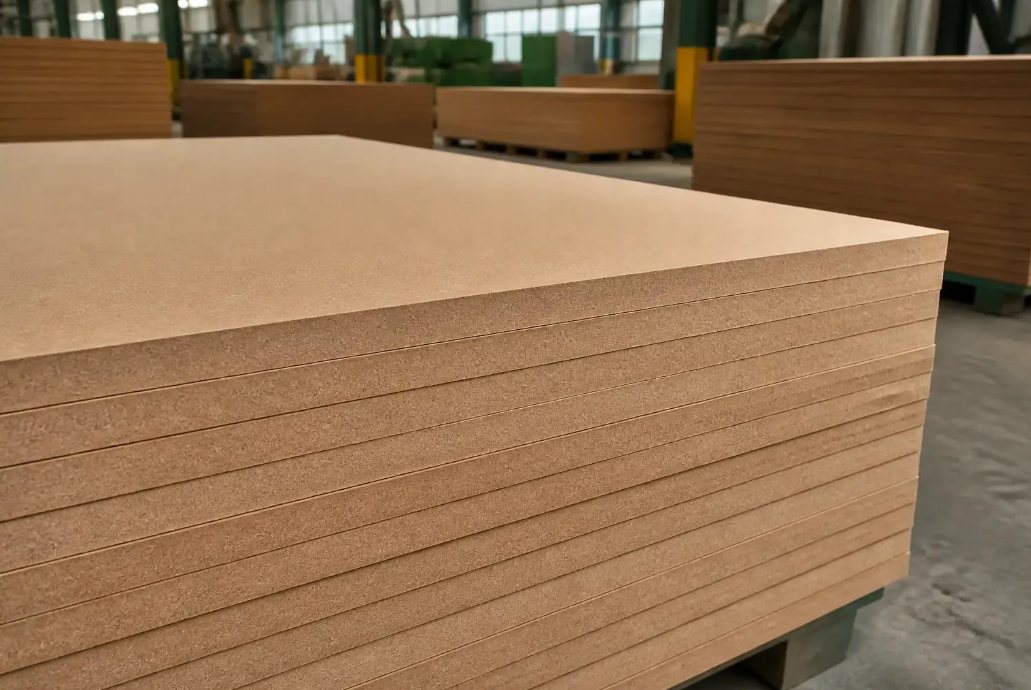
Numbers tell the real story here. For decades, Egypt’s entire domestic MDF output rested on one producer: Nag Hammadi Fiberboard, running two lines totaling roughly 90,000 m³/year — 60,000 m³ for thick board, 30,000 m³ for thin board, built on German Siempelkamp equipment. One plant. That’s the whole local base. When it faced maintenance downtime or input shortages, the entire market felt it.
That concentration explains the historical 80%-90% supply gap analysts point to. Egypt leaned hard on imports to cover what domestic capacity couldn’t touch. Customs data back this up: in 2023 alone, Egypt imported $7.5 million worth of particle board and similar wood-based panels (HS 441010), totaling 9.79 million kg.
Why Local Feedstock Fell Short
Traditional wood-fiber supply in Egypt has never been abundant. That’s forced new projects toward unconventional inputs — rice straw and date-palm fronds instead of standard wood residue. It’s a workaround born of necessity, not innovation for its own sake.
The New Capacity Wave
Three projects change the math:
- WOTECH/Beheira (Idku): ~205,000 m³/year, running on 250,000 tonnes/year of rice straw, backed by a €210 million investment
- Toshka date-palm-frond plant: ~125,000 m³/year, built beside a 40,000-acre date farm
- Sadat City facility: 200,000 m³/year
Combined, that’s ~530,000 m³/year of design capacity. Even at a conservative 50-70% first-year utilization, that translates to 265,000-371,000 m³/year of real near-term supply — enough to close the historical gap, assuming feedstock logistics hold steady.
Egypt Furniture Industry Demand for MDF Board
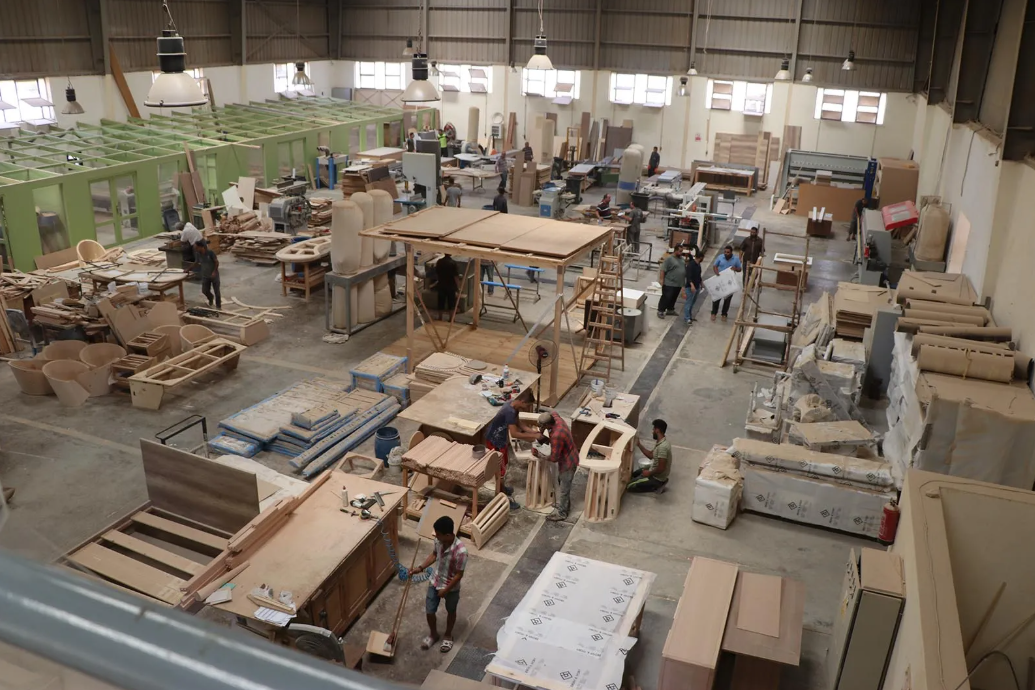
Cabinet doors. Wall panels. Modular kitchen units. Walk into any furniture workshop in Cairo or Alexandria and MDF is everywhere. furniture manufacturing is the single biggest pull factor behind Egypt’s demand for MDF boards, particularly for cabinets, wardrobes, wall panels, and modular furniture.
The Gap Furniture Makers Are Fighting
Industry estimates put Egyptian MDF demand at 160,000-190,000 m³/year. Local supply sits around 90,000 m³/year. That’s a 70,000-100,000 m³ annual shortfall. Domestic mills cover only 47%-56% of what furniture producers actually need. The remaining 44%-53% has to come from somewhere else, usually imports.
This isn’t isolated to MDF. Egypt’s broader wood products sector runs a deficit near USD 307 million, forcing furniture manufacturers to lean on imported panels just to keep production lines moving.
Local capacity hasn’t caught up yet. For years, Egypt’s MDF output ran through one bagasse-based facility in Naga Hammadi, with expansion capped at roughly 97,000 m³ by 2026. Two newer entrants — Nile Wood Factory in Sadat City and Wood Tech Factory in Al-Beheira — now supply about 50% of the input volume feeding MDF production nationwide.
Why Furniture Makers Keep Choosing MDF
Cost and workability. MDF machines cleanly, paints and laminates well, and beats solid wood on price. Retail snapshots show 8mm MDF around EGP 250/m, 4.2mm near EGP 150/m, 3mm at EGP 105-110/m, and 2mm around EGP 80/m. Against particleboard (weaker screw-holding) and plywood (pricier, more moisture-resistant), MDF wins the middle ground most furniture producers need.
Import patterns reveal a tight buyer base — just 11 active MDF importers, with 4 controlling 80% of volume. For manufacturers exporting to Europe and Gulf markets, quality compliance and consistent thickness aren’t optional. They’re the entry ticket.
MDF Pricing Trends And Product Mix Analysis In Egypt
Egypt MDF Pricing by Thickness and Product Type
| MDF Type / Thickness | Typical Application | Indicative Price in Egypt | Key Buyer Consideration |
|---|---|---|---|
| 2–3 mm | Backing panels, drawer backs, light-duty components | EGP 80–110/m | Low-cost option for non-structural applications |
| 4–6 mm | Cabinet backs, furniture components, decorative parts | EGP 150–600/panel* | Price varies significantly by board size and finish |
| 8 mm | Furniture components, doors, panels | Around EGP 250/m* | Common mid-thickness option; verify whether price is per linear meter or panel |
| 12–15 mm | Furniture carcasses, shelving, cabinetry | Market-dependent | Balance between material cost, stiffness, and machining |
| 15–18 mm | Kitchen cabinets, wardrobes, modular furniture | Market-dependent | Important furniture-grade range in Egypt |
| 18–19 mm | Furniture carcasses, doors, decorative laminated panels | EGP 3,525–9,875/panel* | Laminated and finished boards can command a substantial premium |
| 20–30 mm | Heavy furniture components, specialized applications | Quotation-based | Less suitable for direct retail price comparison |
* Price units and board dimensions must be stated clearly before using these figures commercially. Your original figures mix EGP/m, EGP/panel, and older EGP 100–600 per board, so they should not be presented as directly comparable prices.
Price tags on Egyptian MDF swing hard depending on thickness, finish, and where the board came from. A 2.5mm backing sheet and a 19mm decorative laminate aren’t playing in the same market at all, even though both carry the same three-letter name. Buyers comparing Egyptian and imported panels should define MDF specifications for density, thickness, moisture content, formaldehyde emissions, and intended application before requesting quotations.
The Thickness Ladder
Egypt’s retail market prices boards by thickness: 2.5mm, 6mm, 8mm, up to 30mm in some catalogs. Older consumer references put basic boards at LE 100-600 per board. Current listings for 8mm-19mm decorative laminated MDF show LE 3,525-9,875 per panel, with premium white pearl at the top. The 15-18mm range dominates structural furniture demand. Thinner stock (3mm-12mm) mostly serves backing panels and light-duty parts.
Egypt MDF Import Cost Structure
| Cost Component | Indicative Level | Impact on Final Price |
|---|---|---|
| Average MDF landed price | ~US$824/m³ | Base import cost |
| Turkey-origin MDF | ~US$825/m³ | Close to the reported market average |
| Freight & port handling | ~5–12% of CIF | Adds to landed cost before local distribution |
| Brokerage, financing & distribution | ~15–30% | Significant additional cost after arrival |
| Potential retail markup over CIF | ~40–100%+ | Explains the large gap between import value and retail pricing |
What Import Data Reveals About True Cost
Average MDF landed at $824/m³ in June 2023, barely changed from the prior month. Turkey-origin board priced at $825/m³ that same month, nearly identical to the average and among the highest origin prices tracked.
Add freight and port handling (5-12% of CIF, roughly $40-100/m³), then duty, brokerage, financing, and distributor margin (another 15-30%), and the final retail markup over CIF can hit 40-100%+. That gap explains why Egypt’s board prices look inflated compared to raw import figures. Most of what sells is semi-finished or laminated, not bare board.
Why Turkey Holds The Middle Ground
Turkey’s MDF pricing sits at parity with Egypt’s import average, but proximity cuts freight time and working capital costs versus Asian suppliers. Turkish mills also produce heavily in the 15-18mm furniture-grade range, exactly where Egyptian kitchen and wardrobe manufacturers buy most. Established trade relationships add credit terms and delivery reliability, which often outweighs a marginally cheaper quote from further away.
For procurement teams, the practical benchmark is treating ±10-20% monthly price movement as normal noise tied to FX and freight, with premium laminated SKUs swinging even wider.
Short-Term Vs Medium-Term Market Gap Implications For Buyers
Two different playbooks apply here, depending on your time horizon. Buyers ignoring that distinction end up either overpaying for panic stock or underhedged when the pound moves again.
Short-Term (1–2 Years): Lock Rate, Lock Volume, Lock Delivery
The Egyptian pound’s post-2023 devaluation is the reference point nobody in procurement forgets. Official rates fell from roughly 31/USD toward a parallel-market rate near 40/USD — a swing near 40%. That kind of currency move hits landed MDF cost directly, on top of freight and financing.
Egyptian imports typically route through letters of credit or collections. L/C approval drags out timelines; collections shift risk onto the release-versus-payment gap. Short-term buyers should:
- Lock quarterly contract pricing, with an FX-trigger renegotiation clause built in
- Split deliveries into multiple batches rather than one large shipment exposed to a single exchange-rate snapshot
- Hold extra safety stock to absorb L/C approval delays and customs holdups
- Shift volume toward local stock where the spec allows, given how thin Egypt’s domestic manufacturer base still is
Medium-Term (2–4 Years): Diversify Suppliers, Track New Capacity
The supply gap won’t close through imports alone. Nile Wood Factory (Sadat City) and Wood Tech Factory (Al-Beheira) are expected to supply roughly 50% of MDF input volume once ramped. That shifts the market from pure import scarcity toward a phase where local capacity exists but delivery consistency during ramp-up remains uncertain.
Medium-term buyers should build dual-sourcing structures — import plus domestic, run in parallel — reassess allocation quarterly as new plants report output, and split contracts across 2–3 suppliers rather than depending on one mill’s ramp schedule. Treat lead-time stability as equal in weight to price; new capacity almost always wobbles before it stabilizes.
Sourcing Strategy Recommendations For Furniture Manufacturers And Traders
A supplier scorecard beats gut feeling in a market this volatile. Buyers who treat MDF procurement as a checklist exercise come out ahead when the next shortage or currency swing hits.
Set Hard Screening Thresholds
Vet every MDF board supplier in Egypt against measurable quality, capacity, and delivery criteria. Before approving an MDF supplier, buyers should request MDF quality test reports covering density, moisture, Formaldehyde emissions, and relevant mechanical performance.
- Delivery consistency: flag any supplier whose lead-time variance exceeds 7 days. Track on-time delivery and downgrade below 95%, especially after three consecutive months under 90%.
- Moisture content: accept 9–12%. Send anything above 12% for recheck and reject outright past 14%.
- Batch density variance: keep it within ±5% across a single shipment.
- Certification: require CARB Phase 2 / EPA TSCA Title VI for U.S.-bound goods, EN 622-5 for European orders, backed by third-party lab reports.
Build Dual-Origin Coverage
Never single-source. Split allocation 70/30 or 60/40 across two mills or two countries. If defect rates cross 2–3% or lead times slip twice running, trigger the backup supplier automatically.
Lock In Local Mills With Structured Deals
Prepaying 20–30% for guaranteed priority production and locked pricing is standard practice among traders working the particle board Egypt market. Prepaying 20–30% for guaranteed priority production and locked pricing can help buyers secure supply in the Egypt MDF market. Add VMI-style joint inventory (2–4 weeks buffer near port) and write moisture, grade, and color-consistency KPIs directly into the SLA.
Watch The Right Signals
Egypt’s furniture sector pulled in exports worth billions of EGP through the 2010s, and the industry now covers 2.2% of GDP across 15,800 manufacturers. Track CAPMAS releases and Damietta cluster announcements — that’s where new wood fiber board supply chain capacity shows up first.
Conclusion
Egypt’s MDF market is caught between rising furniture production and a supply base that still depends heavily on imports. That gap won’t close quickly. Local capacity is expanding, but only gradually, while furniture makers’ demand keeps climbing faster than domestic mills can keep up. Price swings tied to currency moves and freight costs will stay the norm for the medium term, not the exception.
For manufacturers and traders, the message is simple. Don’t wait for the market to settle before locking down supply. Diversify your sourcing now. Build ties with a reliable MDF board supplier in Egypt that can deliver consistent grades, documentation, and lead times. Buyers who move early on inventory and supplier diversification won’t just survive the gap — they’ll grab the margin advantage others miss. Contact us to explore reliable sourcing partnerships today.