
Argentina’s housing stock is aging, its cities are renovating, and somebody’s about to win big supplying the flooring underneath it all. Real families remodeling real apartments in Buenos Aires, Córdoba, and beyond are driving Argentina’s laminate flooring demand, chasing durability and design at a price that makes sense in today’s economy.
For manufacturers, distributors, and importers watching the South America flooring market from the sidelines, the question is how fast you need to move. This report breaks down where the growth is concentrated, what’s fueling it through 2030, and why laminate specifically is set to capture the lion’s share of Argentina’s renovation wave.
Argentina Laminate Flooring Market Size And Growth Forecast (2024-2030)
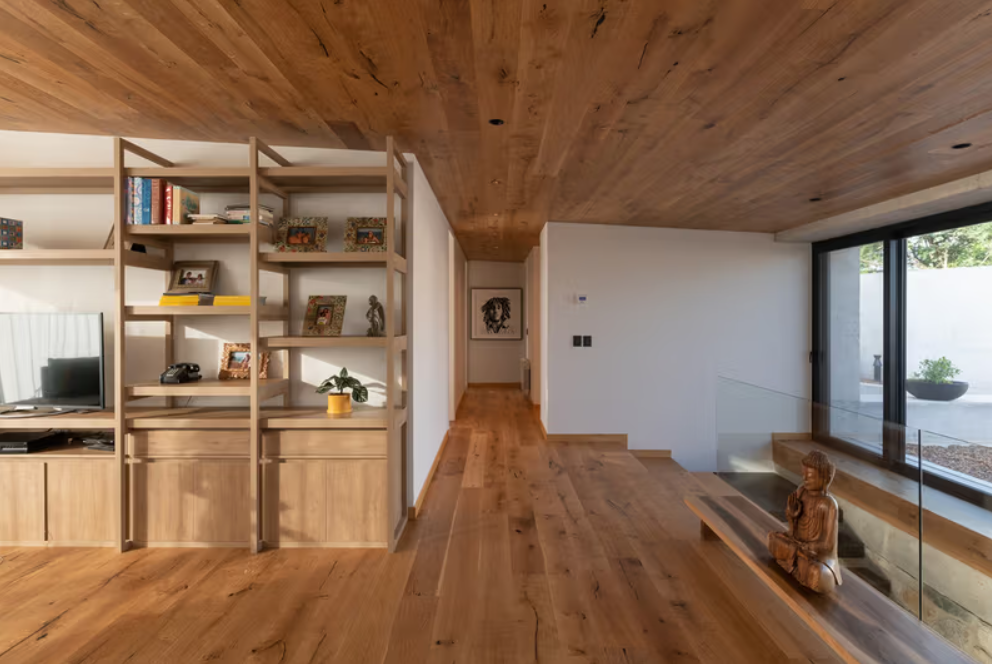
Put this number on your sourcing spreadsheet: USD 210.9 million. That’s what Argentina’s laminate flooring market was worth in 2024. By 2030, it should reach USD 290.2 million — an increase of about USD 79.3 million, or roughly 37.6% growth, over six years. The math works out to a 5.6% CAGR from 2025 to 2030. Not explosive. But steady, and that counts for a lot here.
Now zoom out. Argentina’s laminate growth runs close to the global laminate flooring category, forecast at about 5.7% CAGR for the same 2024–2030 window (another estimate puts global laminate/wood at 5.5%). Argentina isn’t an outlier. It’s moving with the world’s flooring dollars.
Laminate Is Outpacing Its Competitors at Home
Compare laminate to other flooring materials in Argentina:
- Vinyl flooring: 3.4% CAGR (2025–2030)
- Commercial flooring overall: 2.7% CAGR (2022–2030)
- Laminate flooring: 5.6% CAGR
Laminate is winning. Not by a landslide, but by a margin that matters if you’re deciding where to allocate inventory or manufacturing capacity.
The Regional Tailwind Is Even Bigger
Zoom out to South America and the story gets bolder. The region’s broader flooring materials market is valued at USD 148,870.05 million in 2024, climbing to USD 236,212.89 million by 2032 — a 7.71% CAGR. Laminate wood is the standout performer, forecast at 9.71% growth through 2032, already generating USD 9,269.51 million in regional revenue in 2024.
Argentina sits just behind Brazil as the region’s second key market for laminate sourcing and demand planning. For manufacturers weighing where to expand, that’s a signal.
Key Drivers Behind Argentina Flooring Market Trends
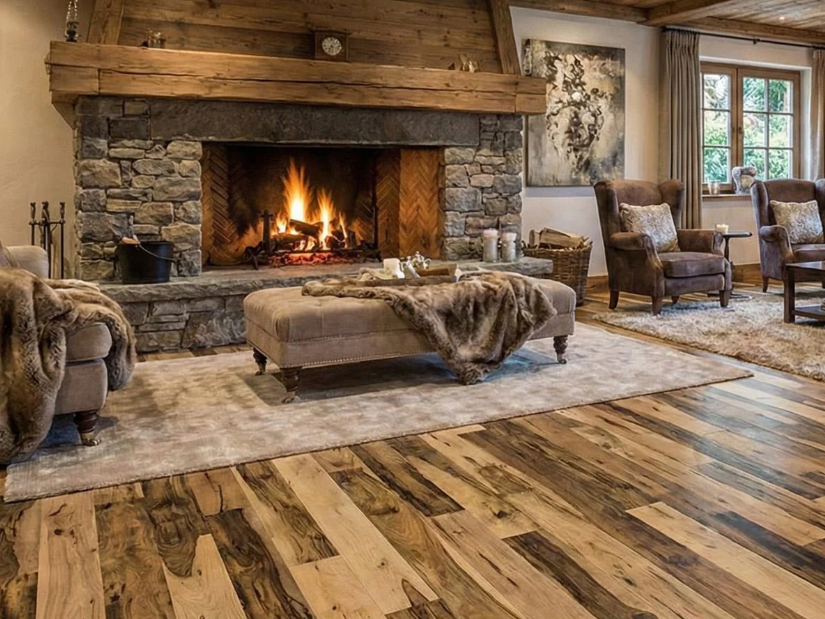
Argentina is a country of cities. More than 92% of the population lives in urban areas, concentrated in Buenos Aires, Córdoba, and Rosario. These three cities anchor nearly all new housing, commercial development, and infrastructure investment — which means they’re also where flooring demand lives.
Construction Is Moving, Even If Slowly
Argentina’s construction industry grew steadily, not spectacularly. Output rose 13.9% year-on-year in June 2025. The housing construction cost index in Greater Buenos Aires climbed 1.47% month-on-month in August 2025. projects are happening, and costs keep creeping up.
Residential is doing the heavy lifting. BBVA reports the residential market strengthened through 2025 — deed volumes up, prices per square meter rising, accessibility improving. Public works stayed flat. Private investment stepped in where government spending pulled back.
Renovation Is Where The Real Opportunity Sits
Light construction — renovations and small residential projects — made up roughly 30% of market activity in 2023. That number matters. Remodels replace flooring at a much higher rate than new builds, which often ship with basic subfloor and nothing more. If you’re planning distribution for laminate flooring manufacturers in Argentina, renovation is your most reliable channel.
Macro Stability Is Doing Quiet Work
Mortgage credit access and wage growth are giving households more room to spend on interior upgrades. That’s good news for mid-range laminate and vinyl categories specifically — the ones that benefit most when purchasing power ticks up incrementally rather than surging all at once.
Imports Face Real Friction
Flooring import economics in Argentina aren’t simple. Inflation and currency volatility inflate landed costs fast. Import prices hit 129.80 points in March 2026, according to Trading Economics. Foreign flooring products are getting more expensive to bring in, even as domestic demand holds steady.
The Longer Arc Still Points Up
Construction forecasts diverge slightly on numbers but agree on direction. One projects Argentina’s construction sector reaching USD 88.2 billion by 2034 at a 3.35% CAGR. Another puts it at USD 82.53 billion by 2035, growing at 2.23% CAGR. Either way, the base is expanding, and flooring rides along with it.
Commercial development adds another layer. Urban population growth is fueling business complexes, hospitals, hotels, and shopping malls across Argentina’s key cities. These projects typically favor ceramic tile and commercial-grade laminate in high-traffic zones, opening a parallel demand stream beyond residential remodeling.
Residential Renovation Trends Argentina 2025-2026: Design Preferences
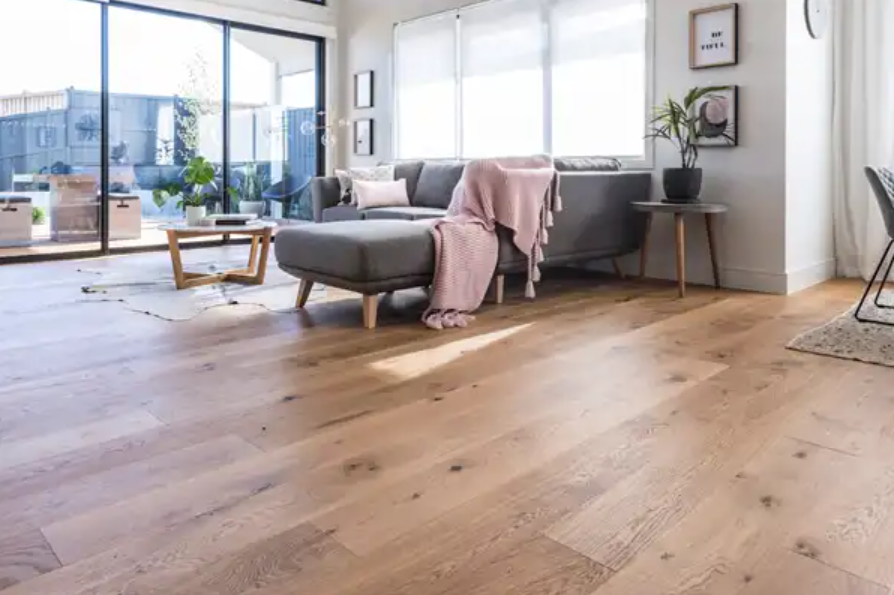
Color palettes rarely make headlines. But Argentina’s retreat from stark white finishes is reshaping what “renovated” looks like in 2025-2026.
Argentina interior design trends are pulling toward one direction: warm, natural, and calm. Local coverage from Revista Área Tres notes Argentina is breaking from the global apricot-orange wave in favor of warm neutrals: arena, beige, arcilla, layered with deeper accents like green and petroleum blue. Miranda Bosch frames it as a move toward modularity and organic materials. Para Ti describes silencio visual as flexibility, sustainability, and biofilia combined into one aesthetic. RE/MAX Home adds that white finishes are losing ground fast, replaced by handcrafted, nature-connected detailing.
For laminate flooring manufacturers in Argentina, that translates directly to a spec sheet. Matte or ultra-matte finishes beat gloss every time. Light wood grain with low contrast, like calm Scandinavian tones rather than aggressive rustic oak, reads as more aligned with the moment. Large-format, low-joint visuals support the “less clutter” instinct driving home renovation across South America. Microcement-style, stone-textured decors with muted speckling are showing up as a named 2026 material trend.
Distábile’s 70/20/10 rule offers a practical filter. Use 70% base tone, 20% transitional material, and 10% accent. For flooring materials in Argentina, that means base collections built around warm beige, sand, greige, oak-clear, and soft olive, with accent lines reserved for terracotta or charcoal.
Budget logic follows the same restraint. Renovation spending in this residential remodeling market in Latin America favors high-visibility surfaces first: floors, walls, kitchen fronts, because that’s where sustainable flooring solutions in Argentina deliver the biggest emotional payoff per peso.
Why Laminate Flooring Fits Argentina’s Renovation-Led Demand
Run the numbers on a 60-square-meter renovation, and laminate wins the argument before design even enters the room. Installed laminate in Argentina runs ARS 31,000–83,000/m². Vinyl sits at ARS 21,000–52,000/m². Solid wood? ARS 125,000–415,000/m². On that same 60m² apartment, laminate lands around ARS 1.86M–4.98M total. Solid wood costs ARS 7.5M–24.9M. That’s a 4x-to-5x gap, sometimes wider.
Laminate delivers the wood-look finish renovation buyers want, priced closer to vinyl and ceramic than to actual timber.
Speed Matters More Than People Admit
Argentina’s laminate is sold as flotante laminado — a floating system. Remove the old floor, click the new one into place, done. No sanding, no polishing, no carpentry-heavy install. Labor-only pricing for this kind of work runs as low as ARS 16,000–31,000/m², which fits into contractor-led renovation menus alongside vinyl and ceramic.
Maintenance Is Where Wood Loses Its Edge
Real wood needs refinishing. Pulido + plastificado de madera costs ARS 8,000–18,000/m², with plastificado alone running ARS 4,000–8,000/m². Laminate skips that cycle entirely.
One common spec: 7mm thickness, AC1 abrasion class, Class 21 domestic rating, 1200×190mm planks, paired with a 3mm foam underlay that cuts impact noise by 16dB. That’s built for bedrooms, living rooms, and rental turnarounds — the places Argentina’s renovation wave is hitting.
Market Segmentation: Where Laminate Flooring Demand Concentrates
Follow the money, and it lands on existing homes. Residential applications claim 65.1%–68.55% of laminate flooring demand, with renovation and replacement work accounting for 57.68% globally. North America’s residential replacement segment hits 79.8%. Argentina tracks the same script.
Your best customer is a homeowner or landlord doing a budget-controlled upgrade — an apartment in Buenos Aires, a suburban house in Córdoba, or a rental turn in Rosario. They want durability, easy installation, scratch resistance, and a price tag well below solid wood. That’s the whole pitch for laminate flooring manufacturers in Argentina.
Channel structure matters just as much as buyer profile. Indirect sales — distributors, dealers, and retail stores — control 68.56% of the market. Argentina’s flooring retail landscape is highly fragmented and dominated by independent players. That makes distributor coverage more practical than factory-direct deals.
Apartment renovations lean toward thin-profile, click-lock, low-noise SKUs sold through retail displays and contractor referrals — smaller tickets, higher frequency. Detached-house renovations take larger project sizes, wider plank visuals, and dealer-installer packages.
Local market pages already flag laminate as the fastest-growing segment in Argentina’s wood-and-laminate category. Waterproof and moisture-resistant lines fit urban kitchens and living areas best. Commercial renovation stays smaller but grows faster at 4.16% CAGR through 2031 — worth watching, not leading with.
Argentina Flooring Industry Growth: Challenges And Market Risks

Growth on paper doesn’t guarantee growth in your warehouse. Argentina’s modular flooring market sits at USD 113.9 million in 2026, climbing to USD 136.6 million by 2031, a 3.7% CAGR. That’s slower than the broader wood-and-laminate category’s 5.6% CAGR. Both numbers point to slow, incremental growth.
Consumer Pull Is Weaker Than You’d Like
Statista reports minimal growth in Argentina’s floor covering sector for DIY and hardware retail, driven by low consumer interest. Add limited product innovation and aggressive price competition, and you get a market where distributors chase the lowest landed cost over the best spec sheet. If you’re building a go-to-market plan around premium laminate, know this upfront.
Import Costs Stack Fast
Argentina taxes imports on CIF value, freight and insurance included in the duty base. Wood-based and plastic-laminate flooring inputs carry MFN rates of 9% and 12.6% on several relevant HS lines. Layer in ocean freight, insurance, and local handling, and margin erodes quickly.
It gets sharper. Argentina holds definitive anti-dumping duties on plates and tiles from China, Malaysia, Vietnam, Brazil, and India, extended in August 2024, with a fresh sunset review opened in August 2026. That’s active regulatory risk.
For laminate flooring manufacturers in Argentina, local production wins on lead time and peso-based pricing. Import brands compete on spec breadth. Both are constrained by a price-sensitive buyer.
Strategic Positioning For Laminate Flooring Brands In Argentina
Twelve. That’s how many wood and laminate flooring suppliers operate in Argentina as of 2025, up 20% from 2023. The door isn’t crowded yet, but it’s opening fast.
Build Your Line Around Three Tiers
Skip the one-size-fits-all catalog. Argentina’s buyers sort themselves into clear categories:
- Value: Basic wear-resistant laminate, competing on delivery speed and dealer rebates
- Mid: 12mm-range planks with upgraded wear layers and click-lock systems. This is your renovation workhorse.
- Premium: Low-formaldehyde, waterproof, sound-dampening underlay, design-forward textures for architects and high-end retail
That 12.3mm high-gloss spec already circulating among local suppliers? Use it as your mid-to-premium benchmark.
Certifications Close Doors Faster Than Price Cuts Open Them
Argentina is import-heavy and distribution-driven. Buyers here reward paperwork: E1 low-Formaldehyde compliance, FSC or PEFC traceability, VOC emission statements, and abrasion-class testing. A supplier with clean documentation and reliable lead times beats a cheaper competitor without them, every time.
Distribution Beats Direct Sales
All Covering Argentina’s network of 700-plus distributors shows the winning model: regional stores layered over city-level dealers in Buenos Aires, Rosario, Mendoza, and La Plata. Start with a Buenos Aires-area exclusive distribution deal, minimum order commitments, and annual rebates. Expand nationally once that foundation holds. Arm dealers with Spanish-language certification packets, sample boxes, and project pricing templates. That’s what converts a pitch into a signed agreement.
2030 Outlook: Long-Term Investment Value In Argentina’s Laminate Flooring Market
Numbers only tell half the story. Argentina’s laminate growth is outpacing its own neighborhood.
Latin America’s overall flooring market is projected at 3.1% CAGR through 2030, reaching USD 25,175 million. Argentina’s laminate segment beats that baseline by nearly double. Even Argentina’s resilient flooring category — vinyl, LVT, and similar hard surfaces — manages 5.1% CAGR toward USD 90 million by 2030. Laminate edges it out. One outlook goes further, pegging Argentina’s broader flooring-materials growth at 6.60% CAGR through 2032, with laminate wood hitting 8.67% — the fastest-growing segment in that forecast.
That’s the bull case. The realistic underwriting case is to assume mid-single-digit volume growth, not a breakout. Upside comes from renovation cycles and product-mix shifts, not new construction alone.
Timing Your Entry
0–12 months: Test SKUs through distributor relationships. Keep inventory turns conservative.
12–24 months: Expand mid-range laminate wood lines once sell-through confirms the 5%–6% growth range.
Through 2030: Scale if local execution captures that segment-level advantage and if Argentina’s housing market renovation demand holds up.
If macro volatility hits household budgets, growth could slide back toward the regional 3.1% floor. Structure around flexible inventory and mixed residential-commercial sales. Skip the big fixed-capacity bet.
Conclusion
Rising urbanization, a renovation-hungry middle class, and a growing appetite for durable, design-forward materials are rewriting the rules of the South America flooring market. Laminate sits at the intersection of affordability and aspiration.
The numbers back this up. The trends confirm it. For manufacturers, distributors, and importers watching Argentina laminate flooring demand and trend data closely, the question is how fast you can align your product line with what Argentine homeowners actually want underfoot.
Request our market entry brief, or talk to our team about partnership opportunities in the region.