
Peru imports nearly 60% of the wood-based panels it consumes, and that gap isn’t closing anytime soon. If you’re one of the many particle board suppliers eyeing South America’s timber industry for expansion, this is the market fundamental you can’t ignore.
Peru’s construction boom, a fast-growing furniture manufacturing sector, and chronic sawmill residue underutilization have created a rare window of strong demand, weak local supply, and almost no dominant player controlling distribution.That’s exactly the kind of gap particle board suppliers and panel manufacturers look for.
This guide breaks down where the opportunities for particle board suppliers in Peru’s growing panel market sit, from melamine-faced boards to equipment financing, so you can decide whether now’s the time to move and how to position yourself before competitors do.
Peru’s Wood Panel Market Size And Growth Trajectory
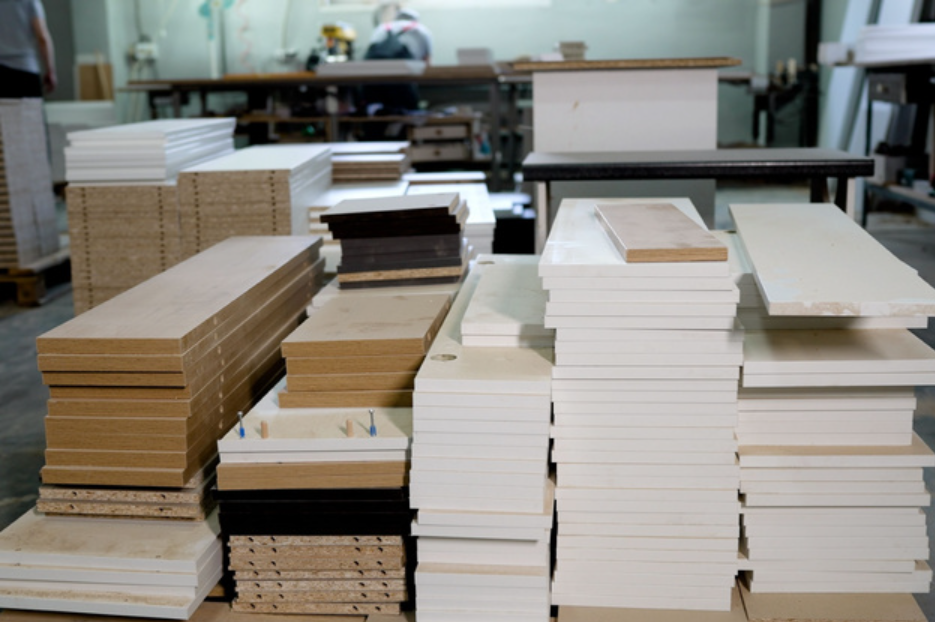
The numbers tell a story most suppliers haven’t caught onto yet. Peru’s wood board agglomerated market hit US$76.53M in 2024, moving 135.15K tons of product. Back in 2020, that same market sat at just US$11.44M. That’s a 61.4% compound annual growth rate over four years — one of the fastest-expanding panel markets in South America right now.
The momentum hasn’t slowed down either. Trailing twelve-month imports (May 2024 to April 2025) reached US$79.88M and 140,012.05 tons, up 213% year-over-year in both value and volume. Early 2025 data confirms this isn’t a fluke: Q1 2025 imports totaled US$28.85M, a 13.18% jump from the same period in 2024.
Where the demand comes from:
– Customs data shows full-year 2024 agglomerated board/MDP imports at US$139.62M, up 3.8% from 2023’s US$134.46M
– Ecuador dominates supply, contributing US$17.15M in Q1 2024 alone, though that’s down 10.4% YoY, opening room for new entrants
– Chile holds the second-largest supply share, with other origins splitting the remainder
Construction and furniture output drive most of this demand. Peru’s construction sector, according to Peru’s official construction statistics, after contracting 7.9% in 2023, is projected to grow 3.2-4.6% in 2024 and 3.8% in 2025. Furniture manufacturing adds another 4.0% growth layer on top, both feeding directly into panel consumption.
Why Peru Remains Import-Dependent: Supply-Demand Gap Analysis
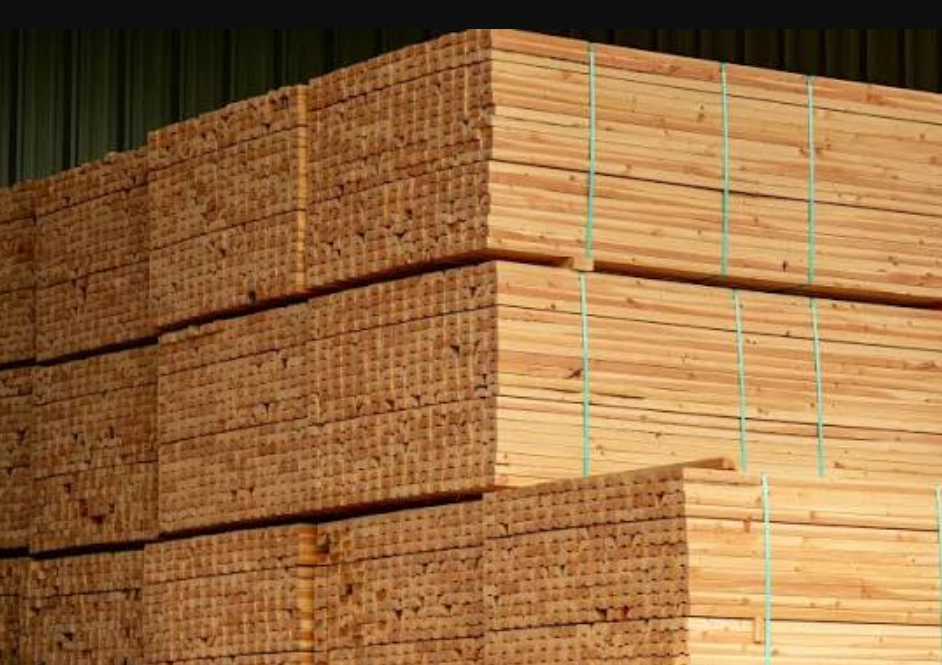
No single domestic producer has stepped up to close the gap, and the numbers prove it. Peru’s total demand for fiberboard and particleboard sits at an estimated 375,000 m³, yet imports keep climbing instead of shrinking. 5M-2025 imports hit US$63.6M (+16.8% YoY), and 6M-2025 pushed to US$81.4M (+23.1% YoY). This is a structural gap any serious panel plant investor should be watching.
Who’s Filling The Gap (And Who’s Losing Ground)
- Ecuador: dominant at US$33.8M (5M-2025) and US$40.0M (6M-2025). By 8M-2025, Peru became Ecuador’s #1 export destination at US$55.1M, up 26.7%
- Spain: fastest riser, jumping to US$20.4M in 6M-2025, now the second-largest source
- Chile: steady at US$9.6M, useful for shorter lead times
- Brazil: fading fast, down 45.3% in 6M-2025
- Other origins: surged +550.4% as buyers diversify beyond traditional lanes
The Novopan Playbook
Ecuador’s lead is company-driven. Novopan del Ecuador manufactures the supply; Novopan Perú imports it, capturing US$39.3M in 6M-2025, nearly half of all imports. That’s a vertically integrated cross-border model: build capacity, control the distribution channel, own the relationship. Any MDF board suppliers or engineered wood products market entrants studying South America’s timber industry should treat this as the template to beat.
Furniture Manufacturing Sector: The Core Demand Driver
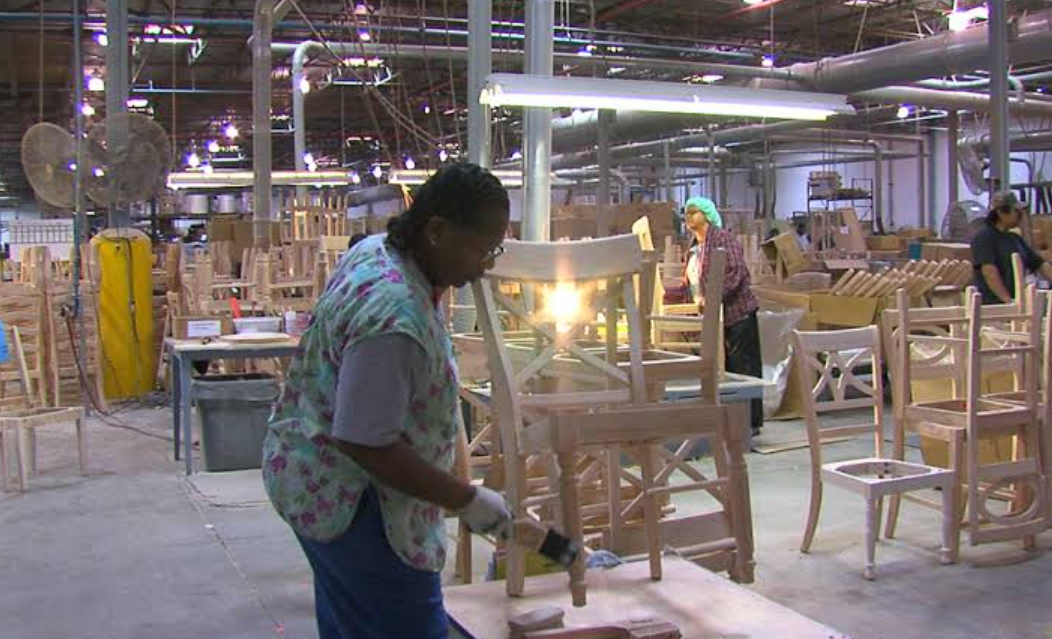
Cabinet makers in Lima don’t guess at specs. They work from a tight, repeatable set of numbers, and that consistency is exactly what makes Peru’s furniture industry such a reliable demand engine for wood composite panels.
The core specs that matter:
– 15 mm melamine board for carcass and cabinet sides
– 18 mm melamine board for shelves, doors, and general panels — the explicit government-recommended thickness for closet and kitchen doors
– 9 mm and 12 mm for lighter panels and partitions where structure allows
– Standard sheet sizes: 1220×2440 mm and 1830×2440 mm
For furniture manufacturers comparing board options, particle board strength depends on factors such as density, raw material quality, resin formulation, and production consistency.
Notice the pattern? The 12–18 mm band isn’t a rough estimate — it’s the commercial core of Peru’s furniture-grade board demand. Screw sizing even scales with it, stepping from 2.9 mm fasteners on 9 mm board up to 4.9 mm on 18 mm board. That’s a market with mature, standardized purchasing logic, not a chaotic emerging one.
Finish preference tells its own story too. Peru’s furniture guidance consistently references “muebles con tablero con melamina” — melamine-faced board, not raw board. Why? Melamine cuts edge-banding and post-processing time, which usually offsets a higher per-board price. Suppliers quoting into this market should price both plain and melamine-faced options side-by-side, then let buyers compare total in-use cost, not just board price. That US$204–282/m³ range is the right benchmark for this comparison.
Geographically, demand clusters hard around Lima’s Cluster del Mueble de Lima — Mobilia Industrial SAC, Grupo Ibero Peru SAC, Allcenter EIRL, and Masisa, backed by CITE Madera. Villa El Salvador stands out as the production and material-handling hub worth targeting directly for OEM relationships and distribution deals.
Construction & Interior Fit-Out: Emerging Growth Segment
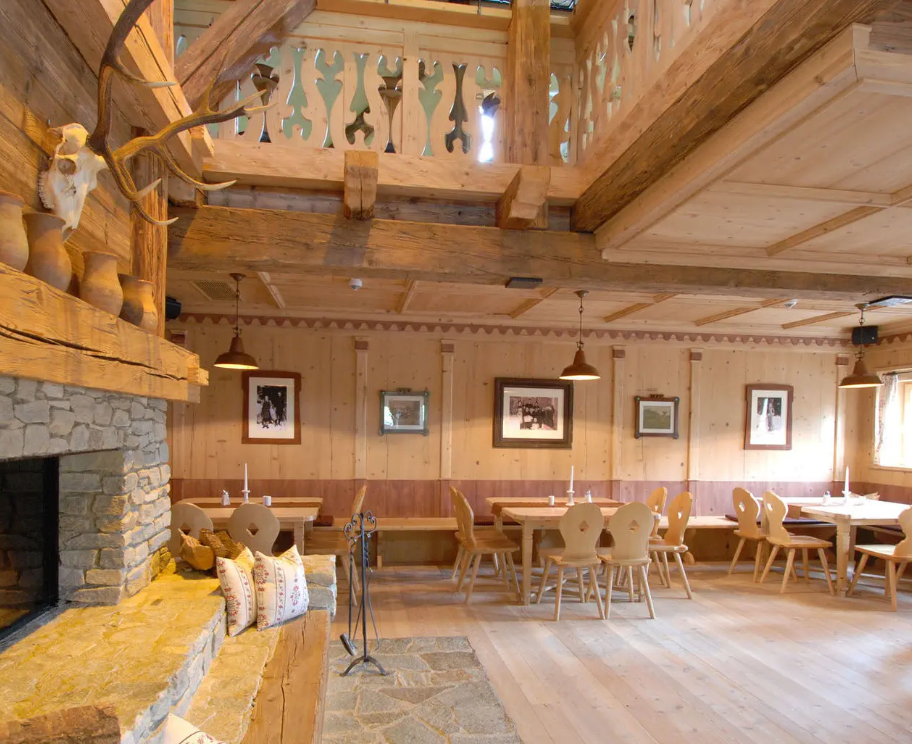
Cement consumption is up 3.1% year-over-year through mid-2025. Rebar sales climbed 12% in the same window. Public infrastructure execution grew 6.7% in May alone. None of these numbers mention panels directly, but they’re the leading indicators every serious particle board supplier should be tracking. Construction activity always pulls interior fit-out demand behind it, usually within a two-to-three quarter lag.
Peru’s construction materials market backs this up at the macro level: US$253.88M by 2034, growing at a 4.30% CAGR from 2025. Housing shortages, urbanization, and commercial renovation cycles are the three forces pushing that curve upward.
Where the demand actually lands:
- Residential interiors — cabinetry, closets, modular kitchens, shelving
- RTA furniture — standardized panel sizes feeding fast-assembly production
- Commercial partitions — offices, retail, hospitality, education fit-outs
- Public project support work — trailing behind, but still growing
Material selection follows a predictable hierarchy:
- Melamine particle board — a default choice for economy cabinetry and mass-cut furniture, while particle board panels remain widely used across furniture and interior applications.
- MDF board — preferred where surface finish, routing, or painted door profiles matter, making MDF vs particle board an important consideration for furniture manufacturers.
- Plywood — structural backing, load points, moisture-prone zones
- OSB — substructure and non-visible construction layers
Demand ranks: residential renovation first, custom furniture second, commercial interior fit-out third, public projects last. Suppliers building product mix around wood composite panels should weight inventory accordingly. This order won’t flip anytime soon.
Melamine-Faced Particle Board: The High-Value Opportunity Segment
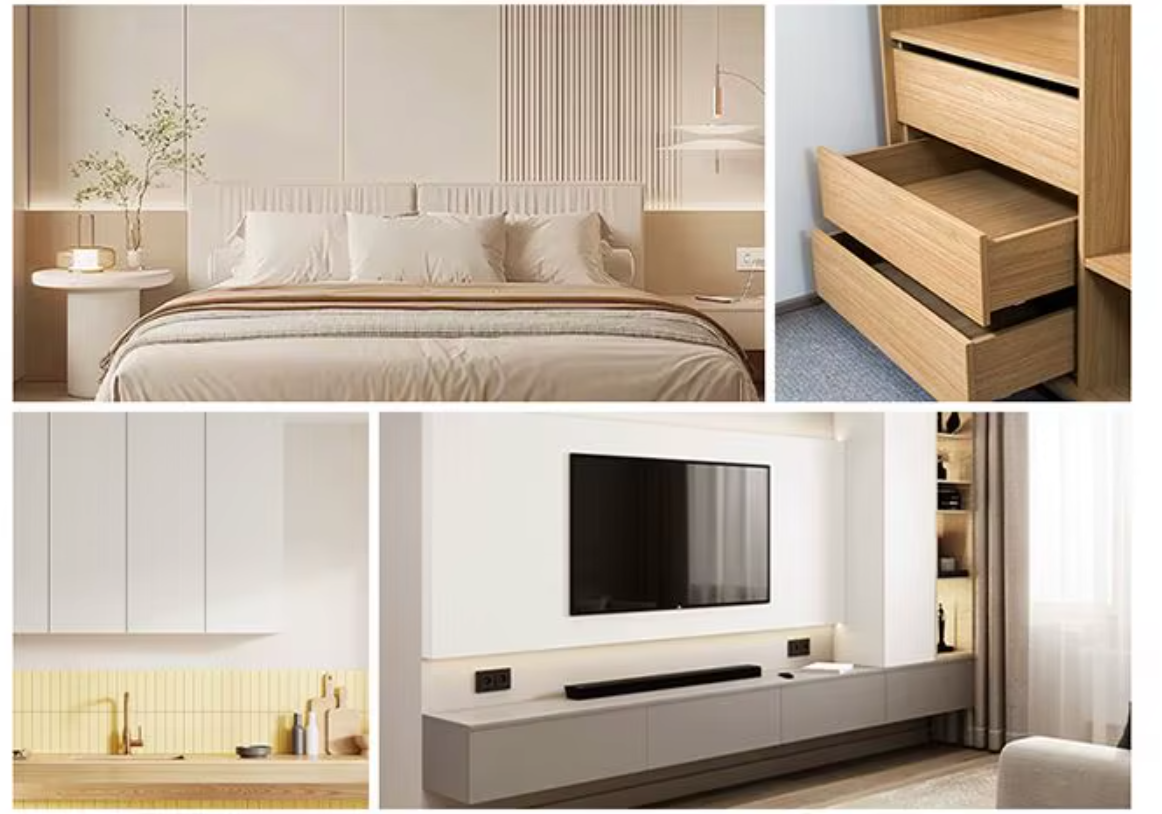
For bulk buyers, particle board procurement should cover board thickness, density, surface quality, moisture resistance, and batch consistency before confirming a supplier.
Peru leads the world in importing melamine board. One trade dataset ranks Peru as the largest global importer of melamine board, with 18,206 shipments representing 28% of total global melamine board imports. Narrow that to melamine particle board, and Peru still tops the list at 2,572 shipments. No other market in South America’s timber industry comes close to this concentration of demand.
A finished 18 mm melamine panel (2.15 x 2.44 m) retails at S/ 234.90 through Sodimac. Landed CIF unit value on imported melamine-coated particleboard runs around US$348.90, with customs records showing a 200-piece lot at FOB US$6,145.59 and CIF US$6,435.73. That gap between raw substrate cost and finished retail price is the margin melamine-facing captures — one extra production step (decorative paper, resin impregnation, pressing, edge finishing) buys real pricing power.
Product specs cluster tightly: 15 mm and 18 mm thicknesses, 2.44 x 2.15 m panels, finishes in white, black, caramel, and grafito. HS code 441112 covers this category, which matters for any panel plant investor structuring export documentation.
Thailand already supplies a meaningful share of Peru’s melamine-laminated particle board imports, proving foreign suppliers can compete here. But most listings stick to standard colors and thicknesses. That leaves room for particle board manufacturing equipment operators who can offer faster lead times, cut-to-size service, matching edge banding, and broader decor ranges.
Success still depends on execution — pressing quality, surface adhesion, scratch resistance, and consistent color matching aren’t negotiable. Get those right, and the best entry point is 18 mm decorative panels for kitchens, wardrobes, office furniture, and retail fixtures, sold directly to furniture factories and building-material chains already buying at these exact specs.
Competitive Landscape: How New Suppliers Can Position Against Established Players
Price alone won’t win this market. Peru’s procurement rules for construction buyers and furniture factories weigh price, delivery timetable, product characteristics, and guarantees together. A cheaper quote loses to a supplier who proves faster, more reliable delivery.
Beat Ecuador on speed
Novopan built its lead on vertical integration, but lead time is the metric procurement teams actually score. Pitch numbers: median lead time, P80/P95 lead time, and OTIF% (on-time-in-full). That’s the language Peru’s buyers use to compare suppliers.
Match the Chile/Brazil service model, then exceed it
Established players compete on legacy relationships: local maintenance support, permanent local address, permit compliance. One Peru tender required 10 years of local presence plus repair capability. New entrants can’t fake tenure, but they can win on response time, replacement turnaround, and MOQ flexibility. Legacy suppliers are often slower in those areas.
The four-part entry playbook
- Lead with compliance — RUC/RNP-equivalent registration, tax status, warranty documentation ready before quoting
- Two-tier pricing — sharp entry price for first orders, margin protected through repeat-order SLAs
- Publish reliability data — median lead time, P80/P95, late-delivery rate
- Localize without overhead — pair a local technical partner with remote commercial support to match incumbent service coverage at lower cost
Particle board suppliers and panel plant investors entering Peru’s timber industry should treat these benchmarks as table stakes. Guarantees and delivery certainty close deals here. Price just gets you in the room.
Market Entry Strategy: Localization, Partnership, and Capacity Building
Building a full panel plant from scratch is not the fastest way into this market. Peru’s 2017 import data already showed US$167M in wood-based board and timber products coming through customs, plus US$104M in particle board/MDP alone that year. By June 2025, particle board/MDP imports hit US$81.4M, up 23.1% year over year. That trajectory points to local value-add as the smarter entry point.
Start with light-asset finishing
Callao port handles most imports, with Paita as secondary entry. Lima concentrates the buyers. So a small cutting, edge-banding, and melamine-finishing operation near Lima gives the highest ROI first move. Priority services to localize:
- Board cutting and sizing
- Custom edge-banding
- Melamine surface finishing
- Kit packaging for JIT delivery
- Forward-stocking for furniture factories
None of this requires plant-level capex. It requires proximity and speed.
Partner with importers before chasing factories
Peru’s supply chain is concentrated. Novopan Peru alone captured US$39.3M in H1 2025, nearly half the market. Representaciones Martín (US$16.0M), Arauco Peru (US$8.5M), Maderas America (US$7.4M), and Inversiones Jocema (US$4.7M) round out the top five. Sequence your outreach: importers first for channel access, then furniture factories for co-development, then wood processors for semi-finished board supply.
Package smart
Skip the full turnkey plant pitch. Lead with particle board/MDP as the core product and MDF as a complementary spec. Buyers already accept MDF’s price-to-finish ratio versus melamine. Melamine finishing becomes the margin-rich add-on. That combination cuts procurement complexity for furniture makers and shortens their delivery cycles, winning repeat orders in this market.
Equipment And Production Line Opportunities For Suppliers
Tableros Peruanos SA, Peru’s only particleboard mill, shut down in January 2017 and hasn’t been replaced. The opportunity is that domestic production is missing entirely.
A Peru wood panel industry study puts combined particleboard and fiberboard demand at roughly 400,000 m³, with more than 80% imported from Chile or Ecuador. Import numbers back that up: US$63.6M through May 2025, climbing to US$81.4M by June. That import dependence creates an opportunity for particle board suppliers, manufacturers, and production-line investors looking to enter the Peruvian market.
A regional benchmark
Novopan del Ecuador added a second MDP line in Quito using a Dieffenbacher press, with US$100M total investment, doubling capacity from 300,000 to 600,000 m³/year. That’s the phased-expansion model that works in South America.
For Peru, a first-phase plant sized 150,000–300,000 m³/year makes sense, with debottlenecking to 600,000 m³/year once demand justifies it.
Where the real sales sit
You can sell press lines, forming and sanding equipment, resin handling systems, energy and automation packages, and post-installation spares, press plates, and upgrades. Sell turnkey lines through a local EPC partner first. Recurring maintenance revenue follows.
Key Takeaways: Positioning Your Business In Peru’s Panel Market
Three moves separate winners from also-rans in this market. You need to sequence your entry, price for the channel you’re targeting, and lead with the finish quality Peruvian buyers actually reward.
The sequencing that works:
- Lock in furniture and cabinet-shop trial orders first. This segment is the largest end-user of melamine board in Peru, and repeat orders here build the revenue base everything else depends on.
- Move into residential and commercial fit-out projects second. Fast delivery and standardized specs win here, not the lowest price.
- Let project case studies pull distribution and retail volume third. Reference jobs convert skeptical channel partners faster than any pitch deck.
Pricing reality check: Promart’s retail melamine products run S/130–290, and Novopan already holds just over 40% of Peru’s US$100M melamine-panel submarket. That leaves real room for suppliers who can match consistent finish quality, moisture and scratch resistance, and reliable batch-to-batch color matching. These are the three things Peru’s furniture and fit-out buyers won’t compromise on.
Conclusion
Peru’s panel market is wide open. With import dependence still above 60% and furniture manufacturers scrambling for reliable melamine-faced particle board, demand is outpacing local production capacity, and that gap won’t close itself.
First, the window for early-mover advantage in particle board manufacturing equipment is narrowing as regional competitors take notice, and the suppliers who move now will define who owns this market in five years. Second, localization beats exportation because partnering with Peruvian processors or investing in on-ground capacity builds the trust that pure importers can’t buy. Third, the furniture and construction sectors aren’t slowing down anytime soon.
If you’re evaluating opportunities for particle board suppliers in this market, the entry point is already forming. Reach out to discuss equipment specifications, production line design, or partnership models tailored to Peru’s supply chain realities.