
Peru’s growing furniture industry is driving demand for MDF Board across the country. As furniture manufacturers scale production for domestic and export markets, demand for consistent, machinable, and cost-effective MDF panels is increasing. Domestic engineered wood products can’t keep pace with demand, forcing heavier reliance on imports and reshaping the competitive landscape for MDF board suppliers eyeing this market.
This piece digs into what’s fueling that furniture industry MDF demand, from shifting consumer preferences to the specific panel specifications gaining traction, and unpacks where the supply gap creates real opportunity. Whether you’re evaluating market entry, sourcing partnerships, or tracking sustainable wood materials trends across Latin America, Peru’s trajectory through 2025 offers a case study worth understanding before your competitors do.
Peru’s Furniture Industry Landscape and Growth Trajectory
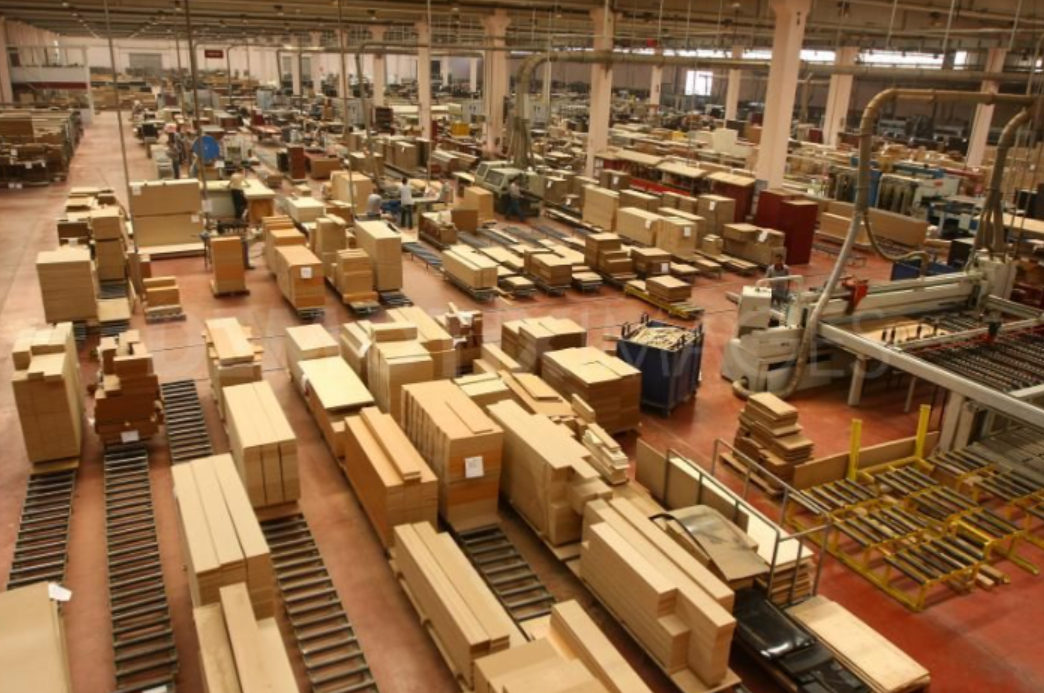
Numbers tell the story better than adjectives here. According to Peru’s furniture manufacturing data, Peru imported roughly US$132.22M in furniture and components in 2024. That’s a market signal. The first four months of 2025 added another US$38.2M, up 13.12% year-over-year. Look at the rolling 12 months from May 2024 to April 2025, and imports hit US$136.64M, a 33.63% jump. This is a market built on imports.
Wood Furniture: The Real Growth Engine
Wood furniture imports alone reached US$57.62M in 2024, up 47.6%. The growth is mid-market, standardized product flooding in from abroad. Brazil supplied US$36.65M of that in 2024, with China at US$8.4M, Spain at US$2.03M, and Chile at US$1.81M. By early 2025, Brazil’s share had dropped to US$13M while China climbed to US$4.8M. Supply chains are shifting.
Average import prices sat around US$2.08K per ton in 2024, sliding 12.8% from 2023, then settling near US$2.03K per ton in early 2025. That’s squarely mid-tier pricing territory.
Retail Chains Are Driving the Curve
Organized retail is where the real volume lives. Sodimac-Maestro brought in US$5.5M in imports during H1 2025, up 9.5%. Homecenters Peruanos posted US$16.18M in 2024, a 99.9% increase. Ace Peru wasn’t far behind at US$11.71M, up 60.2%. These chains are absorbing standardized SKUs at a pace domestic furniture manufacturing in Peru can’t match yet.
Why Peru’s Furniture Industry Is Driving MDF Board Demand
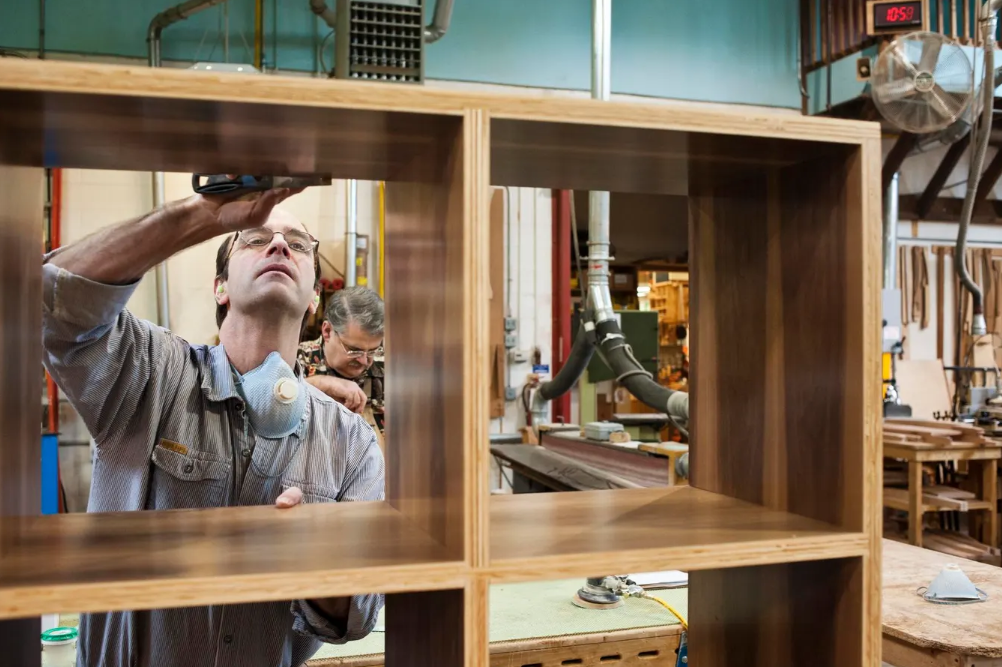
Peru’s engineered-panel demand covers more than imported wood furniture. Particleboard and MDP imports hit USD 81.4 million in 6M-2025, up 23.1% year-over-year, with USD 63.6 million logged through 5M-2025 alone, up 16.8%. That’s the baseline. MDF competes inside that same spend pool, and furniture manufacturing is the pull factor. MDF remains particularly relevant for furniture applications that require machining, painting, routing, and higher-quality surface finishing.
Why Manufacturers Are Choosing MDF
Local furniture makers use MDF boards for kitchen cabinets, wardrobe systems, retail fixtures, and interior cladding, where machinability and surface quality matter. Brazilian MDF exports into Peru carry a pricing edge over Melamine Board, and that cost advantage, paired with what local buyers call “fino acabado” (fine finish), is winning shelf space in mid-range and economic furniture lines.
Modular Furniture Is Rewriting Specifications
Standardized, ready-to-assemble furniture formats need repeatable dimensions and machinable surfaces. MDF delivers both. Modular manufacturers, for example, use 24 mm MDF sheets sized at 2.14m x 2.44m, CNC-cut for cabinet assembly. That’s the processing logic manufacturers are building around. E-commerce and flat-pack furniture reinforce this shift further, since panel goods ship efficiently and assemble into standardized components without variance.
Construction Is the Quiet Multiplier
Residential construction remains the largest downstream channel for board consumption, through built-in cabinetry, wardrobes, and modular kitchens. Commercial projects add steady volume through office furniture, retail fixtures, and hospitality fit-outs. Public infrastructure expansion and private housing growth push MDF demand through doors, partitions, and decorative interior elements.
The Sourcing Takeaway
Particleboard still leads on tracked import volume, but MDF vs particleboard becomes an important consideration where modular kitchens, wardrobes, office systems, and RTA furniture require higher-finish and more machinable panels. For suppliers, the specification sweet spot sits at 18–24 mm MDF with consistent density and CNC-friendly calibration, making MDF specifications an important consideration when matching panels to furniture production requirements.
Import Dependence: The Core Gap Driving MDF Board Market Opportunity
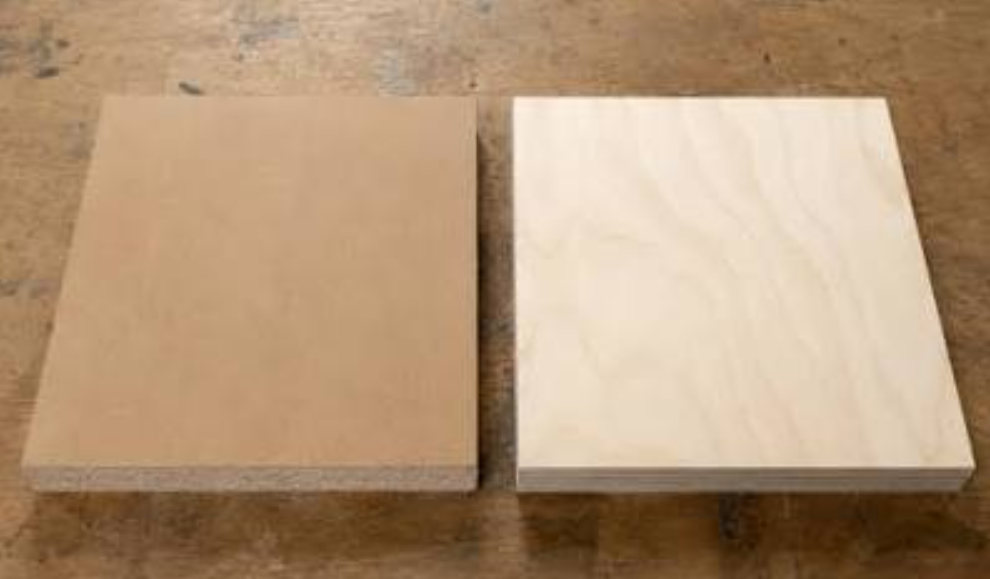
Three countries control roughly 62% of Peru’s MDF import volume. Brazil, Chile, and China together account for close to 60% of import value too. That concentration signals that domestic supply simply can’t keep pace with what Peru’s furniture manufacturing sector needs.
Why Local Production Falls Short
Peru’s MDF board manufacturers face three structural constraints:
- Raw material limits: Scalable wood fiber and timber sourcing hasn’t kept up with industrial demand.
- Technical gaps: Continuous presses, sanding lines, and eco-friendly adhesive capabilities for mid-to-high density board remain underdeveloped.
- Capital barriers: MDF production lines are heavy-asset investments, and entry costs stay high.
Peruvian industry and academic sources describe imported Brazilian MDF as a “profitable and environmentally sound alternative” for furniture manufacturing. Imported wood-based panels have already won mainstream acceptance on cost and sustainability grounds, not just availability.
Brazil’s Position as the Pricing Benchmark
Brazil supplies Peru with what buyers treat as the mid-price, stable-quality, scalable option. Its “eco-friendly, economical” positioning fits furniture and interior applications well. Some 2025 import data shows Brazil losing share in certain panel segments, but that reflects rising competition from Chile and European suppliers, not shrinking demand. Sourcing is diversifying. Before committing to bulk orders, buyers should review MDF quality test reports covering key properties such as density, moisture, formaldehyde emissions, and mechanical performance.
MDF vs. Melamine: A Different Competitive Lane
MDF and melamine board serve different roles. MDF works as a substrate for painting, veneering, laminating, and precision routing. Melamine board arrives finish-ready, built for speed over customization.
Peru’s melamine MDF imports reveal extreme supplier concentration: Vietnam, China, and Germany account for 93% combined, with Vietnam alone holding roughly 71%. MDF’s real opportunity sits with mid-tier furniture makers who need finishing flexibility, not just raw board at the lowest price point.
Market Signals: Panel Specifications and Sustained Growth Potential Through 2025
Three panel sizes dominate Peru’s medium density fiberboard trade, and each one maps directly to a specific furniture or construction use case. The 1.22m x 2.44m (4’x8′) format is the workhorse: cabinets, wardrobe doors, custom furniture, and shelving all run through this size at retail and engineering channels alike. Larger formats tell a different story. 1.85m x 2.44m sheets show up where decorative coverage matters: wall paneling, door faces, display cabinet surfaces, and full-wall interior treatments that benefit from fewer seams and better material yield. A third size, 1.52m x 2.44m, dominates grooved paneling, accent walls, and lighter commercial interior fit-outs.
Thickness follows a similarly clear pattern, spanning 2.8mm up to 25mm, with 18mm standing out as the retail default for structural furniture panels.
Pricing Reveals Where the Cost Pressure Sits
Sodimac Peru’s retail data puts this into sharp focus. An 18mm MDF sheet at 2.135m x 2.44m runs roughly S/269.90. A 1.52m x 2.44m grooved panel at 18mm sits near S/184.90. A thin 5.5mm sheet at 2.14m x 2.44m costs S/59.90. The gradient is instructive: thickness and surface treatment drive cost far more than raw size, meaning furniture manufacturers absorb most of their material expense on structural cabinet components, not thin backing panels.
Macro Signals Point to Continued Demand
Peru’s GDP grew roughly 3.3% in 2024, with 2025 forecasts ranging 2.8–3.2%. Construction expanded 3.6% in 2024, driven largely by public works. Non-traditional exports rose 1.3% against 6.1% total export growth. Combined, these figures support continued expansion in South America’s furniture market and sustained MDF board suppliers’ opportunity through 2025.
Who Benefits: Supply Chain Opportunities for MDF Board Suppliers
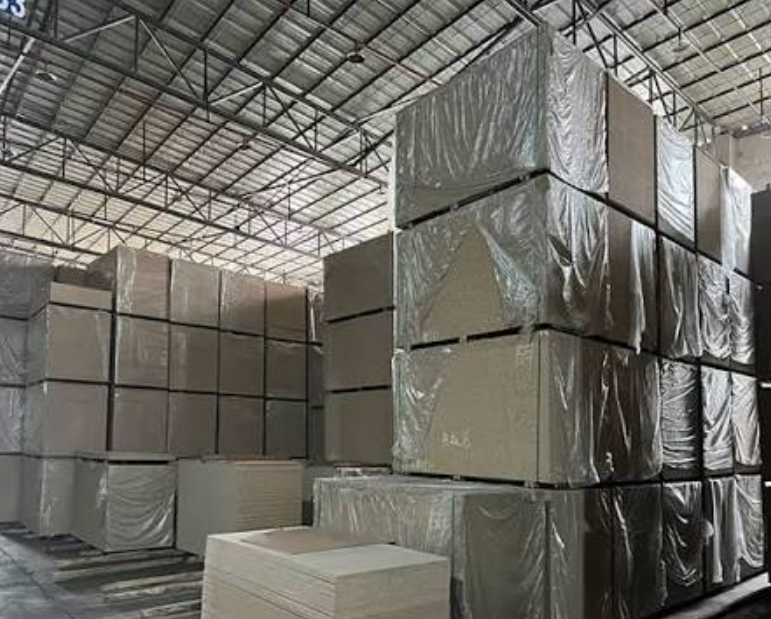
Volza trade data shows 1,086 active exporters and suppliers chasing just 573 buyers in Peru’s MDF and particle board space. The supply side is fragmented, and buyers hold the leverage. For suppliers who position themselves correctly, that fragmentation is an opening.
There are four buyer segments, each with a different playbook.
- Furniture manufacturers (mueblistas): They obsess over thickness tolerance, surface flatness, and moisture stability. Local distributors already serve this crowd directly, often bundling MDF supply with cutting and edge-banding services for mueblistas, carpinteros, and arquitectos.
- Interior renovation contractors: Speed matters more than price here. SIPFSA runs warehouse points in Villa El Salvador and Villa María del Triunfo. Maderas América covers Villa María del Triunfo, San Juan de Lurigancho, and San Martín de Porres. Density of local stock beats a better quote every time.
- Retail chains: Promart markets itself with “sirve a todo el país,” nationwide coverage as the core sales pitch. Standardized SKUs and reliable restocking matter more than customization.
- Regional import distributors: They want exclusivity and brand control. Kronospan’s exclusive tie-up with Grupo Jocema shows how a single distribution partnership can open the entire Peruvian market.
Where the Concentration Actually Sits
Buyer concentration flips the script on melamine MDF imports from China. A public sample shows just 6 importers sourcing from 2 Chinese suppliers, with PISOPAK PERU SAC alone holding 51% of volume across 18 shipments. Three importers together control 86% of that flow.
Peru’s MDF Market: Positioning for What’s Next
The window here won’t stay open indefinitely. Peru’s furniture imports fell to USD 21.7M in the first half of 2025, down 12% year-over-year. Brazil’s share dropped 16.4% to USD 13.0M. China filled the gap, jumping 36.6% to USD 4.8M. That’s a supplier reshuffle happening in real time.
The export side is more interesting. According to Peru wood products export data, Peru’s wood-products exports for finishes and construction hit USD 39.2M in 2024, shipping mainly to China, Vietnam, and the Dominican Republic. Export-oriented furniture makers need tighter tolerances and consistent density than domestic buyers tolerate. Meanwhile Peru’s own MDF exports stay almost entirely dependent on one buyer. Chile absorbs 96% of volume and 92% of value. No diversification there yet.
What wins share:
- Local stock discipline: 2–6 weeks of onshore cover on standard boards
- Certification-led selling: low-formaldehyde compliance and FSC/PEFC documentation for export accounts
- Segmented product ladders: standard MDF for price-sensitive domestic buyers, melamine-faced MDF for kitchens and export lines
- Technical service bundling: cutting optimization and edge-banding support tied to supply contracts
Suppliers combining inventory, certification, and service will own the next phase of this market.
Conclusion
Peru’s furniture sector is rewriting the region’s demand curve for engineered wood. Rising furniture exports, a young urbanizing population, and a domestic MDF supply base that can’t keep pace with manufacturer needs create that gap. That gap is the opportunity. For MDF board suppliers and investors watching South America’s furniture market, Peru offers a mid-sized economy with real growth signals.
The window to establish supply relationships is now, before import dependence tightens further and competitors lock in distribution channels. Companies serious about capturing For MDF board suppliers targeting Peru’s furniture industry, the opportunity lies in supplying consistent, specification-driven panels for kitchens, wardrobes, modular furniture, and interior applications.