
Ordering MDF without checking the right quality test reports is like signing a blank check — and a bad supplier will cash it fast. A formaldehyde-heavy batch ends up in a school furniture project. A moisture-sensitive board gets fitted in a coastal kitchen. Screw holes strip out halfway through assembly. These aren’t rare disasters from careless buyers. This is what happens when paperwork gets treated as a box to tick instead of a real filter.
The reports covered here cut through all of that. You’ll find everything from emission certifications and internal bond strength to multi-batch consistency data. Plus, you’ll see the fraud red flags that separate real lab results from documents typed up in a supplier’s sales office.
For buyers comparing different MDF grades and production standards, understanding how MDF boards are manufactured helps explain why test report consistency matters.
Quick Checklist: Which MDF Test Reports Matter Most

Not every MDF project requires the same testing priority.
For school furniture and US exports, emission compliance reports come first.
For kitchen cabinets and humid-climate installations, moisture resistance and internal bond strength matter more.
For painted furniture, sanding smoothness and density consistency directly affect finishing quality.
Before placing an order, buyers should match the report type to the real application — not just collect generic certificates.
| Application | Most Important Reports |
|---|---|
| School furniture | TSCA / CARB emission reports |
| Kitchen cabinets | Moisture + IB strength |
| Painted MDF | Surface roughness + density |
| CNC machining | Thickness consistency |
| Bulk import orders | Multi-batch consistency |
| Hardware-heavy furniture | Screw-holding strength |
Formaldehyde Emission Reports: The First Compliance Filter
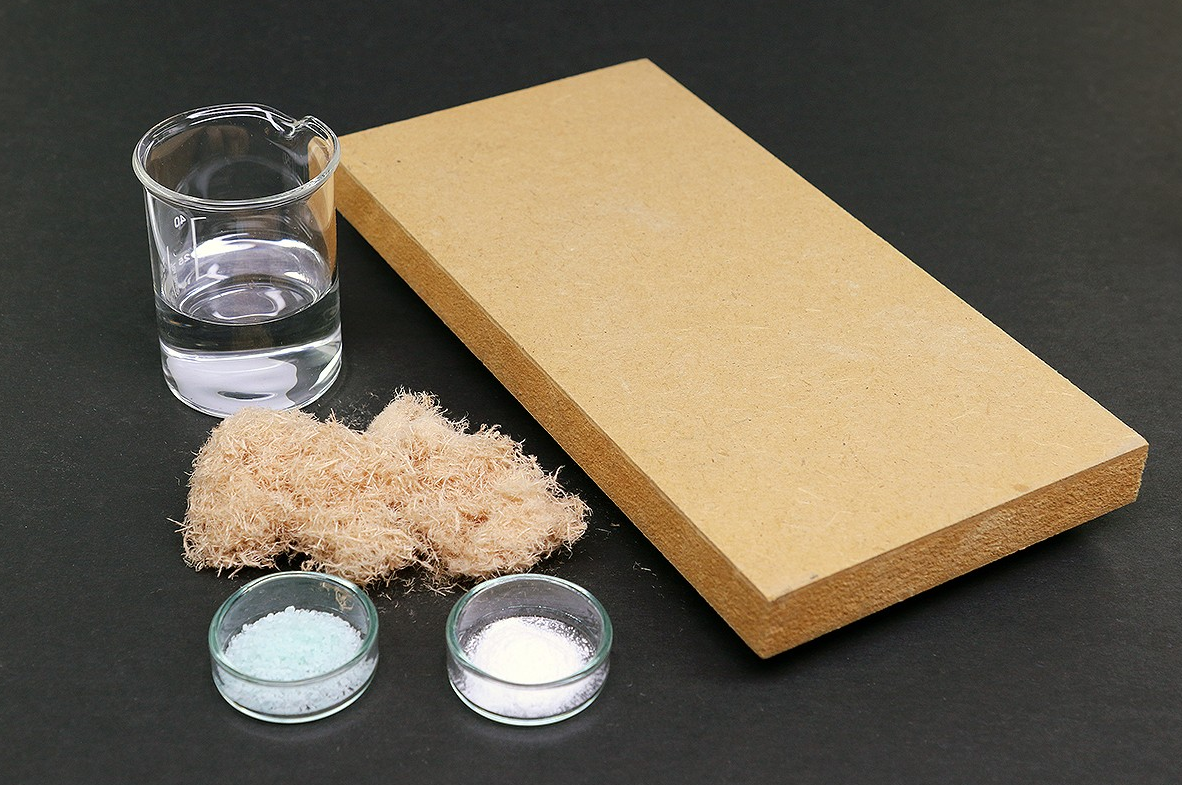
Formaldehyde limits exist on paper for a reason — and that reason isn’t bureaucratic decoration. US-bound MDF shipments should always be verified against EPA TSCA Title VI composite wood product requirements before import approval.
In the US, EPA TSCA Title VI sets the hard ceiling for MDF at 0.11 ppm. Thin MDF gets a looser ceiling at 0.13 ppm. These numbers come from 40 CFR Part 770, and they aren’t suggestions. Miss them, and you face import rejection, fines, and product recalls before your shipment ever reaches a warehouse shelf.
What the numbers mean for your sourcing decisions:
| Product | EPA / CARB Phase 2 Limit |
|---|---|
| MDF | 0.11 ppm |
| Thin MDF | 0.13 ppm |
| Particleboard | 0.09 ppm |
| Hardwood Plywood | 0.05 ppm |
CARB Phase 2 runs parallel to EPA limits — same thresholds, stricter enforcement. California supply chains feel this the most. Your product touches a California retailer, distributor, or contractor? CARB compliance is required. Full stop.
California-bound MDF products should also comply with CARB Airborne Toxic Control Measure requirements for composite wood materials.
The test method printed on the report matters as much as the number.
Approved methods include ASTM E1333-22 (large chamber), ASTM D6007-22 (small chamber), and BS EN ISO 12460-3:2023 (gas analysis). A February 2026 EPA proposal would add ISO 12460-2:2024 to the approved list too. That method supports laser absorption spectroscopy for quality control testing. A supplier hands you a report citing an unrecognized method? That report is worthless — no matter what emission figure it shows.
Third-party certification is mandatory — not optional, not “preferred.”
Manufacturers and importers must:
– Use an accredited third-party certifier
– Label products as “TSCA Title VI compliant”
– Keep test records for two years after the sale
Also, build batch-specific reports into your purchase contracts. Put it in writing before production starts.
California Prop 65 adds one more layer. Formaldehyde exposure must stay below 40 µg/day to avoid a no-significant-risk-level violation. Some products pass emission limits but still carry exposure risks in enclosed spaces. Prop 65 catches those cases.
Ask for the lab accreditation number. Check the test date against the production batch. Aren’t those details in the document? The document doesn’t exist.
Moisture Content Reports: What Humid-Climate Buyers Must Check

Coastal warehouses, tropical job sites, monsoon-season installations — MDF hits moisture long before a single screw gets driven. A board can pass every factory test and still fail in the field. The reason? Nobody checked moisture content at the source.
Here’s what the numbers mean:
| Moisture Reading | Status | What It Signals |
|---|---|---|
| ≤15% | Acceptable | Safe for standard interior use |
| 15–20% | Elevated | Leakage risk — investigate before use |
| 20–28% | Dangerous | Borderline decay and mold threshold |
| ≥28% | Critical | Rot initiation begins here |
Interior MDF should arrive at 6–8% moisture content. Boards for exterior use or envelope-adjacent installations need to sit between 9–14%. Any report showing values outside those ranges needs more than a polite follow-up email. Call your supplier and push for answers.
Ambient humidity skews everything in humid climates.
Relative humidity above 70% for extended periods pulls moisture straight into porous materials. A board can read within safe limits at the factory and arrive saturated. Readings that shift by more than ±2% across the same batch signal more than humidity exposure. That points to localized leakage or uneven storage conditions.
Moisture exposure during transportation is one of the main reasons export MDF develops swelling, mold, or dimensional instability before installation.
What to verify in every moisture report:
Full test documentation plus site photos — no “limited visibility” exceptions
Moisture readings at multiple points: near edges, board center, and stacking contact zones
Test date lined up against shipping and arrival dates
Any permit history tied to storage facility repairs or humidity-control replacements
Materials exposed to excess moisture for more than 48 hours follow one rule: remove and replace. No negotiation. ANSI/IICRC S500 backs the same standard — drying targets must stay below microbial growth thresholds, with moisture logs recorded each day to back it up.
A moisture report without site photos isn’t a report. It’s just a number on a page.
Density & Thickness Uniformity Reports: Structural Risk Indicators
Thin spots don’t announce themselves. They show up later — a stripped screw, a bowed cabinet face, an angry client call. Density variation becomes easier to understand once buyers compare how MDF specifications influence machining strength, screw holding, and panel stability.
Density and thickness uniformity sit at the core of every structural quality test report for MDF buyers. A board can pass emissions testing and still fail under load. That happens when internal density shifts too much across the panel. A proper uniformity report is what catches that shift.
What acceptable density variation looks like:
Think in three zones — green, yellow, red.
Green zone: Density meets or exceeds specification → automatic acceptance, no further action
Yellow zone: Below spec but above rejection threshold → investigate, document, get engineering sign-off before use
Red zone: Below rejection threshold → reject the batch, full stop
No exceptions in the red zone. No negotiating with a supplier who insists the boards are “close enough.”
Thickness tolerance is just as unforgiving.
Standard MDF thickness tolerance runs ±0.2 mm for sanded boards. Ask for measurements at multiple points — edges, center, and corner zones — not one midpoint reading. A single-point report tells you almost nothing about how that board performs across a full sheet. You need the full picture.
The practical check:
Request test documentation that shows:
– Density readings mapped across the board face, not averaged into one figure
– Thickness measurements at a minimum of five sample points per board
– Batch-level consistency data, not just individual panel snapshots
A supplier who hands you one average figure isn’t giving you a uniformity report. That’s a summary. Summaries hide the kind of variation that causes field failures — and field failures are what you’re trying to prevent.
Buyers comparing MDF with other panel materials can also review plywood manufacturing standards for structural applications requiring higher load-bearing performance.
Internal Bond & Surface Quality Reports: What Determines Machining and Finishing Performance
A board can pass emission testing and still fail during furniture production. Fiber quality and raw material selection directly influence internal bonding consistency and long-term machining performance in MDF production.
The reason usually shows up in two places buyers often overlook: internal bonding strength and surface finishing quality.
Internal bond strength determines whether the fibers inside the MDF panel stay structurally stable under stress. Weak bonding causes edge swelling, screw pull-out, delamination, and joint failure during machining or assembly. These problems rarely appear on the surface first. They develop inside the board long before visible failure happens.
For buyers, the biggest mistake is relying on a single internal bond figure from one sample test. MDF quality can shift across production runs even when specifications stay unchanged. That’s why batch-level consistency matters more than one isolated laboratory result.
When reviewing internal bond reports, buyers should verify:
Whether results represent batch-level production data
Whether testing dates match the production lot
Whether density consistency aligns with the IB result
Whether the report includes multiple sample points rather than one average value
Surface quality affects a different stage of production: finishing performance.
For painted, laminated, or veneered MDF, sanding consistency directly affects coating adhesion, primer absorption, and final appearance. Uneven sanding increases finishing defects, repainting costs, and visible surface marks after installation.
The key roughness indicators are:
Ra value — overall surface smoothness
Rz value — deeper peaks and valleys that affect coating stability
Lower values generally indicate smoother surfaces and more stable finishing performance.
Sanding grit sequence also changes the result significantly. Boards finished with finer abrasives produce smoother surfaces, while rough sanding patterns often become visible after primer or paint application.
Before approving a supplier, buyers should request:
Batch-level internal bond consistency reports
Surface roughness data by production batch
Multiple-point measurements instead of single averaged figures
Production dates matching the shipment schedule
A clean surface does not always mean a stable board. And a strong board on paper does not guarantee consistent finishing quality during production. Buyers need both structural bonding data and surface quality verification before placing large-volume MDF orders.
Screw-Holding Strength Reports: Hardware Failure Prevention
Strip a screw hole on day one of assembly. No formaldehyde certificate in the world saves your project after that.
Screw-holding strength is the mechanical truth inside every MDF panel. Most buyers never ask for the number before the first fastener goes in. The report you want measures withdrawal resistance — how much perpendicular force the board can take before the screw pulls through or the surrounding fiber collapses.
The numbers that separate usable boards from expensive firewood:
Side-grain withdrawal resistance runs much higher than end-grain. For hardware installations hitting end-grain — cabinet backs, edge-joined panels, face-frame corners — holding power drops by a wide margin. Use longer screws or mechanical reinforcement. Don’t expect the board to do work it isn’t built for.
Slight surface cracks drop holding power by 10–25%. That’s not a cosmetic issue. That’s a structural one.
Pilot hole diameter controls everything that follows. For softwood-core MDF, 75% of shank diameter is the target. Tight enough to grip. Loose enough to drive without splitting the fiber or snapping the fastener.
What failure patterns look like in test data:
Pull-out failures split 59% under the screw head and 41% at the upper full-depth thread. Each failure produces a sudden, audible break. That signals fiber collapse — not just surface stripping. A report showing where failures concentrate tells you whether the board’s surface density or core density is the weak point. Surface failures point to sanding damage or low face-layer density. Core failures point to internal bonding problems covered in the IBT section above.
Ask for these details:
Withdrawal resistance values by grain direction — side-grain and end-grain tested as two separate results
Pilot hole diameter used during testing — confirm it matches your assembly spec
Test screw specs: thread pitch, diameter, and tip geometry all shift results — make sure they match your hardware
A screw-holding report built around a different fastener than the one you’re installing gives you a number with no connection to your real project. Check the match before you trust the figure.
FAQ: MDF Quality Test Reports
What is the most important MDF test report for US imports?
TSCA Title VI and CARB Phase 2 emission reports are the most critical compliance documents for US-bound MDF shipments.
Can MDF pass emission standards but still fail structurally?
Yes. Emission compliance only verifies formaldehyde release levels. Density consistency, internal bonding, and screw-holding strength determine structural performance.
How can buyers verify whether an MDF test report is fake?
Check the laboratory accreditation number, production batch date, SKU information, and whether the report exists in the issuing lab’s database.
Why do batch consistency reports matter for bulk orders?
Large-volume MDF procurement often spans multiple production runs. Batch consistency reports help buyers identify density drift, moisture variation, and bonding instability before shipment.
Certification Documents vs. Lab Test Reports: How to Tell Real from Rubber-Stamped
Two documents can look identical on a screen. One represents real testing. The other was put together in a sales department between lunch and a client call.
Test reports and certificates are not the same thing. Suppliers count on buyers mixing them up.
A lab test report records what happened when a specific product went through controlled conditions and got measured against a defined standard. It covers one product, one model, one batch. The moment the product changes, the report no longer applies.
A certificate comes from that report. It turns the findings into a Declaration of Conformity or a Children’s Product Certificate. No supporting test report means the certificate has no foundation — no matter how official the letterhead looks.
When verifying laboratory credibility, buyers should confirm whether testing follows ISO/IEC 17025 competence requirements for accredited laboratories.
The UL distinction most buyers miss:
| Aspect | UL Certification | UL Compliance |
|---|---|---|
| Testing | Third-party verified | Manufacturer only |
| Marking | Official UL mark + Yellow Card | No UL mark |
| Monitoring | Ongoing audits | None |
A supplier listing “UL Compliant” on their spec sheet has done no testing with UL. They made that call on their own. It’s a self-assessment dressed up as an endorsement.
Five fraud types to screen for:
Altered reports — pass/fail figures changed through basic image editing
Fabricated reports — no testing done at all
Borrowed reports — valid documents that belong to a different supplier’s product
Certificates with no regulatory backing
CE marks issued by unrecognized bodies with zero test support
Run this check before trusting any document:
Call the issuing lab and confirm the report exists in their system
Cross-reference the product model, SKU, and test date against what you ordered
Check lab accreditation — ISO 17025 for test labs, Notified Body registration for CE certificates
Ask for the manufacturer’s declaration alongside the certificate
Missing accreditation numbers, mismatched product names, and certificates with no attached test data are not clerical errors. That’s what fraud looks like when it’s working.
Multi-Batch Consistency Reports: The Volume Buyer’s Hidden Risk
Volume buyers carry a risk that single-order buyers never face. Most don’t discover it until they’re deep in production.
Sourcing MDF across multiple batches from the same supplier? Each batch is its own experiment. Density shifts. Moisture content drifts. Internal bond strength varies between production runs — and no spec sheet reflects the change. The supplier’s price stays the same. The paperwork looks identical. The boards are not.
What consistency reports measure:
Density variance across batches — not just within a single panel
Thickness tolerance drift over time, measured against the same production standard
Formaldehyde emission fluctuation between runs using the same resin blend
Internal bond strength spread across sequential lots
A supplier with 24 open corrective actions on quality deviations — some stretching 18 months without resolution — can still look competitive on price. The consistency data tells a different story. That’s the pharma procurement lesson that applies to MDF too: the risk doesn’t show up in the unit cost. It sits in the batch history.
The number that exposes inconsistency fastest:
Request lot-level traceability documentation. Don’t accept batch averages. Receiving records, warehouse data, and production logs should all agree on the same shipment. A gap — even a small one — signals quality control that isn’t in sync. Small discrepancies stack up fast across large orders.
Ask for sequential batch reports covering your full order window. One clean report tells you nothing about the batch that ships next month.
Red Flags in MDF Test Reports: A Buyer’s Fraud Detection Checklist
Fraudulent MDF test reports don’t arrive looking fraudulent. That’s the whole point.
Suppliers who fabricate or manipulate documents have one goal: make the paperwork look clean enough that you stop reading. Most buyers do stop reading. This checklist is what you run through when you don’t.
Seven red flags that separate real reports from fake ones:
No accreditation number on the issuing lab. Every legitimate test lab under ISO 17025 has a published accreditation number. You can search for it. Not on the document? Call the lab. Can’t find the report in their system? There’s your answer.
Test dates that don’t match production batches. A report dated six months before your order tells you nothing about the boards you’re actually getting. Batch-specific testing means the test date and production date fall within the same window.
Single-point measurements passed off as full-panel data. One density reading, one moisture figure, one emission result — those are not reports. They’re averages dressed up as evidence.
Generic product descriptions. A real report names the specific product, grade, thickness, and SKU. A fake one stays vague enough to fit anything.
Emission figures sitting too close to the limit. Boards that land just inside the legal threshold — batch after batch — point to results that were adjusted, not measured.
Certificates with no supporting test data. A certificate is only as solid as the report behind it. One without the other is just letterhead.
No chain of custody documentation. Real third-party testing includes records that show how the sample moved from the production floor to the lab. No custody records? The evidentiary chain is broken.
Something feels off about a report? That feeling is data. Run through this checklist and confirm it.
Conclusion
Working directly with a wood-based panel factory makes it easier to verify batch consistency, production control, and certification traceability across MDF orders.
Every MDF shipment has a story. Quality test reports are the one way to read it before something goes wrong.
A confident purchase or a costly mistake — what separates them? Three things:
Knowing which reports matter
Understanding what the numbers mean
Telling real lab documentation apart from a rubber-stamped certificate made to look official
From formaldehyde emission baselines to multi-batch consistency checks, buyers who get this right do more than protect one order. They build a supplier vetting system that gets stronger with each purchase.
So here’s your next move. Take this framework into your next supplier conversation. Ask for the specific reports covered here. Watch how they respond.
A supplier who hesitates or deflects is already giving you an answer. Handing over generic certificates with no batch-level data tells you the same thing.
The reports don’t lie. Pay attention to them.