
One wrong spec on your OSB purchase order can derail an entire construction project. Failed inspections, structural rework, and budget overruns follow — and no contractor wants to explain that to a client.
These errors are common. Buyers mix up grades, misread span ratings, or grab whatever’s available at the lowest upfront price. Before focusing on installation or site execution, buyers should first understand how OSB panel specifications affect structural performance under real load and moisture conditions.
This guide covers the OSB purchasing mistakes that hurt real projects. It doesn’t matter if you’re a veteran contractor refining your procurement process, a first-time builder sorting out OSB panel thickness and exposure ratings, or a materials manager cutting waste before it reaches the job site. The mistakes here apply to all of you.
Here’s what to watch for — and how to get it right from day one.
Mistake #1: Selecting the Wrong OSB Grade for Structural Applications

Grade confusion costs more than money — it costs structural integrity.
Walk into almost any lumber yard and you’ll find OSB panels stacked without much fanfare. They look almost identical. Same color, similar weight, same dimensions. But the grade stamped on that panel determines whether your floor holds steady under a loaded refrigerator or starts deflecting six months after move-in.
The oriented strand board grades system runs from OSB/1 through OSB/4. Each step up means something specific:
| Grade | Best Application | Load Capacity |
|---|---|---|
| OSB/1 | Interior packaging, furniture backing | Minimal — non-structural use |
| OSB/2 | Indoor load-bearing floors, roofs, walls | Moderate — dry conditions use |
| OSB/3 | Exterior sheathing, humid environments | High — handles moisture exposure |
| OSB/4 | Industrial floors, demanding structural builds | Highest load + moisture tolerance |
The most common buyer mistake? Grabbing OSB/2 for exterior applications because it’s cheaper and “structural-rated.” It is structural — but for indoor use. Put that panel in prolonged moisture exposure and things go wrong fast. Stiffness drops. Fasteners shift. Deflection creeps into places it was never meant to reach.
OSB moisture resistance rating isn’t a bonus feature on higher grades. It’s the entire point of the classification system. Moisture-related performance should be verified using standardized test methods such as EN 317, which measures thickness swell under water exposure.
Here’s a practical breakdown for common applications:
Exterior wall sheathing → OSB/3 minimum, with water-resistant adhesive
Subfloors in moisture-prone areas (bathrooms, crawl spaces) → OSB/3, Exposure 1 or 2
Roof decking → OSB/3, with mandatory 1/8″ expansion gaps between panels
Interior partitions, dry environments → OSB/1 or OSB/2 sufficient
Expert Tip: Never treat grade selection as a cost-cutting lever on structural applications. The price gap between OSB/2 and OSB/3 comes down to dollars. The repair bill after a grade-related structural failure runs into thousands — plus timeline damage that no budget line item ever covers neatly.
Picking the wrong OSB structural panel specifications doesn’t give you a slow-burn problem you can track and manage. It builds a failure point into the structure. That failure point sits there, hidden, until load, moisture, or time brings it to the surface.
Mistake #2: Ignoring Span Ratings and Thickness Requirements
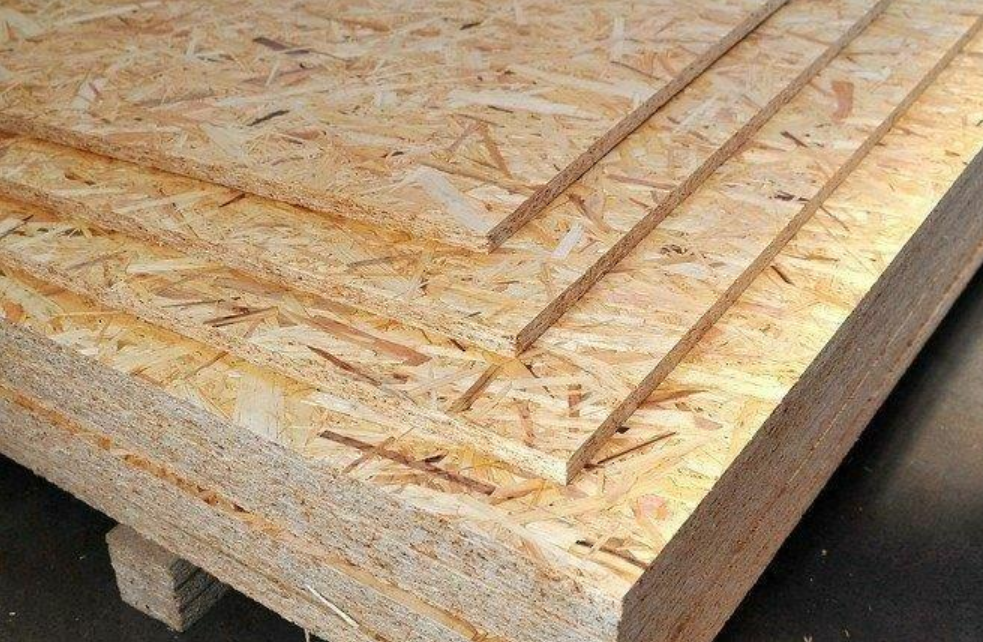
Span ratings get misread on job sites all the time. The stamp says “32/16” and buyers treat it like a single measurement — a size, a weight class, something vague. It’s not. Those two numbers each carry a specific structural meaning. Mix them up and you’re heading toward a real structural problem.
Here’s what the OSB span rating chart tells you: the left number is maximum roof support spacing in inches on center. The right number is maximum subfloor support spacing. A panel stamped 32/16 supports roof framing up to 32″ OC and subfloor joists up to 16″ OC. Two separate specs. One stamp. No room for guesswork.
Thickness connects to span rating. For a 40/20 rating, minimum thickness is 19/32 inch — with the panel running in the strong direction. Drop below that spec and you’re not saving money. You’re setting up a failure.
Span ratings and structural panel performance should be evaluated according to recognized standards such as APA guidelines for engineered wood panels.
What that failure looks like in practice:
Wavy roof decking — panels bend between misaligned rafters or trusses, often mistaken for buckling
Bouncy, vibrating subfloors — deflection builds up as continuous spans drop below 50% of the longest supported run
Long-term load failure — under-spec thickness builds cumulative stress the panel was never built to handle
Use this as your quick reference for OSB sheathing selection:
| Application | Span Rating | Min Thickness |
|---|---|---|
| Roof | 32/16 | 7/16″ – 19/32″ |
| Roof | 40/20 | 19/32″ or greater |
| Roof | 48/24 | 19/32″ or greater |
| Floor | 16 OC | 19/32″ or greater |
| Floor | 24 OC | 23/32″ or greater |
| Wall | 16 OC | 7/16″ or greater |
Expert Tip: Always orient the panel’s strong direction across supports — never parallel. For spans over 32″ OC, weak-direction installation is not a trade-off. It’s a structural risk you can’t afford.
Four checks before any OSB order ships:
Read the left number for roof OC, right number for floor OC — as two separate values, not one combined figure
Confirm panel thickness meets or exceeds the spec for your span rating
Orient strong direction across the framing, not along it
Verify continuous spans are at least 50% of the longest span in the run
The panels that cause the most problems look fine at delivery. The span rating mismatch stays hidden inside the framing until load and time bring it out.
Mistake #3: Overlooking Exposure Ratings in Moisture-Prone Environments
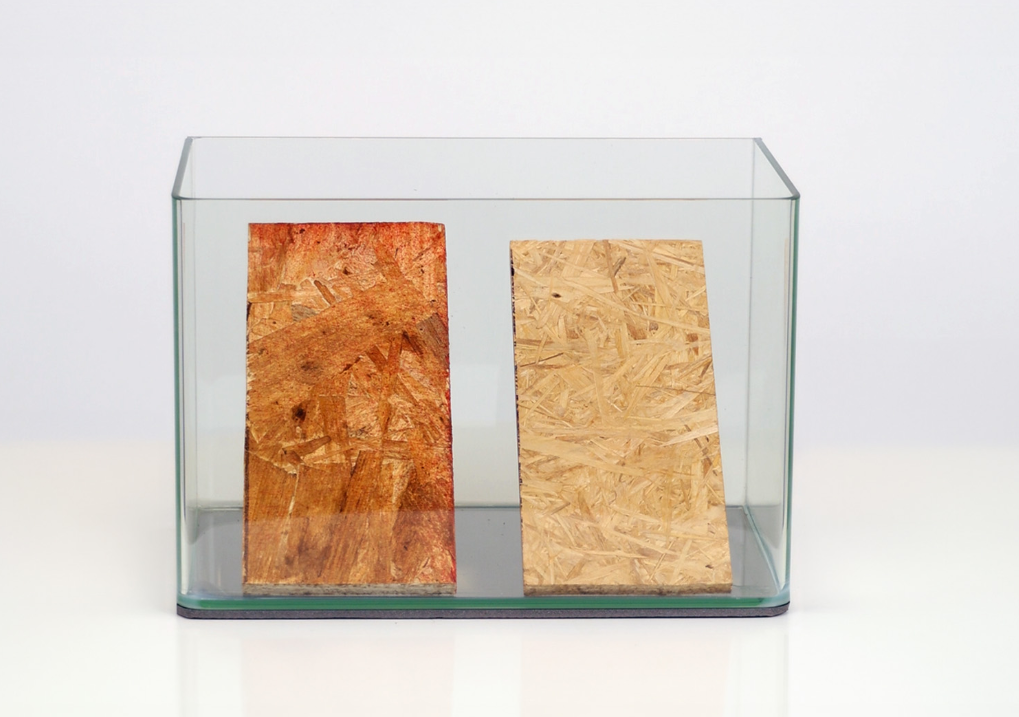
Moisture doesn’t announce itself. It moves through wall cavities, under subfloors, and behind sheathing — all without warning. By the time you notice the damage, the repair bill is already waiting.
Exposure ratings exist to stop that process. Most buyers skip them.
The OSB moisture resistance rating system breaks down into three tiers:
| Rating | Where It Belongs | What It Handles |
|---|---|---|
| Exposure 1 | Indoor dry areas only | Basic edge wax; fails above 19% MC long-term |
| Exposure 2 | Semi-exposed, brief wetting | Enhanced edge seal + polymer overlay; holds under 72hr water contact |
| Exterior | Full weather exposure | Full-face wax + edge seal; permanent outdoor conditions |
The numbers behind wrong rating selection are serious. Exposure 1 OSB placed in a high-humidity space — bathrooms, kitchens, or crawl spaces at 70–90% RH — swells 20–50% in thickness within 24 hours of submersion. At 25% moisture content, delamination starts. At 16% MC, mold begins to grow. That’s not a slow process. The structural timeline breaks down faster than most project schedules can handle.
Exterior wall sheathing in wet climates shows the same problem. Under-rated panels soak up 15–30% of their own weight in rainwater. Without a water-resistive barrier, structural strength drops by 40% after just 72 hours.
Use this as your zone-based selection standard:
RH below 60%, interior dry → Exposure 1, MC under 12%
RH 60–80%, occasional moisture → Exposure 2 plus WRB; limit MC below 19%
RH above 80%, constant wet exposure → Exterior rating, full edge seal required
Expert Tip: Before ordering OSB for any moisture-adjacent zone, run three checks. First, verify site RH — above 60% means you need Exposure 2 at minimum. Second, test MC on existing substrates — above 16% means you upgrade the rating. Third, confirm WRB installation. A proper water-resistive barrier cuts moisture intrusion by up to 90% in exposed applications.
Exposure rating isn’t a fine-print detail on the spec sheet. It’s the line between a panel that holds up and one that fails silently inside your finished walls. In moisture-sensitive applications, many buyers also compare OSB with alternative structural panels to evaluate long-term stability and performance differences.
Quick Decision Guide: How to Choose the Right OSB Specification

If you’re making an OSB decision under time pressure, don’t go back to supplier catalogs. Start with the application and the risk level of the structure.
For any structural application exposed to moisture — roof decking, exterior sheathing, or subfloors near bathrooms and crawl spaces — OSB/3 is the minimum requirement. Anything below that is not a cost-saving decision. It’s a failure point built into the structure.
When span ratings exceed 32″ on center, thickness is no longer flexible. Panels must meet or exceed the required rating (such as 40/20 or 48/24). Underspec panels may pass initial inspection, but they fail under load over time.
If the project involves high load or long-term structural performance, OSB/4 becomes the safer choice. It carries higher density, stronger bonding, and better moisture tolerance — especially in demanding environments.
For interior partitions or non-load-bearing uses in dry conditions, OSB/1 or OSB/2 is acceptable. This is where cost optimization makes sense without introducing structural risk.
Across all applications, three conditions should immediately trigger a spec upgrade:
Exposure to moisture or humidity above 60% RH
Load-bearing structural use
Span ratings above standard residential framing
If more than one of these conditions applies, the decision is already made. Do not downgrade specification to save on panel cost. The cost of failure will always exceed the initial savings.
Mistake #4: Purchasing Without Defined Project Specifications
Vague specifications don’t just slow projects down. They silently push budget toward problems that didn’t need to happen.
A purchase order goes out without clear OSB requirements. Every party in the chain fills the gaps on their own. Suppliers quote what’s cheapest or most available. Site crews install what shows up. The gap between what the project needed and what got delivered? It surfaces at inspection — or worse, after load is applied.
The failure shows up in two directions:
Under-specification leaves out critical details — exposure rating, span rating, panel thickness, grade classification. Suppliers fill those blanks with guesses. You get panels that match what was written on paper, but not what the project needs in practice. The result: inferior materials, unplanned extra purchases, and structural risk built into the job before a single fastener goes in.
Over-specification pulls in the opposite direction. Too much technical detail — detail that doesn’t change scope or cost — wastes review time on both sides. It shrinks the supplier pool. It bloats bid complexity without making the final delivery any better.
Both paths create contract friction and comparison headaches that pile up across the full procurement cycle.
The worst version of this mistake is stakeholder misalignment. Business departments write OSB requirements without looping in technical teams. A detail that looks small on a budget sheet can carry real structural weight. Specifying panel thickness without confirming joist spacing. Listing a grade without checking moisture zone requirements. Those gaps lead to unexpected supplier quotes — and unexpected field failures down the road.
Expert Tip: Every OSB purchase request needs to define at minimum: grade classification, exposure rating, span rating, panel thickness, and intended application zone. Any field left blank means the order isn’t ready to send.
Before locking in any OSB specification, check three things:
Someone with structural or technical knowledge reviewed all requirements — not just the purchasing team
Specifications are specific enough to compare bids, but not so granular they lose any practical estimating value
Every panel type on the order ties to a specific application in the project scope
A specification without those anchors isn’t a real document. It’s just a starting point for disputes.
Mistake #5: Prioritizing Upfront Price Over Total Cost of Ownership (TCO)
The cheapest OSB on the quote sheet is not always the cheapest OSB on the project.
Buying on bid price alone means ignoring costs that don’t show up until after installation — storage losses, labor overruns, early repairs, and panels that need replacing years too soon. That gap between sticker price and actual cost has a name: Total Cost of Ownership (TCO).
The formula is simple: TCO = Acquisition Costs + Operating Costs + Maintenance Costs – Residual Value. Most buyers calculate the first variable. That’s it. The rest gets ignored until it’s too late.
Here’s what the real numbers look like on an actual project. For a 1,000m² flooring application over a 20-year cycle:
| OSB Type | Upfront/m² | Storage Loss | Install Labor/m² | Repairs (5 yrs) | Lifespan | Total TCO/m² |
|---|---|---|---|---|---|---|
| Low-price ($5/m²) | $5.00 | 8% ($0.40) | 0.5 hrs ($25) | 12% ($0.60) | 15 years | $12.50 |
| Standard ($7/m²) | $7.00 | 1.5% ($0.11) | 0.4 hrs ($20) | 3% ($0.21) | 25 years | $9.20 |
The low-price panel saves $2 upfront. Over the project lifecycle, it costs $3.30 more per square meter — $3,300 in total losses on a mid-size flooring job alone. This pattern is common across building materials, especially when buyers underestimate long-term risks related to moisture exposure and storage conditions.
Three hidden cost drivers explain that gap:
Storage loss — Low-quality OSB absorbs moisture at 5–10% damage rates during storage. Standard panels run at 1–2%. On large orders, that difference adds up fast.
Installation labor — Warped or inconsistent panels add about 20% more labor hours. At $50/hour, that cost grows fast across a full crew.
Repair probability — Low-quality OSB carries a 15% repair rate in the first year. Standard panels sit at 2%. One callback visit can wipe out an entire project’s material savings.
Expert Tip: Present OSB selections to owners or project managers using a 5-year TCO projection — not a per-panel comparison. Low-bid panels fail twice as fast and carry 25%+ cumulative cost exposure over a full building lifecycle. That’s the number that changes the conversation.
The OSB quality standards that separate a $5 panel from a $7 panel are not cosmetic. You’re looking at the difference between a 15-year service life and a 25-year one. That’s also the difference between a project that closes clean and one that comes back open at the worst possible time.
Mistake #6: Skipping Supplier Verification and Certification Checks
Uncertified OSB ships to job sites every day. Some of it gets installed.
Skip supplier verification and the problem stays hidden at delivery. Panels look fine. Dimensions check out. The real failure shows up later — in documents nobody asked for, certifications that don’t exist, and quality controls that were never in place at the source.
The damage hits both structure and budget. OSB from unverified suppliers can have weak adhesive bonding, unknown moisture resistance levels, and grade stamps that don’t match real panel performance. No certification trail means no recourse. Panels fail inspection. Panels fail under load. You have no paper to stand on.
Three checks before any supplier gets approved:
Certification status — Confirm FSC or PEFC chain-of-custody documentation. Ask for it. A supplier who hesitates has already given you the answer.
Quality consistency record — Request batch testing results and past project references. Specs that hold steady across deliveries show a reliable supplier. Wide swings in specs signal a price-chaser, not a quality supplier.
Compliance history — Pull any past violations tied to panel grading or structural specs. Do this before the purchase order goes out, not after.
Expert Tip: Run a small trial order before committing to full project volume. Check panel specs, test dimensional stability, and confirm grade stamps match what was quoted. A trial shipment costs almost nothing. A failed inspection after full installation costs everything.
No documentation means no quality assurance. It’s that simple.
Mistake #7: Poor On-Site Storage Leading to Pre-Installation Damage
Panels get damaged before a single fastener goes in. It happens between delivery and installation — no noise, no warning — while the crew stays focused on the next phase.
OSB left on the ground absorbs moisture from below within hours. End swelling hits up to 15% thickness increase in just 24–48 hours of direct water contact. Surface delamination starts after seven days in humidity above 70% RH. Stack it wrong under direct sun and UV surface checking shows up in two to four weeks. None of this damage announces itself. You find it later — the panel won’t sit flat, fasteners won’t hold, or an inspector flags what’s already framed.
Stacking causes just as much loss. Bad load distribution accounts for 22–35% of all storage damage claims on construction sites. Low-quality packing or unstable stacking pushes that damage rate up by 89%. That’s not a rounding error — it’s material waste built into your project before installation even starts. Many of these failures originate before installation, particularly during improper storage and handling of wood-based panels.
Four storage standards that prevent pre-install losses:
Elevate panels 6–12 inches off the ground on pallets or dunnage — no ground contact, ever
Cover stacks with waterproof tarps and keep airflow underneath — sealed covers trap condensation and make things worse
Stack flat, no more than 4–6 bundles high — go beyond that and deflection hits 5–10% under improper load
Keep 6–12 inch ventilation gaps between stacks and surrounding walls — this stops moisture from building up
Expert Tip: Put proper storage setup in your budget the same way you budget for installation labor. Bad storage drives 10–20% pre-install scrap rates across the industry. On a large OSB order, that percentage isn’t a small line item — it’s a second purchase you never planned to make.
The panels you store without care today are the callbacks you explain next year.
OSB Grade & Application Quick-Reference Table
Every spec in this guide comes down to one decision: match the right panel to the right application before the order goes out.
Use this table as your field reference. Check grade, thickness, span rating, and exposure rating for each application — all four, every time.
| Application | Grade | Thickness (in) | Span Rating | Exposure |
|---|---|---|---|---|
| Wall Sheathing | APA Rated Sheathing | 3/8, 7/16 | 24″ max | Exposure 1 |
| Roof Sheathing | APA Rated Sheathing | 3/8–23/32 | 24/32 – 48/24 | Exposure 1 |
| Subfloor | APA Rated Sheathing | 19/32, 23/32, 7/8 | 19″ or 23″ OC | Exposure 1 |
| Single-Layer Flooring | APA Sturd-I-Floor | 19/32–1-1/8 | 19–24 OC | Exposure 1 |
| Exterior Siding | APA Rated Siding | 7/16, 19/32 | Code-dependent | EXT BOND |
| Moderate Humidity | OSB/3 | Per project spec | CSA O325 rated | Load-bearing |
| High-Demand/High-Moisture | OSB/4 | Per project spec | Enhanced strength | High durability |
Two installation details that cause problems when skipped:
Square-edge panels need a 1/8″ expansion gap at all edges. Skip it and moisture will find that gap fast — no exceptions
T&G panels (subfloor and single-layer flooring) self-align at edges. They cut down on squeaking. Plus, you don’t need blocking at unsupported joints
Expert Tip: All structural OSB — across every application — should carry Exterior Bond (EXT BOND) adhesive. It’s not an upgrade. It’s the baseline standard for any load-bearing panel.
OSB Purchasing Checklist for Construction Professionals
This checklist is not optional for structural projects. Skipping any step increases the risk of material failure, inspection rejection, or rework costs.
Every mistake in this guide has a prevention point. This checklist puts them all in one place.
Run through it before any OSB order goes out. Each stage catches a different failure — specs, supplier, delivery, storage. Skip a stage and you’ve left a gap in your procurement process.
Pre-Purchase: Specifications Confirmed
Grade matches application — OSB/3 minimum for exterior and moisture-adjacent zones
Thickness meets span rating requirements (19/32″ for 32/16 roof; 23/32″ for 24 OC subfloor)
Exposure rating checked against site moisture zone (Exposure 1, 2, or Exterior)
Panel quantity calculated: (total sq ft ÷ 32) + 10% waste buffer
Structural application zones signed off by someone with technical authority
Supplier Verification
FSC or PEFC chain-of-custody documents requested and received
APA grade stamps confirmed on quoted panel spec
Batch consistency records reviewed — not just a single sample
Trial order placed before full project volume commits
Purchase Order & Delivery
Formal PO issued — grade, thickness, exposure rating, and quantity all in writing
Delivery inspection done before signing goods receipt
Panel dimensions and grade stamps checked against PO spec
Damaged panels documented and rejected on site
On-Site Storage
Panels elevated 6–12″ off ground on pallets or dunnage
Stacks covered with waterproof tarps. Keep ventilation running underneath
Stack height at 4–6 bundles maximum
Moisture content checked every week — flag anything above 19% MC
Expert Tip: Run this checklist on one project first before using it across your full procurement workflow. Teams with a structured OSB intake process cut material-related overruns by 15–20% and see fewer inspection failures. The checklist costs nothing. The problems it stops? Those cost plenty.
Conclusion
Every OSB purchasing decision you make before breaking ground either protects your project — or sets it up to fail.
A solid build versus an expensive rework has little to do with bad luck. It comes down to specific mistakes: skipping grade verification, ignoring span ratings, assuming a panel is moisture-resistant when it isn’t, or letting a low unit price override the real cost of getting it wrong.
The eight mistakes in this guide aren’t hypothetical. They happen on real job sites. Experienced contractors make them. First-time builders make them too. And nearly all of them are preventable. For projects involving multiple panel materials, aligning your sourcing strategy across all structural and interior boards helps prevent performance mismatch on site.
Here’s what to do before you place any order:
Use the OSB purchasing checklist as your pre-order filter
Treat your supplier’s certifications as non-negotiable
Match every panel spec to your project’s structural demands before anything goes on a truck
Good OSB sheathing selection protects more than your materials. It protects your timeline. It protects your budget. And it protects your reputation.
Get the spec right the first time. Everything else follows.