
Uzbekistan has become one of the fastest-growing markets for laminate flooring in Central Asia.
But for importers, the real challenge is not finding suppliers — it’s identifying which Chinese manufacturers can deliver consistent quality, stable pricing, and reliable export support.
In this guide, we won’t just list suppliers. Instead, we break down:
– What Uzbek buyers actually import
– How to evaluate Chinese factories
– Which types of manufacturers fit different business models
This is based on real export patterns, not generic rankings.
What Uzbek Buyers Actually Need
Most importers in Uzbekistan are not looking for premium brands. In most cases, branding is not the priority. What really matters is whether the product can sell fast, stay stable, and avoid complaints.
From actual sourcing experience, buyers in this market usually focus on a few practical points.
First is stable AC4 or AC5 quality. Not just the test result on paper, but consistency across batches. Some suppliers can pass AC4 in samples, but bulk orders may vary. For distributors, this creates serious problems later.
Second is resistance to dry climate and temperature changes. Uzbekistan has hot summers and large temperature differences. Flooring that is not stable may expand, shrink, or create gaps after installation. This is one of the most common issues reported by importers.
Third is pricing that works for wholesale resale. The goal is not the lowest price, but a price that allows margin after transport, tax, and distribution. Many buyers prefer stable pricing over aggressive low quotes that change every order.
Fourth is flexible MOQ. In this market, mixed containers are common. Buyers often test new designs or combine different specifications in one shipment. Suppliers who only accept full-container single SKU orders are harder to work with.
Fifth is reliable delivery to Central Asia. This includes experience with rail transport, truck delivery, and proper export packaging. Delays, damaged goods, or missing documents can easily destroy a project timeline. In many cases, this is related to unclear responsibilities defined under international trade terms (Incoterms 2020).
If a supplier cannot meet these basic conditions, cooperation usually does not last long. On the other hand, suppliers who can handle these details well often build stable, long-term relationships with importers in Uzbekistan.
3 Types of Chinese Suppliers
In China, laminate flooring suppliers are not all the same. On the surface, many look similar. They all show factories, certificates, and product catalogs. But once you start working with them, the differences become very clear.
From a sourcing perspective, most suppliers fall into three categories. Understanding this is important, because choosing the wrong type often leads to problems later.
1. Large-Scale Factories
These factories are built for volume. Their main goal is to keep production lines running at full capacity.
They usually offer:
Very competitive pricing at large volume
Strong and stable production capacity
Experience working with big international buyers
But in real cooperation, there are also some limitations.
MOQ is often high, especially for specific designs
Less flexibility for mixed orders or small trials
Communication can be slower, especially for smaller clients
For large distributors or long-term bulk buyers, this type can work well. But for smaller importers or new markets, it can be difficult to cooperate at the beginning.
2. Export-Oriented Mid-Size Manufacturers
This group is often the most practical choice for buyers in Uzbekistan.
These factories are usually not the biggest, but they are built around export business. They understand what overseas buyers need.
Typical advantages include:
Balanced price and quality, suitable for resale markets
More flexible MOQ, easier for mixed containers
Faster response and more attention to each order
More importantly, they understand the details that matter in export:
Correct documents and certifications
Proper packaging for long-distance transport
Experience with rail and truck shipments to Central Asia
For most importers, especially those building long-term supply, this type is the safest and most efficient option.
3. Trading Companies / Exporters
These companies do not produce flooring themselves. They act as middlemen between factories and buyers.
Working with them is usually easier at the beginning.
Communication is simple and fast
They can combine products from different factories
Quotation and sampling are often quicker
However, there are some risks to be aware of.
Limited control over production quality
Different batches may come from different factories
Pricing may change depending on sourcing
Technical support is often weaker
For small orders or when testing the market, trading companies can be useful. But for long-term cooperation, many buyers prefer to work closer to the factory.
In practice, most experienced importers in Uzbekistan do not rely on just one type. They often combine options — for example, using trading companies for flexibility, while building direct relationships with manufacturers for stable supply.
Understanding these differences early can save a lot of time and cost later.
Examples of Chinese Suppliers
1. Chiping Senli Wood Industry Co., Ltd.

Chiping Senli Wood Industry Co., Ltd. has become a major name. Their 75,000-square-meter factory in Shandong employs over 260 skilled workers. In 2023, their export sales were USD 5 billion. Over 60% of this was shipped to more than 60 countries. From what I’ve seen, a steady supply goes to Uzbekistan.
I have observed that Uzbek importers like OOO Mastersclass Laminate Flooring and Multiplex Trade LLP rely on Senli. They count on the company for consistent quality and on-time delivery. Based on my experience, this helps build strong business partnerships. I think their modern production lines, strict quality control, and ability to adapt are commendable. These factors have made them a key supplier for the growing laminate flooring market in Uzbekistan.
2. Shanghai 3C Industrial Co., Ltd.

Shanghai 3C Industrial is a clear leader among Chinese exporters for 2023-2024. They offer a wide range of products that I find impressive. What catches my attention most is their skill with decorative laminate flooring. Their work shows the precision of an artist perfecting a craft.
It is exciting to watch them expand into new global markets. Their export process seems very efficient and smooth. From what I have seen, their years of experience create a perfect combination of quality and reliability. I find their consistent performance exceptional.
3. Changzhou Dongjia Decorative Materials Co., Ltd.

This company ships a steady amount of flooring to Central Asia, including Uzbekistan. From what I’ve seen, they are known for their solid market presence and dependable supply chain in many countries.
I believe one of their key strengths is consistency. Whether you’re ordering a small batch or a full container, Dongjia has built a reputation for timely delivery and product reliability. Their product range covers both vinyl and laminate flooring, with specifications tailored to meet regional demands such as waterproof surfaces, abrasion resistance, and modern designs.
In addition to strong logistics, I find that their team focuses on long-term relationships with overseas clients. They often provide support with local certifications, language translation, and export documentation—an added value for many importers in Central Asia.
For buyers in Uzbekistan looking for a flooring supplier with stable production capacity and export experience, I think Dongjia stands out as a practical and trustworthy option.
4. Changzhou Richwood Decorative Material Co., Ltd.

I find this company is known for its quality laminate flooring. They also run efficient export operations to the Uzbek market.
Local distributors in Uzbekistan trust them. This is due to their consistent product quality and their commitment to meeting export standards.
5. Jinan Luckyforest Decoration Material Co., Ltd.
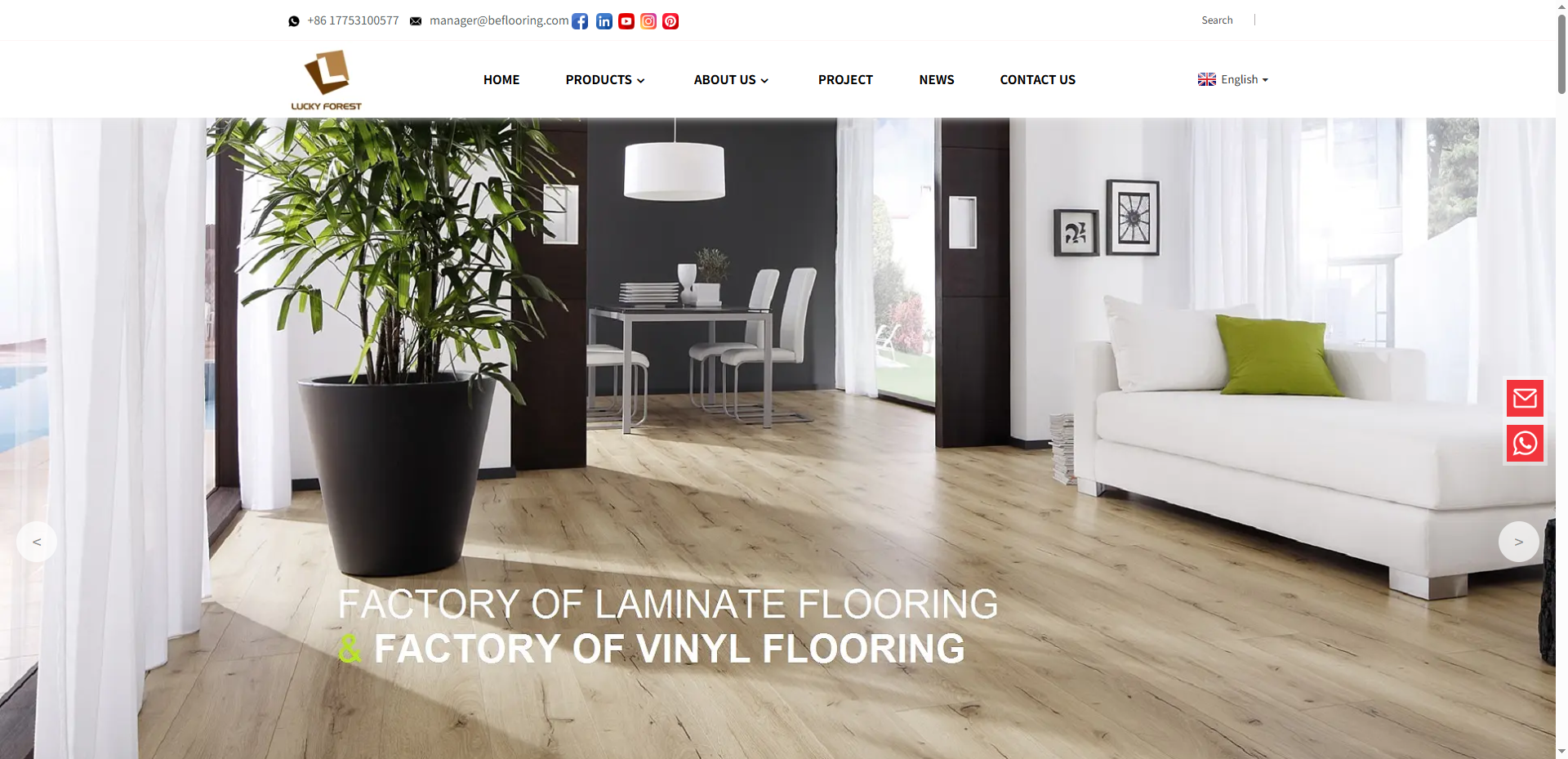
This company has a strong market share because of its global distribution network.
It is often ranked among the top exporters in its field. I believe their focus on creating direct connections with Uzbek importers is a smart strategy.
6. Baier Flooring – Reliable MDF and Flooring Supplier with Growing Presence

I believe what sets Baier apart is its consistent investment in quality control and customer service. The company maintains long-term cooperation with distributors in Uzbekistan, which helps reduce lead times and build stronger buyer trust. Its focus on both product stability and communication makes Baier a practical choice for importers seeking reliable MDF or vinyl flooring options.
Key Highlights:
– In my view, these exporters support the market in Uzbekistan with good technology, quality guarantees, and effective logistics.
– Important Uzbek importers, such as Europol Exclusive LLC, Agromir Buildings LLC, and Sanfa Products LLC, depend on their partnerships with these Chinese companies.
– Chinese producers have the capacity for large-scale production. Their ability to reach international markets ensures a steady supply to cover Uzbekistan’s increasing need for laminate flooring.
My Recommended Export-Oriented Manufacturers
If you’re a buyer in Uzbekistan, I know you need reliable Chinese laminate flooring exporters. Based on my review of recent data and product trends, I suggest taking a look at these manufacturers.
Jinan Luckyforest Decoration Material Co., Ltd
In my experience, Luckyforest is a leading choice. It is the largest laminate flooring factory in China. They supply floors in 7mm, 8mm, and 12mm thicknesses.
Their product selection is impressive. It covers popular wear grades like AC3, AC4, and AC5, especially when comparing laminate vs vinyl flooring performance in real projects. The designs include oak, maple, teak, and cherry. I also find their special finishes, like EIR embossed, high gloss, and beveled painted V groove, to be excellent options.
Luckyforest’s offerings include more than just laminate. I’ve noted they also export PVC and vinyl flooring, along with skirting and underlayment.
Prices for their laminate flooring are competitive. They range from $0.50 to $5.00 per square meter. The minimum order starts at 200–500 square meters, which depends on the product you choose.
The company has sold over 10,000 units in some product lines. It holds multiple international certifications. I believe this confirms their products meet tough export standards.
Their biggest markets are the US, Canada, and Colombia. However, their production size and technical abilities suggest a strong capacity to export to Eurasia. I feel they are a great fit for Uzbekistan’s demand for durable, European-style laminate flooring.
Other Exporters: A Note on Data
Risingsun New Materials Co., Ltd: I could not find any recent export or production data for their laminate flooring or their trade with Uzbekistan.
Zhengfeng Company: I found no current numbers or confirmed exports of laminate flooring to Uzbekistan.
SENLI Group (most likely Chiping Senli): It seems there are no new export statistics or specific trade records with Uzbekistan.
JianKai Wood Company: I was unable to find public records on their export volume or if they sell directly to the Uzbekistan market.
Xiamen Yung De Ornament: There are no product or export details for their laminate flooring going to Uzbekistan.
How to Verify a Chinese Supplier Before Ordering
Before placing any order, experienced buyers do not rely on catalog photos or price lists. They verify the supplier step by step.
In China, many companies look like factories online. But once cooperation starts, you may find they are traders, or they outsource production. This is why basic verification is critical.
Here are the key points that should always be checked.
1. Factory or Trader
The first step is to understand who you are really dealing with.
Do not rely only on the company introduction. Ask for real production proof:
Workshop videos (not edited promotional clips)
Photos of production lines and warehouse
Details about machines and capacity
If possible, ask simple but direct questions, such as daily output or lead time for a full container. Real factories usually answer clearly. Traders often give vague replies.
2. Export Experience (Especially to Central Asia)
Not all exporters understand Central Asia logistics.
Suppliers with experience in Uzbekistan or nearby markets usually know:
Rail and truck transport routes
Required export documents
Common customs issues
This reduces the risk of delays or mistakes. A supplier without this experience may still work, but you will need to manage more details yourself.
3. Product Standards and Real Performance
Do not rely only on certificates or claims like “AC4” or “waterproof”.
Check practical details:
AC rating consistency (not just one test report)
Core density and thickness tolerance
Edge sealing quality
Moisture resistance under temperature change
If possible, ask how they control quality between batches. This matters more than a single sample.
4. Packaging for Long-Distance Transport
This point is often underestimated.
Transport to Central Asia can be long and dry. Poor packaging can cause damage even if the product itself is good.
Check:
Carton strength and pallet protection
Stretch wrapping and edge protection
Container loading method
Good suppliers already have standard export packaging. If they cannot explain this clearly, it is a warning sign.
5. Sample Quality vs Bulk Consistency
Samples are important, but they are not enough.
Many problems happen when bulk production does not match the sample.
To reduce risk:
Compare multiple samples if possible
Confirm specifications in writing
Ask about production control process
Reliable suppliers can explain how they keep consistency across orders.
6. Communication Speed and Problem Handling
Fast and clear communication is often more important than price.
During early contact, pay attention to:
How quickly they reply
Whether answers are clear or generic
How they handle detailed questions
If communication is slow or unclear at the beginning, it usually becomes worse after payment.
In practice, these checks do not take much time, but they help avoid major problems later.
Most experienced importers treat supplier verification as part of the purchasing process, not an optional step.
Final Thoughts
For buyers in Uzbekistan, choosing a Chinese laminate flooring supplier is not about finding the biggest name or the lowest price.
In most cases, problems do not come from the first order. They come later — when quality changes, delivery is delayed, or communication breaks down. That is where the real difference between suppliers shows.
A reliable supplier is not the one who gives the best quotation at the beginning. It is the one who can keep quality stable, deliver on time, and respond quickly when something goes wrong.
From a practical point of view:
Large factories are suitable for stable, high-volume buyers
Mid-size export-oriented manufacturers are more flexible and easier to work with
Trading companies can help at the early stage, but may not be ideal for long-term control
Most experienced importers do not depend on a single supplier. They usually test, compare, and build relationships step by step.
If you are entering the Uzbekistan market or expanding your sourcing, it is better to start with small orders, verify the supplier carefully, and then scale up.
In this industry, long-term cooperation is built on consistency, not promises.