
That grade stamp on an OSB panel looks reassuring during procurement. It suggests the panel already passed structural testing and should perform once it reaches the job site.
Then the problems start showing up.
Subfloors swell after framing delays. Roof sheathing softens after repeated humidity exposure. Fasteners begin loosening months after installation. In many cases, the OSB grade stamp never changed — but the panel performance did.
The issue is not that OSB grading systems are useless. The problem is that many builders, importers, and procurement teams misunderstand what those grades actually certify.
OSB grades measure structural performance under controlled laboratory conditions. They do not account for long-term field moisture exposure, improper storage, installation shortcuts, manufacturing variability between mills, or climate-related humidity cycling on real construction projects.
That gap between laboratory certification and field performance is where expensive failures begin.
This guide explains:
What OSB grades actually measure
Which job-site variables the grade stamp ignores
Why identical grade panels can perform differently in the field
How OSB compares with plywood under moisture exposure
What builders and procurement teams should verify before bulk OSB orders
More importantly, it provides a practical framework for evaluating OSB panels beyond the stamp itself — using moisture benchmarks, manufacturing consistency checks, and application-specific risk assessment before problems appear on site.
What OSB Grades Measure (And What They Don’t)
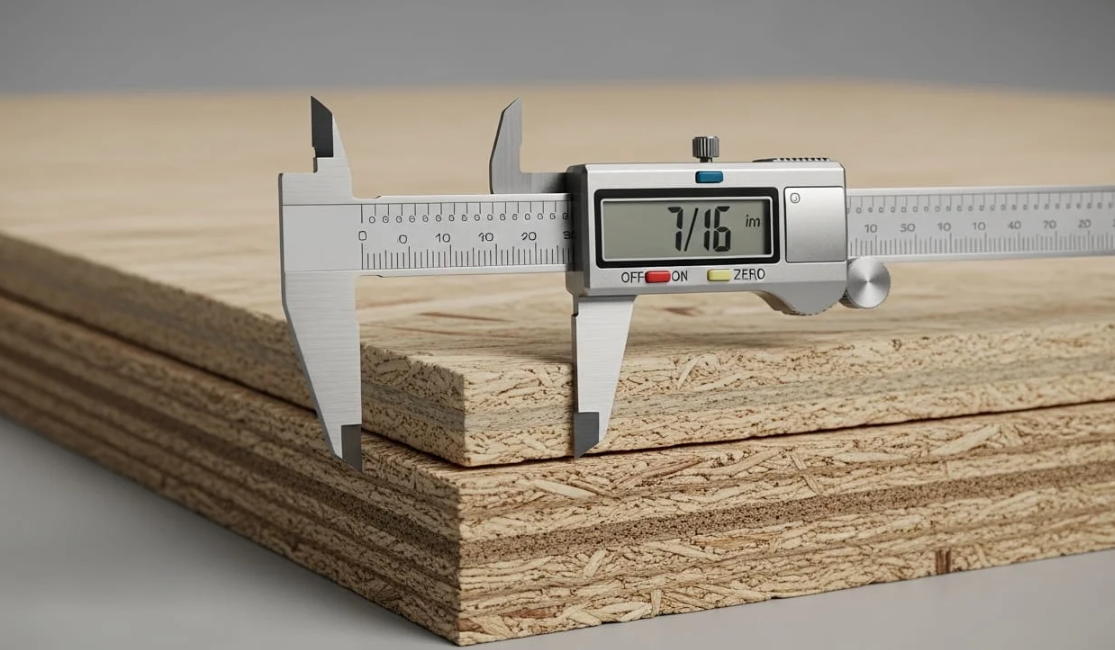
Pull that stamp apart and you’ll find a precise technical language hiding in plain sight.
A mark like 1R24//2F16/W24 isn’t random. Each character tells you something specific. The number prefix — 1 or 2 — tells you whether the panel stands alone or needs extra support. A “1” means it works on its own. A “2” means you need H-clips for roofs or underlayment for floors. It can also mean the panel lacks enough support for that use. The letter tells you the end use: R for roof, F for floor, W for wall. The number after that is your maximum span in inches between supports.
So 1R24 breaks down like this: roof use, 24-inch truss spacing, no edge support needed. That panel passed for that specific load scenario — nothing more, nothing less.
Here’s what the testing verified:
Load capacity — the panel carried a defined uniform load without structural failure
Deflection limits — sag stayed within acceptable tolerances (floors rated at L/360, meaning span divided by 360)
Minimum performance thresholds — not peak capacity, not average capacity. This is the lowest acceptable performance under standard lab conditions.
The testing assumed correct framing spacing, dry installation, and code-compliant setup. Those aren’t small assumptions. They’re the entire foundation the rating sits on.
Here’s what those OSB grades don’t cover:
Prolonged moisture exposure — “Exterior Bond” resists brief construction moisture. But sustained exposure above 20% moisture content will damage the panel, no matter the grade.
Surface quality — voids, texture, and finish fall under separate labels like S1 or S2. These have nothing to do with structural grading.
formaldehyde emissions — this is a separate classification on its own (EN300 OSB/0 for zero emissions).
Non-standard framing — a 2F16 floor panel tested with underlayment at 16-inch joist spacing loses that rating the moment you pull the underlayment or move to 24-inch spacing.
The EN300 European system follows similar logic. OSB3 handles humid conditions for exterior sheathing — but only under cover. OSB4 carries heavier loads in humid environments. Neither grade covers open-air or long-term weather exposure.
The grade certifies a minimum threshold under controlled conditions. Every variable your job site adds — humidity swings, storage conditions, installation order — falls outside that certification boundary.
The Installation Gap: Why Lab Ratings Break Down on the Job Site
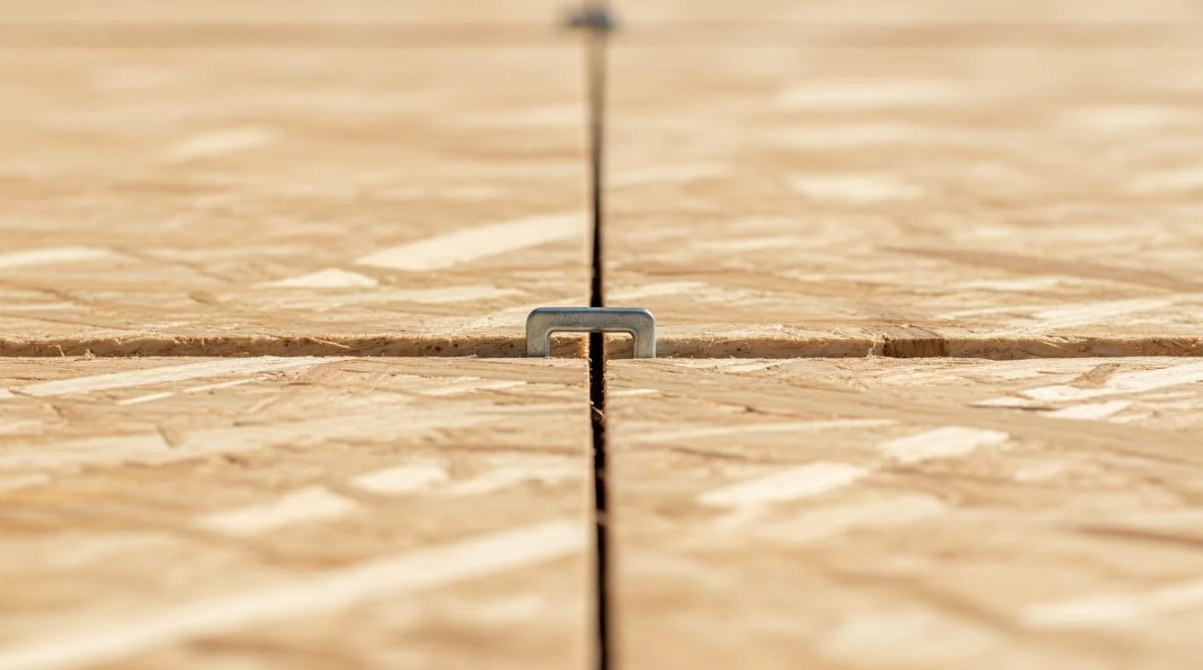
Every OSB grade assumes something the job site will never give you: control.
Lab testing runs on perfect geometry, precise fastener schedules, stable humidity, and trained installers. Strip any one of those conditions away — you’re already outside the rating’s boundaries. On most projects, several conditions fail at once. That’s when the gap between stamped grade and real-world performance becomes a structural liability.
Small Deviations, Large Consequences
The numbers here deserve attention.
One skipped fastener per connection point cuts connection strength by 5–8%. That sounds small. But contractor data shows 20–40% of installations have at least one fastening deviation per connection point. Miss 25% of your fasteners across a 16-fastener connection and you’ve lost 20–30% of load capacity — before anything else goes wrong.
Span overages hit even harder. Deflection doesn’t scale in a straight line with span. It follows a cubic relationship. Push a 24-inch rated span 10% past maximum and deflection jumps 33%. Go 20% over, and deflection climbs 73% while load resistance drops 30–40%.
Here’s where it gets serious: deviations stack by multiplication, not addition. A system with fastening deficiencies of -20%, a span overage of +15%, and moisture content just 5% above lab conditions can shed 40–55% of total rated capacity. The OSB grade stamped on that panel stays the same. The wood’s ability to hold load does not.
What’s Driving the Gap
Five patterns explain most of the damage:
Specification ambiguity — vague drawings leave fastener type, torque, and spacing open to interpretation
No real-time QC — inspections happen after installation, long after corrections become expensive
Economic pressure — a 5–10% labor saving from wider spacing or skipped fasteners can cost 30–50% of structural capacity down the line
Material variability — labs test premium-grade panels; job sites run on commodity stock with real moisture, real knots, and real grain variation
Environmental mismatch — labs hold at 50% RH and 70°F; real sites swing from -20°F to 120°F, with humidity cycles that wear down fastener preload over time
Applying a Realistic Adjustment
ANSI/APA PRG 320 ratings assume 12% moisture content and full installation compliance. Field averages land closer to 15–18% moisture and 80–90% installation compliance. That gap alone drives a 25–35% capacity loss against the rated value.
The practical fix: use a 0.65–0.75 field adjustment factor on lab ratings for any project where installation conditions aren’t under tight control. That’s not pessimism — it’s the math finally catching up to a reality most OSB grades were never built to reflect.
Moisture, Handling & Field Exposure: The Variables Grades Ignore
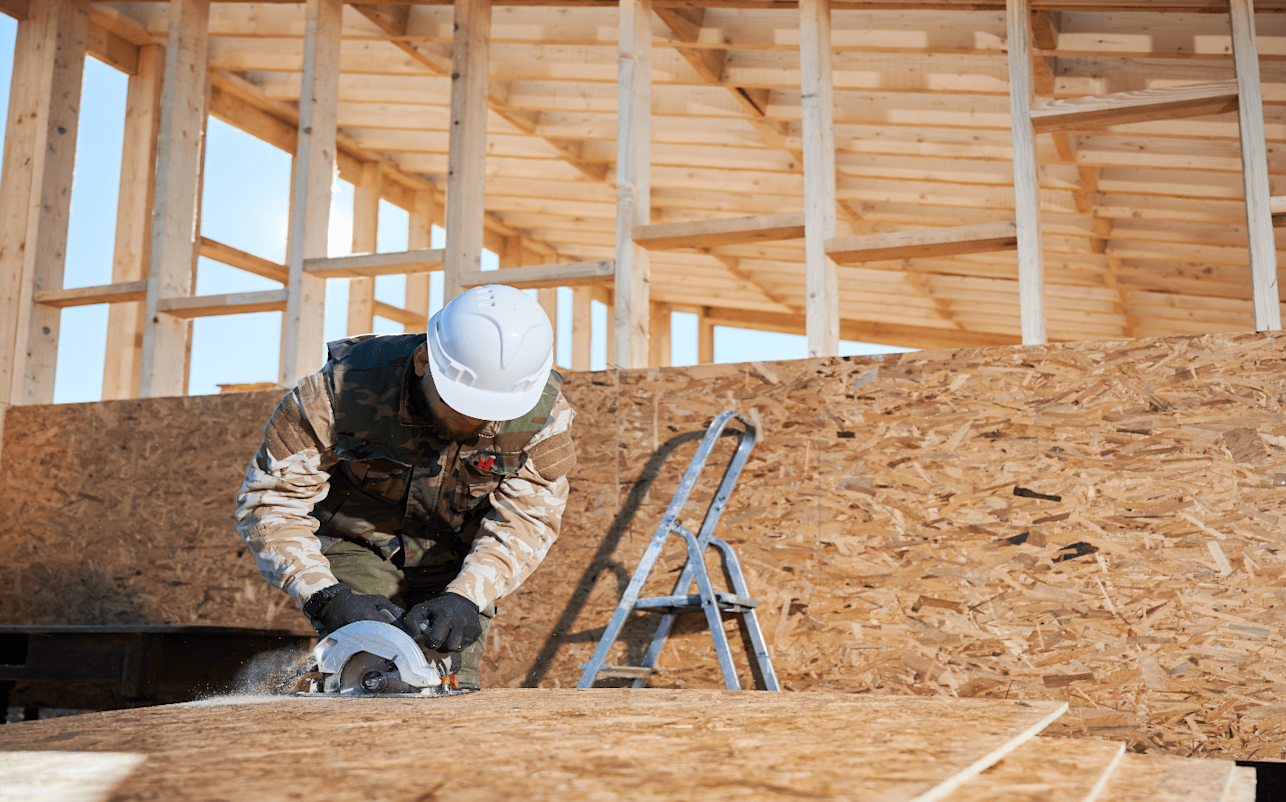
Stack OSB panels on a wet job site for 48 hours. The grade stamp won’t warn you about what happens next.
Wood-strand panels pull in moisture fast. At 90%+ relative humidity, OSB swells 2–5% in thickness in the first two days. That sounds manageable. The edges tell a different story — they swell 8–12%, while the panel interior moves just 1–2%. That pressure gap is where delamination starts. Plywood, by comparison, swells 1–3% under the same conditions. Your OSB grade stamp mentions none of this.
Delamination hits sooner than most builders expect. Field testing shows OSB bond strength breaks down once moisture content reaches 20–30%. On a humid job site, a panel sitting in ground contact can hit 25–35% MC in two to four days. A standard 7/16″ OSB panel loses 40–60% of bond strength after a single 48-hour wetting and drying cycle. The APA lab standard (ASTM D1037) runs six controlled wet-dry cycles. That test does not cover three weeks of partial exposure during a framing delay.
What Handling Does That No Grade Accounts For
The handling table shows what grades leave out:
|
Handling Factor |
Effect on Same-Grade OSB |
Measured Impact |
|---|---|---|
|
Ground contact |
MC rises 15–25% within 24 hours; fungal growth by day 7 |
Edge rot begins at 28% MC |
|
Flat stacking without cover |
10–20% thickness swell |
30% racking strength loss |
|
UV exposure (2–4 weeks) |
Surface tensile strength drops 15–25% |
Combined with moisture: 2x edge checking vs. sheltered panels |
That racking strength loss shows up nowhere in the grade classification. The fungal clock that starts at 28% MC doesn’t appear there either.
Climate Is the Variable the Grade Ignores Most
Same OSB grade. Different zip codes. Very different results.
Houston averages 75–90% RH. Field moisture content there stabilizes between 20–28%. In Phoenix, the same panel settles at 9–14%. That gap drives everything. OSB grades set a maximum recommended MC of 19%. Houston panels exceed that mark on a regular basis. Florida field studies report a 3x delamination and swell failure rate over six months compared to Arizona installs.
Practical storage benchmarks that protect performance:
Elevate panels 6–12 inches off the ground and use a breathable tarp — this holds MC gain under 5% across two weeks of rain
Stack panels upright to cut swell by 50% compared to flat stacking; add UV shielding to reduce surface degradation by 70%
Check MC before installation — anything above 19% doubles failure risk in humid-climate builds
The grade certified how that panel performed in a lab at controlled humidity. Your job site is not that lab.
OSB vs. Plywood: Same Grade, Different Field Behavior
The APA stamp doesn’t lie. In the lab, OSB and plywood with identical grades perform the same — nail withdrawal, load capacity, deflection limits. The Chow tests confirmed it. OSB3 even edges out CD-grade plywood on shear strength for wall sheathing and lateral stability. On paper, same grade means same panel.
Field behavior has other opinions.
The gap isn’t small, and it isn’t rare. It shows up six months after a job wraps. A subfloor that rattles. A section of flooring that humps up three inches. A row of nail heads working loose every time someone walks the hallway.
Where the Equivalence Breaks Down
Moisture is the fault line.
Spill a bucket on an OSB subfloor and that raised section stays raised. OSB takes in water at a slow rate, dries at a slow rate, and swells for good. Plywood swells too — then comes back close to its original thickness once it dries. That recovery difference is what decides subfloor performance.
Edge swelling adds to the problem. Plywood carries 10% more rigidity in subfloor applications and holds up better under point loads after moisture cycles. OSB stays size-stable when dry. Wet-dry cycling breaks that fast.
Fastener retention tells a similar story.
APA pre-flex tests show equal nail-holding between the two materials. But months of foot traffic, seasonal movement, and humidity cycling wear OSB cleats smooth. The nail grip loosens. The floor starts talking. Plywood holds fasteners tighter under those same conditions. It also breaks down less from repeated heat and humidity exposure.
|
Metric |
OSB (Same Grade) |
Plywood (Same Grade) |
|---|---|---|
|
Shear Strength |
Higher (OSB3) |
Lower |
|
Subfloor Rigidity |
Baseline |
+10% |
|
Swell Recovery |
Poor — permanent |
Good — returns near nominal |
|
Nail Hold After Flex Cycles |
Wears smooth over time |
Firmer long-term retention |
|
Delamination Risk |
Low |
Elevated in humidity/heat |
Aacer Flooring — a commercial flooring manufacturer with zero tolerance for subfloor movement — rejects OSB outright despite full APA equivalence. Their reason: the grade certification doesn’t cover field swelling behavior or fastener wear under real traffic loads. That’s not a fringe position. That’s a professional decision made after watching the failures stack up.
Use the Grade as a Guide — But Know Its Limits
OSB grades hold up well in dry applications. Roof sheathing under a tight install schedule, wall sheathing in moderate climates, structural panels in conditioned spaces — those are the jobs where OSB earns its grade stamp.
Subfloors in humid climates are a different story. High-moisture construction schedules, or any job where wet-dry cycling is predictable — those favor plywood. The grade numbers may match, but the real-world tolerance for tough conditions does not.
The grade tells you both panels cleared the same minimum bar. It doesn’t tell you how much margin is left after your job site gets through with them.
Manufacturing Variability: The Hidden Factor Behind Identical Grade Stamps
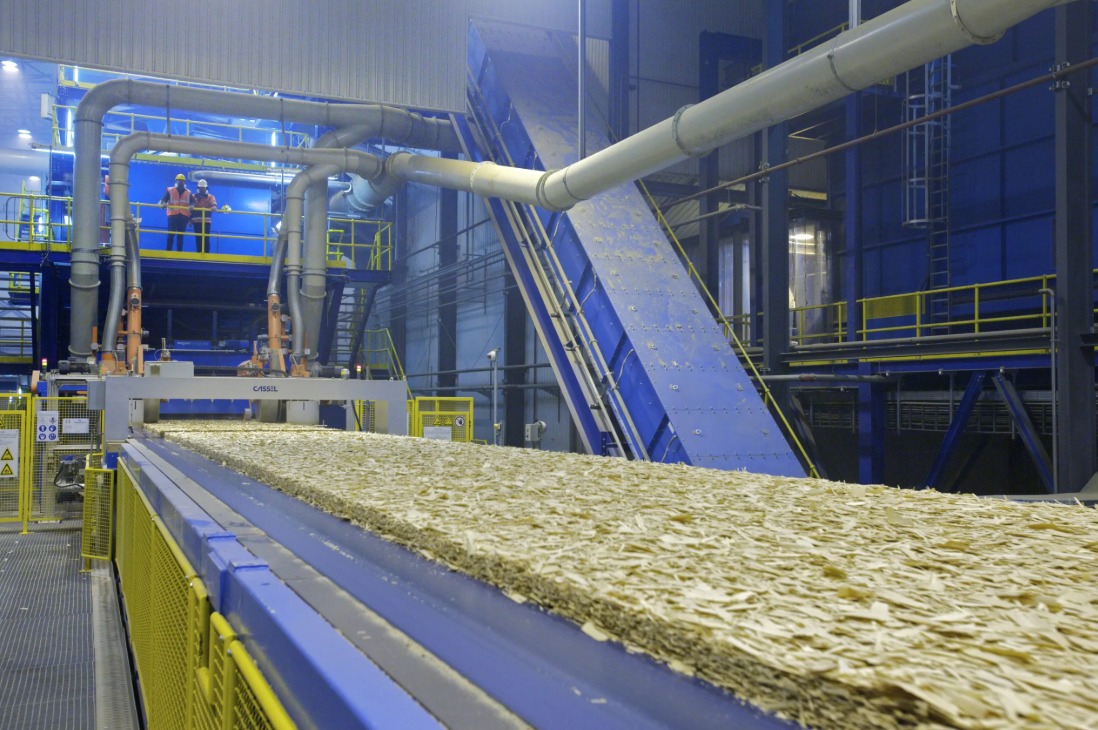
Even panels carrying the same OSB grade can perform differently in the field because manufacturing consistency varies between mills. Resin distribution, strand geometry, pressing temperature, and quality-control standards all influence long-term panel stability and moisture behavior.
For procurement teams, the key issue is not whether a panel passed minimum certification once — but whether the supplier can maintain consistent production quality across batches.
Before approving bulk OSB orders, request:
Batch-specific test reports
Third-party certification records
Thickness swell data
Internal bond consistency data
Production traceability linked to mill numbers
The grade stamp confirms minimum compliance. It does not confirm manufacturing consistency.
Buyer Mistakes That Cause OSB Failures After Installation
Many OSB failures are not caused by the panel grade itself. They happen because procurement teams or installers assume the grade stamp guarantees field durability under all conditions.
The most common mistakes include:
|
Buyer / Installation Mistake |
Real Consequence |
|---|---|
|
Leaving OSB exposed during framing delays |
Edge swelling and bond degradation |
|
Storing panels directly on wet ground |
Moisture content rises above safe limits within days |
|
Using OSB subfloors in high-humidity climates without moisture planning |
Permanent panel swelling and fastener loosening |
|
Choosing OSB based only on price and grade stamp |
Inconsistent performance between mills |
|
Ignoring thickness swell data during procurement |
Increased risk of floor movement and callbacks |
|
Assuming “Exterior Bond” means waterproof |
Delamination under long-term moisture cycling |
For humid-climate construction, procurement teams should evaluate moisture exposure risk before selecting OSB purely from structural grade classifications.
How to Make Smarter OSB Decisions Beyond the Grade Stamp
The grade stamp is a floor, not a ceiling. Work from it — but don’t stop there.
The stamp leaves things out. So ask better questions before the panels reach your job site.
Read the Stamp for What It Is
Every APA stamp carries four pieces of information — panel grade, span rating, bond classification, and mill number. That mill number matters more than most buyers realize. It points to the specific facility and production date. Request batch-specific test reports matched to that number. Two panels can carry identical stamps but come from different production runs. Their performance histories may differ in ways that matter on your build.
Ask the Supplier What the Stamp Doesn’t Say
The grade certifies a minimum. It says nothing about resin type, emission levels, or how the panel holds up after repeated wet-dry cycling. Before purchase, push for specifics:
Resin type — phenolic (Type I) holds up under sustained moisture; melamine-urea (Type II) does not
Formaldehyde emissions — request CARB Phase 2 compliance (≤0.09 ppm) for schools or healthcare projects
Internal bond strength — standard threshold is ≥0.50 psi; high-moisture applications need ≥0.60 psi
24-hour thickness swell — ≤15% is acceptable; ≤10% is the target for wet-prone installs
Match Documentation to Project Risk
Some jobs run fine on the stamp alone. Think interior sheathing, standard framing, panels installed within six months. Other projects need more.
|
Your project involves… |
Request this beyond the grade |
|---|---|
|
Kitchens, bathrooms, exterior soffits |
Type I Exterior Bond; thickness swell ≤15% per ASTM D1037 |
|
Roof trusses at 32″+ spacing |
MOE ≥600,000 psi; third-party deflection data under sustained load |
|
Shear walls (seismic/wind) |
Shear capacity test per ASTM E2126; fastener spacing tolerance |
|
Formaldehyde-sensitive occupancy |
ASTM E1333 chamber test results; EPA ≤0.13 ppm or CARB ≤0.09 ppm |
The grade got the panel into your supply chain. What you ask for next decides whether it holds up on your build.
Conclusion
The grade stamp on an OSB panel tells you what it qualified for in a lab setting. It doesn’t tell you how it holds up through three weeks of rain on an exposed roof deck. And it won’t tell you whether the mill printing that stamp last Tuesday was running tight tolerances or cutting corners.
That’s the gap this article has been about.
Real performance hides in details that grades were never built to capture:
-
Installation quality
-
Moisture exposure
-
Manufacturing consistency
-
Airtightness
Knowing your OSB grades is useful. But treating them as the full picture is where projects run into problems.
So here’s the move: use the grade as a starting point, not the finish line. Ask sharper questions about the specific product. Check the manufacturer’s tolerances. Think about the conditions that panel will face on your job site — not just the conditions it passed in a test.
The builders who get the best results don’t just trust the stamp. They know what’s behind it.