
Choosing the right MDF thickness is an important part of cabinet manufacturing procurement. Ordering 12mm, 15mm, 18mm, or 25mm boards without matching them to the cabinet design and component requirements can lead to unnecessary material costs, excess weight, or panels that do not meet the project’s performance requirements.
This guide compares four commonly specified MDF thicknesses—12mm, 15mm, 18mm, and 25mm—and explains where each may fit in cabinet doors, carcasses, shelves, and other furniture components. It also outlines the specifications buyers should confirm with suppliers, including board dimensions, thickness tolerance, density, moisture resistance, and formaldehyde emissions.
12 mm MDF for Lightweight Cabinet Doors, Wall Cabinets, and Interior Components
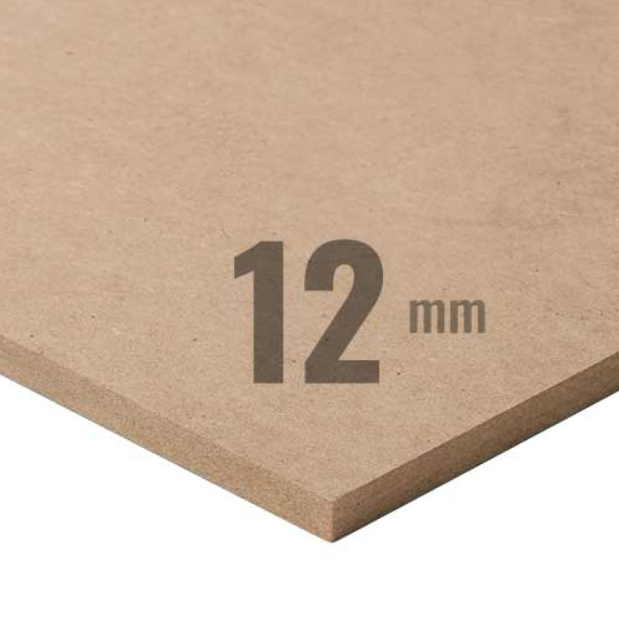
A standard 2440 × 1220 × 12mm MDF panel weighs between 21.4 and 28.6 kg, depending on density grade. That difference determines whether a wall cabinet door hangs true for ten years or pulls on its hinges within eighteen months.
This is the thinnest of the common cabinet gauges, manufactured to EN 622-5 for interior, dry-condition use. Core density spans 600–800 kg/m³, with lightweight commercial grades clustering around 680–750 kg/m³. In that range, weight lands near 8.2–9.0 kg per square metre—light enough to cut door load, yet dense enough to take paint and veneer well.
Where 12mm earns its place in production:
Lightweight cabinet doors and drawer fronts
Wall-cabinet doors where reducing hinge load is the goal
Interior partitions, back panels, end panels, and infill pieces
Flat-panel paint jobs and small-to-medium shaker doors
Veneered or laminated interior components not carrying weight
Door dimensions and hardware. The suitability of 12mm MDF for cabinet doors depends on door height and width, panel construction, hinge type, and the number and position of fixings. For larger doors or frequently used cabinets, confirm the panel’s stiffness and hinge-fixing requirements before specifying this thickness.
Shelf spans and structural support. Thin MDF shelves are more susceptible to deflection under sustained loads, particularly across wide unsupported spans. The appropriate thickness depends on shelf dimensions, expected load, support conditions, and the acceptable amount of deflection. For cabinet carcasses and heavily loaded shelves, compare 15mm and 18mm options against the project’s structural requirements rather than relying on thickness alone.
Finishing and moisture considerations. MDF can be painted, veneered, or laminated when the surface is properly prepared. Cut edges are more absorbent than finished faces and may require sealing before coating. For kitchens, utility rooms, and other humid environments, specify a suitable moisture-resistant grade where required, and protect exposed edges from water ingress. Moisture-resistant MDF is not waterproof.
Sourcing spec to quote: 12mm, EN 622-5, interior dry-grade, 680–750 kg/m³, ±0.3mm tolerance, E1/E0 emission class, 2440 × 1220mm minimum format. Order a test sheet before starting a production run.
MDF Thickness Specifications and Tolerance Verification for Cabinet Orders
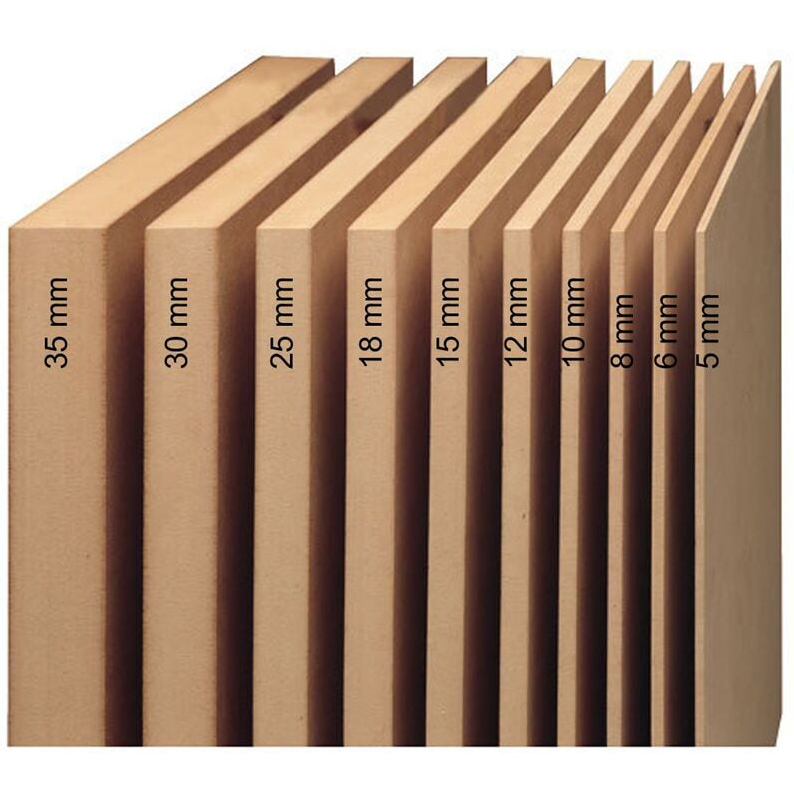
Thickness consistency matters in cabinet manufacturing because small variations can affect CNC machining, edge-banding, joint alignment, and finished door gaps. Buyers should confirm the supplier’s actual thickness range and tolerance before approving a production order.
For cabinet projects, commonly specified MDF thicknesses include 12mm, 15mm, 18mm, and 25mm. Thinner boards may be suitable for backs and drawer bottoms, while thicker panels are often considered for carcasses, shelves, and other components according to the design. Available thicknesses and sheet dimensions vary by manufacturer.
What to specify in a purchase order:
Nominal thickness and agreed thickness tolerance
Sheet length and width
Density or other relevant mechanical requirements
Surface condition, sanding, and edge requirements
Formaldehyde emissions classification and required documentation
Standard or moisture-resistant grade, depending on the application
A sample purchase specification could read:
MDF, 18mm nominal thickness, 1220 × 2440mm, sanded both faces, suitable for cabinet manufacturing, with thickness tolerance and applicable product standard confirmed in the purchase agreement.
Do not assume that a particular tolerance is guaranteed across every thickness or product grade. Ask the supplier to confirm the tolerance achievable for the specified board and obtain written acceptance limits before production.
Incoming inspection checklist:
Measure the thickness at several positions on each sampled panel.
Sample multiple boards from different positions in the shipment.
Use a calibrated thickness gauge or micrometer appropriate to the required tolerance.
Record the highest and lowest readings and compare them with the agreed specification.
Check the supplier’s batch test report for the required density, moisture content, and emissions data.
For repeat orders, agree on the sampling procedure and the process for handling out-of-specification panels before shipment.
15 mm MDF for Lightweight Carcasses, Wall Cabinets, and Furniture Panels
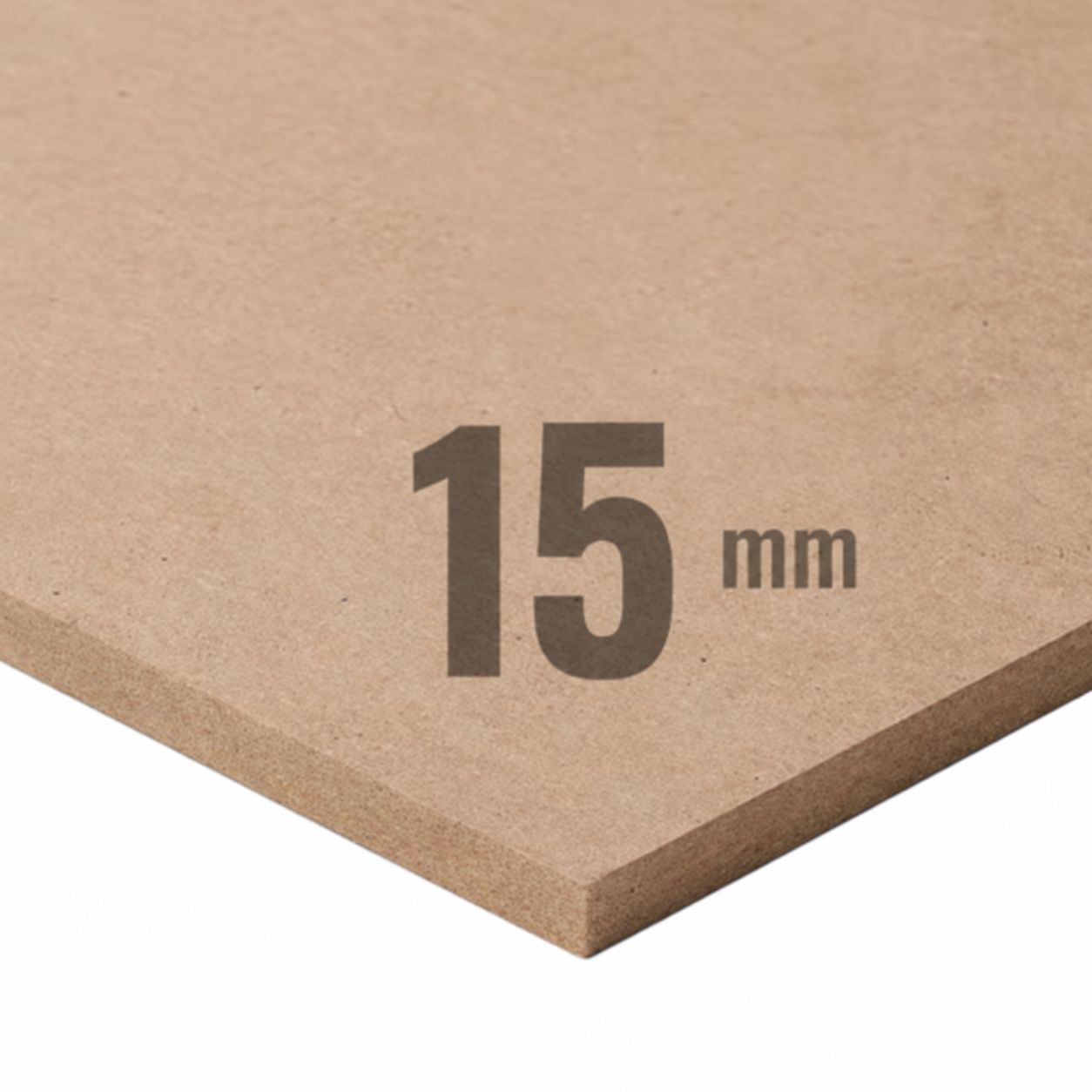
Between 12mm door stock and 18mm structural panels sits 15mm. It is the thickness most shops turn to when a job needs more backbone than a drawer front without the weight penalty of a full 18mm carcass. A standard 2440 × 1220mm sheet weighs about 33.5 kg, which works out to 11.3 kg/m² for standard grade and 11.7 kg/m² for moisture-resistant stock. That is a noticeable step up from 12mm, but you can still wheel a sheet around the shop on a cart by yourself.
Where 15mm MDF does the work:
Lightweight kitchen carcasses (sides, tops, bottoms)
Wall-cabinet construction (sides, top, bottom, and doors)
Shelving under moderate load
Wardrobe panels and furniture side panels
Drawer components and interior joinery
Core density runs 650–800 kg/m³ for standard 15mm MDF sheets, while moisture-resistant stock generally sits between 700 and 750 kg/m³. If total panel weight matters most, such as on upper wall runs where hinge strain accumulates, aim for the lower end of that range. If you need firmer screw-holding and crisper edges, pick a denser board and allow for the extra weight.
Shelf and fastening realities. A 15mm shelf holds up reliably over shorter spans under moderate weight. Wide shelves carrying heavy storage still require a solid front lip, center divider, or rear support; the extra 3mm over a 12mm panel will not stop long-term sag on its own. For joinery, confirmat screws, dowels, biscuits, and standard knock-down fittings all hold well, but always pre-drill near the edges. MDF at this thickness splits open if you drive a fastener blind.
Wall-cabinet mounting note. Build the box and doors from 15mm, then back up the assembly with a solid hanging rail or inset back. Never hang a loaded cabinet off an unsupported MDF back. Fix directly into wall studs or solid masonry, because the wall anchor will give out long before the sheet material fails.
Pricing benchmark. UK retail listings put standard 15mm MDF sheets between £15 and £77 depending on sheet dimensions and pack format. For volume work, trade suppliers sell 60-board packs at 15 × 1220 × 2440mm. A single sheet yields about 2.98 m² of usable board. Divide your sheet quote by that figure to get an accurate square-metre rate before placing an order.
Sourcing spec to quote: 15mm, EN 622-5, 650–750 kg/m³, E1 formaldehyde class (max ~8–9 mg/100 g), sanded both faces. Ask for written spec sheets to confirm moisture-resistant resin systems; do not depend on green core dye alone.
18 mm MDF for Mainstream Cabinet Carcasses, Doors, Shelves, and Wardrobes
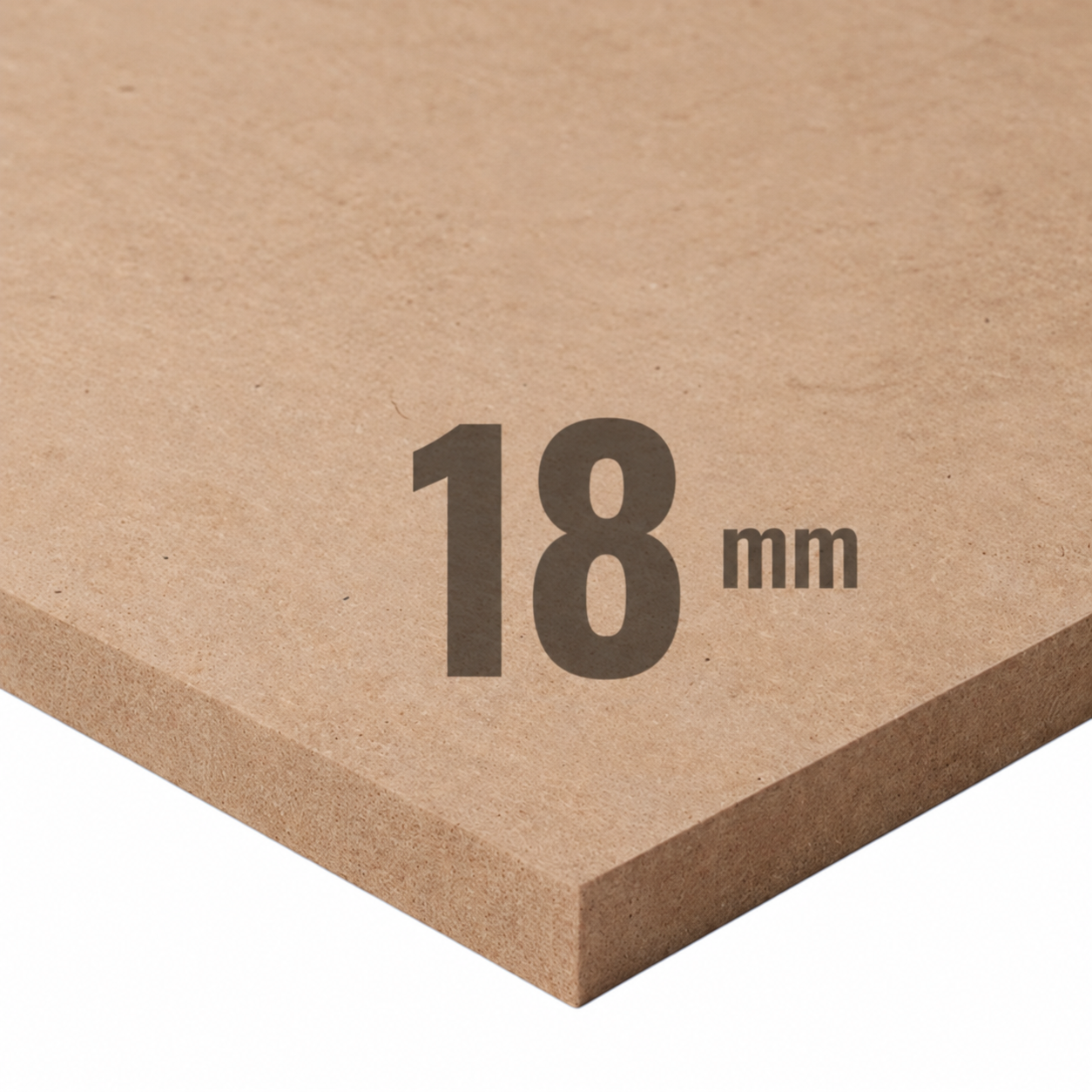
Most cabinet shops default to 18mm when a drawing does not specify thickness, and for good reason. This gauge holds cam-and-dowel fittings, confirmat screws, shelf pins, standard hinges, and 32mm system hardware without extra reinforcement. If your shop uses European hardware, 18mm is the thickness that hardware was engineered around.
Sheet formats and weight. A 2,440 × 1,220 × 18mm sheet yields 2.98 m² and dominates trade stock across the UK and most export markets. The 2,400 × 1,200mm metric equivalent is smaller at 2.88 m² per sheet. Expect a sheet to weigh between 32 and 38 kg depending on the density grade and resin mix.
Technical benchmarks worth quoting against:
Density: 700–780 kg/m³
Thickness tolerance: ±0.2–0.3mm on calibrated board
Modulus of rupture: 23–28 N/mm²
Modulus of elasticity: 2,700 N/mm²
Internal bond strength: minimum 0.60 N/mm²
Moisture content: 5–11%
Screw-holding: 1,000 N face, 700 N edge
Those numbers matter most on carcass joints, where cam-lock fittings take repeated stress from loaded shelves and drawer runners.
Where 18mm Fits in the Build
Carcasses — Sides, tops, bottoms, and partitions all run on 18mm standard MDF. Backs are the exception: drop to 6–9mm MDF or HDF to save weight without compromising the frame.
Shelves — 18mm handles domestic spans up to 800mm under normal loads. If you span wider or store heavy goods, step up to 22–25mm stock, add front lipping, or fit a centre support to stop the panel sagging.
Doors — Flat slab, routed, veneered, painted, or foil-wrapped fronts all standardise on 18mm door thickness. In kitchens, utility rooms, or wet zones, specify moisture-resistant grade. West Fraser CaberMDF Trade Moisture Resistant and Kronobuild MR are manufactured for that exposure.
Wardrobes — Vertical sides, top and bottom panels, dividers, and shelves take 18mm without issue. Standard hinged doors work well at this thickness, but wide doors need extra hinges or internal stiffening to prevent long-term bow.
Standard vs moisture-resistant. Standard 18mm MDF suits dry interior furniture and general joinery. Moisture-resistant boards target kitchens, bathrooms, and commercial fit-outs. Because moisture-resistant panels still swell under direct water, edge sealing and a full coating system remain mandatory on every exposed cut.
Compliance checklist for procurement: EN 622-5 classification, EN 13986 for construction applications, E1 formaldehyde limits, CE marking, and CARB Phase 2 for North American supply chains.
Pricing reference. UK retail runs around £29 per 2,440 × 1,220 × 18mm sheet. Australian 2,400 × 1,200mm stock lists between A$78.74 and A$98.42 depending on the supplier.
Sourcing spec to quote: “18mm calibrated furniture-grade MDF, 1,220 × 2,440mm, density 700–780 kg/m³, thickness tolerance ±0.3mm maximum, sanded both faces, E1 or CARB P2 emissions, EN 622-5 compliant, standard or moisture-resistant grade per end use, square edges, batch test certificate required.”
25 mm MDF for Heavy-Duty Shelves, Countertop Bases, and Thick Cabinet Components
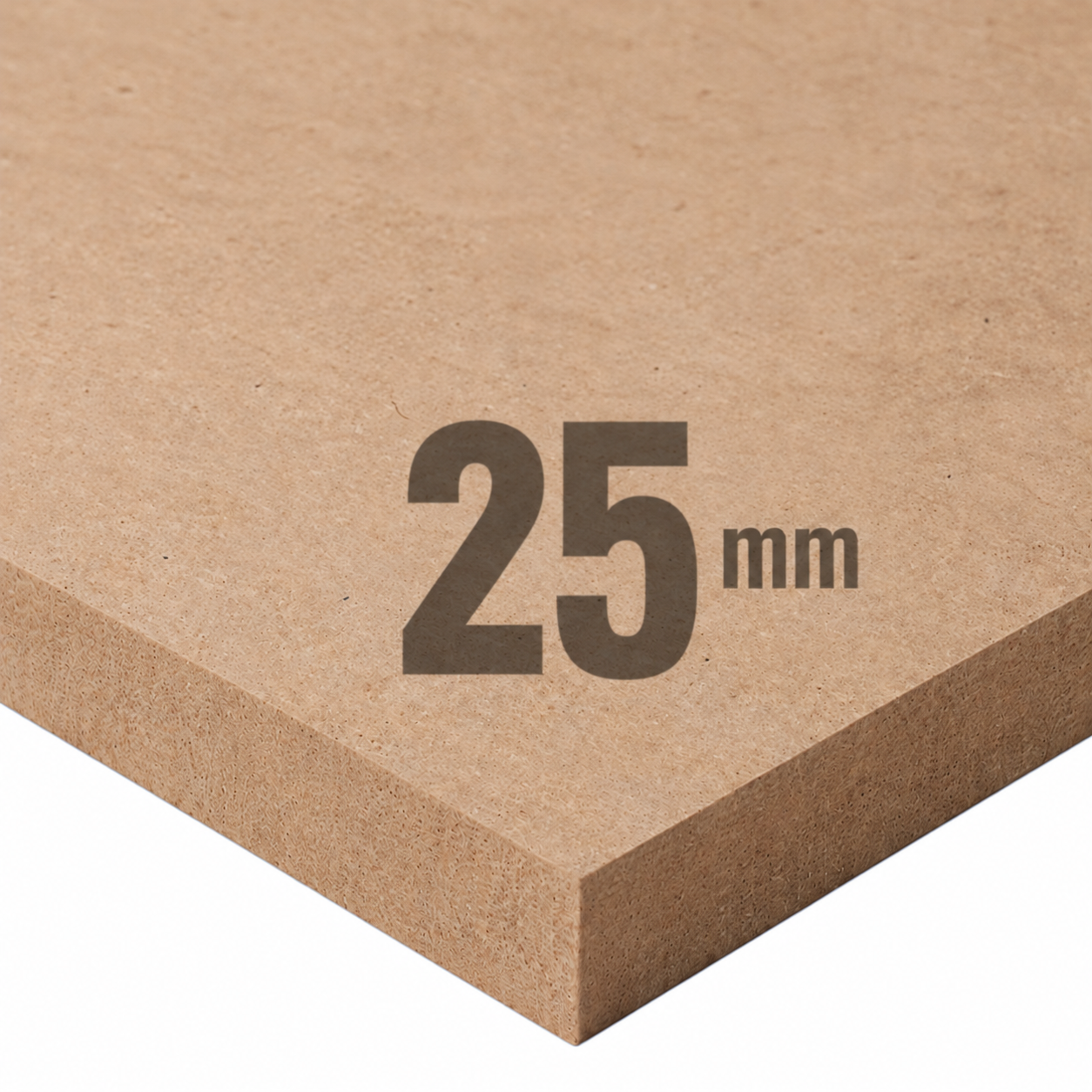
Pick up a full 25mm sheet and you feel the weight right away. At 45–55 kg per 2440 × 1220mm board, this is the heaviest standard thickness in cabinet production. Joinery shops turn to it whenever 18mm board lacks the stiffness to support the span or the load.
Where 25mm earns its spot on the cut list:
Heavy-duty shelving across wide, unsupported spans
Kitchen-island carcasses and countertop substrates
Cabinet sides and plinths taking repeated structural stress
Thick cabinet doors, end panels, and drawer fronts where visual mass matters
Window boards, shopfitting components, and furniture partitions
Standard vs moisture-resistant stock. Guararapes Premium MDF (2440 × 1220 × 25mm) sets the baseline for dry interiors: E1 low-formaldehyde emissions, FSC certification, and compliance with EN 622-5. For kitchens and bathrooms, Kronospan Kronobuild Moisture Resistant takes over. Each sheet weighs about 45 kg, meets both EN 622-5 and E1 standards, and carries an EN 13501-1 Euroclass D-s2,d0 fire rating. That fire rating makes it an automatic choice for commercial shopfitting projects where building inspectors verify documentation.
Pricing benchmarks. Standard 25mm MDF at 2400 × 1200mm costs around £53.71 per sheet with VAT. Moisture-resistant 25mm at 2440 × 1220mm runs closer to £89.64 with VAT. That near-70% premium protects an island carcass from failing during a plumbing leak under the sink.
Cut-to-size and tolerance. Most suppliers cut panels anywhere from 100 × 50mm up to full sheets, keeping cuts within ±1mm. Raw sheet thickness varies more widely—up to ±10% plus 0.4mm—so measure your batch before setting up CNC toolpaths or fitting tight door reveals.
Structural limits. Standard 25mm MDF remains a non-load-bearing interior material. It handles heavy static storage without issue, but cantilevered sections or high-impact points require cleats, partitions, or an internal support frame.
Sourcing spec to quote: “25mm MDF, 2440 × 1220mm, E1 low-emission, EN 622-5 compliant, moisture-resistant grade for kitchens or humid zones, FSC-certified where required, cut tolerance ±1mm, sealed or banded exposed edges.”
Conclusion
A smooth production run comes down to matching board thickness to function. The 18mm MDF board remains the industry standard for cabinet carcasses and doors because it balances strength, weight, and cost, but not every component needs it. Drawer bottoms, interior panels, and wall cabinets often perform better and cost less at 12mm or 15mm, while load-bearing shelves and countertop bases justify the 25mm upgrade.
Before calling a supplier, check your project specs against the comparison table above. Confirm your density ratings, moisture resistance requirements, and cabinet carcass thickness against your actual load conditions rather than defaulting to what the last factory used.
That five-minute check is the difference between a quote that matches your project and three rounds of email corrections. Working with an experienced panel manufacturer like Baier Floor can simplify that verification process.