
If you’ve priced out a flooring project in Brazil recently, you’ve probably noticed the numbers don’t match what you remember from even a year ago. Rising costs come from a tangled web of import tariffs, currency swings, and raw material shortages, not just inflation. Some categories are hit harder than others. Vinyl flooring has seen particularly sharp increases, while laminate flooring price hikes are forcing builders to rethink specs mid-project. Understanding why these costs are climbing—and which factors are temporary versus structural—can mean the difference between a budget that holds and one that blows up halfway through construction.
Brazil Flooring Market Snapshot: Current Price Baseline & Size
Brazil’s floor covering market is at roughly USD 11.99 billion in 2025, with projections to USD 16.13 billion by 2031—a 4.62% CAGR. Some sources peg the base even higher, closer to USD 20 billion, once you factor in total volume across categories.
That volume is staggering: ~1.2 billion square meters moved annually, split across roughly 150 million units, with the top 10 manufacturers controlling about 60% of that volume. Do the math on value versus volume, and you land on a national average selling price of about USD 16–17 per square meter. That’s a useful benchmark when regional quotes start creeping upward.
Where the Money Concentrates
Ceramic & porcelain tiles: ~60% of volume, 46.61% of market value. Brazil’s default flooring choice.
Wood flooring: ~25% of volume, the highest revenue-per-unit segment.
Laminate + vinyl combined: ~10% of volume, but the fastest-growing slice.
Residential buyers: 70% of total market value.
B2C retail channel: 59% of value, growing at 7.20% CAGR—faster than commercial.
Vinyl flooring alone is growing at 4.69% CAGR, slightly outpacing the broader market. That’s your baseline. Everything discussed from here—tariffs, currency swings, raw material costs—gets layered on top of these numbers.
Import Tariffs & Trade Policy Driving Up Brazil Flooring Prices
Trade policy just rewrote the math on Brazilian flooring, and not in buyers’ favor. Two tariff regimes are colliding right now—one from Washington, one from Brasília—and both are squeezing prices from opposite directions.
The Section 301 Shockwave
The U.S. Trade Representative finalized an additional 25% ad valorem tariff on Brazilian imports under Section 301, effective July 22, 2026. This stacks on top of existing MFN duties:
Ceramic tile: 8.5–10% MFN + 25% = ~34% total duty
Vinyl/LVT: 5–8% MFN + 25% = ~30–33% total
Engineered wood: 8% MFN + 25% = ~33% total
Take ceramic tile. A 9% duty load pushes your landed-cost multiplier to 1.09. Adding the 25% jumps it to 1.34. That’s a 22.9 percentage-point swing. Once importers pad margins to offset risk, final U.S. shelf prices often climb 33–35%.
The April 2025 Whiplash
Brazil briefly became the cheapest non-Asian flooring source on Earth. When the U.S. announced country-specific surcharges in April 2025, Brazil got hit with +18% (28% total) while China absorbed +34% (44% total). Then a 90-day pause dropped Brazil back to just 10% baseline, a 34-point gap versus China. Buyers flooded Brazilian mills with orders, driving FOB export prices up domestically.
Brazil Taxes Its Own Imports Higher
Brasília isn’t sitting still either. Import duty on PVC floor coverings (NCM 3918.10.00) rose from 16% to 20% through October 2026. Duty on non-ceramic tiles and flagstones jumped from 7.2% to 25%. Once you stack IPI, PIS/COFINS, and ICMS on top, total tax load can hit 2–3x the nominal rate—protecting domestic producers while quietly raising the flooring price floor for everyone else.
Freight Costs, Currency Exchange & Imported Input Inflation
Freight isn’t the villain everyone assumes it is. Globally, shipping costs run about 7.5% of the customs value of imported goods on average. But when that number spikes, the ripple effect is out of proportion. A 1 standard deviation jump in global shipping costs (~+21.8 percentage points) adds about 0.15 percentage points to headline inflation within 12 months. Double container shipping rates worldwide, and you’re looking at +0.7 percentage points added to global inflation. For Brazil, where imported flooring inputs make up a meaningful chunk of production costs, that math compounds fast. Research from the OECD also shows that higher global shipping costs can gradually feed through to domestic inflation and imported product prices, even after freight rates begin to stabilize.
Where the Real Pressure Comes From: Exchange Rate, Not Freight
Currency exchange has a bigger long-run effect on flooring prices than freight itself. Dallas Fed research on U.S. import pricing found freight cost pass-through sits at just 0.04% long-run—economically tiny. Exchange rate depreciation drives a 0.42% increase in import prices for every 1% currency drop.
Apply that to Brazil. PVC resin—the backbone of vinyl flooring—trades in USD per ton. If BRL moves from 5.00 to 5.50 against the dollar (a 10% depreciation), your resin cost in reais jumps about 10% before margins absorb anything. Same story for urea-formaldehyde and melamine resins used in laminate, and aluminum/steel trims sourced from Asia.
Freight adds a smaller but real layer: 5–10% of CIF cost for resins, spiking to 10–15% during container shortages. Combine a weak real with a freight spike, and Brazilian flooring manufacturers face a genuine input-cost squeeze—one that eventually lands on your invoice.
Domestic Raw Material & Construction Cost Pressures
Metals are where the real damage shows up. Section 232 tariffs now sit at 50% on steel, aluminum, and copper imports—inputs that feed directly into flooring production equipment, press plates, and trim hardware. As of April 2026, steel mill products jumped 15% year over year, aluminum spiked 34%, and copper climbed 21%. AGC’s 2025 data tells a similar story: aluminum up 30.5%, steel up 17%, copper up 11.8%.
Energy costs compound the squeeze. Diesel fuel surged 73.8% year over year by June 2026—a cost that hasn’t fully hit construction bids yet. Liquid asphalt jumped 41% month over month, and crude petroleum added 11.3% in a single month. Every one of these feeds into HDF and MDF production, which is energy-intensive by nature.
Overall construction input prices are up 7.0% year over year, with 6.2% added in just the first four months of 2026. Residential building materials have grown above 3.5% year over year since mid-2025—the sharpest annual jump since early 2023.
Why Supply Constraints Matter More Than Demand
One national analysis found 83% of construction material cost inflation traces back to supply constraints, not demand. That’s structural, not seasonal.
Manufacturers are responding by shifting mix toward higher-margin products—AC4-AC5 laminate, glue-free cores, water-resistant boards—which raises average selling price per square meter even when raw material costs plateau. Raw materials typically account for 50–70% of ex-factory flooring costs, so when steel, resins, and energy climb simultaneously, that pressure compounds into finished product pricing faster than headline inflation numbers suggest.
Which Flooring Types Are Most Affected: Tile, Vinyl, Laminate & Hardwood
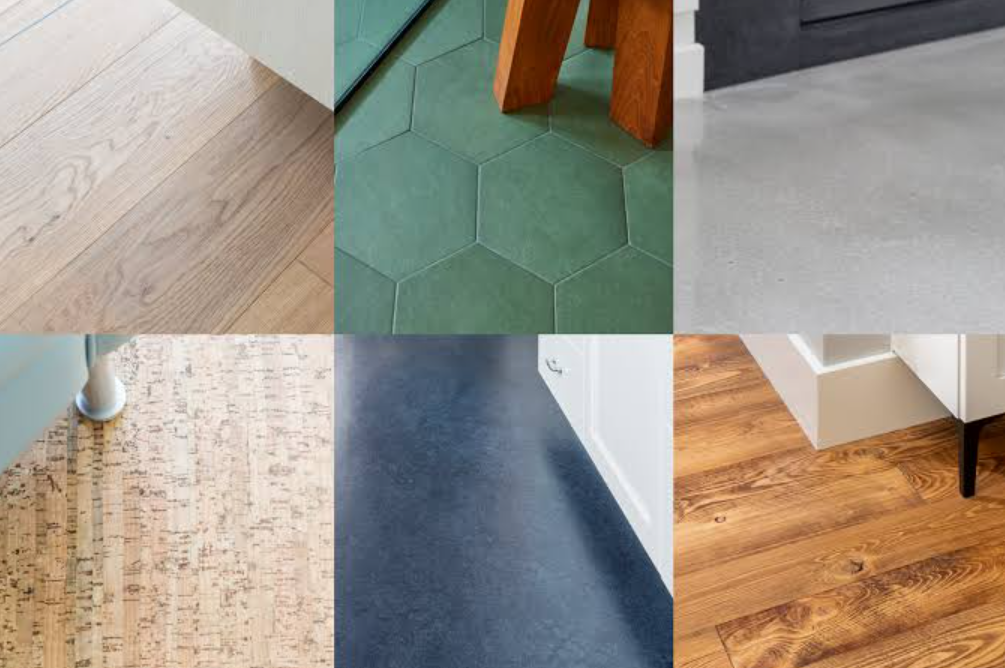
Not every flooring category feels these pressures the same way. Prices move differently across tile, vinyl, laminate, and hardwood, because each type has its own cost DNA.
Ceramic and porcelain tile live and die by energy costs. Firing and drying can eat up 30–50% of manufacturing cost, so when natural gas or electricity spikes, factory costs jump 10–20% in a single year. Add export taxes or logistics surcharges, and FOB tile prices to key markets can climb another 5–10%. Tile is nearly indestructible in abrasion tests, ranking alongside vinyl and laminate for durability.
Vinyl flooring in Brazil faces the sharpest raw material exposure. PVC resin tracks crude oil and naphtha, with historical swings of ±20–40% in volatile years. That’s a brutal ride for manufacturers. Yet demand keeps climbing because vinyl plank consistently ties or wins comparative durability tests against laminate and engineered hardwood, especially on water resistance. Buyers won’t switch away because nothing else performs as well in wet areas, even as rising raw material prices squeeze margins. Rising material costs are only one part of the picture—the Brazil SPC flooring market is also expanding rapidly as developers increasingly prioritize waterproof and low-maintenance flooring solutions.
Laminate flooring price increases trace back to HDF core and resin costs, which can represent 40–60% of manufacturing cost. Laminate is “among the most vulnerable” flooring types to water damage. Even brief exposure causes edge swelling that can’t be reversed, forcing full replacement rather than repair. Working with an experienced laminate flooring manufacturer can also improve supply stability and reduce procurement risks during periods of raw material volatility.
Hardwood flooring cost in Brazil runs on a different track. Raw lumber accounts for 50–70% of material cost, making solid hardwood far more sensitive to logging restrictions and export quotas than oil prices. Engineered hardwood shows visible swelling in water tests where vinyl and laminate stay intact, making moisture exposure a real cost risk for this category alone.
Market Demand & Trends Shaping Future Flooring Prices in Brazil
Forecasts diverge wildly depending on who’s crunching the numbers. Conservative models put Brazil’s floor covering market at 4.6–5.8% CAGR through 2030–2031. More aggressive projections—IMARC’s Portuguese report, Verified Market Research—push that to 7.7–12.4% CAGR, with values reaching USD 19.8–21.1 billion by 2033–2034. That gap matters because it signals two different futures: one driven mostly by volume, another driven by price.
Three forces are pulling demand upward:
Urbanization and smaller households—more housing units means more square meters needing coverage, even if per-unit spending stays flat.
Rising disposable income—Brazil’s growing middle class is trading up from basic ceramic to premium vinyl, engineered wood, and design-forward laminates.
Sustainability preference—bamboo, cork, and eco-certified composites now carry a 15–30% price premium per square meter over standard products, according to global industry benchmarks.
Why Prices Aren’t Rising as Fast as They Could
Competition is doing buyers a favor—temporarily. With ceramic, vinyl, laminate, and engineered wood all fighting for shelf space, manufacturers are delaying list-price hikes in favor of promotions and spec adjustments. IndexBox calls flooring demand “moderately cyclical,” meaning purchases get postponed whenever household budgets tighten.
But that restraint has limits. Once premium categories gain enough share, repricing becomes unavoidable—margins eventually need restoring, regardless of how patient suppliers have been.
What Rising Costs Mean for Builders, Distributors & Homeowners
Three groups are absorbing this cost surge in three very different ways, and the numbers make the stakes clear. Overall construction costs sit 30–31% higher than pre-pandemic levels, which works out to a 6–8% compound annual increase over the last four to five years. That’s not a temporary blip. It’s the new baseline everyone from contractors to homeowners has to plan around.
Builders & Contractors: Budget for 8–10%, Not 4–5%
Single-family construction costs are running +3.2% year-over-year, with services climbing +4.7% YoY. But the sharper pain shows up in goods: NAHB data shows materials used in new residential construction up 8.3% YoY, with some contractors reporting 10%+ price jumps in just three months. Lumber alone hit $1,200 per thousand board feet at one point—a 250% spike that added about $36,000 to an average home build.
Tariffs compound this. Estimates put the added cost at $10,900–$11,000 per single-family home, with material costs rising 4–10% depending on region and mix. The practical move: build 8–10% annual escalation into materials, logistics, and energy budgets. For flooring-heavy projects specifically, assume 8–12% annual inflation during volatile stretches, and negotiate 90–120 day fixed-price windows with installers before quoting clients.
Choosing cost-effective flooring solutions with long-term durability can help contractors offset rising material and installation costs.
Distributors & Importers: Repricing Is No Longer Optional
Building material prices are up 3.5% YoY—the sharpest increase since early 2023. If your gross margin sits at 20% and landed costs rise 8% from tariffs, flat pricing drops you to about 12% margin. The fix is tiered: 3–5% across the board, with 10%+ on tariff-exposed SKUs like steel-intensive flooring hardware. Many are also adding a 4–6% tariff-and-freight surcharge, reviewed quarterly against diesel and duty indices, plus shortening price guarantees from 90 days down to 30–60 during volatile stretches.
Homeowners: Waiting Rarely Pays Off
Building materials have climbed 41.6% since the pandemic, far outpacing general inflation. On a $10,000 flooring project, waiting 12 months costs you about $10,500 in a stable phase, or $11,000 if energy and freight spike again. With most of that 30–40% increase already locked in, prices are sticky, not falling. Unless you’re expecting a major local demand slowdown, buying sooner beats betting on a correction that historical data doesn’t support.
Brazil Flooring Price Outlook: 2025–2031 Forecast
Two forecast paths exist for Brazil’s flooring market, and picking the wrong one could throw off your five-year budget entirely. The conservative scenario pegs growth at 4.62–5.8% CAGR through 2031. The aggressive scenario, backed by IMARC and Verified Market Research, pushes that to 7.7–12.4% CAGR, with the market hitting USD 19.8–21.1 billion by 2033–2034. The two scenarios differ by more than a rounding error, representing either steady inflation or a market repricing itself category by category.
Segment Forecasts Diverge From the Headline Number
The segment-level data shows a different story:
Vinyl/LVT: 4.69% CAGR through 2031, with some Brazilian LVT datasets showing spikes up to 12% between 2024–2031
Wood & laminate: 5.9% CAGR through 2030, growing from USD 599.3 million (2024) to USD 839.0 million
Resinous flooring (epoxy, PU): 7% CAGR through 2033, from USD 93.5 million to USD 169.0 million
Resinous and wood/laminate are outpacing the broader market. The growth reflects price and mix expansion, driven by spec-driven demand and premiumization. For commercial developments, understanding LVT flooring for Brazil projects can help buyers balance project budgets with long-term maintenance and installation performance.
Why Cost Relief Isn’t Coming Soon
Global floor-covering demand is projected to grow from USD 106.42 billion (2026) to USD 136.18 billion (2031) at 5.06% CAGR, slightly ahead of Brazil’s conservative base case. That external benchmark matters. It signals import-dependent inputs like PVC resin and decorative paper stay in high global demand, which keeps upward pressure on Brazilian landed costs. According to the World Bank, exchange-rate movements and global commodity prices remain key factors influencing construction material costs across emerging markets.
Brazil’s construction and furniture markets reinforce this. The furniture sector alone grows from USD 16.15 billion to USD 19.74 billion by 2031 at 4.10% CAGR, a macro signal that housing and interior spending isn’t slowing down. Assume no-relief base case pricing, and consider moderate relief only as an optimistic scenario.
FAQ: Common Questions About Rising Flooring Costs in Brazil
The data on Brazil’s flooring cost surge is broken down below by category, region, and timeline. Stop guessing and start budgeting.
Why Are Flooring Costs Rising in Brazil Right Now?
Construction materials climbed 32.92% over 12 months, per INCC-DI/FGV. That is a historic record. In 2026 alone, materials rose 10–25% year-over-year. The national average build cost hit R$1,925.08/m² in February 2026 (SINAPI/IBGE), split between R$1,085.16/m² in materials and R$839.92/m² in labor. Costs vary by region: R$1,711.27/m² in Pernambuco and R$2,174.12/m² in Santa Catarina. Labor is now outpacing materials month-to-month, up 1.73% versus 0.73%.
Which Flooring Types Got Hit Hardest?
Not all flooring types rose equally.
Porcelain tile (60×60, standard): R$130–215/m² installed
Premium national porcelain: R$175–320/m² installed
Solid hardwood: R$260–640/m² installed
Engineered hardwood: R$190–420/m² installed
LVT vinyl (5mm click): R$110–250/m² installed
Laminate (AC3–AC4): R$90–200/m² installed
Economy ceramic: R$80–130/m² installed
Hardwood and premium porcelain saw the steepest material-cost increases. Laminate and vinyl held steady on the cost-benefit scale.
What Does It Actually Cost to Replace Flooring Today?
A 60m² apartment with mid-range porcelain (R$150/m² installed) runs about R$9,000 for flooring alone. Add R$3,000 for removal and leveling, for a total around R$12,000. A 100m² home at average pricing (R$200/m²) comes to R$20,000. Budget an extra R$20–45/m² for things like premium grout or complex cuts.
Will Prices Drop Soon, or Should I Buy Now?
Don’t wait on a correction that isn’t coming. Construction inflation is still running 10–25% YoY in 2026, with costs climbing month to month (+0.23% from January to February). Labor costs continue outpacing materials. This pattern points to sustained high pricing, especially for imported-input categories like premium porcelain and high-end LVT.
How Do I Choose Cost-Effective Flooring During This Price Surge?
Match your budget to a category.
Economy (R$80–130/m²): national ceramic 45×45 or 60×60
Mid-range (R$110–200/m²): laminate AC3–AC4 or basic LVT
High-end (R$200–320/m²): premium porcelain or engineered hardwood
For B2B sourcing, look for 5–10 year warranties, ABNT/ISO certification, and manufacturers with multi-state distribution to reduce supply risk and price volatility.
Conclusion
Brazil flooring costs are rising because import tariffs, currency swings, and raw material inflation are all hitting at once. Vinyl and laminate price increases are coming through hardest right now, and hardwood is still squeezed by domestic supply constraints and import duties. Based on current trade policy trends, this isn’t a temporary spike—it’s the new normal through at least 2027.
If you’re a builder or distributor, lock in pricing before the next tariff adjustment. If you’re a homeowner, don’t wait for a price drop that isn’t coming—budget accordingly. If you’re evaluating suppliers, partner with manufacturers who source strategically and communicate transparently about what drives costs. If you’re planning future flooring projects or sourcing for Brazil, contact our team to discuss product options, OEM services, and current market conditions.