
South Africa’s furniture industry is quietly becoming one of Africa’s most compelling growth stories, and MDF is the backbone of that growth. As local manufacturers scale up production to meet rising domestic and export demand, can the country’s timber supply keep pace, or will import dependency define the next decade?
Between 2020 and 2030, South Africa MDF imports and furniture manufacturing growth are set to reshape the wood-based panel market Africa-wide, driven by construction booms, shifting trade policies, and a widening domestic supply gap. Whether you’re a manufacturer sourcing reliable raw material, an exporter evaluating market entry, or an analyst tracking price trends and tariffs, this breakdown includes the data, forecasts, and sourcing insights you need to make confident, informed decisions before your competitors do.
South Africa MDF Import Market Overview(2020-2025)
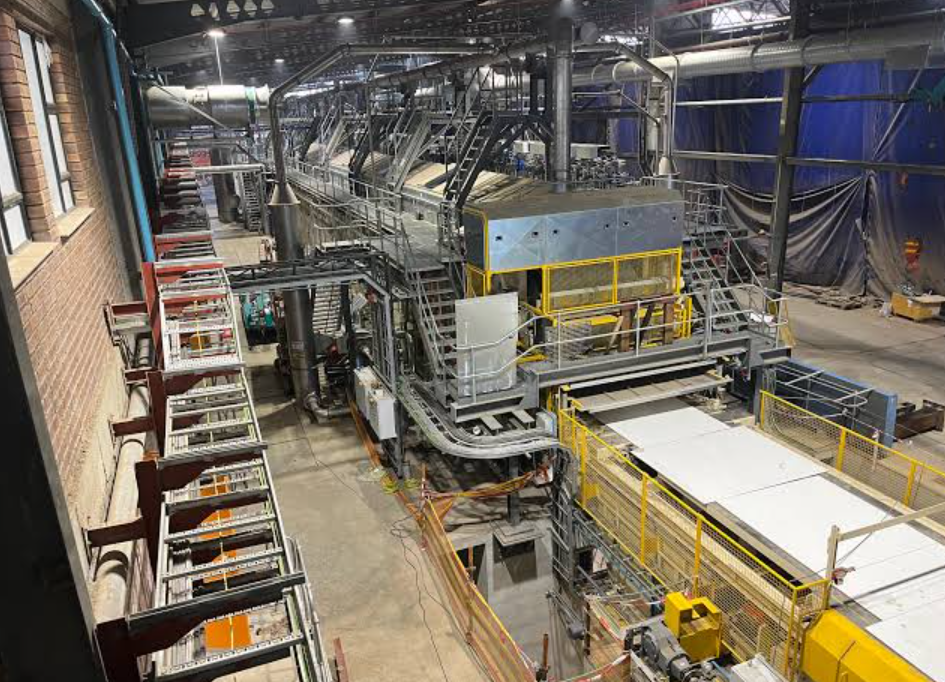
2020 was rock bottom for South Africa MDF imports. Three consecutive years of decline (2018-2020) left the market at its lowest point, then everything flipped. In 2021, IndexBox data shows South Africa MDF imports jumped 46% year-over-year, snapping that downward streak and kicking off a recovery that’s still playing out today.
Zoom out further and the trend gets even more compelling. Between 2012 and 2021, South Africa’s MDF market value grew at an average annual rate of +5.6%, hitting a peak consumption value in 2021. Structural demand from furniture manufacturers who can’t get enough board drove that growth.
Mdf Price Trends South Africa: What’s Driving the Squeeze
Prices moved just as fast as volume. Average import prices rose roughly 12% in 2021 alone. Container shipping rates from East Asia and South America to South Africa spiked, driving up CIF landed costs. Wood fiber and resin adhesives (urea-formaldehyde, MDI) got more expensive post-pandemic. And a weaker rand against the dollar made dollar-denominated MDF imports even pricier locally.
A Malaysian trade journal captured the squeeze in real numbers: South African buyers saw prices climb from RM1,874/m³ to RM2,158/m³, while purchase volume dropped 67% to just 21m³ over the same period. Higher prices, lower appetite.
MDF Raw Material Sourcing: Who’s Supplying South Africa
Brazil, Thailand, and Germany together account for roughly 54% of South Africa’s MDF imports, while China, Malaysia, and Hungary make up another 34%. China and Malaysia compete on volume and cost. Hungary’s exports to South Africa grew at a 96.3% CAGR between 2012 and 2021, fueled by capacity expansion and a shift toward higher-margin, melamine-faced MDF for cabinetry and flooring.
Beyond MDF, related wood-carpentry imports hit $25.1 million in 2023, led by China ($10.2M), Indonesia ($5.16M), and Thailand ($3.1M). The broader wood-based panel market Africa depends on is still import-heavy going into 2025.
South Africa Furniture Manufacturing Industry Growth Drivers
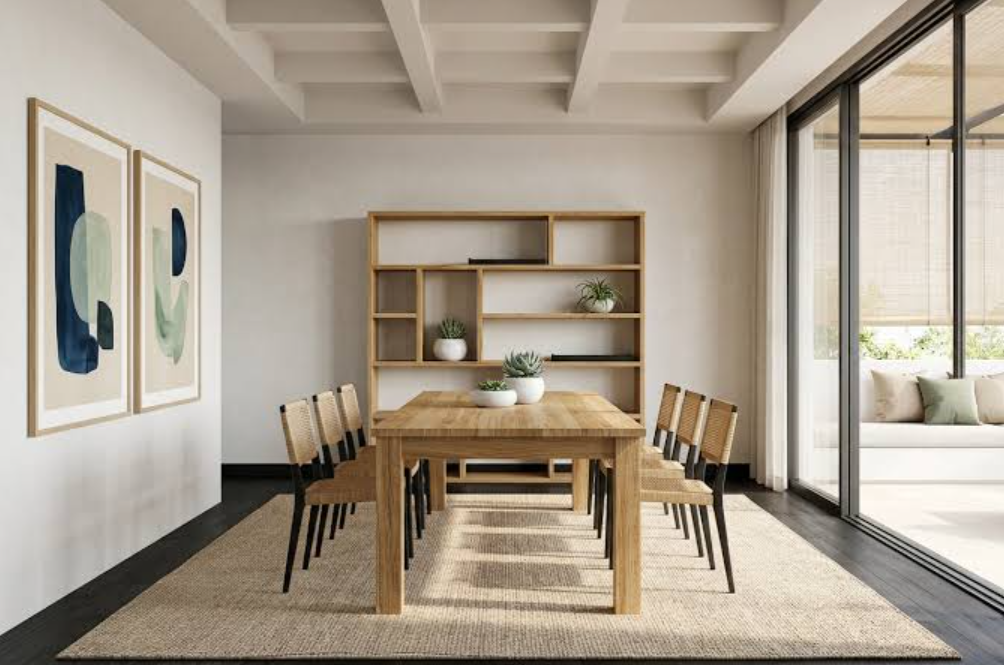
Twenty years of decline set the stage for this turnaround. SAFI classified furniture manufacturing as an industry in continuous contraction for over two decades. Between 2002 and 2018, local furniture demand dropped 23%, while exports fell an even steeper 46%. Cheap imports, low capital investment, weak design and R&D spending, skills shortages, and loadshedding-driven cost inflation compounded the damage. When 2020 hit, pandemic supply chain chaos crushed import volumes further, forcing retailers to look local out of necessity, not preference.
That crisis became the catalyst. In 2021, government, SAFI, manufacturers, and unions launched the Furniture Masterplan, built on six growth pillars:
- Localisation — pushing government and major retailers toward higher local procurement quotas
- Competitiveness — financing equipment upgrades, automation, and CNC adoption to cut unit costs
- Export promotion — connecting manufacturers to African, European, and Gulf buyers
- Raw material supply — stabilizing MDF, timber, and hardware inputs
- Skills development — rebuilding the technical labor pipeline
- Transformation — expanding SMME and historically disadvantaged participation
Government designation policies now require public procurement to prioritize local furniture, creating a guaranteed order base that didn’t exist a decade ago.
Where the Real Demand Is Coming From
South Africa’s furniture and interior market sits around USD 5.1 billion, projected to grow at roughly 6.89% CAGR through 2031. Urbanization (55% to 67% by 2030), about 200,000 new urban homes annually, rising disposable income (up roughly 10% to ZAR 60,000 per year), and hybrid-office demand are all fueling orders for flatpack furniture, kitchen cabinetry, and case goods. These are categories where Mdf Board applications dominate production. Retailers report local sourcing growing 3-4% annually, directly replacing import volume that high freight costs made unattractive.
Domestic Timber Supply Gap and Import Dependency

South Africa’s industrial roundwood demand sits at 4,441,426 tons, but baseline domestic supply reaches 3,242,000 tons. That’s a gap of 1,199,426 tons — a 37% supply shortfall against available supply. Look at it from the demand side and the gap eats up about 27% of total requirement. South Africa’s timber industry can’t feed its own furniture and panel sectors without outside help.
Why the Gap Keeps Widening
Three structural issues drive this shortfall.
Forest resource limits. Usable timber stock is thin, and the mismatch between natural forest and plantation structure caps how much raw material domestic mills can pull.
Long growth cycles. Commercial timber takes years to mature. You can’t plant your way out of a shortage overnight, which amplifies every cyclical dip.
Processing bottlenecks. Even where forestland exists, weak harvesting, sorting, and logistics infrastructure keeps usable volume low. Raw material scarcity and processing constraints compound each other.
The Three-Stage Import Dependency Pattern
Local MDF producers absorb what stable raw material they can get first, but production growth lags consumption growth. Once domestic supply can’t cover the increase, import share climbs to fill the gap. This pattern has played out across other timber-constrained markets. From there pricing power splits: local producers stay squeezed on raw material costs, while importers gain flexibility on finished product. Imports become the market’s safety valve.
Domestic MDF consumption has grown about 5% each year over the past five years, pushed by construction demand, furniture applications, and MDF displacing solid wood and plywood on cost and workability. Track four numbers to model where this goes: capacity utilization, raw material availability, import share, and the CIF-to-local price spread. These variables explain most of the market share migration ahead.
MDF Board Market South Africa: 2025-2030 Demand Forecast
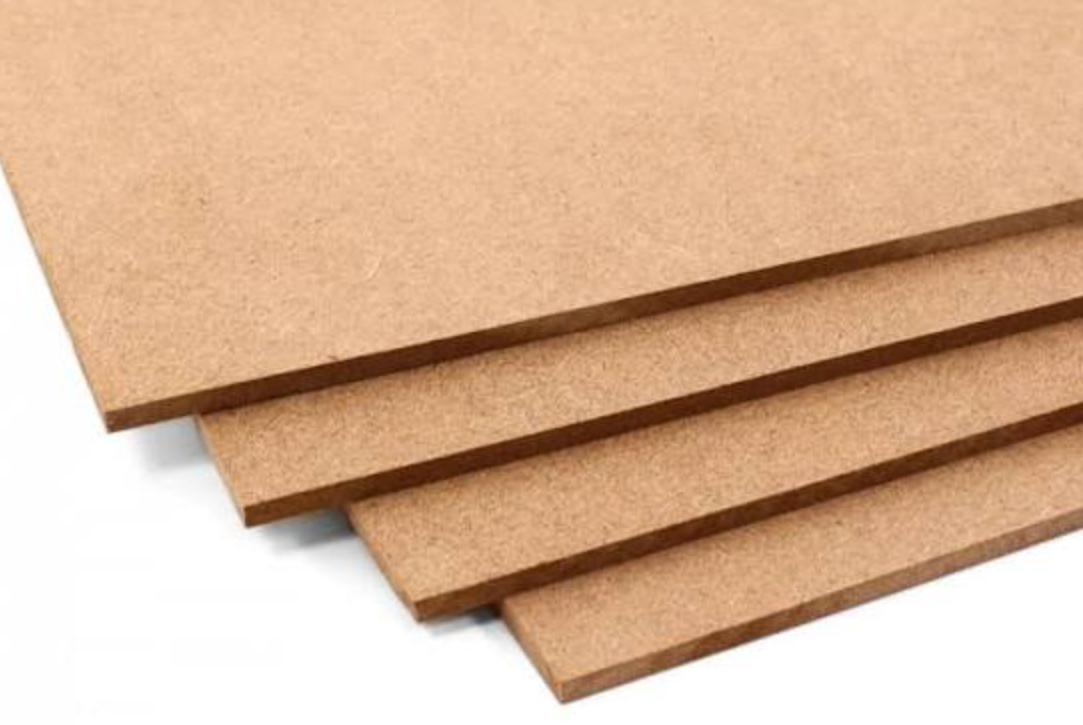
No source publishes a clean South Africa-only MDF volume forecast for 2025-2030. But the global numbers give us a reliable benchmark, and South Africa’s regional position tells us how to apply it.
Start with the global picture. The MDF market hits 121.87 million m³ in 2025 and climbs to 146.93 million m³ by 2030 — a 3.81% CAGR. A separate estimate puts 2026 volume at 126.45 million m³, reaching 152.05 million m³ by 2031, tracking at 3.76% CAGR. Furniture drives 51.10% of that 2025 volume, growing at 4.04% CAGR through 2031. Residential end-use accounts for 65.91% of global demand — 80.33 million m³ — expanding at 3.79% CAGR.
South Africa doesn’t just participate in this trend. It anchors it. Regional market data names South Africa the primary production hub and largest consumption center for melamine-faced MDF board across the entire SADC bloc. That positioning matters: when regional supply chains shift, South Africa captures the upside first.
Three Scenarios for 2025-2030
- Base case: Mid-single-digit CAGR, mirroring the global 3.76%-3.81% band, supported by furniture demand.
- Upside case: Faster growth if local furniture production keeps expanding and import costs stay high, pushing more buyers toward domestic capacity.
- Downside case: Slower growth if construction activity cools or consumer spending tightens.
Four product segments matter most here. Furniture-grade MDF leads, given furniture’s dominant global share and South Africa’s manufacturing weight. Standard MDF covers the broad base — carcasses, shelving, cabinetry. Melamine-faced MDF board carries outsized relevance given South Africa’s SADC hub status. Moisture-resistant MDF stays a smaller upsell segment tied to kitchens, bathrooms, and higher-spec fit-outs.
Watch import volumes, local capacity utilization, and the price spread between imported and domestic board. These three indicators will tell you which scenario is playing out in real time.
MDF Supplier Selection Criteria for South Africa Buyers
Four numbers separate a reliable MDF supplier from a costly mistake: 95%, ±0.2mm, E1, and B-BBEE. Miss any one, and you’re gambling with production downtime or compliance penalties.
Price Stability ranks in the top 3 selection criteria for South African buyers, alongside quality and delivery. Smart procurement teams lock in 6-12 month contracts with quarterly price-cap clauses (typically 5-8% max variance) and then evaluate total cost of ownership, factoring in logistics, wastage, and delay costs.
Thickness and Density Consistency separates furniture-grade suppliers from commodity players. Look for ±0.2-0.3mm tolerance and density control within ±20-30 kg/m³. Request batch testing on 3-5 boards per shipment, targeting 98%+ pass rates.
Delivery Reliability matters more in South Africa’s timber industry than almost anywhere else. Local stock typically ships in 3-7 days; imported containers take 4-8 weeks including customs. Set OTD targets at 95-97% and weight delivery performance at 30%+ in your supplier scorecard.
Compliance Requirements now gate supplier shortlists entirely:
- FSC certification + ISO 9001 + ISO 14001 as non-negotiable baseline
- B-BBEE rating required by most public and corporate buyers
- Formaldehyde emissions at E1 (≤0.124 mg/m³) or CARB Phase 2 equivalent
- Moisture-resistant grades for kitchens, bathrooms, coastal builds (thickness swell ≤8-12%)
- Flame-retardant MDF (EN 13501-1 B-s1,d0) for hospitality and public projects
Supplier diversification isn’t optional anymore. Running 2-3 core suppliers cuts single-source disruption risk to under 50% and typically compresses pricing 3-5% through competitive tension. That’s why buyers increasingly split orders across specialists in standard boards, MR-grade panels, and pre-laminated melamine finishes.
Import Tariffs, Logistics and Trade Compliance for MDF into South Africa
Duty math can make or break your MDF import economics. Right now, MDF falls under HS heading 44.11, carrying a 10% MFN duty — but ITAC’s Notice 3727 of 2026 has a formal application pending to push that to 15%. If you’re modeling landed costs for 2026 onward, build the higher rate into your scenarios now.
The Real Tax Burden on MDF Imports
South Africa applies a 15% VAT on the Added Tax Value, not just CIF. On a $100 CIF shipment, you add a 10% non-SACU uplift ($10), then duty on that ($11), giving an ATV of $121. VAT at 15% adds $18.15. Total tax load: 29.15% of CIF value — and that climbs once the 15% duty lands.
There’s an escape route. AfCFTA, SADC, and EU/UK certificates of origin can drop duty to zero on qualifying MDF-based products, versus 20% general rates on comparable furniture substrates. Missing or defective certificates, though, trigger reassessment at full MFN rates — an instant 10-20 percentage point cost spike.
Where Shipments Get Stuck
Durban handles the bulk of Asian MDF imports. Ocean transit from Shanghai or Ningbo runs 22-28 days at sea, 30-40 days door-to-door. Southeast Asian routes are faster — 18-26 days at sea, 28-38 days total.
The real risk sits at customs. SARS’s risk engine sorts containers into three channels:
- Green — 1-3 day release, no inspection
- Yellow — document review, adds 2-5 days
- Red — physical inspection, adds 5-10+ days
MDF now sits on the Prohibited and Restricted Imports List under Chapter 44 subheadings like 4411.12.31. That means more red-channel scrutiny than most wood products face. Misclassify MDF as chipboard and you’re looking at a full classification investigation. Port free time runs just 3-7 days before demurrage kicks in at $50-150 per container per day.
Compliance Documents That Prevent Delays
Every shipment needs a commercial invoice matching your SAD500 declaration, a packing list with thickness and board count, a bill of lading, and, if you’re claiming preferential duty, a valid certificate of origin (EUR.1, SADC, or AfCFTA depending on origin).
This is where supplier expertise pays for itself. A supplier who pre-builds your HS classification sheet, issues accurate origin certificates, and coordinates with a Durban clearing agent before your container even leaves port eliminates most of the red-channel risk before it starts. That’s the difference between a smooth 30-day delivery and a container sitting in demurrage for two weeks while paperwork gets sorted out.
Conclusion
South Africa’s furniture manufacturing growth is accelerating. Domestic timber supply can’t keep pace with demand, which means South Africa MDF imports will remain the backbone of this industry through 2030. Local forestry output covers maybe 60-70% of what manufacturers need, leaving a gap that only reliable, high-volume suppliers can fill.
If you’re a furniture manufacturer, don’t wait until Q4 to lock in your MDF supply chain—price volatility and tariff changes hit hardest when you’re scrambling. And if you’re evaluating South Africa as an export market, demand is rising 15-20% annually through 2030. Only suppliers who understand compliance, logistics, and consistent quality will capture that growth.
At Baier, we’ve spent years solving this problem. We offer South African buyers stable MDF supply, competitive pricing, and full trade compliance. Reach out today and Let’s talk about how we fit into your 2025 sourcing strategy.