
Walk into any furniture workshop in Lagos or Abuja today, and you’ll notice something: the wood panels stacked against the walls aren’t quite what they used to be. Nigeria’s growing demand for MDF panels is reshaping how manufacturers think about materials, cost, and quality—and the shift isn’t slowing down anytime soon.
What’s driving this? Urbanization, a booming real estate sector, and furniture makers realizing that MDF offers a level of consistency and finish that traditional timber can’t match at scale. But there’s more to the story than just demand. Pricing dynamics, import dependency, and competition from particle board are all quietly shaping who wins in this market.
If you’re trying to understand where Nigeria’s MDF industry is headed—and how to position yourself within it—this breakdown covers the numbers, the drivers, and the opportunities worth paying attention to.
Nigeria MDF Panels Market Size and Growth Trajectory (2025-2034)
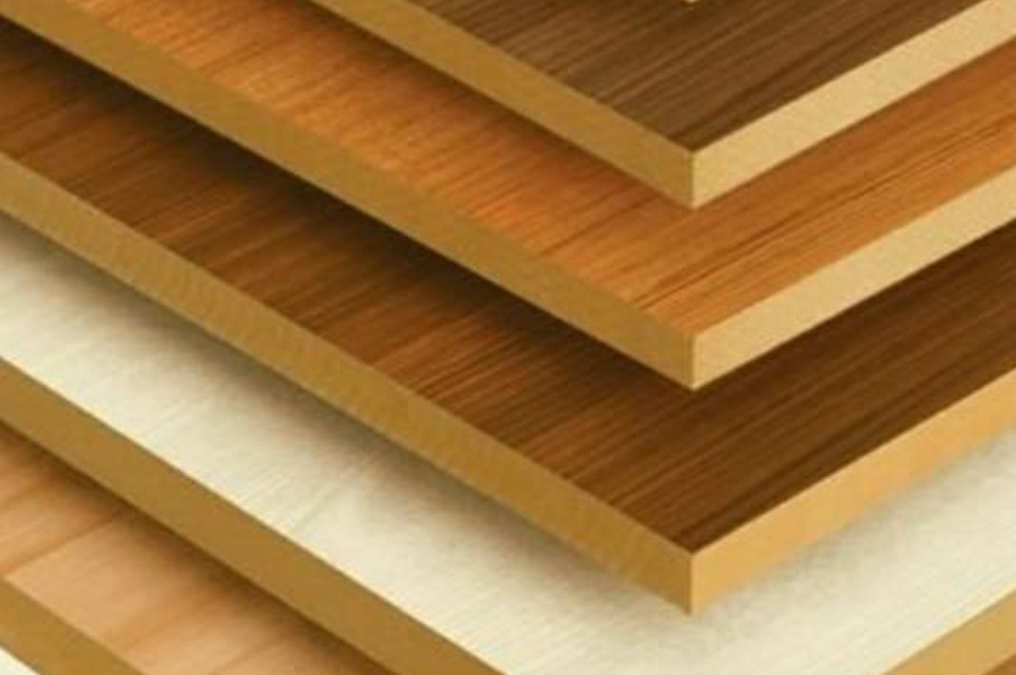
Nigeria’s MDF panels market is worth USD 37 million in 2025. Industry forecasts put that at USD 57 million by 2034, a steady 4.5% CAGR over nine years. It’s steady growth, the kind furniture manufacturers and importers can actually plan around.
Here is what that trajectory looks like year by year:
2025: ~$37.0M (starting point, post-contraction recovery)
2027: ~$40.5M
2029: ~$44.2M
2031: ~$48.3M
2034: ~$57M (terminal forecast)
A separate segment-level analysis reveals a sharper short-term spike under the smoothed CAGR. Nigeria’s MDF growth rate hits 35.93% in 2026, up from 34.66%, before cooling to 19.04% by 2029. That is a massive short-term surge sitting on top of a modest long-term average.
The 26.5% contraction in Nigeria’s broader wood-based panels market during 2023-2024 explains the surge. What we are seeing in 2025-2027 is a rebound effect: pent-up demand, import expansion, and manufacturers restocking after a rough patch, layered on top of steady long-term fundamentals.
Regionally, Nigeria’s growing MDF demand needs context against Africa’s wider wood-based panels market, which hit 13 million m³ (USD 6.7 billion) in 2024, projected to reach 15 million m³ and USD 8.6 billion by 2035. Nigeria’s economic weight and construction activity put its share of West Africa’s MDF imports well above 50%, though exact volume splits are harder to pin down than value figures.
Key Demand Drivers Fueling MDF Growth in Nigeria
Urbanization, rising disposable income, and a construction sector that’s finally formalizing its interior builds are driving Nigeria’s growing demand for MDF panels.
Urbanization is the foundation. Nigeria’s cities are growing fast, with urbanization rates near 4.3% annually. Run the math on an urban population target of 24 million, apply a household size of roughly 4.5–5 people, and you land at close to 5 million urban housing units needed. In comparable African markets, MDF penetration in formal-sector housing projects (cabinets, doors, wardrobes, wall panels) regularly exceeds 60–70%. At that benchmark, Nigeria would need MDF-based interior solutions in 3+ million dwellings.
Income growth is changing what people buy. As disposable income rises, Nigerian households are shifting from informal solid-wood furniture toward modular, laminated MDF pieces. Globally, furniture manufacturing accounts for nearly 45% of all MDF demand. Higher income leads to more spending on branded or modular furniture; manufacturers then lean harder into MDF because it’s uniform, machinable, and cheaper to finish at scale.
Construction and real estate provide the volume. Every new residential or commercial project—housing estates, offices, hotels, retail fit-outs—needs a standardized joinery package: doors, frames, skirting, wardrobes, kitchens. Developers pick MDF because it beats solid wood and often plywood on cost, without sacrificing finish quality. In Asia-Pacific, this exact substitution pattern helped the region capture 59.4% of global MDF revenue in 2025. Nigeria’s formalizing real estate sector is following the same script.
Cost and sustainability seal the deal. MDF is cheap relative to alternatives, and roughly 29% of global demand comes from sustainability-driven buyers who favor recycled-fiber, low-emission panels. Those criteria are increasingly written into Nigerian building codes and corporate ESG targets.
MDF Applications in Furniture Manufacturing
Modern furniture workshops use MDF for cabinet doors, wardrobe panels, bookshelves, TV units, desks, and drawer backs. In Nigeria, the demand shows up part by part in kitchen cabinetry, bathroom vanities, closet systems, and decorative trim work across the country’s furniture supply chain.
Thickness steers the application. Drawer bottoms and sliding door backs use 3–6mm. Light shelving and small tabletops run on 9–12mm. The 15–18mm range handles custom furniture, wardrobe doors, and cabinet structures. Reinforced tabletops and structural countertops need 25–30mm.
In Nigerian furniture manufacturing right now, the 15–18mm range carries the most work.
MDF mills, carves, and molds into curved doors and profiles that solid wood struggles to replicate at the same cost. Its surface is flatter and more uniform than timber, so spray paint, lacquer, and high-gloss finishes come out better. That matters for the compact, multi-functional storage systems going into urban apartments.
Standard MDF deforms past 15kg per linear meter of sustained load. At 18mm thickness, keep unsupported shelving spans under 60cm. For more capacity, high-density MDF (800–1,100 kg/m³) handles moderate loads better, though it still needs additional bracing.
MDF beats MDP for painted, molded doors. HDF wins on strength and flooring cores. Solid wood still handles high-load frames and natural-grain showcases. But for finish consistency and machinability, MDF is hard to beat.
MDF for Interior Fit-Out & Décor Solutions
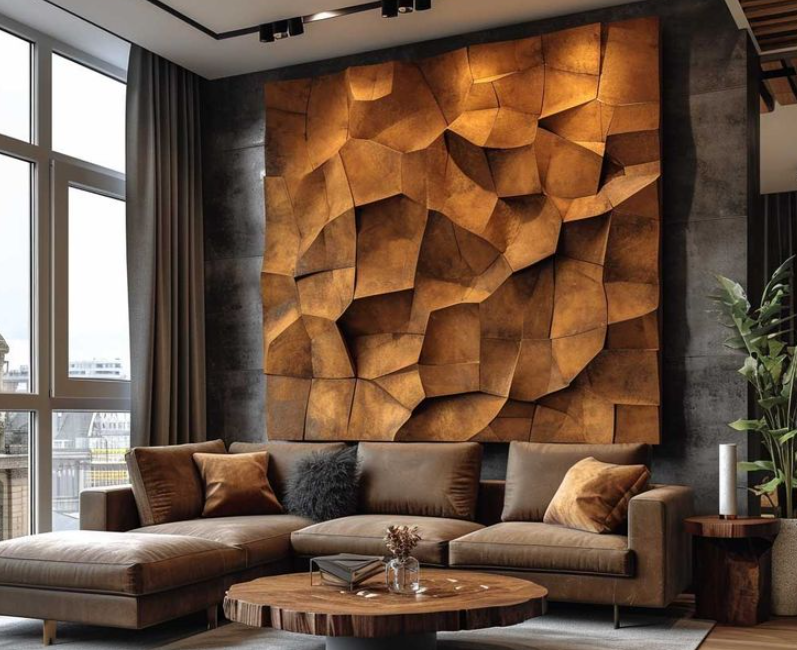
MDF is taking over Nigeria’s wall panels, moldings, and commercial shelving systems. Of the 115 million m³ of MDF produced in 2024, over 67% went into furniture and interior products like wall panels, doors, moldings, and cabinetry. Construction and interior applications make up 25.4% of total MDF demand, and in new-construction projects, 63.4% use MDF for panels, ceilings, and interior fittings.
Moldings and trim work make up 8% of global MDF consumption. Skirting boards, crown molding, and door casings finish a space, and MDF machines them without the grain inconsistencies that solid wood brings.
Storage and shelving are a big part of the story. Cabinetry alone captured 34.5% of global Mdf Applications in 2023, and when you add furniture-adjacent storage systems like wardrobes, bookshelves, and TV units, combined furniture-and-storage demand reaches 40-60% depending on the market.
Commercial fit-out is where Nigeria’s growing demand for MDF panels really takes off. The global interior fit-out market is projected to grow from $39.59 billion in 2025 to $66.54 billion by 2031, a compound annual growth rate of 9.04% that outpaces MDF’s own growth rate. Office and retail buildouts use MDF for modular partitions (16-25mm facing panels over aluminum framing, 50-100mm wall thickness) and E1-grade office furniture at 18mm and 25mm thicknesses.
Surface finishing is what makes the aesthetic difference. Melamine-faced MDF (12-25mm) gives you uniform matte or gloss finishes for cabinetry and partitions. Lacquered MDF, shaped via CNC and sprayed with 2-3 coats of PU paint, produces the 3D door panels and feature walls high-end retail spaces demand. Veneered MDF holds about 10% share in premium office fit-outs. It replicates oak and walnut grain for boardroom walls and TV feature walls without the cost or supply constraints of solid timber.
Supply Chain Structure: Import Dependency vs Local Manufacturing
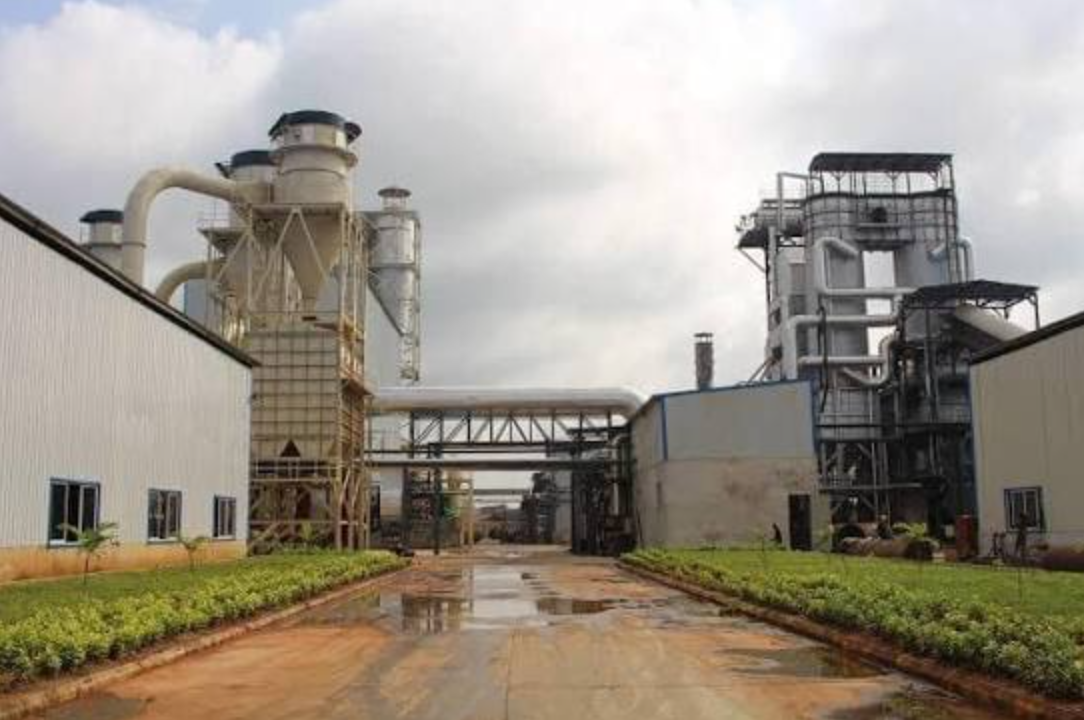
Nigeria’s demand for MDF panels keeps growing, but most of it still isn’t made in Nigeria. Local factories exist, but they cover a fraction of what the market consumes.
Import dependency runs deep. Terminal markets without deep processing capacity typically see 40-70% of manufacturing inputs coming from abroad. Québec’s manufacturing sector sits at 65% import reliance. South Africa’s pharmaceutical industry leans on imports so heavily that local production can’t compete without policy intervention. Nigeria’s MDF market fits this pattern.
Where the imports come from matters. China, Turkey, the Middle East, and Europe dominate the sourcing mix. In markets like this, the top three source countries usually account for over 70% of import volume, with the single largest supplier often exceeding 40% market share. That concentration creates real exposure. Currency swings, shipping rate spikes, and single-country supply shocks all hit harder when you’re not diversified.
Local Manufacturing: Three Paths to Market Entry
International players entering Nigeria’s MDF space typically follow one of three models.
Export-plus-agent means no local factory. Distribution runs through agents and warehousing, with local value-add staying under 25%. In a joint venture with technology transfer, foreign equipment or expertise pairs with local capital, hitting 25-50% localization. Timber and labor stay local; resin and equipment maintenance stay imported.
Capex for a single MDF line running 100,000-200,000 m³ annually typically falls between USD 20-50 million, depending on equipment specs and timber species. Local mills often expand in stages—starting around 50,000 m³/year and scaling toward 150,000 m³/year as demand justifies it. Even fully local operations rarely escape import dependency entirely. Resin, adhesives, and spare parts usually still cross a border first.
Pricing Structure and Cost-Effectiveness Positioning
A standard 2440×1220×18mm MDF panel (about 0.55 m³) shows why Nigeria’s growing demand for MDF keeps shifting toward this material over alternatives.
Raw panel economics. Wood fiber and pulp eat up 30-40% of manufacturing cost, roughly $0.30-0.40 per sheet. Resin adhesives add another $0.20-0.25. Energy and processing (drying, pressing, sanding) run $0.25-0.30. Labor, depreciation, packaging, and logistics push full factory cost to $1.10-1.20 per sheet. Add an 8-15% margin, and FOB China pricing starts around $1.40/sheet for bare panels.
Faced panels cost more, for good reason. Melamine-faced MDF adds impregnation paper ($0.20-0.50/sheet), pressing labor, and 2-5% defect loss. Total manufacturing lands at $1.60-2.10/sheet. Brand and channel markups push export B2B pricing to $3.00-3.50/sheet, with premium finishes exceeding $4.50.
Channel Markups Landing on Nigerian Buyers
Freight, tariffs, and distributor margins add 20-35% between factory FOB and warehouse. Bare panels landing at $1.40 FOB typically reach $1.80-2.10 wholesale, $2.20-2.50 for small B2B buyers. Faced panels follow the same curve. At $3.50 FOB they become $4.30-4.80 wholesale, often $5.00-5.50 at the retail end.
Volume Breaks Change the Math
Order volume changes the pricing significantly. Small furniture shops ordering 100-499 sheets pay $4.80-5.20 for faced panels. Push past 1,000 sheets and pricing drops to $4.20-4.50. Housing developers buying 10,000+ sheets for estate projects negotiate down to $3.80-4.20, with margins compressed to 5-8% and 12-24 month price locks are common.
MDF material costs $3-5/m², melamine-faced runs $5-9/m², plywood sits at $6-10/m², and solid wood starts above $15/m². Factor in 10-year lifecycle costs (installation, maintenance, replacement) and MDF cuts total spend 15-40% against solid wood alternatives.
MDF vs Laminated Particle Board: Competitive Landscape
Price wins some battles. Finish wins others. That tension splits Nigeria’s furniture market between MDF and laminated particle board.
Laminated particle board is the budget play. It’s 15-30% cheaper than MDF and ready to use straight off the line, with no painting or finishing labor. The global melamine-faced particle board market grows at a modest 3.8-5% CAGR, and it’s fragmented: no single producer controls more than 8% of global capacity. That fragmentation keeps prices competitive but margins thin.
MDF plays a different game. It grows faster—15-20% in high-growth markets—because it wins where finish quality matters. Uniform density means clean routing, painted fronts, and profiled doors that particle board can’t replicate without lamination.
Solid wood lasts 20+ years and costs the most. MDF lasts 15-20 years at mid-price with a smooth paintable surface. Laminated particle board often fails under 10-15 years but has the lowest upfront cost.
For Nigeria’s growing demand for MDF panels, particle board handles carcasses and shelving, while MDF takes doors, fronts, and moldings.
Strategic Outlook: Opportunities for Panel Producers & Investors
Strategic Outlook for Panel Producers and Investors
The global wood-based panel market climbs from $185.7 billion in 2024 to $265.2 billion by 2030 at a 6.1% CAGR, pulled forward by sustainable construction and modular building growth. Nigeria fits neatly into that curve.
Three entry signals to watch are urbanization crossing 50%, urban population growth above 3% annually, and per-capita cement consumption topping 250-300 kg/year. Each signals a construction boom ready for engineered panels.
Localization matters most. Minimum efficient scale sits at 150,000-300,000 m³/year, with local fiber sourcing targeting 70-80% to dodge FX exposure. Certified low-emission MDF (E1 at ≤0.124 mg/m³) commands 5-15% price premiums and unlocks green financing 20-80 bps cheaper than conventional debt.
Conclusion
Nigeria’s growing demand for MDF panels is a structural shift in how the country builds, furnishes, and finishes spaces. The numbers show a booming furniture sector, rapid urban interior fit-outs, and a widening gap between import reliance and local production capacity that’s ripe for disruption. MDF’s cost-to-performance ratio keeps winning against laminated particle board, especially as manufacturers push for consistency and finish quality that mass-market consumers now expect.
The infrastructure gap means early movers in local manufacturing can capture margin that importers currently pocket. For furniture brands and interior contractors, locking in reliable MDF supply relationships now, before demand outpaces capacity, means you scale smoothly instead of scrambling later.