Osb Grades And Thickness: A Selection Guide

OSB

Pick the wrong OSB and you’ll face thousands in repairs. Failed inspections happen. Worse? Structural problems show up later.

Most builders and DIYers think all Oriented Strand Board works the same. They grab whatever thickness “looks right” off the rack. Big mistake.

OSB grades and thickness options exist for good reasons. Moisture resistance matters. Load capacity counts. Your project’s safety and lifespan depend on these factors.

Sheathing a roof in Seattle’s rainy climate? Different needs. Subflooring a kitchen? Another story. Building furniture meant to last decades? You need the right specs.

The OSB system ranges from moisture-vulnerable OSB1 to marine-grade OSB4. Thickness options span 6mm to 28.5mm. Know this system and you’ll stop guessing.

This guide cuts through the manufacturer talk. You’ll see which grade and thickness your project needs. Save money. Skip the headaches.

OSB Grades and Thickness: A Selection Guide 

3e7290ec9b55dfff1323837e7d798457

The OSB industry matches thickness with span ratings. Think of it like car engines—bigger numbers carry heavier loads.

Sheathing and Roof Panels

You’ll find performance categories from 3/8″ to 1-1/8″ thick. Each thickness has an APA span rating. This rating shows you the maximum gap between supports.

A 7/16″ panel rated 24/16 works with 24″ spacing for roofs and 16″ for floors. It carries 40 psf live load at 24″ on-center spacing. Compare that to 23/32″ (48/24 rating) which supports 175 psf. That’s over four times stronger.

Floor-Specific Sturd-I-Floor

Floor systems use 19/32″ to 1-1/8″ T&G (tongue-and-groove) panels. A 19/32″ panel over 16″ on-center joists holds 185 psf total load. Spread that same panel to 24″ spacing? Capacity falls to 65 psf.

Weight matters for handling: A 1/4″ sheet weighs 42 lbs. A 1-1/8″ panel? You’re lifting 120 lbs per 4×8 sheet.

Installation Specs Drive Performance

Follow the nailing schedules. 6″ spacing at edges, 12″ in the field for most jobs. 8d nails give you 255-670 psf shear capacity. 10d nails bump that to 280-870 psf.

Standard panels measure 3’11-7/8″ x 7’11-7/8″. Makers leave a 1/8″ gap for heat expansion.

Understanding OSB Grade Classifications (OSB1 to OSB4)

20513e21b93c69ca2d486ee79de8707b

The European EN 300 standard divides OSB into four grades. Each grade is based on load capacity and how much moisture it can handle. Different grades have different strength levels. These levels tell you where the board works best.

OSB/1: Interior-Only, Non-Structural

OSB/1 works only in dry conditions. Use it for furniture, interior trim, or decorative panels. Never use it for anything load-bearing. The bending strength along the major axis hits 16 N/mm² minimum for 6-18mm panels. Minor axis strength drops to 10 N/mm². Internal bond strength? Just 0.90 N/mm².

Thickness swelling maxes out at 15% after getting wet. That’s poor moisture performance. Keep this grade away from bathrooms and kitchens. Skip any area where humidity spikes.

OSB/2: Load-Bearing for Dry Spaces

OSB/2 steps up the structural game. But it still can’t handle moisture well. Bending strength climbs to 18 N/mm² (major axis) and 9 N/mm² (minor axis). Internal bond reaches 1.2 N/mm². That’s 33% stronger than OSB/1.

Use it for walls, floors, and roofs inside climate-controlled buildings. Garages work. Conditioned basements work. Exterior sheathing? Don’t even think about it. The 15% swelling threshold means water exposure ruins the board fast. Structural integrity goes down the drain.

OSB/3: The Workhorse for Humid Conditions

OSB/3 leads the pack in residential construction. There’s a good reason why. It carries loads and fights moisture at the same time. Bending strength jumps to 22 N/mm² major axis, 11 N/mm² minor axis. Internal bond hits 1.2 N/mm². Swelling drops to 12%. That’s a 20% improvement over lower grades.

You’ll find OSB/3 on exterior wall sheathing. It’s also common for roof decking in rainy climates. Subfloors where moisture creeps in? OSB/3 has you covered. It handles temporary weather exposure during construction. Think of it like APA’s “Exposure 1” rating. Not marine-grade, but tough enough for most above-ground jobs.

OSB/4: Heavy-Duty Performance

OSB/4 delivers maximum strength. Plus, it offers the best moisture resistance. Bending strength peaks at 27 N/mm² major axis and 16 N/mm² minor axis. Internal bond reaches 1.8 N/mm². That’s double OSB/1’s capacity. Swelling stays at 12%.

Commercial projects with heavy loads need this grade. Think industrial flooring. Or structural beams. Anywhere failure isn’t an option. The price premium over OSB/3 runs 15-25%. But you’re buying insurance against total performance loss.

ISO 16894 mirrors this system with different labels. It uses: OSB GP-REG (general purpose), OSB LB-REG (load-bearing dry), OSB LB-MR (load-bearing moisture-resistant), and OSB HLB-MR (heavy-duty). The performance thresholds align with EN 300 classifications. The numbers are almost the same.

OSB Thickness Specifications: From 6mm to 28.5mm

You get eleven standard thickness options. They range from 6mm (1/4″) to 28.5mm (1-1/8″). Each size fits specific building needs.

Global factories use metric measurements. North American markets prefer inches. So you’ll see both at suppliers:

Thin Options (Under 12mm)
– 6mm (1/4″) – Crafts, backing panels
– 7.9mm (5/16″) – Light wall applications
– 8.7mm (11/32″) – Furniture components
– 9.5mm (3/8″) – Minimum for I-joist webs, light sheathing
– 11mm (7/16″) – Standard wall sheathing

Mid-Range (12-18mm)
– 12mm (15/32″) – Upgraded wall sheathing
– 12.7mm (1/2″) – Common roof decking
– 15mm (19/32″) – Subfloor applications, T&G available
– 18mm (23/32″) – Heavy-duty flooring

Heavy-Duty (Over 18mm)
– 22mm (7/8″) – Commercial flooring systems
– 28.5mm (1-1/8″) – Industrial applications

Weight and Handling Considerations

Thicker panels weigh more. A standard 1220 × 2440mm (4 × 8 ft) sheet at 9.5mm weighs 18kg (40 lbs). You can carry that solo. At 28.5mm you’re lifting 54kg (120 lbs). You’ll need two people for that.

Factories use 640 kg/m³ (40 lbs/cu. ft.) density for calculations. Real weights shift ±5% based on moisture in the strands during production.

Edge Configurations Matter

Panels 15mm (19/32″) and thicker offer tongue-and-groove (T&G) options on long edges. Thinner panels come square-edged. T&G edges lock together. This means no blocking needed between floor joists. The design spreads weight across panel edges. Floors stay solid without bounce.

Standard 4 × 8 sheets aren’t your only choice. Order 4 × 9 ft or 4 × 10 ft for tall walls. Need something bigger? Panels go up to 2440 × 7320mm (8 × 24 ft). You can get one or both faces sanded. CSA O325 standard controls all specs.

Matching OSB Grades to Specific Applications

The panel marks stamped on OSB sheets tell you where they belong. CSA O325 and APA standards use a simple letter-and-number system. This removes the guesswork.

Floor, Roof, and Wall Designations

1F and 2F panels go on floors. The “1F” rating means standalone structural flooring. No underlayment needed. “2F” requires a finished floor layer on top. 1R and 2R handle roof sheathing duties. W-rated panels work for walls. Each letter matches building code requirements for that spot.

Span marks—16, 20, 24, 32, 40, 48—show maximum on-center joist spacing in inches. A 24/16 rating supports 24″ spacing on roofs and 16″ spacing on floors. Match these numbers to your framing plan.

Load Performance by Application

7/16″ panels (24/16 rating) carry 40 psf snow load plus 24 psf dead load on roofs at 24″ spacing. That’s 68 psf total. Deflection stays under span/180. For walls with studs 16″ on-center, the same thickness handles 30 psf live load without edge support.

15/32″ Category sheathing bumps roof capacity to 70 psf at 24″ spacing. Span it across 32″ centers for floors. You’re looking at 260-490 psf depending on edge support. The Performance Category system replaced old thickness labels. Use these numbers for code compliance.

Sturd-I-Floor vs. Standard Sheathing

Rated Sturd-I-Floor panels work as single-layer flooring systems. They resist impact well. They’re rated for 100 psf live load at 48″ joist spacing. Rated Sheathing works in three spots—floors, walls, and roofs. Each use has different span ratings.

LP OSB Structural 1 Sheathing fits high-stress areas. Think wind zones, earthquake regions, commercial buildings. In Seismic Design Categories D, E, or F, use framing members at least 3″ nominal width. Exceeding 350 plf shear loads with dual 2″ members? Verify your connections meet code.

Pick span ratings that exceed your actual support spacing. A 32/16 panel over 24″ centers gives you a safety margin built in.

Selection Criteria Based on Moisture Exposure Levels

12807ba8cddc44037d124517faf88af0

Water destroys OSB faster than any other factor. A board can last 30 years or fail in 18 months. The difference? How you match the grade to moisture conditions.

The Four-Tier Moisture Classification System

OSB/1 (Dry Environments) tolerates maximum 15% thickness swelling after water exposure. Internal bond strength sits at just 0.90 N/mm². This fails completely in humid spaces. Keep relative humidity below 65% year-round. Good for climate-controlled offices, heated living rooms, or enclosed closets away from plumbing.

OSB/2 (Protected Structural) keeps the same 15% swelling limit. But it bumps internal bond to 1.2 N/mm²—33% stronger bonding. Use it inside conditioned buildings. Moisture needs to stay controlled. Garage walls behind vapor barriers? Works. Attic sheathing with proper ventilation? Works. Basement walls with dehumidifiers running? That’s the edge of acceptable.

OSB/3 (Moisture-Resistant Load-Bearing) drops swelling to 12% maximum—a 20% improvement. This grade handles temporary rain exposure during construction. No permanent damage. Exterior wall sheathing under housewrap? Perfect. Roof decking that might see weather before shingles go on? Designed for it. Kitchen subfloors where dishwasher leaks happen? OSB/3 recovers. The European EN 300 standard tests this grade with 72-hour water immersion at 20°C.

OSB/4 (Heavy-Duty Structural) keeps 12% swelling. It boosts bending strength to 27 N/mm² major axis. Internal bond reaches 1.8 N/mm²—double OSB/1’s resistance. Commercial buildings in coastal zones need this. Industrial flooring gets exposed to washdown? This grade handles it. Structural members support critical loads in high-humidity warehouses? Nothing else passes code.

Matching Moisture Zones to Real Projects

Coastal projects within 3,000 feet of saltwater require OSB/3 minimum for all sheathing. Salt spray boosts moisture penetration by 40% compared to inland sites. Seattle gets annual rainfall over 37 inches. Use OSB/3 for roofs and walls. Phoenix gets annual rainfall under 8 inches. OSB/2 works fine for interior framing.

Check your local climate zone. USDA moisture zones 1-3 (desert to semi-arid) allow OSB/2 for most jobs. Zones 4-6 (moderate to humid) push you toward OSB/3. Marine and tropical zones make OSB/4 the smart pick for long life.

The rule? Moisture content stays below 12% wood equilibrium? You’re safe with lower grades. It goes above that limit for more than 30 days per year? Step up one grade level.

Load-Bearing Requirements and Grade Selection

Structural loads control your OSB selection. Start by figuring out what weight the panel needs to carry. Thickness and price per sheet don’t matter if the panel can’t handle the load.

Calculate Total Load First

Add up dead load (the building’s permanent weight) plus live load (people, furniture, snow). A residential floor usually sees 40 psf live load plus 10 psf dead load. That’s 50 psf total your subfloor needs to handle. Commercial spaces jump to 80-125 psf based on use. Storage areas? You’re looking at 125-250 psf.

Roof loads change by climate zone. Snow country needs panels rated for 40-60 psf snow load plus 15 psf dead load. Warm climates drop to 20 psf live load standards. Check your local code. These numbers are requirements.

Match Grade to Load Type

Static loads include furniture, walls, and stored materials. OSB/2 works fine for interior jobs. OSB/3 handles exterior applications. The load stays constant. The panel spreads weight across its span.

Dynamic loads are different. People walking create impact forces. Equipment vibrates. Snow piles up then slides off. You need OSB/3 minimum for these situations. The 1.2 N/mm² internal bond strength fights off stress cycling. Weaker grades break down over time from this stress.

Heavy machinery or commercial traffic? You must use OSB/4. Its 1.8 N/mm² bonding and 27 N/mm² bending strength take the beating without breaking down.

Span Ratings Lock In Your Choice

Never go beyond the marked span rating. A 24/16 panel over 32″ joist spacing fails code and physics. The sag goes past span/180 limits. Floors bounce. Ceilings crack. Pick the next rating up—32/16 or 40/20—to match your actual framing.

OSB vs. Plywood: Which One to Pick

Both panels cover walls and roofs. Both work as subfloors. But their performance differs. This creates clear winners for specific jobs.

Price vs. Performance

OSB costs 15-30% less than plywood for the same coverage. On a 2,000 sq ft roof sheathing job, that’s $300-600 in your pocket. OSB uses smaller, faster-growing trees. This makes production more efficient. Plywood needs larger logs with continuous grain patterns.

Plywood costs more upfront. But the extra money pays off in wet climates. It also works better in high-stress jobs.

The Moisture Problem

Water separates these materials fast. An 18mm OSB/3 panel swells 3mm at 85% relative humidity. The same thickness in WISA-Spruce plywood expands just 1mm. That’s three times worse for OSB.

OSB holds moisture longer. It dries slower. Worse? The swelling damage stays. Plywood bounces back. It shrinks to near-original size after drying out.

After 24-hour water immersion, OSB hits 36.9% moisture content. Plywood absorbs more at first (41.8% MC). But it recovers structural strength faster. Tests after soaking show plywood keeps higher bending strength. It also keeps better stiffness.

Humid climates, leak-prone roofs, coastal zones—plywood wins every time. Phoenix, Albuquerque, inland dry areas? OSB saves money. Moisture risk stays low.

Structural Performance

Plywood gives you 1.8x higher stiffness (MOE) than similar OSB. An 11.1mm OSB/3 panel tests at 4,607 N/mm² modulus of elasticity. Plywood beats that easily.

What does this mean? Plywood subfloors feel 10% more rigid. Less bounce underfoot. Fewer squeaks after tile or hardwood goes down. You need 22mm OSB to match 18mm plywood in floor jobs. That’s four pounds more weight per sheet to handle.

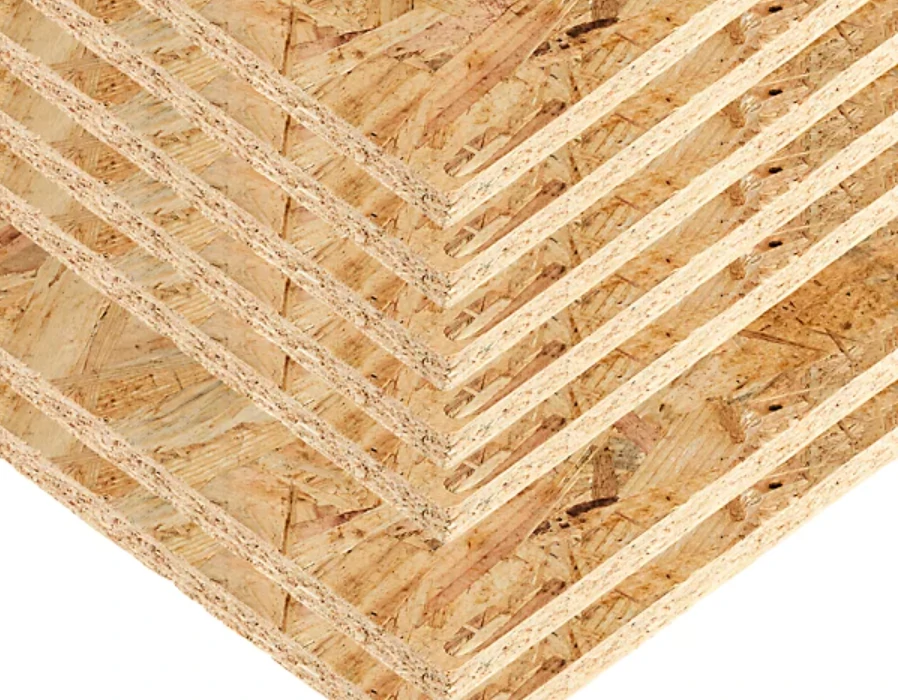
OSB crushes plywood on shear strength. The strand layout spreads loads evenly across the panel. No voids. No weak spots. Nail zone edges hold loads better than plywood’s layered build.

Bending strength for 11.1mm OSB/3 averages 32.7 N/mm² ±6.4. Plywood holds strength better after water exposure tests, though.

Fastener Holding Power

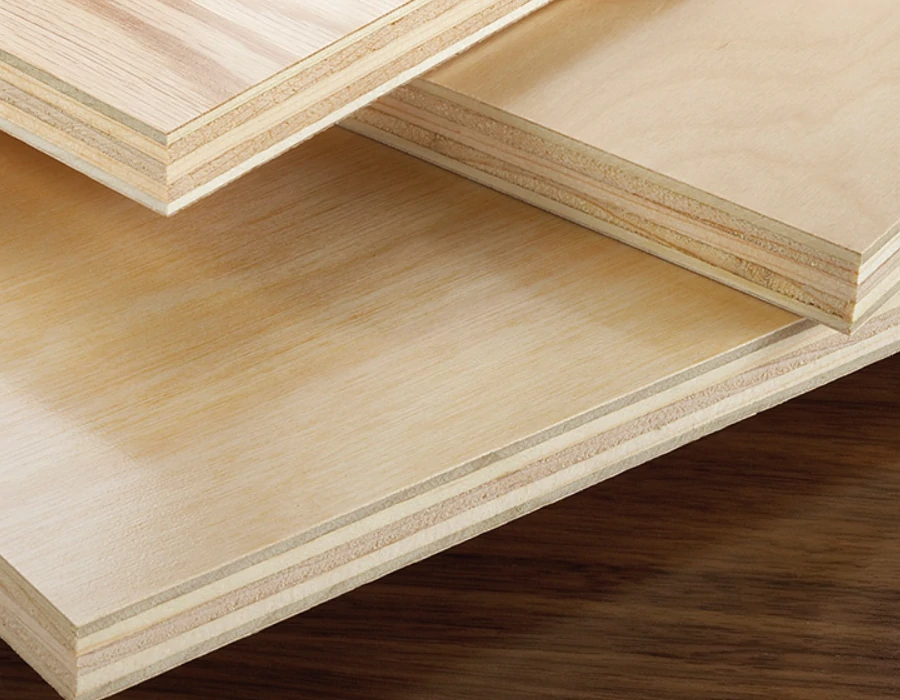
Screws and nails grip plywood better. The cross-layered veneer locks fasteners tight. OSB’s pressed strands allow more movement. Subfloors get more squeaks and fastener backing-out with OSB over time.

high-traffic commercial spaces? Tile jobs? Plywood’s fastener hold matters here. You’re drilling, screwing, nailing over and over. Plywood handles the abuse. Hold strength stays strong.

Installation Reality Check

Plywood cuts cleaner. Drill it without edge chips. OSB’s pressed strands splinter more during cuts. Both materials install in similar ways. But plywood edges hold screws better for tight fits.

Plywood weighs less. Easier for one person to handle on ladders and scaffolding. The weight gap grows as panels get thicker.

Decision Matrix for Your Project

Pick OSB:
– Budget runs tight on large sheathing jobs
– Climate stays dry year-round (under 8″ annual rainfall)
– Wall sheathing needs even shear strength
– Environmental impact matters (uses smaller trees)
– Roof/wall stays protected from leaks

Pick plywood:
– Annual rainfall exceeds 20 inches
– Subfloors carry tile, hardwood, or heavy traffic
– Leak risk exists (bathrooms, kitchens, roofs)
– You need thinner panels for same span ratings
– Impact resistance counts (hurricane zones, hail regions)
– Marine or coastal exposure happens

Plywood costs more upfront. But it saves on replacement in moisture-heavy jobs. OSB delivers value in dry, controlled spaces. Water stays out of the picture.

Building Code Rules for OSB Selection

The International Building Code (IBC) and International Residential Code (IRC) set the baseline for structural panels across the United States. Your area adds local rules on top of these. Virginia’s USBC changes the IBC for state needs. Check your local building department before you order materials.

Fire-Rated OSB Under ESR-1365

Fire-rated cement-coated (FRCC) OSB meets code through ESR-1365 evaluation reports. You’ll find it used in multi-story projects where fire resistance matters:

Type V construction covers 1-4 story wood-framed buildings. These use FRCC OSB for 1-hour wall assemblies. This includes exterior walls and fire walls per CBC 706.2. Type III construction covers 5-6 story commercial and apartment buildings. These need 1-hour and 2-hour rated assemblies in bearing and non-bearing exterior walls under IBC Section 602.3.

Roof applications work differently. FRCC OSB on both sides of fire walls meets IBC 706.6 parapet rules. Normally you’d build a 30″ parapet for 2-hour rated walls. The exception? Fire walls can stop at the roof deck. Just install code-compliant fire-resistant sheathing for 4 feet along the wall.

Design Value Benefits

Standard OSB design values work for FRCC products. No deductions needed. Fire-resistant treated plywood needs design value cuts that reduce structural strength. This difference saves money on thicker panels and extra support in multi-story jobs.

Structures Outside Code Rules

Agricultural buildings skip permits in most counties. Sheds, animal shelters, and lean-tos use B-grade OSB without inspections. Jobsite enclosures, shipping crates, and temporary walls fall in the same group. DIY workshops, storage boxes, and seasonal structures work with lower-grade panels. Building departments don’t track these projects.

ICC-ES Reports and Testing Standards

Code officials use ICC-ES evaluation reports to approve FRCC OSB applications. ASTM, NFPA, and UL test procedures validate fire ratings. Local inspection departments enforce these rules. They charge fees for the service. Disagree with their call? Appeals systems resolve conflicts between agencies and applicants.

Climate and Environmental Factors in OSB Selection

OSB production generates 197 kg CO₂ equivalent per cubic meter from cradle to gate. That number looks big at first. Dig into the details and you’ll see why it’s not so bad. Biomass combustion accounts for 61% of total CO₂. The wood industry counts this as carbon neutral. Trees regrow and recapture the carbon.

Energy Footprint Per Panel

Making one cubic meter of OSB requires 2.3 GJ of thermal energy. The good news? 95% comes from wood biomass—bark, sawdust, and trim waste from the same logs. Just 134 kWh of electricity per cubic meter comes from the grid. Stack that up against concrete or steel. OSB wins on embodied energy every time.

Mills turn 740 kg of roundwood into 1 cubic meter of finished board. The conversion efficiency beats solid lumber by 30%. Smaller trees work fine. This takes pressure off old-growth forests.

Regional Production Impact

US mills produced 9.77 million cubic meters in 2012. The eastern US cranked out 75% of that volume—7.32 million cubic meters. Eight surveyed plants in the Southeast and Northeast made 33% of national output. These facilities run 265,000 to 575,000 cubic meters per year. Average age? 8 to 32 years old. Each mill employs about 152 workers on a production-weighted basis.

Modern emission controls cut pollution. Three thermal oxidizers (RTOs) and one electrostatic precipitator came online between 1999 and 2012 at surveyed facilities. RTOs burn 80% natural gas to clean exhaust from drying. The drying process creates the most emissions. Thermal energy powers the whole system.

Current Environmental Data

23 OSB facilities joined the 2022-2023 LCA surveys. The industry uses SimaPro 9.6 software with ecoinvent 3.8 databases and Datasmart grids for carbon tracking. Canadian OSB makers put out a 2022 Environmental Product Declaration. They used gate-to-gate data from web surveys. This gives regional industry averages, not just single-plant data.

Europe’s OSB market hit USD 7,355.58 million in 2024. It’s growing at 7.5% per year through 2033. Climate-focused building codes push this growth. Builders pick OSB over options that emit more.

Oven-dry OSB density averages 651 kg/cubic meter across production-weighted samples. Green logs convert at 0.46 specific gravity. Oven-dry material tests at 0.53. Engineers use these steady metrics to calculate building loads and environmental impact per project.

Cost-Benefit Analysis: Balancing Grade and Thickness

07130aecdc00d6c2d5acffdbd44307db

Price tags lie. A cheaper panel today costs you more tomorrow if it fails soon or needs replacement.

The Grade Premium Reality

OSB/2 costs $18-22 per sheet (4×8, 15/32″) at most building suppliers. OSB/3 runs $21-26 per sheet. That’s a $3-4 difference. On a 2,000 sq ft roof using 63 sheets, you’re looking at $189-252 extra for moisture-resistant grade.

Seems steep. But one water damage claim from failed sheathing? You’re out $3,000-8,000 minimum. Insurance won’t always cover mistakes in building. OSB/3 pays for itself if it stops a single callback.

OSB/4 jumps to $28-35 per sheet—a 15-25% premium over OSB/3. Use it where failure can’t happen. Think heavy machinery floors. Beams that carry major loads. Coastal commercial buildings. The extra cost acts like insurance. It protects against major performance failure.

Thickness vs. Coverage Math

Thicker panels cost more per sheet but cover the same area. An 11mm (7/16″) panel runs $19. A 15mm (19/32″) version hits $24. Both cover 32 square feet. The real cost difference shows up in how well they perform.

That 15mm panel supports 260 psf with edge blocking. The 11mm version? Just 170 psf under the same conditions. Need the thicker panel anyway for span ratings? You’re paying for power you must have. Need it to last longer? Do the math on replacement costs.

The Longevity Calculation

OSB/2 lasts 8-12 years outdoors before moisture damage appears. OSB/3 in the same spot? 20-25 years of use. You’re doubling or tripling the time before replacement.

Here’s how to figure total cost: Initial cost + (replacement cost × number of replacements over 30 years). OSB/2 needs two replacements. OSB/3 needs zero. Even with OSB/2’s lower starting price, OSB/3 saves you money after 15 years.

Maintenance matters too. Better grades resist cracking and coming apart. You get fewer callbacks. Less time fixing problems. That puts money in your pocket on every job.

Common Selection Mistakes and How to Avoid Them

Builders grab the cheapest OSB on the rack. They guess at thickness. They skip the grade stamp. Then floors sag or walls swell six months later.

Ignoring Moisture Exposure Reality

The mistake: Using OSB/2 for bathroom subfloors or exterior walls because it’s $3 cheaper per sheet. You save $189 on a small job. One leak costs you $3,000 in repairs.

The fix: Match grade to real conditions, not perfect ones. Bathrooms need OSB/3 at minimum. Coastal projects within 3,000 feet of saltwater? Same rule applies. Annual rainfall over 20 inches? Step up one grade from what looks adequate.

Confusing Thickness with Load Capacity

The mistake: Thinking thicker equals stronger. Contractors buy 23/32″ panels for every job “just to be safe.” They pay 30% more for power they don’t need.

The fix: Check the span rating, not thickness alone. A 24/16 panel over 16″ joists works great. Skip the 32/16 rated material for that job. You lift heavier sheets. You spend extra money. You get zero performance gain.

Mixing Indoor and Outdoor Applications

The mistake: Using leftover OSB/1 interior panels for shed walls. “It’s just a shed” thinking kills projects. Those panels swell 15% in humidity. The structure falls apart.

The fix: Keep OSB/1 inside climate-controlled spaces. Relative humidity must stay below 65% year-round. Everything else gets OSB/3 or better.

Skipping the Span Rating Match

The mistake: Installing 24/16 panels over 24″ floor joists because “16 is in the rating somewhere.” The second number counts. That panel tops out at 16″ spacing for floors.

The fix: Never exceed marked span ratings. Match the second number to floor joist spacing. Match the first number to roof rafter spacing. Past these limits, you get bounce and sag that breaks code.

Choosing Based on Single-Job Pricing

The mistake: Picking OSB/2 because it costs $4 less per sheet today. But it needs replacement in 8-12 years instead of 20-25 years for OSB/3.

The fix: Figure out total ownership cost over 30 years. Add initial cost and replacement expenses together. OSB/2 needs two replacements in that time. OSB/3 needs zero. The “expensive” panel saves money after year 15.

Conclusion

3332a2cdf32cd830e0820b11523eaa38

Choosing the right OSB grades and thickness isn’t about charts. It’s about matching material to purpose. Here are the basics: moisture exposure picks your grade. OSB3 works for most structural jobs. OSB4 handles high-moisture spots. Thickness ties to span needs and load limits. That 9mm panel? Great for wall sheathing. But subfloors need 18mm minimum.

The smart approach? Map your project conditions first. Then pick your materials. Check your climate zone. Review building codes. Look at actual loading conditions. Don’t just grab “good enough” options. OSB4 costs more than OSB2, yes. But moisture damage? That repair bill runs much higher.

Start with your moisture exposure level. Check your structural needs. Compare these to local building codes. Not sure? Talk to your structural engineer. They know what happens with cheap shortcuts. The right OSB grade and thickness today saves problems tomorrow. Make it count.