
Softwood benchmarks are up double digits year-over-year, and if you’re running procurement for a laminate flooring operation, that number isn’t abstract. It’s already sitting in your next HDF board quote. This timber price forecast traces how raw material costs and industry pressures move through the supply chain, from sawn timber and wood pulp benchmarks into HDF and MDF core board pricing and on to your per-square-meter production cost.
You’ll get the actual 12-24 month price data, a working formula to calculate what a 10% timber price swing does to your margins, and the tariff and mill-closure drivers behind current volatility. You’ll also walk away with five procurement strategies you can use in your next supply contract negotiation. These are the kind that separate manufacturers absorbing costs from those protecting margin through 2024 and beyond.
12–24-Month Timber Price Data: Softwood, Hardwood, and Wood Pulp Benchmarks
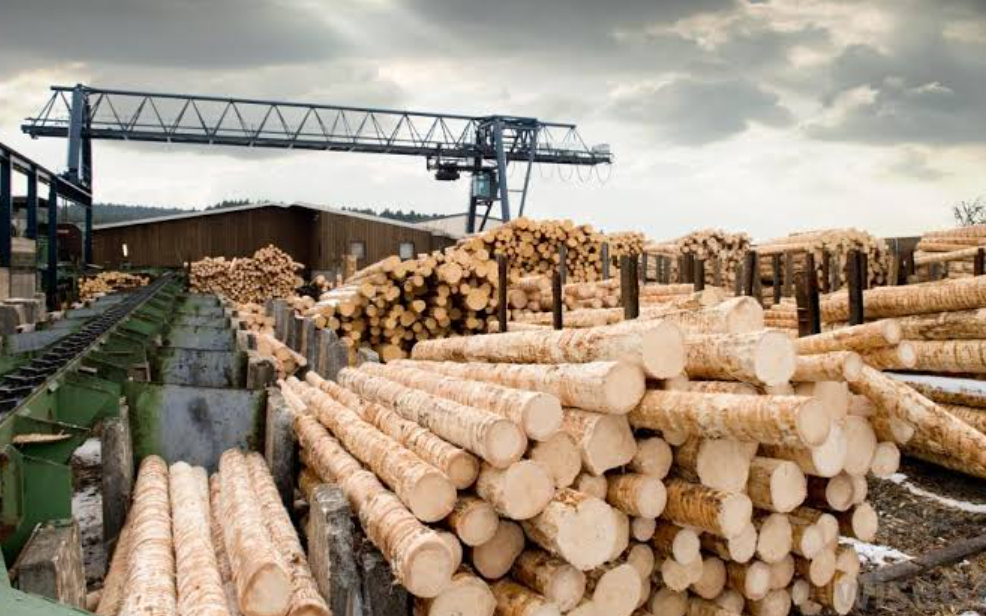
Numbers don’t lie, and this timber price forecast starts with the raw data. Great Britain’s softwood sawlog benchmark tells the sharpest story. It was £55.98/m³ in the six months to March 2024, spiked to £77.55/m³ by March 2025 (a 38.5% nominal jump), then cooled to £59.70/m³ by September 2025. That’s a full boom-and-correction cycle inside 18 months.
North American lumber spot prices moved even faster. Western Spruce-Pine-Fir 2×4 lumber dropped from US$500/mfbm in July 2025 to US$430/mfbm by mid-September — a 14% slide in nine weeks. On the global lumber supply chain side, FRED’s softwood sawnwood index confirms the downtrend: 328.2 to 326.9 to 317.6 to 286.6 across the four 2025 quarters.
Hardwood and Wood Pulp Proxies
Exact GB hardwood series aren’t publicly surfaced, so use regional US benchmarks as directional proxies:
-
Hardwood sawtimber: $16.27 → $18.72 (up)
-
Hardwood pulpwood: $6.30 → $5.73 (down)
-
Pine pulpwood (wood pulp proxy): $5.08–$5.67 range across 2025-2026 quarters
For your flooring manufacturing input costs model, here is the softwood versus hardwood signal: softwood led the volatility spike, hardwood sawtimber is climbing steadily, and pulp-grade material stayed relatively flat. Track Forest Research’s Timber Price Indices and weekly US lumber reports for ongoing monitoring. Those two sources feed this entire sawn timber price index analysis.
Current Timber Market Position for Laminate Flooring Procurement
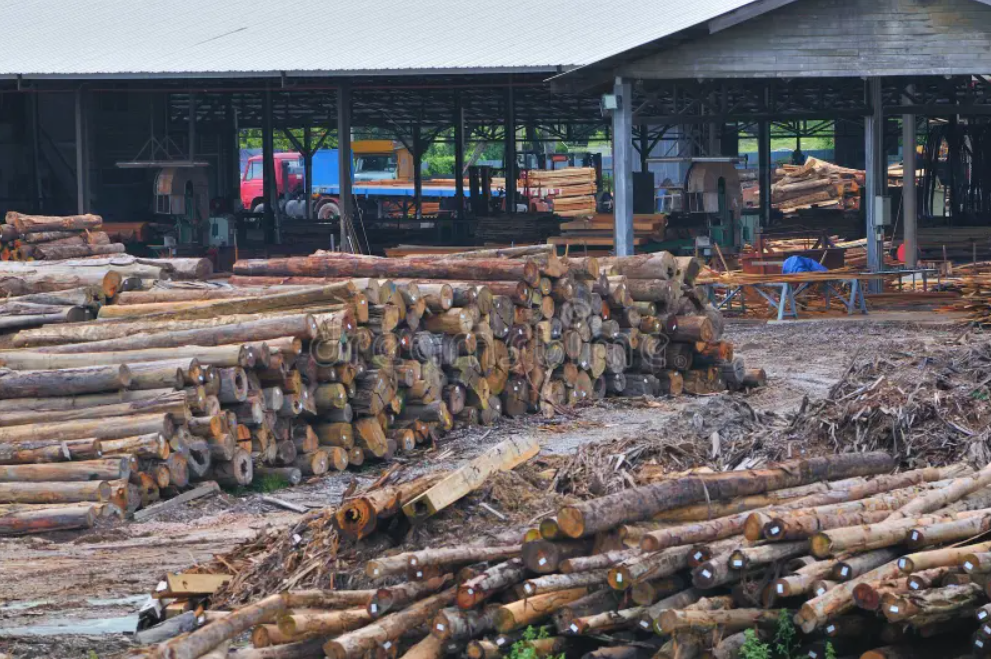
Retail shelf prices already reflect the squeeze. Laminate flooring is selling at $0.99–$6.82/sq ft with a median of $3.19/sq ft, while trade pricing sits at $0.64–$5.12/sq ft, median $2.23/sq ft. For commercial builds, most contracts land in the $1.39–$2.79/sq ft band. That’s your current benchmark before factoring in another laminate flooring price increase in 2024–2026.
On the demand side, the global laminate flooring market is projected at $3.67 billion in 2026, up from $3.64 billion in 2025 — a modest 3.65% CAGR through 2031. Steady growth matters when raw material costs in the flooring industry outpace end-market demand.
Meanwhile, U.S. hardwood flooring imports fell 21% year-over-year through H1 2026. That’s a real signal that buyers are pulling back on imported hardwood exposure, likely shifting sourcing toward domestic HDF/MDF core boards.
Before locking any contract, verify these procurement basics:
-
FSC or PEFC certification on the HDF core layer
-
NALFA LF-2011 thickness swell data (<18% standard, <12% moisture-resistant, <5% high-performance)
-
AC3–AC5 wear rating matched to end-use application
How Timber Prices Flow Through HDF and MDF Core Board Costs
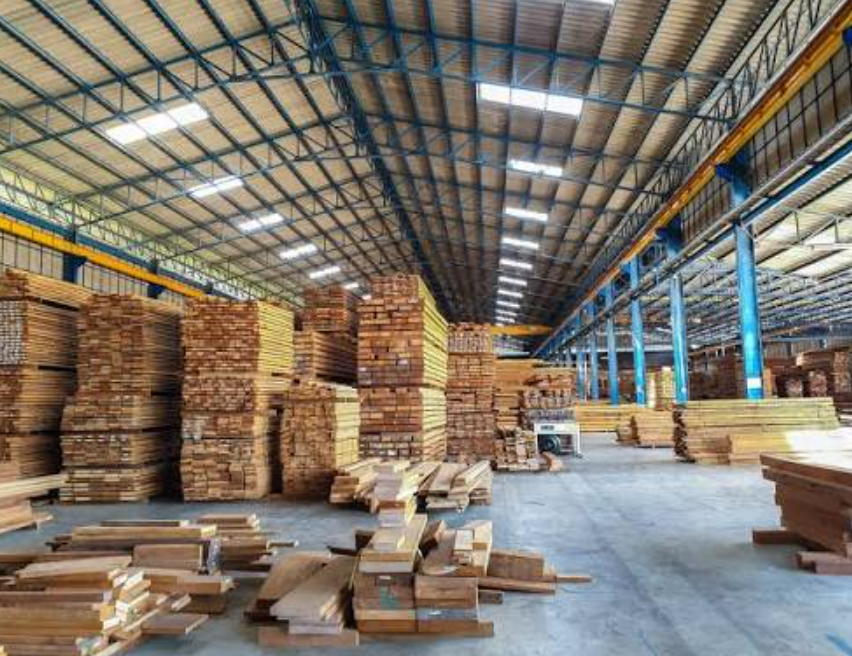
Wood is the whole cost structure in fiberboard production. Wood inputs accounted for almost 60% of pulp cash cost worldwide in Q4 2022, dwarfing energy (17%), chemicals (14%), materials (5%), and labor (5%). When you’re modeling raw material costs in the flooring industry, this is your starting ratio.
Fiber inflation backs this up. The Global Hardwood Fiber Price Index climbed from $78.79/bdmt in Q3 2020 to $100.07/bdmt in Q4 2022 — a 27% jump that flowed straight into board pricing.
Where HDF and MDF Prices Land Today
Standard MDF runs $15–25/m², HDF sits higher at $25–40/m². On the 2026 FOB side, 18mm MDF trades at $473–523/m³ in Europe versus $390–432/m³ out of Asia. HDF 3mm is quoted at $470/m³ in Europe and $388/m³ Asia FOB — both up roughly 13.3–13.5% year-on-year.
Melamine-faced MDF adds another $90–130/m³ over raw board, buffering some of that timber volatility through finishing value.
Raw board price moves first when pulp or fiber spikes (NBSK pulp sits at $1,570–1,640/tonne currently). Finished HDF/MDF panels follow with a lag, typically high single-digit to low double-digit percentage pass-through.
Laminate Flooring Production Cost Breakdown Under Timber Inflation
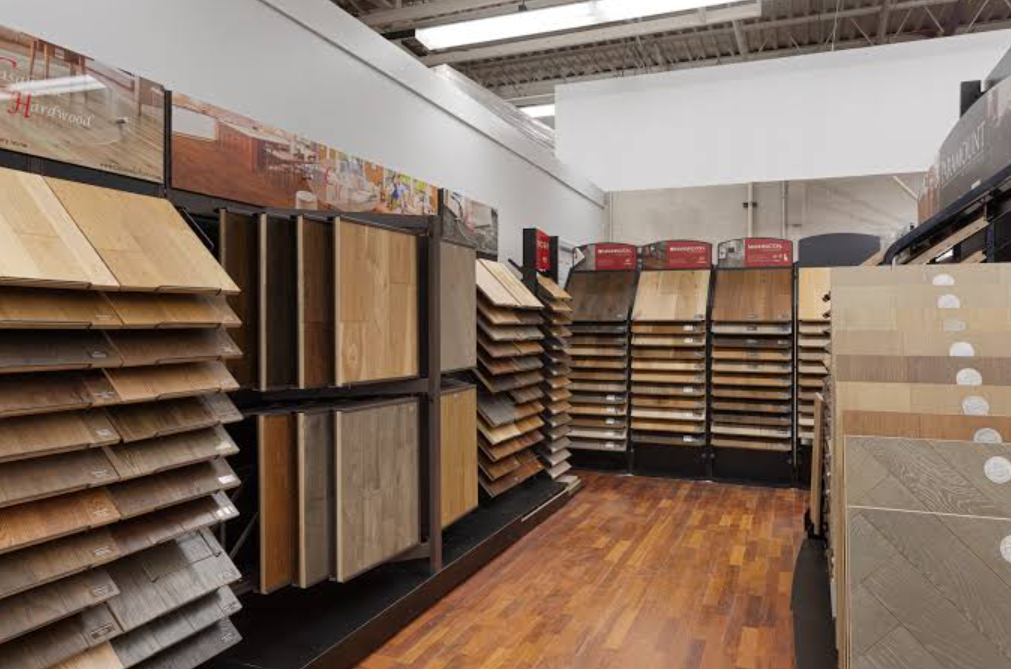
Break down a laminate plank into its cost layers, and one component dominates everything else. The HDF core accounts for 40–50% of total material cost — more than double any other input. Wear layer follows at 15–20%, decorative paper sits at 10–12%, and balancing backing rounds out 8–10%. This is why timber volatility hits laminate producers harder than almost any other flooring category.
The math shows up fast in finished pricing. Economy laminate (6–7mm, AC3) runs €8–12/m² material cost, landing at €15–22/m² installed. Commercial-grade laminate (10mm, AC4/AC5) climbs to €20–30/m² material cost and €30–42/m² installed. That price gap tracks core board density and wear-layer thickness almost exactly.
Upstream indicators confirm the pressure is real, not seasonal noise. U.S. Lumber and Wood Products PPI hit 315.049 in August 2026, while the logs/timber/pulpwood/wood chips PPI sat at 258.869. Hardwood flooring PPI climbed from 268.464 in January to 277.894 by August — eight straight months of upward drift.
UK coniferous standing sales confirm it: £35.17/m³ in the year to March 2026, up from £31.16/m³ — an 11.7% real-terms jump.
Certification and Quality Premiums Compound the Squeeze
Three cost add-ons stack on top of base timber inflation:
-
PEFC-certified fiber: 15–20% premium over non-certified feedstock
-
High-density HDF (≥900 kg/m³): roughly 30% more than standard 800 kg/m³ core
-
Upgraded wear layer: adds €3–5/m²; thicker backing adds €1–2/m²
-
E0 low-formaldehyde resin: roughly €1–2/m² extra
Formula: Calculating the Cost Impact of a 10% Timber Price Increase
Multiply your timber line item by 1.10, subtract the original spend, and you’ve got your cost impact. Simple as that.
Core formula: Incremental cost = Baseline timber spend × 10%
Apply it to the UK coniferous benchmark. £35.17/m³ rising 10% becomes £38.69/m³, a £3.52/m³ hit. Coniferous standing sales already jumped 15.7% nominally year-over-year to March 2026.
Now scale it to your total project cost using the timber share:
-
Timber at 20% of project cost: a 10% price jump adds ~2% to total cost
-
Timber at 35% of project cost: a 10% price jump adds ~3.5% to total cost
-
Timber at 50% of project cost: a 10% price jump adds ~5% to total cost
For flooring, where HDF core sits at 40-50% of material cost, use the 50% scenario. A 10% softwood spike alone can add roughly 5% to your total manufacturing input cost, before pulp or resin volatility compounds it further.
Cost Sensitivity by Laminate Flooring Product Segment
Not every laminate product feels timber inflation the same way. Segment matters more than most procurement teams admit.
Budget laminate takes the hardest hit. At $0.60–$1.50/sq ft materials, 6–7mm thick, AC1–AC3, there’s no cushion. Thin cores mean HDF cost swings translate almost dollar-for-dollar into margin loss. This is your most cost-sensitive segment, full stop.
Mid-range laminate ($1.30–$3.00/sq ft, 8–10mm, AC3–AC4) has more room to absorb volatility, especially with attached underlayment adding differentiated value.
Premium laminate ($2.50–$5.00+/sq ft, 10–14mm, AC4–AC5, EIR texture) is the least cost-sensitive tier. Buyers here pay for thickness and realism, not just material weight, so pricing power stays intact even as timber costs climb.
Waterproof/water-resistant laminate commands $3.00–$5.00/sq ft materials with $5–$12/sq ft installed totals. Antimicrobial and moisture-resistance features add another 15–20% premium on top.
Residential demand — 68.55% of 2025 volumes — concentrates almost entirely in budget and mid-range categories. That’s exactly where price sensitivity peaks, and exactly where a laminate flooring price increase in 2024–2026 will be felt fastest by end consumers, not absorbed by manufacturers.
Installed costs range from $3–$8/sq ft standard to $8–$17/sq ft premium, with labor ($1.50–$6.00/sq ft) and underlayment ($0.10–$0.75/sq ft) rounding out the stack.
Timber Price Drivers: Tariffs, Mill Closures, Climate, and Supply Chain Disruptions
Four forces are colliding right now, and none of them are cooling off. If you want to understand the volatility in today’s HDF quotes, start with the timber tariff impact.
Tariffs lead the list. U.S. duties on Canadian softwood lumber jumped to roughly 34.45% after the sixth administrative review, up from 14.4%. Add a 10% global tariff on imported softwood logs and lumber, and the combined burden for 2026 reaches 45.16%. Homebuilders and distributors already cite effective rates near 35%, which is squeezing the global lumber supply chain directly.
Mill closures compound the problem. North American sawmills cut roughly 5 billion board feet of capacity in 2023–2024 alone. Another 1.3 BBF is expected to vanish as British Columbia and the U.S. South keep shuttering plants. Canfor closed its Estill and Darlington mills in South Carolina, pulling 350 million board feet offline, and its Northwood Pulp Mill shutdown removed 300,000 tonnes of annual capacity.
Climate shocks add sudden price spikes. British Columbia logged 937 active wildfires in 2026, pushing lumber futures to $653/MBF, a one-year high. Other reports cited $640+ during the same disruption window.
Futures still swung from $526/MBF in early September 2025 to $543 by year-end. Closures outpaced openings, and framing lumber now benchmarks $500–600/MBF, spiking past $600 whenever tariffs or fires hit at the same time.
6–12-Month Timber Market Outlook for Laminate Flooring Manufacturers
Supply cost is the problem here. The global laminate flooring market is on track for $3.67 billion in 2026, climbing to $4.39 billion by 2031 at a 3.65% CAGR. That’s steady, unspectacular growth. Nothing about it explains the board-price pressure manufacturers are seeing right now.
MDF is actually the fastest-growing substrate segment in laminate flooring, projected at a 4.44% CAGR through 2031. That’s outpacing overall category growth, which tells you core-board demand is structurally strong even as end-market growth stays modest. The global wood-based fiber market backs this up: $41.51 billion in 2026, up from $38.85 billion in 2025, with Europe holding 28% share and North America at 24%.
Expect stable-to-firm board costs over the next 6-12 months. Europe is showing the strongest input-price pressure right now. Asia still offers the lower FOB benchmark, giving you the most near-term MDF/HDF sourcing flexibility.
For budgeting, work with a $390–523/m³ FOB band for MDF/HDF across Asia and Europe, plus $90–130/m³ if you’re speccing melamine-faced boards. U.S. laminate demand should post low-to-mid single-digit growth in 2026. Renovation and replacement alone drove 57.68% of 2025 demand. Prioritize core thickness optimization and supplier locking over spot buying this cycle.
Procurement Timing: When to Lock Timber and HDF/MDF Supply Contracts
Timing your buy matters as much as negotiating price. November through January is your lock window — lumber demand softens, mills negotiate harder, and December purchases often beat the January 1 price hikes that hit most annual contracts.
Planning a spring install? Lock earlier than instinct tells you. Quotes for March–July projects need securing by January–mid-April, or at minimum 8–12 weeks pre-install, to dodge peak-season drift.
Lead times vary by product:
-
Wood-based panels: off-the-shelf
-
Machine-graded structural timber: 1 day–2 weeks
-
Manufactured flooring products: 4–8 weeks
Skip seasonality when there’s a supply shock — mill closures, tariff shifts, weather disruption. Lock immediately. If regional lead times stretch past 2–3 weeks, secure your next 30-day requirement first, then tranche the remainder.
Three procurement moves to run now:
-
Use fixed-price contracts for high-volatility HDF/MDF lines, phasing long-lead items first
-
Keep a 3–5% contingency buffer on the timber line
-
Target FSC-certified suppliers with 50 m³ MOQs and 20–30 day lead times to diversify away from single-source exposure
Five Direct Cost-Control Strategies for the Next Procurement Negotiation
Timber volatility opens a gap. Negotiation skill closes it. Here is what you bring when you sit down with your HDF/MDF supplier this quarter.
-
Audit contracts for hidden fee leakage. Outdated terms bleed margin. Push past unit price into payment terms, freight, warranty, and service levels. That is where real savings hide.
-
Bring your spend data. Historical volume, realized discounts, and purchase frequency give you leverage suppliers can’t argue with. Numbers beat rapport every time.
-
Get three competing quotes before renewal. Benchmarking against market rates turns your supplier’s price increase into a starting offer.
-
Consolidate volume across SKUs and business units. Bundling purchases gets you tiered pricing. Suppliers reward buying power.
-
Trade commitment for savings. Offer 12–24 month price holds in exchange for volume guarantees. Tell them you can commit to more volume if they hold pricing for 12–24 months. Process standardization deals have produced 30–50% cost savings in comparable outsourcing arrangements. That ceiling is worth chasing.
Prep with a total cost of ownership view, your walk-away point, and a raw-material cost-driver breakdown.
Pricing and Margin Response to Lumber Prices Impact on Flooring
History already ran this experiment once. Softwood lumber spiked more than 250% starting April 2020, per NAHB analysis, and that single run-up added nearly $36,000 to the average new single-family home price. By March 2021, softwood was still up over 180% from that same baseline, squeezing wood-floor producers directly. Lumber peaked above $1,400 per thousand board feet in 2021, then eased to roughly $655 by mid-2022 — still 30% above pre-COVID norms.
Flooring pricing followed. Floor coverings rose about 7% year-over-year at one tracking point, with hardwood and engineered wood absorbing lumber costs while laminate and vinyl caught resin inflation too. Wood flooring specifically ran 10-15% above 2019 pricing by 2022.
Margins held differently across channels. Average retail flooring margin sits near 37%, while hardwood specifically runs 45-55% in residential markets. Engineered wood’s cost stack shows the compounding: $18-30/m² FOB China becomes $28-50/m² landed, $34-65/m² wholesale, then $47-100+/m² retail materials-only — before installation adds another $32-86/m².
By late 2022, lumber cooled to $400-500 per thousand board feet, giving manufacturers room to streamline production, selectively absorb costs, and push product innovation to protect share.
Procurement Dashboard for Ongoing Timber Market Monitoring
Build a dashboard, not a spreadsheet you check once a quarter. Track four sources: Forest Research’s UK Timber Price Indices (biannual releases, May and November), FRED lumber PPI (294.899 in Aug 2026, seasonally adjusted 300.611), spot lumber prices ($572/thousand board feet as of Sep 14, 2026, down 1.12% day-over-day), and the World Bank timber index (82.70, versus 83.30 a year ago).
Structure it in three rows. Top row shows current index, month-over-month percentage, year-over-year percentage, and last release date. Middle row tracks standing sales, sawlog, and roundwood trend lines separately. Bottom row compares spot lumber against PPI and the timber index for divergence signals — set alerts when the spot/index spread widens past your contract-review threshold.
Conclusion
Timber prices are the single biggest lever on your margins this year. Softwood benchmarks are up double digits, and HDF/MDF core board prices are absorbing that inflation almost dollar-for-dollar. The math is unforgiving. A 10% timber swing doesn’t stay a 10% problem. It compounds through your entire cost structure by the time it hits the warehouse floor.
The procurement leaders who win in 2024 will have locked contracts before the Q3 supply crunch, diversified their softwood-hardwood mix, and stress-tested alternative core materials months in advance.
You now have the data, the formula, and five negotiation strategies to act on. Don’t file this away. Pull your current supplier contracts, run the numbers against this forecast, and start the conversation this week.