
Choosing between postforming HPL and flat lamination looks simple until the wrong surface fails on a real project. A cracked edge, a swollen panel, or a poor fit on a curved counter can turn a routine material decision into an expensive correction.
The problem is that these materials are often grouped under the same broad label of “laminate,” even though they differ in forming ability, durability, processing method, and long-term cost.
This guide explains what separates postforming HPL, flat HPL, and TFL, and shows where each one makes the most sense in commercial interiors, cabinetry, and high-use surfaces. The goal is simple: help buyers match the right laminated surface to the right application before the order is placed.
Buyers comparing laminated surfaces across different engineered wood panel products should evaluate not only decorative finish, but also edge treatment, substrate compatibility, and long-term wear performance.
What Is Postforming HPL and How Is It Different from Standard HPL?
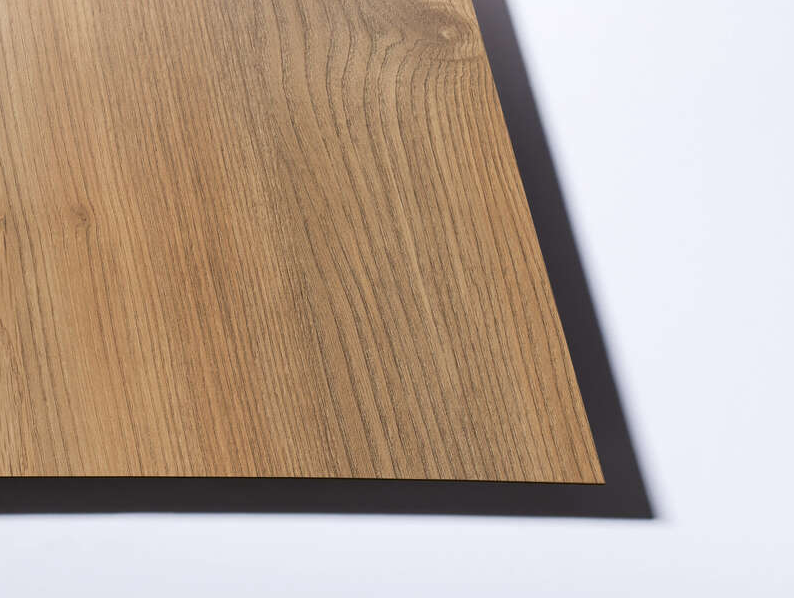
Here’s what most buyers miss: the “HPL” label tells you almost nothing about what the material can do.
Postforming HPL is a specialized grade of high-pressure laminate. The ISO classification system for high-pressure decorative laminates less than 2 mm thick also distinguishes application categories and performance requirements for bonded laminate sheets. It uses a specific resin mix that softens under heat. That means you can shape it around curves and edges after bonding — no cracking, no delaminating. Standard HPL? It sets rigid. Flat. Permanent. Try to bend it and you get a fractured surface and a wasted sheet.
Same Construction, Different DNA
Both types share the same layered build:
Surface papers saturated with melamine resin
Core kraft papers treated with phenolic resin
Fused under high heat and pressure into a thermoset sheet
Then bonded to MDF, particleboard, or plywood for structural support
The sheet runs thin — 0.7–1.5mm — so the substrate carries the structural load. But the resin formulation is where the two grades split apart.
What Postforming HPL Opens Up
That thermal flexibility is not a minor production detail. It gives you real design capability:
Seamless wrapped edges on countertops and reception desks — no visible joints, no exposed raw substrate
Rounded corners on kitchen surfaces and retail counters
S-curves and multiple radii that replicate the look of stone at a fraction of the cost
Continuous edge profiles on medical cabinets where hygiene and easy cleaning matter
And it does all of this without giving up durability. Postforming HPL holds the full performance profile of standard HPL: scratch resistance, impact resistance, moisture resistance, and heat suitability for kitchen and food service environments.
One spec detail worth noting: vertical-grade postforming laminate runs about 40% thinner than horizontal-grade. For curved surfaces under heavy use — countertops taking hard daily impact, for example — horizontal-grade postforming sheets give you the thickness and strength you need.
The point is straightforward. Not all HPL can be postformed. Your project has curved edges, wrapped surfaces, or seamless corner treatments? You need material engineered for thermal flexibility from day one. Ordering standard HPL for those jobs is not a cost-saving move. It’s a guaranteed failure waiting to happen.
Flat Lamination Explained: Flat HPL vs TFL
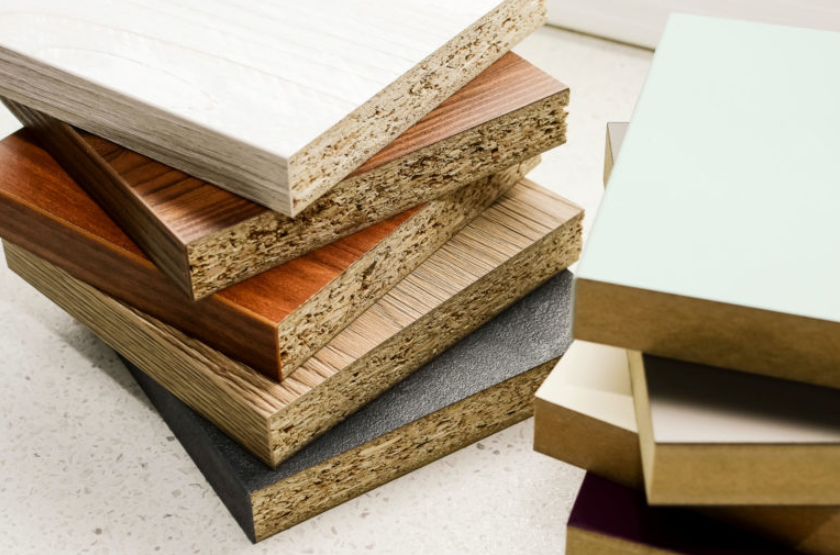
Flat lamination is not a single product. It’s a category. Inside that category, two different manufacturing processes produce two different surfaces.
Miss that distinction, and you’ll spec the wrong material every time.
HPL Flat: The Multi-Layer Performer
Flat HPL shares its DNA with postforming HPL — same layered construction, same high-pressure manufacturing. Six to eight layers of kraft paper, saturated with phenolic resin. A melamine-treated surface paper fused on top. All pressed together at around 1,400 psi at 140°C.
You end up with a dense, hard thermoset sheet. It’s made apart from its substrate, then bonded to MDF or particleboard as a second step. In many furniture projects, flat lamination is applied over MDF boards for furniture manufacturing because the substrate offers a smooth and stable surface for decorative finishing.
That extra process matters. It’s what gives flat HPL its performance edge:
Scratch and wear resistance — best in class, well ahead of TFL
Moisture performance — built for wet environments and sustained heat up to 275°F
Impact resistance — ideal for countertops, desktops, and high-traffic horizontal surfaces
TFL: One Step, Lower Cost, Real Trade-offs
TFL skips the kraft paper layers. A single melamine-impregnated decorative paper bonds straight onto the MDF or particleboard core — one step, fused at 400 psi. Faster to produce. Fewer raw materials. Lower price point.
That cost advantage is real. But so are the trade-offs:
Cannot be postformed — flat, straight-edge applications only
Lower scratch, impact, and moisture resistance across every durability benchmark
Higher vulnerability to gouging, chemical exposure, and fungal growth over time
TFL is a solid fit for cabinetry, closet interiors, and low-traffic vertical panels. It makes sense where budget matters more than long-term surface performance.
Buyers who are still weighing decorative surface options can also compare HPL and melamine on MDF to understand how pressure, layering, and finishing method affect durability.
The bottom line: both carry the “laminate” label. One is built for demanding surfaces. The other isn’t.
Postforming HPL vs Flat Lamination: Durability Comparison
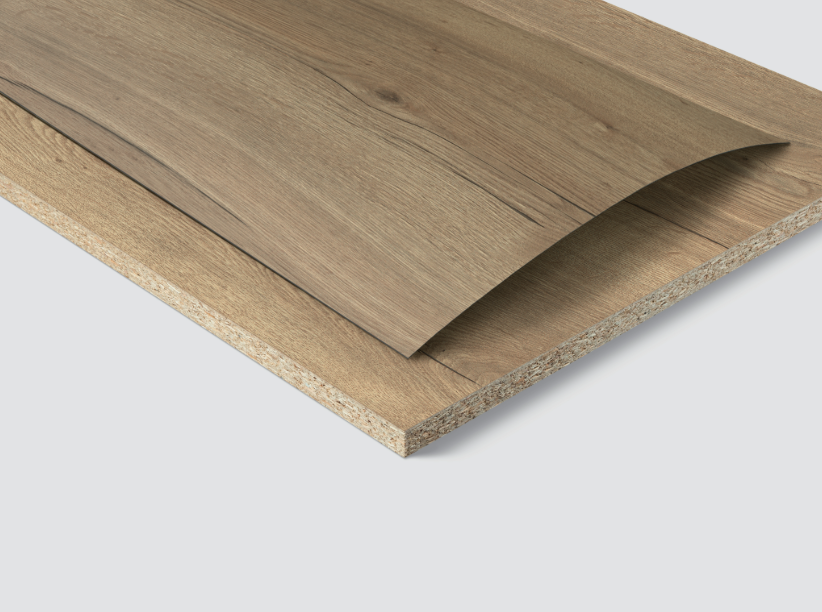
Surface failure doesn’t announce itself. It starts small — a micro-scratch here, a swollen edge there — and keeps building until the damage is too big to ignore and too costly to fix.
So let’s put postforming HPL vs flat lamination side by side on the metrics that matter most on a job site.
Scratch and Wear Resistance
Flat HPL wins this category outright. The multi-layer kraft paper core gets pressed at 1,400 psi. That process creates a thermoset surface that resists abrasion better than almost anything else in its price class. It handles tool contact, dragged equipment, and heavy objects day after day without showing meaningful wear. Performance testing for high-pressure decorative laminates is commonly referenced through NEMA’s HPDL standard framework when buyers evaluate wear resistance, impact, and surface suitability.
TFL sits at the other end of the scale. One decorative paper, bonded at just 400 psi. It marks faster, gouges easier, and loses its finish under repeated friction. On a high-traffic countertop or a commercial desk surface, that gap shows up within months — not years.
Postforming HPL matches flat HPL on scratch resistance. The thermal flexibility built into its resin has no effect on surface hardness. So you get the curved edge capability and the wear performance — both, not one or the other.
Moisture and Heat Performance
This is where the gap between HPL grades and TFL becomes critical.
Both flat HPL and postforming HPL handle sustained heat up to 275°F. In kitchens, food service counters, and areas near heat-generating equipment, that thermal tolerance is a hard requirement. TFL carries no equivalent rating.
Moisture tells the same story. HPL surfaces — flat and postforming alike — block water at the surface level and hold up in humid spaces with a correct installation. TFL is different. It absorbs moisture at unsealed edges. Over time, that leads to swelling, delamination, and fungal growth.
Bottom line by application:
High-traffic horizontal surfaces (countertops, desktops): Go with flat HPL or postforming HPL. TFL will underperform here.
Curved edges in wet or heated zones: Postforming HPL is the one option that works. Flat HPL can’t bend to fit, and TFL won’t hold up to the conditions.
Low-traffic vertical panels and cabinet interiors: TFL holds up fine and delivers real cost savings.
Medical, hospitality, or food service environments: HPL grades are the only credible choice.
Match the material to the environment. That one decision cuts out most durability failures before they ever start.
Design Flexibility: Curved Edges, Wrapped Profiles, and Flat Panels
Curved surfaces aren’t just a design preference. There’s measurable psychology behind them.
Here’s what that means for your material selection.
Postforming HPL: Built for Curves That Perform
Postforming HPL handles edge radii down to 3/8 inch. That thermal flexibility lets fabricators wrap surfaces in one clean run — countertops, reception desks, medical cabinetry — no visible seams, no exposed substrate. The result looks cleaner. It also removes collection points for bacteria, moisture, and debris.
For high-complexity profiles — S-curves, multiple radii, continuous edge wraps — postforming HPL is the laminate that delivers. No other option comes close. Flat HPL goes rigid once set. TFL can’t be shaped at all. Neither handles this level of edge complexity.
That matters more in modern commercial interiors now than it ever did. Curved forms scored stronger on stress reduction metrics (η²g=8–12%). That’s a real factor in hospitality, healthcare, and retail spaces where user experience drives repeat business.
Flat Lamination: Where Straight Lines Win
Flat HPL and TFL still cover a solid design range. Large-format panels, grain runs, and precise geometric patterns are areas where flat lamination outperforms postforming HPL. You get tighter dimensional control, fewer fabrication variables, and cleaner results on rectilinear furniture.
TFL offers a wide decorative library — wood grains, solids, stone patterns — at a price point that works for volume cabinet and panel production.
The practical split:
– Curved edges, wrapped profiles, seamless corners → Postforming HPL
– Flat panels, angular geometry, budget-driven volume work → Flat HPL or TFL
Match the material to the edge. Everything else follows from there.
Cost Comparison: Upfront Price vs Long-Term Value
Price tags lie. The number on a supplier quote tells you what you pay on day one — not what you pay over the life of a project.
Here’s how the real cost structure breaks down for each option.
Where Your Money Goes with Postforming HPL
Postforming HPL cost splits like this:
Materials (HPL sheet + substrate): 60–70% of unit cost
Processing (postforming, bonding, edge work): 20–25%
Labor: 10–15%
That processing line is what separates it from flat lamination. The heat-shaping step adds real production time and equipment cost. You get seamless edges, curved profiles, and zero exposed substrate. That’s what you’re paying for.
The TFL Price Advantage (And Its Hidden Catch)
Flat TFL runs 20–40% cheaper upfront. No postforming step. No edge processing. Faster to produce, faster to quote, faster to ship.
But run the numbers over time. The story shifts.
TFL surfaces need replacement every 5–7 years. Repair costs run $50–100 per m². HPL surfaces last 15+ years at $20–50 per m² to repair. Over a decade, that gap adds up to a 10–20% lower lifetime cost for HPL — despite the higher sticker price. This same budget-versus-performance decision also appears when buyers compare low-pressure and high-pressure laminate for cabinet interiors, shelving, and commercial fit-out work.
Scale Changes Everything
Volume is the biggest variable in this decision:
| Order Scale | Postforming HPL ($/m²) | Flat TFL ($/m²) | Better Value |
|---|---|---|---|
| Under 500m² | $45–60 | $25–35 | TFL |
| 500–2,000m² | $35–45 | $20–30 | About equal |
| Over 2,000m² | $25–35 | $18–25 | HPL |
At low volumes, TFL wins on price — no question. At scale, postforming HPL’s volume discounts close the gap fast.
The ROI Frame That Matters
Short-term renovation or one-off fitout: TFL delivers. Year 1 costs drop by around 30%. Payback comes in under 12 months.
Long-term commercial installation: HPL returns 15–25% better ROI over 10 years. Durability cuts replacement frequency in half. Maintenance costs drop by 40%.
Match your procurement decision to your project timeline. Budget jobs with short service cycles favor TFL. High-traffic commercial spaces with decade-long expectations? HPL wins — every time.
Application Guide: Which Material Fits Which Project?
The data is clear. The durability numbers are settled. The cost math is done. One question remains: which material belongs in your project?
Use this simple decision filter. Match your project conditions to the criteria below — the right choice becomes clear fast.
Choose Postforming HPL When:
Your surfaces have curved edges or wrapped profiles. Reception desks, kitchen countertops, medical cabinetry — any edge that needs a seamless radius. No other laminate option handles this.
The environment is demanding. High foot traffic, heat exposure, moisture contact. Think commercial kitchens, healthcare facilities, hospitality counters. Postforming HPL keeps its surface intact where TFL breaks down within months.
Hygiene is a hard requirement. Seamless edges remove the joints where bacteria and moisture build up. In food service and clinical environments, that difference is significant.
The installation is long-term. You’re looking at a 15+ year service life. These are projects where replacement cost and downtime are not an option.
Choose Flat HPL When:
Your surfaces are straight-line with high wear demands. High-traffic horizontal panels, commercial desktops, heavy-use workstations — flat geometry works here and durability is the top priority.
You need large-format panel runs with precise geometric patterns and consistent dimensions throughout.
Choose TFL When:
Budget is the main constraint and the application sees low traffic.
You’re working with vertical panels, cabinet interiors, or closet components — surfaces that take minimal wear and don’t need postforming.
Project timelines are short with replacement cycles under 7 years built into the plan.
One rule covers every scenario: match the material to the edge type first. Then check durability requirements. Then confirm the cost fits the service life. That sequence cuts out guesswork — and it cuts out the expensive mistakes that come with it.
Postforming HPL vs Flat Lamination FAQ
What is the difference between postforming HPL and flat lamination?
Postforming HPL is a heat-formable grade of high-pressure laminate that can wrap around curved edges and radiused profiles after bonding. Flat lamination refers to straight-surface lamination systems, usually including flat HPL and TFL.
The key difference is that postforming HPL is designed for curved applications, while flat lamination is limited to straight and flat surfaces.
Is TFL the same as HPL?
No. TFL and HPL are different laminated surface systems.
HPL is a separate high-pressure laminate sheet made from multiple resin-treated paper layers and then bonded to a substrate. TFL bonds a melamine decorative paper directly onto MDF or particleboard in one pressing step.
TFL is more economical, but HPL generally performs better in scratch resistance, impact resistance, and moisture-heavy environments.
When should buyers choose postforming HPL instead of TFL?
Buyers should choose postforming HPL when the project includes:
curved edges or wrapped profiles
countertops or heavy-use desktops
moisture-prone commercial interiors
medical, hospitality, or food service environments
TFL is usually a better fit for cabinet interiors, wardrobes, and low-traffic vertical panels where flat geometry and lower cost matter more than edge durability.
Is flat HPL better than TFL for commercial projects?
For high-wear commercial surfaces, yes. Flat HPL usually offers stronger abrasion resistance, better heat tolerance, and better long-term durability than TFL.
However, TFL can still be the better buying decision for budget-sensitive vertical applications where impact, moisture, and edge stress are limited.
Buyer Checklist: What to Confirm Before Placing an Order
1. Postforming Capability
Do not accept a generic “yes, we can postform.” You need to see how they do it.
Ask for the actual machine model — established lines like Duespohl or IMA are the baseline. Then confirm whether their setup can handle standard postforming conditions:
Heated calender rolls operating between 160–190°C
Line speeds in the range of 5–10 m/min
Mandrel diameters between 50–100 mm
Maximum postforming height around 40–60 mm
Compatibility with 16–19 mm chipboard or MDF substrates
Standard HPL thickness (0.7–1.0 mm) should achieve a bending radius of 6–12 mm. Anything tighter than 6 mm requires specialized capability.
If a supplier cannot clearly explain these parameters, they are not controlling the process — they are guessing.
2. Sample Testing & Abrasion Performance
Always test physical samples from the actual batch before committing to volume.
Request 100 × 100 mm samples and run them through a Taber abrasion test using a CS-10 wheel under a 1,000 g load. A minimum of 500 cycles is a reasonable baseline for validation.
The results should align with recognized standards:
EN 438-2 (Type 30): minimum 400 cycles
Postformed edge areas: at least 150 cycles
Scratch resistance: Class 3 under ISO 1518, tested with a ≥2N steel stylus
NEMA LD3 reference benchmark: 350+ cycles
Spec sheet numbers are easy to print. Verified performance from your own samples is what protects your project.
3. Lead Time for Custom Orders
Stock material and custom production follow completely different timelines.
Standard HPL inventory may ship within 1–7 days. Custom postforming orders typically require 4–8 weeks, especially when decoration matching is involved.
If you are working on a compressed schedule, some suppliers offer expedited production in 2–4 weeks — but expect a 20–30% cost increase.
New edge profiles introduce another layer of delay. Custom tooling can add 6–10 weeks on top of the base lead time. Minimum order quantities for custom runs usually fall between 100–500 sheets.
These timelines must be built into your project plan before purchase. Adjusting expectations after ordering leads to cost overruns and delays.
4. Certification & Compliance
Do not rely on verbal assurances. Request the actual certification documents and verify their validity.
Key standards to check include:
EN 438 for abrasion, impact, and scratch resistance (Type 30/31)
NEMA LD3 for performance grading and formability
EN 13501-1 for fire classification (B-s1,d0)
Greenguard or FSC for VOC control and chain-of-custody
Pay attention to the details behind the certificates:
Abrasion performance should meet or exceed 400 cycles
Fire test reports should be current (typically issued within the last two years)
VOC emissions should remain below 0.5 mg/m³
Documentation should carry third-party verification such as SGS or TÜV
Expired certificates or missing validation stamps should be treated as immediate risks.
5. Edge Banding Process Standards
Most failures in the field happen at the edges — not the surface. That makes edge banding a critical control point.
For chipboard (around 16 mm thickness), suppliers typically use PUR hotmelt adhesives at approximately 200°C, with band thickness in the 0.15–0.20 mm range. Performance should be validated under humidity exposure, such as a 24-hour test.
For MDF (around 19 mm), EVA adhesives are more common. A proper postforming seal should include a 2–3 mm overlap, with tensile strength reaching at least 4 N/mm².
Clear acceptance criteria should also be defined:
No visible gaps beyond 0.2 mm
Adhesion strength of at least 5 N/10 mm (ASTM D3330)
Color matching controlled within ΔE < 1.0
Thickness tolerance maintained within ±0.1 mm
If these process standards are not defined before production, they will not be controlled during production.
Final Note
Every issue this checklist prevents has one thing in common — it could have been caught before the order was placed.
The goal is not to ask more questions.
It is to ask the ones that actually change the outcome.
Verdict: Postforming HPL vs Flat Lamination
Four variables drive this decision: budget, edge geometry, traffic intensity, and environment. Nail those four, and the right material becomes obvious.
Curved edges? Postforming HPL is your sole option. No other laminate handles radii down to 3/8 inch without cracking. That’s it.
High-wear horizontal surfaces? Postforming HPL wins here. It presses at over 1,000 psi. TFL only reaches 300–500 psi. That pressure gap shows up fast on countertops and commercial desktops.
Low-traffic verticals on a tight budget? Flat TFL cuts real costs. You give up nothing meaningful in durability.
In many commercial fit-out projects, buyers use postforming HPL only on high-wear or curved surfaces, while using TFL on low-impact vertical areas to control total cost.
Three mistakes that cost buyers most:
– Speccing TFL on countertops — lifespan drops 2–5x
– Over-speccing HPL on budget verticals — 20–50% cost overrun with zero durability gain
– Missing postforming requirements at the planning stage — rework runs 15–30% higher
Match the material to the surface. Run the hybrid where it fits. That’s the formula.
Conclusion
Choosing between postforming HPL vs flat lamination isn’t about which material is “better.” It’s about which one fits your specific project. For buyers sourcing multiple surface and panel materials from one supplier, the right specification often depends on how each laminated finish will perform in actual project conditions rather than on unit price alone.
Here’s what the data shows:
Postforming HPL wins on seamless curves, edge durability, and high-traffic performance.
Flat lamination wins on design range, large-surface consistency, and cost efficiency for straightforward applications.
Neither is the right answer for every job.
Most buyers default to price. That’s a mistake. A cheaper material used in the wrong application costs you more — replacements, callbacks, and lost client trust add up fast. Those losses will outweigh any upfront savings.
Go back to those five questions before placing your next order. Match your material to your use case. Budget matters, but it shouldn’t be the only factor.
Ready to find the right product? Talk to a supplier who can show you real samples, walk you through forming tolerances, and back their specs with actual data. That one conversation will save you more money than any discount ever could.