
Lagos humidity has a way of exposing bad flooring decisions. That gorgeous hardwood you fell in love with on Pinterest? Give it one rainy season and watch it warp, buckle, and betray you. Ceramic tiles crack under settling foundations. Laminate swells at the first hint of moisture. And yet, walk into any newly renovated home or office in Nigeria today, and you’ll notice something different underfoot—vinyl.
This isn’t a passing trend. Vinyl flooring has quietly become the go-to answer for anyone tired of replacing floors every few years. But “vinyl” isn’t one thing—it’s LVT, SPC, WPC, PVC sheets, each built for different rooms, budgets, and traffic levels. Choosing wrong still costs you money and headaches.
This guide breaks down exactly which vinyl flooring type fits your space, what you’ll actually pay per square meter, and how it stacks up against tiles and wood—so your next flooring decision is your last one for years.
Why Vinyl Flooring Suits Nigeria’s Climate & Market Demands
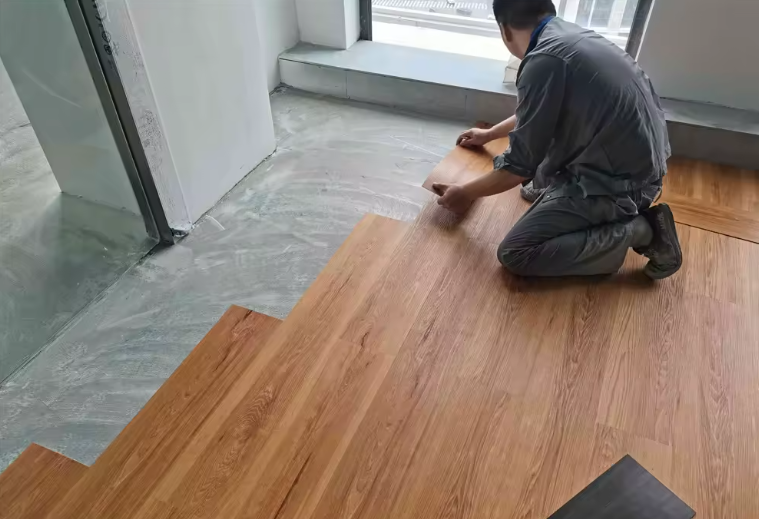
Nigeria’s tropical climate keeps indoor humidity between 60–80% for most of the year, and during rainy season, moisture creeps up through slabs and pools near doorways. That’s exactly the environment where wood swells, laminate bubbles, and tiles eventually hollow out beneath their grout lines. That’s why your neighbor’s floor still looks flawless three rainy seasons later.
Vinyl doesn’t play by those rules.
Waterproof
PVC-based vinyl flooring is genuinely 100% waterproof. Its non-porous surface means water sits on top instead of soaking in. Wipe it, and you’re done. SPC (rigid vinyl core) takes this further. Manufacturers class it as completely moisture-resistant, so it won’t swell, crack, or warp regardless of how long water sits on it. Compare that to timber, which absorbs 3–12% moisture and visibly shifts in size. Vinyl’s moisture content stays near zero, even after prolonged exposure.
Stable Under Nigerian Heat
Lagos heat tests your flooring’s dimensional stability. Vinyl’s low thermal expansion coefficient means it stays put under high temperatures, avoiding the seam-cracking that plagues wood and laminate when AC units cycle on and off. It’s also noticeably warmer underfoot than tile—roughly 2–4°C warmer—so you get comfort without the cold-tile shock or the heat-trapping tile absorbs from direct sun.
Fewer Mold Problems, Healthier Homes
Because vinyl doesn’t absorb moisture, it starves mold of what it needs to grow. In humid, poorly ventilated Lagos apartments, that’s a genuine health safeguard against mildew buildup along floors and skirting boards.
LVT/LVP: Best Vinyl Flooring For Nigeria Homes
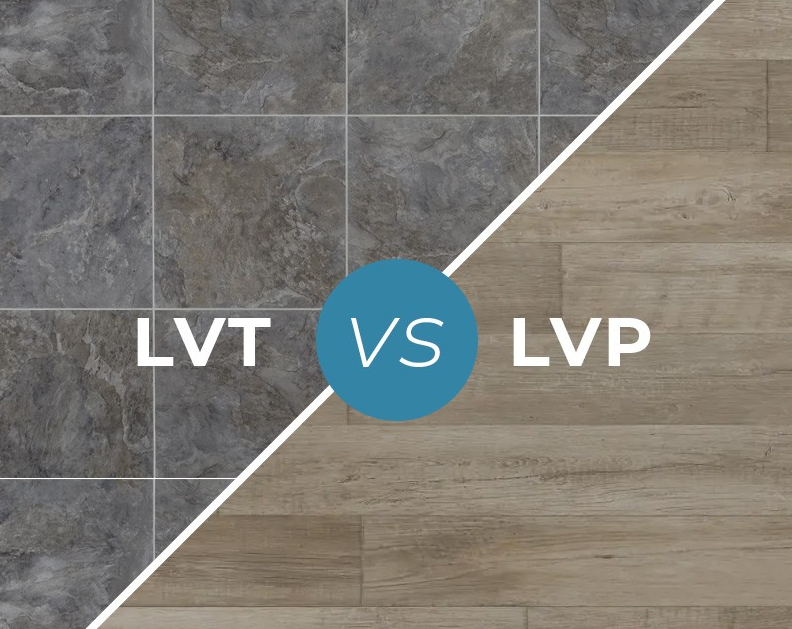
“LVT/LVP” isn’t one product. It’s four different installation systems, each solving a different problem.
Dryback LVT/LVP (2–4mm) glues down flat—ideal for open-plan living rooms. Click/Locking LVP (4mm+) snaps together over uneven subfloors and works for bedroom renovations and DIY jobs. Loose-lay LVT uses a high-friction backing for spot repairs. Peel & Stick is the budget option landlords choose for quick rental turnovers.
Pricing Tiers That Match Your Budget
Nigeria’s 2026 market breaks into clear brackets:
-
Economy LVP (3–4mm): ₦6,000–₦10,000/m²—warm underfoot, waterproof, fast install
-
Premium locking LVP (5–8mm, SPC/WPC core): ₦10,000–₦20,000/m², full installation included
-
High-end SPC-core LVP (8mm+): ₦15,000–₦30,000/m²—commercial-grade durability for demanding homes
Do the math on a 20m² bedroom. Economy tiles run ₦50,000–₦100,000 total. Standard LVP costs ₦120,000–₦200,000. Premium SPC lands between ₦200,000–₦400,000.
Foot Feel and Noise Matter More Than You Think
Thin economy LVP feels fine. The 5–8mm locking planks are the ones suppliers market as offering “enhanced acoustic and foot comfort”—thicker cores plus interlocking joints dampen footsteps. If you’ve got kids upstairs or live in a multi-story building, that difference is noticeable within the first week.
Design That Fits Nigerian Homes
Long-plank wood-grain LVP (roughly 1200×180mm) laid parallel to your main light source makes small living rooms feel larger. Stone-look LVT in larger formats (600×600mm) pairs naturally with the white walls and dark furniture common in Lagos interiors—and it hides spills better in dining areas.
Floors Nigeria, Chuvie Decor, and Megson Floors all stock imported SPC/LVT lines built for this climate. Nigeria has no local LVT manufacturing, so everything arrives via China, with local partners handling distribution and installation only.
SPC Flooring Nigeria: The Commercial-Grade Choice
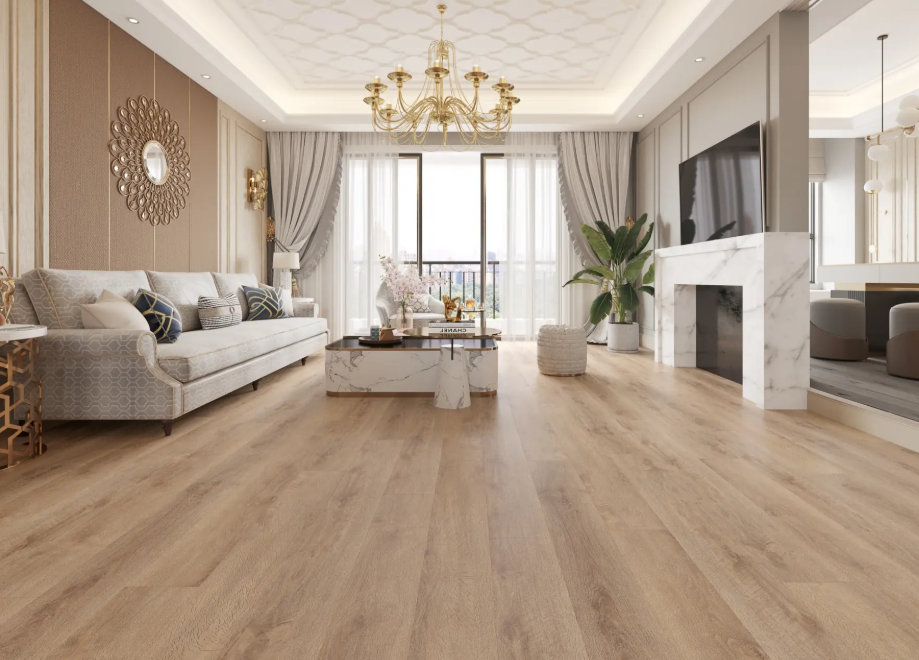
Offices, retail stores, and schools don’t get the luxury of babying their floors. Between rolling office chairs, shopping carts, and hundreds of students shuffling through hallways daily, these floors take a beating. This is where SPC flooring earns its “commercial-grade” label.
SPC’s rigid core packs a density of 1.95–2.2 g/cm³, roughly double what standard residential vinyl offers. That density is what stops a heavy filing cabinet or a loaded shelving unit from leaving permanent dents. Under a 1.4 kN load, commercial-grade SPC indents less than 0.05mm. Engineers set that threshold for spaces where furniture doesn’t move for years.
Wear layer thickness separates the pretenders from the real commercial product. Anything under 0.5mm won’t survive three to five years of heavy foot traffic. It’ll dull, scratch, and need replacing while you’re still paying off the installation. True commercial SPC runs 0.5–0.7mm, rated AC4 or AC5, and holds up through 20,000 to 25,000+ Taber abrasion cycles. That’s the difference between flooring that looks tired by year three and flooring that still photographs well for your retail store’s Instagram in year fifteen.
Where SPC Earns Its Keep in Nigeria
-
Open-plan offices & call centers: 5–6mm total thickness with IXPE backing cuts impact noise by 19–22 decibels. Your team hears fewer rolling chairs and more actual conversation.
-
Retail stores & supermarkets: 100% waterproof core handles daily mopping and spills without swelling at the edges.
-
Schools & hospitals: DCOF slip resistance ≥0.42 meets safety thresholds for high-traffic corridors, plus chemical resistance for regular disinfecting.
Floors Nigeria prices standard commercial SPC (0.5mm wear layer, 5mm thickness) at ₦10,800–₦14,000/m², with high-end options (0.7mm wear layer, 6mm+, denser core) reaching ₦14,000–₦19,500/m². Floor Gallery Nigeria sells similar Rigid Core Technology at comparable prices and leans on waterproof performance for humid commercial environments.
When you request quotes from any vinyl flooring suppliers Nigeria has to offer, ask for three numbers upfront: wear layer thickness, core density, and warranty length. Anyone dodging those questions probably isn’t selling true commercial-grade product.
WPC & PVC Sheet Flooring: Specialized Use Cases
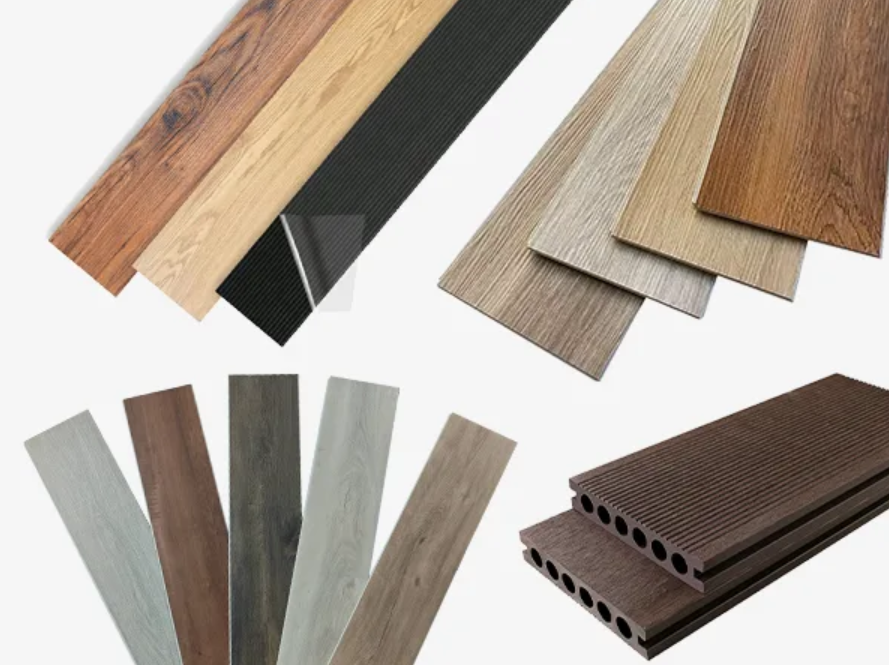
Not every room needs SPC’s rigidity. Some need softness, quiet, and forgiveness underfoot—that’s where WPC and PVC sheet flooring come in.
WPC (Wood Plastic Composite) uses a foamed PVC core with cork or EVA underlayment, giving it a noticeably softer feel than SPC. At 4–8mm thick (structure ranging 1.6–9mm) and just 2–7kg/m², it’s light enough for old-building renovations without structural strain. Acoustic and thermal efficiency improve by up to 30% in living rooms. Households with elderly parents or toddlers see roughly 70% fewer slip-and-fall injuries thanks to its cushioned, slip-resistant wear layer. Water absorption sits around 0.2%, making it ideal for underfloor-heated homes.
PVC sheet flooring solves a different problem: seamless coverage. Heat-welded seams create continuous, joint-free surfaces across hospitals, ICUs, and transit stations—cutting seam count by 50–80% versus click-lock systems in spaces over 200m². For industrial floors, sheet PVC typically runs 20–40% cheaper than tile or epoxy once labor is factored in.
Choose WPC for comfort-driven residential spaces. Choose PVC sheets for hygiene-critical, high-traffic commercial floors.
Vinyl Flooring vs Tiles, Wood & Laminate: Making The Right Choice
No flooring material is best across the board. The right pick comes down to your room, your budget, and your tolerance for maintenance headaches. Vinyl wins some fights, tile wins others, and knowing which is which saves you from an expensive redo.
The Side-By-Side Reality
|
Factor |
Vinyl (LVT/SPC) |
Tile |
Wood |
Laminate |
|---|---|---|---|---|
|
Waterproofing |
Excellent—zero absorption |
Excellent (grout needs upkeep) |
Poor |
Poor to moderate |
|
Comfort underfoot |
Warm, soft |
Cold, hard |
Warm, natural |
Cushioned, but risky near moisture |
|
Material cost |
US$1–10/sq ft |
US$6–18/sq ft (up to $25 installed) |
US$8–22/sq ft |
US$1–8/sq ft |
|
Lifespan |
10–30 years |
50–100 years |
50+ years |
10–25 years |
Tile wins on pure longevity; it’ll outlast your mortgage. But that durability comes with a harder floor, a colder floor, and a bigger upfront bill. Wood delivers warmth and prestige, right up until Lagos humidity finds a way in. Laminate looks tempting on price, but its HDF Core swells at the first sign of standing water. Keep it away from kitchen sinks and bathroom doors.
Where This Plays Out In Real Nigerian Homes
-
Kitchens, laundry rooms, ground-floor apartments: Go with vinyl, SPC especially. High humidity punishes wood and laminate; vinyl shrugs it off.
-
high-traffic commercial spaces, long-hold properties: Tile’s 50–100 year lifespan justifies the higher install cost.
-
Dry bedrooms on a tight renovation budget: Laminate works, as long as you keep it out of wet zones.
-
Budget-conscious residential projects: Mid-range LVT/SPC is the sweet spot, waterproof without tile’s price tag or wood’s fragility.
If your priority is dodging moisture damage and repair bills, vinyl usually wins the math. If maximum lifespan matters more than upfront cost, tile still takes it.
Vinyl Flooring Price In Nigeria: What To Expect
Money talks, and in Nigeria’s flooring market, it says a lot of different things depending on where you shop. Vinyl flooring cost per square meter is a spread wide enough to fit a bargain-hunter and a boutique showroom in the same conversation.
The Lower End
Before you even get to LVP and SPC, there’s a basic tier: economy vinyl tiles at ₦1,800–₦5,000/m². This is the stuff sold by the roll or carton at hardware markets, with no interlocking system, no wear layer specs, just PVC sheet meant to cover a floor cheaply. Sheet vinyl runs a step up: ₦3,000–₦7,000/m² for residential grade, ₦5,000–₦12,000/m² for commercial-rated sheet with heavier coating. Generic, unbranded PVC coverings from local suppliers sit at ₦5,500–₦9,000/m² material-only, with no installation included.
What Moves The Price Needle
Thickness is the biggest lever. Go from 1.2mm to 2.0mm LVT, and you’re paying roughly 60% more, with ₦6,800/m² jumping to ₦11,000/m². Every step up in thickness adds another ₦1,500–₦3,000/m².
Channel matters just as much as spec. Marketplace sellers on Instagram, Facebook, and Jiji often quote ₦6,500–₦11,500/m² for products that showrooms like Floor Direct or Dee Certain Floors price at ₦12,000–₦25,000/m² for the same thickness. Same tile, different overhead.
Installation adds separately. Daibau’s PVC install fee starts at ₦600/m², climbing past ₦1,000/m² for detailed work. Jiji’s per-project installation quotes range ₦5,500–₦17,000 depending on room size, which works out to roughly ₦500–₦1,700/m² in labor alone.
Watch for promo pricing too. Items listed at ₦24,000 dropping to ₦14,999 aren’t unusual, a near-40% discount pattern common enough that it’s worth asking suppliers if a “sale price” is actually their standard rate.
Key Selection Criteria: Choosing Vinyl For Your Specific Space
Most buyers pick vinyl flooring by looking at a sample swatch, not by matching specs to the room. Get the wear layer wrong, and you’ll be replacing a bedroom floor in three years instead of fifteen.
Match Wear Layer To Foot Traffic
Bedrooms and home offices (low traffic): 0.3mm wear layer is enough. Living rooms, dining areas, hallways: step up to 0.5mm—this is the most common residential spec, and for good reason. It handles kids, pets, and daily wear without dulling. Retail floors, restaurants, commercial corridors: 0.7mm minimum. That thickness difference isn’t cosmetic—0.55mm wear layers typically last 5+ years, while 0.7mm pushes past 10 years under heavy use.
Slip Resistance Isn’t Optional Near Water
Bathrooms, kitchens, and entryways need vinyl with a documented slip-resistance rating—wet or dry coefficient of friction, not just marketing language. For commercial kitchens and supermarket entrances, pair that slip rating with a wear layer of 0.7mm or higher. Skip this, and you’re liable the day someone slips on a wet floor.
Your Subfloor Determines What You Can Install
Uneven concrete kills more vinyl installations than bad product choice does. Industry standard: height variation should stay under 2–3mm across any 2-meter stretch. Anything worse needs leveling compound before installation day. Moisture content matters just as much—subfloor moisture above 2–3% causes bubbling and adhesive failure, full stop. Rigid SPC tolerates minor unevenness better than soft sheet vinyl, but neither survives a genuinely wet or uneven slab.
Check The Warranty Before You Check The Price
Residential vinyl should carry at least a 10-year wear layer warranty. Commercial-grade product needs 5+ years minimum. Ask any vinyl flooring suppliers Nigeria has for test documentation—Taber abrasion results, castor chair test results for office spaces—before signing anything.
Where To Buy: Top Vinyl Flooring Suppliers Serving Nigeria
When you start looking for a vinyl Flooring Supplier in Nigeria that people trust, six names keep coming up. Each one covers different territory, both geographic and commercial.
Megson Floors operates out of Lagos, Lekki, and Ikeja, handling importation, installation, and maintenance for LVT, SPC, and waterproof laminate lines—one of the few offering full-service coverage from purchase to upkeep. Floors Nigeria is the authorized BEAU FLOR distributor, stocking everything from DIY-friendly vinyl to premium engineered wood. Chuvie Decor runs a Lagos-focused luxury vinyl retail channel, and Jatos Kairos Products Limited in Ikeja specializes in affordable, waterproof vinyl.
For buyers outside Lagos, Vinyl Flor claims coverage across multiple Nigerian and Ghanaian cities. Shera VBM supplies PVC vinyl flooring directly from export channels serving Nigeria, Ghana, and East Africa, which is useful if you’re sourcing in bulk.
Before requesting quotes, confirm which product types they stock (LVT, SPC, WPC, or cushion vinyl), whether installation is included or product-only, and their actual delivery radius. Coverage of Lagos, Abuja, Ibadan, and Abeokuta varies by supplier.
Installation & Maintenance: Ensuring Long-Term Performance
Your vinyl floor is only as good as the installation underneath it. Skip the prep work, and even premium SPC will bubble, gap, or curl within a year. Nigeria’s heat and rainy-season humidity punish shortcuts fast.
Getting The Subfloor Right
Concrete moisture content needs to sit at 4–5% or below (or under 75–85% RH via CM test) before any vinyl goes down. Surface strength matters too—compressive strength should hit ≥20 MPa, with no sanding or crumbling under a scratch test. Flatness tolerance: ≤3mm variation across a 2-meter span, with hollow spots under 5% of total room area.
Click-Lock vs. Glue-Down: What Changes On-Site
Click-lock planks need an 8–10mm expansion gap along walls—non-negotiable given indoor temps hitting 30–35°C. Let planks acclimate on-site for 24–48 hours before installing, and avoid installing when room temp exceeds 35°C or humidity tops 80%. Use a rubber mallet (0.5–1kg force) to seat locks; anything heavier snaps them.
Glue-down systems need 250–350g/m² adhesive, applied with a notched trowel for a consistent 0.3–0.5mm layer. In Lagos heat, open time drops to 10–20 minutes—work fast or scrape and reapply. Roll with a 50–70kg steel roller, both directions, 2–3 passes, within 30–60 minutes of glue application to push out trapped air.
Daily Cleaning That Protects Your Investment
Sweep or vacuum daily. Damp-mop 2–3 times weekly with a mild neutral cleaner (0.5–1% solution), wrung to under 60% moisture content. In Lagos’s dusty, red-soil environment, a double entry mat—coarse fiber outside, fine fiber inside—cuts sand and grit tracking indoors by 60–80%, which directly slows wear-layer abrasion.
Humidity Control Extends Lifespan
Keep indoor RH between 40–60% and temperature between 18–28°C. Floors held in this range show 30–50% fewer cases of edge-lifting or bubbling. During rainy season, run dehumidifiers or AC for 4–8 hours daily to keep RH below 70%. In kitchens and bathrooms, seal the vinyl-to-wall junction with mold-resistant silicone (3–5mm bead) to block moisture creep into the subfloor.
Furniture and Traffic Protection
Fit furniture legs with 25–30mm felt pads—this alone cuts point-load pressure by 50–70%, preventing permanent indentation. When moving appliances, use protective boards (200mm+ wide) or wheeled dollies with wheels under 90 Shore A hardness to avoid gouging.
Catching Problems Before They’re Expensive
Most bubbling and gapping traces back to poor subfloor prep—usually near doorways or exterior walls, where moisture readings exceed 5–6%. Fixing it after installation costs 20–30% more than getting it right the first time. Annual inspection catches this early: check seam gaps (repair if over 0.5mm) and bubble height (flag anything above 2mm covering more than 0.25m²). Residential floors need one full check a year; high-traffic commercial spaces handling 1,000+ daily visitors need inspections every six months.
Conclusion
Your climate doesn’t negotiate, and neither should your materials. Between humidity, rainy season floods, and daily wear in busy homes and businesses, you need flooring that performs.
Whether you’re drawn to the warmth of LVT in a living room or the industrial toughness of SPC in a retail space, vinyl gives you waterproof reliability, lower lifetime costs than tile or wood, and styles that actually suit how Nigerians live and build.
So don’t let another rainy season catch your floors or your budget off guard. Reach out to a trusted vinyl flooring supplier, request Samples, and get a real quote for your space.