
From Cape Town’s coastal humidity to Johannesburg’s dry winters and dusty summers, South African homes face a climate puzzle that most flooring isn’t built for. Yet laminate flooring has become one of the smartest renovation choices for homeowners who want the warmth of wood without the warping, cracking, or budget-breaking costs that come with our unique conditions. But not all laminate is created equal. Choosing wrong can mean replacing your floors within a few years.
This guide covers the AC ratings that determine durability, the moisture resistance that can make or break a bathroom or kitchen install, and the real cost breakdowns you’ll encounter at local suppliers when selecting laminate flooring for South African homes and renovation projects. Whether you’re renovating one room or an entire home, you’ll know what to look for and what to avoid.
What Is Laminate Flooring: Structure and Composition
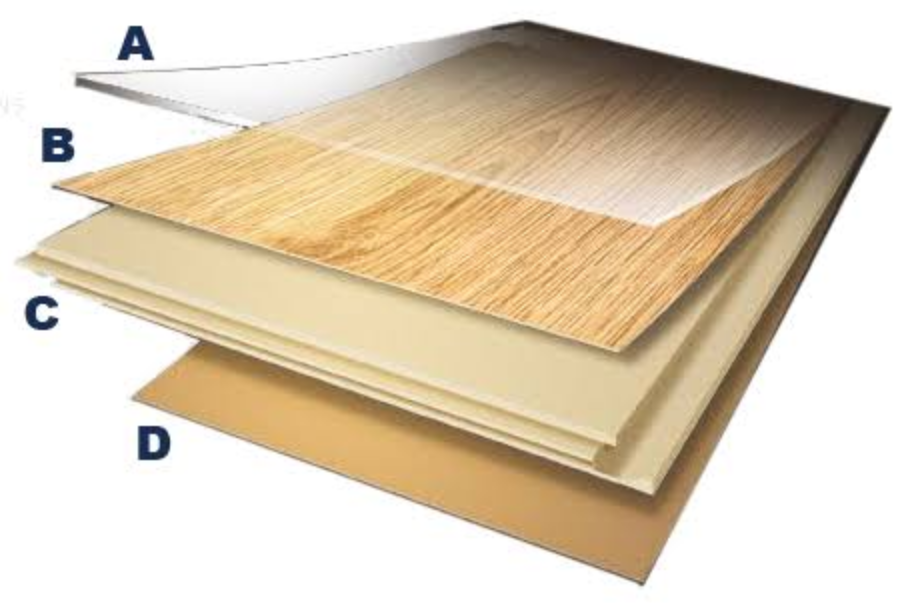
Strip away the marketing language and laminate flooring is clever engineering: a sandwich of layers, each doing one job well. At its heart sits a wood-fiber HDF Core, high-density fiberboard made from compressed wood fibres, often exceeding 0.85 g/cm³ density. One manufacturer says the core is made from more than 80% wood. This layer carries the structural weight, giving planks their rigidity and resistance to impact.
Most laminate flooring for South African homes and renovation projects uses a four-layer DPL structure: wear layer, decorative layer, HDF core, and a backing or balancing layer. Some manufacturers go further, splitting this into six layers by adding overlay, antistatic paper, and impact-sound insulation.
Here’s what each layer does:
The wear layer is melamine resin with aluminum oxide, protecting against scratches and stains. This determines your AC rating.
The decorative layer is printed paper that creates realistic wood, stone, or tile patterns.
The backing layer is melamine-treated paper that prevents warping and cupping from below.
Most planks now use click-lock installation, with tongue-and-groove edges that snap together without glue, floating over the subfloor. It’s faster, cheaper, and easier for DIY renovations than traditional glue-down methods.
Why Laminate Flooring Suits South African Climate and Homes
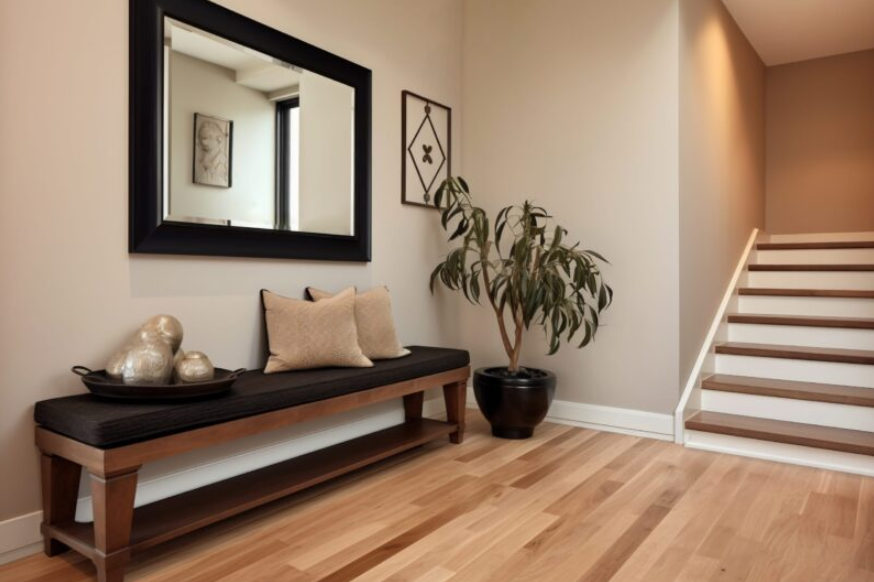
South Africa has several climates, not just one. That’s exactly why the “right” laminate flooring depends on where you live. In dry to moderately humid living areas, modern laminate holds up beautifully. In consistently damp rooms, standard laminate struggles. Knowing which category your home falls into changes everything about your purchase decision.
One local supplier recommends keeping the temperature between 15–27°C and relative humidity between 30–50% for lasting stability. Manage those conditions indoors, and laminate becomes a practical choice for most inland South African homes.
Coastal humidity tells a different story. The HDF core absorbs moisture readily, and in damp environments that means swelling, bubbling, and warping. Quality separates good laminate from disappointing laminate. One South African product tested at just 8% swell after 24-hour total immersion, against an industry mean of 18%. That gap explains why higher-grade laminates handle our humidity swings so much better than budget options.
Sunlight matters too. Laminate generally outperforms alternatives in direct sun, though pairing it with UV-protective window film helps limit surface fading and keeps indoor temperatures steadier.
Installation Adjustments for South African Conditions
Homes exposed to bigger temperature swings, especially holiday homes, need larger expansion gaps. If your manufacturer specifies 10mm, bump it up by at least 20%, landing closer to 12mm minimum around the perimeter.
Where Laminate Works Best
Living rooms, bedrooms, hallways – low moisture, high traffic tolerance
Home offices, open-plan areas – stable surfaces for daily use
Proceed cautiously in bathrooms, laundries, and damp sculleries unless you’re using waterproof-rated laminate with proper sealing.
Regional Reality Check
Gauteng (Johannesburg/Pretoria): Dry winters, hot summers. Laminate avoids the cracking issues natural wood faces here.
Cape Town/Western Cape: Dry rooms work fine; damp winters demand moisture-resistant grades and careful sealing.
Durban/KZN coast: Water-resistant laminate is the practical minimum outside wet rooms.
For quality, most South African retailers suggest AC3 or higher for general climate suitability, moving to AC4/AC5 in busier households. Laminate stays dimensionally stable through seasonal swings in ways solid wood can’t match.
AC Rating and Durability: How to Choose the Right Grade
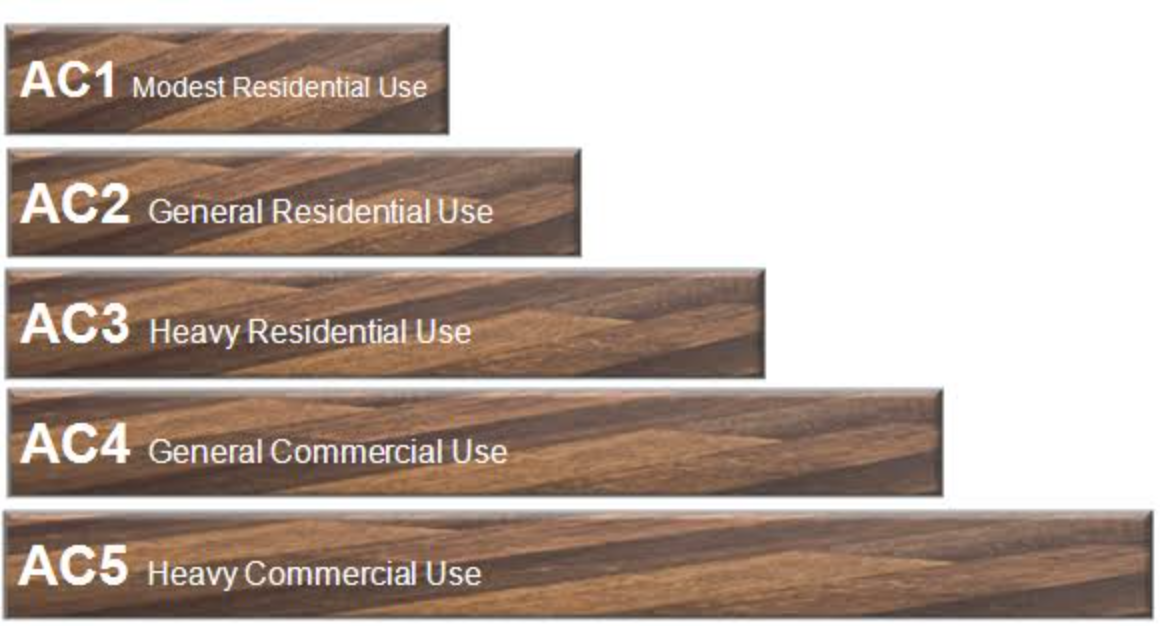
Six letters and a number determine whether your new floor survives toddler tantrums or buckles under the dog’s daily zoomies. That’s the AC rating system, short for Abrasion Class, and it’s the single most important spec on any laminate box. The European Producers of Laminate Flooring (EPLF) introduced it. The scale runs from AC1 to AC6 and measures resistance to traffic, impact, stains, scratches, and furniture castors.
Here’s the breakdown that matters when you’re standing in the aisle:
AC1–AC2: Light residential use. Fine for bedrooms or guest rooms that see slippers, not stampedes.
AC3: Moderate-to-higher traffic. Suits hallways, lounges, entryways where daily footfall is steady but not chaotic.
AC4: Heavy residential and light commercial. This is your pick if kids, pets, or rolling office chairs are part of daily life.
AC5–AC6: Commercial-grade, built for retail floors, restaurants, schools, even airport terminals. Overkill for most homes, but useful if you’re renovating a home-based business space.
The buying rule that saves headaches: any room with directional daily traffic deserves at least AC3. Add kids or pets, move up to AC4 for breathing room.
The AC rating is a wear-standard, not a warranty or a lifespan guarantee. How long your floor actually lasts depends on installation quality, subfloor prep, and how well you manage moisture, especially with laminate flooring for South African homes and renovation projects.
When shopping locally, expect entry ranges around AC2/AC3, mainstream options at AC3/AC4, and premium commercial-grade laminate at AC4/AC5. Record the AC rating alongside thickness, click system, and price per m² for each option you compare.
Moisture Resistance: Critical Factor for South African Homes

Water doesn’t announce itself. It seeps in through a seam here, a splash there, and by the time you notice the swelling, the damage is already done. That’s the reality when choosing laminate flooring for South African homes, especially in the rooms where water lives day to day.
Relevant South African standards can provide useful reference points when evaluating moisture-resistant materials. South African standards provide useful benchmarks for moisture-resistant board performance, but the suitability of laminate flooring in kitchens and other damp areas also depends on the flooring system, joint protection, installation method, and manufacturer requirements.
Standard laminate and waterproof composite differ in where the water gets in. Ordinary laminate fails at the seams first – moisture creeps through the joints before it touches the surface. Waterproof boards counter this with sealed edges, water-resistant cores, or rigid SPC-style layers built for exactly that weakness.
Location shifts your priorities:
Coastal homes deal with salt air and constant humidity. Look for sealed joints, anti-mildew coatings, and good ventilation.
Inland homes face seasonal rain, plumbing leaks, roof failures, and rising damp through the foundation.
For wet zones, seal every junction: sinks, taps, skirting boards, appliance cutouts. Those are the repeat offenders in South African moisture damage reports. A twice-yearly inspection, before and after rainy season, catches problems before they become replacements.
Thickness, Underlay and Subfloor Preparation
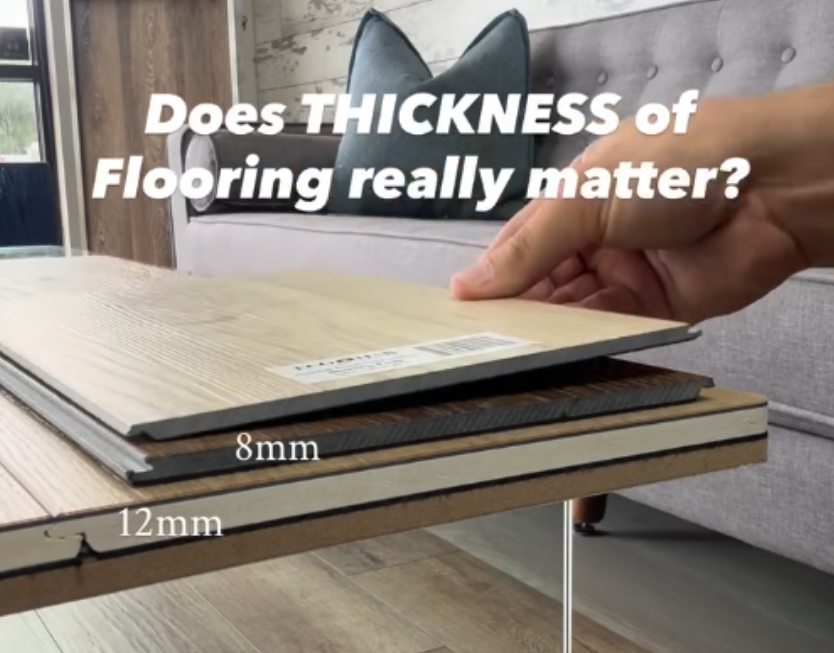
Three millimeters can change everything about how a floor feels underfoot. That’s the difference between 8mm, 10mm, and 12mm laminate, and it matters more than most buyers realize when picking flooring for a South African home or renovation project.
8mm feels harder underfoot, with a noticeably “clicky” sound when you walk. It’s the budget-friendly choice, best suited to bedrooms, studies, or low-traffic rooms. Sound insulation typically improves by 16–18 dB over bare subfloor. If you’re installing over underfloor heating, this thinner profile transfers heat 15–20% more efficiently.
10mm sits in the middle. Sound insulation climbs to roughly 18–20 dB, and the balance between comfort, cost, and stability makes it the practical default for living rooms, dining areas, and hallways.
12mm delivers the most substantial, wood-like feel underfoot, with quieter footsteps and insulation around 21–23 dB. It’s worth the extra cost for open-plan living areas and entryways where comfort and quiet matter most. One trade-off: impact resistance can run about 30% lower than thicker commercial-grade products.
Thickness affects comfort and sound, but durability comes down to AC rating, surface technology, and installation quality, not millimeters alone.
Underlay: Don’t Skip This Layer
South Africa’s climate swings make underlay non-negotiable.
You need a moisture barrier underlay over concrete subfloors, especially in humid coastal regions or homes with fluctuating indoor humidity. Acoustic underlay reduces footstep noise and hollow echoes. Pairing laminate with a 2mm moisture/acoustic underlay is standard practice; some 3mm cork options add up to 15 dB of extra sound reduction. For underfloor heating systems, choose low thermal-resistance underlay so you don’t lose heating efficiency.
For a concrete subfloor, start with a moisture barrier. For noise-sensitive homes, go for acoustic or combination underlay. If you’re budget-conscious, choose 8mm laminate with a basic moisture barrier. If comfort is the priority, pick 12mm laminate with a quality composite underlay.
Subfloor Preparation
An uneven or damp subfloor undoes even the best laminate purchase. Before installation, check flatness with a 2m straight edge and keep variance under 3mm. Clean off dust, grease, grit, and loose debris. Anything left behind interferes with click-lock joints. Test moisture at multiple points, especially near doorways, exterior walls, bathrooms, and corners. New concrete pours need full curing time before flooring goes down.
Before you start, confirm there are no visible cracks, hollow spots, or crumbling surface. Make sure moisture readings are within the acceptable range for your laminate system. Verify subfloor flatness and allow expansion gaps around the perimeter.
For South African conditions, prioritize moisture control first, then flatness, then dryness, and acoustic comfort last. Concrete subfloors especially demand proper moisture testing before you commit to a single plank.
Where to Use and Where to Avoid Laminate Flooring
Room by room, laminate flooring for South African homes and renovation projects has clear winners and clear no-go zones. Get this map right, and you will skip the regret.
Where laminate thrives:
Bedrooms – AC1 covers light traffic, but AC3 is the smarter all-around pick if you want longevity.
Living rooms and dining areas – AC2 handles medium traffic. Busier households or homes where you shuffle furniture often should bump up to AC3–AC4.
Hallways, entryways, and family rooms – choose AC4 here. These spaces see the heaviest daily footfall in any home.
Home offices – rolling chairs demand a higher AC rating, but otherwise laminate holds up well.
Dry basements – only if you install a proper moisture barrier underneath.
Sun-drenched rooms – the resin wear layer resists fading and cracking far better than solid wood.
Where to avoid it:
Full bathrooms and laundry rooms – humidity and splash risk make these weak spots for standard laminate. Tile or LVP is the safer route.
In front of dishwashers, behind fridges – hidden moisture traps that cause slow, invisible damage.
Garages – built for footsteps, not tyres.
The practical fix: mixed flooring. Tile the kitchen work zone, lay laminate through the open-plan lounge, and bridge the two with a T-moulding transition strip at the doorway. South African renovators use this layout constantly. It keeps both style and moisture protection intact.
Price Guide: Cost Breakdown for South African Market
Laminate flooring for South African homes and renovations runs R199 to R575 per m². Where you land in that range depends on AC rating, thickness, and whether you’re buying promotional stock or premium product.
By AC rating:
– AC3 (standard residential): R199–R320/m²
– AC4 (heavy residential, light commercial): R280–R450/m²
– AC5 (high-wear, demanding use): R420–R575/m²
Entry-level and clearance stock sit at the bottom of the range. Mainstream options cluster in the middle. Premium, more durable laminate pushes toward the top.
Full Installation Cost Template
Materials alone won’t tell you what you’ll pay. You need to budget for underlay, subfloor levelling, and labour too:
Laminate flooring: R199–R575/m²
Underlay/moisture barrier: R25–R60/m²
Subfloor levelling: R40–R120/m²
Labour: R80–R180/m²
That gives you three realistic tiers:
Economy: R344–R420/m²
Standard: R420–R650/m²
Premium: R650–R935/m²
Add skirting, door-transition finishes, and disposal, and tack on another R30–R100/m². Uneven subfloors that need extra levelling can push total costs up 10–25%.
Getting Accurate Quotes
For any renovation over R50,000, ask contractors for an itemised BOQ (Bill of Quantities). For projects above R30,000, get at least three quotes on the same basis. That way you’re comparing apples to apples, not one supplier’s bundled price against another’s stripped-down estimate.
When you’re shopping around, record these fields for every option: retail price per m², AC rating, thickness, box coverage, whether underlay is included, labour billing, minimum order quantities, delivery fees, and whether it’s promotional or regular pricing. South African building material pricing varies by 1–8% between retailers on comparable products, but clearance stock can swing wider.
Pros and Cons: Making an Informed Decision
Every flooring choice is a trade-off. Laminate just happens to trade in your favour more often than not.
What laminate does well
Wears like a workhorse. Landlords, pet owners, and busy households with kids underfoot reach for it first because it’s often the most abrasion-resistant option on the market.
Asks almost nothing of you. No waxing, no refinishing, no annual upkeep ritual. Daily sweeping and the occasional damp mop is the whole routine.
Goes down fast. The floating click-lock system skips the sanding, gluing, and curing time solid wood demands. That matters when you’re racing a renovation deadline or turning around a rental unit.
Handles moisture better than solid timber. It’s more forgiving near windows, in humid rooms, or under frequent mopping, though it’s not waterproof.
Where it falls short
You can’t sand it back. Once the wear layer is gone, it’s gone. Solid wood can be refinished for decades; laminate gets replaced.
The feel underfoot is harder, hollower. If you love the warmth and give of real timber in a bedroom retreat, laminate’s click-lock structure won’t replicate that.
It’s not immune to swelling. Standing water at a kitchen doorway or a leaking appliance can still cause bubbling.
Impact resistance lags. A dropped cast-iron pot or dragged furniture leg can dent laminate faster than tile or premium engineered wood.
Choose laminate when budget, timeline, and low maintenance top your list. Choose solid or engineered wood when natural grain, refinishing potential, and underfoot warmth matter more than upfront savings, and you’re prepared to pay more for both material and installation labour.
Renovation Project Considerations: Planning Your Installation
Good renovations start with honesty about what’s underneath. Before you rip out old flooring, assess the current condition: check for leaks, structural cracks, uneven surfaces, dampness, and ageing wiring. Photograph and measure everything first, then remove the old flooring to inspect the subfloor for cracks, hollow spots, moisture, or warping. Fix structural or waterproofing issues before laying anything new.
Allocate 50–60% of your renovation budget to foundational work (demolition, waterproofing, electrical, plumbing) and hold back 10–20% as a contingency for surprises hiding beneath old floors.
Demolition, structural repair, electrical/plumbing, waterproofing, carpentry, painting, then laminate flooring installation, followed by final inspection.
Full renovations need 5–6 months, especially with structural work. Leave inspection time after demolition, don’t seal problems in. Ventilate thoroughly after adhesives and paints before Installing Laminate Flooring for South African homes and renovation projects.
Avoid scheduling floor installation during rainy seasons, moisture undermines subfloor drying and adhesive curing.
Before crews arrive, plan temporary power and water access, debris removal, protection for valuables, and preservation plans for built-ins.
Contractors finish in half to two-thirds the time of DIY, especially where structural or moisture work is involved.
Final Selection Checklist for South African Buyers
Walk through this list before you sign anything. Work out the total budget first, covering laminate cost, underlay, subfloor prep, labour, skirting, and a contingency buffer, since the price per square metre on the box is never the full cost. Then inspect the space itself. Feel for dampness near sinks and exterior walls, check for hairline cracks in the subfloor, and test how sunlight hits the room throughout the day. Confirm the paperwork too, and get SANS 266 moisture compliance and AC ratings in writing from suppliers. Weigh your location risk as well, because coastal salt air, inland dust, or basement dampness all change your product choice. Proceed only when cost, condition, compliance, and climate all fit together. If one piece is missing, wait.
Conclusion
Choosing laminate flooring for South African homes comes down to matching the right AC rating and moisture resistance to the room you live in, not the one you wish you had. Get the subfloor prep right, budget for underlay and installation, and you’ll have floors that handle everything from Joburg’s dry winters to coastal humidity.
That’s the real win: durability and style without the price tag or upkeep of hardwood. Laminate has earned its place in South African homes because it’s practical.
So before you fall in love with a plank pattern, pull out your final selection checklist, measure your space, and get quotes from at least two suppliers. The best floor holds up beautifully five years from now.