
If you’ve ever ordered plywood in bulk and gotten warped panels, uneven thickness, or a shipment that showed up three weeks late, you know what it really costs to pick the wrong supplier. For construction firms, furniture makers, and timber distributors across Colombia, finding a reliable plywood supplier is about protecting your margins, your production schedule, and your reputation with clients who don’t care why you missed the deadline.
This guide covers what separates a solid plywood exporter from a risky one: which certifications matter, what questions to ask before wiring a deposit, and how local suppliers compare with international manufacturers on cost, lead time, and quality control. Whether you need marine plywood for coastal projects or hardwood panels for furniture, you’ll get a practical framework for vetting your next supplier before you place the order, not after.
Colombia Plywood Market Landscape: Supply Overview and Key Players
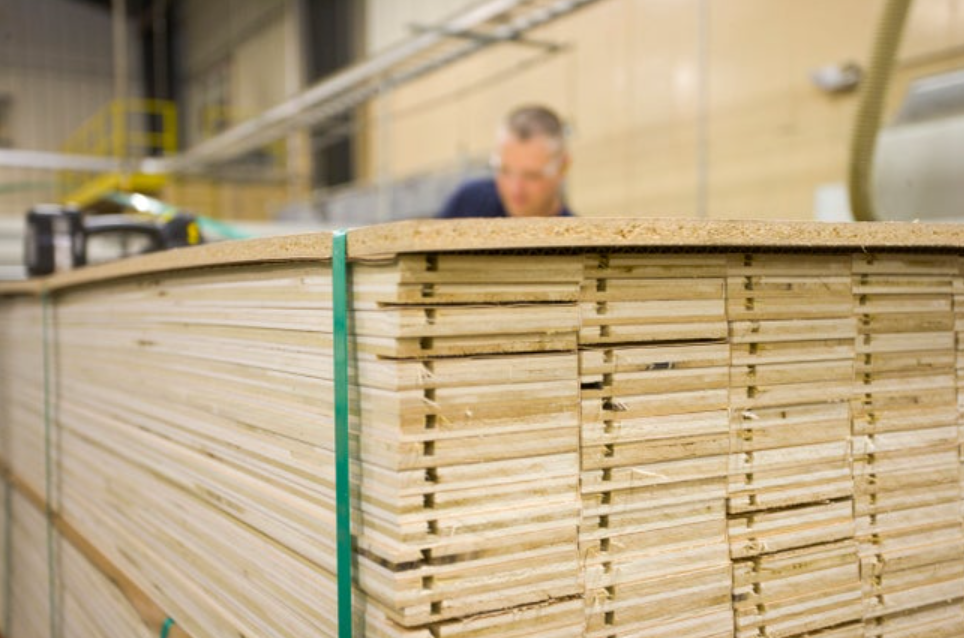
Eighty-one plywood suppliers operate in Colombia. Where they’re located matters more than the count. Bogotá alone has 35 suppliers, 43.2% of the market. Add Antioquia’s 14 (17.3%), and you’ve got 60.5% of all plywood supply concentrated in just two regions. If you’re sourcing outside Bogotá or Medellín, your options thin out fast.
Refopanel Changes the Equation
A new plywood factory opened in Zambrano, Bolívar in September 2024. Refopanel produces 27,500 cubic meters annually, with panel thickness from 9–25mm in standard 1.22m × 2.44m and 1.53m × 2.44m formats. Industry reports call it the only plywood factory in Colombia operating at this scale. The company’s own leadership has said the goal is import substitution, targeting roughly 70% of domestic demand. Their priority markets, in order: Bogotá first, then the Caribbean coast (Barranquilla, Cartagena, Santa Marta), followed by Antioquia and Valle del Cauca.
Who’s Actually Selling Plywood on the Ground
The local distribution network breaks down into a few recognizable types:
- Sival Triplex (Bogotá) — established plywood distributor in Bogotá with direct sales channels for project and end-client buyers
- La Tienda del Triplex — 14 retail locations, known for precision cutting, geared toward furniture makers and small-batch buyers
- SURTIMADERAS DEL OCCIDENTE SAS — regional player serving western Colombia’s wholesale and decoration segments
- ACEMAR — multi-location presence in Bogotá and Itagüí, a multi-point distribution model
- Primadera — technically an MDP/particleboard manufacturer, not plywood, but relevant as a complementary board supplier in the same buying channels
For buyers, that means local supply is real but geographically narrow, and much of it runs through retail-style distributors rather than direct hardwood plywood supplier relationships. Refopanel’s capacity may shrink delivery radius over time, but for now, most bulk plywood purchase decisions still weigh local availability against import options. That’s the tension we’ll unpack next.
How to Evaluate Reliable Plywood Suppliers: 6 Core Criteria Buyers Must Check
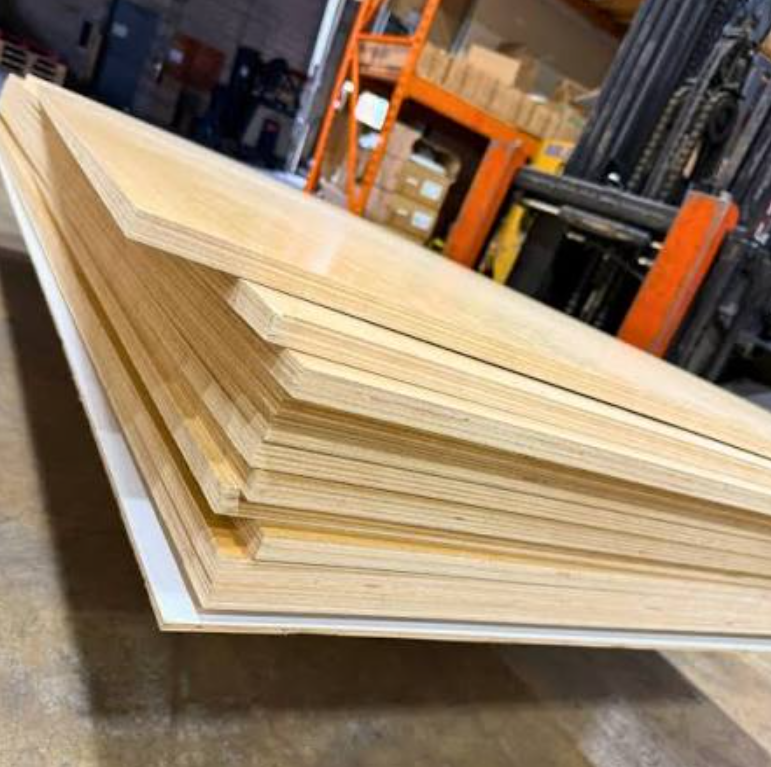
Most plywood disputes trace back to one root cause: buyers skipped verification and trusted a sales pitch instead of a paper trail. Here’s the checklist that separates a genuine plywood exporter from a middleman reselling someone else’s inventory.
1. Confirm You’re Dealing With an Actual Factory, Not a Trading Desk
Ask for the factory address — the production floor, not the showroom. A legitimate plywood factory will hand over gate photos, workshop images, loading dock shots, and a business license that matches the address on paper. Reliable manufacturers can arrange pre-shipment inspection at the production facility and provide date-stamped factory line photos on request.
Check capacity against order size. Divide monthly output by your order volume. Industry benchmarks run around 500 m³/month minimum capacity, with MOQs typically between 20 m³ and 500–1,000 sqm. If a supplier claims high volume but can’t produce consecutive monthly production records, that’s a red flag.
2. Six Quality Metrics You Cannot Skip
- Grading system: species, veneer grade, bond strength, sanding finish, intended use
- Thickness tolerance: commonly ±0.8mm (1/32 in) for panels under 13/16 in; ±1/16 in for sanded panels, ±1/32 in for unsanded
- Veneer thickness consistency: request per-layer records, typically ±5% tolerance
- Moisture content: structural plywood benchmarks around 9%; general-purpose range runs 5%–15%, verified by batch testing
- Defect limits: patch repairs, knots, splits, color variation — no defect chart means no real quality control
- Mill test reports: every container should ship with bonding strength results, thickness measurements, moisture readings, and inspection photos
3. Verify Export Experience to Latin America Specifically
Request 6–12 months of bills of lading and packing lists showing shipments to Colombia or Latin America. Confirm they handle commercial invoices, certificates of origin, and phytosanitary documentation in both Spanish and English — consignee details need to match exactly for customs clearance. Ask for on-time delivery rates and claim history; a standard benchmark is ≤30-day lead time with low claim rates.
4. Certifications That Actually Matter for This Market
- ISO 9001 for quality management
- FSC Chain of Custody for sourcing traceability
- ISPM 15 for wood packaging, with visible phytosanitary treatment marks
- CARB/TSCA or CE/EN 636 if the panels feed into US, Canadian, or EU-linked projects
5. Score Suppliers Instead of Trusting Gut Feel
Weight your evaluation: factory authenticity (20 points), capacity consistency (20), quality documentation (20), export capability (15), certification compliance (15), commercial stability (10 — MOQ, price validity, payment terms, claims process).
6. Request the Full Document Package Before You Commit
Business license, factory floor plan, production photos, capacity proof, product spec sheets, third-party test reports, recent bills of lading, and certification files. Any hardwood plywood supplier confident in their operation will hand these over without hesitation.
Local vs International Plywood Suppliers: Which Sourcing Strategy Fits Your Business
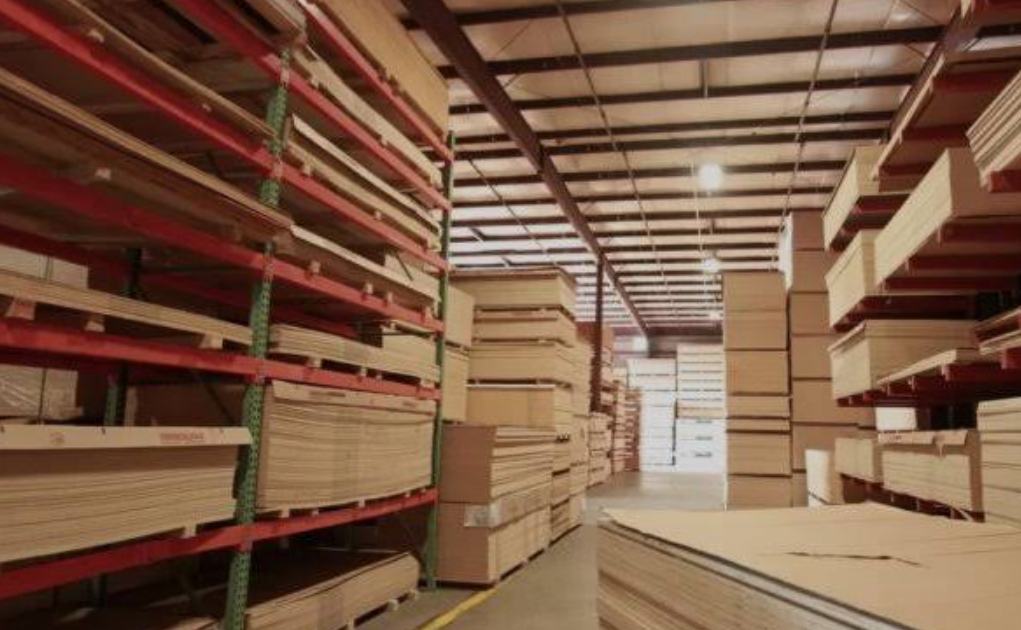
Not every buyer needs the same supplier. Your order size, deadline tolerance, and appetite for paperwork should decide whether you buy local, buy international, or run both at once.
When Local Colombian Suppliers Win
Local wins on speed and flexibility. You get domestic inventory or nearby production moving fast, without ocean freight, customs clearance, or port turnaround. That matters most for:
- Urgent restocks where a two-week wait kills a project timeline
- Small-batch furniture orders needing frequent sample confirmation
- Non-standard modifications: thickness tweaks, veneer changes, cut adjustments
- Delivery windows under 2–3 weeks, where imports can’t compete
When International Suppliers (Chinese Exporters) Win
International sourcing wins on price and range. Mature exporters require 1×20GP or 1×40HQ container MOQ, though mixed-container orders are common. Production runs 10–25 days, plus 20–40 days ocean transit depending on origin and destination port. Certification coverage tends to be broader too, including ISO 9001, FSC/PEFC, CARB/EPA P2, CE, JAS, EUDR. That’s useful if your projects need multiple compliance stamps at once.
The tradeoff is risk concentration. Longer lead times inflate inventory exposure during peak season or tight shipping capacity. Tariff exposure adds another variable: actual landed cost depends on HS code classification and origin, which the WITS database tracks by country. And sample-to-bulk consistency (bond strength, moisture content, formaldehyde emission) demands stricter inspection than a local relationship requires.
The Hybrid Model Most Experienced Buyers Use
One local supplier plus one or two verified international exporters. Local handles urgent orders, restocks, and after-sales replacement. International handles core volume, including your standing SKUs, annual framework orders, and price-sensitive bulk. This splits risk so that timing risk stays local and price and spec risk goes international.
Plywood Import Regulations and Customs Compliance for the Colombian Market
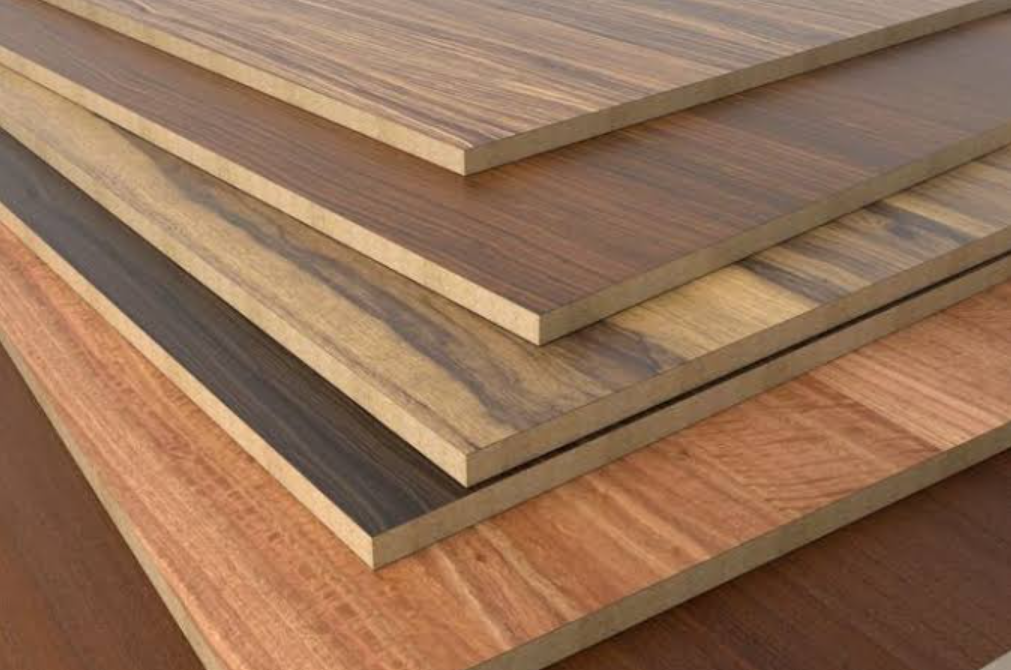
First-time importers often miss this: plywood itself rarely needs ISPM 15 treatment. The packaging around it does. Colombian customs classifies plywood as processed wood — glued, heated, and pressed — which puts it in the exemption category under ISPM 15 rules. Solid wood pallets, crates, and dunnage don’t get that exemption. That distinction determines whether your container clears in a day or sits in a bonded warehouse for a week.
What Qualifies for Exemption
Packaging made from plywood, OSB, particleboard, fiberboard, or veneer counts as low-risk and skips ISPM 15 treatment. Any wood packaging material 6mm or thinner also doesn’t require treatment, regardless of whether it’s solid wood. Anything solid wood above that thickness — pallet blocks, crating timber, dunnage — needs ISPM 15 marking, either heat-treated at 56°C core temperature for a minimum of 30 minutes, or fumigated with methyl bromide at no less than 10°C for at least 16 hours.
HS Code and Documentation Checklist
Plywood imports get tracked under HS 4412. Before booking a shipment, confirm three things with your supplier: the panel’s HS classification, whether packaging is fully processed wood or mixed with solid timber, and — if solid wood packaging is used — visible ISPM 15 stamping with treatment method noted. Build a packaging material declaration into your shipping documents every time. It should state whether the load is “processed wood only, exempt from ISPM 15” or backed by treatment certification. Skipping this is the fastest way to trigger a customs hold.
Where the Supply Chain Runs
Trade data from 2024 shows Chile and China dominate Colombia’s plywood import market — China at roughly 33% ($5.99M), Chile close behind at 32% ($5.89M). Add Ecuador, and those three countries account for 90% of all plywood entering Colombia. That concentration means customs officers see these origin patterns constantly, which can work in your favor if your paperwork matches expected norms.
Step-by-Step Supplier Vetting Checklist Before Placing a Bulk Order
Don’t rely on a first impression. Run this sequence before you send any money. It turns a sales pitch into a verified partnership.
Verify the Entity Before You Verify Anything Else
Do not accept a cropped screenshot. Request a full-page color scan of the business license.
Check the company name, legal representative, registered capital, and address against China’s official enterprise credit database. Search using the original Chinese characters, not the English translation. Discrepancies hide there. Confirm the license covers manufacturing. If it doesn’t, you’re dealing with a trading company, not a factory. You need to know who is actually making your order.
Cross-reference the factory address on the license with satellite maps and site photos. Reverse-search the photos, too. Stolen factory images are common.
Lock Specs Before You Approve a Single Sample
Your spec sheet needs exact dimensions, thickness tolerance (commonly ±0.1mm or ±5%), and the grading standard. Specify the adhesive type and brand, veneer species and grain direction, and moisture content (typically 8%–12%). Define defect tolerances with AQL sampling terms. Put all of that in writing, confirmed by both sides via email, before any sample is cut.
Test Small, Then Scale
Samples must come from actual production conditions. Same materials, same line, same supply chain as the bulk order.
Test dimensions, appearance, durability, and moisture against your spec sheet.
Then place a trial order at 5%–10% of your full volume before committing more. Confirm the defect rate, packaging, and documentation match what was promised. Run a pre-shipment inspection on the first batch before it leaves the warehouse.
Compare at Least Three Suppliers Side by Side
Score each on price (30%), quality/defect rate (25%), lead time (20%), compliance (15%), and communication (10%). Cut any supplier that falls below your threshold.
Pay Into the Right Account
Payments must go to the company’s corporate account, matching the licensed entity exactly. Personal accounts are an automatic disqualifier. No exceptions.
Red Flags and Common Pitfalls When Sourcing Plywood for the Colombian Market
A container that clears customs in a day and one that sits for a week often ship the same product. The difference is in the paperwork, and most buyers learn that after the fact.
Documentation Gaps That Trigger Customs Holds
Colombia requires advance declaration 48 hours before arrival. Suppliers who can’t produce accurate documents on that timeline stall your shipment before it even reaches port. Watch the value thresholds too. Cargo near or above $1,000 CIF/FOB typically needs full customs brokerage handling, and anything at $5,000 FOB or higher requires an Andean Customs Value Declaration. Smaller suppliers skip this step, forcing last-minute corrections and port storage fees.
Wood products also draw scrutiny from ICA at the port. Missing phytosanitary certificates for the country of origin remain one of the most common compliance failures in Colombian timber imports.
Packaging and Invoice Details That Cost You Later
Vague commercial invoices — just “plywood,” no dimensions, no standard, no per-unit price — invite classification disputes and re-inspection. Packing lists need exact piece counts, gross and net weight, and dimensions matching the physical cargo. Mismatches trigger container inspections and storage billing.
ISPM 15 marks on wood pallets and crates must be visible. No heat-treatment or fumigation stamp means possible rejection or return shipment. A “low-price winner” supplier who skips these details often ends up costing more once demurrage, re-photography, and re-declaration fees stack up.
Warranty Clauses Buyers Forget to Lock In
Without written terms specifying claim windows, evidence requirements, and replacement responsibility, warped panels or moisture defects become verbal disputes you can’t enforce. Standard practice is a 30-day written notice with photos and proof of purchase. Get the thickness tolerance, bonding grade, and moisture content thresholds documented before the order ships.
Conclusion
Sourcing plywood for the Colombian market comes down to three things: verified production credentials, consistent quality control, and a supplier who understands the logistics of getting sheets from a factory floor to your job site without delays or surprise costs. Skip any of these, and you’re gambling with your margins, your timelines, and your client relationships.
The suppliers who last in this business show up when they say they will, with product that matches spec every single time. That’s the standard worth holding every plywood exporter or hardwood plywood supplier to, whether they’re based in Bogotá or halfway across the world.
Before your next bulk plywood purchase, run your shortlist through the vetting checklist we’ve outlined here. Request samples, ask for certifications, and don’t be afraid to ask hard questions about shipping to Latin America. The right partner will welcome the scrutiny, and Baier is ready to answer every one of those questions directly.