
laminate flooring on a Bunnings shelf at $45/m² often left a factory in Guangdong or Selangor for less than $12/m². The gap comes from freight, tariffs, GST, and a few middlemen. You can close that gap legally and safely yourself, or learn an expensive lesson about AS/NZS4586 compliance and AC ratings the hard way.
This guide breaks down the landed cost of a real 40-foot container of laminate flooring in Sydney: FOB price, ocean freight, duty, clearance fees, all of it. Then it hands you a calculator template to run your own numbers. Whether you’re a homeowner wondering if importing is worth the hassle, or a dealer sourcing your next shipment from China or Malaysia, you’ll walk away knowing your true landed cost per square meter, not a retailer’s estimate.
Australia Laminate Flooring Price Benchmarks: Retail, Wholesale and Installation Cost per Square Meter
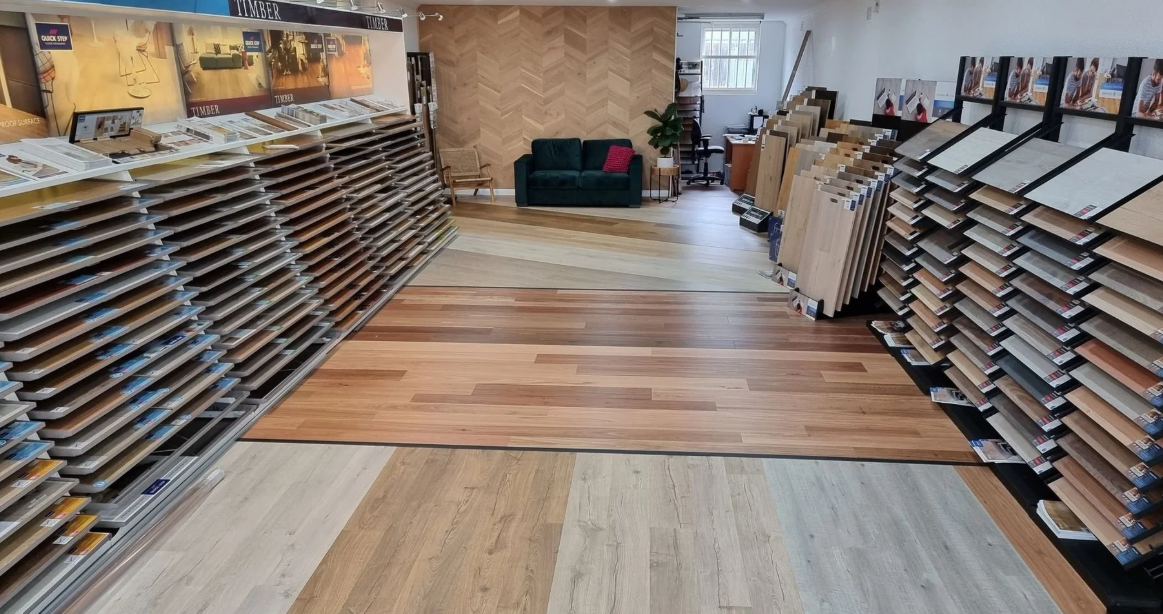
Three numbers matter here: supply-only price, installation labour, and the fully installed total. Mix them up and your budget falls apart fast.
Supply-only pricing across Australian retailers falls between $25–$80/m², though some listings push that ceiling to $90/m². The tiers break down like this:
Budget boards: $15–$35/m²
Mid-range/standard: $30–$55/m²
Premium waterproof laminate flooring – the kind Australian buyers ask for most – $55–$90/m²
Real listings confirm it. Costco Australia’s laminate flooring wholesale price sits at $37.70/m², $39.10/m², and $62.14/m² depending on the range. Bunnings runs wider, with shelf tags at $40/m², $48/m², $95, and even $96 for select premium and waterproof lines. That’s your practical retail spread, in-store and online, before you’ve paid a single dollar for installation.
Installation labour is its own line item, and estimates vary more than boards do:
Basic installs: $20–$30/m²
Mid-range jobs: $25–$45/m²
Premium or complex layouts (stairs, herringbone, subfloor prep): $35–$45+/m²
Most tradies quote somewhere in the $25–$40/m² band for a standard residential job.
Fully installed totals – boards, underlay, trims, prep, and labour combined – land at $55–$110/m². For metro jobs or higher-spec waterproof laminate flooring – the kind homeowners choose for kitchens and bathrooms – you’re looking at $70–$150/m². A safe mid-market planning figure is $60–$110+/m² all-in.
Here’s the tier breakdown once installation is factored in:
Budget: $35–$55/m² installed
Mid-range: $50–$85/m² installed
Premium/waterproof: $85–$150/m² installed
Now hold that $25–$80/m² retail figure next to the $12/m² factory price from Guangdong. That gap is what the rest of this guide unpacks – freight, duty, GST, and clearance – line by line.
Where the Price Gap Comes From: Local Retail vs Imported Laminate Flooring
Four layers sit between a factory in Foshan and a showroom in Parramatta. Strip them out one by one and the $45–$80/m² retail tag starts making sense.
Layer one is MOQ. Chinese laminate flooring suppliers list their prices in tiers. Order 500m² and you pay US$2.60 to 6.80/m². At a 2,000m² container-load MOQ, the price drops to US$3.00–4.00/m². A sample run of 10 or 50 pieces pushes the same board to US$5.00–10.00 per unit, and higher-spec finishes run US$20–300. Small orders always pay a premium. That’s the first gap.
Layer two is the middleman stack. Local retail carries duty, freight, warehousing, and showroom margin baked in. Direct-import wholesalers skip most of that, which is why their pricing sits closer to factory levels than Bunnings ever will.
Layer three is who you’re buying from. Suppliers like Dongjia (30+ export countries) and LUCKYFOREST (20+ years wholesale) quote near-factory rates because they cut out the local distributor.
Layer four is overstock. European wholesalers reselling residues, overproduction, and bankruptcy stock undercut even standard wholesale. It’s a channel worth knowing if margin is your priority.
40-Foot Container Case Study: China to Sydney Landed Cost per Square Meter
Numbers beat guesswork. A standard 40ft container has an internal footprint of 12.03m × 2.35m × 2.39m, which gives you about 28.3 m² of usable floor area once you stack laminate flooring cartons efficiently. That single figure – 28.3 m² – is the denominator for every per-square-meter calculation in this case study.
Ocean freight from South China to Sydney runs USD 2,000–3,200 for a 40ft FCL shipment out of Shenzhen or Guangzhou. Some 2026 market benchmarks push that range to USD 2,925–3,575 for Sydney-bound cargo. Divide either range by 28.3 m², and freight alone costs USD 71–126 per m² before anything else touches the invoice.
Destination charges add another layer. Budget AUD/USD 450–750 for Australian terminal handling, customs clearance, and local delivery. Some freight forwarders also quote a separate AUD 100–200 port/customs processing fee per shipment.
Stack it all together and the logistics subtotal – freight plus destination charges, before duty, GST, or cargo value – lands at USD 2,450–3,950 for the whole container. Spread across 28.3 m², that’s USD 87–140 per square meter in pure shipping cost.
That range is your benchmark. If a Laminate flooring supplier Australia quote or a freight forwarder’s number falls outside USD 90–140/m², ask why. Either they’re padding margin, or they’re quoting LCL rates (around AUD 90–180 per CBM) instead of a full container – which changes the math entirely.
Import Laminate Flooring Australia Cost Calculator Template
Duty and GST aren’t optional line items you can estimate loosely. Get the base wrong and your landed cost per m² is wrong too.
Australia charges 10% GST on the Value of the Taxable Importation (VoTI) – customs value plus duty plus freight and insurance to Australia, not just the goods price. Duty typically runs at a 5% benchmark, but your actual rate depends on the HS tariff code, and many laminate flooring shipments clear at 0% under FTA origin rules. Shipments valued at A$1,000 or less generally skip border duty and GST collection entirely.
Your calculator needs these fields: supplier unit price times quantity, HS code and customs value, duty percentage per HS code, ocean freight and marine insurance, port and clearance fees, GST on VoTI not goods cost, and a total landed cost per m² or per carton.
Landed cost = goods cost + freight + insurance + duty + GST + clearance charges.
Australia Import Tariff, GST and Customs Documentation for Laminate Flooring
Get the HS code wrong and everything downstream breaks – duty rate, GST base, even whether your shipment clears on time.
Laminate flooring with an MDF or HDF Core and a laminate wear layer falls under HS code 4411.13.10, with a general duty rate of 5%. Wood-veneered laminated flooring on an MDF support sits under 4412.99.39. If you’re importing vinyl or plastic flooring instead, that’s 3918.10.00, also at 5%. Confirm which one applies before you book freight, not after.
Australia’s 10% GST is calculated on the taxable importation value: customs value plus duty plus international freight and insurance plus customs-related charges. It’s not just on the goods cost.
Free trade agreement origin can drop that 5% to zero. China-origin laminate flooring imported under ChAFTA qualifies for 0% duty if rules of origin are met and a certificate of origin is provided.
Documents Customs Will Ask For
Customs will ask for a commercial invoice, packing list, bill of lading or sea waybill, import declaration (N10), certificate of origin (if you want the FTA duty reduction), and ISPM-15-compliant wood packaging evidence if you’re using pallets or crates.
China vs Malaysia: Shipping Cost, FOB Price and FTA Trade-Off
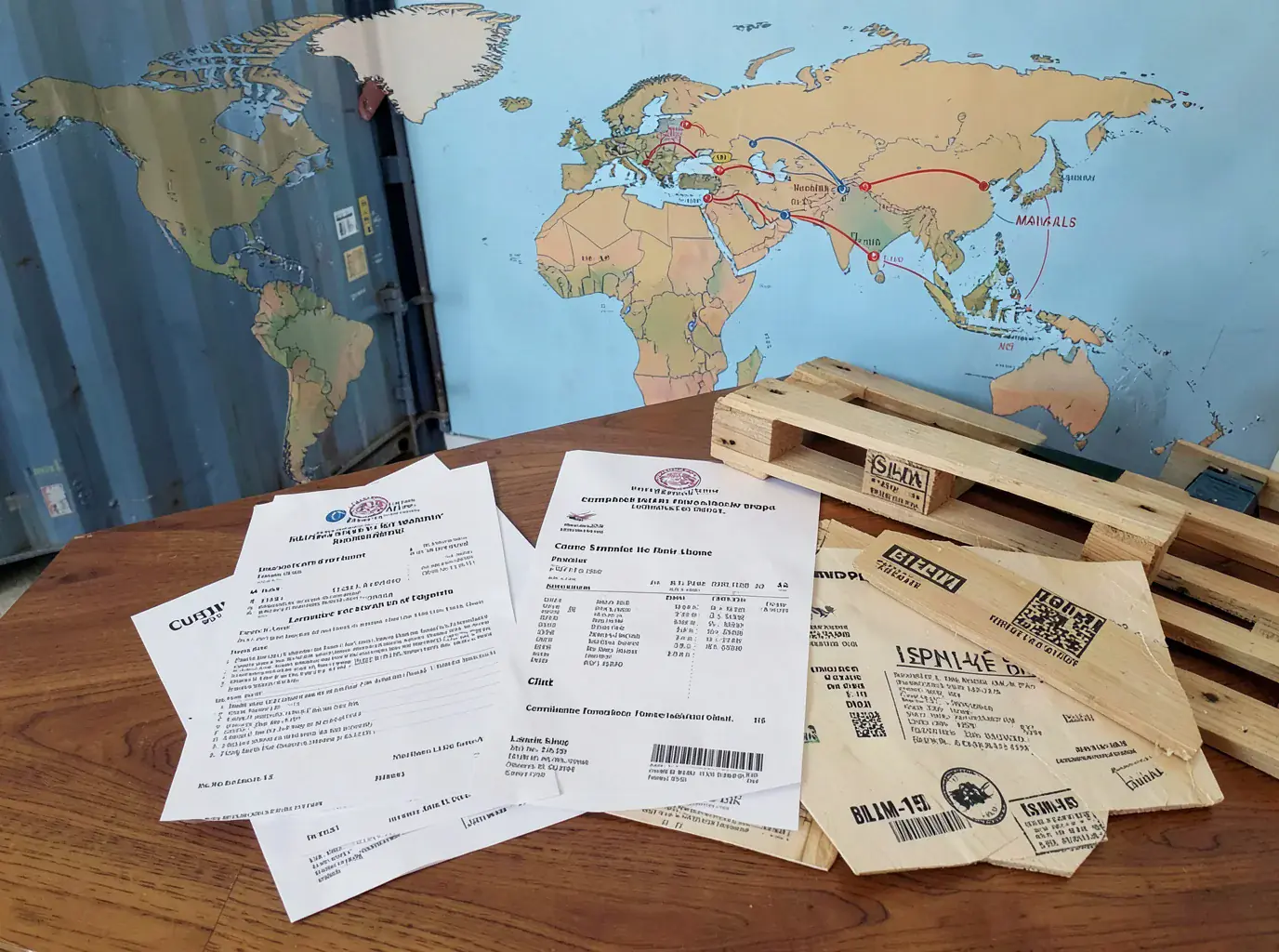
Sourcing from Malaysia instead of China changes your freight math, not just your factory price.
China → Port Klang runs US$400–800 for a 20GP and US$700–1,000 for a 40GP, with transit around 8–10 days. Spot rates swing hard – one 2026 route guide showed 40GP quotes at US$1,170–1,430, about 37% above the prior month. LCL sits at US$25–60 per CBM depending on the guide you trust.
Flip the lane and it gets expensive fast: Malaysia → China costs US$1,200–1,800 per 20ft FCL, more than double the reverse trip.
Here’s where FOB bites. Under FOB terms, the supplier’s quote looks cheap because they only cover loading at origin – you absorb the ocean freight, and that number moves with fuel prices and container shortages.
A real example makes this concrete: FOB Shenzhen at RM 400,000, plus RM 7,500 ocean freight (Yantian → Port Klang, 40ft), RM 1,100 origin charges, RM 1,200 destination THC, RM 450 clearance, RM 800 haulage. Duty was 0% under ACFTA with Form E – SST still applied at 10% on CIF value.
The trade-off, simplified:
– China FOB – lower unit price, higher freight volatility
– Malaysia sourcing – faster regional freight, but Malaysia→China legs cost more if you’re re-exporting
– Use FTA paperwork – ACFTA/RCEP/ATIGA documentation can zero out duty and offset freight gaps entirely
AC Rating, Waterproof Claims and AS/NZS Compliance Verification
A printed “waterproof” sticker on a laminate flooring carton means nothing without a number behind it. That number is an IP code, and you need a test report to back it up.
AS/NZS 60529 is the standard your supplier’s waterproof claim should trace back to. It classifies resistance to dust and water ingress. For flooring, look for IPX4 for splash resistance, the bare minimum for wet-area suitability. IP65 or IP66 gives strong water-jet resistance. IP67 or IP68 is immersion-rated, the level that genuine “100% waterproof laminate flooring” claims should carry.
Don’t accept a number on a datasheet alone. Ask for the IP test certificate with pass/fail results and test conditions. Make sure the testing comes from a NATA-accredited or internationally recognized lab. Check the test method reference matches AS/NZS 60529, along with the testing lab’s identity.
AC rating works the same way. It measures wear-layer durability against abrasion. AC3 suits residential traffic; AC4 and AC5 suit commercial. Never take a supplier’s AC claim at face value. Cross-check it against the same third-party test paperwork you’re demanding for the IP rating.
Supplier RFQ Checklist for Laminate Flooring Bulk Orders in Australia
Send a vague email asking “what’s your best price” and you’ll get a vague quote back. A proper RFQ to any laminate flooring supplier Australian buyers should trust needs specific line items, not open-ended questions.
Product standard to request first: compliance with EN 13329 (Laminate Floor Coverings – Specifications, Requirements and Test Methods), the reference standard most Australian industry sources cite. Also request the ATFA Laminate Flooring Industry Standard (2015) for installation guidance. ATFA expects practices to follow its standard plus manufacturer instructions.
Lock these specs into every RFQ:
Board thickness – standard range for commercial lines is 8mm or 12mm. State it exactly; don’t accept “standard”
AC rating for bulk commercial orders – push for AC4–AC6, not AC3
Subfloor tolerance – max 3mm variance under a 1-metre straight edge for floating installs, 3mm under 3-metre for direct-stick
Moisture barrier – require 200-micron plastic sheeting if floating over concrete
Fire rating – Cfl-s1 classification data
Slip resistance – R9/R10 test results
Chair castor resistance – above 25,000 cycles for office use
Emissions data – formaldehyde ≤0.05ppm (EN 717-1), VOC ≤300ppm (AgBB)
Demand a full proof pack before wiring any deposit:
-
Current technical data sheet
-
Third-party test reports covering abrasion, moisture, fire, slip, emissions
-
PEFC/Responsible Wood or FSC chain-of-custody certificate with expiry date
-
Warranty terms split by residential vs commercial use
-
Country of origin and factory address
-
MOQ per decor/SKU, plus whether custom colors or embossed textures raise that MOQ
-
Packaging quote: m² per carton, cartons per pallet, container loading count
One line covers most of it: “Confirm product complies with EN 13329, provide third-party test reports, and quote MOQ with palletization for Australia delivery.” Suppliers who answer that in full paragraphs, unprompted, are the ones worth a sample order.
MOQ, Container Capacity and Inventory Risk in Australia
A 20ft container holds roughly 33.2 m³, a 40ft holds 67.6 m³. State road weight caps limit your order.
Queensland allows about 25t per 20ft GP; Western Australia drops that to 22t; NSW sits at 23.5t. Cargo weight decides how much laminate flooring you can legally truck out of the port.
MOQ economics follow freight costs. LCL consolidation typically kicks in around 10–15 CBM. Past that threshold, you’re effectively buying a partial container, and the math shifts from unit pricing to container-load procurement.
Take the 20ft for your first order. Lower CBM exposure if sell-through or quality disappoints.
The ACCC has flagged unreliable vessel schedules as a reason Australian importers now carry higher safety stock than they’d like.
Consumer Buying Decision: When to Buy Locally and When to Import
Skip the analysis paralysis. Two numbers settle most of it. 75% of buyers say they’ll pay more for trusted quality, but 62% still switch to a cheaper import once price becomes the deciding factor. Flooring isn’t perishable, so the “buy local for freshness” logic that drives food purchases doesn’t apply here. The trade-off is simple. Buy local for speed and warranty backup; import for the laminate flooring wholesale price advantage.
Buy local when:
You need boards in this week, not in six.
Warranty claims and replacement stock matter more than saving $10/m².
You’re doing a small job (under 50m²) where import MOQs don’t make sense.
Recognised Laminate Flooring Brands Australia stocks give you AS/NZS paperwork without asking.
Consider importing when:
Your order clears 500m²+ and volume makes freight economics work.
You’ve verified AC rating and waterproof claims independently, not on trust alone.
You can absorb 6–10 weeks of shipping cost from China without a supply gap.
Price gap between local supply-only ($25–$80/m²) and landed import cost justifies the risk.
Quality decides satisfaction either way. A cheap import with the wrong AC rating costs more than the $30/m² you thought you saved.
Laminate Flooring vs Vinyl Plank and Engineered Timber for Australian Projects
Three materials, three different jobs. Pick the wrong one and you’re either overpaying for durability you don’t need, or underpaying for water resistance you desperately do.
Construction differences matter more than marketing copy suggests. Laminate is a synthetic plank with an HDF/MDF core, a printed décor layer, and a wear layer on top. It looks like timber but isn’t. Vinyl plank (LVP/LVT) is PVC-based and resilient, and waterproof formats are now standard in Australian guidance. Engineered timber uses a real timber veneer over a plywood or HDF base. It’s actual wood with better long-term resale value.
Performance splits along predictable lines:
Water resistance: vinyl wins outright. Engineered timber is moderate. Laminate sits low to moderate and isn’t recommended for wet areas.
Scratch resistance: laminate typically outperforms engineered timber and standard vinyl in daily wear.
Underfoot feel: vinyl is softer and quieter. Laminate is harder. Timber feels most natural.
Refinishing: only engineered timber can be sanded and refinished.
Price bands, supply-only:
-
Laminate: $20–$50/m²
-
Vinyl plank: $20–$60/m²
-
Engineered timber: $70–$220+/m², with many products clustering at $67–$121/m²
Once installed, engineered timber adds another $40–$60/m² on top. That’s noticeably higher than laminate or vinyl labour rates.
Use-case fit, no ambiguity:
Laminate works for budget residential, rentals, and high-traffic dry areas.
Vinyl suits kitchens, laundries, apartments, and moisture-prone zones.
Engineered timber fits premium builds, display homes, and resale-driven projects.
Australian wholesalers like Preference Floors, Terra Mater, and Australian Flooring Outlet stock all three side by side. That’s useful if you want to compare landed Samples before committing container space to one product category.
Conclusion
When you add FOB price, ocean freight, 5% import tariff, and 10% GST into one spreadsheet, the gap between local retail and true laminate flooring wholesale price in Australia is often 2 to 3 times. Our Sydney container case study confirmed that.
Whether you are a homeowner deciding if a DIY import is worth the hassle, or a contractor sourcing your third container this year, verify AC rating and AS/NZS4586 compliance before you wire a single dollar, request real samples, and run your numbers through the calculator template above instead of trusting a supplier’s quote sheet.
Save this cost breakdown, screenshot the RFQ checklist, and use it on your next call with a laminate flooring supplier that Australian importers trust.