
Accurate pricing benchmarks are essential for buyers sourcing flooring and wood panels across Africa in 2026.Most procurement teams are flying blind on it. A supplier in Lagos quotes one number. A distributor in Johannesburg quotes another. Neither tells you what import duties will add to your landed cost. That gap between quoted price and real cost is where budgets get blown and margins disappear.
This guide fixes that. We’ve pulled together current flooring price per square meter benchmarks across South Africa, Nigeria, and Kenya, broken down wood panel import duty structures line by line, and mapped out where timber prices are heading through 2026. Whether you’re negotiating with a supplier, budgeting a build, or scoping a market entry, you’re getting numbers you can use — not averages pulled from a press release.
Africa Flooring & Wood Panel Market Overview (2026)
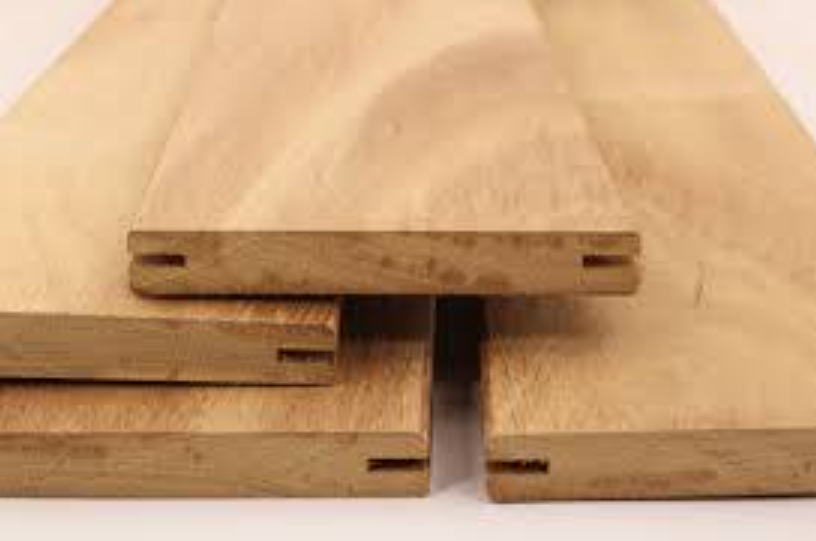
The broader Middle East & Africa flooring market sits at USD 44.78 billion in 2024, tracking toward USD 68.06 billion by 2031 on a 6.4% CAGR. Run that math forward and 2026 lands around USD 50.71 billion — the baseline figure anyone tracking African timber market trends should have memorized.
Wood flooring is smaller but moving faster. Africa’s wood flooring segment was worth USD 900 million recently, with Mobility Foresights projecting growth to USD 3.2 billion by 2031 at an aggressive 11.5% CAGR. That puts 2026 somewhere near USD 1.78–1.80 billion — call it 3-5% of total MEA flooring value, concentrated in wood and wood-look categories.
Panel Market Structure
wood-based panels are the bigger prize.Industry estimates place Africa’s wood panel consumption at around 12 million m³ in 2024, with imports filling part of the supply gap. That production-consumption gap — roughly 2 million m³ — gets filled by imports, and it’s shrinking slowly as local capacity builds.
By 2026, expect the market value around USD 6.40–6.45 billion. Fibreboard (MDF/HDF) dominates this mix at 58-59% of both consumption and production, well above global averages. Plywood, particleboard, and OSB split the remaining 41-42%.
Trade volatility matters too. 2024 saw imports contract -23.8% and exports drop -40.6% — sharp swings that any flooring supplier across Africa needs to price into contracts. Zimbabwe stands out as the fastest-growing producer and consumer among major African panel markets, driven by local teak and softwood.
South Africa, Nigeria, and Côte d’Ivoire lead production. Egypt joins South Africa and Nigeria as top consumers — setting up the country-level cost comparisons ahead.
Africa Flooring Price by Product Category (2026)

South Africa gives us the clearest per-category pricing picture on the continent, and the spread between product types is bigger than most buyers expect.
laminate flooring sits at the budget end. Material-only pricing runs R190–260/m² for 6–7mm boards, climbing to R260–340/m² for mid-tier 8mm AC3–AC4, and R340–450/m² for premium 10–12mm AC4–AC5. Add installation labour, typically R50–70/m² including underlay and trim, and a mid-tier install lands around R380–420/m² total.
SPC/LVT vinyl costs more but earns it through water resistance. Budget-tier wholesale material runs ZAR 120–180/m², retail ZAR 200–300/m², with installation at ZAR 80–120/m². Mid-tier pushes retail to ZAR 300–450/m² plus ZAR 100–140/m² labour, a realistic total near R500/m².
Bamboo flooring delivers R450–1,100/m² fully installed, with a median around R775/m². That’s a genuine middle ground – close to hardwood durability, well under hardwood pricing.
Solid and engineered wood commands the premium, with installed prices from R950 to R2,800/m² and a median of R1,300–1,600/m². African hardwood Samples (Zim Teak) price individual boards at R300–825/piece, translating to roughly R600–1,200/m² in material cost once installation waste is factored in. Imported engineered wood FOB China runs $15–30/m² depending on wear-layer thickness. Before duties, freight, and dealer margin, that landed cost roughly doubles.
Carpet, for comparison, averages R500/m² installed, cheaper than bamboo but with higher long-term maintenance costs.
Base Panel Pricing: Plywood & MDF
For subfloor and construction use, these get compared often against flooring line items. Plywood runs from R200–350/m² for economy grade to R350–600/m² for furniture-grade imported birch. MDF runs from R150–280/m² for standard to R250–400/m² for moisture-resistant/high-density. Thickness moves both categories 30–70% depending on grade and whether the board is locally sourced or imported.
Country-Level Price Snapshot: South Africa / Nigeria / Kenya
Price per square meter changes as much within a country as it does between countries. South Africa’s Sandton and East Rand aren’t buying the same flooring, and neither is paying the same labour rate. Here’s how flooring costs break down by city and by country.
South Africa: Regional Cost Tiers
South Africa’s building cost data splits into distinct tiers, and flooring tracks almost exactly with them. It typically runs 10–15% of total construction cost.
| Region | Building Cost Tier (ZAR/m²) | Estimated Flooring Cost (ZAR/m²) |
|---|---|---|
| Sandton (Johannesburg CBD) | 15,600–25,000 (luxury/premium) | 1,500–3,000 |
| Pretoria / Centurion | 9,300–15,600 (standard/luxury) | 900–2,000 |
| Randburg / East Rand | 7,400–11,200 (economy/mid) | 700–1,500 |
The gap isn’t random. Sandton and Centurion carry a higher share of premium residential and office builds, which pushes projects into imported tile, engineered wood, and high-end laminate territory. Randburg and East Rand skew toward economy and standard builds, where locally-produced tile and basic laminate dominate. Same country, same currency, more than double the flooring spend depending on postcode.
Nigeria: Material-Driven Pricing
Nigeria’s flooring market runs on a different model entirely. Buyers purchase materials directly from building markets in Lagos or Abuja, then hire installers separately. No bundled quote.
- Laminate flooring: ₦5,000–8,000/m² (economy) up to ₦12,000–18,000/m² (waterproof/branded)
- 3D wall panels: ₦800–2,000 per 300×300mm or 500×500mm sheet, roughly ₦3,000–7,000/m²
- Floor tiles: ₦3,000–6,000/m² economy, ₦10,000–18,000/m² for wood-look or imported
Installation labour is cheap relative to material. Tiling runs ₦1,500–3,000/m² and laminate installation ₦1,000–2,500/m². Because purchasing and hiring are separate transactions, material typically accounts for 60% or more of total cost, with labour absorbing the rest. Mid-tier flooring lands around ₦7,000–12,000/m² all-in.
Kenya: Tiling and Labour Split
Kenya’s residential build costs run KES 35,000–60,000/m² for mid-market Nairobi housing and KES 60,000–90,000/m² for high-end. Interior finishes account for 20–30% of that total.
Floor tiling specifically:
- Economy tile: KES 1,200–2,000/m² material, KES 600–1,500/m² labour
- Mid-tier polished/wood-look tile: KES 2,000–3,500/m² material, labour rising for pattern-laid work
- Premium/imported tile: KES 3,500–6,000/m²
As grade climbs, material’s share of total cost rises too, from 60–70% at economy level to 70–75% for mid-and-high grades. Mid-tier tiling lands at KES 3,000–6,500/m² total, comparable to South Africa’s Randburg tier once currency is normalized.
Wood Panel Africa Import Cost Structure Breakdown
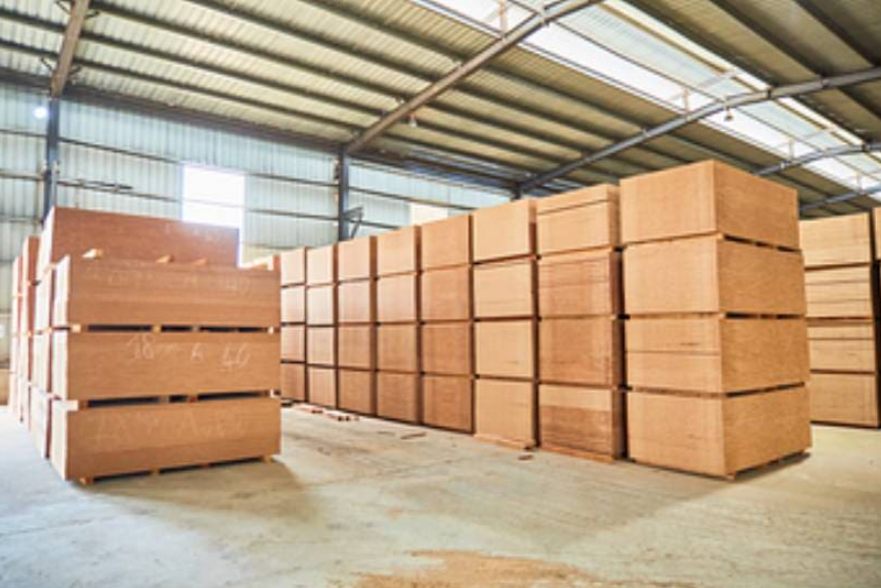
For a 25 m³ container of Sapelli or Iroko hardwood, the FOB value runs $12,000–14,000 per container. That’s just the starting line. Shipping, port handling, customs clearing, and insurance add another $1,500–3,000. Then there’s wood panel import duty in Africa, which adds $500–1,400, depending on destination. Total landed cost before it reaches your warehouse is $14,000–18,400 per container. If you’re running this as an ongoing operation, not a one-off, budget a minimum of $20,000 per container and keep $50,000–100,000 in working capital.
HS Codes and Duty Rates You Need to Know
Classification determines everything. Assembled flooring panels typically fall under HS 4418.81, taxed at South Africa’s general 15% ad valorem rate, though SADC-origin goods often qualify for 0% duty. Plywood sits under HS 4412, with rates across African markets ranging 5–20%. Solid hardwood flooring lands in HS 4409 or 4418.81, usually 10–15%. Laminate is messier—it can fall under 4418.81 or 4411/4412 depending on core material, so confirm with your destination country’s customs portal before quoting a landed price.
VAT Adds Another Layer
South Africa calculates import VAT on an adjusted taxable value. The formula is ATV = (FOB × 1.10) + duty. On a R2,000 FOB shipment, duty is R300, ATV becomes R2,500, and VAT at 15% adds R375. Total duty plus VAT is R675 on top of FOB. East African VAT runs 16–18%; West Africa sits near 18%, sometimes with building material exemptions worth chasing down.
Landlocked Countries Pay More
Rwanda, Uganda, and similar inland markets absorb a 15–25% landed cost premium over coastal buyers. Standard particleboard delivered to a coastal warehouse costs $280–420/m³; inland destinations add $60–120/m³ in logistics premium, roughly $1,500–3,000 extra per container. That’s the equivalent of paying for a second shipping leg.
African Timber Market Trends to 2026
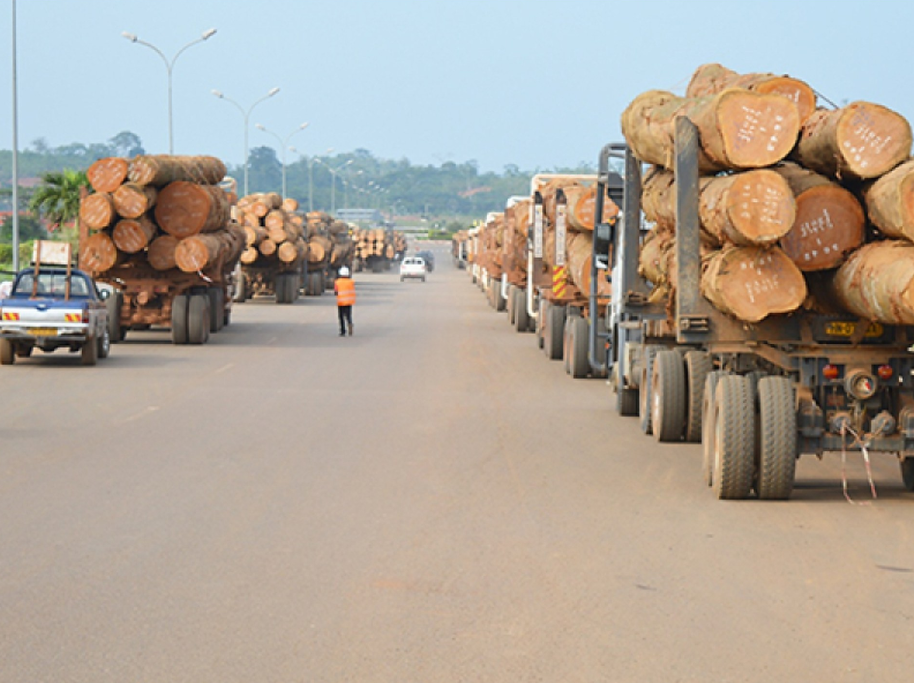
Freight costs and certification rules are rewriting the price curve for African hardwoods. Industry indicators point to a 15–20% price increase for African hardwood by end-2026, and the ITTO CIF data backs that up hard: Okoume jumped from $372 to $498/m³ (+33.9%), Merswa climbed 40% to $280/m³, and Teak edged up 5.2% to $466/m³. Southeast Asian supply is tightening, pushing buyers toward West and Central Africa, and that demand shift is baked into every quote you’ll see through 2026.
That raw timber inflation doesn’t stay contained to logs — it bleeds into finished flooring costs. Raw timber typically runs 35–45% of ex-factory flooring cost. A 30% jump in wood input costs adds roughly 12% to total product cost when timber sits at 40% of the mix. For premium hardwood flooring where timber share nears 50%, a 20% raw material increase translates to about 10% higher shelf prices.
This is exactly why LVT/SPC and engineered wood are eating into solid hardwood’s market share. LVT runs $10–18/m² wholesale versus $20–35/m² for premium solid hardwood, and installation costs 20–30% less overall. Expect LVT/SPC and engineered wood combined to climb from under 20% of new-build flooring in 2020 to 35–45% by 2026, concentrated in South Africa, Nigeria, Kenya, and Morocco.
Currency swings compound everything. Naira depreciation of 50% doubles local import cost for the same dollar-denominated panel price, forcing substitution toward cheaper alternatives. Meanwhile, export-restriction policies in Gabon, Cameroon, and Ghana are pushing local processing up, with import substitution potentially cutting timber import bills 10–20% in leading hubs by 2026.
Cross-Country Price and Cost Comparison Table (South Africa vs Nigeria vs Kenya)
$30 gets you mid-tier laminate installed in Johannesburg. In Nairobi, the same product runs $22. The gap is labour, not materials, and once you convert local pricing to a common currency it repeats across every flooring category.
| Product (mid-tier, installed) | South Africa | Nigeria | Kenya |
|---|---|---|---|
| Laminate flooring (AC3-AC4) | $20–30/m² | $16–24/m² | $14–22/m² |
| LVT/SPC vinyl | $25–35/m² | $20–28/m² | $18–26/m² |
| Engineered wood (3-layer) | $40–60/m² | $35–50/m² | $32–45/m² |
| Solid hardwood (18–20mm) | $55–80/m² | $50–75/m² | $45–70/m² |
South Africa’s wages run 2 to 4 times Kenya’s, and that alone pushes installed pricing 20 to 40 percent higher across every category. Nigeria falls in between — Lagos service costs run roughly 20 to 30 percent above Nairobi.
Material pricing barely moves the needle. All three markets import laminate, LVT, and engineered wood from China, Europe, or the Middle East, so retail material spreads stay within 10 to 15 percent. The real gap is in installation and distribution costs, not the board itself.
Nigerian quotes are often material-only, so add $4 to $10 per square metre for installation. Kenyan pricing typically reflects Nairobi rates; rural markets run 10 to 20 percent cheaper. South African quotes usually bundle full installed packages but swing 15 to 20 percent either way depending on project condition. And Naira volatility (NGN sits near 1,500–1,600 per USD) means USD-denominated contracts protect margins better than local-currency quotes.
A Practical Guide to B2B Procurement and Investment Decisions
Every serious buyer in this market builds their cost model around South Africa. The country’s manufacturing wages ($3–4/hour vs. $0.8–2/hour in Ethiopia or Tanzania) and mature production base make it the region’s de facto mid-cost benchmark for any Flooring Supplier across Africa.
Building Your Cost Baseline
Take mid-tier 8mm AC3 laminate as an example. South African wholesale runs $5.5–7.5/m². Back that into a factory-gate cost of about $4.5–5.0/m², assuming raw materials (45–55%), labour (10–15%), energy/depreciation (10–15%), and margin (10–15%). Swap in a lower-wage country’s labour index (0.4–0.5 vs. South Africa’s 1.0) and manufacturing cost drops about $0.3/m², before adding back 5–10% for imported decorative paper and adhesives. From these inputs, you get a workable African price band that runs $4.5–5.5/m² in high-cost zones (South Africa, Morocco), $4.0–4.8/m² in mid-tier zones (Egypt, Kenya), and $3.8–4.5/m² in low-cost zones (Ethiopia, Tanzania).
2026 Landed Cost Template by Product
| Product | FOB Range | Shipping/Insurance | Landed Cost Example |
|---|---|---|---|
| Laminate | $4–7/m² | $0.2–0.8/m² | ~$5.9/m² (10% duty) |
| Vinyl/SPC | $4.5–7.5/m² | $0.2–0.8/m² | Add duty + local logistics |
| Engineered wood | $15–25/m² | $0.2–0.8/m² | ~$20.6/m² (5% duty) |
| Solid hardwood | $20–45/m² | Varies | Budget top of range |
Build in 10–15% for FX and freight volatility, and reserve 1–3% extra area for quality claims on projects above 50,000 m².
Finding Genuinely Cheap Flooring
Egyptian and Moroccan laminate lands at $4–6/m² FOB with strong port access. SPC/LVT out of China or Vietnam, landed in Africa at $4.5–7.0/m², still beats most local alternatives on quality-adjusted price. West African hardwood (Ghana, Cameroon) processed and exported runs 10–20% below European pricing — a $20–35/m² band worth chasing for premium projects.
Before signing, demand net weight per m², wear-layer/AC rating, and warranty terms in every RFQ. Without those, “cheap” usually means downgraded spec.
Conclusion
Africa’s flooring and wood panel market breaks into three distinct stories—South Africa, Nigeria, and Kenya—each shaped by different duty structures, currency pressures, and local manufacturing capacity. Price benchmarks can swing 20-40% depending on which country you’re sourcing from, and import duties often matter more than the base product cost.
For buyers and traders, the real edge is understanding why prices are moving, so you can time purchases, renegotiate with suppliers, and hedge against the volatility we’ve flagged heading into 2026.
Bookmark this guide, cross-reference it against your next quote, and reach out to our sourcing team if you need country-specific cost modeling before you commit to a shipment.