
Kazakhstan’s construction boom hits a surprising problem: melamine MDF boards manufacturers in Kazakhstan don’t exist. Builders and developers must find suppliers across the CIS region instead.
Sourcing materials for commercial fit-outs, residential developments, or furniture making in Almaty or Nur-Sultan? You’ve probably faced this challenge already.
Here’s the good news. Five major manufacturers from Russia and the broader CIS region now deliver into Kazakhstan. Each one brings different strengths in quality, certifications, and logistics.
You might need FSC certification. Or you want European manufacturing standards. Maybe you just need good prices with steady availability. Knowing these key suppliers helps – from Kastamonu’s strong market position to Swiss Krono’s premium options. This knowledge saves you hours of research and thousands of dollars per project.
This guide shows you who delivers quality melamine MDF into Kazakhstan. You’ll learn what makes each supplier different. Plus, you’ll see how to pick the right partner for your construction needs.
Kazakhstan’s Melamine MDF Market Reality: Import-Dependent Construction Industry
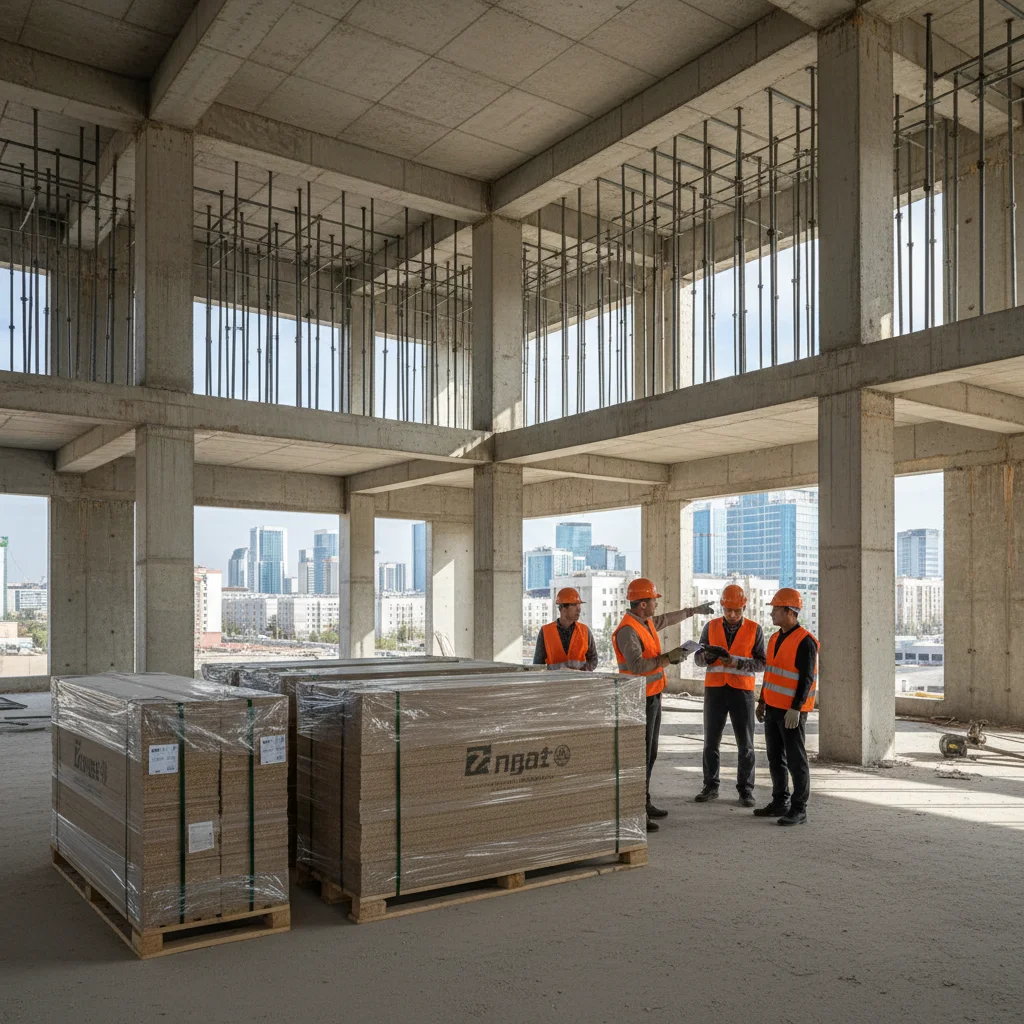
The numbers tell a clear story about Kazakhstan’s position in the global MDF landscape. China produces 49 million cubic meters each year, controlling 49% of worldwide production. Turkey makes 6.3 million cubic meters. Melamine MDF boards manufacturers in Kazakhstan don’t appear in international industry directories.
This gap forces the entire construction sector to rely on imports.
The Real-World Impact of Zero Local Production
Look at Iran’s situation – it shows what’s happening across Central Asia. Iran has local manufacturers like Arian Takhteh (250,000 m³ capacity) and Caspian (105,000 m³). But Iran still imported about 800,000 cubic meters of MDF this year. Most came from Turkey and China.
Kazakhstan faces the same supplier network. Pakistani exporters like ZRK Industries target Central Asian distribution channels. They fill the gap left by missing domestic manufacturing.
Construction Demand Keeps Growing Despite Import Challenges
Kazakhstan’s wholesale price index jumped 103.2% year-over-year in January 2026. Retail climbed 102.1%. This growth impacts MDF demand. Builders need those standard 15-17mm thick panels for furniture frames, shelves, and construction fit-outs.
The global melamine-faced chipboard (MFC) market hit USD 1.89 billion in 2025, growing at 4.2% CAGR. Ex-factory prices hover around USD 320 per cubic meter. Gross margins sit between 18-28%. But Kazakhstan builders pay import rates that averaged USD 413/m³ in 2024. That’s down 16.1% year-over-year. Still, it’s marked up well above factory prices.
Asia-Pacific Dominance Creates Regional Gaps
Over 50% of global MFC consumption happens in Asia-Pacific. Central Asian markets stay fragmented and price-sensitive. Urbanization drives the shift toward moisture-resistant and eco-certified grades. This makes import selection even more critical for Kazakhstan contractors.
Kastamonu Entegre (Russia) – Primary CIS Supplier
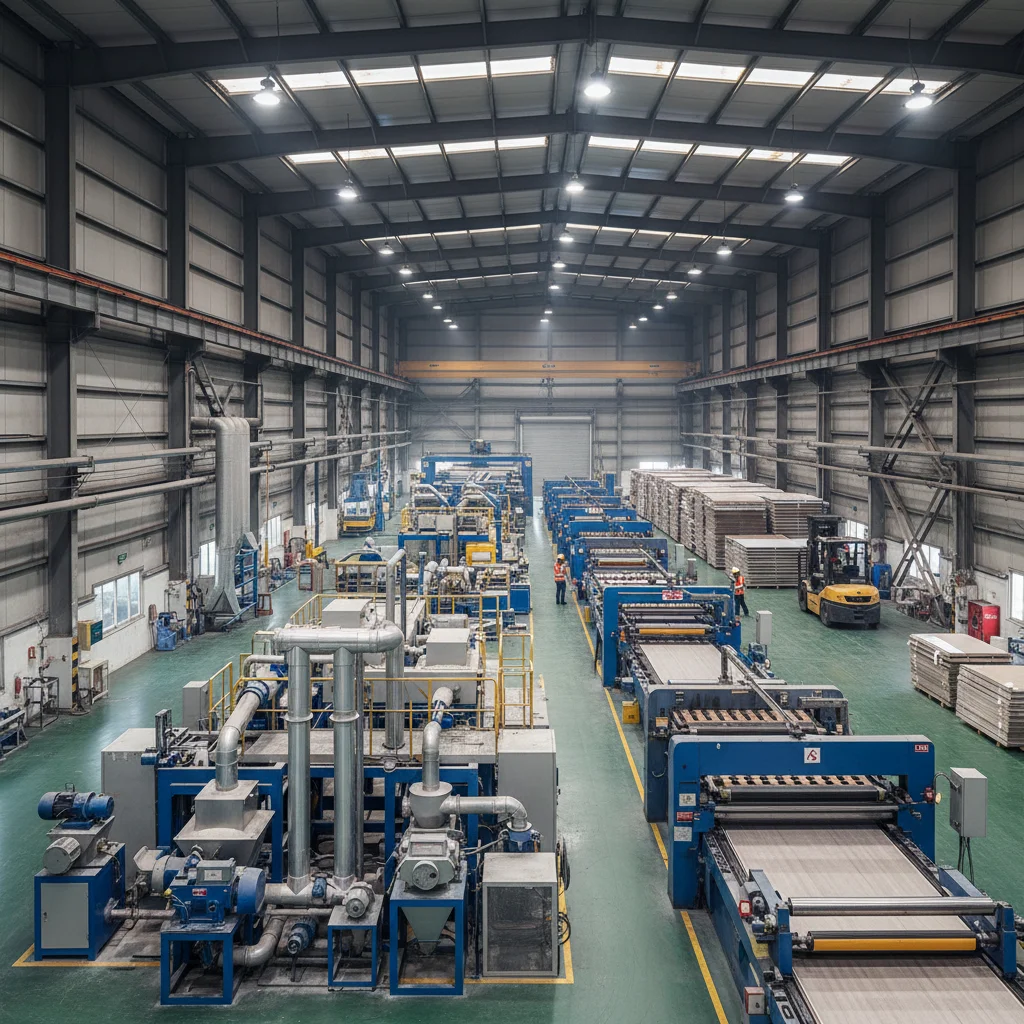
Kastamonu Entegre runs Russia’s largest MDF production facility. The Alabuga plant sits in Tatarstan’s Special Economic Zone. It produces 1.05 million cubic meters of MDF each year. That’s serious volume. This supplies a quarter of Russia’s entire MDF market.
The numbers get interesting. 40% crosses borders into CIS countries. Azerbaijan. Uzbekistan. Kazakhstan. Armenia. Georgia. Turkmenistan. Kyrgyzstan. Belarus, China, and Tajikistan get regular shipments too. The remaining 60% stays in Russia for local construction projects.
Market Position That Matters for Kazakhstan Buyers
Kastamonu holds 25-30% of Russia’s MDF market share. They’re not just another supplier. They’re the dominant player. This position gives you something practical: reliable supply chains. Melamine MDF boards manufacturers in Kazakhstan don’t exist in the local market. So you need a supplier who won’t run out mid-project.
The plant employs 800 workers. It supports 2,500 more jobs across transport, forestry, and related services. This workforce keeps production steady all year.
Production Scale Meets International Standards
Here’s what sets Kastamonu apart from regional competitors. They produce 45 million square meters of laminate flooring each year. This runs alongside MDF production. The dual-line setup creates better economies of scale. You get lower per-unit costs. Bulk orders into Kazakhstan come with more competitive pricing.
The certifications matter: FSC, EU Conformity, EPD, and CARB Phase II. Got projects with environmental compliance needs? These certifications aren’t optional extras. They’re must-haves for international building standards.
Kastamonu operates across 6 countries with 6,300 employees. They produce 5.5-7 million cubic meters of wood-based panels worldwide. That’s 7% of global laminate market share. Kazakhstan construction firms get a clear advantage. You access manufacturing standards that match European and Asian requirements. No European shipping costs.
Egger Group (Russia) – Premium European Standard Provider
Austrian precision pairs with Russian manufacturing muscle at Egger’s two-plant setup. The Gagarin facility sits in Smolensk region, 150 km west of Moscow. Melamine MDF boards manufacturers in Kazakhstan benefit from this spot. Transit times drop. Freight costs stay low. Deliveries arrive on schedule.
Egger put over €302 million into the Gagarin plant. Half funded construction and basic infrastructure. The rest built a biomass power station. This station generates heat and dries wood fiber. The plant runs on its own power. Your orders keep moving without utility problems.
Production Numbers That Support Large-Scale Projects
The Gagarin MDF line cranks out 350,000 cubic meters per year. Production started April 4, 2016. Finishing lines handle 20 million square meters yearly. Russia and Eastern Europe’s busy markets get serious volume from this output.
The fiber prep system can scale to double what it makes now. Egger planned ahead. Construction demand in Kazakhstan can jump without maxing out this supplier’s capacity.
The older Shuya plant contributes 250,000 cubic meters of particleboard. Egger bought OOO Gagarinskiy Fanerniy Zavod in 2011. That purchase brought another 500,000 cubic meters of total capacity. One supplier network gives you both MDF and particleboard.
European Standards Meet Regional Pricing
Egger controls 30,000 hectares of certified sustainable forests. That’s half their wood source. Certified suppliers provide the rest. FSC certification covers the full production process. Working on LEED credits or green building certifications? Egger’s paperwork backs those needs.
ANDRITZ systems power the production tech. A 6,000 kW motor drives the 60-inch pressurized refiner. Water removal works fast, cutting energy use. Wear liners come off easy, keeping downtime short. This German tech delivers the same board quality, batch after batch.
The product line includes high-density fiberboard with dense top layers. These boards go into laminate flooring. Also furniture making. Interior design work. Construction projects. Shop fixtures. You can order raw MDF or Pre-laminated boards. Design catalogs show you different surfaces and sizes.
Active Russian Operations Support CIS Distribution
Three companies run operations: EGGER DREVPRODUCTS SHUYA LLC (TIN 7704267807), EGGER DREVPRODUKT GAGARIN LLC (TIN 6723019741), and WOODPRODUCT VOSTOK ASSET MANAGEMENT LLC in Ivanovo region (started October 2022). All three were active in July 2024.
The Gagarin expansion added 350 new jobs. A stable workforce keeps material flowing. Kazakhstan contractors get European production quality. No messy European shipping. No complex customs paperwork.
Kronospan – Multi-Regional Access (Ukraine/Russia Operations)
Kronospan runs plants on both sides of a major conflict zone. $1 billion invested in Ukraine over 20 years. Plants in Russia and Belarus? Still active after 2022. Melamine MDF boards manufacturers in Kazakhstan get a unique sourcing option from this setup.
The Rivne plant in western Ukraine got €563 million in direct investment. That’s about $590 million for one plant. A new OSB line? Another €200 million ($210 million). This facility makes particleboard, MDF, Oriented Strand Board, laminated boards, and countertops. Over 800 specialists run the operation.
Here’s what stands out. 60% of Rivne’s output goes to EU and USA markets. Kronospan’s Russian plants? Running at full capacity. Before 2021, Russian and Belarusian units moved under Cyprus-based Kronospan Holdings East Ltd. August 2022 saw another shift. Ownership went to Vaduz-based Causing Holding AG. Liechtenstein’s Stiftung Causa foundation set it up.
Operating Where Others Exit
Raiffeisen Bank International gave a €315 million credit line at end-2021 for Russia investments. That cash kept flowing. Over 1,000 companies cut back their Russian work. By January 2026, 547 companies made full exits. 1,369 more scaled back. Kronospan? Not on either list.
Rockwool and CanPack lost assets in January 2026. Kronospan built a different model. National factories feed middle-layer holdings. Liechtenstein funds (Luda, Betuva, Und Gerhorst) control those. This creates separation between operations. The Cyprus holding? No public data on who owns it.
Kazakhstan buyers reach both networks. Ukrainian plants ship European-standard boards. Russian sites? Closer shipping routes. Pricing fits CIS markets better. One supplier name. Two separate chains.
Baier (China) – Export-Oriented Melamine MDF Supplier for Kazakhstan Construction Projects
Baier operates as an export-focused manufacturer supplying melamine MDF boards to Central Asian construction and interior markets. While internationally recognized for SPC and laminate flooring production, the company also provides pre-laminated MDF panels suitable for residential, commercial, and mixed-use building projects.
For Kazakhstan developers and contractors, procurement stability and delivery reliability are critical. Baier structures its production around batch consistency, standardized specifications, and export compliance—reducing supply risk in large-scale construction orders.
Product Range for Interior Construction Applications
Baier supplies melamine-faced MDF boards in commonly requested thicknesses and panel dimensions used in:
Kitchen and wardrobe systems
Office and retail interiors
Apartment fit-outs
Hospitality furnishing projects
Built-in storage installations
The boards are factory-finished under controlled lamination processes, ensuring:
Stable surface bonding
Consistent color batches
Scratch-resistant finishes
Clean CNC processing performance
Panels are delivered ready for cutting, edge-banding, and hardware installation, minimizing secondary processing in workshops and on-site fabrication environments.
Export-Structured Manufacturing Model
Unlike suppliers focused purely on domestic spot sales, Baier operates with an export-oriented production system. This includes:
Standardized packing for container transport
Controlled density and thickness tolerances
Batch tracking across shipments
Optional third-party inspection reports
For Kazakhstan importers, this model supports smoother customs clearance and predictable project scheduling.
Logistics Advantage for Central Asia
Located near major Chinese shipping ports, Baier supports multimodal freight routes into Central Asia. Buyers consolidating MDF boards with flooring materials can optimize container utilization, reducing per-unit transport cost.
Typical production lead time ranges from 20–25 days depending on order specifications.
Position Within Kazakhstan Supply Landscape
Among melamine MDF boards manufacturers serving Kazakhstan, Baier positions itself as a reliable export partner rather than a domestic distributor. The company’s strength lies in:
Export compliance experience
Scalable production capacity
Stable surface finish consistency
Integrated product supply options
For construction firms managing apartment complexes, commercial interiors, or developer-led residential projects, supply continuity often matters more than brand recognition.
Baier fits procurement models that prioritize reliability, cost efficiency, and structured export processes.
Latat (Siberia, Russia) – FSC-Certified Regional Option
Siberia’s boreal forests are huge. They cover more land than Belgium, Netherlands, and Luxembourg combined. One regional operator controls 7.42 million hectares. 85% of that—6.46 million hectares—has FSC certification. Your project needs documented sustainable sourcing? This certification covers you.
Melamine MDF boards manufacturers in Kazakhstan source from Siberian suppliers. They benefit from Russia’s strong forest certification position. October 2019 showed 47.65 million hectares of FSC-certified Russian forests. That’s 25% of the global total above 200 million hectares. Russia held 186 forest management certificates—first place worldwide. Canada had 602 chain-of-custody certificates. Russia? 629.
Regional FSC Infrastructure Supports Compliance Needs
Certification density varies across Siberian regions. Khabarovsk operations show 19% Intact Forest Landscape (IFL) lease shares. Irkutsk region hits 65%. Average IFL coverage across FSC-certified Siberian areas runs 14%. These numbers fell from December 2018’s 3.5 million hectares of IFLs across 45 certificate holders.
Here’s what changed. April 2022 brought FSC suspension of Russian chain-of-custody certificates. Geopolitical shifts caused this. Pre-2022 certification peaked at 62 million hectares. Some Siberian high-value forest logging continued after suspension. Russian Forest Group and other certificate holders ended certain IFL certificates in January-February 2019. They planned to return to FSC after internal changes.
December 2016 data showed 146 FSC forest management certificates. These covered over 40 million hectares. The NFSS 6-1 standard has been valid since 2012. It’s the only official document that recognizes IFLs in Russian forestry. NFSS 7 was set for 2020 rollout.
Kazakhstan builders need FSC papers for LEED projects or green building certifications? Check current certificate status. Regional Siberian suppliers still run the infrastructure built during peak certification years. Transit routes into Kazakhstan stay open. International certification body decisions don’t change that.
Import Process & Local Distribution Partners
Kazakhstan handles $43 billion in annual merchandise trade through its import infrastructure. Your melamine MDF boards enter here. You need specific documents, certified distributors, and logistics networks. These networks link melamine Mdf Board manufacturers in Kazakhstan’s supplier regions to construction sites in Almaty and Nur-Sultan.
Documentation Requirements for MDF Imports
Each shipment requires a commercial invoice. Use HS code 4411.14 for melamine-surfaced MDF. Your customs declaration needs a sanitary-epidemiological certificate. Fire safety documents are required for building materials. FSC certification adds value. It’s not required unless your project needs green building standards.
The State Revenue Committee uses the Astana-1 electronic system. Transit takes 7-12 days from Russian borders at Petropavlovsk or Karaganda rail terminals. Border clearance runs 2-4 business days with complete documents. Missing certificates? You face 10-15 day delays and storage fees of ₸2,500 per pallet each day at customs warehouses.
Active Distribution Networks in Major Cities
TechnoNIKOL Kazakhstan is the largest building materials distributor. They run 14 regional branches. They handle Russian supplier shipments. These include Kastamonu and Egger products. Their Almaty warehouse stocks 3,000+ cubic meters of panel materials. The Nur-Sultan facility holds similar amounts.
Stroybaza Group operates 8 distribution centers across Kazakhstan. They import from Kronospan’s Russian plants. Minimum orders start at 100 cubic meters for factory pricing. Smaller orders cost 12-18% more through distributor stock.
Melon Pro focuses on finishing materials. They have 6 showrooms in Almaty, Shymkent, and Aktobe. They work with Swiss Krono’s CIS distributors. Custom color orders take 3-4 weeks. Standard inventory ships in 5-7 days.
Regional dealers in Atyrau, Pavlodar, and Kyzylorda carry basic grades. Premium laminates and specialty thicknesses? Order through Almaty or Nur-Sultan hubs. Transport adds ₸8,000-12,000 per cubic meter for secondary city delivery.
Future Trends: Local Manufacturing on the Rise
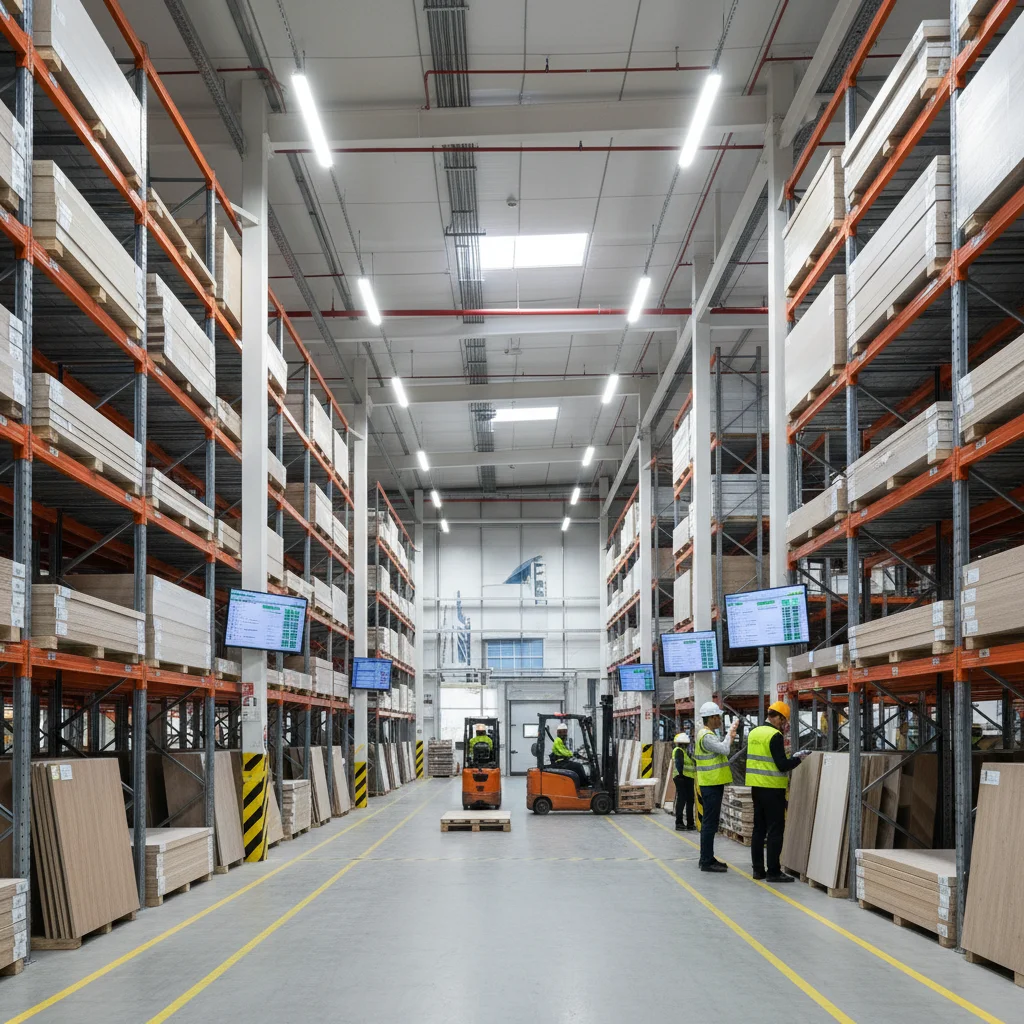
AI investments will reshape Kazakhstan’s panel board sector by 2034. The global AI-in-manufacturing market hits $230.95 billion, growing at 44.20% CAGR through 2034. Melamine MDF board makers in Kazakhstan could rise from this tech wave.
80% of manufacturing executives put over 20% of improvement budgets into smart manufacturing. Automation hardware. Data analytics. Sensors. Cloud computing. These tools cut production costs 15-25% in existing plants. Kazakhstan’s government sees this. They watch U.S. chipmaking bring in over $500 billion as of 2025. That money creates 500,000+ jobs and triples domestic capacity by 2032.
Bringing Production Home Makes Economic Sense
Every dollar spent on U.S. manufacturing creates $2.64 in economic impact. Suppliers gain. Logistics networks expand. Jobs multiply. Kazakhstan sees the same effects in nearby markets.
Defense sectors move production home first. Electrical transmission follows. Solar panels. Rail infrastructure. Data centers. Building materials come next. 45% of manufacturers now place facilities near engineering hubs. Another 45% cut freight and duty costs through regional production. 38% reduce global chain risks.
Regional MDF plants in Kazakhstan remove ₸8,000-12,000 per cubic meter in secondary city transport fees. They cut 7-12 day Russian border transit times to zero. Customs delays? Gone.
New Tech Makes Small-Scale Local Plants Viable
3D printing and automated metal cutting change setup costs. On-site customization replaces large inventory. You order sheet metal, not precuts. Waste drops 20-30%. Modular building methods let new plants grow in stages. Schedules stay on track. Disruption stays low. Capital needs shrink.
Predictive maintenance AI cuts downtime 18-22% in wood processing. Real-time ERP systems balance output against material and energy costs. AI flags trade risks and finds cost savings in raw material buying.
Kazakhstan tech schools could team up with equipment suppliers. Internships fill 3am production shifts. Graduates operate automated systems. The Midwest U.S. model proves it works—solid infrastructure, skilled workers, lower costs than coastal areas.
Tax breaks for semiconductors and data centers show government support drives growth. Critical domestic parts increase through tax policy and chain security rules. Kazakhstan’s building boom creates the demand base. Local manufacturing needs the funding spark and tech transfer partnerships.
Conclusion
| Supplier | Production Base | Annual Capacity | Market Position | Certifications | Logistics to Kazakhstan | Pricing Level | Best For |
|---|---|---|---|---|---|---|---|
| Kastamonu Entegre | Russia (Alabuga, Tatarstan) | 1.05 million m³ MDF | Dominant CIS supplier (25–30% Russia market share) | FSC, EPD, CARB Phase II | Strong CIS export network; regular shipments | Competitive / Mid-range | Large residential & commercial construction projects needing steady supply |
| Egger Group | Russia (Gagarin & Shuya plants) | 350,000 m³ MDF + 250,000 m³ particleboard | Premium European-standard producer | FSC certified forests, EU standards | Shorter transit from Western Russia | Mid-to-High | Green building projects, LEED-oriented developments, premium interiors |
| Kronospan | Russia / Ukraine / Belarus | Multi-plant regional capacity | Multi-regional network supplier | Varies by plant & region | Flexible sourcing (EU-standard or CIS-based routes) | Competitive to Mid-range | Buyers needing sourcing flexibility & large project volume |
| Baier | China (export-oriented production) | Scalable export production | Export-focused Central Asia supplier | Export documentation, optional third-party inspection | Sea + multimodal freight (20–25 days production) | Cost-efficient | Developers consolidating MDF + flooring imports; cost-sensitive bulk orders |
| Latat | Siberia, Russia | Regional producer | FSC-focused regional option | FSC (status varies post-2022) | Rail & road via Russian border | Mid-range | Projects requiring documented forest sourcing (verify certification validity) |
Kazakhstan’s construction sector can maintain quality without local MDF production. Five Melamine MDF boards manufacturers covered here—Kastamonu Entegre, Egger, Kronospan, Swiss Krono, and Latat—supply European-grade materials. They use established CIS distribution networks. Premium finishes are now within reach for your projects.
Match your supplier to your project needs. Working on a tight budget? Kastamonu gives solid value. Building premium commercial spaces? Egger and Swiss Krono cost more but perform better. Check FSC certification first. Get physical samples before placing bulk orders. Choose distributors with warehouses in Almaty or Nur-Sultan. This cuts your wait times.
Here’s the real opportunity: Melamine MDF boards manufacturers in Kazakhstan plan local production by 2025-2026. Build relationships with current suppliers now. You’ll get better pricing and guaranteed supply later. Start checking your options today. Request quotes. Compare delivery times. Lock in partnerships before construction demand pushes prices up. The materials you choose now affect your profits later.