
This guide cuts through the glossy product brochures. You’ll get honest installation time estimates based on real conditions. You’ll see where these snap together flooring systems work great. You’ll also learn where they fall short.
Plus, you’ll discover the specific risk factors. These factors decide if your floating floor becomes a decade-long success or an expensive mistake.
Click Lock Systems in Laminate Flooring: How They Work
The engineering behind click systems looks simple. Each plank edge has a machined tongue-and-groove profile. This creates an interlocking joint. No glue. No nails. No mess.
Think of it as adult LEGO. Tolerances are measured in fractions of millimeters.
The Locking Mechanism Explained
The groove shape and locking angle make it work. Modern click systems use several proven designs:
Unilin and Valinge (2G Drop Lock) systems dominate the market. You position the second plank at a 20-30 degree angle into the groove of your first plank. Then you angle it down. Or rock it while pressing forward.
Megaloc (angle-fold) and newer 5G systems refine this basic principle. They use different groove shapes. Some use U-grooves. Others prefer V-grooves or R-grooves. Each shape affects the final joint tightness. It also determines how much wiggle room you get during installation.
The groove does more than just fit planks together. Modern designs like SafeLock® PRO add edge protection all around the plank. This water-resistant barrier activates on contact with moisture. It prevents core swelling at joint edges where planks are most vulnerable.
Plank thickness matters for system performance. Standard residential options range from 7mm to 12mm. Thicker planks (11-12mm) create stronger locking profiles. They resist bending better over time. This means your floor stays flat and tight for years.
Installation Time: Real Estimates for DIY vs Professional
Most product boxes promise “easy installation in hours.” The truth depends on two things: your skill level and your room’s setup.
A confident DIYer with basic tools can finish a 12×15 foot bedroom in 4-6 hours. This covers underlayment prep, cutting planks, and cleanup. First-timers? Budget 8-12 hours for the same space. You’ll spend extra time measuring twice. Plus, watching tutorial videos mid-project. And fixing alignment mistakes.
professional installers work faster. A two-person crew tackles that bedroom in 2-3 hours. They bring pneumatic cutters, laser levels, and zero learning curve. They’ve laid thousands of planks. Their muscle memory handles what you’re still figuring out.
Breaking Down Real Installation Timelines
Here’s what eats your time during DIY installation:
Room prep and underlayment: 1-2 hours for beginners. Professionals knock this out in 30 minutes.
First three rows: Another 2-3 hours for DIY.Pros finish these critical rows in 45 minutes because they know the tricks.
Remaining field installation: The middle section moves faster once you find your rhythm. DIYers average 15-20 planks per hour. Professional teams hit 40-50 planks per hour working together.
Cutting and fitting around obstacles: Doorframes, vents, and corners slow everyone down. Budget 30-45 minutes per complex cut as a beginner. Professionals handle these in 10-15 minutes with specialized tools.
Room complexity matters more than marketing claims. Simple rectangular rooms favor DIY. Got multiple doorways, angled walls, or built-in furniture? professional installation saves you from expensive mistakes. These waste materials and test your patience.
Step-by-Step Installation Guide: What You Need to Know
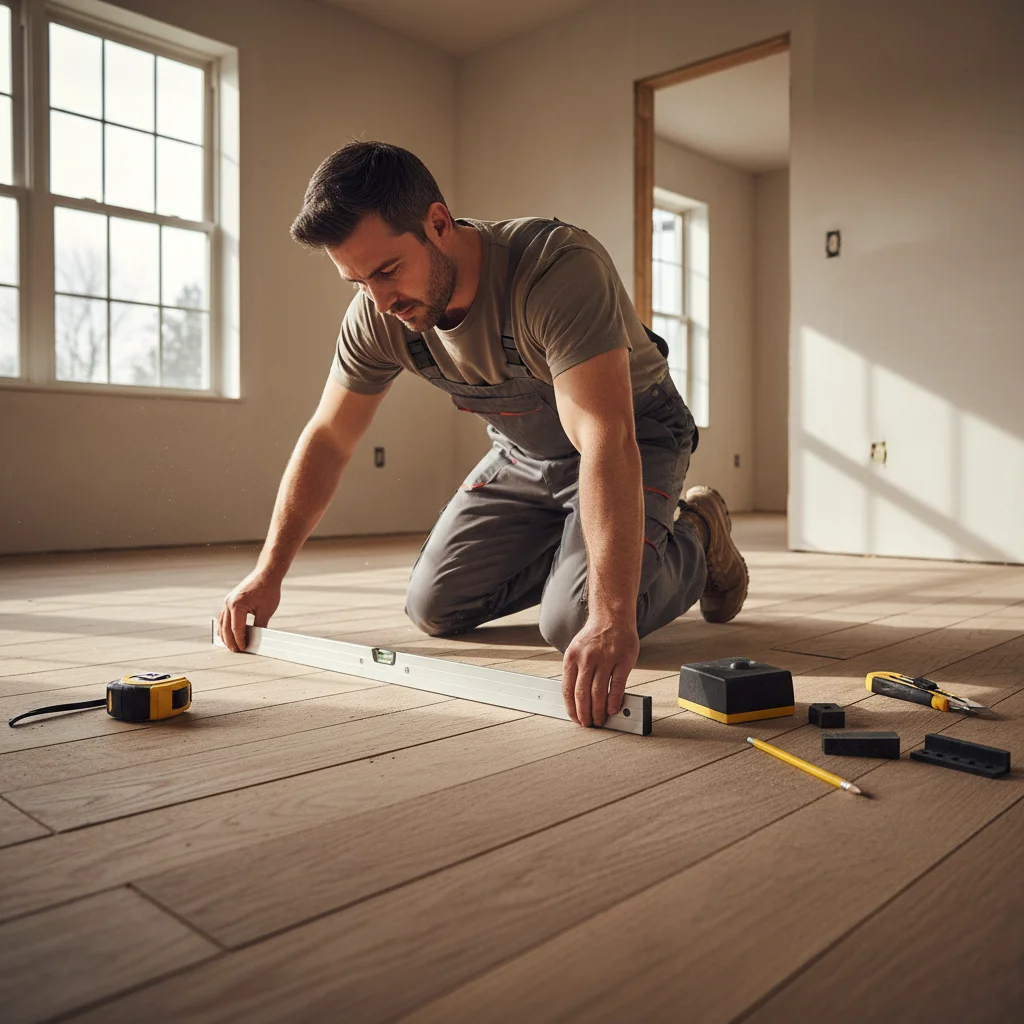
Success with click systems starts before you open the first box. Good prep makes your install smooth. Bad prep turns it into a frustrating puzzle with pieces that don’t match.
Essential Tools and Materials Checklist
You don’t need a contractor’s truck full of equipment. But you do need the right basics.
Measuring and marking tools: Get a tape measure (25-foot minimum), carpenter’s pencil, and chalk line. These keep your rows straight. That $8 chalk line saves you from crooked floors that haunt you for years.
Cutting equipment: A circular saw or miter saw handles most cuts. Add a jigsaw for curved cuts around pipes and doorframes. Rent these if buying doesn’t make sense. Home improvement stores charge $20-40 per day.
Installation helpers: Spacers maintain your expansion gap. Always leave 1/4 inch minimum from walls. A tapping block protects plank edges. Use it to coax stubborn joints to click. A pull bar reaches tight spots where your hands won’t fit.
Underlayment: Choose foam or cork based on your subfloor. Concrete? You need moisture barrier properties. Wood subfloors? Standard foam works fine. Don’t skip this layer. It’s your floor’s shock absorber and sound dampener.
Safety gear: Knee pads transform this job from painful to manageable. Safety glasses protect against wood chips. A dust mask helps if you’re cutting indoors.
The Core Installation Sequence
Step 1: Acclimate your planks. Stack boxes flat in the installation room for 48 hours minimum. This lets the material adjust to your home’s temperature and humidity. Skip this? Your floor might buckle within weeks.
Step 2: Prepare the subfloor. Sweep every inch. Vacuum corners where dust hides. Check for high spots with a 6-foot level. Sand down bumps over 3/16 inch. Fill low spots with leveling compound. A perfect base stops clicking joints from separating later.
Step 3: Roll out underlayment. Start at your longest wall. Butt seams tight. Don’t overlap. Tape seams with the manufacturer’s tape. Trim excess at walls.
Step 4: Plan your layout. Measure room width. Divide by plank width. This shows you if your final row will be too narrow. Less than 2 inches means trouble. Adjust your starting position to keep end rows at least 2 inches wide.
Step 5: Install the first row. Remove the tongue side facing the wall. This creates a clean starting edge. Insert spacers every 12 inches along the wall. Lay planks left to right. Connect end joints by angling the tongue into the groove. Press down with solid pressure.
Step 6: Stagger your seams. Start row two with a plank cut to create at least 8-inch offset from row one joints. This brick pattern adds strength. It looks professional too. Random staggering works fine. Just maintain that 8-inch minimum.
Step 7: Lock each row. Angle the new plank 20-30 degrees. Slide the long edge into the previous row’s groove. Lower it while pushing forward. You’ll feel resistance. That’s the locking mechanism engaging.
Step 8: Handle obstacles. Make a cardboard template for tricky cuts first. Transfer measurements to planks. Cut with care. Test fit before final installation. Doorframes need undercuts. Slide a plank plus underlayment under the frame to mark cutting height.
Step 9: Install final rows. Use your pull bar here. Hook it over the plank edge. Tap with your hammer to close gaps. Tight spaces need patience and exact measurements.
Step 10: Install trim and transitions. Pull out the spacers. Install quarter-round or baseboards to cover expansion gaps. Use transition strips at doorways. Also use them where laminate meets other flooring types.
Critical Success Factors
Temperature matters. Work in rooms between 60-80°F. Extreme cold makes planks brittle. High heat can cause early expansion.
Never force planks. Joints won’t click? Check for debris in the groove. Inspect the tongue for damage. Sometimes you’ll find a bad plank. Set it aside and grab a fresh one.
Keep steady pressure on planks as you lower them into locked position. Stopping partway creates weak locks that fail later. Confidence comes with practice. So your first few rows take longer than the rest.
Installation Risks: Common Problems and How to Avoid Them
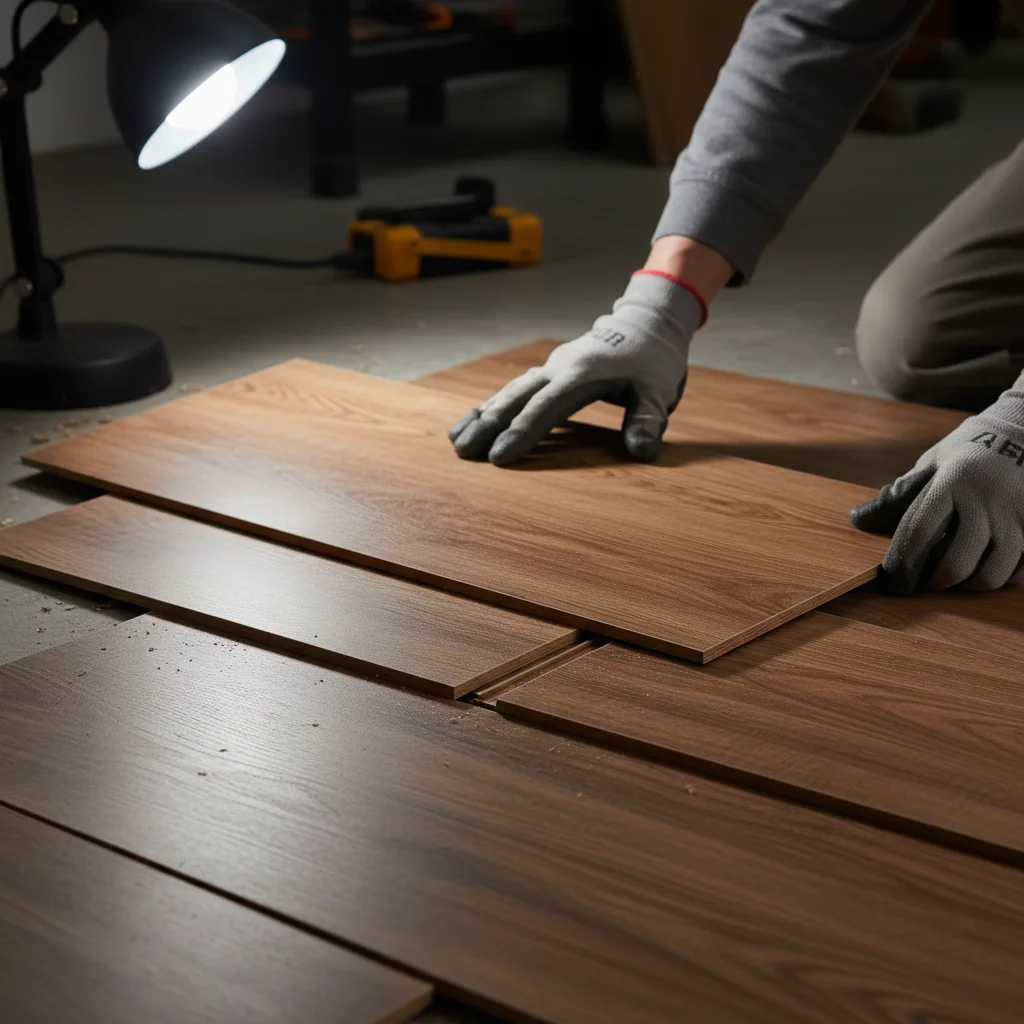
Even experienced DIYers hit snags with click systems. Quick weekend projects turn into multi-day ordeals. The locking mechanism makes installation “easy.” But it also creates specific failure points you won’t find with traditional glued floors.
Know where things go wrong—and why. This saves you from expensive do-overs and floors that fail too soon.
Subfloor Imperfections: The Hidden Deal-Breaker
Your Floating floor system follows every bump and valley in the subfloor beneath it. A high spot as small as 3/16 inch over six feet creates stress points. Planks rock. Locking joints separate. You’ll hear creaking with every step.
Walk your bare subfloor before installation. Feel for bumps with your hands. Use a six-foot straightedge to find problem areas. Sand down high spots with a belt sander. Fill low spots with leveling compound. This boring prep work prevents 60% of post-installation complaints.
Moisture presents bigger risks. Concrete subfloors pull water vapor upward. This moisture hits your laminate core. The material swells. Planks buckle or cup within months. Always test concrete moisture levels with a calcium chloride kit before installing. Readings above 3 pounds per 1,000 square feet in 24 hours mean you need a moisture barrier underlayment.
Expansion Gap Failures: Good Floors Gone Bad
Laminate expands and contracts with temperature and humidity changes. That’s physics. Your floor needs breathing room at every wall, doorframe, and fixed object. The standard 1/4-inch gap handles this movement.
Skip this gap? Your floor has nowhere to go during summer humidity. Planks push against walls. The pressure pops locking joints apart. You’ll see lifted edges, separated seams, and buckling in room centers.
Beginners make two big mistakes here. First, they remove spacers too soon and kick planks tight against walls during installation. Second, they install baseboards onto the flooring instead of the wall. This pins the floor in place.
Use spacers along every wall. Leave them in place until trim installation. Nail or glue baseboards to walls only—never to the floor itself. Check transitions at doorways. These areas need gaps too, hidden under transition strips.
Joint Integrity: The Weak Link in Your Floor System
Several factors hurt joint strength over time.
Debris in grooves stops planks from seating right. A wood chip or dust particle creates a tiny gap. The locking mechanism can’t engage all the way. You might not notice during installation. But traffic stress works these weak joints apart within weeks.
Clean grooves during installation. Keep a small brush handy. Wipe tongue-and-groove edges before each connection. Work in well-lit conditions. Tiny bits are easier to spot.
Temperature during installation matters more than manufacturers admit. Installing in rooms below 60°F makes planks brittle. The locking profiles can crack as you snap them together. These tiny cracks spread under foot traffic. Summer installations in 85°F+ rooms cause too-soon expansion. Planks lock together under stress. Future shrinking creates joint gaps.
The Pattern Problem: Weak Layouts That Fail Fast
Random stagger patterns look natural. But poor seam placement weakens your entire floor structure. Joints closer than eight inches in side-by-side rows create stress points. The floor flexes at these spots. Locking parts wear out faster.
H-patterns—where seams in three rows line up—are worse. They create fault lines across your floor. Think of them as weak spots waiting to fail.
Plan your layout before cutting the first plank. Use a layout stick or chalk lines to map seam positions. Adjust your starting point if needed. Keep that eight-inch minimum offset. Vary your cut lengths to create random patterns. Professional installers keep three or four partial planks in rotation. This ensures proper stagger without thinking.
Tool-Related Damage: Tapping Blocks Gone Wrong
Installation tools Protect Your Floor—until they don’t. Tapping blocks and pull bars transfer installation force without damaging plank edges. But too much force or poor technique creates new problems.
Hitting planks too hard crushes locking profiles. You won’t see outside damage. But inside damage stops proper fit. These joints click, yet they lack full strength. They’ll separate under normal use.
Never hit planks with hammers. Always use your tapping block. Use firm, controlled pressure instead of hard strikes. If a joint won’t close, stop. Check for debris or damage. Forcing damaged parts guarantees future failure.
Pull bars need careful handling in tight spaces. Wrong angles stress tongue edges. The thin material cracks. Position your pull bar straight to the seam. Pull gently rather than jerking.
Acclimation Shortcuts: The 48-Hour Rule You Can’t Skip
Laminate planks straight from the truck don’t match your home’s conditions. The material needs time to adjust. Manufacturers specify 48 hours minimum. That’s not a suggestion.
Install planks that haven’t adjusted? They’ll expand or contract after installation. Expansion closes your needed gaps. Shrinking opens joints. Both outcomes ruin floors.
Stack boxes flat—never on edge—in the installation room. Open the packaging to allow air flow. Keep room temperature between 60-80°F during adjustment time. Don’t store boxes in garages, basements, or vehicles. These spaces have different conditions than your finished room.
Rushing this step to meet weekend deadlines costs more than the time you save. Plan projects with adjustment time built into your schedule.
Long-Term Durability and Buyer Risks Analysis
Click laminate floors promise 20-25 year lifespans in ads. Reality? Manufacturers don’t talk about what shortens that timeframe on their glossy brochures.
floating floor systems show mixed results. Premium click laminate with AC4 or AC5 wear ratings works well in European homes. You get 12-15 years of active use before seeing real wear. Budget options? Traffic patterns show up in 6-8 years.
Here’s the problem: no standard exists for life expectancy disclosure. You can’t compare durability across brands like you compare warranties. This gap pushes buyers to choose based on price alone. Many pick products that fail faster.
The Performance Gap Nobody Discusses
Buyer expectations don’t match real outcomes. Testing shows quality click systems keep locking integrity for 10-12 years under normal home traffic. The locking mechanism isn’t the weak point.
Wear resistance controls how long floors last. AC ratings matter more than click design. An AC3-rated floor shows through-wear at busy zones within 7 years. Perfect installation doesn’t change this. That same click system on an AC5 core? It lasts twice as long.
Material strength under furniture creates risk. Heavy appliances, pianos, and loaded bookcases press down constantly. Standard 8mm planks show damage within 3-5 years under focused weight. The locking joints stay fine. But visible dents and marks ruin the floor’s look long before the click system breaks.
What Buyers Risk
Early failure from quality gaps: Low-end click systems use weak locks with thin wear layers. You save $0.50 per square foot upfront. Then you replace the whole floor in year six instead of year twelve. That’s $800-1,200 in surprise costs for a typical 200-square-foot room. Plus installation time and hassle.
Hidden lifecycle costs split smart buys from costly mistakes. A $2.49/sq ft floor lasting 8 years costs you $0.31 per square foot each year. A $3.99/sq ft floor lasting 15 years? That’s $0.27 per square foot per year. The cheaper choice costs more over time.
Repair ability matters. Click systems beat glued floors here. You can replace damaged planks in floating installs without ripping up whole rooms. But you need matching planks from the same batch. Manufacturers change color batches every 6-12 months.
Keep extra boxes from your first purchase. That water-damaged plank near your dishwasher becomes a color-mismatched patch otherwise. It screams “repair job.” Pros recommend buying 10% extra material for future repairs. Budget another $150-250 beyond install needs for typical rooms.
Making Durability Work For You
Three proven ways extend your floor’s lifespan:
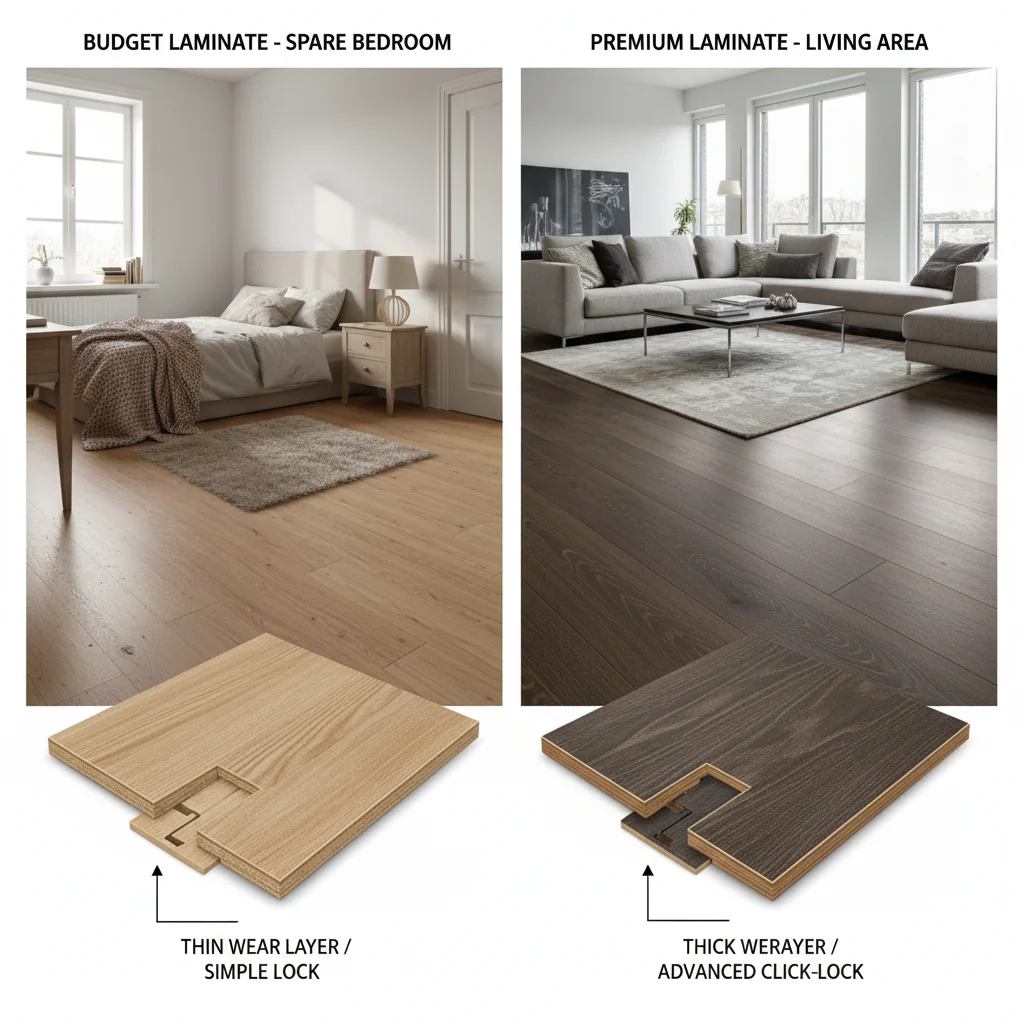
Design choices before purchase: Pick AC4 minimum for main living areas. Get 10mm+ thickness for rooms with heavy furniture. Edge-sealed planks like SafeLock® PRO resist moisture damage at joints. These choices add 30-40% to your floor’s life.
Protection during use: Quality underlayment cuts impact stress on locking joints by 25-30%. Furniture pads spread weight across larger areas. Area rugs in busy zones protect wear layers where you walk most. Simple habits that cost little but add real durability.
Repair mindset vs. replacement reflex: Fix what breaks. Don’t live with damage or replace entire floors. Click systems make spot repairs easy. Learn to swap damaged planks yourself. It’s a 30-minute job once you know the technique. Save pro service calls for tough issues.
Match quality to use intensity. Budget options work fine in spare bedrooms. Main living areas need premium materials. Click systems give you install advantages. But lifespan still depends on core quality—not clever locking designs.
Click Lock vs Traditional Glue-Down: Which System Fits Your Space?
Your flooring choice goes beyond just how you install it. You need to match the system to how you live.
Click systems are fast. They’re DIY-friendly. Glue-down gives you something else: stability that lasts and floors that stay put.
How They Perform in Real Life
Both handle normal home traffic. But push them hard, and you’ll see the difference.
Busy commercial spaces need glue-down. The adhesive stops planks from moving under hundreds of feet each day. Click systems work great at home. But in retail stores or packed hallways? Joints start to separate in 18-24 months.
Heavy carts and equipment cause the same problems. Warehouses need glue-down. So do commercial kitchens and stores with constant cart traffic. Click planks can’t handle this stress. The locks break down under constant weight. Gaps show up. Edges pop up.
You can feel the difference underfoot. Glue-down floors feel solid. They’re quiet. Each step connects straight to the subfloor through the adhesive. Click systems feel cushioned and hollow without good underlayment. Some people love this soft feel. Others think it feels cheap next to glued floors.
Where Each System Works Best
Pick click-lock for: Bedrooms, living rooms, dining rooms, rental units, and spaces where you want fast install or might change floors later. Install it yourself and save 40-60% on total cost. You set the schedule. Most DIYers finish a room in a weekend.
Pick glue-down for: Kitchens, bathrooms, basements, sunrooms, and business spaces. Moisture resistance matters in these spots. Good glue-down install handles standing water better than click-lock joints. Got big temperature swings in sunrooms or porches? Glue-down handles these changes with the right adhesive.
Budget math isn’t always obvious. Glue-down planks cost $0.30-0.80 less per square foot than click versions. But pros charge $2-4 per square foot to install. Your total cost ends up similar—unless you do it yourself.
Think long-term. Glue-down needs fewer fixes over 15-20 years. Pull out damaged planks with heat. Simple. Click systems get tricky—fixing one plank in the middle means dealing with all the surrounding ones.
custom patterns matter for design lovers. Glue-down lets you do herringbone, custom borders, decorative strips, and detailed patterns. Click planks go down in straight rows. That’s it. Want creative layouts? You need glue-down.
Buyer Decision Checklist: Key Factors Before Purchase
Walk into any flooring store and you’ll face dozens of click laminate options. Same locking mechanism. Similar wood-grain patterns. Prices range from $1.49 to $6.99 per square foot. How do you choose the right one without making an expensive mistake?
Smart buyers check specific criteria before buying. Your decision impacts your home for the next 10-15 years. Get it right, and you’ll forget about your floors—they just work. Get it wrong, and every creaky step reminds you of that regret.
Quality Markers That Matter
AC rating comes first. This wear resistance number tells you how long your floor survives real life. AC3 handles moderate home traffic. Think bedrooms and dining rooms where you walk in socks. AC4 and AC5 resist heavy traffic and commercial use. Main hallways, kitchens, and kids’ play areas need AC4 minimum. Don’t compromise here. A lower AC rating saves you $200 today but costs $1,500 in replacement tomorrow.
Thickness affects performance. Standard 8mm planks feel hollow underfoot. They show dents under furniture within three years. Premium 10-12mm options feel solid. They resist impact damage better. The extra $0.40-0.80 per square foot buys you real quality improvements.
Edge protection separates survivors from failures. Water-resistant edge sealing like SafeLock® PRO stops moisture damage at joints. Regular click systems let spills seep into cores through exposed edges. Planks swell and buckle within months. Ask about edge treatment. Don’t settle for surface water resistance alone.
Installation Reality Check
Match the system to your skill level. Some click designs forgive mistakes. Others punish beginners with gaps and misaligned rows. Read actual user reviews about installation difficulty. Skip manufacturer claims. Look for phrases like “snapped together with ease” versus “joints wouldn’t lock right.” Real experiences tell you what to expect.
Tool requirements add hidden costs. Basic click systems need standard tools most DIYers own. Complex patterns or rigid cores need specialty equipment. Renting a pneumatic cutter and laser level adds $60-100 to your budget. Factor this in. Compare DIY savings to Professional installation quotes.
Price and Value Balance
Calculate total ownership cost. Don’t just look at purchase price. Divide total floor cost by expected lifespan in years. A $3.99/sq ft floor lasting 15 years costs $0.27 per year per square foot. A $2.29/sq ft floor failing at year 8 costs $0.29 per year. The “expensive” choice saves money over time.
Brand reputation predicts support quality. Established brands honor warranties without hassle. Budget brands disappear or make claims difficult. Check how long the company has existed. Read warranty terms with care. Pay attention to exclusions for installation errors or moisture damage.
Your Space, Your Needs
Room moisture levels determine system fit. Basements, bathrooms, and laundry rooms need maximum moisture protection. Standard click laminate with water-resistant coating handles kitchen spills. Standing water situations need advanced edge sealing or different flooring.
Traffic patterns reveal durability needs. Count footsteps in each space. Front entryways see 50-100 trips per day in active families. Guest bedrooms get 5-10. Match AC ratings to actual use intensity. Forget room names.
Real Cost Analysis: Total Investment Breakdown
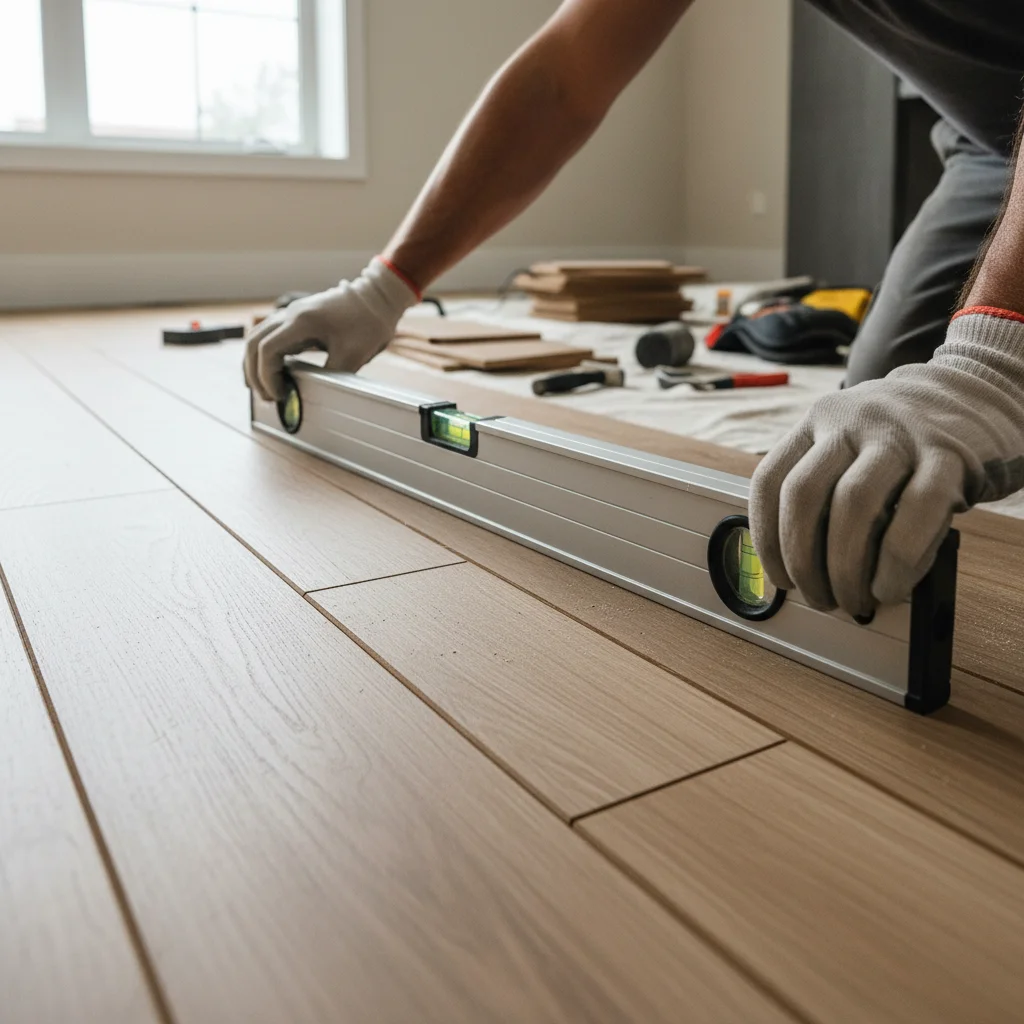
Most homeowners get flooring costs wrong. They take square footage times the per-plank price and stop there. That number misses half what you’ll actually spend.
Your project costs fall into three groups: materials, tools, and your time. Each one has hidden expenses that surprise buyers.
Direct material costs start with planks. Budget-grade click laminate costs $1.49-2.29 per square foot. Mid-range options cost $2.50-3.99. Premium systems with advanced locking and AC5 ratings cost $4.50-6.99 per square foot. A 200-square-foot bedroom takes 220 square feet of material. That includes a 10% overage. You’re looking at $328-1,538 just for planks.
Underlayment adds $0.40-1.20 per square foot. Standard foam costs the least. Moisture barriers cost more. Sound-dampening options cost even more. For that same bedroom: $88-264.
Installation tools are your indirect costs. Don’t own any tools? You need a tapping block ($12-18), pull bar ($15-22), spacers ($8-12), and saw blades ($25-40). Rent a miter saw for $35-50 per day. First-time DIYers spend $95-142 on tools.
Time investment has real value. You’ll spend 8-12 hours installing that 200-square-foot room as a beginner. Your weekend is worth $25/hour? That’s $200-300 in lost time. Pros charge $3-5 per square foot installed. Labor runs $600-1,000.
Total DIY investment: Materials ($416-1,802) + Tools ($95-142) + Time value ($200-300) = $711-2,244 complete project cost.
Professional installation total: Materials ($416-1,802) + Labor ($600-1,000) = $1,016-2,802.
The break-even math is key. DIY saves $305-558 on that bedroom. Do three rooms and savings reach $915-1,674. But mistakes cost money. Waste one box of planks ($60-140) on bad cuts? Your savings drop fast.
Final Verdict: DIY Savings vs. The Effort
Let’s stay real about this trade-off. Click-lock laminate isn’t the “instant magic” you see on TV. It amounts to a real construction project. You trade a full weekend—and maybe some sore knees—to keep $2.00 to $4.00 per square foot in your pocket.
Update a standard bedroom? You save $500. Do a whole floor? You keep thousands. The system works great on flat subfloors. You just need patience for the layout math. But maybe you have a bumpy concrete slab. Or you must finish by Tuesday. The precise joints might test your patience before you finish the first row.
Quick Answers to Common Install Hassles (FAQ)
Can I skip the 48-hour wait time?
Do this only if you want gaps in winter. Or buckling in summer. Humidity changes the material size. It must find its “resting size” before installation. Skipping this step ranks as the top reason brands deny warranty claims.
What if a clicking joint breaks during installation?
Keep it out of the main area. Mark it as a “cutter”. Use it at the start or end of a row. You cut the broken side off there anyway. A broken lock might look fine now. But it won’t hold tight when people walk on it.
Is “Waterproof” click flooring waterproof?Marketing teams say yes. Installers call it “top-down water resistant.” Wipe a spill in 20 minutes? That works fine. But a dishwasher leak under the floor? That ruins the core. The click tightness doesn’t matter there. Treat “waterproof” laminate with care unless you use synthetic vinyl (LVT).