
Your return rate jumped 15% last quarter, and the complaint tickets all tell the same story. Edges crumble in transit, screws pull loose after three uses, and panels swell the second a customer’s apartment gets humid. Before you fire your supplier or slash your margins on “better” materials, look closer. Particle board durability comes down to four or five distinct failures wearing the same disguise.
This breakdown skips textbook definitions and goes straight to the forensics. You’ll see which complaint maps to which density range, which moisture-content number predicts swelling before it happens, and which bonding-strength threshold separates a $12 panel from a liability. You’ll walk away with the numbers you can hand to a supplier during negotiation.
Edge Cracking and Chipping Complaints Traced to Low Density and Weak Edge Structure

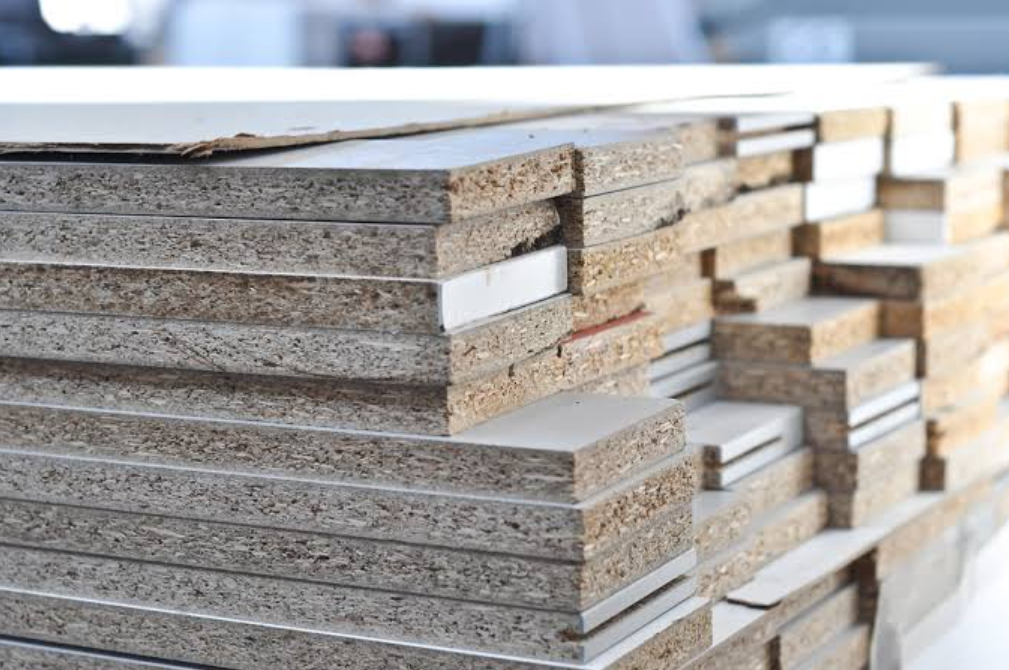
Crack open a panel at the corner, and the evidence shows up before you even call the supplier. The core feels solid, but the rim crumbles like it never bonded properly. Edges carry fewer particle-to-particle bonds than the core, dropping fracture resistance right where handling stress concentrates. Every drop, box corner, or forklift bump hits that weak zone first.
The complaint signature:
Chips cluster along top edges, corners, and cut lines around the perimeter.
The same corner or edge fails across multiple units, pointing to a recurring process defect.
Breakage occurs during unboxing, edge-banding, or normal transit impacts.
A thin, porous rim or crumbling powder along the cut edge signals poor consolidation before density testing even begins.
What causes it on the manufacturing side:
Uneven mat formation during pressing leaves panel edges underfilled with particles, creating a sparse, low-density zone.
Excess fines or particle segregation along the panel perimeter on the forming line.
Insufficient resin distribution reaching edge particles.
Trapped air pockets that fail to densify under the press.
High line speed and shortened press dwell times that prevent edges from consolidating like the core.
Worn saw blades or poor cutting support during trimming that break marginal edges.
What to measure before you accept the shipment:
Edge density versus core density, reported in kg/m³. A gap wider than 10–15% below standard particle board density ratings reliably predicts chipping complaints.
Friability, measured by material loss under light abrasion. Any edge that sheds visible powder on contact fails inspection.
Chip count per 1,000 units after a controlled drop or tumble test, run against a complaint-free control batch from the same particle board manufacturer.
Check the edge density yourself with a handheld density probe at several points around the panel. When the rim reads lower than the core and complaint tickets keep flagging the same corner, the root cause is an under-densified edge.
Screw Loosening and Joint Failure Complaints Traced to Poor Screw-Holding Strength
Six seconds. That is how fast a joint without a locking element lost preload down to 11 kN during vibration testing. Six seconds on a delivery truck, and the clamp force your customer paid for is already gone. Once furniture ships, rattles in a van, and sits through a few months of normal use, that rapid loss explains why “screw backs out” and “joint loose after a week” dominate your complaint logs.
The complaint signature:
Customers report repeated retightening, cracked or separated joints, and stripped internal threads despite proper installation.
Loosening shows up after transit or light use, long after initial assembly.
Clamp force disappears even when tightening felt firm at the factory.
What’s happening at the material level:
Poor screw-holding strength reduces thread engagement and friction at mating surfaces. Add transverse vibration, and preload loss can hit 100%. Axial vibration knocks off 30–40%. Either way, the screw rotates loose, the joint slips, and cyclic load transfers straight into the fastener instead of staying distributed as clamp friction. NASA documented this exact failure mode in bolted mechanisms. Every unit tested lost preload, with two assemblies dropping by half despite safety wire and high thread friction. Sourcing panels from a reputable مصنع ألواح خشبية reduces this risk from the start.
Separating the failure types:
Screw rotates out intact → low prevailing torque or missing locking feature.
Female thread strips → weak substrate or oversized pilot hole.
Screw fractures after loosening → preload loss led to fatigue.
Verification before acceptance:
Run a Junker transverse-vibration test (DIN 65151) and track residual preload. Reject any batch that falls below 40% residual preload after testing.
Measure installation torque against approved windows. Torque readings alone can mask inadequate clamp force, so verify preload directly where possible.
Section failed joints to inspect thread engagement and hole diameter.
Any supplier unwilling to share these numbers is asking you to absorb the return rate yourself.
Swelling, Warping, and Water-Damage Complaints Traced to High Moisture Uptake

A panel that measures true at the factory can measure dead wrong three weeks later in a customer’s bathroom. Suppliers rarely bring that up during price negotiations. Durability depends on how the board handles humidity once installed, regardless of resin grade or density from any particleboard and MDF supplier.
The complaint signature:
Doors and drawer fronts stop aligning after a few weeks in use.
Edges puff up near sinks, bathrooms, and exterior-facing walls.
Panels that swelled during a humid season leave visible gaps once they dry and shrink back.
Fasteners pull loose from swollen holes, and coatings crack along the same lines.
The moisture math behind it:
Particle board and MDF shift in thickness by 0.3–0.5% for every percentage point of moisture content change. On an 18mm panel, a 10-point moisture swing produces 1.8–3.0mm of thickness movement. That is more than enough to misalign a cabinet door or crack a joint seam.
Warping complaints usually trace back to uneven exposure. When one face absorbs moisture faster than the other, the panel expands asymmetrically, then pulls out of square as it dries.
Where the moisture content starts matters.
Lumber and sheathing should sit at 18% moisture or lower before enclosure. Above that threshold, the material continues to shrink after being sealed in, leaving gaps, loose fasteners, and cracked finishes months down the road. Interior wood for heated spaces should land closer to 6–8% moisture before installation. When panels are installed with mismatched moisture levels, they expand and contract at different rates, which directly causes warping.
MDF moves more than particleboard — and it gets worse with repetition.
In humidity cycling tests, MDF moisture content swung from 5.21% to 7.93%, with thickness changes ranging from −1.0% to +2.8%. After nine humidity cycles, swelling coefficients rose 31.8% for MDF and 23.7% for particleboard compared to untreated material. Panels that pass inspection today can still fail after repeated wet-dry exposure.
Part of that swelling never reverses. One aging comparison found residual thickness swelling after reconditioning reached 5.43% for MDF, compared to 1.58% and 0.49% for two particleboard formulations. MDF also retained 30% of its internal bond strength after moisture exposure, leading directly to delamination and fastener failure.
How to Catch Water Damage Before It’s a Return
Test 24-hour thickness swelling against EN 317 on 50mm × 50mm samples before approving a supplier.
For MDF between 12–19mm, benchmark against NBR 15316-2’s 12% maximum swelling limit. Tested ranges of 4.4–9.2% show how widely grade and sealing quality vary, which is why comparing quotes from each مورد ألواح MDF matters before you order.
Run EN 321 damp-cycling (3 days submerged at 20°C, 1 day frozen at −12°C, 3 days at 70°C) to simulate intermittent wetting up to 80% relative humidity.
Map swelling complaints to specific locations (sink cutouts, floor contact points, exterior walls) and compare moisture content at the damaged spot against an unaffected control area.
Separate reversible humidity movement from irreversible residual swelling. That second measurement proves the panel itself failed, rather than the room simply being humid.
Delamination and Surface-Lifting Complaints Traced to Weak Bonding

A panel can pass every visual check in the warehouse and still peel apart on a customer’s coffee table within weeks. Delamination happens when the bond between layers—laminate to substrate, veneer to core, or coating to coating—is weaker than the stress pulling it apart. Contamination, skipped surface prep, incompatible materials from an unreliable HDF or MDF board supplier, or rushed heat and pressure during lamination all set up this failure before the furniture ever ships.
The complaint signature:
Lifting starts at edges, seams, or fastener points, rarely in the dead center of a panel.
Large-area separation points to an incompatible substrate or an adhesive never suited for the job.
In one accelerated coating study, adhesion couldn’t even be measured on a third of the panels after 2,016 hours of exposure because the coatings had already delaminated.
Where the failure lives:
Don’t stop at “it peeled.” Identify the exact separation plane: adhesive-to-substrate, adhesive-to-film, coating-to-coating, or cohesive splitting inside a single layer. Pull-off testing catches all four in real complaint investigations, and each points to a different fix upstream.
Verification before acceptance:
Run ASTM D3359 tape testing to screen for weak adhesion. It won’t quantify strength, but it catches obvious failures quickly.
Use ASTM D6677 knife testing for a 0–10 field rating. Anything below 4 is a return rate problem waiting to happen.
Where you need numbers for negotiations, ASTM D4541 pull-off testing gives you both bond strength and the failure mode in one report.
Photograph the lifting pattern, log batch numbers, and record the environmental conditions from the line. That evidence package is what gets a supplier to fix the process instead of denying the claim.
Odor and Formaldehyde Complaints Traced to Resin Emission, Not Panel Density
Smell tests do not prove formaldehyde. Keep that in mind before rejecting a batch over a “chemical smell” complaint. Composite panels carry odor from varnish, lacquer, decorative finishes, or general VOCs with zero formaldehyde involved. A customer reporting an odor has not confirmed a formaldehyde issue, and chasing the wrong variable wastes weeks.
The complaint signature:
Chemical smell reported after unboxing, sometimes fading and sometimes persisting.
Complaints cluster by resin batch rather than density grade.
Smell intensity shows no correlation with panel thickness or density rating.
Where formaldehyde comes from:
Formaldehyde in wood-based panels comes from residual free formaldehyde in the resin, particularly urea-formaldehyde (UF). Panel density plays no part in this baseline. Resin formaldehyde content shares a direct linear relationship with panel emission rates. When UF resin increases from 0.88 to 0.98 mol, emissions climb alongside it, peaking at 0.98 mol and dropping lowest at 0.88 mol. Pressing conditions matter just as much: continuous hot pressing cut formaldehyde gas emissions by 57.12% compared to multiday pressing, measuring 3.67 mg/100g versus 5.76 mg/100g.
Why density is the wrong lever:
In MDF, emissions shift with adhesive content and press conditions rather than density alone. Pushing adhesive from 8% to 14% increases emissions across every density rating. Emitted VOCs also split into separate sources. Formaldehyde tracks with UF resin, while other VOCs (34 distinct compounds identified in testing) trace back to the wood chips. Ask your مصنع ألواح MDF for adhesive content data instead of relying on density specs.
Verification before acceptance:
Test finished panels using a recognized chamber or desiccator method instead of sniffing for odor intensity.
Request the resin supplier’s free-formaldehyde spec and UF solids/add-on rate.
Compare panels from different resin batches at matched density.
Audit hot-press temperature, pressure, time, and mat moisture.
Test bare board apart from laminate, paint, and edge banding.
Benchmark against E1-class limits: ≤8 mg/100g dry board, ≤0.124 mg/m³ chamber emission.
Frame odor complaints as resin-related until testing says otherwise.
خاتمة
Every furniture complaint leaves a paper trail that leads straight back to the panel. Edge chipping comes from density below spec. Swelling after shipping points to moisture uptake nobody tested for. Screws pulling loose in week three stem from weak internal bond strength that looked fine on paper and failed in the warehouse.
Treat your particle board density rating as your first line of defense against returns. A $40 moisture meter and a five-minute water-soak test cost less than one refunded order, and they catch the defects that turn into one-star reviews.
Your furniture return rate comes down to math. Pull your last 20 supplier samples, run them through the checks above, and watch which ones fail before your customers do. For context, review the background of an established مصنع أرضيات SPC.