Brazil Laminate Flooring: Import Trends, Pricing Factors & Sourcing Guide

Laminate Flooring

Sourcing Brazil laminate flooring sounds simple — until the pricing quotes don’t add up. Supplier certifications raise more questions than answers. Import duties hit your landed cost harder than anyone told you upfront.

That gap between what buyers expect and what they find is exactly where deals fall apart. This guide closes that gap.

You might be evaluating Brazilian wood flooring for a large-scale project. Maybe you’re comparing supplier tiers. Or you’re building a solid cost model before your next negotiation. Either way, what follows gives you a data-grounded, step-by-step breakdown of what moves the needle:

Pricing drivers

Quality benchmarks

Compliance requirements

Sourcing strategy built for buyers who need to make real decisions

What This Guide Covers — and Why the Structure Matters

Brazil’s laminate flooring market hit USD 599.3 million in 2024. By 2030, that number reaches USD 839.0 million — a 5.9% CAGR. Construction growth and rising demand for sustainable, low-maintenance surfaces are pushing it there. Laminate is the fastest-growing segment in that market. The opportunity is real.

But opportunity without structure leads to costly mistakes.

This guide breaks down six key decision modules:

Market overview — export trends, domestic demand growth, and import share dynamics

Pricing factor breakdown — raw materials, grade, currency, freight, and tariffs

Product specifications — AC ratings, HDF density, thickness, and surface finish comparisons

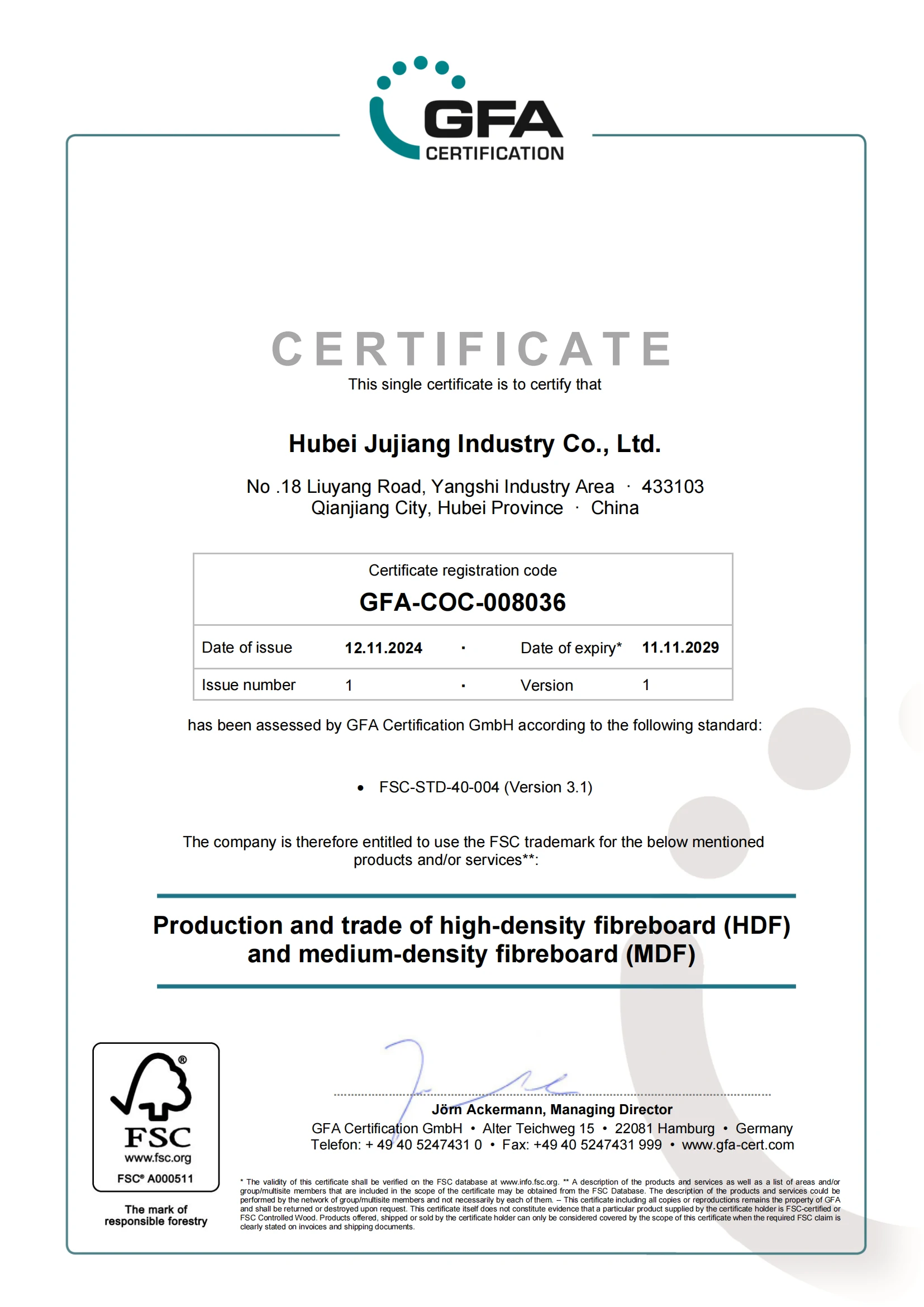
Supplier vetting — ISO, FSC, CARB certification requirements

Import compliance — HS codes, duty rates, and clearance requirements

Cost modeling — landed-cost examples and practical sourcing recommendations

Each module builds on the last. Skip one, and your cost model has a gap.

One critical data point before you start: Brazil carries a 28% total U.S. tariff rate. That’s lower than China (44%), Vietnam (56%), or Indonesia (42%). This one number changes your sourcing math — before you’ve looked at a single product spec.

Brazil Laminate Flooring Market at a Glance: What the Numbers Tell Buyers

Brazil’s laminate flooring market is smaller than most buyers expect. It’s also growing faster than most competitors notice.

Here’s what the data shows:

The total Brazil floor covering market sits at USD 11.99 billion in 2025. Wood and laminate combined? USD 599.3 million — that’s 5% of that total. Laminate alone is a fraction of that figure.

This is a niche market. Not a marginal one.

Within that niche, laminate holds the “most lucrative” label. It’s the fastest-growing segment in the wood and laminate category through 2030. Growth runs at 5.9% CAGR — a step above the broader floor coverings market.

Three numbers matter most for your planning:

Base case laminate CAGR: ~6% through 2030

Residential demand: ~70% of end-use — build your SKU range around this

Commercial segment CAGR: 5.12% — smaller base, but picking up speed

Residential demand shapes your product specs directly. The bulk of volume falls in AC3/AC4 ratings, 7–8mm thickness, and click/glue-free locking systems. That format fits a global glue-free segment growing from USD 7.5 billion to USD 12.2 billion by 2033.

On pricing: laminate beats ceramic tile on installation speed. It beats LVT on cost. Global data puts laminate 20–40% below engineered wood per square meter. Use that gap as your negotiation anchor with Brazilian suppliers.

The bottom line: buyers here are not chasing dominant volume. You’re targeting above-market growth in a defined niche — and that’s where the real margin sits.

Brazil’s Real Role in Laminate Flooring Trade (Importer vs. Exporter)

c1a15f0a 371d 4746 8a15 4fbca0ea44e4 

Most buyers come to Brazil with the wrong idea — and it costs them.

Here’s the truth: Brazil is a massive consumer of laminate flooring, not a major exporter. That difference matters a lot when you’re building a sourcing strategy.

Brazil’s domestic glue-free laminate segment sits at USD 7.5 billion. Its total laminated panel imports? USD 1.06 million. That gap — billions versus millions — tells you exactly where Brazil stands in the global flooring chain.

Brazil Imports Finished Flooring. It Exports Raw Inputs.

The trade flow splits into two clear lanes:

What Brazil buys from the world:
– Finished click-system laminate flooring (mostly from Europe and Asia)
– Décor foils, overlay papers, and locking technology
– Higher-grade branded laminate systems

What Brazil sells to the world: – FSC/CARB-certified plywood and MDF panels – HDF substrate boards used as laminate cores by foreign manufacturers – Pine and teak timber for construction and flooring production

Duratex (now Dexco) runs large-scale MDF/HDF plants. They produce hundreds of thousands of cubic meters each year. That output feeds both local flooring converters and international panel buyers. Export Brazil Pine markets Brazilian plywood and MDF to global distributors. Their key selling points are certifications: FSC, CARB, and EUDR.

Their hashtags say it all: #BrazilianPlywood #WoodPanels #TimberTrade — not laminate flooring systems.

The Import Concentration Risk Worth Knowing

Brazil’s laminated panel imports (HS 441299) show a clear concentration pattern:

Origin Import Value (2023) Share
China USD 616,040 ~58%
Belgium USD 179,010 ~17%
Finland USD 84,790 ~8%
Spain USD 51,660 ~5%
United States USD 35,090 ~3%

China leads on the supply side. EU countries together hold ~29% — a useful benchmark for measuring supply chain resilience.

What This Means for Your Sourcing Decision

Your next step depends on which direction you’re moving:

Selling laminate flooring into Brazil? You’re stepping into a fast-growing import market. The laminate segment grows at 6.1% CAGR — ahead of the broader floor coverings market at 4.62%. Distributors like G-Floor Brazil (based in Curitiba, with a U.S. office in Naples, Florida) already run active import channels built for this market.

Sourcing from Brazil? Focus on certified panel substrates — MDF, HDF, plywood — not finished laminate flooring. Brazilian mills deliver solid quality and strong certifications. Finished product design, locking systems, and surface technology still come from other markets.

The bottom line: Brazil’s laminate flooring story is a demand story, not a supply story. Build your strategy around that fact, and the numbers start working in your favor.

d7a8f396 8cbd 4d11 8b36 e35720937db8

Brazil’s laminate flooring market runs on foreign supply — and that’s not a weakness. It’s a structural reality that smart importers can use.

Here’s the core fact: imports make up 14–16.5% of Brazil’s total laminate flooring sales, according to ABIPLAR data. The market hit USD 599.3 million in 2024. It’s heading toward USD 839 million by 2030. That share is real, sustained volume — not a rounding error.

China Dominates the Import Flow

The enforcement data tells the story clearly. Brazilian customs seized a 30-tonne shipment of illegal laminate flooring from China — one case that points to a much bigger pattern. China is the dominant low-cost source driving Brazil’s import demand. It shows up in both legitimate trade channels and customs enforcement actions tied to misclassification.

That second point is worth your attention. Tariff misclassification is a live risk.

Brazilian customs are watching shipments closely — especially from low-price origins. Get your HS code wrong and you’re not just paying a fine. You’re losing the shipment entirely. So get it right before the cargo moves.

The Structural Trade Deficit That Creates Opportunity

IndexBox confirms it: Brazil carries a structural trade deficit in laminate flooring. Imports exceed exports. Domestic production covers the mid-to-upper tier. Foreign supply — led by China on price, with European brands holding the premium end — fills the gap.

For importers, that gap is the opening. Here’s what the picture looks like:

Demand is real. Brazil’s floor covering market is growing at a steady pace.

Domestic supply has limits. Local producers focus on mid-to-upper tier products. The lower price range stays open.

You’re targeting the fastest-growing segment in Brazil’s entire floor covering market.

The deficit isn’t a problem to solve. It’s the reason you have a market to enter.

Why Import Laminate Flooring from China for the Brazil Market?

766aadb7 9bb1 4b04 8975 34cde78e8601

Brazil’s laminate flooring market relies heavily on imported finished products, especially in the value-focused segment. China has become the largest supply source for Brazil’s laminated panel imports, accounting for around 58% of import value in 2023. This reflects China’s advantage in large-scale production, cost control, and flexible product customization.

For Brazilian distributors, retailers, and project buyers, importing laminate flooring from China is especially suitable for products targeting the mid-range market, including AC3 and AC4 residential flooring, commercial renovation projects, and private-label collections.

The main reasons buyers choose Chinese laminate flooring suppliers include:

Competitive FOB pricing — China’s large manufacturing base allows suppliers to offer a wider price range from economy residential products to premium AC4/AC5 collections.

High customization capability — Buyers can request specific décors, embossing patterns, packaging designs, and private-label solutions for local market positioning.

Complete product specifications — Chinese manufacturers typically provide a wide range of thicknesses, HDF densities, click systems, and surface finishes to match different project requirements.
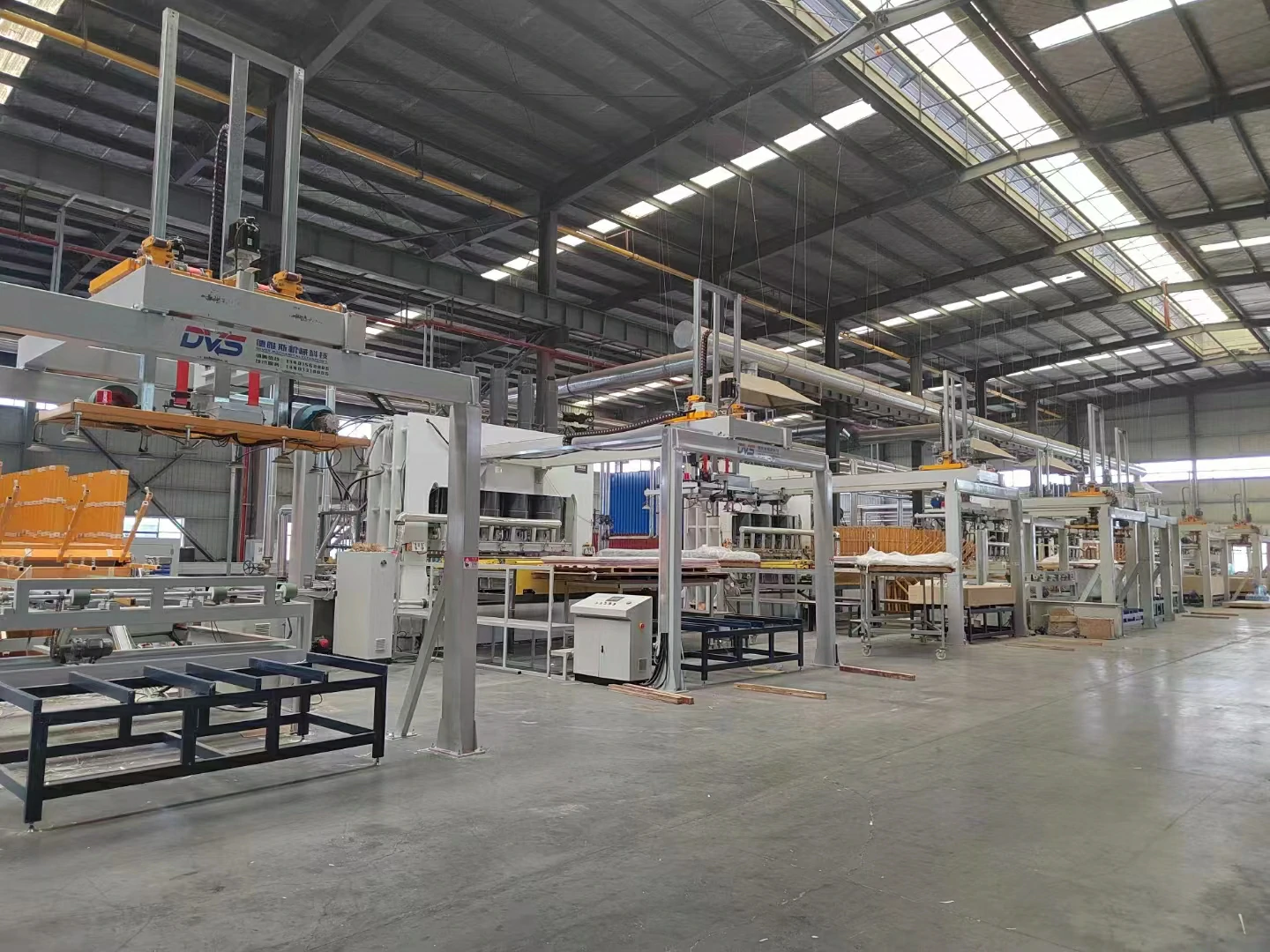
Export experience — Established suppliers are familiar with international documentation, container loading standards, and compliance requirements for overseas markets.

For Brazil buyers, the most suitable sourcing strategy is usually not competing only on the lowest price. A better approach is selecting suppliers that can balance FOB cost, product stability, certification requirements, and long-term supply capacity.

Laminate Flooring Pricing Factors: A Full Cost Breakdown for Brazil Market

b42b6669 c635 41c6 a43b 2ff2d03ed36a

Five numbers determine whether your Brazil laminate flooring deal makes money or kills your margin. Miss any one of them and your landed-cost model is broken before the cargo ships.

Here’s the full breakdown.

Material Cost by Product Tier

Brazil’s laminate flooring market prices in BRL. Converting to your home currency adds one more variable — but the tier structure stays consistent:

Category AC Rating / Thickness Material Cost (R$/m²)
Economy AC3, 7mm R$40–60
Mid-range AC4, 8mm R$60–90
Premium AC5, 12mm R$90–150

Each step up the AC ladder adds R$20–50/m² in material cost. Moving from 7mm to 12mm alone pushes material spend up by R$60–90/m². That’s not a rounding difference — that’s a tier decision.

Installation and Accessories: The Costs Buyers Undercount

Material is never the full story. Here’s what the total installed cost looks like on a 50m² mid-range AC4 project:

Flooring material (AC4, R$70/m²): R$3,500

Acoustic underlay (R$15/m²): R$750

Skirting boards (60m perimeter, R$20/m): R$1,200

Transition profiles (6 pieces × R$50): R$300

Labor — São Paulo rate (R$50/m²): R$2,500

Without subfloor prep: ~R$7,750 → R$155/m²
With self-leveling compound (+R$1,500): ~R$9,250 → R$185/m²

Both figures sit well within the R$120–220/m² benchmark for installed mid-range laminate. Plan for the higher end on São Paulo projects.

The Five Factors That Move Your Final Price

1. AC rating — the single biggest material-cost driver. AC3 residential vs. AC5 commercial is a R$50–90/m² swing in material alone.

2. System type — glue-down material runs R$30–37/m². Click-lock runs R$45–50/m². The labor gap follows the same direction: R$25–30/m² vs. R$32–38/m².

3. Geography — São Paulo and Rio labor runs R$45–55/m². Interior markets sit at R$25–35/m². That R$20/m² spread across a 500m² commercial project adds up to R$10,000 in labor variance.

4. Subfloor condition — self-leveling compound adds R$20–45/m² where needed. Check the subfloor before you quote. Every time.

5. Project volume — orders above 100m² tend to bring 5–15% discounts on both material and labor. Major retailers like Leroy Merlin and Telhanorte treat this as standard commercial pricing.

What Premium Costs at the Top Tier

AC5 flooring in São Paulo, with full accessories, subfloor prep, and premium finish — the real number is R$180–250/m². That’s not a worst case. That’s the expected range at the top tier.

Know your tier before you build your quote.

Landed Cost Calculation: What You’ll Pay Per m² (With Brazil as Origin)

Most importers get the product price right. They get almost everything else wrong.

Margin disappears in the eight cost layers between FOB Brazil and your warehouse dock — not at the supplier negotiation. Here’s the formula that fixes it:

Landed cost per m² = (FOB cost + freight + insurance + origin fees + customs duties + import taxes + brokerage + inland freight) ÷ total m² shipped × FX rate

Every component is a variable. Each variable builds on the last.

Build Your Cost Stack Layer by Layer

Start with shipment-level totals. Then break each charge down to per-m². The math is simple: your shipment covers 100 m². Every BRL 1,000 in freight becomes BRL 10/m². Every BRL 500 in insurance becomes BRL 5/m². Every BRL 2,000 in customs and destination fees becomes BRL 20/m².

Small numbers per unit. Large numbers at scale.

Follow this sequence — in order:

  1. Lock in your m² count, FOB unit price, invoice currency, Incoterm, and NCM/HS code
  2. Add international freight, insurance, and prepaid Brazil origin fees to your running total
  3. Convert all figures using a documented exchange rate
  4. Calculate customs value: FOB total + freight + insurance
  5. Run your duty rate against that customs value
  6. Run VAT or destination import tax against the combined taxable base
  7. Add brokerage, clearance, and inland freight — then divide the full total by m²

The Spreadsheet Checklist That Keeps You Audit-Safe

Confirm these inputs before a single container moves:

SKU and product type

Total m² shipped

FOB price (BRL or USD)

Freight total

Insurance premium

Origin charges in Brazil

Destination charges

NCM/HS code + duty rate

VAT/GST or destination tax rate

Brokerage and clearance fees

Inland freight to final warehouse

One final check: add up every allocated per-m² charge. The total must match your shipment-level figures. A gap beyond minor rounding means a cost component is missing. That gap turns into a margin hit you never planned for.

Laminate Flooring Product Specifications & Quality Benchmarks for Smart Sourcing

Spec sheets separate serious buyers from expensive mistakes.

Sourcing HDF Core laminate flooring at container scale means every number on that spec sheet is either a negotiation lever — or a liability that shows up after delivery. Here’s what those numbers mean, and which benchmarks to hold suppliers to.

AC Rating: Your Non-Negotiable Starting Point

AC rating (EN 13329) is the single most important quality benchmark on any laminate spec. It shows how the floor holds up under real traffic — not how it looks in a showroom.

Here’s the working framework:

AC Rating Use Case Sourcing Benchmark
AC3 Standard residential Minimum for bedrooms/living rooms
AC4 Heavy residential / light commercial Preferred residential standard
AC5 Heavy commercial Premium wear, high-traffic spaces

Don’t accept marketing claims. Ask for the actual EN 13329 test report. AC ratings with no lab documentation mean nothing in a B2B contract.

Laminate Plank Thickness Specifications: Where Feel Meets Function

Laminate plank thickness runs from 6mm to 15mm across the market. Here’s what the numbers mean for commercial sourcing:

7–8mm — budget residential, works for low-traffic applications

8–10mm — standard performance, better underfoot feel, less noise transfer

10–12mm — premium stability, strong sound reduction, handles subfloor imperfections better

Swiss Krono’s commercial lines run 8mm, 10mm, and 12mm. That range reflects real-world demand — not catalog padding.

Rule of thumb: Stay above 8mm for any project where warranty performance matters.

Moisture Resistance: The Spec Most Buyers Skip

Thickness swell is where cheap laminate fails — fast.

NALFA LF-01 3.2 sets the benchmark:

Residential floors: maximum 20% thickness swell

Commercial floors: maximum 16% thickness swell

Put this language straight into your RFQ: “Maximum thickness swell rating to NALFA LF-01 3.2: 20% residential / 16% commercial.”

Also ask for 24-hour spill test data showing edge height change of ≤0.2mm. A supplier who won’t provide that number is already giving you useful information.

Emissions & Environmental Compliance

For Brazilian flooring export aimed at North America or Europe, E1 formaldehyde emissions (≤0.1 ppm) is the baseline — not a premium add-on.

For U.S. market entry, require CARB Phase 2 compliance at minimum. Many buyers sourcing from Brazil, or through Brazilian distributors, skip this step. That creates clearance delays that cost real money.

Dimensional Specs That Drive Visual Quality

Current market trends favor:

Width: 7.5–9 inches (190–230mm)

Length: 6–7 feet (1,800–2,100mm)

Pattern repeat: minimum 1:6 ratio (one pattern per six planks)

Specify embossed-in-register surface texture where appearance consistency matters. Synchronized texture aligned to the printed grain is what pushes a product from mid-tier into premium positioning.

Your Spec Checklist Before Any RFQ Goes Out

Lock these inputs before contacting a single supplier:

Thickness: ≥8mm, target 10–12mm for commercial

AC rating: AC3+ residential, AC4–AC5 commercial

HDF core density: >800 kg/m³

Swell: ≤20% residential / ≤16% commercial (NALFA LF-01)

Emissions: E1 or CARB-equivalent

Click system: mechanical locking, long and short sides specified

MOQ confirmation: standard is 1×20′ container (~2,000–2,500 m² for 8mm)

Warranty: ≥20 years residential, commercial warranty documented on its own

FOB price benchmarks for reference: basic 7–8mm AC3 E1 product runs around USD 4–7/m² ex-factory. Move up to 8–12mm AC4–AC5 with embossed texture and E1/E0 emissions, and you’re looking at USD 7–12/m² FOB.

These numbers give you a solid anchor before your first supplier call.

Supplier Evaluation & Certification Checklist for Brazil-Linked Laminate Flooring

Bad suppliers don’t announce themselves. They show up in warranty claims, customs rejections, and cartons that don’t match your spec sheet.

This checklist stops that from happening — before a single container moves.


Step 1: Verify the Brazil Linkage First

“Brazil-linked” means different things to different suppliers. Pin it down with documented evidence — not sales claims.

Accept one of these three forms of proof:

Brazilian legal entity: CNPJ number, state registration (Inscrição Estadual), full facility address

Active production or finishing site: city, state, and annual capacity in m²/year

Long-term Brazilian material sourcing: MDF/HDF or décor paper contracts spanning 3+ years, with % of total volume confirmed in writing

Run this filter too: ask what percentage of annual laminate sales ships to the EU, North America, or Australia. A ≥30% export share to regulated markets tells you the supplier already works inside compliance frameworks. That’s not a guarantee — it’s a useful signal.

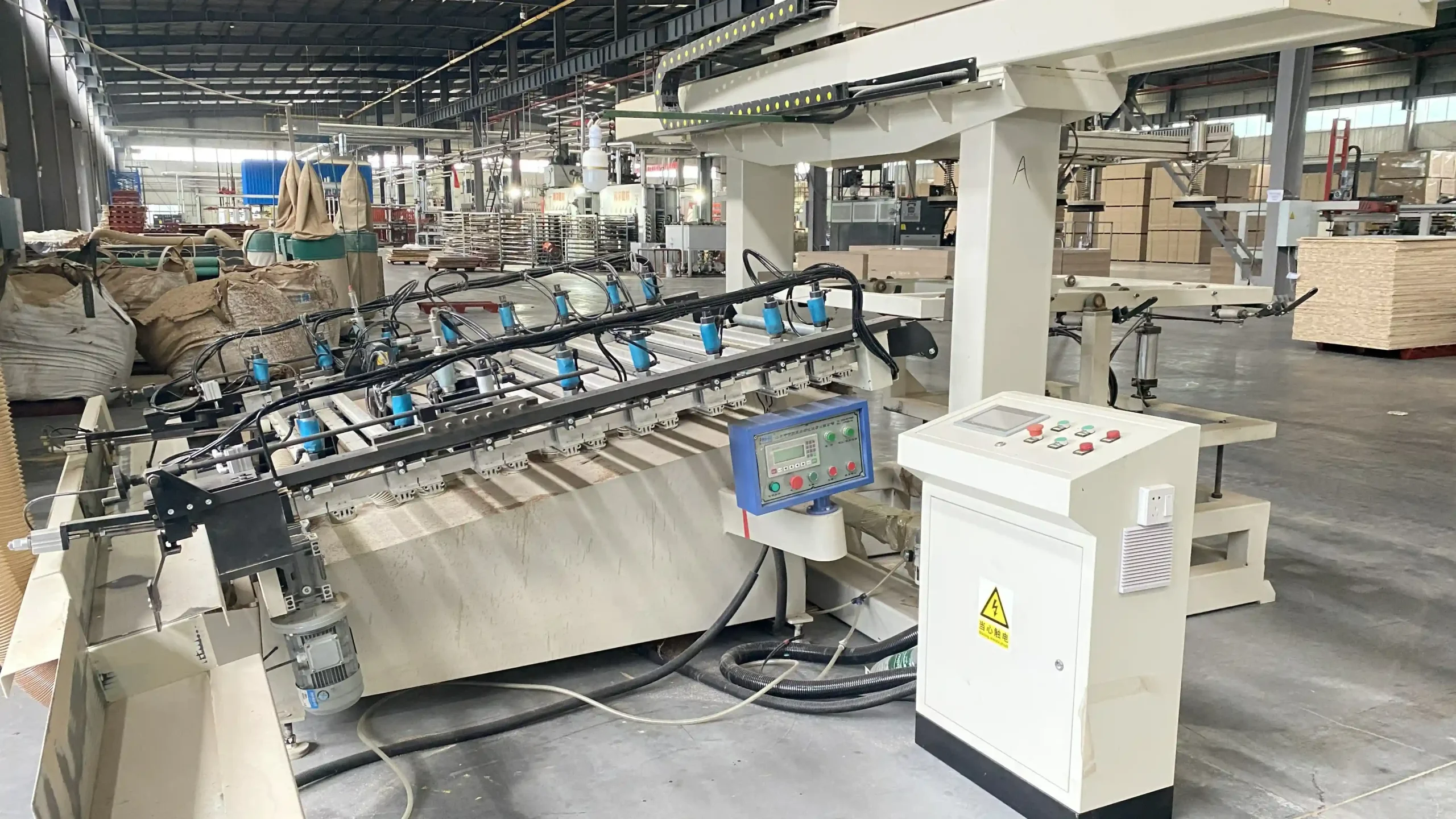
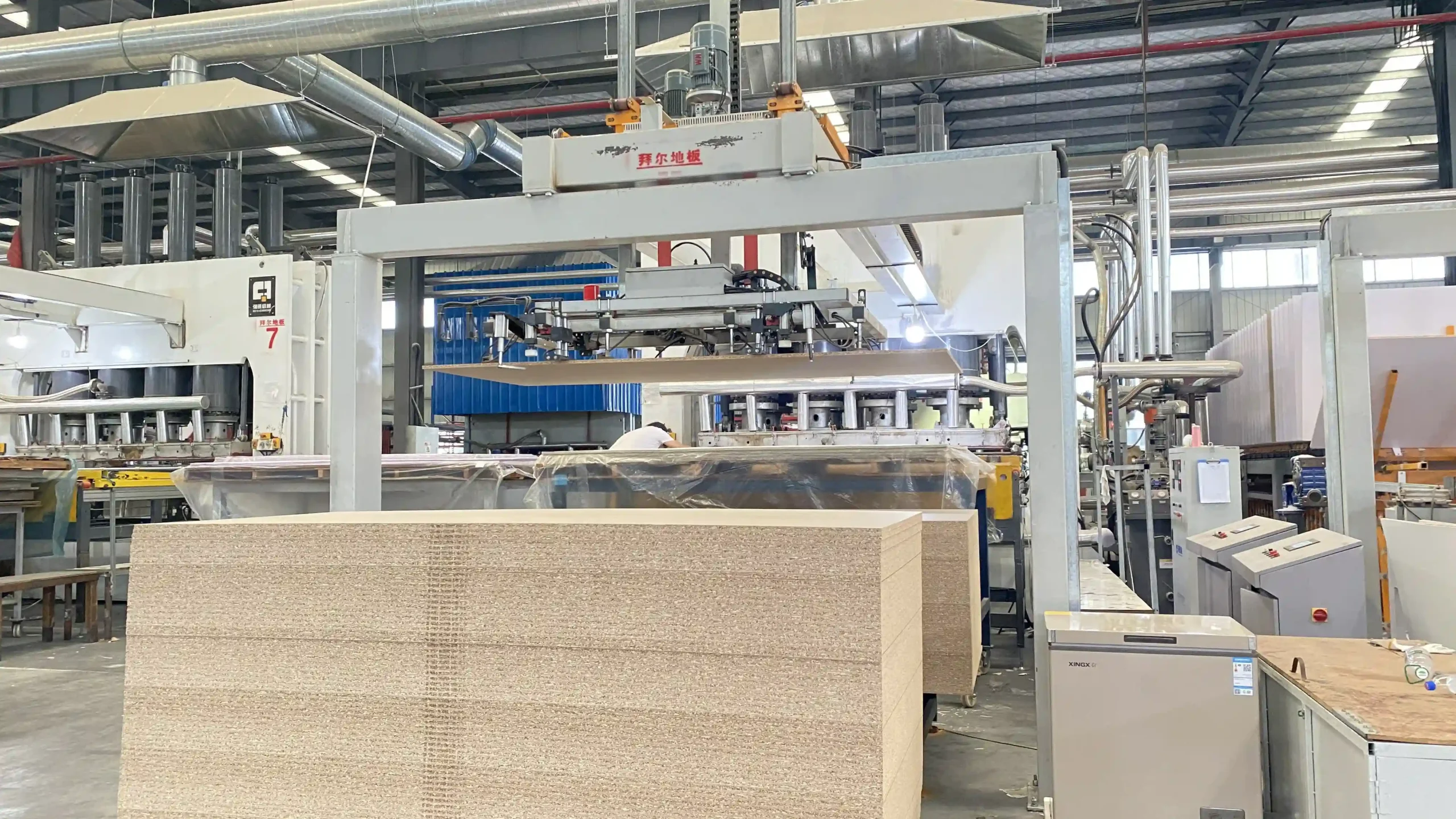
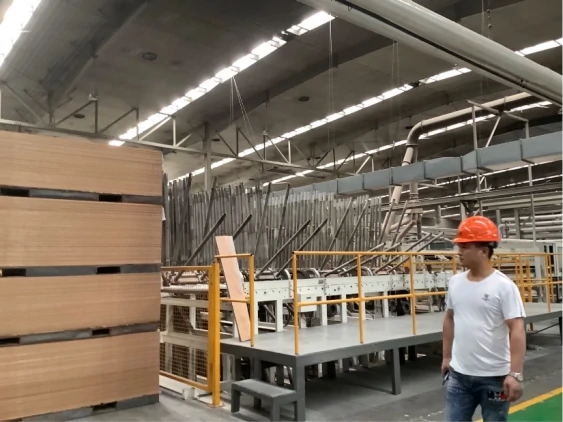
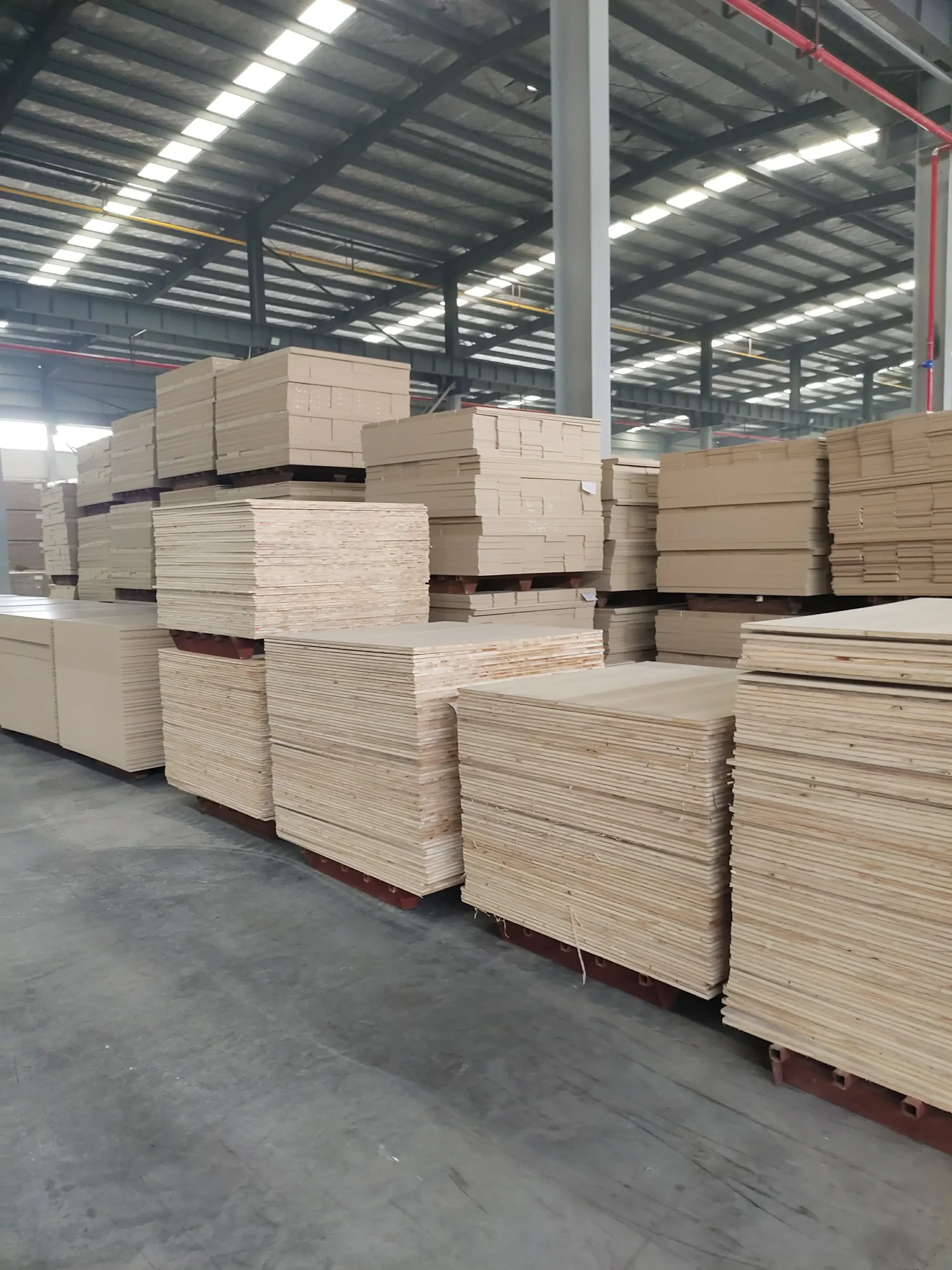
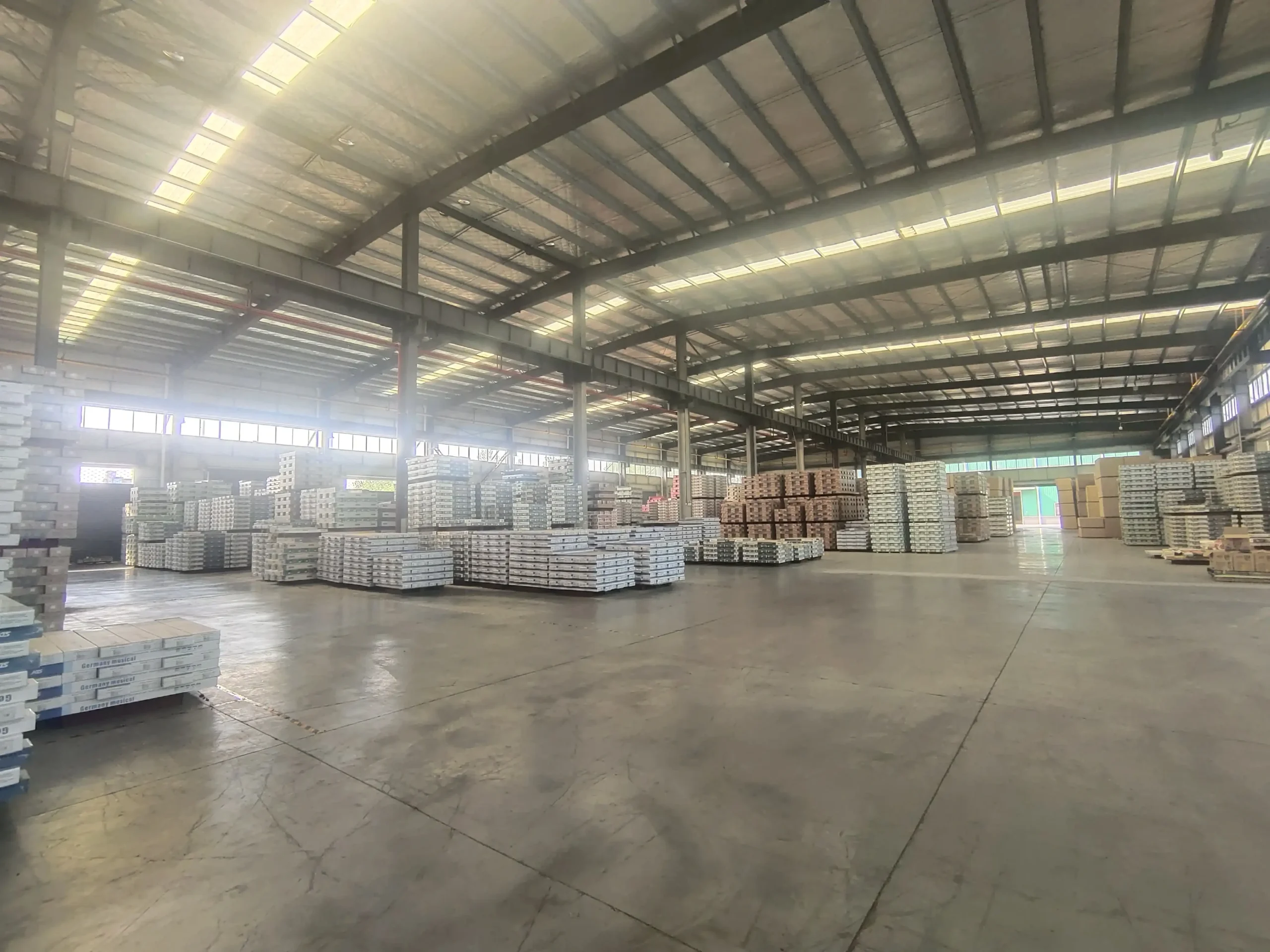
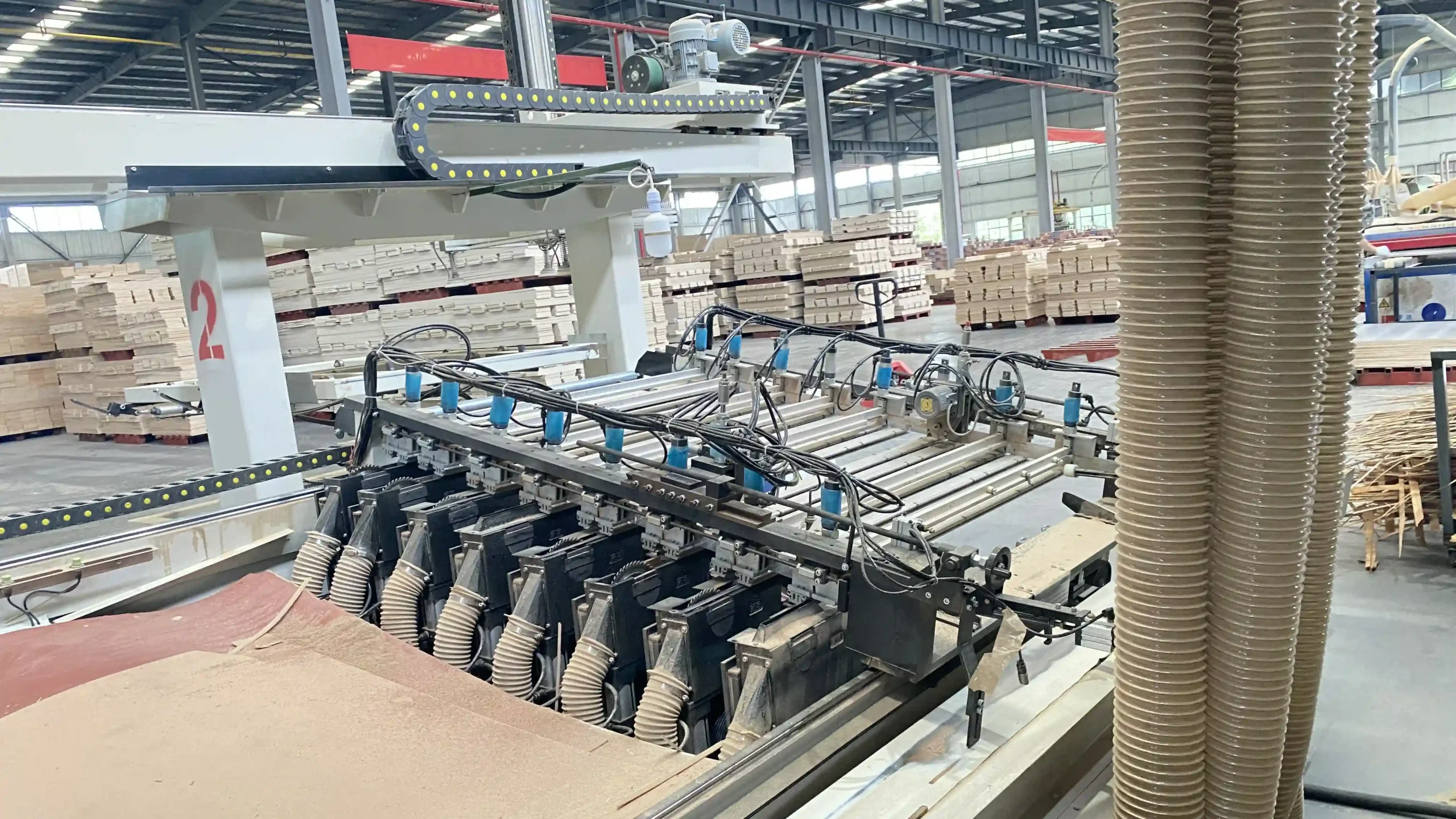
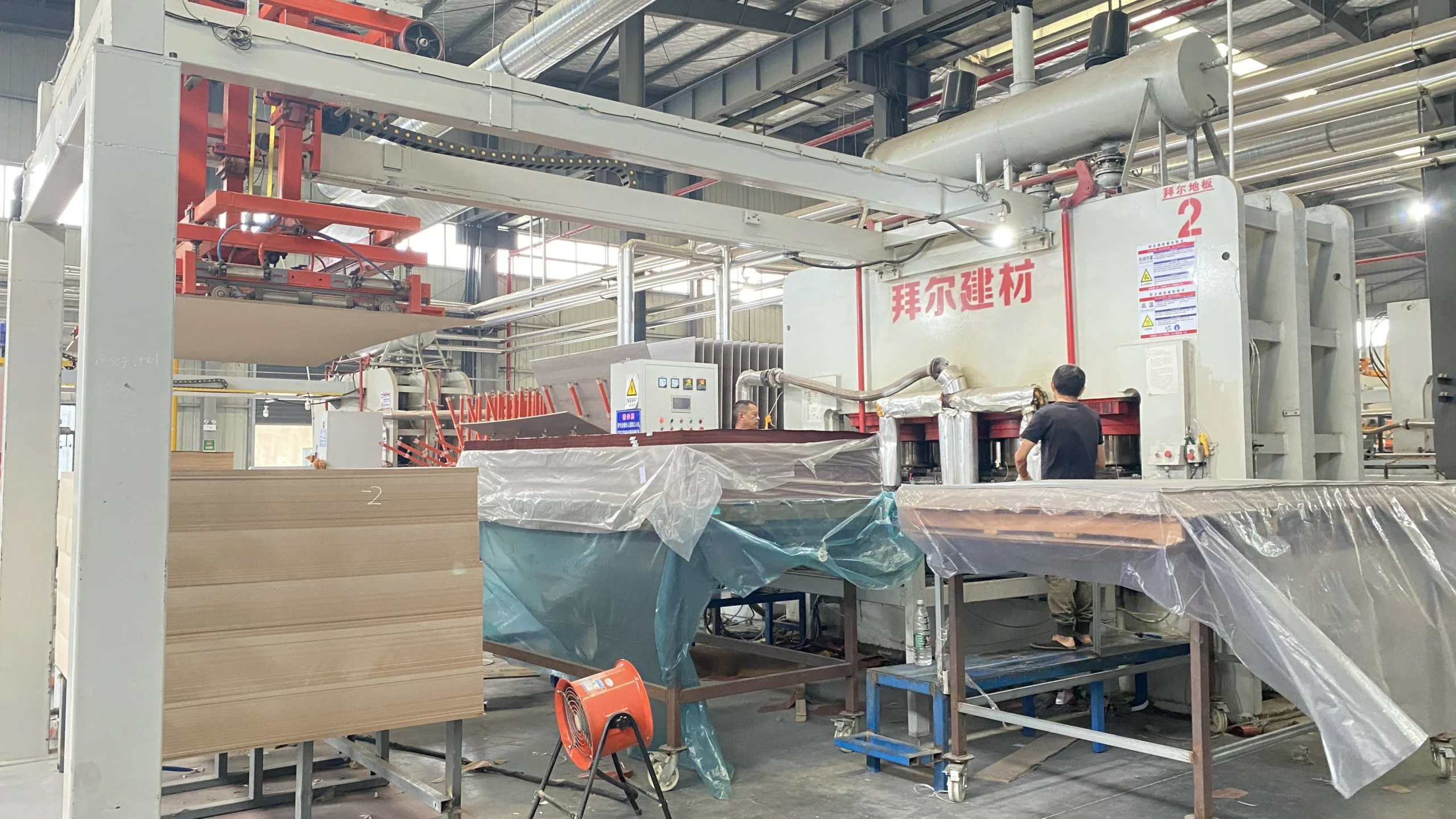
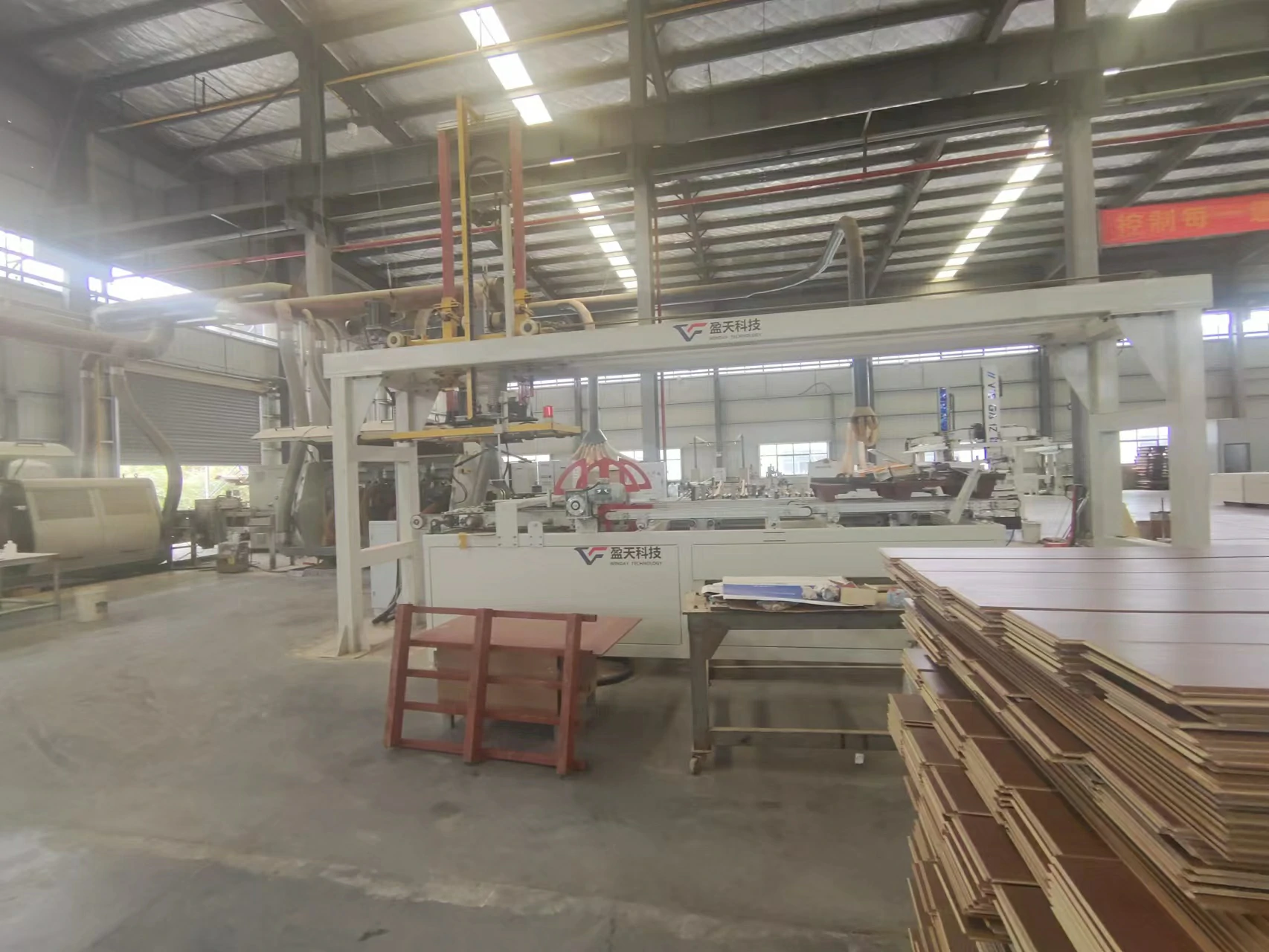
Also confirm whether you’re dealing with a manufacturer or trader. Ask for photos of continuous press lines, a machine list, and a production layout. Traders aren’t disqualified by default, but the accountability chain is longer — and that matters when something goes wrong.


Step 2: Lock Down Product Specifications

Once Brazil linkage is confirmed, move to the spec sheet. These numbers determine whether your product performs — or fails mid-project.

HDF Core Density
– Minimum 880 kg/m³, tolerance ±0.15 mm per ISO 14486 Class T
– Request batch logs from ≥10 consecutive production runs, showing mean density and min/max values
– Anything below 880 kg/m³ puts long-term dimensional stability at risk

Thickness & Dimensional Tolerances
– Nominal thickness (8.0, 10.0, or 12.0 mm); tolerance ±0.15 mm
– Length/width tolerance: ≤0.20 mm; squareness and straightness within EN 13329 limits
– Ask for the lab report — not just the spec sheet claim

Locking System Strength
– Require tensile strength per EN 13329 Annex A
– Minimum: 450 N/m for commercial use; ≥550 N/m for premium applications
– A locking system that fails on a commercial job is a liability, not just a defect

Edge Swell
– Request 24-hour EN 13329 edge swell test data
– Acceptable threshold: ≤6% thickness swell for PUR-sealed products
– Walk away if swell exceeds 8% or the supplier can’t produce test documentation

First-Pass Yield & Defect Rates
– First-pass yield: ≥95%
– Defect rate: <1% for residential products; overall QC reject rate in-plant <2%
– Ask for calibration logs and in-line inspection records to back these figures up


Step 3: Demand the Right Certifications

Certifications aren’t paperwork formalities. They’re your legal and reputational protection.

Formaldehyde & VOC

Certification Requirement Market
E1/E0 ≤0.1 ppm chamber test All markets
CARB Phase 2 + TSCA Title VI Full compliance docs, lab name + report ID US-bound orders
GREENGUARD Gold / EU Ecolabel / Blue Angel Certificate number + expiry date Premium or institutional projects

Don’t accept a certificate without the measured ppm value attached. A certificate that omits numeric test results is incomplete.

Forest & Sustainability (FSC/PEFC)

For Brazilian wood-based supply, this certification isn’t optional. It’s what separates legitimate trade from legal risk.

Require FSC Mix ≥70%, FSC 100%, or PEFC chain-of-custody

Get the CoC certificate code, scope of products covered, and expiry date. Then check the codes on the FSC or PEFC certification body database

Confirm traceability of Brazilian timber by origin state (Paraná, Santa Catarina are common sources). Cross-check against internal tracking documents

A supplier who can’t show FSC/PEFC documentation on Brazilian wood-based inputs has a compliance gap. That gap carries real import consequences — for EU and North American buyers.


Step 4: Run a Structured Supplier Evaluation

The 10 Cs framework gives you a numeric scoring structure. It removes personal bias from a process that tends to get subjective fast.

Score each criterion 1–5, then rank suppliers against each other:

Criterion What You’re Measuring
Competence Lab capability, technical documentation quality
Capacity Annual m²/year output; 15–20% buffer availability
Commitment Warranty terms, long-term Brazil material sourcing
Control In-line QC, reject rate <2%
Cash Financial stability for long-term contracts
Cost Price/m² against verified spec level
Consistency Defect <1%, batch-to-batch repeatability
Culture Alignment on sustainability, regulatory compliance
Clean E1/E0, low VOC, FSC/PEFC scope coverage
Communication Response time, documentation turnaround

A supplier who scores well on Cost but low on Control and Clean is a risk. It just doesn’t show up until later.


Step 5: Test Before You Commit

Before full-volume orders, run these physical checks on product Samples:

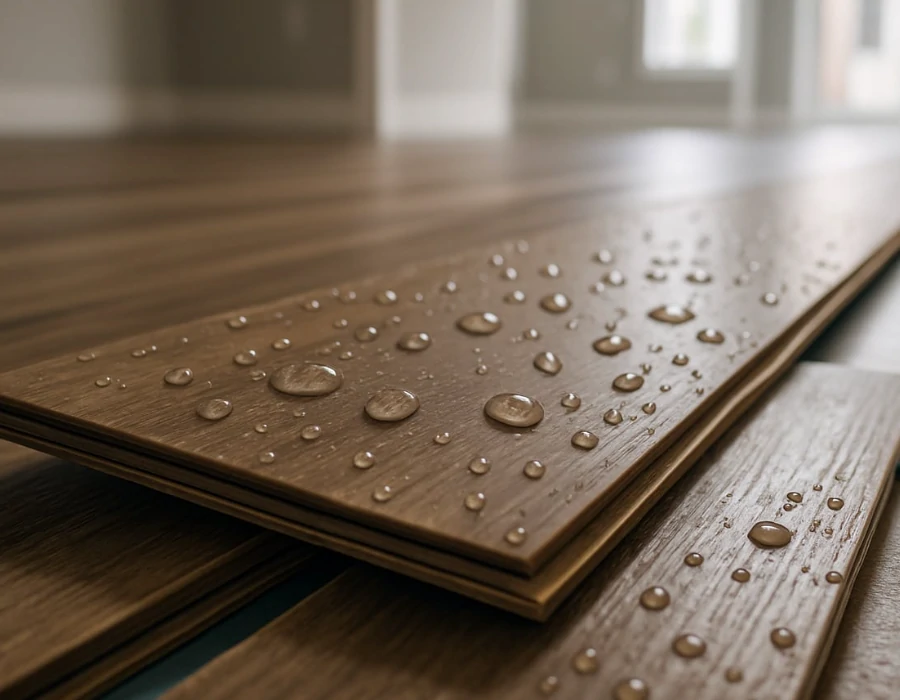
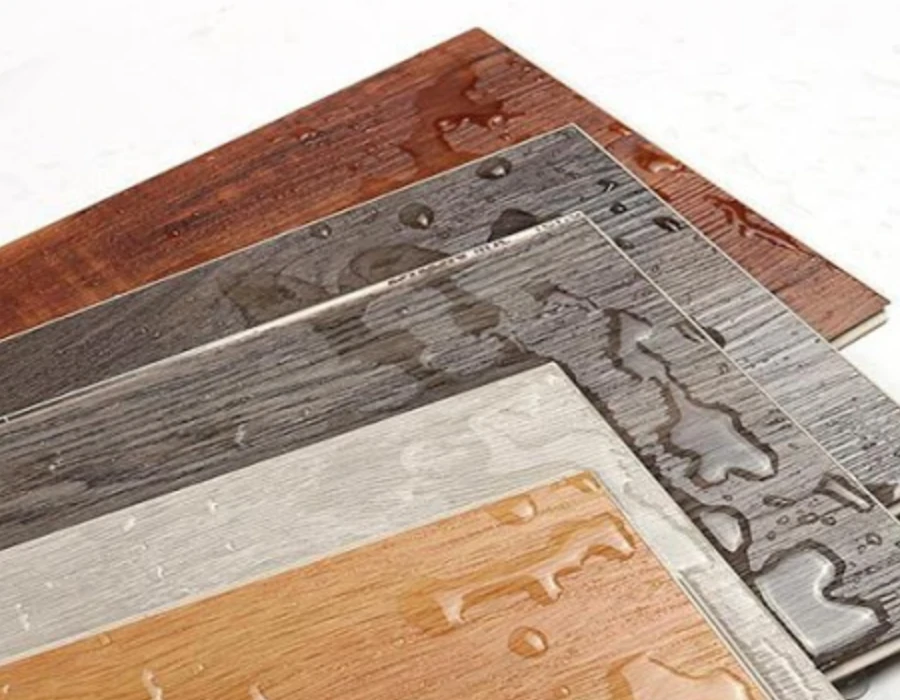
Water resistance field test: Pour 50 ml of water on a plank sample. Leave it for 24 hours. Measure edge swelling, check surface integrity, and document the result with photos.

Click system inspection: Lock sample planks together. No visible gaps, no resistance during engagement, no chipping at edges.

Color/finish consistency: Pull boards from multiple cartons of the same batch. Check shade uniformity and texture alignment against catalog samples.

Then place a 500–1,000 m² trial order. Use it to check packing accuracy (SKU, AC rating, color labeling), product consistency (dimensions, click fit), and how fast the supplier responds when something’s wrong.


The Document Package to Demand Before Signing

Build this into your RFQ process. Every supplier shortlisted for Brazil-linked laminate supply should provide:

Company documentation
– [ ] CNPJ + state registration
– [ ] Facility list with addresses and annual capacity
– [ ] Export history by market (countries + % share)

Product technical file (per collection)
– [ ] AC rating + EN 13329 test report from accredited lab
– [ ] HDF density and thickness tolerance logs (≥10 production runs)
– [ ] Edge swell report with numeric % value
– [ ] Locking tensile strength report with N/m values

Compliance & sustainability
– [ ] E1/E0 certificate with exact measured ppm
– [ ] CARB Phase 2 / TSCA Title VI reports (for US-bound orders)
– [ ] FSC/PEFC CoC certificate with code, scope, and expiry date
– [ ] GREENGUARD Gold / EU Ecolabel / Blue Angel where applicable

Performance data
– [ ] Annual production volume (m²/year)
– [ ] Defect rate % and QC reject rate %
– [ ] On-time delivery % over the past 12 months
– [ ] 3–5 reference projects with size, AC rating, and ≥2 years of performance data

A supplier who resists providing this package is telling you something. That same resistance will show up again in your quality disputes later.

Laminate Flooring Import Process & Compliance Guide: Step-by-Step for Brazil Origin

Customs holds kill deals. Not bad products. Not wrong pricing. The paperwork gap between your supplier’s loading dock and your destination port is where shipments get stuck. That’s also where landed costs blow up fast.

Here’s the exact compliance sequence that keeps your Brazil laminate flooring moving.


Step 1: Get Your NCM Code Right Before Anything Else

Brazil classifies all goods under the NCM (Nomenclatura Comum do Mercosul) — the Brazilian version of the international HS system. For laminate flooring, the code falls within Chapter 44 (wood-based floor panels).

This isn’t a minor admin detail. The NCM code must appear on your Bill of Lading and Siscarga before cargo arrives. Wrong code = BL corrections + extra charges from freight forwarders + potential cargo holds.

Get this locked down first. Everything else builds on it.


Step 2: Confirm Importer Registration (RADAR + SISCOMEX)

Only registered Brazilian legal entities can import. No exceptions.

Before any shipment is planned, confirm:

Company is registered with Receita Federal as an importer

RADAR authorization is active and linked to a licensed customs broker (despachante)

Registered in SISCOMEX as an import operator

Without RADAR, your customs broker cannot process clearance or pay import taxes. This is a hard stop — not a soft requirement.


Step 3: Check Administrative Treatment & Import License (LI)

Once your NCM is confirmed, run it through the SISCOMEX simulator. You’re checking Tratamento Administrativo — whether your product needs a pre-shipment Import License (LI).

HDF core laminate flooring is a wood-based product. It may fall under MAPA/VIGIAGRO scope (Normative Instruction 51/2011). If it does, LI approval is mandatory before goods board the vessel.

Two timelines to lock into your planning calendar:

LI approval: 1–3 weeks

Boarding window after LI approval: 60 days maximum — miss it, and you start the application over from scratch


Step 4: Build a Compliant Document Package

Brazilian customs under Article 557 requires specific data on every commercial invoice. Missing fields trigger inspection. Inspection triggers delays.

Your minimum compliant document set:

Document Key Requirement
Bill of Lading NCM (min. 4 digits), origin, weights — must match SISCOMEX to the letter
Commercial Invoice Product specs in Portuguese (e.g. “laminate flooring, AC4, 8mm, click system, oak décor”), unit + total pricing, Incoterm stated
Packing List Original, signed — mandatory for air/express shipments
Certificate of Origin Brazil listed as origin; must align with BL and invoice
Import License (LI) Pre-approved before boarding where MAPA/VIGIAGRO applies

Here’s one detail buyers miss: Brazilian customs separates three origin fields — País de origem (manufacturing country), País de aquisição (exporter’s country), and País de procedência (shipment location). Any mismatch across these three fields triggers a mandatory inspection. Align all three on every document, every time.


Step 5: Know Your Duty Rate Before the Container Ships

Brazil applies 10–35% import duty on commercial shipments, calculated on FOB + freight + insurance. Laminate flooring, as a manufactured wood product, lands in the 14–18% range — but your exact rate depends on the specific NCM.

Three numbers worth noting:

Commercial imports: 0 BRL de minimis — every shipment is taxed, no threshold

Postal imports: flat 60% duty (irrelevant at container scale, but worth knowing)

Duty payment timing: triggered at DI/DUIMP registration in SISCOMEX on cargo arrival

On DUIMP — Brazil is moving from the current DI (Declaração de Importação) to DUIMP (Declaração Única de Importação) by end of 2025. This unified form replaces both LI and DI formats. Your import timeline runs into late 2025? Verify which form applies before clearance starts.


Step 6: Don’t Let the Pallets Fail You

This one trips up experienced importers. Laminate flooring ships on heavy wooden pallets — so ISPM 15 phytosanitary compliance is non-negotiable.

Every wooden pallet and crate must be:

Heat-treated to a minimum core temperature of 56°C for at least 30 minutes, OR fumigated with Methyl Bromide under specified parameters

Stamped with the legible ISPM 15 / IPPC mark

Non-compliant pallets get quarantined, re-exported, or destroyed. The cost goes beyond the fine — you’re also paying for cargo delays, re-booking fees, and a missed deadline with your customer.


Your Timeline Snapshot

Phase Days Key Actions
Pre-shipment planning T‑45 to T‑30 Confirm RADAR/SISCOMEX, classify NCM, check Admin Treatment, apply for LI
Document preparation T‑30 to T‑10 Prepare invoice (Art. 557 compliant), packing list, CoO, verify ISPM 15 pallets
Boarding T‑10 to T‑0 Confirm LI approved; BL/Siscarga contain correct NCM and origin fields
Arrival & clearance T+0 to T+15 Broker registers DI/DUIMP; pay duties; customs verifies full document set

Build these windows into your purchase orders. A supplier who boards goods before LI approval isn’t saving time — they’re creating a compliance problem that lands on your desk at port.

Practical Sourcing Strategy: How to Source Laminate Flooring from Brazil

A profitable Brazil sourcing deal and an expensive mistake share one difference: structure.

Here’s the eight-step framework that separates buyers who scale from buyers who scramble.

1. Define your numbers first.
Set a target landed cost of USD 7–12/m² CIF for mid-range laminate. Fix your MOQ at 1×20’–1×40′ FCL per SKU. Lock in an annual volume forecast — 100,000–300,000 m²/year is where real price breaks start.

2. Source by geography, not just company name. Brazil’s production clusters show you where real capability lives. Paraná, Santa Catarina, and Rio Grande do Sul handle wood-based panels. São Paulo covers export infrastructure. Filter by region first — company names alone tell you very little.

3. Validate export capability with hard thresholds.
Require ≥10 years in the industry. Check for ≥10–20 export shipments/year to the EU or North America. Confirm verified output of ≥200,000 m²/month. Any claim without shipment records carries no weight.

4. Run technical checks on every shortlisted supplier.
Ask for batch test reports. These should cover HDF density, internal bonding strength (≥0.55 MPa), formaldehyde emissions, and Taber abrasion cycles. Catalog specs with no lab documentation are just marketing material — not sourcing data you can rely on.

5. Demand production samples — not showroom pieces.
Target sample lead time at ≤3–4 weeks. Check dimension tolerance (thickness ±0.2 mm) and click-lock fit on every batch. How fast a supplier responds to your sample request also tells you how they’ll handle issues down the road.

6. Verify legal standing before any PO.
Confirm CNPJ registration and an export license that covers your NCM code. Also check for a current “Certidão Negativa de Débitos (CND)” — this proves zero federal tax debts. A supplier carrying unresolved tax liabilities can get your shipment blocked at the origin port.

7. Build quality checkpoints into the production cycle.
Set three inspection gates: incoming raw board, post-lamination, and pre-packaging. Track KPIs that matter — ≥95% on-time delivery, defect rate ≤1–2% per container, and documentation accuracy ≥99%.

8. Start with one container. Scale on performance.
A 1×20′ FCL pilot (~10,000–20,000 m²) lets you check quality, lead time, and documentation before you commit to volume. Suppliers who perform well on a pilot are the ones worth long-term contracts. Build in annual certification renewal clauses, audit access rights, and penalty terms for delays beyond 7 days.

Brazil works well for structured buyers. Each step above removes a specific risk — one that would otherwise show up later as a real cost.

Conclusion

Sourcing Brazil laminate flooring isn’t about finding the cheapest FOB price. It’s about understanding the full picture before you commit a purchase order.

The buyers who win in this market do three things well. They master the landed cost math. They validate supplier certifications before sampling. And they treat compliance — tariffs, CARB, FSC — as a fixed line item, not an afterthought. That’s what this guide was built to help you do.

The Brazilian flooring trade ecosystem offers real opportunity. But it rewards sourcing professionals who work with data, not assumptions.

Your next move is simple. Take the supplier checklist and cost framework from this guide. Run them against your current shortlist. See how your numbers change.

Want a faster path to verified suppliers, competitive pricing benchmarks, and compliant import documentation? Talk to our sourcing team today. We’ve done this before. We’ll help you get it right.