Brazil Mdf Market: Price Trends, Supply & Buyer Guide

MDF/HDF Fiberboard

Brazil’s MDF market doesn’t behave like most people expect. Prices shift with the real. Eucalyptus supply tightens in dry seasons. The gap between what major manufacturers quote and what international buyers pay can be significant — sometimes 15 to 20 percent.

Sourcing wood panels for furniture production? The numbers matter more than the reputation. The same goes for evaluating suppliers across South America, or checking whether Brazilian MDF can compete with Asian alternatives on landed cost.

This guide covers three things:

Current price benchmarks

The real production capacity behind Brazil’s top manufacturers

A practical framework for qualifying suppliers before you commit to a container

Brazil MDF Market Size & Growth Outlook (2022–2030)

image.png

The numbers tell a clear story. Brazil’s MDF market was valued at USD 1,446.6 million in 2022. It’s set to reach USD 2,066.3 million by 2030 — a 4.6% CAGR held steady across eight years. That’s USD 620 million in added market value, built on real demand, not speculative growth. Global forestry and wood product statistics can be cross-checked through FAOSTAT, which provides international production and trade data.

Furniture manufacturing drives the bulk of it — holding 59.56% of total revenue in 2022. Interior decoration is the fastest-growing segment. Renovation activity and retail fit-out demand push it forward, not just new construction.

The regional picture is worth noting. Latin America’s full MDF board market sat at USD 2.06 billion in 2024. Brazil’s 2030 projection hits that same number. Brazil alone is on track to match the region’s current total output. Today, it holds 70% of Latin American MDF demand.

On the global scale, Brazil’s share is small but growing. It held 3.5% of the USD 41.25 billion global market in 2022. That share moves toward 5.0% by 2030. Asia-Pacific leads global volume. Brazil’s real strength is regional — it’s the largest MDF market and manufacturing hub in Latin America, plain and simple.

For sourcing decisions, keep these benchmarks in mind:

USD 1.45B — market size in 2022

USD 2.07B — projected size by 2030

4.6% CAGR — steady annual growth rate

Furniture — the core demand driver, accounting for nearly 60% of revenue

Brazil MDF Price Trends 2022–2024: What Buyers Need to Know

image.png

Three years. Three very different pricing environments. Anyone sourcing MDF from Brazil across 2022–2024 lived through all of them.Understanding how raw materials, energy costs, and specifications influence MDF prices helps buyers evaluate whether a supplier quotation is competitive.

The 2022 Price Peak

FOB Brazil export prices hit their highest point in December 2022 — around 452 USD/m³. That’s not a rounding error. Earlier in the year, prices ran in the 390–430 USD/m³ range. The December spike was a 15% month-on-month jump.

Four cost drivers pushed prices to that peak:

Eucalyptus fiber costs — up +97% in BRL terms between 2020 and 2023. Wood fiber makes up 35–45% of MDF cash cost. So fiber prices nearly double, and board prices follow.

Urea-formaldehyde resins — crude oil and methanol prices drove resin costs up. Resins added an estimated +40–60 USD/m³ to Brazil’s 2022 export prices. That’s 30–40% of the total price increase.

Domestic logistics — truck freight hit peak rates in 2022. Inland transport ran 8–12% of FOB cost at that point.

BRL/USD dynamics — currency moves either push dollar prices up or pull them down. A ±10% shift in BRL/USD moves FOB USD pricing by ±5–8%.

The 2023 Pullback

By June 2023, average export prices settled near 325 USD/m³ (FOB). Still above pre-pandemic levels, but well below the 2022 peak.

Board thickness drives big price differences:

Specification

FOB Brazil (Jun 2023)

5–9 mm MDF

~377 USD/m³

>9 mm MDF

~294 USD/m³

Destination matters too. The US market pulled around 413 USD/m³. Mexico averaged 261 USD/m³ in the same period. That’s a 58% spread between the two largest export destinations.

Where 2024 Landed

Standard grades landed at 280–340 USD/m³. Thin or high-spec boards for premium markets ran 350–380 USD/m³. High interest rates and soft construction demand pushed prices down in the first half of the year. The second half steadied as inventory and demand found balance again.

How Brazil Stacks Up Against Asian Alternatives

This is where procurement decisions get tricky.

FOB price comparison (standard board, 2023–2024):

China: 250–300 USD/m³

Brazil: 300–340 USD/m³

That’s a 25–75 USD/m³ FOB disadvantage for Brazil — 8–25% more expensive at origin.

But FOB isn’t landed cost. For Atlantic-facing markets, the numbers shift:

China

Brazil

FOB price

275 USD/m³

325 USD/m³

Freight to Atlantic port

45 USD/m³

25 USD/m³

Landed cost

~320 USD/m³

~350 USD/m³

The real gap narrows to around 30 USD/m³, or 8–10%. For specialty grades — thin high-density board, E0/E1 low-formaldehyde, laminated surface — that gap shrinks further or closes completely.

The bottom line for buyers: Brazilian MDF carries a real but manageable cost premium over Chinese board in most Atlantic markets. Buying standard commodity grades in volume? China wins on pure price. Sourcing thicker boards, specialty specs, or prioritizing supply chain proximity? Brazil’s pricing holds up — and the freight advantage is real.

Major MDF Producers in Brazil: Capacity & Supply Landscape

Brazil’s MDF industry is more concentrated than most buyers expect. Ten companies run 22 production lines. Total installed capacity sits at 8,055,000 m³/year — and the top four producers control about 70% of it.

The full capacity breakdown:

Manufacturer

Lines

Capacity (m³/year)

Dexco (Duratex)

4

1,800,000

Arauco

4

1,440,000

Berneck

3

1,395,000

Guararapes

3

1,140,000

Fibraplac

2

670,000

Floraplac

2

595,000

Asperbras/Greenplac

1

300,000

Placas do Brasil

1

300,000

Eucatex

1

275,000

Sudati

1

140,000–220,000

The Four Producers That Drive the Market

Dexco (Duratex) is Brazil’s largest integrated wood panel producer — full stop. Four MDF/HDF lines deliver up to 1.8 million m³/year in the WBPI count. Some industry sources put their total capacity closer to 2.5 million m³ across seven facilities. Their product range covers standard MDF, moisture-resistant board, flame-retardant grades, and pre-laminated panels. Plants operate across São Paulo and Minas Gerais. FSC certification and ISO 9001/14001 come standard. Export buyers can reach Latin America, North America, Europe, and the Middle East through Dexco.

Arauco, the Chilean giant with deep Brazil roots, runs four lines out of Jaguariaíva and Piên in Paraná. Capacity sits at 1,440,000 m³/year. The export profile is strong. OEM supply is consistent. Furniture manufacturers rely on Arauco for high-volume, multi-SKU programs — and for good reason.

Berneck puts its focus on pine-based panels. That’s a real spec difference for buyers targeting flooring substrates or construction-grade MDF. Three lines, 1,395,000 m³/year, plus a newer Lages mill in Santa Catarina that came online in late 2021.

Guararapes runs something worth noting. Its Caçador plant in Santa Catarina holds the title of largest single MDF facility in the Americas. The third production line started in 2023. It added 540,000 m³/year and pushed total site capacity to 1,140,000 m³/year. Product focus leans toward pre-laminated furniture panels and export-grade board.

Specialist Producers Worth Knowing

Eucatex (Salto, SP) runs a single Dieffenbacher line at 275,000 m³/year. The specialty is clear: thin HDF — panels from 2.5 to 6 mm — used in flooring substrates, doorskins, and laminate backing. You need a reliable HDF-plus-MDF combo source but don’t want to go to a mega-producer? Eucatex fits that gap well.

Asperbras/Greenplac runs a fully automated Siempelkamp line in Mato Grosso do Sul at 300,000 m³/year. Expansion to 460,000 m³ is planned. Output centers on melamine-faced MDF for the domestic market. That’s useful to know for buyers who want value-added, ready-to-use panels rather than raw board.

Masisa (Ponta Grossa, PR) operates at 350,000 m³/year and brings something the others don’t. It runs a LatAm-wide network spanning Brazil, Chile, and other regional markets. You’re sourcing across multiple South American countries? Masisa lets you unify specs and balance cross-border inventory — a practical edge at regional scale.

Brazil MDF Supply Structure: Raw Materials, Production & Export Flows

image.png

Planted forests cover just over 1% of Brazil’s total forest area. That narrow slice supplies nearly all the wood fiber the country’s MDF industry runs on.

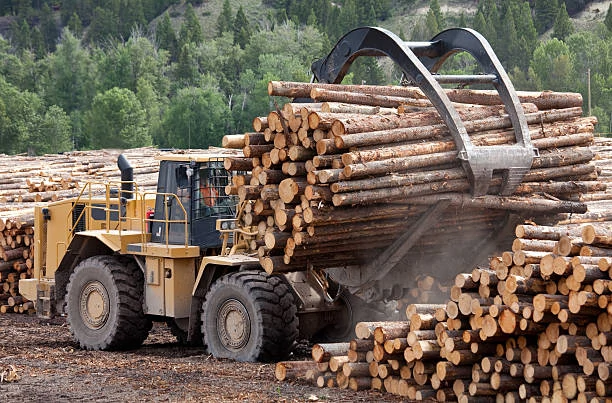
The fiber base is simple: eucalyptus and southern pine, grown in managed industrial plantations. No native forest harvesting. No supply risk from deforestation pressure. The raw material pipeline runs on fast-growing, purpose-planted stock — predictable from the start.

Mills sit where the fiber is. Paraná, Santa Catarina, São Paulo, and Mato Grosso do Sul make up the core production zone. The Asperbras plant in Água Clara, MS, shows this logic clearly. It sits 192 km from Campo Grande, surrounded by eucalyptus plantations. The plant pulls fiber straight from the land around it — short supply chain, low transport cost, high efficiency.

Production numbers are strong. Brazil ranked second in the world for MDF/HDF output in 2021, reaching close to 6 million m³. Installed capacity stands at 5.37 million m³/year. Utilization rates often run above 85–90% when domestic demand stays solid.

Exports follow a clear order. The United States is the top buyer outside the region. Inside Latin America, Argentina, Chile, and Colombia take a large share — often 30–50% of total panel exports. Europe buys less volume, but focuses on higher-value grades with steady demand.

Domestic producers hold real structural advantages. Integrated forest-to-panel operations keep fiber costs under control. Brazil has a track record of hitting back with anti-dumping measures as import pressure from China or Vietnam rises — pushing up CIF costs for foreign board and holding price floors steady for local mills. For international buyers, that means Brazilian producers come to the table from a position of supply strength, not pressure.

MDF Product Specifications Guide: Grades, Thickness & Certifications

image.png

For international buyers comparing specifications, MDF boards should be evaluated based on density, thickness tolerance, emission standards, and application requirements rather than price alone.

Spec sheets lie by omission. A supplier quotes you “standard MDF, 18mm” — and that tells you almost nothing about what you’re buying. Before confirming an order, buyers should review key MDF specifications including density, glue type, thickness, and emission requirements.

Thickness, Density & Sheet Sizes

Brazilian MDF runs 600–800 kg/m³ for standard interior grades. That density range is your baseline. Anything below 600 is a red flag for furniture carcass work. Anything above 800 starts crossing into HDF territory.

Thickness selection follows application logic. Buyers get this wrong more often than they should:

3–6 mm: door skins, backing panels, decorative overlays

9–15 mm: drawer sides, light cabinet components, wall linings

18–25 mm: furniture carcasses, shelving, kitchen cabinets — 18 mm is the global default

30–50 mm: worktops, stair treads, heavy counters

Standard sheet size for international trade: 2440 × 1220 mm. Thickness tolerances on sanded panels run ±0.125 mm. That’s tight enough to matter on CNC production lines.

Functional Grades & Price Premiums

Three grades cover 90% of procurement decisions:

Grade

Thickness Swell (24h)

Price Premium vs Standard

Standard Interior

≤12%

Moisture Resistant (MR/HMR)

≤6–8%

+10–25%

Fire Retardant (FR)

Class A target (ASTM E84)

+30–60%

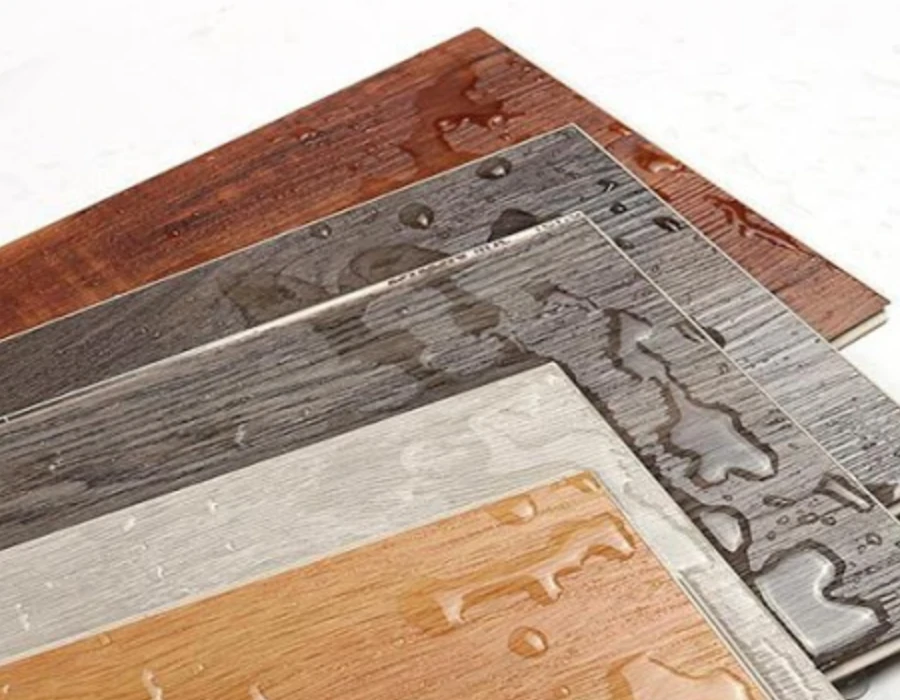
MR board works for kitchens and bathrooms. It’s not outdoor-rated. FR board is mandatory for commercial fit-outs, schools, and escape routes. The price jump reflects real additive and certification costs — not markup.

Formaldehyde Standards & Brazilian Export Compliance

Requesting complete quality test reports before production approval helps reduce risks related to formaldehyde emissions, density variation, and product consistency.

Documentation requests are where you separate reliable suppliers from risky ones.

Major Brazilian exporters — Dexco, Arauco Brazil, Eucatex — ship:

CARB Phase II / TSCA Title VI compliant board to North America (≤0.11 ppm for panels ≥8 mm)

E1-grade panels to Europe (perforator values ≤6–8 mg/100 g on low-emission lines)

E0 options now available for premium segments

What to request from every supplier:
1. Product spec sheet with density, MOR, MOE, internal bond, thickness swell, and formaldehyde class
2. CARB P2 certificate or TPC participation entry
3. EN 120 / EN 717-1 test report with actual ppm or mg/100 g values
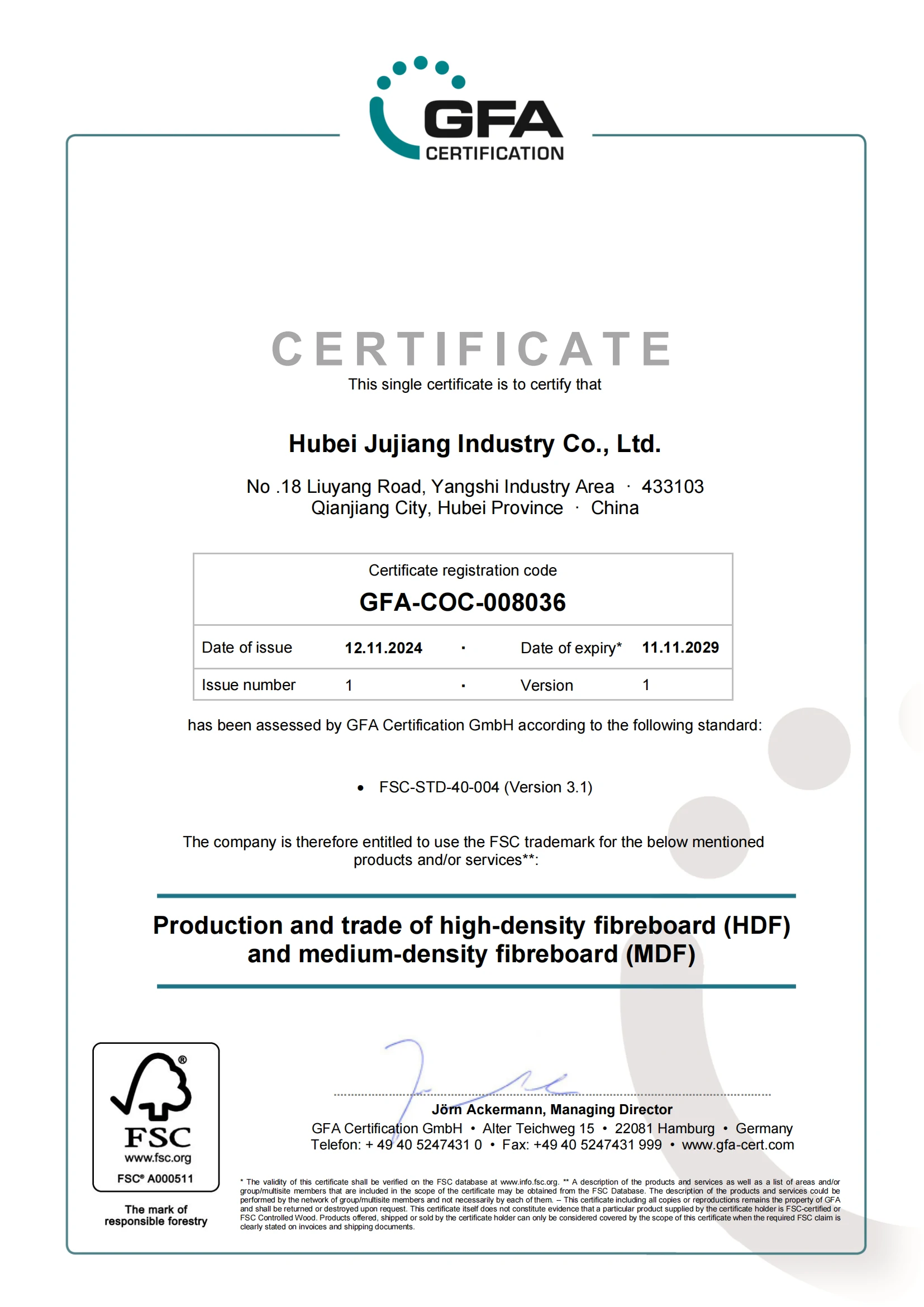
4. FSC CoC certificate number (format: FSC-CXXXXXX) with scope that lists MDF panels by name
5. ISO 9001 certificate — scope text must mention MDF panel production

Export-capable mills in Brazil hold FSC CoC at high rates. ISO 9001 coverage runs above 70–80% among producers shipping to the EU and US. A supplier who can’t produce these documents on request has already given you your answer — before you spend a dollar on samples.

For buyers requiring responsible sourcing documentation, FSC certification provides a recognized framework for verifying forest management and supply chain traceability.

How to Source MDF from Brazil: Step-by-Step Buyer Process

Most sourcing failures happen before the first container gets booked. The process below fixes that. Working directly with a qualified wood-based panel factory allows buyers to verify production capability, certifications, and long-term supply stability before placing bulk orders.

Step 1: Build Your Initial Supplier List

Start with ABIMCI — Brazil’s mechanical wood products industry association. Use their “Busca por Produtos” database to filter by panel type. This gives you a first-pass list of MDF producers. ABIMCI membership is your baseline check for legitimacy.

Next, cross-reference every name against at least two B2B platforms — Alibaba, Made-in-China, or TradeIndia. Look for consistent company names, export records, and real customer activity. One source is not enough.

Step 2: Run Remote Due Diligence

Request these documents from every candidate before sending a single inquiry:

Production capacity documentation — annual output, number of press lines, thickness range (2.5–30 mm)

Export history — destination countries, primary ports (Paranaguá, Itajaí, Rio Grande), CARB P2 / TSCA Title VI compliance records

Certifications — FSC/PEFC, ISO 9001, ISO 14001

No documentation on request? That’s your answer.

Step 3: Send a Structured RFQ

Vague inquiries get vague quotes. Be specific. Include:

Thickness, sheet size, density (target: 650–800 kg/m³), and grade

Formaldehyde requirement (E1 or CARB P2)

Quantity per shipment and annual volume estimate

FOB Paranaguá or FOB Itajaí as your price basis

Get price validity in writing — 15 to 30 days is standard. Longer commitments are open to negotiation on volume.

Step 4: Arrange Pre-Shipment Inspection

For first orders, book a third-party inspector — SGS or Bureau Veritas — at the factory before loading. Budget $400–$800 per inspection day. The inspector checks dimensions, packaging, moisture content (target: 6–10%), and visual defects. For new suppliers or new specs, add lab testing for IB, MOR, and thickness swell. Plan for an extra $300–$600 per sample batch.

Brazil MDF Import Costs & Logistics: FOB to Your Door

The price on the spec sheet is not the price you pay. FOB Santos and your warehouse landed cost are two different numbers. The gap between them decides whether the deal makes sense.

Ports, Transit Times & Ocean Freight

Brazil has three main MDF export ports. Each one serves a different purpose:

Santos — South America’s largest port, handling 5.0–5.4 million TEU/year. Main trunk route calls, with sailings to North America, Europe, and Asia every week.

Itajaí — Brazil’s second-largest container port. This is the go-to exit point for Santa Catarina mills like Guararapes and Berneck.

Paranaguá — strong bulk capacity, but lower container frequency than Santos or Itajaí.

Typical transit times from Santos:

Destination

Transit Time

Rotterdam

20–24 days

Los Angeles

25–30 days

Shanghai

35–40 days

One real risk to watch: Santos gets congested during peak grain season (March–October). Anchorage waiting times can reach 15–30+ days. That creates uncertainty around FOB delivery dates and drives freight quotes up.

Container Loading: Weight Limits Matter More Than Volume

MDF is dense. At 0.70–0.75 t/m³, weight hits the ceiling before volume does — this is a bigger issue in 20′ containers than most buyers expect.

Practical loading limits:

20’GP: Stay under 24 MT gross. At 0.70 t/m³, that works out to 34 m³ — around 550–635 sheets of 18mm standard board.

40’HC: Target 26–28 MT gross, fitting around 700–748 sheets.

Stacking method matters too. Flat-stacked with wood pallets, strapping, and stretch wrap is standard practice. Standing boards upright shifts the center of gravity. That raises in-transit damage risk. Avoid it for dense MDF grades.

Before you confirm anything with your freight forwarder, calculate estimated gross weight as m³ × 0.75. Overweight containers bring fines or forced re-stuffing — and that cost falls on you.

Tariffs & Landed Cost Model

Brazilian MDF clears customs in most major markets without heavy duties:

USA: MFN rates run 0–3.2% under HS 4411. Brazil faces no active anti-dumping cases — unlike Chinese or Vietnamese panel products.

EU: Standard third-country rate is 7–10%, plus destination VAT (~20%) applied to the CIF + duty base.

Southeast Asia: Rates sit at 5–10%, with FTA reductions possible depending on origin and bilateral agreements.

A practical landed cost estimate — FOB Santos to Rotterdam door:

Cost Element

Per MT

FOB Santos (standard MDF)

$280

Ocean freight (40’HC, ÷28 MT)

~$71

THC + docs + port fees

~$8

EU import duty (~7%)

~$25

Inland delivery (port to warehouse)

~$20–35

Total landed cost

~$404–420/MT

That’s a 45–50% premium over FOB. Build this into your sourcing model before you stack Brazilian board against alternatives on price alone.

Payment Terms, MOQ & Commercial Negotiation for Brazil MDF

Getting the price right is half the work. The other half is knowing how the deal gets structured.

Brazilian MDF suppliers run on a simple commercial logic: protect the first order, extend terms on proven relationships. The standard opening structure is 50% upfront, 50% against BL copy via SWIFT TT. That’s the baseline. Everything else is negotiable — you just need to know what to push on.

MOQ runs by the container. A 20′ holds 18–22 m³. A 40′ fits 40–45 m³. Standard specs quote at single-container MOQ. Custom orders — special thickness, printed overlays, non-standard cuts — push MOQ higher. The fix: request separate MOQs for standard versus custom. Then negotiate rolling same-SKU orders to pull the threshold down over time.

Three price levers that move the number:

Currency clause — USD-denominated pricing? Write a BRL/USD trigger into the contract. Brazilian input costs shift. Suppliers will push for price adjustments. This clause stops unilateral moves before they start.

Asian benchmarking — Pull a landed cost comparison using identical specs: same thickness, same formaldehyde grade, same surface finish. Bring that number to the table. Ask for a match price or a volume rebate.

Off-season timing — Brazil’s furniture production cycle creates real buying windows. Lock pricing in the slow season. Take delivery in batches during peak demand.

Volume discount anchors worth targeting: 3–5 containers gets you 2–5% off. Ten or more opens the door to 3–8% rebates, fixed annual pricing, or freight subsidies.

For long-term contracts, write in an index-plus-threshold clause. Price renegotiation triggers only when resin, fiber, or FX moves exceed 3–5% in total. Below that threshold, the price holds — no surprises, no unilateral changes mid-cycle.

Brazil MDF vs. China/Asia MDF: Full Cost & Quality Comparison

The price gap between Brazilian and Asian MDF is real — but it’s smaller and more complex than most buyers expect. The same sourcing principles also apply to other panel products such as plywood, where buyers need to compare core material, certification, and export specifications.

FOB Price: Who’s Cheaper?

The answer depends on which numbers you use. That matters.

On high-spec 18mm raw board (E1/CARB-P2), Brazil runs 395–440 USD/m³ FOB. China sits at 355–405 USD/m³ FOB. That’s a 10–60 USD/m³ disadvantage for Brazil at origin — about 3–15% more expensive.

Switch to standard-grade MDF averages, and the numbers flip: Brazil at 288 USD/m³, China at 312 USD/m³. Different spec, different result.

The clear takeaway:
– On premium export-grade board, China and Vietnam undercut Brazil at origin
– On commodity grades, Brazil holds its own — and sometimes comes in cheaper

Where Brazil Wins on Total Cost

For US and Latin American buyers, ocean freight closes the gap fast. Brazil’s ports are 20–30 days closer to Atlantic destinations than Chinese mills. That saves 20–40 USD/m³ on freight. Brazil’s FOB may run 30 USD/m³ higher, but freight runs 25–35 USD/m³ lower. The landed cost difference shrinks to near zero.

For Middle East and Asia buyers, China holds a real edge. Shorter routes and direct sailings keep Chinese MDF 30–80 USD/m³ cheaper landed, even after duties. Freight savings alone won’t close that gap.

Quality: Where It Shows Up in Production

Fiber source drives the core quality difference.

Brazilian mills use eucalyptus fiber — fine, consistent, and tight-grained. After sanding, surface roughness stays low. That matters for thin PVC wrapping, paper foils, and high-gloss lacquer finishes.

Chinese and Southeast Asian mills use mixed hardwood and rubberwood fiber. Mid-tier boards often have a denser face layer with a looser core underneath. On deep CNC routing or narrow edge profiles, that density gap raises the risk of edge chipping.

The production numbers tell the story:
– Brazilian eucalyptus MDF holds CNC scrap rates to 1–3% on complex profiles
– Lower-grade Asian board in the same applications runs 3–8%
– That yield gap adds up fast at scale

On formaldehyde emissions, the difference is just as clear:
– Brazilian export board defaults to E1/CARB-P2
– Chinese commodity product defaults to E2, with E1/E0 available at extra cost
– For North American retail compliance, Brazilian board needs less batch screening — less work, less risk

Lead Time & Supply Chain Risk

Brazil-to-Americas lead time: 4–8 weeks door to port

Asia-to-Americas: 6–10 weeks

That 1–2 week edge helps with inventory planning. It matters most during Santos peak congestion windows (March–October), when delays stack up fast.

Supply concentration risk runs the other way. China has multiple backup factories within 300 km of major ports — dual-sourcing is straightforward. Brazil’s MDF capacity sits with a handful of large groups. One facility goes down, and your options get thin fast.


Bottom line: Match your sourcing origin to your geography and spec.

Americas buyers sourcing E1/CARB-P2 board for furniture production — Brazilian MDF is cost-competitive on a landed basis and arrives faster

Asia or Middle East buyers working with standard grades at volume — Chinese supply is hard to beat on pure economics

FAQ: Key Questions from International MDF Buyers About Brazil

Brazilian MDF buyers ask the same questions repeatedly. Here are straight answers.

Which certifications matter most?
Look for FSC, ISO 14001, and emission compliance — E1/E0 or CARB Phase 2 for regulated markets. Before issuing a PO, request batch test reports. These should cover density, formaldehyde levels, and surface durability.

What technical specs define export-grade Brazilian MDF?
Here are the numbers to check:
– Density: 700–900 kg/m³
– Internal bond: ≥0.55 MPa
– MOE: ≥3,700 MPa
– 24-hour water absorption: ≤10%
– Moisture content: 4–9%

For humid-use applications, you need moisture-resistant grades. These use wax additives and sealed edges to hold up in wet conditions.

What documents should you collect before confirming an order?
Gather these before anything moves:
– Product catalog
– Technical datasheet
– Batch test report
– Certification copies
– Sample photos
– Written spec confirmation — species, thickness, surface finish, emission class

Get every detail in writing before payment goes out.

How do you verify a supplier can support international buyers?
Ask for three things: a written English quotation, a PDF technical sheet, and a 24-hour response window. Suppliers who can’t deliver all three will likely fall short on everything else too.

What quality risks need pre-shipment attention?
Four common issues to watch:
– Density inconsistency
– Formaldehyde levels exceeding limits
– Poor scratch resistance
– Moisture instability

Test sample panels before approving bulk production. Run them through cutting, drilling, sanding, and painting to see how they hold up.

Conclusion

The Brazil MDF market rewards buyers who come prepared. Get your price benchmarks current. Understand the supply chain. Have a clear process for vetting suppliers. With all that in place, you stop negotiating blind — you negotiate from strength.

Here’s the reality: Brazil wood panel industry pricing will keep shifting. Currency swings, eucalyptus input costs, and global freight volatility all play a role. The buyers who lock in favorable terms aren’t the lucky ones — they’re the ones who did the homework first.

So what’s your next move? You’re sourcing or benchmarking suppliers right now. Don’t let this research sit idle. Use the specification comparisons and price ranges in this guide as your opening-round negotiation baseline. Then reach out — to a shortlisted Brazilian mill or to our team — and start turning market intelligence into real purchase orders.

The data is in your hands. Use it.