Domestic vs Export Grade MDF: How to Choose, Verify, and Avoid Costly Sourcing Mistakes

MDF/HDF Fiberboard

Every year, furniture manufacturers and MDF buyers lose money. Not because they picked the wrong supplier — but because they didn’t know what to ask.

The gap between domestic-grade and export-grade MDF isn’t always something you can see. That’s exactly where the risk sits.

formaldehyde emission standards. Density tolerances. Moisture resistance thresholds. CARB certification. These aren’t just paperwork requirements. They’re the technical lines where a good-looking deal turns into a compliance failure, a rejected shipment, or a product recall.

This guide covers six key parameters that separate the two grades. It also exposes sourcing mistakes that even experienced buyers make — and gives you a clear framework to verify what you’re buying before it becomes a costly problem.

What “Grade” Means in MDF — And Why the Label Isn’t Enough

14865b67 5905 4983 be5d 4306214639af

The label is not the specification. Most buyers don’t see that difference until it’s too late.

Terms like export grade, E1 board, or MR MDF show up in supplier catalogs and quotations all the time. They’re shorthand. Shorthand cuts corners on detail — and the detail it cuts is what decides whether a board works or fails in your application.

Grade is not a single measurement. It’s a mix of connected technical factors:

Fiber quality

Resin system

Density range

Thickness tolerance

Moisture resistance

Emission performance

A board can carry the “export grade” label and still fall short of your market’s compliance threshold. That happens when the supplier can’t back the claim with documented specs.

Here’s the real problem: “export grade” is a commercial term, not a universal technical standard. Ask three suppliers what it means and you’ll get three different answers. One uses it to mean lower formaldehyde. Another means tighter thickness control. A third means nothing precise at all.

Problems show up later — during machining, at inspection, or after the container lands. By then, the label means nothing.

The right buying approach: don’t buy the label. Buy the specification package behind it. That means measurable properties, matched to your application, checked against the compliance requirements of your destination market.

Quick Decision Guide: When to Choose Domestic vs Export Grade MDF

If you’re making a decision under time pressure, don’t go back to the spec sheet. Start with the application.

If the product is going into the U.S., EU, or Australia, the decision is already made. Export-grade MDF is not optional in these markets. Compliance sits at the entry level, not as a quality upgrade.

The same applies to visible surfaces. Cabinet doors, finished panels, and any component exposed to inspection or customer use need consistency in surface quality, thickness tolerance, and emission control. This is where export-grade boards justify their cost.

Load-bearing parts follow the same logic. Once the structure carries weight — especially in cabinetry or modular furniture — density consistency and internal bonding matter more than price. Lower-grade boards don’t fail immediately. They fail after installation.

Moisture exposure is another hard boundary. Kitchens, bathrooms, and humid shipping or storage conditions require MR-grade MDF, and in most export scenarios, that means export-grade specification as well.

Domestic-grade MDF still has its place — but only where the risk is controlled. Back panels, internal partitions, and non-visible components in dry environments can safely use lower-grade material. This is where cost savings actually make sense without affecting performance.

In large-volume projects, the most effective approach is not choosing one grade over the other, but using both strategically. Export-grade where performance and compliance are critical, and domestic-grade where they are not.

If multiple conditions point toward export-grade MDF, the decision should not be debated. The cost difference shows up once. The cost of failure shows up again and again.

The 6 Technical Parameters That Separate Domestic from Export Grade MDF

2bb7e16f 5d71 4b69 8b65 ee056e50a0b4

Six measurements. That’s what it comes down to. Not brand reputation. Not country of origin. Not how confident a supplier sounds on a video call. These six properties decide whether a shipment clears inspection or gets flagged. They determine whether furniture holds up on the showroom floor or fails in a customer’s home.

Here’s what each one means in practice.

1. Formaldehyde Emission Performance

This is the compliance line that stops containers at ports.

Domestic-grade boards often carry an E2 rating. That rating works in some local markets. But it’s a hard block for export destinations that require E1, E0, CARB Phase 2, or TSCA Title VI compliance. The emission standard isn’t a preference. In the US, EU, and several Southeast Asian markets, it’s a legal threshold. Fall below it and you’re not facing a quality complaint. You’re facing a customs hold, a regulatory fine, or a forced product recall.

The number to remember: CARB Phase 2 caps hardwood plywood and MDF composite panels at 0.11 ppm formaldehyde. E2 boards can emit up to 45 times that level.

2. Density Specification

Density is the hidden performance variable. It doesn’t show up right away. Problems surface during machining, during assembly, or after the furniture ships.

Export-grade MDF runs 720–800 kg/m³. Domestic-grade boards can fall well below that range. The damage isn’t just structural. Low density leads to screw pullout problems, unstable edge profiles, and surface inconsistency that only shows up after laminating or painting. Buyers locked onto per-sheet pricing miss this completely — until production starts generating rejects.

What to ask: Don’t just request the nominal density range. Ask for batch-to-batch consistency data. A single spec number means nothing if density swings are wide across production runs.

3. Internal Bond Strength

This parameter doesn’t appear on most standard quotations. That’s exactly why it matters.

Internal bond strength measures how well the fiber structure holds together inside the panel. Weak bonding causes edge chipping on CNC cuts, screw pullout under load, and structural failure in routed profiles. For cabinet makers and furniture manufacturers running high-volume production, these problems translate into real rework rates and real replacement costs. None of that shows up in the original landed price.

4. Surface Uniformity and Thickness Tolerance

Export-grade boards hold to ±0.2mm thickness tolerance or tighter. Domestic-grade boards run at ±0.3mm — sometimes worse across a full batch.

That 0.1mm gap sounds small. It isn’t. In bulk production, inconsistent thickness causes hardware misalignment, groove depth variation, and panel gaps that need manual correction on every single piece. Scale that correction time across several hundred units and the “cheaper” board starts carrying a real hidden labor cost.

Surface uniformity works the same way. Better fiber refinement and tighter pressing control produce boards that machine, laminate, and paint with consistent results. Variable surface quality leads to variable finishing — and that’s a problem you can’t absorb in quality-conscious export markets.

5. Moisture Resistance and Dimensional Stability

Standard MDF and MR-grade MDF are two different products. They share a similar name, and buyers mix them up all the time.

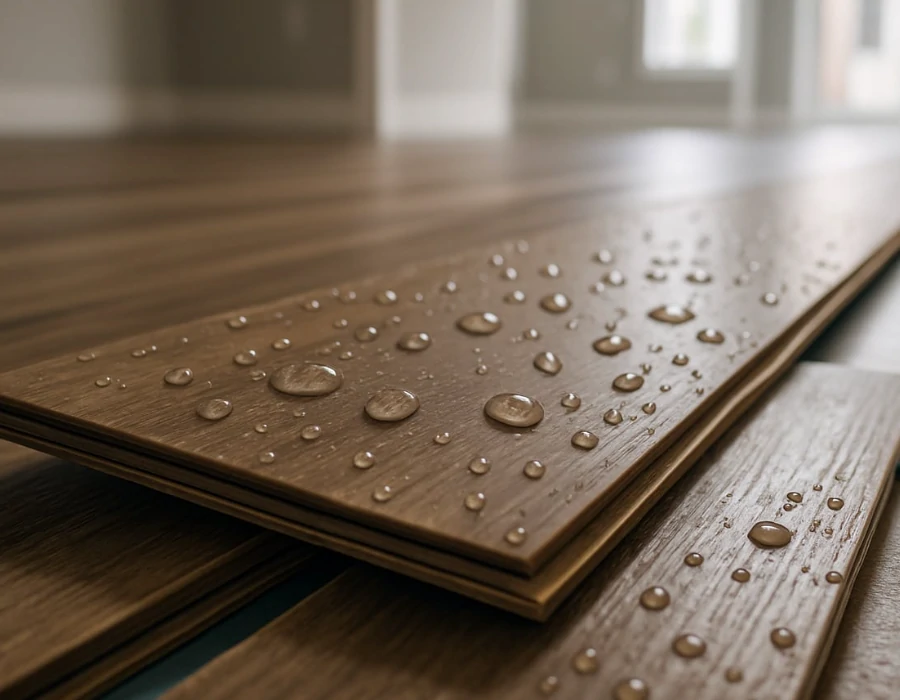
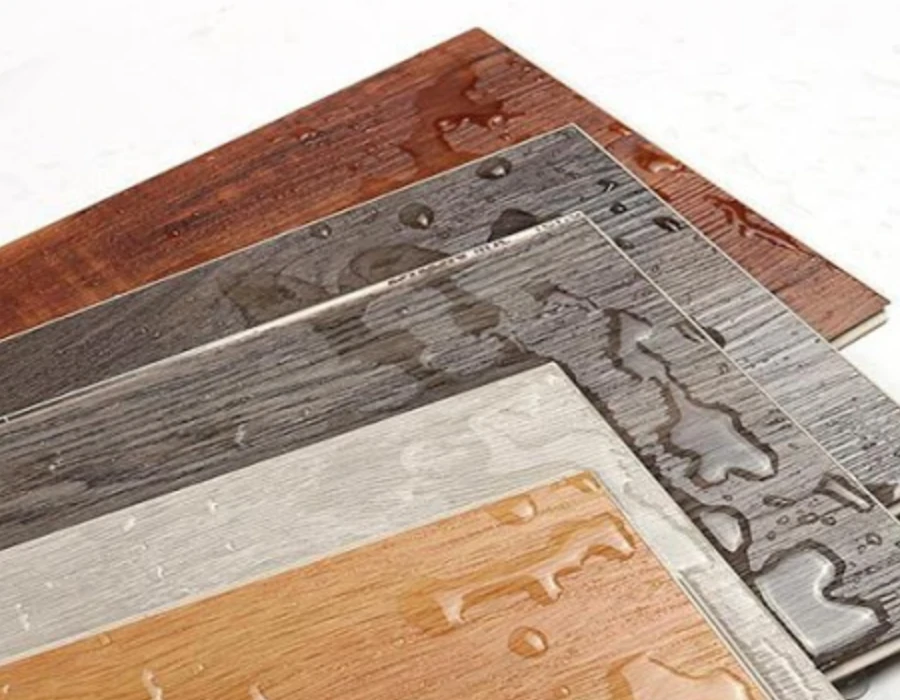
For kitchens, bathroom vanities, wardrobes in humid climates, or any product exposed to temperature and humidity swings during shipping and storage — dimensional stability is not optional. Export-grade MDF needs to show controlled thickness swell and stable edges under moisture exposure. Domestic-grade boards without MR treatment can show edge swelling, surface bubbling, and panel warping. All of that becomes a visible failure after the product reaches the end customer.

The verification step most buyers skip: Request actual swell performance data — not just the grade label. “MR grade” on a spec sheet is not the same as documented thickness swell results under EN 317 or equivalent test conditions.

6. Screw Holding and Machinability

This is the most practical parameter on the list. It also exposes low-grade boards fastest during production.

A board can look clean, measure within acceptable thickness, and still fall apart at the drill point. Screw holding strength, edge chip resistance, and stability under CNC routing all depend on fiber quality, resin system, and density consistency working together. Mix or recycle the fiber input and the machining behavior degrades. Production slows down. Defect rates climb.

Across all six parameters, the real issue is consistency — not just specification. A domestic-grade board may hit the stated spec on paper. What it can’t deliver is the same performance across every sheet in a batch, every batch in a shipment. That gap — between the spec and the actual result — is where export compliance breaks down, where production rejects pile up, and where the cheaper board stops being cheap.

Which Certifications Matter for Export Orders

bd7d235c 265c 4f0e 9ef1 617d3afcffe3

More certificates don’t mean better MDF. That’s a sourcing assumption that costs buyers money every year.

Each certification answers a different question. The real mistake isn’t missing one — it’s treating compliance documents as proof of product quality. They’re not built to do that job.

Here’s what each certificate tells you, and what it doesn’t.

CARB Phase 2 / TSCA Title VI

For U.S. market entry, these aren’t background paperwork. They’re access requirements. Shipping furniture, cabinetry, or interior products into the United States? Valid CARB Phase 2 or TSCA Title VI documentation is mandatory. A generic “low emission” claim won’t satisfy it. The documentation must match the exact product and the specific shipment.

E0 / E1 / E2 / ENF

These grades measure one thing: formaldehyde emission level. They say nothing about density, moisture resistance, thickness tolerance, or screw holding strength. A board can carry an E0 rating and still fail your production line. Read emission grade alongside full technical specs. Don’t use it as a standalone quality indicator.

CE / EN Standards

European buyers see CE-related documentation often. It supports market suitability claims, but it doesn’t replace technical verification. For furniture and interior fabrication, you still need to check the actual board specification on its own. CE paperwork doesn’t cover that for you.

FSC

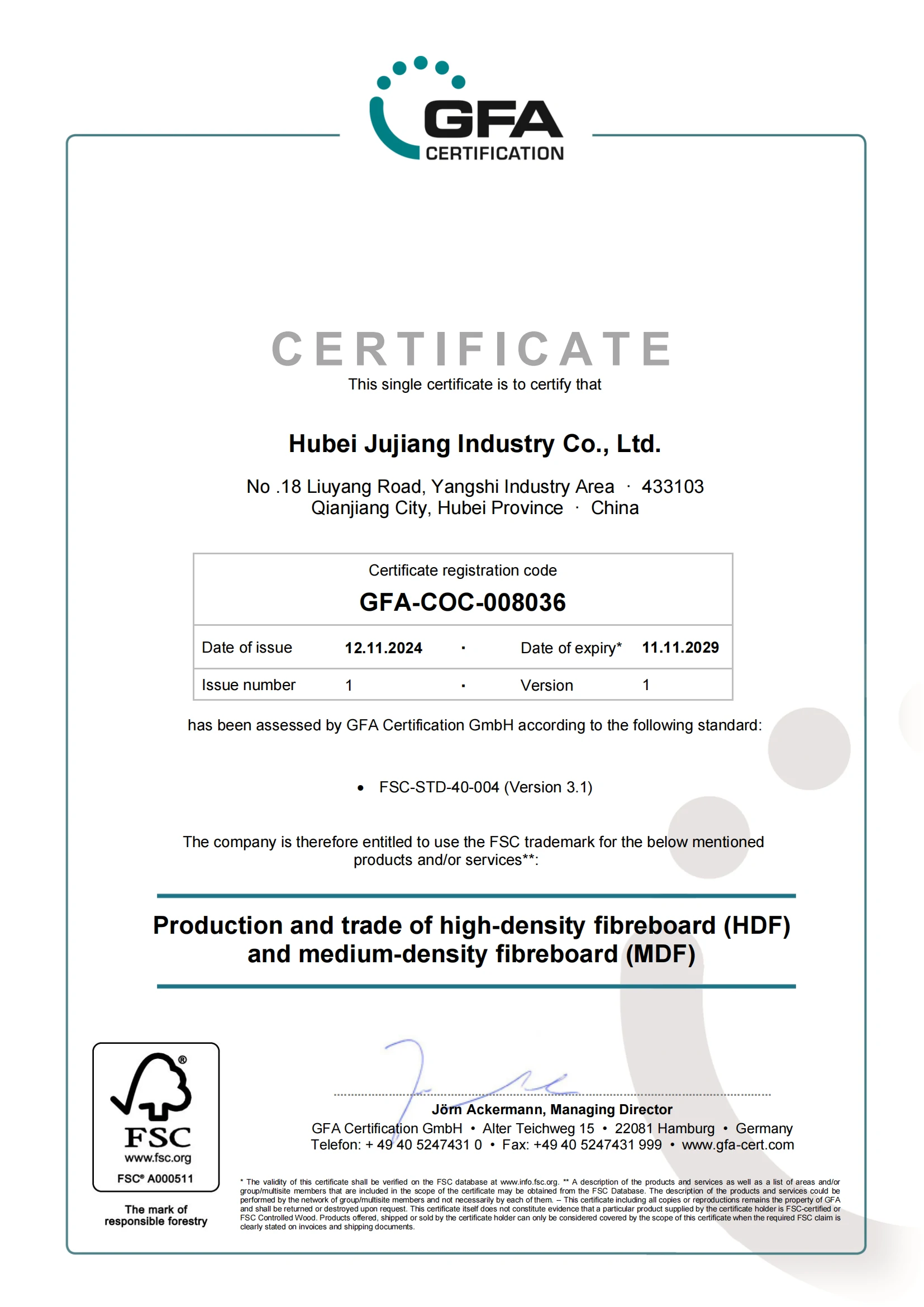
FSC is the most misread certificate in MDF sourcing. It’s a chain-of-custody certification. It tracks material origin and responsible forestry practices. It does not test formaldehyde emissions. It does not verify moisture resistance. It does not validate mechanical performance. A board can be FSC-certified and still fail every compliance threshold your target market requires. FSC has real commercial value — especially for retail clients and sustainability-focused procurement — but it belongs in a different column than product compliance.

The practical question to ask at the order level:

Which certification does this specific market and this specific application require?

U.S. destination → CARB Phase 2 / TSCA Title VI

Low-emission interior application → E1, E0, or equivalent documented performance

Certified sourcing requirement → FSC

Technical or fabrication-heavy application → certificates alone aren’t enough; sample verification and full technical data still matter

Certification is one layer of verification. It was never designed to be the whole decision.

5 Costly Mistakes Buyers Make When Sourcing MDF (And How to Avoid Each One)

c891674d 920d 4a13 a89a 49c510435938

Bad sourcing decisions don’t look bad at first. They look like savings.

Here are five places where that logic falls apart — and what to do before the cost hits.

Mistake 1: Letting Price Lead the Decision

The cheapest board in the quote is not the cheapest board on the production floor. Low-cost MDF from unverified sources often has inconsistent fiber density. That means cracks under router pressure, warping in humidity changes, and failed screw joints during assembly. Then add the labor for rework and the cost of replacement material. Those original “savings” are gone fast.

The fix: Get formaldehyde test reports and density data before you commit. Price is one factor. Specs make the decision.

Mistake 2: Taking “Export Grade” at Face Value

Suppliers use the term. Almost none of them mean the same thing by it. No EN 717-1 formaldehyde test document? No ISO density data in your hands? Then the phrase gives you nothing to work with. Ask for the paperwork. Don’t assume it exists.

The fix: Third-party testing certificates are required on export orders — full stop. A supplier who stalls on providing them? That stall is your answer.

Mistake 3: Treating All Indoor Applications the Same

Standard MDF under a bathroom vanity. Standard MDF behind a kitchen sink cabinet. These are not rare edge cases. They are common spec errors with known results: swelling edges, delaminated surfaces, structural failure. MR-grade MDF exists for these exact environments.

The fix: Match the grade to the application. Kitchens, bathrooms, and humid-climate destinations need MR-grade MDF. Standard MDF belongs in dry interiors — nowhere else.

Mistake 4: Skipping Thickness Tolerance Verification

Domestic-grade boards can deviate ±0.5mm or more across a single batch. At scale, that gap forces manual correction on every affected unit. You get hardware misalignment, groove misfits, and visible panel gaps. The board cost less. The production run did not.

The fix: Put tolerance requirements in the purchase order. For precision fabrication, hold suppliers to ±0.2mm or tighter. That is the standard worth enforcing.

Mistake 5: Applying the Same Grade Across Every Component

Export-grade MDF on non-visible back panels is a budget problem. Domestic-grade MDF on exposed surfaces or load-bearing joints is a quality problem. Both are avoidable with a basic material plan.

The fix:
– Use export-grade for visible surfaces, high-stress joints, and moisture-exposed components
– Use standard-grade where structural and compliance demands are low
– Write the grade assignments into your project specs — not as an afterthought, but as a set procurement standard

How to Verify MDF Grade Without a Lab: A Practical Buyer Checklist

A caliper, a bucket of water, and thirty minutes. That’s all you need to catch most grade substitution problems before they hit your production floor.

No lab. No specialist equipment. Just a clear, step-by-step check at the point of inspection.

The 12-Point Field Checklist

Run through these tests on a sample sheet. Set aside 15–30 minutes. A passing result is 10 out of 12. For high-humidity environments — monsoon climates, coastal warehouses, kitchens — put the water, edge, and density tests first. Those matter most.

Test What To Do Pass Standard
Weight/Knock Lift the sheet; knock the surface 18mm panel should feel 50–60kg; sound is a dull, dense thud — not hollow
Flatness Lay a ruler across the face Max 1–2mm sag across the span
Surface Smoothness Run a palm and fingernail across the face No grit, no pitting
Color Uniformity Scan the full face in flat light No streaks, no yellowing patches
Blister Check Press hard across the face Zero bubbles under pressure
Squareness Place a try-square at each corner Exact 90° — no deviation
Edge Chip Resistance File or knife-scrape the cut edge Minimal crumble; smooth, dense fiber
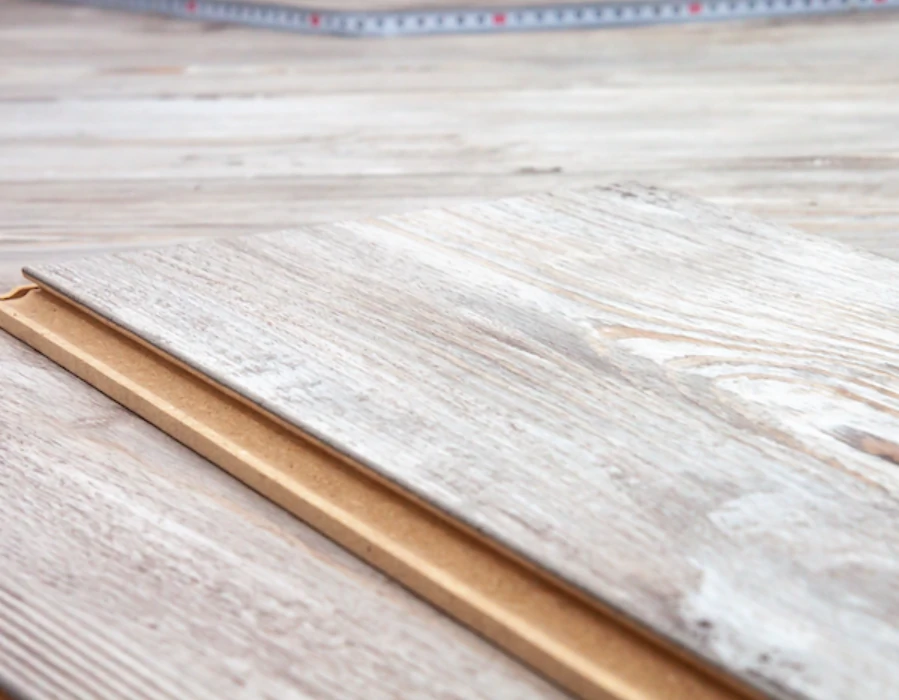
Thickness Uniformity Caliper reading at 9 points across the sheet Variance within ±0.2–0.3mm
10-Minute Water Drop Place water drops on the edge and face No swelling, no darkening after 10 minutes
Screw Pull Drill a 4mm hole, insert a #8 screw, pull by hand Firm grip; no crumbling fiber around the hole
Smell Nose-check at close range Mild wood and resin — not sharp or chemical
Flex/Pressure Light bend at the edge; tap with a hammer No cracking, no surface fracture

The Cut-Edge Core Test

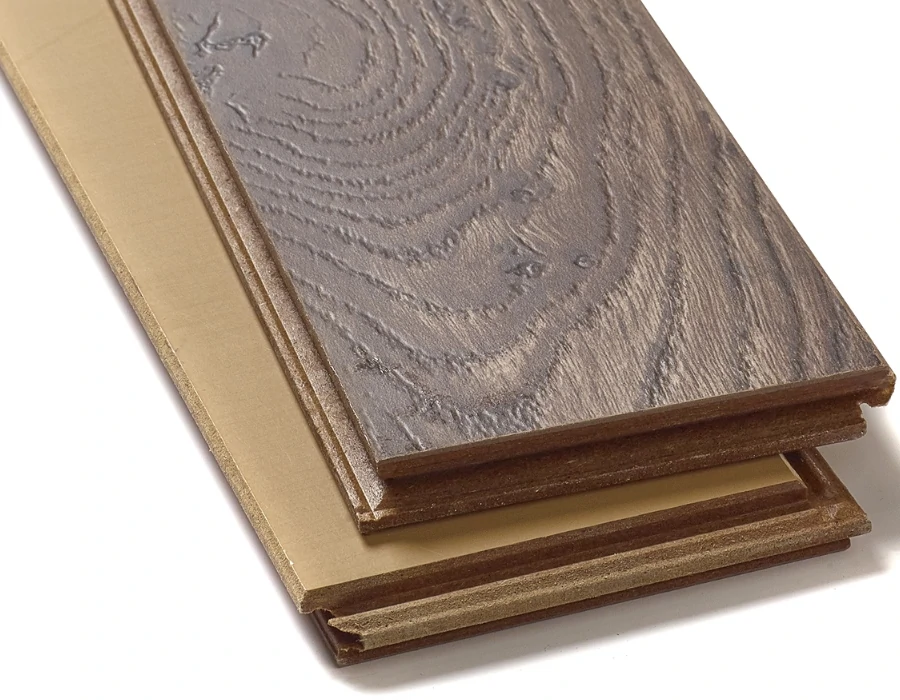
Slice a 10cm sample from the sheet and look at the exposed fiber. Export-grade MDF shows uniform, fine, tight fibers. No visible layering. No separation. Domestic-grade fiber looks different: coarse chunks, rough texture, edges that powder off under a file scrape, and recycled waste particles visible in the cross-section. That cut edge is the fastest honest signal the board gives you.

Document Verification: The Step Most Buyers Skip

Physical checks confirm what’s in front of you. Documents confirm what the supplier is putting in writing and standing behind.

Before placing the order, request:
– Factory test report covering density, moisture content, and formaldehyde emissions
– Third-party certification (CARB Phase 2, E1, or market equivalent)
– Full product spec sheet showing density in kg/m³ and thickness tolerance

Then check the documents themselves. Cross-reference certification numbers on the issuing body’s database — CARB’s registry is open to the public and easy to search. Match batch codes and dates against what’s printed on the certificate. Reject any certificate that arrives unsigned or as a scan-only copy with no original available.

A supplier who stalls on any of this is already telling you something. Take note of it.

Domestic vs Export Grade MDF: Side-by-Side Comparison Table

Ten parameters. Two grades. One table that does more work than most supplier conversations ever will.

Parameter Domestic Grade Export Grade Test Standard
Formaldehyde Emission E2: ≤5.0 mg/L E1: ≤0.124 mg/m³ / CARB P2: ≤0.05 ppm EN 717-1 / ISO 16000-9
Density Range 600–800 kg/m³ 700–900 kg/m³ EN 323 / ISO 16946
Thickness Tolerance ±0.6–0.8mm ±0.2–0.4mm EN 324-2
Moisture Resistance Standard (swell: 10–15%) Enhanced MR (<8% swell) EN 317 / ISO 16983
Surface Quality Standard smooth; minor defects present Ultra-smooth; defect-free EN 324-1
Fiber Raw Material Recycled or mixed fiber Virgin hardwood fiber EN 309 / ISO 16893
Modulus of Rupture 3,190–3,500 psi 4,000+ psi EN 310 / ISO 16946
Certifications Basic local (GB/T) CARB P2, E1, FSC, CE EN 13986 / CARB ATCM
Typical Applications Dry indoor furniture Export furniture, kitchens, humid environments EN 14342
Price (18mm, 4×8 sheet) $15–25 $25–40 2023 market average

The price gap is real — $10–15 per sheet. The table shows the numbers, but not what that extra cost gets you. Here’s what you’re paying for:

Tighter thickness tolerance — ±0.2–0.4mm vs ±0.6–0.8mm on domestic grade

Lower formaldehyde emissions — E1 or CARB P2 certified, not just E2

Stronger bending strength — 4,000+ psi vs 3,190–3,500 psi

Compliance documentation — CARB certified paperwork your destination market may require by law

That’s not a premium. That’s the cost of the board doing its job.

Smart Sourcing Strategy: Domestic Grade vs. Export Grade — Which One Goes Where

The math works — but you need to know which board belongs where.

Specifying export-grade MDF across every single component isn’t smart sourcing. It’s budget waste. Defaulting to domestic grade on everything is a compliance gamble. The 5–10% failure rate for domestic-grade boards in export markets isn’t just a warning stat. It’s an invoice heading your way.

Here’s the framework that saves money without adding manufacturing risk.

Where export grade is the clear answer:

Structural panels, cabinet doors, and veneer-facing components that carry load or face inspection — use export grade, no exceptions. These are the surfaces customs agents and end customers see directly and put under stress.

Any order going to the EU, North America, or Australia. CARB Phase 2, EN 13986, AS/NZS 1859 — these aren’t optional preferences. Non-compliance fines reach up to €100,000. Export grade passes audits at a 99% rate. Domestic grade falls well short of that.

Where domestic grade earns its place:

Back panels, internal partitions, and non-visible structural supports in dry environments. These parts carry no compliance risk and need no surface finish. Domestic grade here cuts material cost by 20–30% with no impact on product quality where it matters.

Southeast Asian and Middle Eastern markets operating under GB/T 18580 thresholds — domestic grade works on up to 80% of internal components in these regions.

What a practical mixed-grade approach looks like:

Take a standard kitchen cabinet unit — 3m × 2m, baseline cost of $1,200 using all-export-grade MDF. Split it 60/40: export grade on structure and doors ($720), domestic grade on backs and partitions ($240). Total spend drops to $960. That’s a 25% saving — $300 per unit — with zero compliance exposure and no visible quality difference to the end customer.

Four questions to guide every decision:

Does this component carry more than 200kg of load? → Export grade.

Is the destination market EU, North America, or Australia? → Export grade, full stop.

Is the surface exposed and finished? → Export grade. Defect rates below 0.5% are achievable there, not with domestic grade.

Is this a non-visible, non-load-bearing internal part making up less than 30% of total volume? → Domestic grade is the right call — savings land between 15–35%.

Buyers running mixed-sourcing strategies on projects above $50,000 are capturing around 20% in material cost reductions. That’s not a rounding error. That’s a real margin line item worth building into every BOM from day one.

How to Evaluate an MDF Supplier’s Grade Credibility: A B2B Audit Framework

Suppliers don’t lie outright. They just let you assume.

Three questions cut through that fast:

What fiber are you using — eucalyptus, poplar, or mixed?

What resin system — UF or MDI?

Can you show me the third-party formaldehyde test report?

Watch what happens. A solid supplier answers right away. A weak one steers the conversation toward price.

Why fiber and resin type matter: Eucalyptus fiber makes dense, uniform panels with strong screw retention. That’s the right material for furniture and cabinetry. Poplar costs less and weighs less — but it chips under load. Mixed or recycled fiber falls in between. Particle size stays inconsistent, and that problem shows up during CNC runs. MDI resin keeps emissions under E0 limits. UF resin runs 20–30% cheaper — but brings real formaldehyde risk at volume.

Minimum documentation to request before placing any order:

CARB Phase 2 certification — check the certificate number in CARB’s public registry yourself

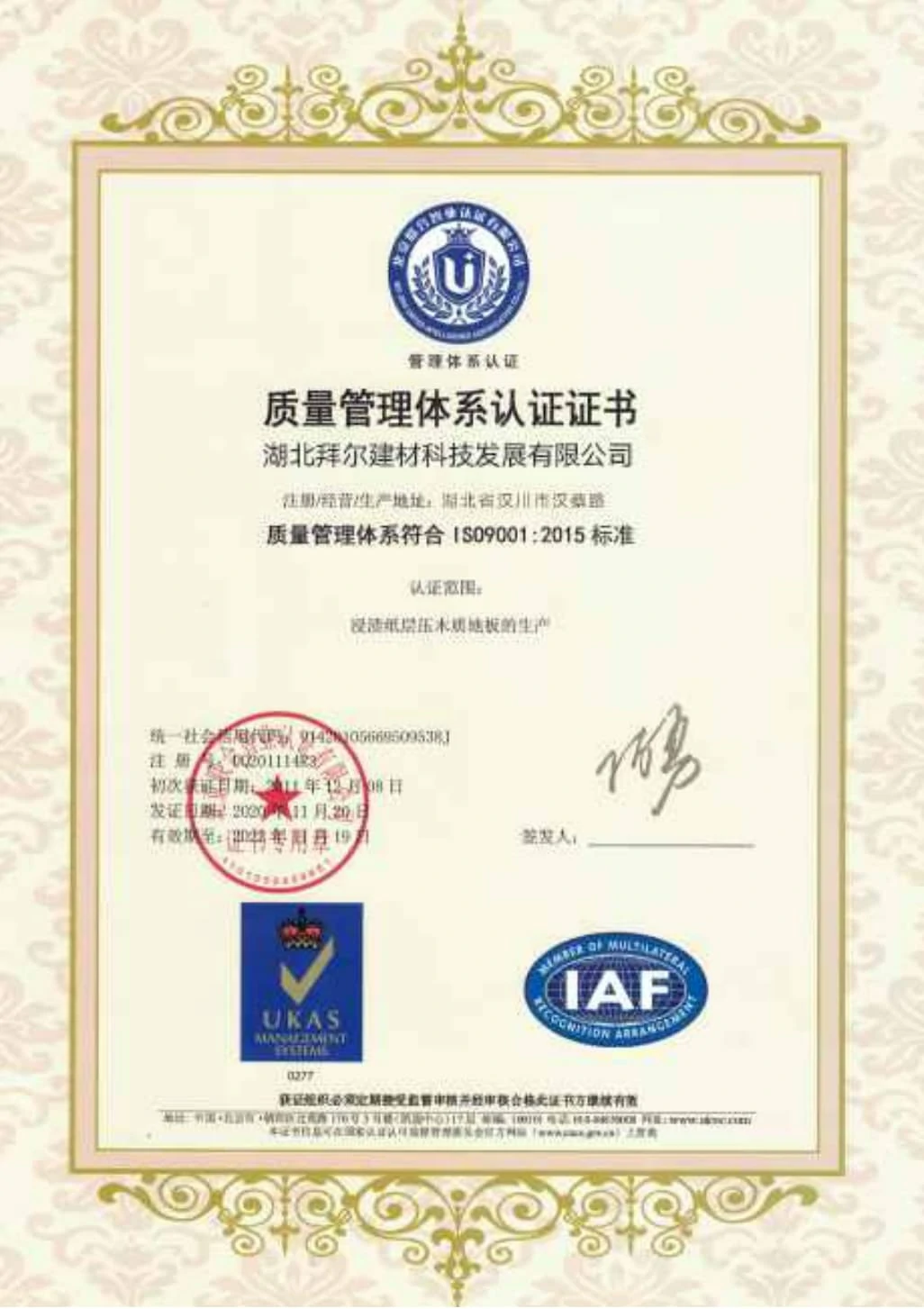
ISO 9001 quality management certificate

Batch-specific test report covering density, moisture content, and formaldehyde emissions

For sample orders of 10–20 sheets, run these five hard benchmarks:

18mm panel weight above 30kg — lighter panels signal low density

Screw pullout force above 800N on a 4mm pilot hole

Thickness measured at nine points — variance must stay within ±0.3mm

Edge exposed to water for 24 hours — swelling must stay below 2%

Edge fiber fine and tight — no visible recycled particles, no crumble under a file scrape

Rejection thresholds to write into your purchase order: Fewer than 10 of 12 inspection points passed triggers a full return. The supplier covers freight. Density below 700 kg/m³ or formaldehyde above E1 triggers rejection plus a 5% penalty. Edge chipping across more than 5% of surface area requires reshipment at the supplier’s cost.

Suppliers who agree to these terms upfront don’t push back on them later.

FAQ: What MDF Buyers Ask Most Before Placing Orders

These questions come up on almost every order. Here are the ones that matter most.

What drives the price difference between domestic and export-grade MDF?
Four things: density, thickness, moisture resistance, and fiber quality. A 750+ kg/m³ board costs more. But it holds screws well, machines without tearing, and survives long shipping routes. Boards priced below market tend to show you the reason — through poor performance.

Can MDF handle modular furniture production?
Yes — as long as the grade fits the job. Export-grade MDF keeps tight thickness tolerances across every panel. Automated assembly lines need that consistency to run without errors. Domestic-grade boards vary more. That variance leads to misaligned hardware and rejected units on the production floor.

What should I specify when requesting a quote?
Include these six details in every quote request:
– Thickness
– Density grade
– Moisture classification
– Intended application
– Quantity
– Destination market

Suppliers who can’t address all six points are worth paying attention to. A vague response tells you something about how they operate.

What certifications should I require for humid-climate orders?
Ask for three things:
– MR-grade classification
– Documented swell performance tested under EN 317
– Third-party emission certification

A label alone isn’t enough. Request the actual test data behind it. Any supplier confident in their product will hand it over without hesitation.

Conclusion

The gap between domestic-grade and export-grade MDF isn’t a minor detail. It decides whether your shipment clears customs or gets held up. It’s the difference between furniture that holds up in humid climates and panels that swell within a single season.

Sharp buyers don’t need a testing lab. They know which specs matter most:

Formaldehyde emission standards

Verified density specs

Surface finish consistency

They also refuse to accept vague assurances. Documented proof is the only acceptable answer.

You now have that framework.

Before your next order, take these steps:

Request the full certification stack

Check the MDF thickness tolerance data

Ask the supplier point-blank whether the product meets CARB certified MDF requirements or the E0/E1 formaldehyde emission standard your target market enforces

The right supplier won’t hesitate. The wrong one will stall.

Use that reaction as your first data point.