
A Practical Guide by Core Board Type
Furniture boards are not defined by surface finishes alone.
Behind every cabinet door, wardrobe panel, or appliance cover lies a core board that determines strength, screw holding, moisture behavior, dimensional stability, and long-term service life.
In professional furniture manufacturing—kitchen cabinetry, built-in storage, hotel casegoods, and home appliances—the choice of board material is a technical and economic decision, not just a visual one. While laminates and veneers shape appearance, the core board governs performance during fabrication, installation, and daily use.
This guide explains the most commonly used wood-based furniture boards, how they perform in doors, cabinets, and appliance covers, and where each material delivers the best balance of durability, cost, and manufacturability.
Furniture Boards by Core Board Type
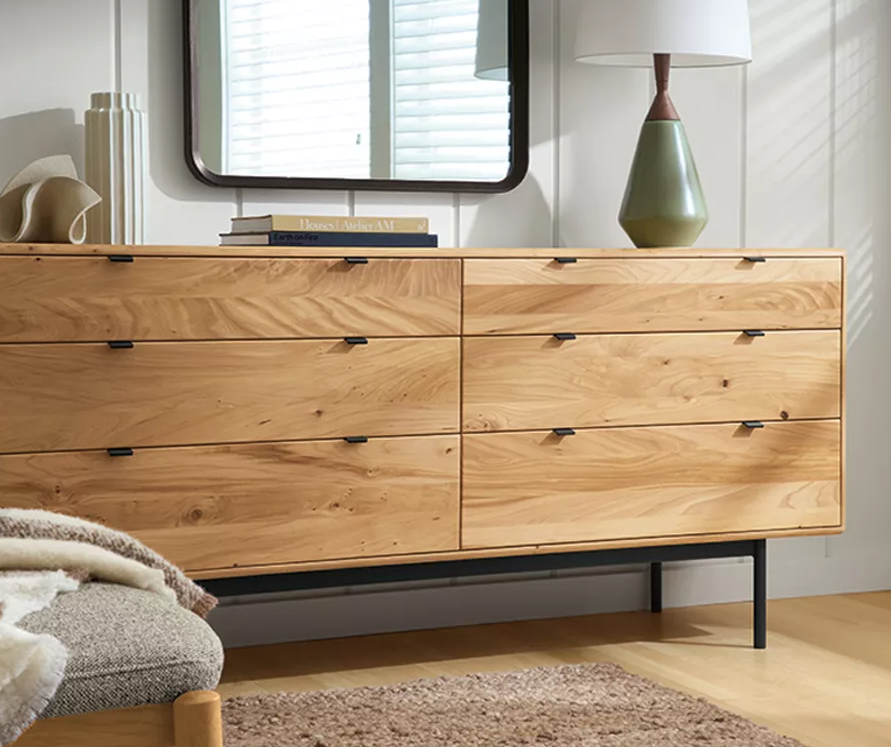
Every cabinet and wardrobe needs a strong core board. Pick the wrong one, and your beautiful finish won’t hide the weakness inside.
Last summer, I toured a custom kitchen shop in Berlin. MDF cut through the CNC machine smoothly. It created perfect door curves that particle board just can’t match. But the engineer showed me something different. Plywood holds screws better. This matters when you hang heavy appliance covers. About 67% of high-use kitchens switch to plywood for this reason, despite the higher cost.
Steamy dishwashers and fingerprints test your furniture constantly. The right core board protects your investment. It’s not just wood—it’s what keeps your furniture strong for years.
MDF Furniture Boards
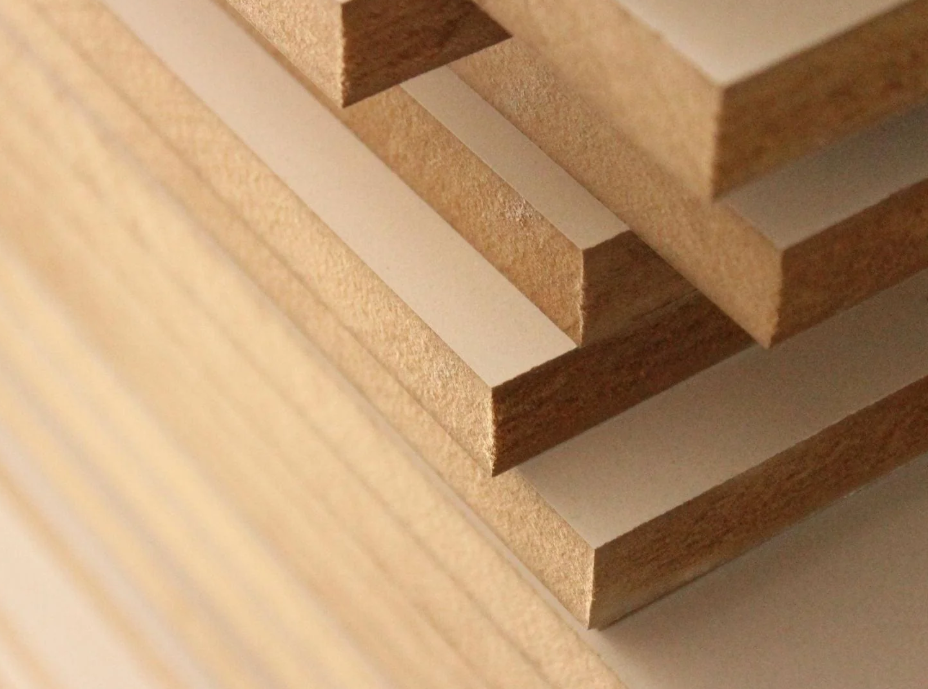
MDF Furniture Boards: Precision, Surface Quality, and Design Flexibility
Walk into a modern kitchen showroom. The smooth cabinet doors, seamless painted panels, and perfectly profiled edges are most likely built on Medium Density Fiberboard (MDF).
MDF is engineered from fine wood fibers bonded under pressure, resulting in a uniform, void-free internal structure. This homogeneity makes MDF exceptionally stable for furniture components that demand clean finishes and tight tolerances.
In furniture systems, MDF functions primarily as:
A paint-grade door core
A lamination and veneer substrate
A dimensionally consistent panel for CNC machining
Its lack of grain direction eliminates warping caused by natural wood movement, which directly improves surface quality and edge precision.
Why MDF Is Widely Used in Furniture
From a manufacturing perspective, MDF offers several advantages:
Surface consistency: No knots or grain telegraphing under paint or foil
Machinability: Reliable CNC routing, edge profiling, and drilling
Finish efficiency: Lower defect rates in painted and laminated doors compared to particle board
These characteristics make MDF the default choice for furniture doors and visible panels where appearance is critical.
Typical Furniture Applications
MDF furniture boards are commonly used in:
Cabinet doors and drawer fronts
Wardrobe and storage furniture panels
Appliance front panels and decorative covers
Limitations & Design Considerations
Moisture sensitivity unless MR-grade MDF is specified
Edge sealing is essential for long-term durability
Not suitable for load-bearing furniture components
Industry Insight:
For furniture components prioritizing surface quality and design flexibility, MDF remains the most production-efficient solution.
Plywood Furniture Boards
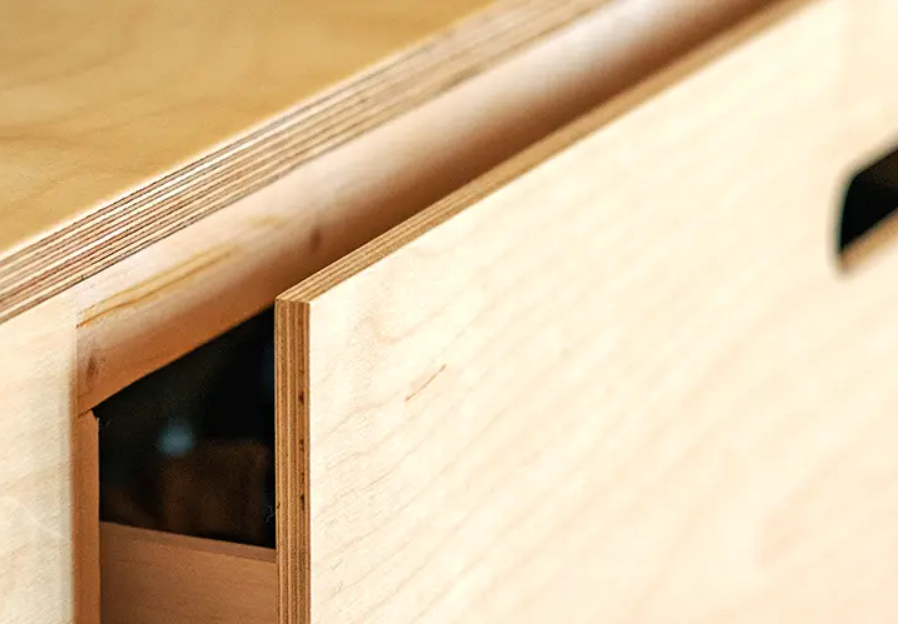
Role of Plywood in Furniture Systems
Plywood serves a different role in furniture construction—strength and structural reliability.
Built from cross-laminated veneers, plywood delivers superior bending strength and screw holding compared to MDF and particle board. This makes it especially valuable in furniture components subjected to repeated loading or mechanical stress.
Why Furniture Manufacturers Choose Plywood
Key performance advantages include:
High dimensional stability across wide panels
Excellent fastener retention for hinges and hardware
Better moisture tolerance when exterior or MR grades are used
These properties make plywood suitable for furniture components that must support weight or withstand frequent use.
Typical Furniture Applications
Plywood furniture boards are widely used in:
Cabinet carcasses and structural frames
Shelving systems and load-bearing panels
Appliance housings requiring strength and rigidity
Limitations & Design Considerations
Higher material cost compared to MDF and particle board
Requires veneer or overlay for premium surface finishes
Heavier panels may affect handling and installation
Industry Insight:
Plywood is chosen when furniture performance and longevity outweigh pure surface aesthetics.
Particle Board Furniture Panels
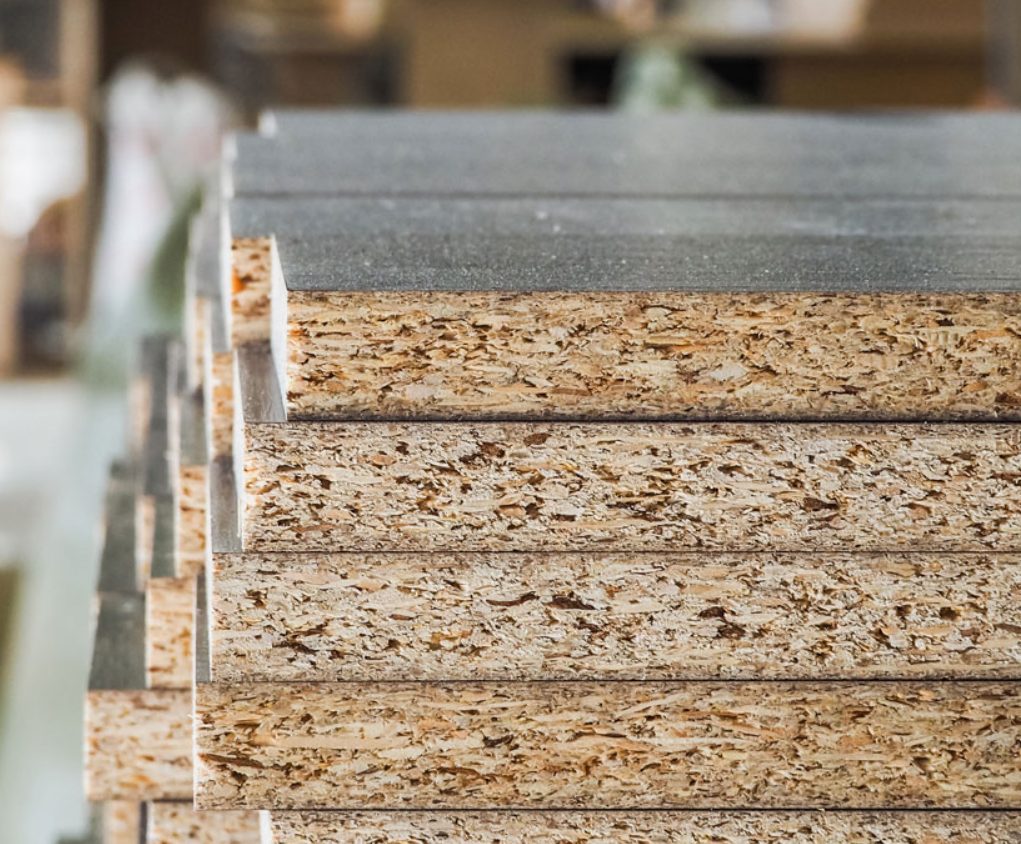
Role of Particle Board in Furniture Manufacturing
Particle board is the most cost-optimized furniture board, widely used in standardized furniture systems and mass production.
Manufactured from wood particles bonded with resin, it provides a flat, consistent panel suitable for surface decoration, though with lower internal strength than MDF or plywood.
Why Particle Board Remains Popular
Particle board continues to be widely specified because of:
Cost efficiency in large-scale furniture production
Compatibility with melamine-faced panels
Uniform panel thickness for modular systems
In controlled indoor environments, it delivers reliable performance at a lower cost point.
Typical Furniture Applications
Particle board furniture panels are commonly used in:
Cabinet bodies and internal partitions
Flat-pack furniture and modular storage systems
Appliance covers with low structural demands
Limitations & Design Considerations
Lower moisture resistance
Reduced screw holding strength
Edge protection is critical
Industry Insight:
Particle board is best suited for cost-driven furniture projects with standardized designs and controlled usage conditions.
OSB Furniture Panels
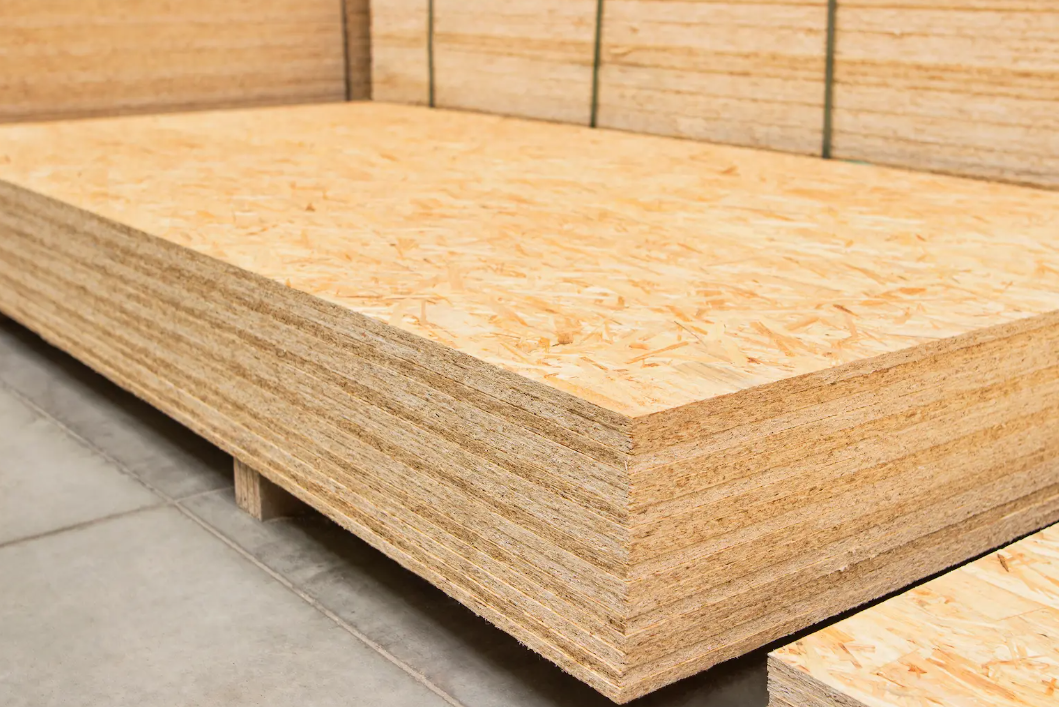
Role of OSB in Furniture Applications
Oriented Strand Board (OSB) occupies a design-driven niche in furniture board applications.
Rather than concealing its structure, OSB embraces its exposed strand pattern as a deliberate visual feature, making it suitable for furniture designs that prioritize material honesty and industrial aesthetics.
Why Designers Choose OSB
OSB furniture panels are selected for:
Raw, industrial visual language
Strong panel stiffness at relatively low cost
Distinctive texture that replaces decorative finishes
Typical Furniture Applications
OSB furniture boards are used in:
Industrial-style cabinets and shelving
Furniture for creative studios and retail spaces
Feature furniture pieces and display systems
Limitations & Design Considerations
Not suitable for refined or high-gloss finishes
Moisture protection and sealing required
Design appeal is project-specific
Industry Insight:
OSB furniture boards work best when structure itself becomes part of the design expression.
Comparative Overview (Furniture Use Focus)
| Board Type | Surface Quality | Structural Strength | Moisture Tolerance | Cost Level | Typical Furniture Use |
|---|---|---|---|---|---|
| MDF | Excellent | Low | Low–Medium | Medium | Doors, fronts, decorative panels |
| Plywood | Good | High | Medium–High | High | Carcasses, shelves, appliance housings |
| Particle Board | Moderate | Low | Low | Low | Cabinet bodies, modular furniture |
| OSB | Raw / Textured | Medium | Low–Medium | Low–Medium | Design-led furniture |
Conclusion: Choosing the Right Furniture Board
Furniture performance begins with core board selection.
While surface finishes define appearance, core materials determine durability, machinability, and long-term reliability.
Choose MDF for high-quality furniture doors and decorative fronts
Choose plywood for strength-critical furniture components
Choose particle board for cost-sensitive, standardized furniture systems
Choose OSB when material expression defines the design
Understanding these differences allows furniture manufacturers, designers, and buyers to specify furniture boards that perform reliably—not just look good.