
Sourcing the right melamine MDF sheets can make or break a retail chain’s furniture and fixture program. Most procurement teams in Panama are still dealing with a fragmented supplier landscape — and getting very little help along the way.
The gap between a reliable manufacturing partner and a bad deal often comes down to one thing: knowing which questions to ask before the first container ships.
This guide ranks the top six MDF sheets manufacturers worth serious consideration for Panama retail chains. The list covers high-volume Chinese direct importers and established LatAm regional players. Use it to make a faster, more confident sourcing decision.
Melamine MDF sourcing in Panama isn’t complicated — until it is. Problems tend to show up at the worst possible moment: after the purchase order is signed, the container is sitting at Balboa port, and your store floor is empty.
1. Shandong Mulzza Imp & Export Trading Co., Ltd (China)
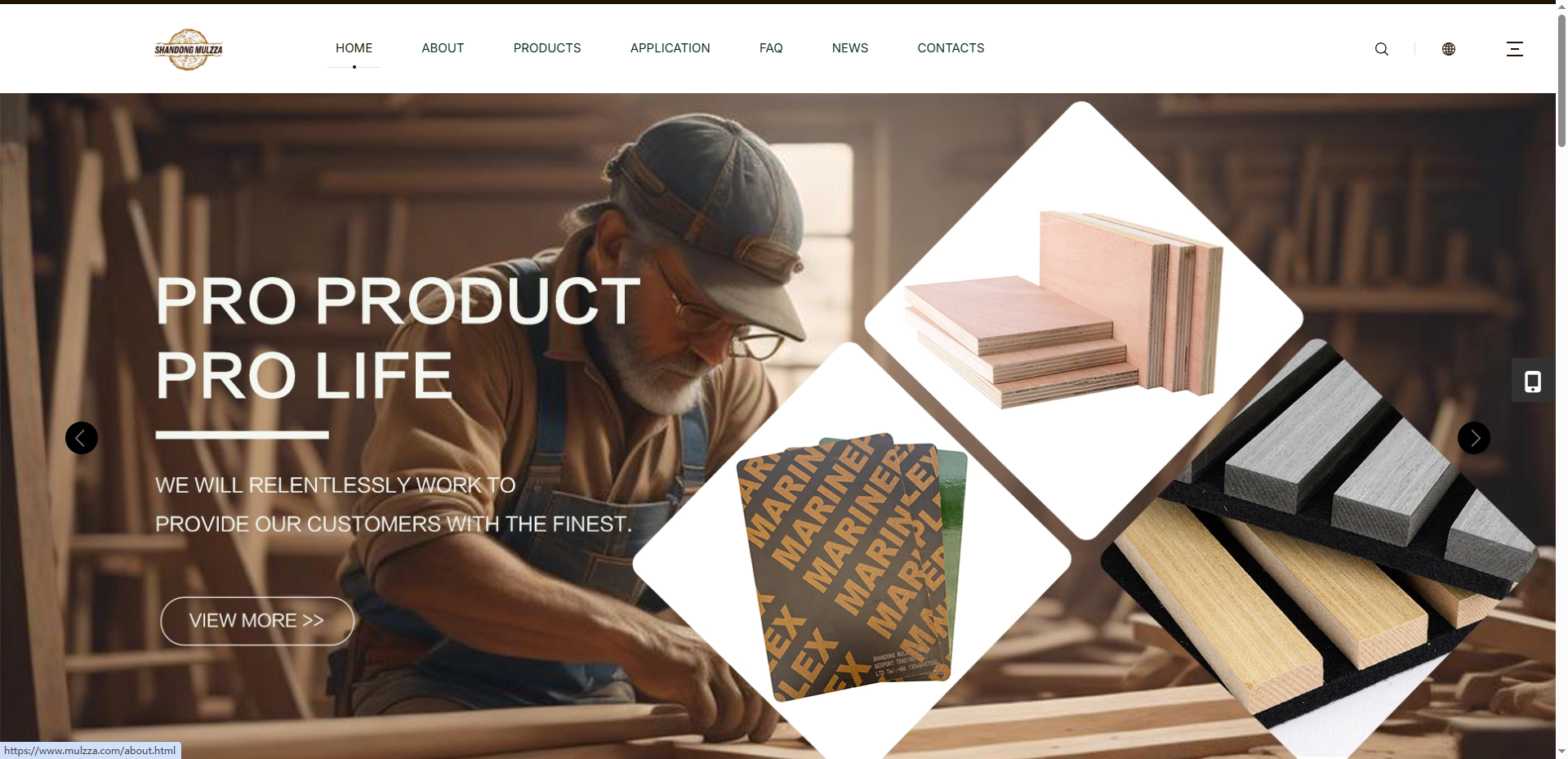
Mulzza has been shipping wood panels to four continents since 2010. South America is already on that list.
Panama retail chains looking to skip the middleman and buy direct from a Chinese manufacturer — this is worth a close look. Mulzza covers a wide range of products. Their core lineup includes melamine-faced MDF, moisture-resistant MDF, fire-retardant MDF, and particle board. That covers every panel format a high-volume retail furniture program needs.
What the Specs Look Like
Thickness runs 2mm to 25mm. The most in-demand sizes — 12mm, 15mm, 16mm, and 18mm — are all available. Sheet dimensions include the industry-standard 1220×2440mm. You also get the larger 2100×2800mm format. That bigger size means fewer cuts and better material yield.
Formaldehyde grades span E0, E1, and E2, plus MR (moisture-resistant) glue options. For indoor furniture, specify E0. Mulzza offers it. That puts them ahead of suppliers who cap out at E1.
Surface finishes include white double-faced melamine, wood grain, UV melamine, and a “luxury surface” option. That last one works well for furniture door applications where the visual finish hits retail shelf appeal hard.
What to Verify Before You Order
A few gaps are worth knowing before you commit:
No published MOQ for Panama-volume orders — ask about container flexibility upfront, not after you’ve assumed it
No documented Panama export history — South America is listed as a target market, but specific LatAm buyer references aren’t out there in public
Transit time from Qingdao runs 25–35 days to Balboa port — build that into your replenishment cycle from day one
Reach them on WhatsApp: +86 159 6430 5853.
Mulzza is a solid pick for retail chains ready to import direct. Go in with specific questions. You’ll get specific answers.
2. Baier (China / Export-Oriented Manufacturer)
Container-based production. Export-driven structure. A supplier built around international volume trade — not regional retail branding. Baier operates in a different lane than multinational panel groups. For Panama retail chains and importers focused on margin control, that difference matters.
Global Scale, Regional Execution
Baier is not a Latin American manufacturer. Orders into Panama ship from China under FOB or CIF terms. That means logistics planning becomes part of your purchasing strategy.
Typical timeline:
Production lead time: 10–20 days
Ocean freight to Balboa port: 25–35 days
Total cycle: ~35–55 days depending on booking window
That window is shorter than many Europe-origin suppliers and gives Panama importers tighter inventory rotation if scheduled correctly.
What the Product Range Offers
Baier focuses on standardized, export-ready melamine MDF configurations — the SKUs Panama retail chains actually move.
Core specifications:
Standard size: 1220 × 2440 mm
Thickness range: 6–25 mm
Double-sided white melamine (custom colors on request)
E1 standard, CARB compliance available on request
Positioning strengths:
Stable density and surface bonding for cabinet-grade use
Clean white finish suited for shelving and interior fixtures
Container-load consistency — important for retail replenishment cycles
This is not a decorative-design catalog supplier. It is a volume-stable, spec-driven exporter.
The Pricing Reality
Baier typically lands 15–30% below European-origin melamine MDF in Latin American markets, depending on freight conditions and thickness mix.
What that pricing reflects:
Direct mill export model
Lower raw material and labor cost structure
Container-based minimum ordering
You are not paying for global brand overhead. You are paying for board specs and shipping efficiency.
Brand Positioning in Panama
Baier is a trade-facing supplier, not a consumer-recognized brand. End customers in Panama will not know the name — and that is not the objective.
What retail buyers will notice:
Flatness
Edge stability during cutting
Surface consistency across batches
For hardware chains and cabinet material distributors competing on price-to-quality ratio, that performance-to-cost balance is the selling point.
Before You Reach Out
Expect container-based MOQs. Mixed thickness containers are usually possible.
Payment terms:
T/T standard
LC negotiable for repeat volume
30–60 day net terms only after established relationship
Before placing an initial order, request:
Density specification sheet
formaldehyde emission certification (E1 / CARB)
Sample board or cut panel
Baier works best for Panama importers who plan in container quantities and prioritize landed cost control over premium brand positioning.
3. Guararapes (Brazil)
Brazil sits about 6,000 kilometers from Panama. That distance is shorter than any Chinese port and faster than any European hub. That’s the core reason to consider a Brazilian Mdf Manufacturer.
Guararapes comes up often in regional supplier conversations. The name carries real weight in South American manufacturing circles. But procurement teams in Panama need to know one thing before reaching out: public data on Guararapes as an MDF or wood panel exporter is very limited.
What the Research Turned Up
Searching for Guararapes MDF production capacity, Panama export history, and panel product specs returns almost nothing useful. What comes up instead are financial records for Guararapes Confecções — a large Brazilian apparel company running the Riachuelo retail chain — and unrelated data for Recife’s Guararapes International Airport.
That’s a problem. It points to one of two things:
The Guararapes listed in MDF supplier directories is a different, smaller regional producer with little public presence
Or a name mix-up is circulating in the sourcing community — one that could waste your time if you chase the wrong lead
Before You Add This to Your Shortlist
Regional proximity to Panama has real value. Brazilian suppliers shipping through Santos or Paranaguá ports can offer shorter transit times than Asian alternatives. That logistics edge is solid — but only if the supplier checks out.
Take these steps before going further:
Confirm the exact legal entity name and CNPJ registration
Request documented export history to Central America
Ask for FOB pricing from a Brazilian port — not factory-gate estimates
A supplier you cannot verify is not a shortlisted supplier. It is a research task.
4. Berneck SA Paineis e Serrados (Brazil)
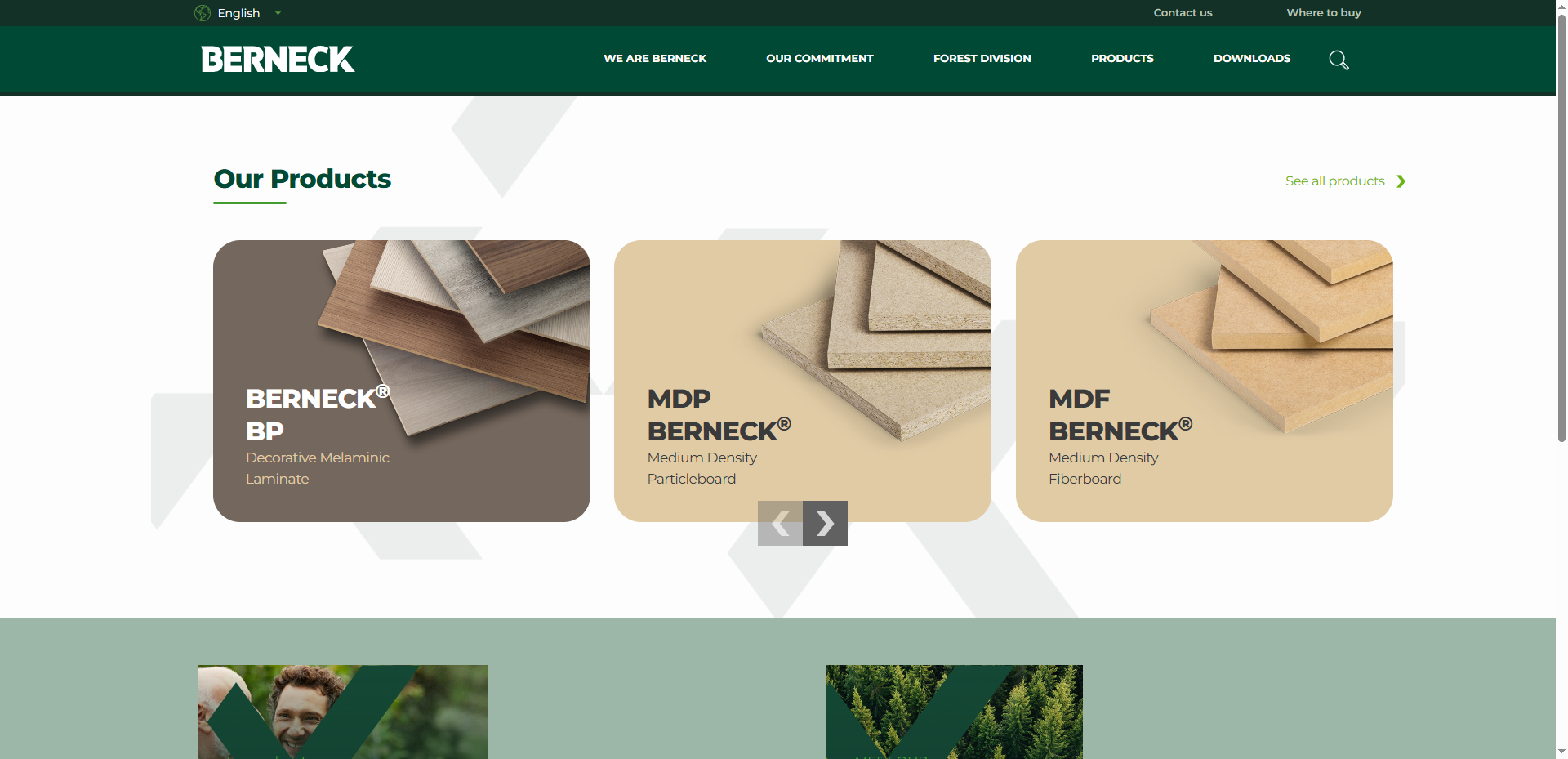
Seventy-plus years of operations. Over 2.4 million cubic meters of annual production capacity. Brazil’s largest wood-based panel exporter — and most Panama procurement teams have never heard of them.
That’s a gap worth closing.
Berneck SA Paineis e Serrados has been exporting for over 40 years. They’ve built 11 industrial units across five Brazilian states. The 2022 Lages facility alone added 1,020,000 m³ of annual capacity. It also created 600 direct jobs in one expansion move. This isn’t a regional curiosity. It’s a scaled manufacturer with real infrastructure behind every order.
What Berneck Makes
The product mix relevant to Panama retail chains includes:
MDF and HDF panels for cabinetry and shelving
Melamine-covered particleboard (MDP) — available in LPL, finish foil, and high-gloss formats
Sawn pine and teak lumber for structural furniture
Their panel plants sit close to southern Brazil’s pine forest base — 58,000+ hectares of plantation. That keeps raw material logistics tight and supply chain disruptions low.
The Credibility Signal That Matters
Berneck won the Valor 1000 Award in Construction Materials and Decoration for six straight years through 2022. Six consecutive wins show operational discipline. That’s not a one-year marketing push.
What’s Still Missing From the Public Record
Here’s where honesty matters more than a clean pitch:
MOQs for mid-scale orders are not published
Lead times to Panama from Brazilian ports are unconfirmed
Surface finish options and thickness tolerances for CNC-routed retail fixtures need direct verification
Berneck runs four active plants with highway and port access. That points to competitive transit times to Balboa. But “points to” isn’t a procurement number. Confirm the details before you build a replenishment cycle around assumptions.
Start the conversation at their Araucária, PR headquarters. Ask about Central American export history. The infrastructure is there. Now confirm the commercial relationship can match it.
5. Masisa (Chile/Argentina)
Masisa doesn’t need to introduce itself in Latin America. The track record does that.
From Argentina alone, Masisa logged 53,640 export shipments between March 2021 and August 2024 — totaling $237.74M USD in value. This isn’t a supplier testing the market. It’s a manufacturer with a solid, well-built export operation.
The product mix fits what Panama retail chains need. HS 441114 fibreboard (>9mm thickness) accounts for $165.41M — over half of total export value. Melamine-faced MDF and particle board make up the rest. These aren’t commodity fillers. They’re the exact panel grades going into cabinetry, shelving, and wardrobe builds across the region.
The Distribution Network Advantage
Masisa built something most manufacturers skip: Placacentro, a dedicated retail distribution chain. You’ll find over 300 stores across Chile, Argentina, Brazil, Venezuela, and Mexico. Each location offers cut-to-size services, design centers, and carpenter training. Thirty percent of Masisa’s wood board sales flow through this retail channel.
For a Panama procurement team, that infrastructure shows real supply chain discipline at scale — not just factory capacity on paper.
What You Won’t Find in the Public Data
No confirmed Panama or Central American distributor shows up in Masisa’s public records. Exports to Bolivia, Paraguay, and Uruguay suggest the regional network gets close — but “close” isn’t a logistics contract.
Shortlist Masisa only after you confirm:
– FOB pricing from Chilean or Argentine ports
– Lead times to Balboa port
– Whether a Central American distributor or freight forwarder relationship already exists
The foundation is strong. Verify the last mile before you commit.
6. Arauco (Chile)
Arauco isn’t trying to impress you. The numbers do that on their own.
Chile’s MDF production capacity sits at 1.015 million m³ at a single site. Total panel sales volume reaches 5.3 million m³ across the business — that includes 1.63 million m³ of particleboard and 1.015 million m³ of MDF. Panel revenues hit US$2.543 billion in the March 2023 trailing twelve months. Arauco and CMPC together control 72% of Chile’s export market.
That’s not market share. That’s structural dominance.
What “Consistency” Means Here
Arauco started Bioforest in 1990 — a dedicated research operation. Since then, it has pushed plantation yields up by over 40% through better planting and harvesting cycles. Their CO₂e net surplus hit 13,053,590 tons in 2019. PwC audited those numbers. The results were also verified under the Kyoto Protocol’s CDM framework.
Stable raw material supply leads to stable panels. Most Panama MDF sheets manufacturers don’t have this level of upstream control. That’s a real gap.
The Compliance Infrastructure
Arauco holds international Forestry Management and Chain of Custody certifications. Full documentation is available at arauco.com. Their Bío-Bío regional base sits well for Pacific export routes. That’s useful for containers heading toward Central American ports.
What to Confirm Before Ordering
A few things the reference data doesn’t cover — and they matter:
CARB Phase 2 / E1 / E0 compliance — check this before you spec it into any U.S.-adjacent supply chain
Panama-specific freight timelines and landed cost estimates
MOQ flexibility for mid-scale retail programs
Arauco’s scale is real. Make sure the commercial details hold up to match it.
How to Evaluate and Choose the Right Manufacturer for Your Panama Retail Chain
Six manufacturers. Completely different profiles. One procurement decision that shapes your entire fixture program for the next 12 months.
The good news: a clear framework exists. Use it.
Score Every Supplier Against the Same Criteria
Before you send a single inquiry, build a weighted decision matrix. Panama retail chains that source well don’t run on gut feel — they score every supplier the same way. Here’s the benchmark that works:
- Price per m³ — 30% weight
- Lead time — 25% weight
- MOQ flexibility — 15% weight
- Certification compliance (E1, FSC, CARB) — 10%
- Color and texture range — 10%
- After-sales support — 10%
Score each supplier 1–10 per category. Any weighted total under 75/100 doesn’t make your shortlist. That’s not arbitrary — it’s a filter that keeps you from a container full of regret.
China vs. Latin America: Run the Real Numbers
The product price from a Chinese exporter looks strong on a factory quote. Add freight, duties, and financing to the spreadsheet, and the picture changes fast.
For a typical 40-foot container order:
| Factor | China | Latin America |
|---|---|---|
| Product price | $4,000 | $5,500 |
| Freight to Panama | $3,500 | $1,800 |
| Duty (6–15%) | $450–$900 | $400–$750 |
| Financing cost | $300 | $100 |
| Total landed | $8,250–$8,700 | $7,800–$8,150 |
China runs 5–10% cheaper ex-works. Latin America wins on total landed cost. It also delivers 50% faster, which cuts inventory carrying costs by around 20%.
Vet Before You Commit
Complete three non-negotiable steps before any purchase order gets signed:
- Factory audit: A virtual audit runs $500–$1,000 through TÜV Rheinland Panama. An in-person visit costs $3,000–$5,000. Check that production capacity exceeds 500m³/month.
- Sample testing: Request 5–10 units ($200–$500 plus freight). Test for 7–14 days. Reject any supplier with a defect rate above 2%.
- Pre-shipment inspection: SGS Panama charges $400 per container. Intertek at the Colón Free Zone runs $350. Verify E1 emission certificates on every shipment — not just the first.
Walk away if you spot these red flags: MOQ above 10,000 units, lead times beyond 90 days, no documented Panama import references, or sample defect rates above 5%.
Negotiate From a Position of Strength
Volume is leverage. One hundred containers per year unlocks 10–15% price reductions. At 500m³ or more with Tier 1 Chinese exporters, expect 18% off standard pricing.
Payment structure matters too. Switch from a standard letter of credit to 30% T/T with 70% post-inspection. That move saves around 5% in financing costs. Repeat-order net-30 terms can trim another 3–7%.
Two-year contracts secure priority production allocation. You get 95% on-time delivery and annual rebates of 2–5%. That’s not just a discount. That’s supply chain stability built into the agreement.
The right MDF sheets manufacturer in Panama isn’t the one with the best brochure. It’s the one whose numbers hold up once you run them through this framework.
Conclusion
Melamine MDF Sheets Suppliers – Panama Retail Chain Comparison
| Manufacturer | Region | Price Level | Typical Lead Time to Balboa | MOQ Flexibility | Certification Depth | Strength for Panama Retail |
|---|---|---|---|---|---|---|
| Shandong Mulzza Imp & Export Trading Co., Ltd | China | Low–Mid | 30–45 days | Container-based (confirm first) | E0 / E1 / MR options | Direct factory pricing, wide spec range |
| Baier | China | Low–Mid | 35–55 days | Container-based, mixed thickness possible | E1 / CARB (on request) | Cost-efficient bulk imports |
| Guararapes | Brazil | Mid | 20–35 days (verify) | Unconfirmed | Limited public export data | Geographic proximity (if verified) |
| Berneck SA Paineis e Serrados | Brazil | Mid | 20–35 days (verify) | Not published | FSC / Industry awards | Large-scale exporter, stable supply |
| Masisa | Chile / Argentina | Mid | 18–30 days (verify) | Regional distribution-based | FSC / regional compliance | Strong LatAm export track record |
| Arauco | Chile | Mid–High | 18–30 days (verify) | Project-based | FSC / Chain of Custody | High-volume industrial stability |
Sourcing melamine MDF sheets for your Panama retail chain is more than a procurement call. It shapes your margins, your timelines, and what ends up on your shelves.
The right partner depends on your position in the market:
High-volume importers who can handle longer shipping lead times get strong value working with manufacturers like Shandong Mulzza.
Regional buyers who need proximity and contract flexibility tend to lean toward Arauco, Masisa, or the Brazilian suppliers.
Brands chasing premium recognition? Kronospan is built for that.
No matter your scale, the smartest MDF sheets manufacturers in Panama sourcing strategy starts with one honest question: What does my supply chain need — not what looks good on paper?
Start simple. Shortlist two or three manufacturers from this guide. Request samples. Then have a real conversation about lead times and minimums. The manufacturers worth your business will make that conversation easy.
The right one is closer than you think.