
Most SPC flooring complaints don’t start when a plank buckles or a seam comes loose. They start the moment a buyer opens a product listing and makes a quick decision based on price or a “waterproof” label. By the time the damage shows up, the real mistake is months behind them.
Researching Spc Flooring before buying puts you ahead of most buyers. This guide breaks down the five purchasing decisions that cost homeowners and contractors the most — and what to check instead so your floor holds up the way it was promised to.
Purchasing Decisions Lead To SPC Flooring Complaints
Five decisions. That’s all it takes to push a flooring project toward complaints, returns, and broken relationships.
Every major SPC flooring complaint — buckling, delamination, locking failures, discoloration, brittleness, premature wear — starts with a specific choice made before installation begins. The defect you see on the floor today points back to a decision made at the spec sheet, the purchase order, or the supplier selection stage.
The Real Cost of Getting SPC Flooring Wrong From the Start
Flooring failures cost the industry $2.4 billion every year — and most of that damage traces back to decisions made before a single plank hit the floor.
That number isn’t abstract. For homeowners, one SPC flooring complaint can run anywhere from $200 to over $20,000 in repairs. The average professional fix for a 300 sq ft subfloor alone lands at $658. On top of that, hidden extras — underlays, trims, subfloor prep — push project budgets up by 20 to 50%.
Here’s what makes this painful: none of it is random.
Every dollar lost follows a predictable chain:
Buying on price alone means thinner wear layers and weaker locking systems.
Skipping pre-shipment checks lets defective batches reach the job site.
Installation problems follow.
Complaints come next. Then disputes.
That $50 savings turns into a claim that costs ten times more.
The math is simple — cheap upfront almost always means expensive later.
Mistake #1: Choosing Price Over Wear Layer Thickness — Source of SPC Flooring Scratching Complaints
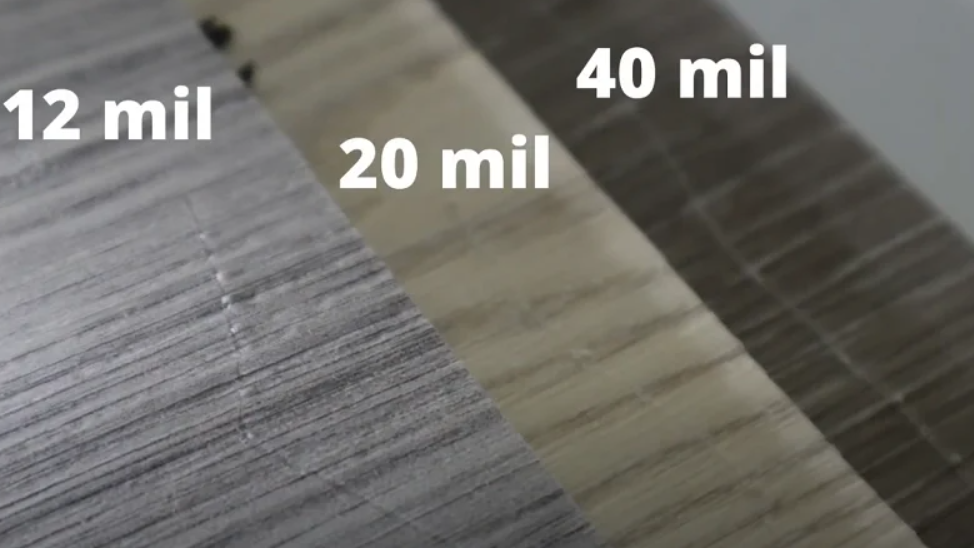
Wear layer thickness is the one number that decides whether a floor lasts twenty years or looks worn out in eighteen months. Most buyers never check it.
Shoppers compare two SPC products and pick the cheaper one. They’re almost always getting a thinner wear layer without realizing it. That thin layer is where SPC flooring scratching complaints start.
What the Numbers Mean
Wear layer thickness is measured in mils (thousandths of an inch) or millimeters. Here’s the breakdown:
8 mil (0.2 mm) — Light-use bedrooms and guest rooms only
12 mil (0.3 mm) — Minimum for standard residential use
20 mil (0.5 mm) — Recommended for rentals, pets, high-traffic homes
22–30 mil (0.7 mm+) — Heavy commercial: restaurants, clinics, offices
Go below 0.3 mm in a busy home, and it’s a ticking clock. Chair legs drag across it. Pet claws score the surface. Sand tracked in from outside — with a Mohs hardness of 7 — cuts straight through thin UV coatings. Most buyers spot the damage within one to two years and call it a product defect. The product isn’t defective. It was the wrong spec for the job.
How to Verify Before You Buy
Skip the marketing language. Request the manufacturer’s specification sheet and look for the mil or mm value straight from the source.
At big-box retailers like Home Depot or Lowe’s, check the product label — 12 mil and 20 mil options are listed there
For bulk or wholesale orders, ask for a detection report confirming wear layer thickness
Samples available? Use a caliper on the cut edge and measure it yourself
Match the wear layer to your actual use case — not your budget. That’s what keeps stone plastic composite flooring defects off your floor and off your complaint list.
Mistake #2: Misreading “Waterproof” Labels — Drives SPC Flooring Moisture Complaints
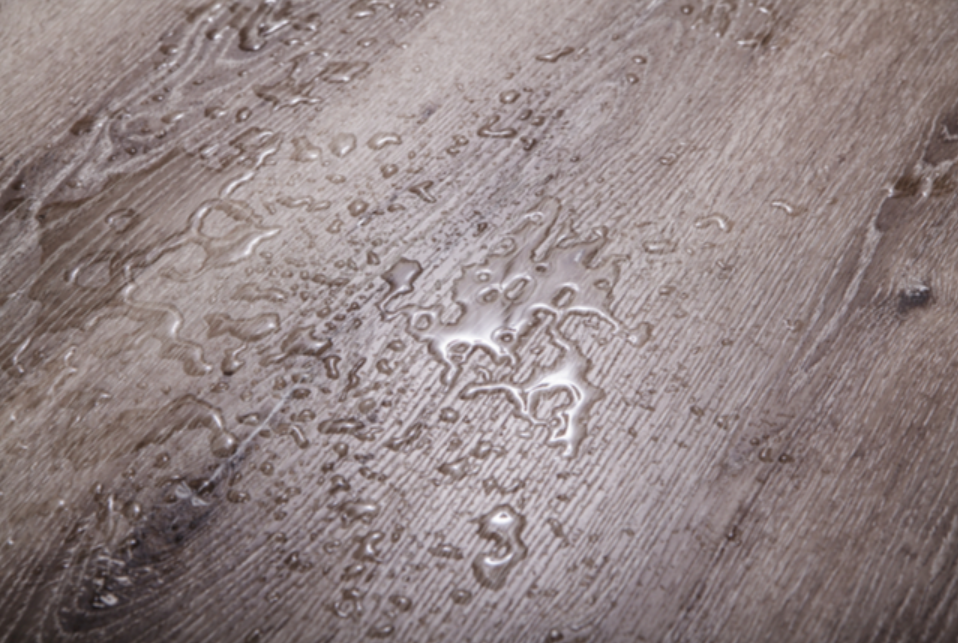
“Waterproof” is one of the most misunderstood words in flooring. That misunderstanding is responsible for 40–60% of all SPC flooring moisture complaints.
Here’s what you need to know: the SPC core itself is waterproof. Limestone powder and PVC binder combined absorb less than 0.1% of their weight even after long water exposure. That part is true. But a floor isn’t just its core. It’s joints, edges, underlayment, and subfloor — none of which that label covers.
Where Moisture Gets In
Three situations cause most rigid core flooring complaints tied to water:
Bathrooms with direct-lay installation — Moisture gets into unsealed edges and causes cupping. Without sealant in humid conditions, expansion reaches 5–10%.
Basements without a vapor barrier — Subfloor relative humidity above 60% pushes vapor through and drives SPC floor delamination. Below-grade installs without a vapor retarder see complaint rates jump 30–50%.
Unsealed click-lock joints — Moisture wicks through gaps after spills. Edge failure shows up in 20–30% of cases, even though the core itself can survive 72-hour submersion.
What to Check Before You Buy
|
Parameter |
What to Check |
Benchmark |
|---|---|---|
|
Core absorption |
ASTM test data |
<0.1% weight gain |
|
Backing type |
IXPE (closed-cell) vs. EVA (open-cell) |
IXPE: <0.1% uptake; EVA: 1–5% |
|
Mold resistance |
ASTM D3273 rating |
Grade 0–1 (no visible growth) |
|
Expansion rate |
Linear change per moisture gain |
≤0.20% per EN 13489 |
Before installation, confirm subfloor RH stays below 60%. Lay a 6-mil vapor barrier over concrete. Seal every joint with 100% silicone coverage. Miss any one of those steps, and the “waterproof” label on the box won’t save you from SPC flooring buckling or mold complaints six months down the line.
Mistake #3: Ignoring Core Density and PVC Formulation — Cause of Buckling and Warping
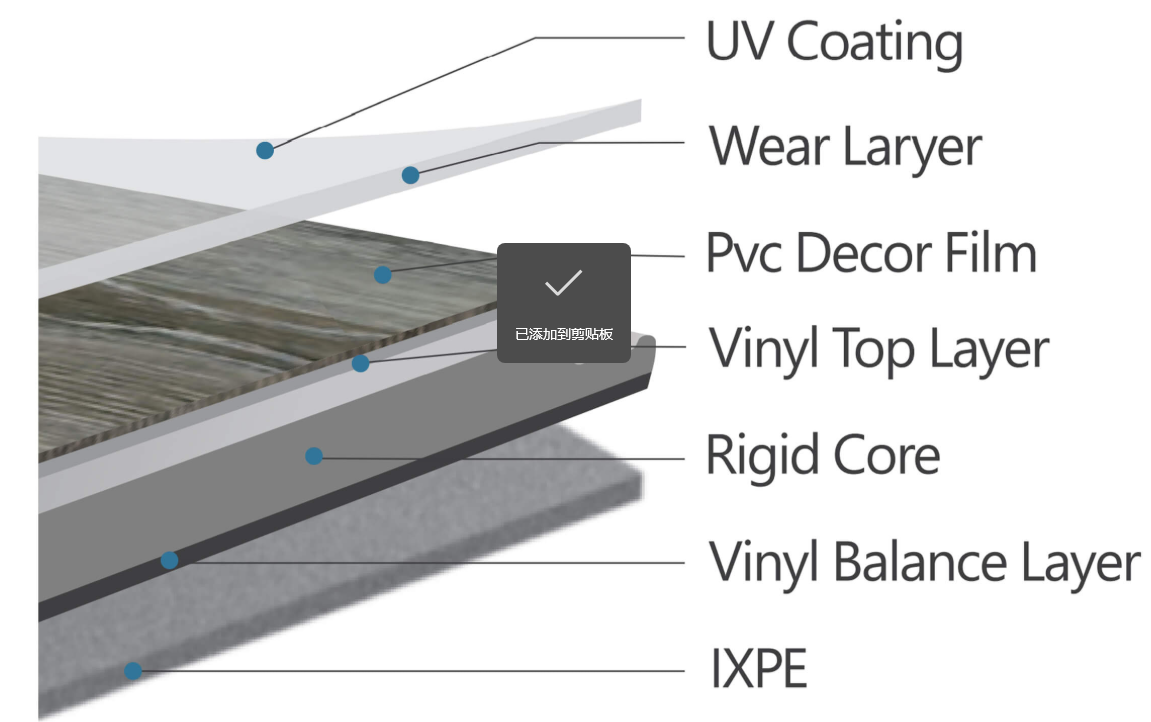
Core density is the one spec that separates a floor that holds up in real life from one that buckles the first summer it meets direct sunlight.
Most buyers never ask about it. They look at thickness — total board thickness — and assume thicker means better. It doesn’t. A 6mm board with a low-density core performs worse under temperature swings than a 4mm board with a well-made one. That performance gap is where SPC flooring buckling complaints start.
What’s Inside a Stable SPC Core
SPC stands for stone plastic composite. The “stone” part is calcium carbonate — limestone powder — bonded with PVC resin and stabilizers. Get that ratio right, and the core holds its shape through heat, cold, and humidity swings. Get it wrong — too much calcium carbonate, not enough stabilizers — and the core becomes brittle. It loses its shape under stress.
The industry benchmark is clear: ≥2000 kg/m³ core density. Below that level, the core can’t control expansion under heat. A solid SPC core, tested at 80°C over six hours, expands no more than 0.12% and curls no more than 1.2mm — per EN 14041:2004 standards. Low-density cores push past both limits. SPC flooring warping follows.
What to Check Before You Buy
|
Parameter |
Stable SPC |
Risk Threshold |
|---|---|---|
|
Core Density |
≥2000 kg/m³ |
<2000 kg/m³ |
|
Heat Expansion (80°C, 6hrs) |
≤0.12% |
>0.12% |
|
Curling (80°C, 6hrs) |
≤1.2mm |
>1.2mm |
Ask the manufacturer for their technical data sheet. Check for floorscore, CE, or SGS certification — these require dimensional stability testing. A supplier that can’t hand over those documents is giving you all the information you need.
Mistake #4: Ignoring Lock System Quality — Cheap Clicks Create Clicking Problems
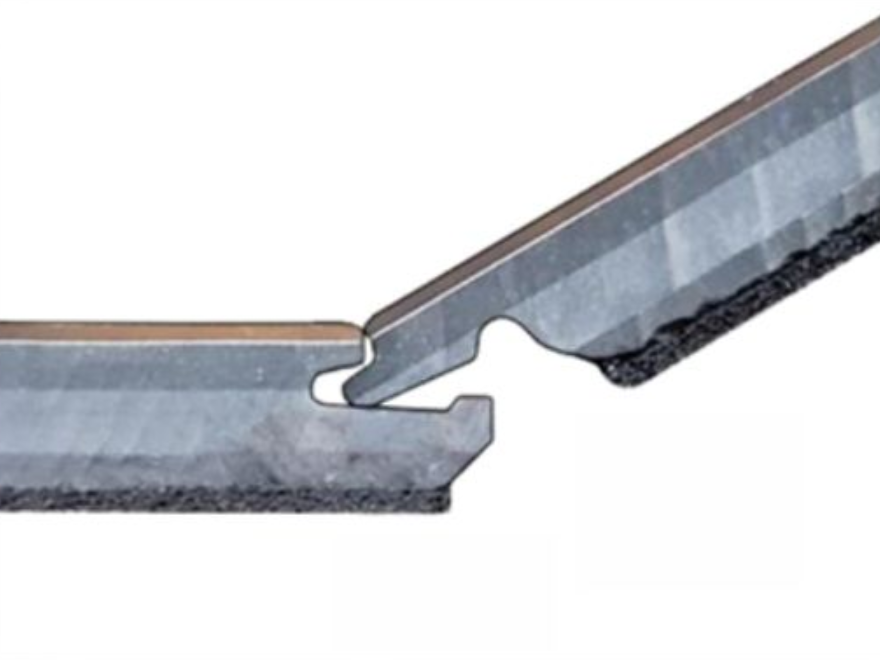
The locking system holds everything together. Skip evaluating it, and every other spec you checked means nothing.
SPC floor clicking problems and edge failures top the list of buyer complaints. The worst part? They show up after installation. At that point, you’re looking at expensive repairs or a full replacement. Those are your only options.
What Lock Failure Looks Like
Three signs point to a failed locking system:
Walking noise and board separation — hollow or springy sections where the lock never seated during installation
Raised seams (“ski ramps”) — dirt collects at lifted edges. This is a clear sign planks were clicked wrong and are now damaged
Edge cracking during installation — over-tapping creates micro-cracks. Foot traffic and thermal pressure make them spread
That last one shows up often in budget SPC. Low-grade PVC resin and recycled fillers damage the lock geometry at the manufacturing stage. Too much calcium carbonate makes the core stiff and brittle. Boards snap under a tapping block before the floor is even done.
How to Verify Lock Quality Before You Buy
Don’t take a supplier’s word for it. Run these checks:
Drop test — exposes hidden edge brittleness before you install anything
Pull test — separate clicked planks by hand and measure the resistance. Strong locks hold firm and don’t give
Sample pressure test — press a concentrated load onto locked planks. They should not crack or pull apart
Request factory QC documentation — ask for lock geometry specs, material composition, and pressure testing results. Get them on paper
One sourcing decision matters a lot here: direct factory purchasing gets you access to production QC records. Trading companies often can’t give you those records at all.
Mistake #5: Not Verifying Certifications and QC Documentation — Trading Companies vs. Direct Factories
The supplier you buy from shapes every plank that arrives at your job site. Yet most buyers never ask who’s making the product.
That gap in due diligence leads straight to stone plastic composite flooring defects — and they show up in batches, not one-offs. Order the same SKU twice and you get two different floors. Thickness varies. Lock geometry shifts. The color is off. These aren’t random defects. They’re the expected result of buying through a trading company that has no control over production.
Trading Companies vs. Direct Factories: What Changes
A trading company sources from multiple manufacturers. They don’t own the production line. No on-site supervision. No raw material testing authority. No way to catch a formulation change before it ships. Every batch comes from whoever filled the order that week.
A direct factory works differently. They run ISO 9001-certified quality management systems. They inspect at every production stage. They test raw materials before mixing starts. A batch that fails internal QC gets pulled before it reaches your container — not after it’s on your floor.
The result is consistent output batch after batch. Formulas stay stable. Dimensions hold. Lock geometry stays precise. That consistency is what stops SPC floor clicking problems, SPC flooring discoloration, and dimension-related rigid core flooring complaints from derailing your project mid-way.
Four Ways to Tell the Difference Before You Order
Don’t go by what a supplier claims. Check these signals instead:
Website self-branding — Trading companies carry wide, multi-category catalogs with thin technical specs. Factories focus on fewer product lines and publish detailed dimensional data
Sample response — Request a sample of a specific product. Hesitation or a long lead time means they’re sourcing it from somewhere else
Schedule flexibility — Ask about a minor production change. Factories give you a clear answer and adjust. Trading companies pass the question along and wait
Single-category depth — A supplier who can speak in detail about SPC-specific tolerances, core density specs, and lock geometry is almost always drawing from direct production knowledge
QC Documents to Demand Before You Place an Order
Certifications alone don’t cut it. Ask for paperwork that shows what’s happening on the line:
Pre-shipment inspection reports — confirms the finished product matches your spec
Raw material testing records — verifies limestone powder purity and PVC resin grade
Stage-wise inspection logs — catches defects during production, not after
Sample retention documentation — the approved gold sample should match every production run
Trading companies often can’t produce these documents. That tells you what you need to know. A factory running proper SPC statistical process control keeps all of it on file and hands it over without delay.
SPC floor warranty issues escalate fast once batch inconsistencies surface post-installation. Close that gap at the sourcing stage — before a single container ships.
SPC Flooring Pre-Purchase Checklist
Before placing an order, verify the following specifications. These checks help prevent the most common SPC flooring complaints related to wear, moisture, and installation compatibility.
|
# |
Question to Ask |
How to Verify |
Recommended Standard |
|---|---|---|---|
|
1 |
What is the plank thickness? |
Check the technical data sheet or measure the sample |
≥ 5 mm (excluding underlay) |
|
2 |
What wear layer protection is used? |
Review wear layer thickness and UV coating spec |
≥ 0.3 mm residential / ≥ 0.5 mm commercial |
|
3 |
What backing material is used? |
Check product label or spec sheet |
IXPE foam (closed-cell, moisture resistant) |
|
4 |
Is waterproof performance documented? |
Request absorption or immersion test data |
SPC core absorption <0.1% |
|
5 |
Is the subfloor compatible? |
Measure flatness and moisture level |
≤ 5 mm deviation over 2 m span |
|
6 |
Is acclimatization required? |
Review installation instructions |
24–48 hours at room conditions |
|
7 |
What defect tolerance does the warranty allow? |
Review warranty documentation |
≤ 2% manufacturing tolerance |
|
8 |
Can it install over existing flooring? |
Evaluate subfloor condition |
Surface must be flat, dry, and stable |
Key Checks to Prioritize
If you cannot verify every item, focus on these critical specifications:
-
Wear layer thickness ≥ 0.3 mm for residential durability
-
IXPE backing to reduce moisture-related failures
-
Core waterproof performance verified by test data
-
Subfloor flatness ≤ 5 mm over 2 m
These four factors account for the majority of SPC flooring performance complaints.
FAQ: Common SPC Flooring Complaints and Their Real Causes
Why does SPC flooring buckle after installation?
SPC flooring buckling usually happens when the floor has no room to expand.
Three conditions typically trigger it:
No perimeter expansion gap during installation
Excessive moisture coming from the subfloor
Low-density SPC cores that expand more under heat
Stable SPC flooring should have core density ≥2000 kg/m³ and be installed with expansion gaps along walls and fixed objects.
Before installation, always verify subfloor moisture levels and allow 24–48 hours of acclimatization.
Why do SPC planks separate or show gaps?
Plank separation normally points to problems in the locking system or installation surface.
Common causes include:
Weak or poorly manufactured click-lock systems
Uneven subfloors creating pressure points
Improper plank installation where locks never fully engaged
High-quality SPC flooring uses precision-machined locking profiles and maintains tight dimensional tolerances. When these tolerances drift during manufacturing, gaps appear after traffic and temperature changes.
Why is my SPC floor scratching so quickly?
Rapid surface scratching usually means the wear layer is too thin for the traffic level.
Typical durability guidelines:
0.2 mm (8 mil) – light residential areas only
0.3 mm (12 mil) – standard residential use
0.5 mm (20 mil) – high traffic homes or rentals
0.7 mm+ (28 mil+) – heavy commercial environments
When buyers choose flooring based only on price, thinner wear layers are often the hidden compromise.
Why do some SPC floors discolor over time?
Color inconsistency or fading is usually linked to printing film quality and UV coating performance.
Low-quality SPC flooring may use:
unstable decorative film
weak UV coating layers
inconsistent printing batches
Quality manufacturers control this with batch color calibration and multi-layer UV coatings, ensuring consistent appearance across cartons.
Why do some SPC floors feel noisy or hollow?
Noise problems usually come from installation conditions rather than the core material.
The most common reasons are:
missing or poor-quality underlayment
uneven subfloors
improperly engaged locking joints
Using IXPE-backed SPC flooring or installing a proper acoustic underlayment significantly reduces footstep noise and hollow sounds.
Conclusion
Most SPC flooring complaints don’t start the day a plank buckles or a seam splits. They start the day someone picked a floor based on price alone, trusted a vague “waterproof” label, or skipped the questions that matter most.
The pattern is clear: rushed decisions lead to real problems down the road. A thinner wear layer. An uncertified core. A lock system not built to last. By the time the damage shows up, the purchase window has already closed.
Here’s what to take away: your protection isn’t in the warranty document. It’s in the questions you ask before you buy. These details aren’t technical fine print:
-
Wear layer thickness
-
Core density
-
Certification documentation
-
Subfloor requirements
They’re your real leverage.
Ready to buy smarter? Use the pre-purchase checklist in this guide. Or reach out to Baier’s flooring specialists — the right floor starts with the right conversation, not the lowest quote.