
This guide gives Costa Rica wholesalers a clear, structured breakdown of melamine-faced MDF boards. No fluff — just what you need to source the right product.
Here’s what each brand section covers:
Core specs — dimensions, thickness range, surface finishes
Costa Rica fit — humidity performance, import records, compliance
Wholesale advantage — MOQs, scalability, pricing tier
You’ll find brands like Kastamonu Entegre, Greenlam, Kronospan, Rocplex, and moisture-resistant specialists covered here. Each one is ranked by real-world wholesale suitability — not marketing claims.
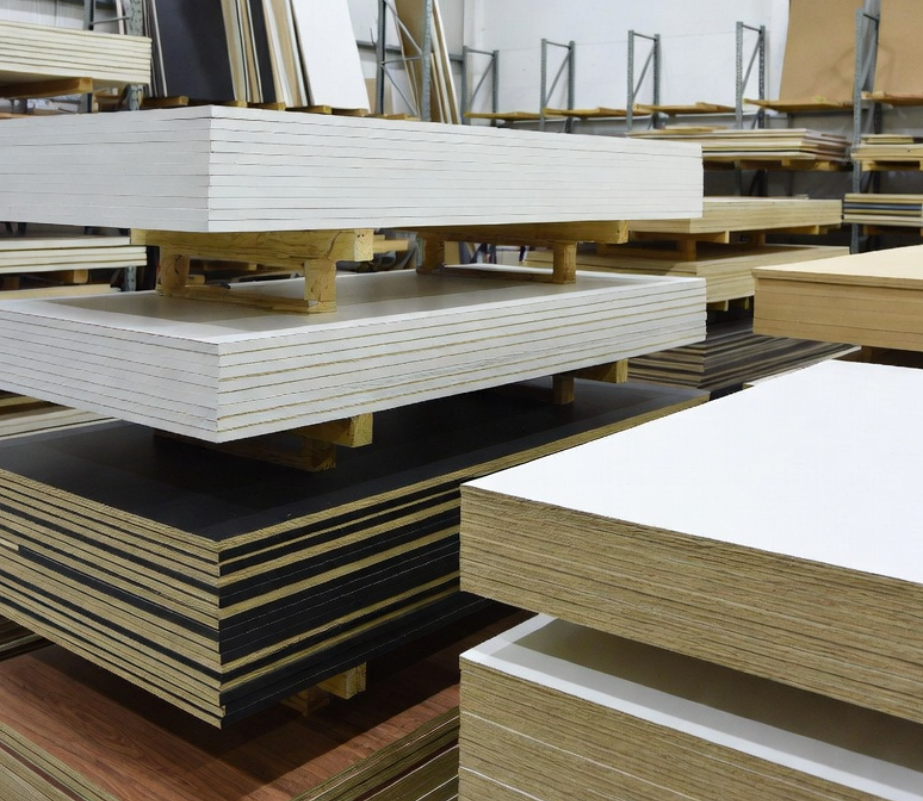
What Is Melamine-Faced MDF Board and Why Costa Rica Wholesalers Should Care
Melamine-faced Mdf Board does one thing well: it arrives ready to use. No extra finishing. No treatment after installation. You get a pre-finished surface straight out of the box.
Here’s how it’s built. The core is dense MDF — wood fibres compressed to 700 kg/m³. That core gets bonded with decorative paper soaked in thermosetting melamine resin. Heat and pressure fuse everything into one solid, seamless panel. The finished surface is hard, scratch-resistant, and stain-resistant from day one.
The Specs That Matter for Wholesale
|
Dimension |
Thickness Range |
Typical Use |
|---|---|---|
|
1220×2440 mm (4×8 ft) |
2–30 mm |
Standard furniture runs |
|
1830×3660 mm |
6–30 mm |
Large-format cabinetry |
|
2100×2800 mm |
6–30 mm |
Fire/moisture-resistant projects |
Surface finishes cover matte, suede, high gloss, and UV-stable options. That range matters for Costa Rica’s residential and commercial fit-out market. Aesthetics drive purchasing decisions there, so variety gives your clients real choices.
Why Compliance Is Non-Negotiable Here
Costa Rica’s furniture manufacturing sector requires boards that meet EN 14322 and E1 emission standards (EN ISO 12460-5). Bring non-compliant stock through Puerto Limón or Caldera and you’ll face customs delays. Worse, you lose client trust fast — and that’s hard to rebuild.
There’s another factor most wholesalers miss: humidity performance. Costa Rica’s climate is tough on standard boards. For kitchen and bathroom cabinetry, moisture-resistant variants aren’t optional — standard boards fail over time. Source the right grade from the start.
For wholesale operations, keep this baseline in mind:
Prioritize 1220×2440×18 mm at 700 kg/m³ density as your core SKU
Verify batch consistency every shipment — color and texture variance between orders kills repeat business fast
Stock moisture-resistant variants for any cabinetry-focused clients — it’s what Costa Rica’s climate demands
Key Criteria for Evaluating Melamine-Faced MDF Brands as a Costa Rica Wholesaler
Six criteria separate a supplier worth your money from one that will cost you clients.
Most wholesalers skip the technical vetting and go straight to price. That’s how you end up with boards that warp in San José’s humidity — and a damaged reputation that sticks around.
Here’s what matters:
Technical Benchmarks You Cannot Compromise On
Board density is your starting filter. Reject anything below 700 kg/m³. The acceptable range is 640–820 kg/m³, but the sweet spot for Costa Rica’s furniture market sits at 700 kg/m³ and above. Higher density gives you better screw-holding strength, cleaner machining results, and fewer client callbacks.
Moisture resistance grading is non-negotiable. Look for MR50 certification. That means the board passes 24-hour submersion testing (MR10) and 6-cycle aging resistance (MR30). Standard boards don’t survive Costa Rica’s climate long-term. MR50 does.
Surface abrasion resistance must be tested against EN 14322. That’s the standard. No documentation, no deal.
Certifications That Clear Costa Rica Customs
|
Certification |
Why It Matters |
|---|---|
|
E1 / CARB Phase 2 |
Emission compliance — mandatory for import |
|
FSC Chain of Custody |
Preferred by institutional buyers; supports eco-tender eligibility |
|
Blue Angel |
Ultra-low emission signal; high-end residential projects |
Brands like Kronospan, Uniboard, and Pfleiderer check multiple boxes here. That’s not coincidence. It comes down to their export infrastructure.
Wholesale-Specific Factors to Verify Before You Commit
Thickness range: Confirm availability from 3–38 mm. Your furniture clients need flexibility. The 16 mm and 19 mm boards move fastest, but gaps in a supplier’s range push you into split orders — and that adds cost and delay.
Decor catalogue depth: Request physical samples, not PDFs. Brands with their own decor systems — like Kronospan’s Kronodesign — give your clients real differentiation on showroom floors. That’s a selling point you can use.
Edgeband matching: A supplier that can’t provide coordinated edgebanding will drive up your finishing costs. Check this before signing any volume agreement.
LatAm export track record: Kastamonu Entegre named its MDF line “Costa” — that signals direct LatAm targeting. Finsa backs its products with global-scope EPD documentation. Both brands are already set up for Central America. That cuts down your customs friction at the border.
Run every shortlisted brand against this checklist. The ones that can’t answer all six points are not ready for your supply chain.
|
Brand |
Price Tier |
Moisture Resistance |
Thickness Range |
MOQ Flexibility |
Certification Depth |
LatAm Export Readiness |
Best Fit Segment |
|---|---|---|---|---|---|---|---|
|
Kastamonu Entegre |
Mid–High |
MR50+ |
3–38 mm |
Volume-focused |
EN 14322, E1 |
Strong (100+ countries) |
High-volume importers |
|
Kronospan |
Mid–High |
MR50 |
2–30 mm |
Flexible |
E1, FSC, Blue Angel |
Strong global footprint |
Large distributors |
|
Greenlam Industries |
Premium |
MR50 |
0.5–30 mm |
Moderate |
GREENGUARD Gold, NSF, REACH |
Active Americas routing |
Healthcare & hospitality projects |
|
Merino Industries |
Mid |
MR+ |
3–30 mm |
High |
E1 |
80+ countries |
Design-focused wholesalers |
|
Baier Wood Based Panel |
Mid |
MR optional |
6–25 mm |
Container-based |
E1 / CARB (on request) |
Export-oriented |
Cost-efficient bulk buyers |
|
Imeca |
Budget–Mid |
Standard |
15–18 mm typical |
Flexible |
Limited public data |
Regional presence |
Price-sensitive retail |
|
Schattdecor |
Upstream supplier |
N/A |
N/A |
N/A |
REACH, low-Formaldehyde systems |
Supplies global board mills |
Surface quality assurance |
Kastamonu Entegre (MEDELAM) — European-Scale Production for High-Volume Importers
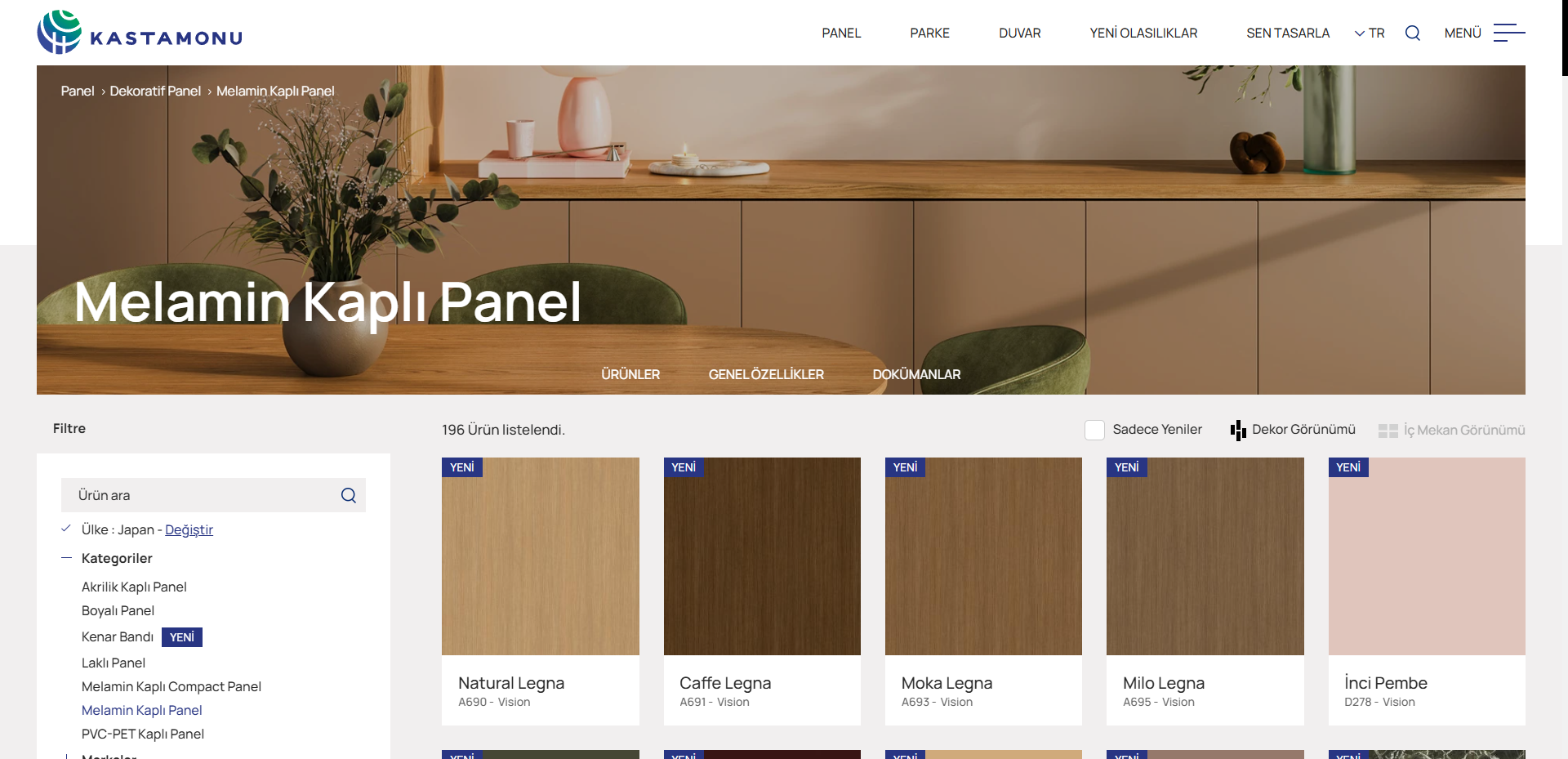
Here’s a number worth paying attention to: 4,500 homes per day. That’s how much material Kastamonu Entegre produces — every single day. Sourcing melamine-faced MDF boards for high-volume wholesale in Costa Rica means supplier scale is everything. It’s not just a number on paper. It determines whether your orders ship on time and your inventory stays consistent.
Kastamonu ranks 6th globally and 4th in Europe for wood-based panel production. Annual output runs between 6 and 7.8 million m³. Their Russia facility — located in the Alabuga Special Economic Zone — holds 1.05 million m³/year of MDF capacity. That makes it the largest single production site in Europe under one roof.
For Costa Rica wholesalers importing at scale, that infrastructure means one thing: supply reliability. They run 18 plants across 7 countries and export to 100+ countries across 6 continents. The logistics networks are already in place. You’re not their test market.
Why Scale Matters for Your Import Operation
Batch consistency — At this production volume, color and texture variances between container loads stay low. You get predictable results across orders.
EN compliance — Their manufacturing standards include EN compliance from the start. That cuts customs friction at Puerto Limón or Caldera.
6,300+ employees across global facilities means real export support. You get a dedicated team — not one person tracking your container on a spreadsheet.
Your Costa Rica wholesale business moves serious volume. Kastamonu is built for that.
Baier Wood Based Panel — Export-Focused Manufacturer with Controlled Production Standards
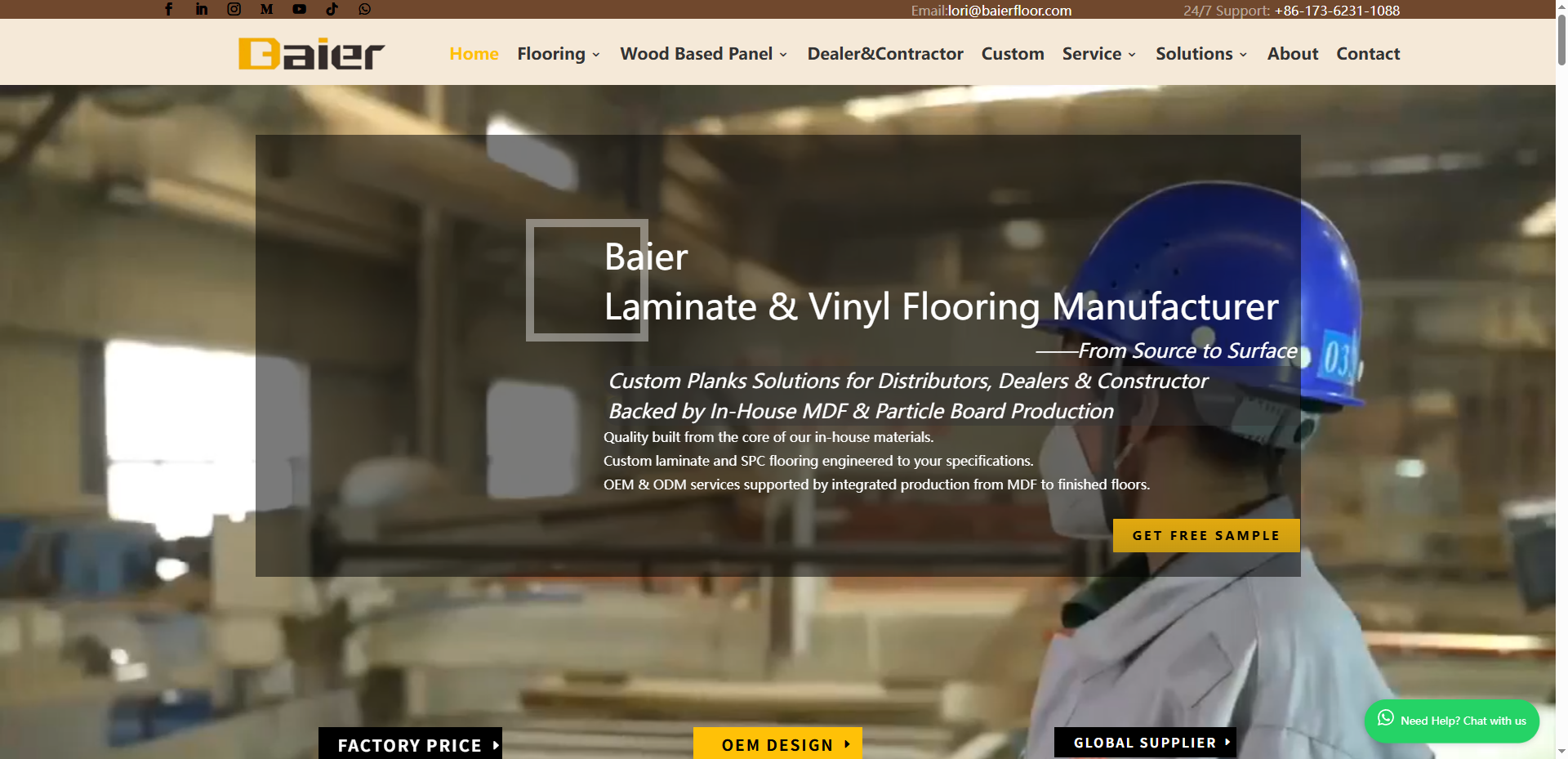
Baier Wood-Based Panel operates as a vertically integrated engineered wood manufacturer with strong export orientation. While it does not run dozens of overseas plants, its strength lies in centralized production control, raw material screening, and stable container-scale output.
For Costa Rica wholesalers sourcing melamine-faced MDF boards, supply stability doesn’t only come from geographic redundancy — it comes from process control, density consistency, and repeatable lamination quality.
Production & Capacity Profile
Baier focuses on MDF, pre-laminated melamine MDF (TFL), particleboard, and HDF production for international markets.
Key operational strengths include:
Automated hot-press production lines
Controlled debarking and fiber preparation systems
Calibrated density management for stable core structure
Standard 1220×2440 mm boards in 6–25 mm thickness range
White melamine both sides (WMDF) and custom décor options
Rather than splitting capacity across multiple global sites, Baier concentrates on optimizing throughput per line. That centralization improves batch uniformity — especially important for wholesalers managing repeat container orders.
What This Means for Your Supply Chain
Raw fiber control → Stable internal bond strength and reduced surface defects
Container-oriented production → Efficient 20-ft and 40-ft loading plans
Export documentation readiness → COA, emission reports (E1 / CARB2 / TSCA if required), and packing documentation prepared per batch
Lead time discipline → 15–25 days for standard décor runs
For Costa Rica wholesale buyers, margin protection depends on predictable surface finish, lamination adhesion, and machining consistency. Rework and customer complaints cost more than small unit price differences.
Market Positioning
Baier competes in the mid-tier export market — positioned between low-cost regional mills and premium global network brands. It is not built on global factory redundancy. It is built on:
Process-controlled fiber sourcing
Stable pressing parameters
Consistent lamination performance
Container-scale export experience
For wholesalers prioritizing repeatable quality over lowest-price sourcing, Baier provides structured manufacturing with export-ready systems — without the premium pricing structure of multinational conglomerates.
Consistency, documentation transparency, and container efficiency — that’s the value equation.
Greenlam — Premium Segment Brand with Anti-Bacterial and Low-Emission Credentials
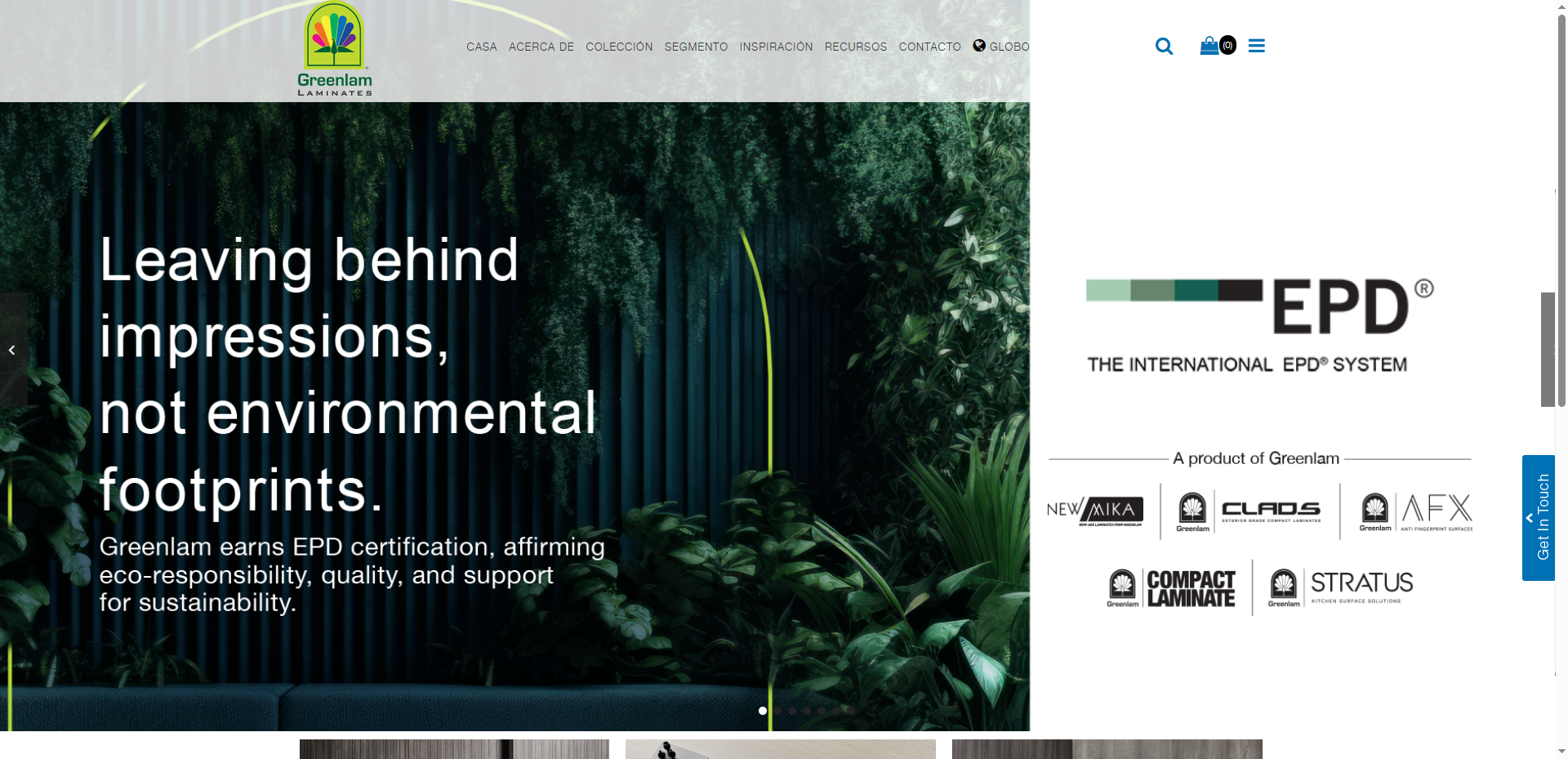
Greenlam holds a record no other Asian laminate brand can claim: first in Asia to earn NSF certification for High Pressure Laminates. That one credential places this brand at the top of the market — and it explains the premium price tag.
Costa Rica wholesalers chasing hospital, hotel, and commercial fit-out contracts will find Greenlam opens doors standard board suppliers simply can’t.
The Two Credentials That Drive Higher Margins
Anti-bacterial performance is not a marketing label here — it’s built straight into the surface chemistry. Every Greenlam laminate and compact laminate carries anti-virus, anti-bacterial, and anti-fungal properties. For healthcare cabinetry and restroom cubicle work, that’s a hard project requirement — not an added bonus.
Low-emission certification runs deep across three standards: GREENGUARD Gold, GREENGUARD Standard, and Singapore Green Label. The boards are REACH compliant with zero urea content in the UV DNA formula. So import compliance is clean and straightforward.
What’s in the Product Range
Surface options: 100+ decor designs across catalogues, covering HD Gloss, Satin, Suede, and matte finishes
EN 438-compliant performance: scratch resistance at N 2.0 minimum, steam resistance at Grade 4, surface wear at 350 rev minimum — all documented and downloadable
Sheet sizes: 3’×7′ up to 6’×14′, thicknesses from 0.5 mm to 30 mm
Production runs out of an 80-acre facility in Andhra Pradesh, using 100% German continuous press technology. Four nearby ports — Krishnapatnam, Ennore, Chennai, and Tuticorin — give Greenlam solid export reach into the Americas. Plus, NEMA certification covers direct access to the US and North American markets.
For wholesalers supplying melamine-faced MDF boards into Costa Rica project chains, Greenlam’s premium tier delivers one result that counts: higher-margin project wins where hygiene and air quality certifications are what close the deal.
Merino — Heritage Brand Since 1967 with Diverse Interior Design Portfolio
Over 250 million USD in annual turnover. Five manufacturing facilities across India. Exports to 80+ countries. Merino isn’t a newcomer trying to break into your supply chain — it’s a brand that has been refining its production since Man Kumar Lohia founded the group in 1965.
The corporate office opened in Kolkata in 1967. The first laminate unit came online in Hapur, UP in 1978 — starting at 500 sheets per day. That number grew steadily over the following decades. By 2015, Merino launched Gloss Meister — covering melamine-faced particle board, MDF, and post-formed panels. The production infrastructure behind it had already run through four decades of real-world testing.
A Design Portfolio That Covers Every Project Type
10,000+ SKUs is not a catalog — it’s a full interior design ecosystem. Costa Rica wholesalers serving diverse client segments get real flexibility here:
Decorative laminates and prelam boards for standard furniture runs
MR+ laminates (launched 2010) for moisture-exposed applications — a strong fit for Costa Rica’s climate conditions
Restroom cubicle systems, wall cladding, and Shaurya compact laminates for commercial fit-outs
Hilton Hotels Jaipur and Maruti Suzuki Gurgaon both use Merino interiors. That track record tells you one thing clearly: the product holds up under institutional-grade scrutiny.
Five facilities — Hapur, Rohad, Hosur, Achheja, and Dahej — keep container supply steady through high-volume export cycles.
Imeca — Budget-to-Mid-Range Option for Price-Sensitive Wholesale Segments
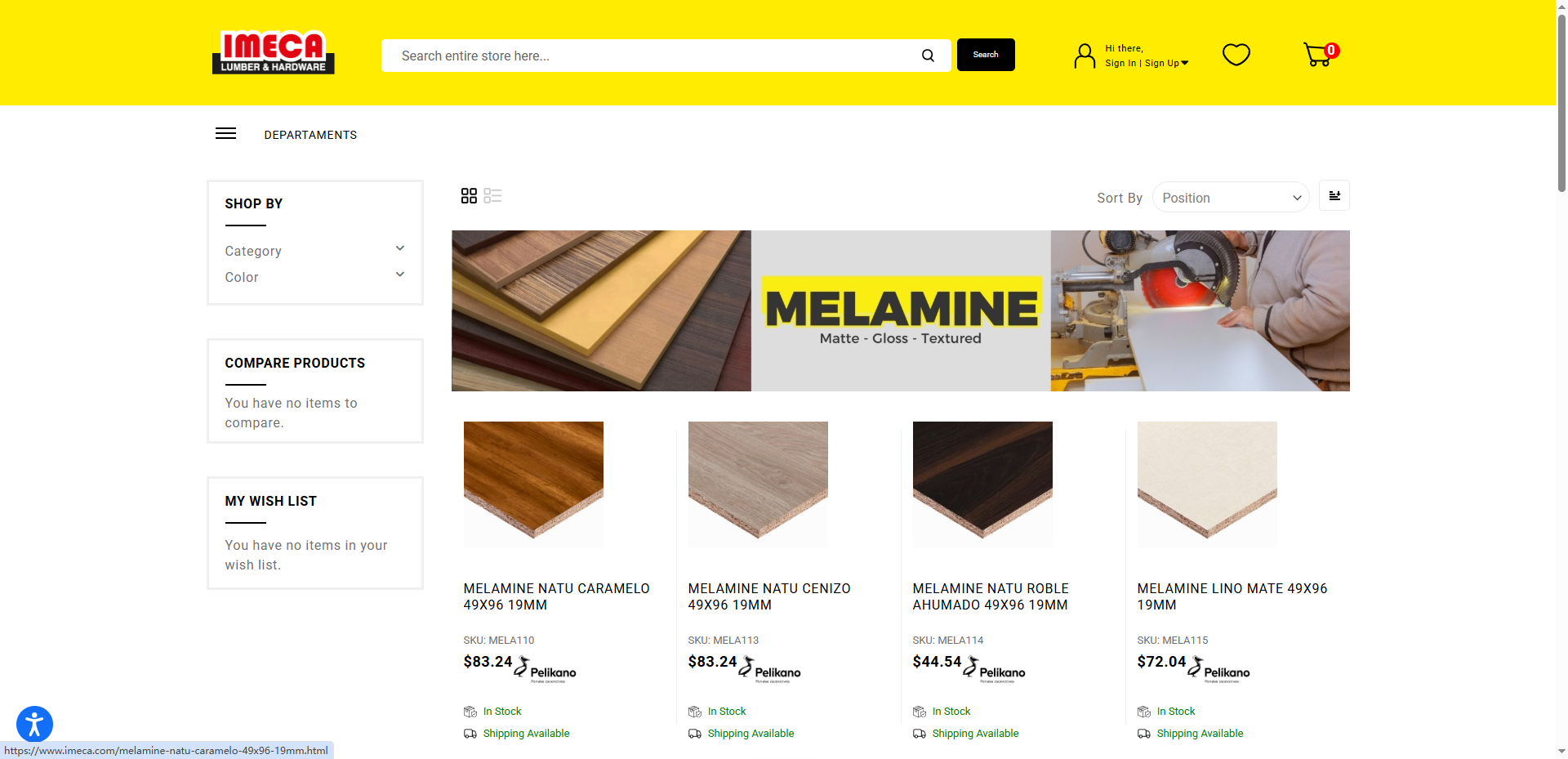
Eximpedia shipment records confirm Imeca CA is an active importer and exporter in the Central American trade corridor. That matters when you’re building a price-sensitive supply chain for the Costa Rica wholesale market.
Not every wholesale segment needs Kronospan’s precision engineering or Greenlam’s NSF-certified surface chemistry. Some client bases need simpler options. Small furniture workshops, entry-level cabinet makers, and residential contractors on tight budgets need boards that meet the technical baseline and arrive at a competitive landed cost. That’s where Imeca fits.
Where Imeca Makes Sense in Your Portfolio
Price tier: Budget-to-mid-range positioning makes it a viable SKU for volume-driven, margin-conscious buyers
Market fit: Best suited for standard residential furniture runs where premium certifications aren’t a purchasing requirement
Regional presence: Central American trade activity is on record — so import logistics into Costa Rica aren’t starting from scratch
The trade-off is transparency. Detailed technical specs, emission certifications, and surface abrasion data aren’t confirmed on record. Vet samples before committing to volume.
Schattdecor — Melamine Paper Supplier Powering Multiple Board Brands
Schattdecor doesn’t sell boards. It sells what makes boards worth buying.
Schattdecor is a decorative impregnated melamine paper supplier. Board manufacturers bond this surface material onto MDF cores. That upstream position is why Costa Rica wholesalers should pay attention. Your supplier uses Schattdecor as their paper source. Quality control is already built in at the material level — before the board gets assembled.
The numbers back that up. In 2024, Schattdecor printed 1.4 billion square meters of decorative paper and finished 770 million square meters of surfaces — generating 875 million euros in total sales.
What It Means for Your Supply Chain
Ask your melamine-faced MDF boards supplier one direct question: “Is your impregnated paper sourced from Schattdecor?” A yes confirms:
-
formaldehyde-reduced resin formulations — cleaner import compliance
-
Deep-texture capability — fingerprint-resistant and antibacterial surface variants available
-
Automated closed-loop production — tighter batch consistency across every shipment
That’s the difference between boards that hold up in Costa Rica’s humidity and boards that don’t.
How to Vet These Brands Before You Commit
A low MOQ doesn’t mean you skip due diligence.
|
Step |
What to Do |
|---|---|
|
Request client references |
Focus on Central American retail or project accounts |
|
Confirm MOQ and samples |
Pilot orders around 50 units are standard here |
|
Audit the supply chain |
Clarify local vs. imported components — this affects reliability |
|
Use PROCOMER networks |
Validate export credibility through regional trade delegations |
The core risk with emerging suppliers is supply irregularity. Regional sourcing models are more flexible, but they don’t have the factory infrastructure behind Kronospan or Kastamonu. Run a pilot order first. Check eco-certifications against actual documentation — recycled materials claims vary a lot across suppliers. Then scale after you’ve seen two or three consistent batch deliveries land at Caldera or Puerto Limón without problems.
Side-by-Side Comparison: 10 Brands Ranked by Wholesale Suitability for Costa Rica
Ten brands. One market. Here’s where each one lands.
|
Brand |
Price Tier |
Moisture Resistance |
MOQ Flexibility |
Certification Depth |
Costa Rica Fit Score |
|---|---|---|---|---|---|
|
Kastamonu Entegre |
Mid-High |
MR50+ |
High-volume |
EN, E1 |
⭐⭐⭐⭐⭐ |
|
Kronospan |
Mid-High |
MR50 |
Flexible |
E1, FSC, Blue Angel |
⭐⭐⭐⭐⭐ |
|
Greenlam |
Premium |
MR50 |
Moderate |
GREENGUARD Gold, NSF |
⭐⭐⭐⭐½ |
|
Merino |
Mid |
MR+ |
High |
E1 |
⭐⭐⭐⭐ |
|
Schattdecor |
Upstream |
N/A |
N/A |
REACH, low-formaldehyde |
⭐⭐⭐⭐ |
|
Imeca |
Budget-Mid |
Standard |
Flexible |
Unconfirmed |
⭐⭐⭐ |
|
Dreamland |
Budget |
Standard |
Low-MOQ |
Eco-positioned |
⭐⭐⭐ |
|
SOS Shades |
Budget-Mid |
Standard |
Small-batch |
Eco-branded |
⭐⭐½ |
|
Ojos del Mar |
Premium-Niche |
Imported stock |
Limited |
Unconfirmed |
⭐⭐½ |
|
Emerging/Other |
Varies |
Varies |
Varies |
Verify first |
⭐⭐ |
What the Rankings Mean
Kastamonu and Kronospan sit at the top for one clear reason: they’re built for this kind of market. Both handle high volume and consistent batches. Their export infrastructure points straight at Latin America. Costa Rica wholesalers moving serious container loads get reliability — no guessing, no risk.
Greenlam earns its premium score through certifications that open up project segments most board suppliers can’t touch. Hospitals, hotels, commercial fit-outs — those buyers need GREENGUARD Gold and NSF. Standard suppliers don’t have those credentials. Greenlam does.
Merino and Schattdecor hold the middle tier well, but for different reasons. Merino gives you design depth across 10,000+ SKUs — that’s real range for buyers who want variety. Schattdecor isn’t a board brand at all. It’s a paper supplier. But knowing your board supplier uses Schattdecor paper boosts your quality confidence. And it costs you nothing extra.
Imeca, Dreamland, and SOS Shades are price-point plays. They work for budget-sensitive client segments. Vet samples before committing. Don’t lead with them on high-stakes project bids — the certification gaps are too risky for serious commercial work.
Bottom line: Match the brand to the buyer, not to your preference.
How to Import Melamine-Faced MDF into Costa Rica: Practical Steps for Wholesalers
Getting product across the Costa Rica border isn’t complicated. But one wrong document will cost you 4–6 weeks and a $250 fine. Here’s what you need to do.
Classify Your Product Before Anything Else
Start with HS code 4411.xx — that’s the fibreboard category covering melamine-faced MDF. The exact subcode matters. MDF above 0.5g/cm³ falls under 4411.13 in most cases. Run your subcode through the Hacienda tariff tool before committing to a shipment. Duties are calculated on CIF value, and total landed costs add up fast:
-
~14% import duty
-
13% sales tax
-
1% Law #6946 tax
That’s 28% on top of your CIF price. Build that into your budget upfront.
Documents You Cannot Arrive Without
Submit your customs declaration through Costa Rica’s COMEX electronic single-window system. Everything goes in digitally before your cargo reaches Puerto Limón or Caldera. Have these ready:
-
Original Bill of Lading — pieces and weight must match the physical container
-
Commercial Invoice — any discrepancy triggers the $250 fine plus a multi-week delay
-
Packing List
-
Certificate of Origin
ISPM15 Compliance Is Non-Negotiable
Every wooden pallet or crate needs ISPM15 treatment. Your two options are Heat Treatment (56°C for 30 minutes) or Methyl Bromide fumigation. Place the IPPC mark on two opposite sides of each packing unit — it must be clearly visible. Non-compliant shipments go back at your expense. Inspectors who find pests will destroy the load.
Your 6-Step Import Checklist
|
Step |
Action |
|---|---|
|
1 |
Confirm HS subcode via COMEX/Hacienda tariff tool |
|
2 |
Collect all supplier docs including ISPM15 proof |
|
3 |
Register as importer through COMEX; obtain MAG phytosanitary permit if flagged |
|
4 |
Route to Puerto Limón (Asia/Europe suppliers) or Caldera (Pacific routes) |
|
5 |
File electronic customs declaration before arrival |
|
6 |
Clear in 10 working days — if your documents match |
Use L/C or T/T payment terms with overseas suppliers. Cover the full CIF value with cargo insurance. A pre-shipment inspection checks your HS classification and ISPM15 treatment. It costs far less than a customs hold — so it’s worth the spend.
Common Mistakes Costa Rica Wholesalers Make Sourcing Melamine-Faced MDF
Most wholesalers lose money before the first container clears customs. Not bad luck. Just predictable, avoidable decisions.
Here’s what keeps happening in the Costa Rica market:
-
Chasing the lowest CIF price — Non-compliant boards arrive at Puerto Limón. You absorb $250 fines, customs holds, and client callbacks. That “savings” disappears fast.
-
Skipping moisture resistance verification — Standard boards don’t hold up in San José’s humidity. MR50-certified stock does. That’s the difference between repeat orders and refund requests.
-
Ignoring batch consistency — One container matches your sample. The next one doesn’t. Your furniture clients notice, and they won’t stay quiet about it.
-
Single-supplier dependency — One factory delay stops your entire operation. No backup means no business.
-
No edgeband alignment — Boards arrive without coordinated edgebanding. Your clients carry the finishing costs. That hurts your relationships and your margins.
The pattern stays the same: chase short-term savings, pay long-term margin penalties.
Fix the sourcing process first. The profits come after.
Conclusion
Picking the right melamine-faced MDF brand is more than a purchase. It’s a real edge in a crowded market.
The wholesalers winning in Costa Rica’s furniture and interior space aren’t the ones with the deepest pockets. They’re the ones who did the work. They match brand strengths to customer segments. They vet suppliers against hard quality standards. They catch the import mistakes that drain margins before those mistakes add up.
Scaling volume with Kastamonu? Pushing premium margins with Greenlam? Building flexibility with newer options? The path is clear — and it’s yours to take.
Your next move is simple:
-
Pick two or three brands from this list
-
Request samples from each
-
Benchmark them against your current supplier side by side
Price-only buying keeps you stuck. Strategy-based buying moves you forward. That shift starts the moment you decide to act on better information.
The top melamine-faced MDF boards factories in Costa Rica‘s wholesale market go to those who use sharper data. You have that data now. Use it.