
These makers supply bulk flooring to Middle Eastern markets. Each has different strengths.
1. Hao Flooring – Direct from Factory
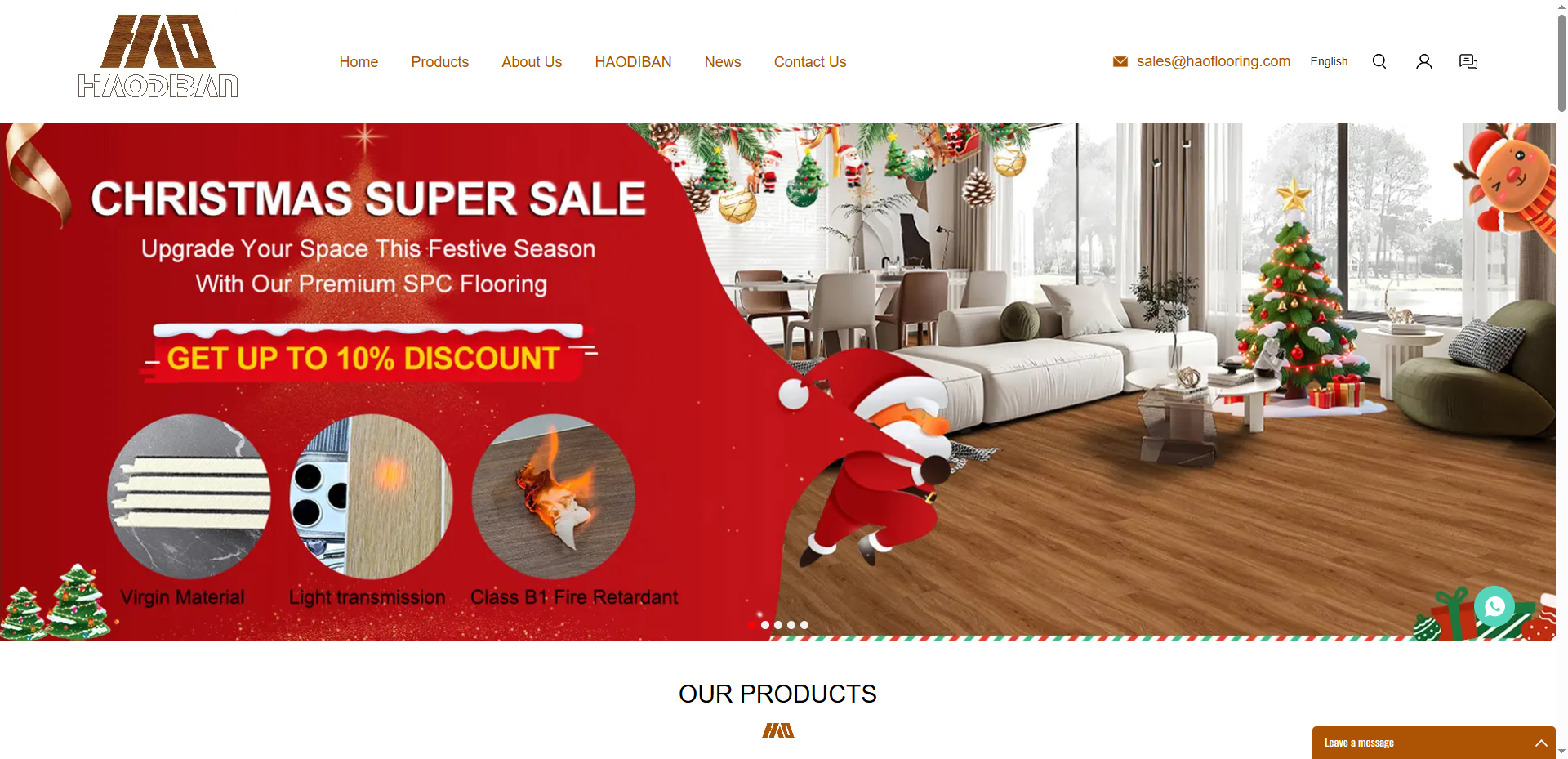
Hao Flooring has one clear edge: no middlemen. You work straight with their factory.
Their minimum order is 3,000 square meters. Most big commercial projects in Bahrain need this much anyway. Factory-direct pricing cuts costs. This helps when you’re covering multiple properties.
What makes them different:
They ship to Cambodia, Canada, Netherlands, Myanmar, and Macedonia. This wide reach shows their strong logistics. They handle international shipping, customs docs, and delivery times well.
You can choose SPC click lock flooring or luxury SPC options. The click lock system cuts install time. I’ve watched crews work 40% faster with good click systems versus glue-down types.
Key specs:
- Thickness options: 4MM, 5MM, 6MM
- Box size: 12 pieces per box, 65 boxes per pallet
- Scratch resistance: ≥2,500g
- Impact resistance: ≥1,600mm (big ball test)
- Buckle tension: ≥120N/50mm
Scratch resistance counts in Bahrain’s business spaces. Sand comes into buildings all the time. Your floors need to hide wear after six months of use.
Impact resistance guards against dropped furniture and moving equipment. Office desks, store fixtures, and hotel gear all stress the flooring.
2. Artclick – Gulf Region Leader
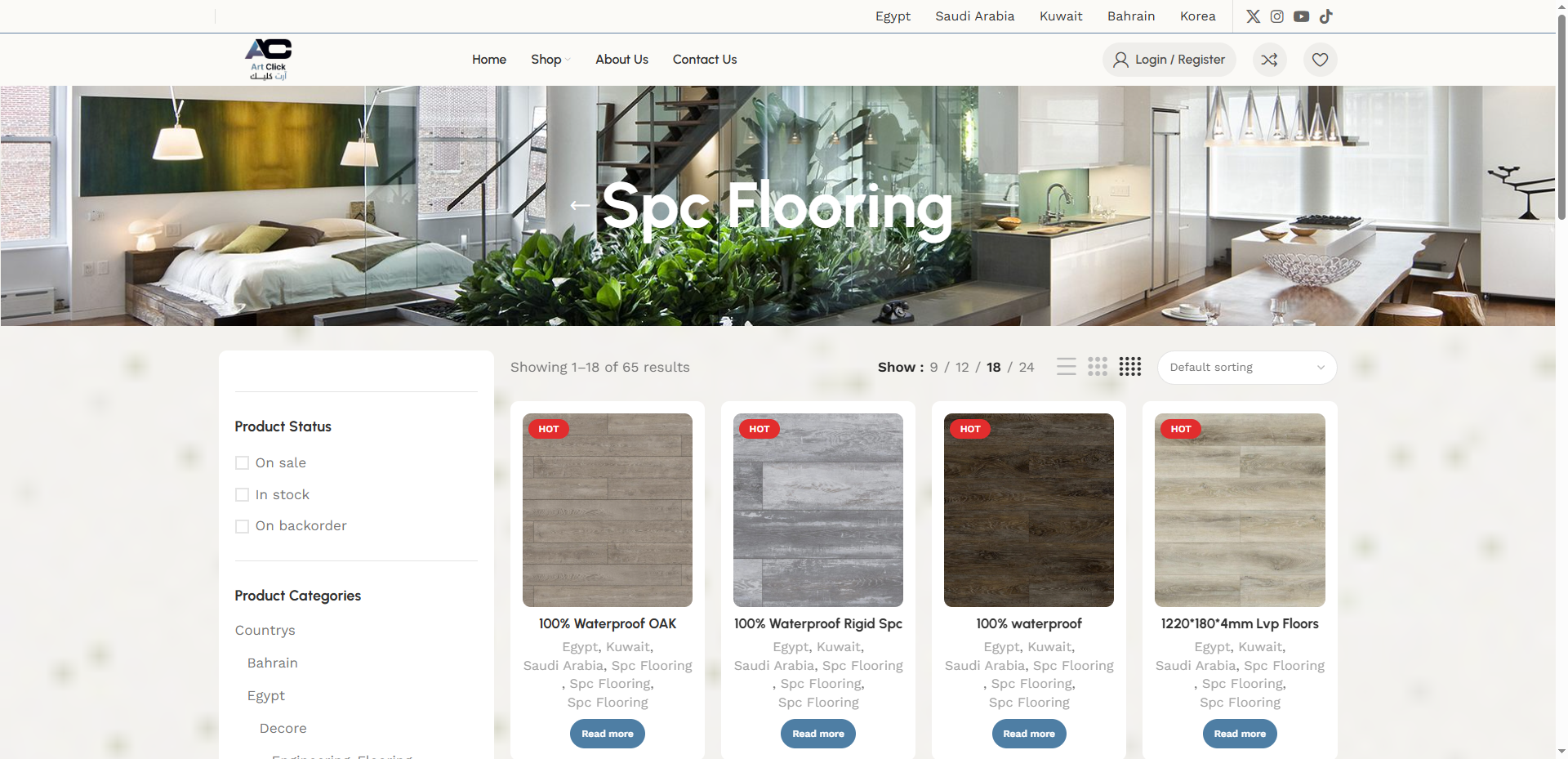
Artclick works across Bahrain, Kuwait, and Saudi Arabia. They’re one of the biggest flooring firms in the Gulf.
Being local means real benefits: stock nearby, quick delivery, and teams who know Bahrain’s codes and weather issues.
Main product:
Their 4.2mm SPC core vinyl planks work well for business use. The thickness gives stability without waste. You don’t pay for extra bulk you don’t need.
Location benefits:
Bahrain builders face tight deadlines. A local maker cuts 2-3 weeks off delivery versus imports from Asia or Europe.
Their staff speaks Arabic and English well. Paperwork, tech help, and warranty claims move faster with no language gaps.
They know Gulf needs. Bahrain flooring deals with tougher conditions than Northern Europe. Summer hits 45°C. Humidity jumps around. Salt air harms materials near the coast.
3. Baier Flooring – Built for Long-Term Performance
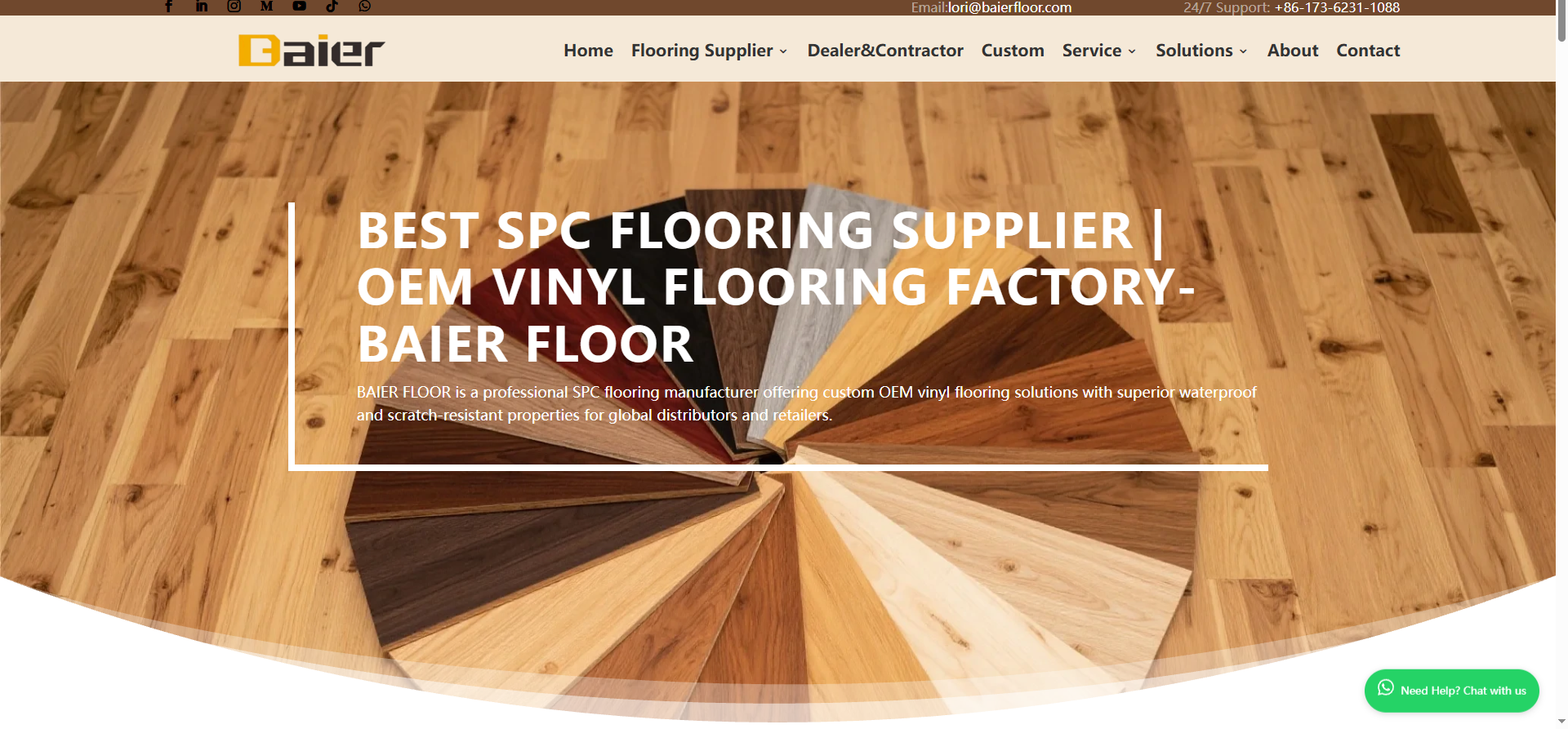
Baier Flooring is recognized for its waterproof rigid core flooring systems designed to perform reliably in hot, high-humidity environments. Rather than chasing short-term trends, Baier focuses on structural stability and surface designs that hold up visually over time.
How Baier Delivers Durability
Waterproof performance varies widely across SPC and rigid core suppliers. Baier’s flooring uses a dense stone-based core that remains dimensionally stable even under standing water exposure. The planks resist cupping, warping, and edge swelling—common failure points in lower-grade products.
In Bahrain, moisture risk goes beyond spills. Air-conditioning condensation, frequent cleaning, and occasional pipe leaks create constant low-level water exposure. Baier’s fully waterproof structure reduces long-term failure risk in both residential and commercial interiors.
Designs That Age Well in High-Traffic Areas
Durability isn’t only about technical specs. Baier places strong emphasis on pattern and surface design. Well-balanced wood and stone visuals help mask dust, scuffs, and daily wear, keeping floors looking presentable between maintenance cycles.
This matters in high-traffic Bahrain environments such as hotel lobbies, retail stores, office reception areas, and serviced apartments. Flooring must look good day after day—not just right after installation. Baier’s design approach supports that reality, reducing visible wear and lowering replacement pressure over time.
4. Neptune Flooring – Stone-Core Build
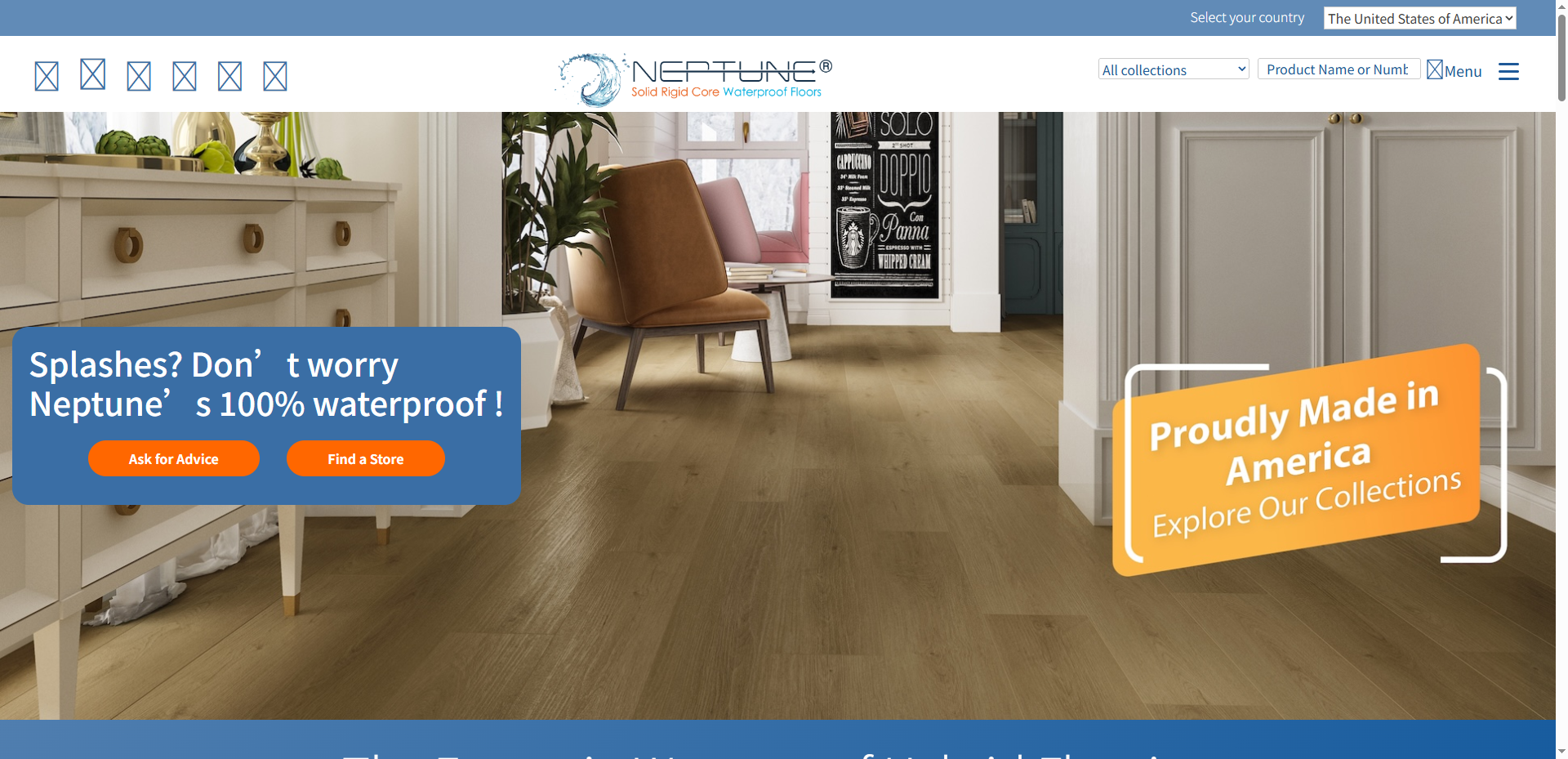
Neptune makes stone-based waterproof flooring. This method creates different traits than standard SPC blends.
Stone-based benefits:
Stone in the core adds density and stability. The flooring handles heat changes better than polymer-heavy options.
Bahrain buildings see big temp swings. Cool AC interiors clash with outside heat. Flooring grows and shrinks with these shifts. Stone cores reduce this movement.
Fire safety:
Their products have Bf1 fire ratings. Commercial jobs need these safety certs. Bahrain building checkers verify ratings at final approval.
Hotels, malls, and offices must meet fire rules. Proper cert flooring speeds approval and avoids expensive fixes.
Full waterproof build:
Neptune’s waterproof coverage includes the whole plank – core, wear layer, and backing. Some makers just waterproof the core, leaving edges open to moisture.
Full protection matters in kitchens, bathrooms, and entry areas where water contact is common.
5. TopJoy – Pure Material Quality

TopJoy makes 100% original SPC interlocking flooring with virgin materials in their rigid core. No recycled content in their core mix.
Why virgin materials count:
Recycled content varies. Quality shifts batch to batch based on source material. Virgin material gives tighter control over strength.
Big orders need matching quality across thousands of square meters. You can’t have visible gaps between floors in different areas.
Lock system strength:
Their lock system must hold across the whole floor. Weak joints gap, let moisture in, and break under foot traffic.
TopJoy uses high-density rigid core that keeps the lock profile firm. Softer cores bend over time, weakening joints.
Bulk order quality:
Orders of 10,000+ square meters need steady output. Every pallet should match specs. Virgin materials give better consistency than recycled blends.
Picking Your Maker
Each maker has special strengths. Hao Flooring gives factory prices and global shipping know-how. Artclick offers local support and fast Bahrain delivery. Audacity makes tough designs that stay nice. Neptune builds stone-core products for better stability. TopJoy promises virgin material consistency.
How to judge for your job:
Check your timeline first. Can you wait for overseas shipping, or do you need local stock?
Look at your budget plan. Factory prices save money but you handle overseas shipping. Local sellers cost more but manage details.
Check your tech needs. Fire ratings, waterproof certs, and performance specs differ by maker. Match these to your building codes and job needs.
Test samples before big orders. Get planks from each maker. Install them like your real job. Watch performance for 30-60 days.
Next steps:
Get detailed quotes from three makers minimum. Compare full landed costs – not just unit prices. Include shipping, import fees, and site delivery.
Ask about timing from order to Bahrain delivery. Plan realistic schedules around these dates.
Check MOQ fits your job size. The standard 3,000 square meter minimum suits big commercial builds but may be too much for small updates.
Review warranty terms closely. Overseas warranties need different claim steps than local supplier warranties.
The best maker for your Bahrain job depends on your priorities. Judge these five against your timeline, budget, tech needs, and support wants.
Key Specs for Large-Scale Suitability

Large commercial orders need different standards than residential projects. The specs that work for 500 square meters won’t cut it for 15,000.
Core thickness drives everything else. SPC flooring for big Bahrain projects should hit 4mm minimum in the rigid core alone. Total plank thickness runs 5mm to 7mm. This depends on wear layer and backing.
Thin cores flex too much across wide installations. I’ve seen 3.5mm planks develop micro-gaps in hotel corridors after eight months. The lock system stays intact. But the planks show subfloor problems.
Thicker doesn’t always mean better. Beyond 7mm total thickness, you pay for bulk. It adds no real performance. Transport costs jump. Planks weigh more, so installation takes longer.
Wear layer specs separate commercial from residential grades. Look for 0.5mm minimum wear layer thickness. Budget options use 0.3mm – fine for homes, bad for foot traffic.
The wear layer number links to scratch resistance scores. Quality SPC rigid core flooring manufacturers for large-scale orders in Bahrain spec their products at ≥2,500g scratch resistance. They use the Taber test method.
What does 2,500g mean in real terms? Sand tracked into lobbies won’t leave visible marks after normal cleaning. Furniture moves don’t create permanent scuffs. The floor looks good between deep cleaning cycles.
Impact resistance matters more than most builders think. The big ball test measures this – dropping a heavy steel ball from set heights. Good specs show ≥1,600mm impact resistance.
Bahrain projects face specific impact scenarios. Rolling carts in hospitals. Dropped equipment in warehouses. Furniture installation in hotels. Weak flooring cracks or dents. Strong cores absorb impacts and bounce back.
Lock system tensile strength keeps installations tight. The spec to check: buckle tension ≥120N per 50mm width.
Low-quality locks pull apart under stress. Temperature changes make buildings expand and contract. Foot traffic creates side forces. Lock systems under 100N fail within two years in commercial spaces.
Stable dimensions prevent warping. Quality products show ≤0.25mm thickness swell after 24-hour water immersion. Length and width changes should stay under 0.15% at 70°C heat.
Bahrain’s climate stresses flooring hard. Morning AC blast meets afternoon heat soak. Humidity swings from 20% to 85% by season. Stable cores handle this. Unstable ones cup at edges or gap between planks.
Fire ratings aren’t optional for commercial work. Bf1 or Cfl-s1 classifications meet most Gulf building codes. Some projects need Afl for specific zones.
Check that certifications match Bahrain’s accepted standards. European classifications differ from American ASTM ratings. Your specs need to align with local inspectors’ requirements.
Formaldehyde emission levels affect approval. E1 standard (≤0.124 mg/m³) is minimum. E0 classification (≤0.05 mg/m³) opens more project types. Schools and hospitals fall in this category.
Virgin material cores hit lower emission numbers than recycled content. This connects back to TopJoy’s pure material advantage – tighter control over VOC output.
Sound transmission class (STC) ratings matter in multi-story buildings. Attached underlayment should deliver STC 50+ and IIC 50+ ratings.
Hotels need quiet between floors. Offices want meeting room privacy. Apartments need neighbor noise reduction. These numbers determine if your flooring passes acoustic requirements.
Pallet packaging specs affect project logistics. Standard configuration: 12 pieces per box, 65 boxes per pallet. This yields about 130-150 square meters per pallet. Plank size affects the total.
Calculate your order in full pallets. Partial pallets cost more to ship and handle. A 10,000 square meter order breaks into about 70 pallets. Plan storage and staging space based on this.
Bahrain Considerations
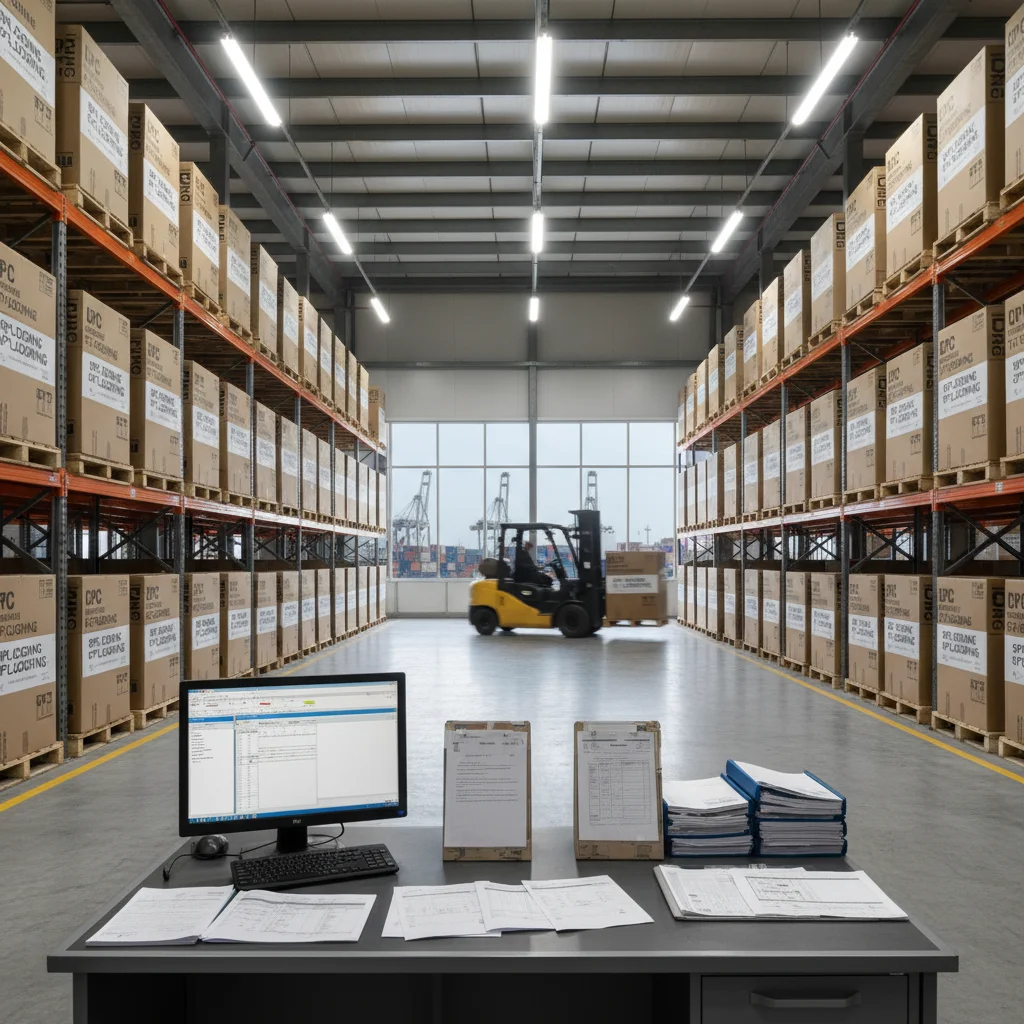
Bahrain’s flooring import rules differ from neighboring Gulf states. The country runs as a free trade hub with easy customs processes. But SPC rigid core flooring manufacturers for large-scale orders in Bahrain still need to meet specific product standards.
Most construction materials come through Khalifa Bin Salman Port. Some enter through Saudi Arabia’s King Fahd Causeway. Customs puts floor coverings of plastics under HS code 3918.10. Standard duty rates exist. Free trade deals with certain countries can cut costs.
Building codes decide which shipments get approved. The Ministry of Works, Municipalities Affairs and Urban Planning sets flooring rules for business projects. They use International Building Code (IBC) standards. These get adjusted for Gulf conditions.
Fire safety certification ranks first on the requirement list. Your flooring needs test reports from third parties. These must show Bf1-s1 or Class 1 fire ratings. European EN 13501-1 certificates work fine. American ASTM E648 reports need conversion to accepted formats. I’ve seen shipments stuck in customs for weeks. Suppliers brought the wrong certification formats.
formaldehyde emission papers matter for health clearance. E1 classification is the minimum. Schools, hospitals, and government buildings need E0 or California CARB2 standards. Your maker should give you lab reports from Bahrain’s accepted testing groups.
Commercial registration rules affect who can buy. Licensed contractors and registered importers can clear large flooring orders. No one else can. Working through a Bahraini general contractor? Check their import license covers building materials. Some focus on MEP or structural work. They lack the right paperwork for finishing materials.
Sample approval before bulk shipping prevents big problems. Send product samples to project consultants and town inspectors right away. Technical approval takes 2-4 weeks. Wait until your container arrives? You risk rejection and re-export costs.
Currency factors affect price talks. Bahraini Dinar (BHD) ties to US Dollar at 1 BHD = 2.65 USD. Most SPC rigid core flooring manufacturers for large-scale orders in Bahrain quote in USD. This cuts exchange risk. Check if quoted prices include Bahrain delivery or just port pickup.
Project payment terms usually break down this way: 30% advance, 40% on shipment, 30% after delivery and inspection. Letters of credit through Bahraini banks add safety. They also raise costs by 1-2%. Strong ties with makers may get you better payment terms.
Conclusion

Finding the right SPC rigid core flooring manufacturers for large-scale orders in Bahrain doesn’t need to be complicated. The five manufacturers we’ve covered each offer something different. Some have top-tier production capacity. Others specialize in climate-specific engineering for Bahrain’s humidity. You’ll also find transparent pricing that keeps your budget on track.
Here’s what matters most: Pick suppliers who know bulk logistics. Look for customization options without extra markup. Check their track record in the Gulf region. The specs we outlined matter—wear layer thickness, thermal expansion ratings, and anti-slip coefficients. These aren’t just technical terms. They protect you from expensive replacements later.
Ready to move forward? Request sample batches from at least three manufacturers on this list. Run durability tests side by side. Check references from their previous Bahrain clients. Your flooring choice will outlast most of your other facility investments. Make it count.
Your floor does more than handle foot traffic. It’s the foundation of your space’s long-term durability.