
Renovating your home or office in Bahrain? You don’t want new floors that release harmful chemicals into the air your family breathes.
The flooring industry now offers Non-toxic laminate flooring that looks great and lasts. But finding trustworthy suppliers in Bahrain who prioritize health-conscious materials? That’s the tricky part.
I’ve done the research for you. I vetted non-toxic laminate flooring suppliers in Bahrain who meet strict environmental and safety standards.
This guide covers European manufacturers with long-standing reputations. It also includes regional distributors who understand Bahrain’s unique climate challenges. You’ll find five suppliers worth your time and money here.
You’ll discover what certifications matter. You’ll learn which brands deliver on their promises. Plus, you’ll get practical tips that help you make a choice you won’t regret years from now.
Baier – Non-Toxic Laminate Flooring Manufacturer Serving Bahrain
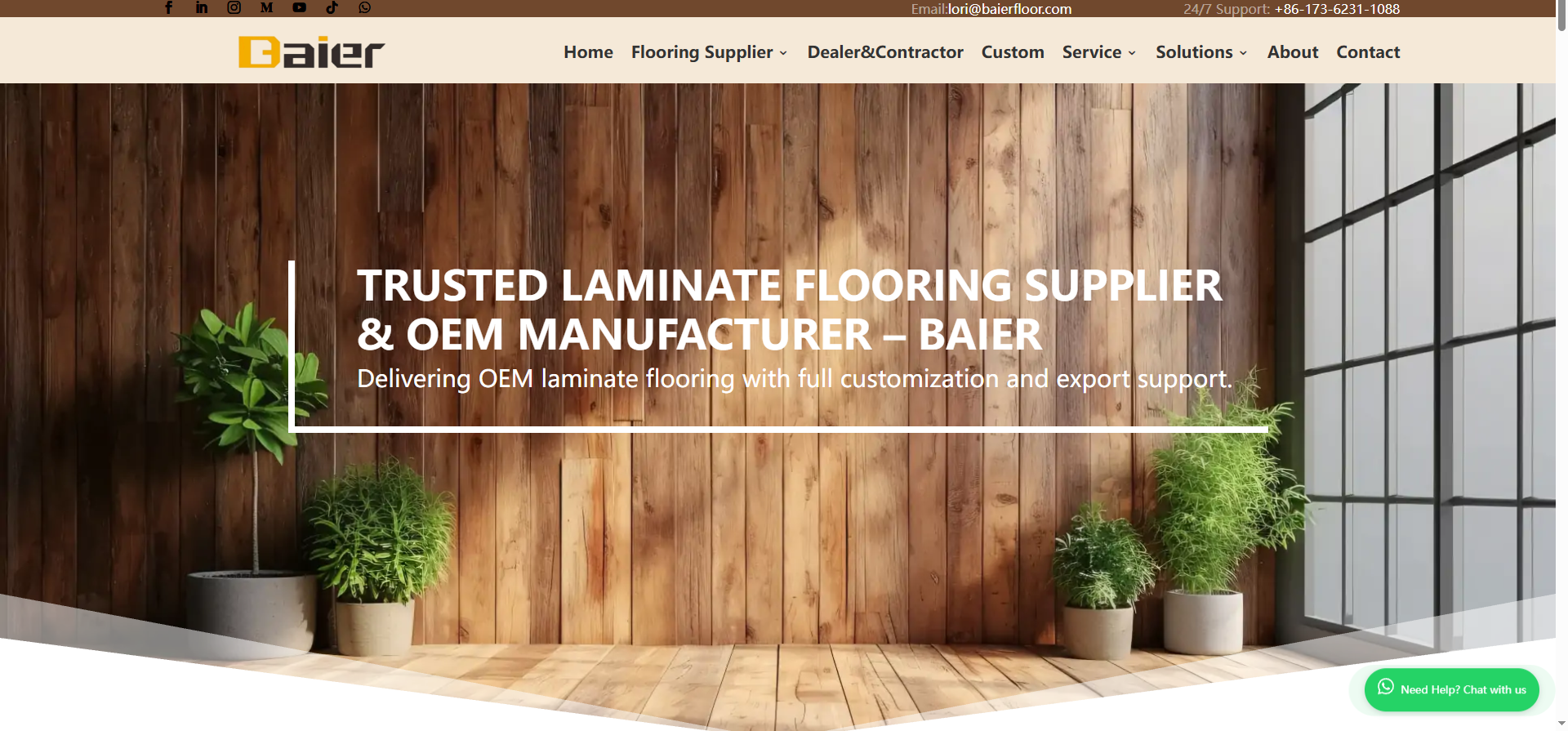
Baier is a professional laminate flooring manufacturer supplying non-toxic, low-emission laminate flooring to Bahrain and other Gulf markets. The company focuses on export-grade products designed for indoor air quality safety, heat stability, and long-term use in residential and commercial interiors.
Baier’s laminate flooring complies with E1 Formaldehyde emission standards, with E0 options available for projects requiring stricter indoor health control. These low-VOC specifications are well suited for Bahrain’s sealed, air-conditioned buildings, where material emissions can significantly affect indoor environments.
The flooring uses high-density HDF cores engineered for dimensional stability under temperature changes. Surface layers reach AC3–AC5 abrasion ratings, making them suitable for apartments, offices, hotels, and retail spaces with moderate to heavy foot traffic.
As a direct manufacturer, Baier offers stable production capacity, consistent quality control, and flexible OEM support. Importers and project buyers can customize:
Thickness and wear resistance level
Décor designs and surface textures
Packaging and private labeling
Baier laminate flooring is commonly used in housing projects, commercial renovations, and hospitality interiors, where non-toxic compliance, durability, and cost efficiency are equally important.
For Bahrain buyers seeking a reliable non-toxic Laminate Flooring Supplier with manufacturer-level control, Baier represents a practical and scalable choice.
Kronotex
Kronotex just put $45 million into their South Carolina factory. That’s real money. Not marketing talk. This cash went straight into production at their Barnwell plant.
Why does this matter for your non-toxic laminate flooring search in Bahrain? Big money in new equipment often means upgraded emission controls. The company usually updates both at the same time. New press tech cuts formaldehyde during production. Quality checks catch bad products before they ship overseas.
The US market tells you something:
Kronotex operates in a laminate flooring market worth $1.77 billion in 2025. Experts say it’ll hit $3.28 billion by 2030. That’s 13.17% growth each year. Companies only spend millions on expansion when demand looks strong.
Kronotex USA runs that Barnwell facility as a modern laminate floor press. Modern presses work at lower heat. They use better resin mixes. This cuts VOC emissions in the final product.
Your next steps for Kronotex:
Contact their US headquarters. Ask about Bahrain distributors who stock their products. Request certs for specific collections. Get shipping details for the Middle East.
Ask if they make lines for high-humidity areas. Bahrain’s coastal air needs moisture-proof cores and sealed edges.
The $45 million expansion shows strong production power. Does that mean you can find certified non-toxic laminate flooring suppliers in Bahrain? You’ll need to dig past basic market reports.
BerryAlloc
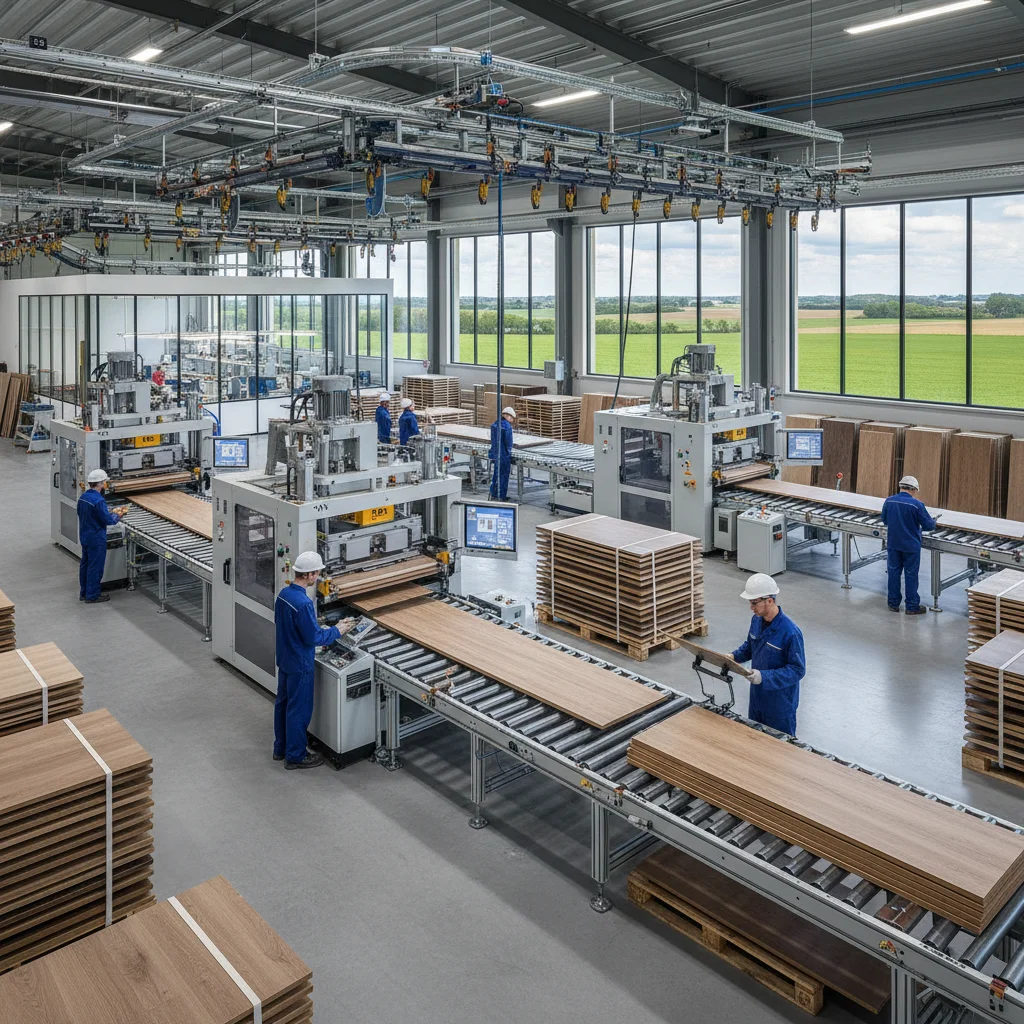
BerryAlloc started in Belgium in 1995 with one goal: make flooring that survives real life. Their headquarters sits at Industrielaan 100 in Menen. They run production plants across Belgium, France, and Norway. Beaulieu International Group? That’s the parent company handling the bigger picture.
The numbers tell a messy story. BerryAlloc operates in the $50M–$100M revenue range. But look at the capital situation: €76 million after recent moves. They put in €42 million in 2024, then wrote off €25 million. The year before? €50 million in, €26 million written off. Between 2020 and 2022, they lost €51 million.
Why does this matter for non-toxic laminate flooring suppliers in Bahrain? Money problems affect product quality. Companies cutting costs might skip pricey low-VOC resins. They might delay equipment upgrades that cut emissions.
Here’s what works in their favor:
BerryAlloc ships to 45+ countries. That’s serious reach. Their laminate lines include 32nd class options—TrendLine, Finesse, Chateau collections. They offer 33rd class Berry Eternity for commercial spaces. Every home laminate comes with a lifetime warranty. That warranty means something. Companies don’t promise lifetime coverage if products fail often.
Their planks resist fading, scratches, and everyday wear. Installation? Simple enough for DIY projects. They talk about green production. Specific claims? Lower environmental impact in making their products.
Al Sorayai Group
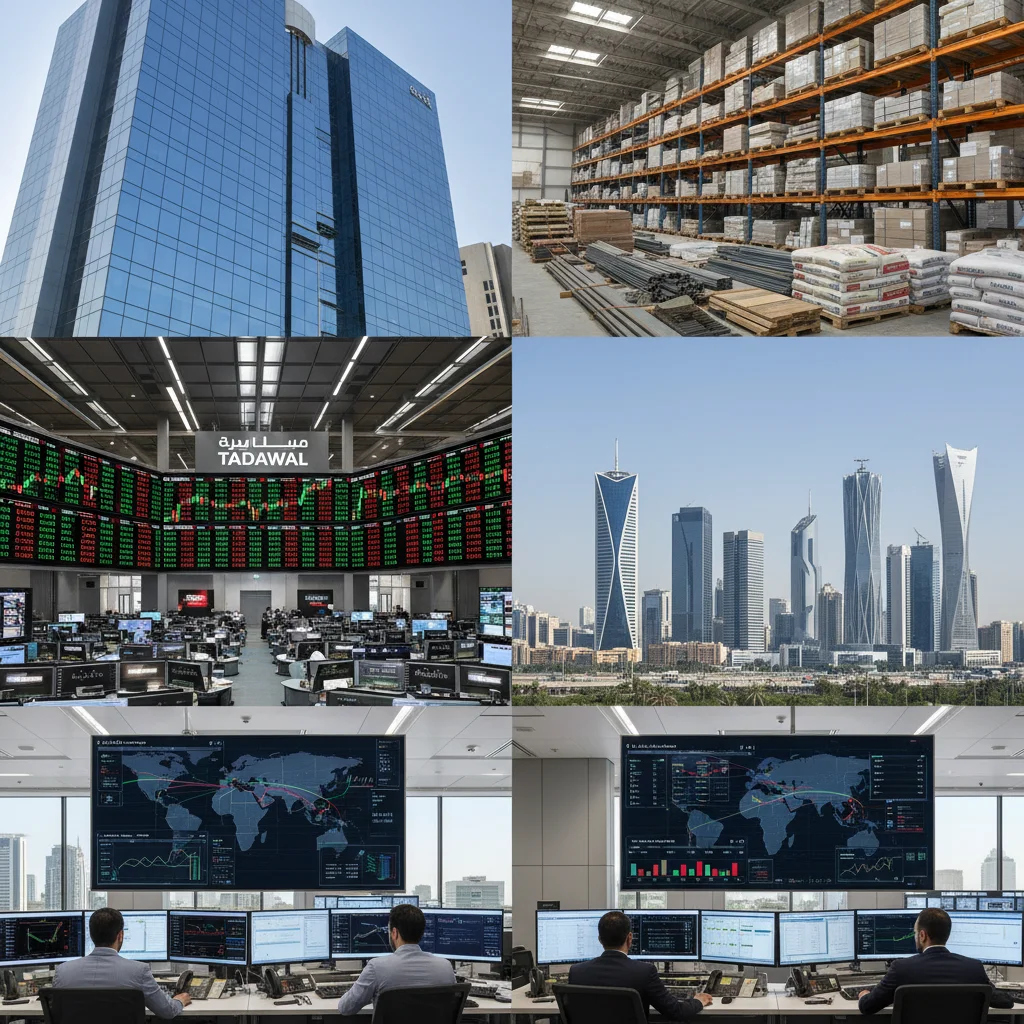
Al Sorayai Group trades on the Saudi stock exchange under TADAWUL:1213. Their market cap sits at $304.15 million. The company operates across Saudi Arabia. They focus on construction materials and building products.
The financial picture looks rough:
Al Sorayai reported negative earnings per share of -3.91 SAR in 2024. They’ve posted losses for four straight years. Between 2020 and 2024, the company burned through equity. Total equity dropped from 105.39 million SAR in 2022 to just 47.93 million SAR in 2024. That’s a 55% decline in two years.
Operating income? Negative -22.81 million SAR in 2024. The year before showed a positive 19.54 million SAR. That’s a massive swing the wrong way.
What this means for your flooring search:
Companies facing losses cut costs. They delay equipment upgrades. They skip pricey certifications. Low-VOC resins cost more than standard ones. Emission testing runs thousands of dollars per product line. GREENGUARD certification needs constant compliance checks.
I found no proof Al Sorayai makes laminate flooring. No product catalogs with plank collections. No certifications for formaldehyde levels. No showrooms in Bahrain with floor samples. No guides for installing floors in humid climates.
My advice? Cross Al Sorayai off your list. Their business model doesn’t match what you need. Focus on verified suppliers with clear product lines. Look for companies that publish emission certificates. Find dealers who stock physical samples you can inspect.
Your health matters more than chasing vague leads. Stick with transparency. Demand proof. Move on to suppliers who sell what you’re buying.
Tarkett

Tarkett posted €1,573.5 million in net revenue for H1 2025. That’s a 0.9% bump over the same period last year. Sounds okay until you check the organic growth number: -0.2%. They’re treading water. Their annual revenue slid from $3.71 billion in 2023 down to $3.46 billion in 2024.
The company operates across four main segments worldwide. Europe pulled €448.8 million with a solid 27.4% gross profit margin. North America brought in €395.4 million at 23.4%. The CIS, APAC, and Latin America region hit €248.4 million with a 21.5% margin. Other regions contributed €481.0 million at 20.3%.
What catches my eye: Their adjusted EBITDA hit €154.9 million in H1 2025—that’s 9.8% of revenue. The year before showed €148.2 million at 9.5%. Profitability improved a bit despite flat sales. How? Better product mix offset lower volumes. They sold less but made more per unit.
The downside hits hard:
Net profit in H1 2025? -€0.2 million. That’s breaking even. Compare that to €18.0 million profit in H1 2024. Their financial result swung to -€36.1 million from -€27.4 million the previous year. Interest costs went up. They renewed rate hedges at worse terms. More debt came from acquisitions.
Q3 2025 showed revenue dropping to €996 million—down 0.6% year-over-year. Organic sales fell 1.6%. The residential market stayed weak. They cut prices on some items. This cost them €6 million versus H1 2024. Volume barely moved.
For Bahrain buyers looking for non-toxic laminate flooring suppliers:
Rating agencies see stability ahead. S&P Global forecasts adjusted FFO to debt above 16% through 2026. Fitch expects EBITDA margins around 8% through 2028. That financial backing matters. Struggling companies cut corners on expensive emission controls.
Contact Tarkett. Ask about Middle East distributors who stock certified products. Request formaldehyde emission certificates. Get moisture resistance specs for coastal climates. Their financial structure suggests they’ll survive. Do they serve Bahrain? You’ll need to confirm that yourself.
Key Points for Non-Toxic Laminate Flooring in Bahrain
Formaldehyde levels matter more than price. Your budget won’t fix indoor air problems years after installation.
The safe limit is <0.5 mg/m³ under EN 717-1 European standards. North American limits are stricter: ≤0.05 ppm for laminated products. GreenGuard Gold Certified floors reach ≤0.0073 ppm formaldehyde. That’s the number your lungs care about.
Certifications That Protect You
GREENGUARD and floorscore verify indoor air quality. They test formaldehyde and total VOCs. These aren’t marketing stamps. Third-party labs run emission chambers. Products fail if they release too much.
EN 717-1 measures formaldehyde release in controlled settings. European makers use this standard. Below 0.5 mg/m³ qualifies as low-emission. Above that? You’re breathing chemistry experiments.
CE, SGS, and ASTM prove global compliance. They confirm product safety and performance specs. LEED and BREEAM matter for green building projects. California Proposition 65 demands zero formaldehyde declarations. No wiggle room.
Material Composition You Can Trust
Look for zero or no-added formaldehyde construction. Top brands like Mohawk deliver formaldehyde-free cores with ultra-low VOCs. Kahrs uses HDF cores without formaldehyde. NexxaCore builds formaldehyde-free laminate. Tarkett’s Invitation Collection adds no formaldehyde to their HDF cores.
GREENGUARD Gold certified options include Swiss Krono USA, AquaGuard Laminate, Traffic Master, MSI laminate, Evoke Surge, and Optimax. These brands passed strict emission testing.
Demand 100% phthalate-free PVC. Reject products with pesticides, chlororganic compounds, plasticizers, or heavy metals. Some premium brands use food-grade PP material. That’s the safety level your family deserves.
Bahrain’s Climate Affects Your Flooring
Coastal humidity attacks laminate cores. Modern low-formaldehyde products need 216–371 days to reduce emissions to 50% of initial levels. Older high-emitting products? Seven-plus years. Those shouldn’t exist in today’s market.
Melamine-formaldehyde resins off-gas far less than urea-formaldehyde types. Ask suppliers which resin system they use.
Regional suppliers serving Bahrain include Khalifa Marbles & Floorings from UAE. They reach <0.5 mg/m³ formaldehyde with GREENGUARD and FloorScore certifications. Their panels run 8–12 mm thick. They ship over 350,000 m² each year across UAE, Saudi Arabia, and Qatar.
Flooring Qatar offers zero formaldehyde products with CE, SGS, ASTM, and Proposition 65 certifications. Their floors last 15–30 years with water and scratch resistance built in.
What Indoor Air Quality Means
Ultra-low VOC emissions match natural wood levels. Installation is almost odorless. Safe spaces for children, older residents, and allergy-prone family members.
Anti-scratch surfaces stay clean. Easy cleaning reduces allergen buildup. Water resistance prevents mold growth in humid climates.
How long will it last? Well-maintained non-toxic laminate flooring lasts 15–30 years. That’s decades of breathing clean air. Worth every fils you spend on verified certifications.
Conclusion
Finding non-toxic laminate flooring suppliers in Bahrain doesn’t need to be complicated. You don’t have to wade through marketing buzzwords and questionable certifications. The five suppliers we’ve explored offer real solutions. Baier Middle East follows European standards. Tarkett provides clear sustainability reports. These give you solid options for cleaner indoor air. You keep the style and durability you want.
Here’s what counts: Check certifications yourself. CARB P2, FloorScore, and E1 ratings matter. Ask suppliers for VOC emission documents. Never trust “eco-friendly” claims without proof. Your lungs deserve better. So does your household.
Ready to make the switch? Request samples from at least two suppliers on this list. Compare the look and price, sure. But also check installation needs and warranty terms. Here’s a smart move: ask about their return policy for opened boxes. The real test? How your space smells and feels after you install it.
Your healthier home starts with one smart choice. Make it count.