
Middle East & Afghanistan Non-Toxic Laminate Flooring Market Overview
The flooring market in the Middle East and Afghanistan is evolving rapidly. Residential and commercial projects increasingly prioritize eco-friendly, non-toxic flooring that meets international safety and sustainability standards. Rising awareness of indoor air quality, harsh climate conditions, and the demand for long-lasting materials are driving this trend.
Local developers, contractors, and distributors are looking for suppliers who combine durability, environmental compliance, and regional supply capability. Imported products from established global brands compete with regional manufacturers for commercial projects, luxury villas, schools, hotels, and government buildings.
Key factors shaping the market:
-
Climate Adaptation: Flooring must withstand high heat, humidity, or dust. Water-resistant cores and AC3–AC5 wear ratings are recommended.
-
Sustainability Compliance: Buyers increasingly demand floorscore, GreenGuard, E0/E1, FSC, or PEFC certifications.
-
Supply Chain Reliability: Afghanistan and GCC countries value manufacturers with strong export and local distribution networks.
-
Cost-Efficiency: Budget-sensitive projects require a balance between quality, lifespan, and purchase cost.
This analysis focuses on five notable flooring suppliers active in the region: Baier (China), Mohawk (USA), Mannington (USA), Shaw (USA), and Tarkett (France). The comparison covers product portfolio, certifications, durability, regional availability, and suitability for local climate conditions.
Non-Toxic Laminate Flooring Supplier Comparison – Middle East & Afghanistan
| Brand | Key Strengths | Product Types | Eco / Non-Toxic Certifications | Durability / AC Rating | Export Capability | Ideal Projects | Price Range | Middle East / Afghanistan Advantage |
|---|---|---|---|---|---|---|---|---|
| Mannington Mills | High-end quality; certified for luxury & government contracts | LVT, Laminate, Hardwood, Porcelain Tile, Carpet | E1/E0, FSC/PEFC | AC4–AC5 | Global distributors | Luxury residential, government projects | High | Diverse product portfolio; certifications suitable for premium projects |
| Baier Flooring | Export-ready, cost-effective, non-toxic | Laminate, SPC, LVT, Underlay | FloorScore, GreenGuard, E0/E1 | AC3–AC5 | Direct sales to Europe, Middle East, Africa | Residential & commercial | Mid | Fast delivery; certifications complete; ideal for Middle East & Afghan projects |
| Shaw Floors | High durability; strong brand recognition | Laminate, LVT, WPC, Carpet | FloorScore, GreenGuard | AC4–AC5 | Regional distributors | Commercial, high-traffic residential | High | Durable products; suitable for high-traffic areas; distribution may affect delivery speed |
| Tarkett SA | Sustainability-focused; strong brand reputation | Laminate, LVT, Sports Flooring | E0/E1, ISO 14001 | AC4–AC5 | Global distribution | Premium residential, government contracts | High | Stable financials; strong eco certifications; price premium |
| Liberty Home | Extensive residential network; distribution channel | Home infrastructure & partner flooring | Partner brand certifications | AC3–AC4 | Local network distribution | Residential renovation, home improvement | Mid | Acts as a channel for non-toxic brands; supports local delivery & installation |
| Dream Home | Affordable & practical home solutions | Laminate, LVT | Basic eco standards | AC3 | Local procurement / custom orders | Mid-range residential | Low–Mid | Budget-friendly option; emphasizes health & quality for dream home projects |
Mannington Mills – Certified Quality for Luxury & Government Contracts
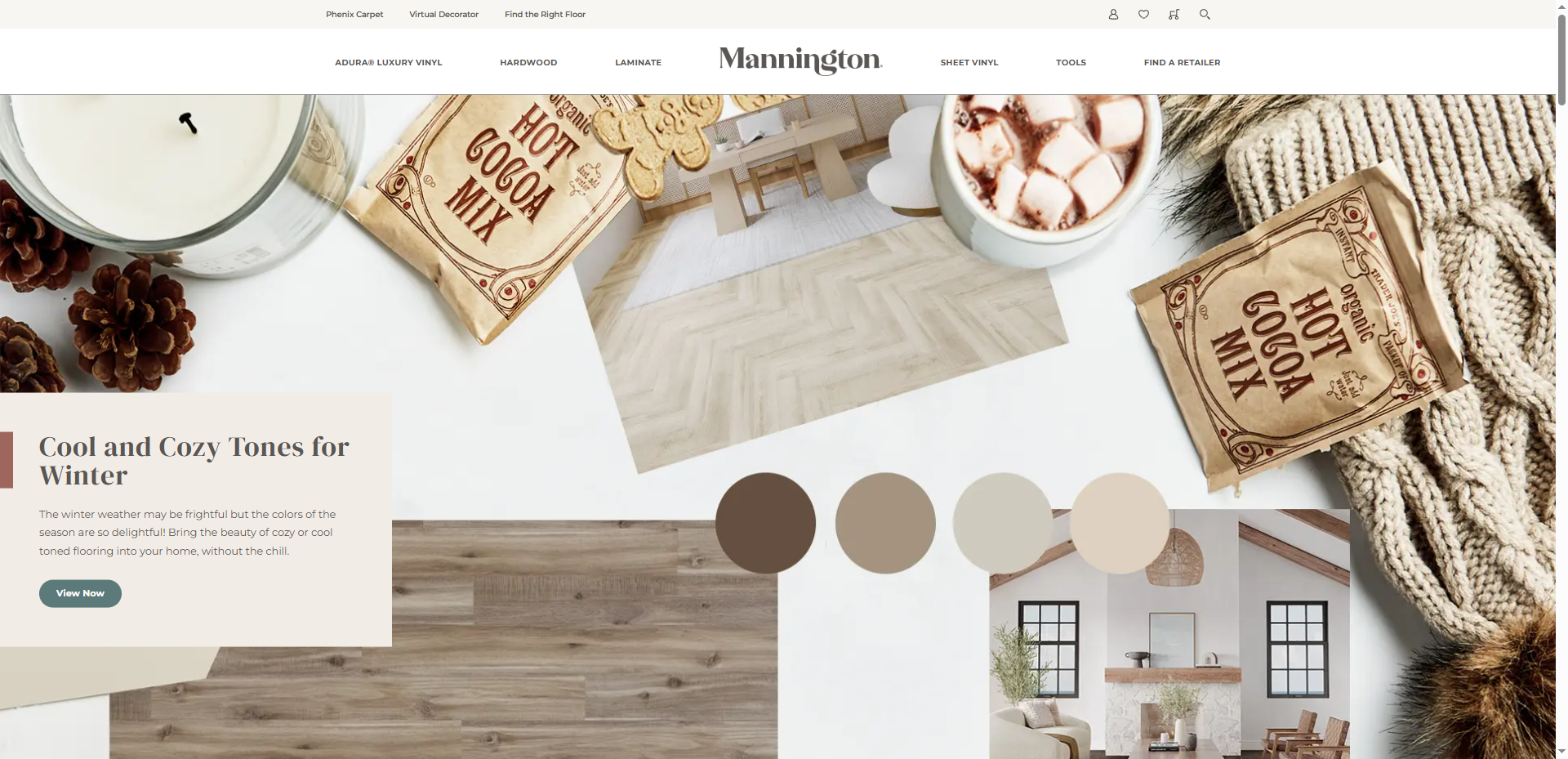
Mannington Mills is one of America’s largest family-owned flooring makers. The company has operated from Salem, New Jersey since it started. They serve homes and businesses through five major brands: Mannington Residential, Mannington Commercial, Amtico, Phenix, and Burke Industries.
Product Portfolio and Market Leadership
Mannington makes many types of flooring. You’ll find luxury vinyl tile (LVT), sheet vinyl, laminate flooring, hardwood, rubber flooring, porcelain tile, and carpet. This wide range puts them in the Top 20 Vinyl flooring companies Worldwide 2025. They compete with big names like Mohawk, Tarkett, Shaw, Forbo, and Armstrong.
The company’s laminate products are part of a growing global market. The laminate market hit 1,028.81 million m² in 2024. It’s expected to grow to 1,229.74 million m² by 2034 at a 1.80% CAGR. Their resilient flooring lines (LVT and sheet vinyl) meet strong market demand. Resilient products now make up 35% of total U.S. flooring dollar sales. They also represent 57.4% of hard surface dollar sales.
Financial Strength and Market Position
S&P Global Ratings gave Mannington a B+ issuer credit rating. This is an upgrade from earlier levels. The reason? Better operating performance in both residential and commercial areas. The rating agency pointed to stronger leverage metrics and enhanced cash flow generation. Plus, they noted benefits from product diversity and multi-brand positioning.
Mannington operates in strong market segments. The global vinyl flooring market measured $54.58 billion in 2024. Forecasts show $115.83 billion by 2035 (CAGR 7.08%). The broader flooring industry was valued at $357.34 billion in 2024. It’s projected to reach $530.11 billion by 2030. Mannington’s manufacturing capabilities and distribution networks give them a good position for growth in Non-toxic laminate flooring and other sustainable products.
Baier Flooring – Eco-Friendly & Export-Ready Choice for Middle East & Afghanistan
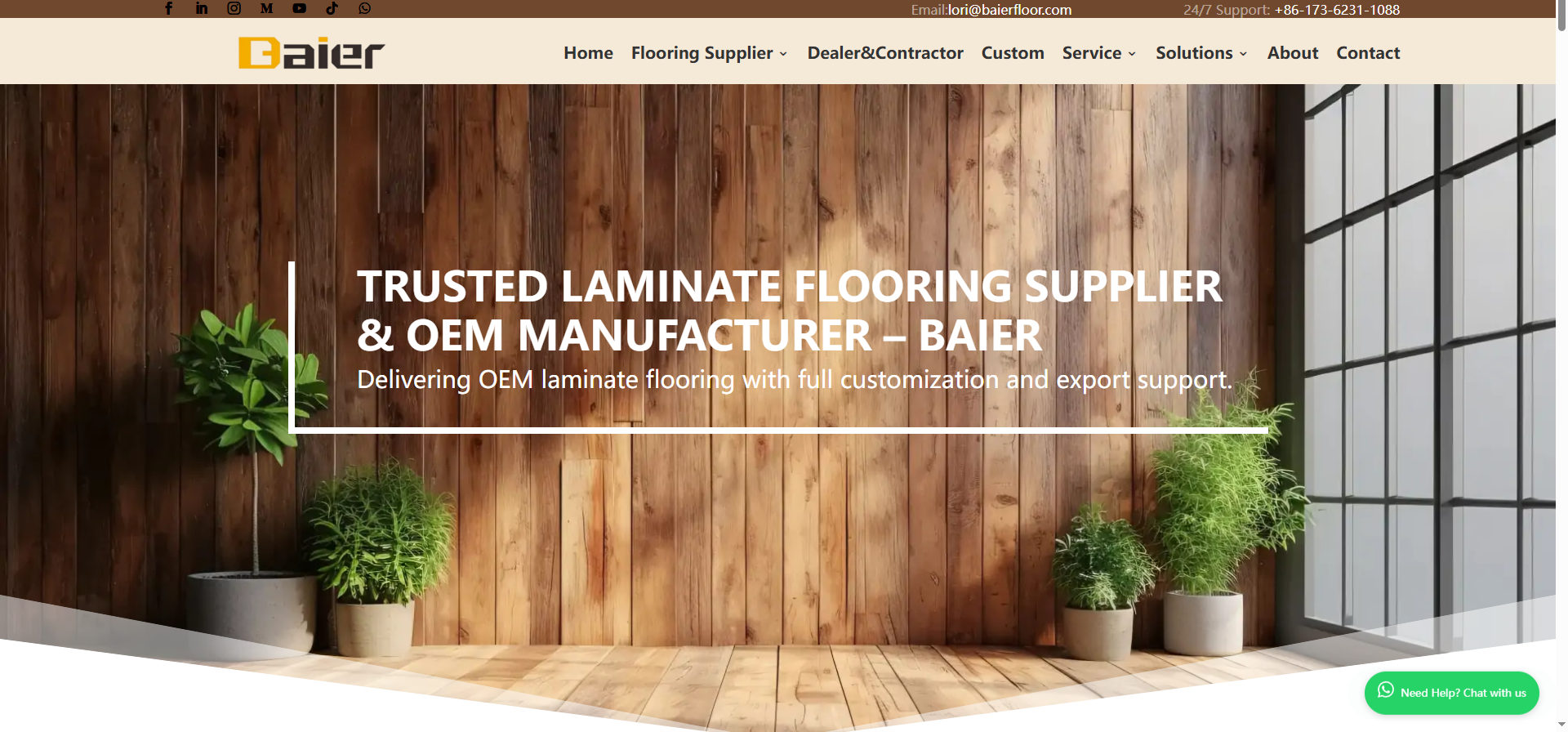
Baier is a leading manufacturer and exporter of laminate flooring, SPC, LVT, and underlay products based in Wuhan, China. The company has established a strong international presence, supplying non-toxic, Eco-Friendly Flooring solutions to residential and commercial projects worldwide.
Baier maintains a conservative debt structure, ensuring stable operations and reliable supply chains. Strong cash flow allows the company to invest in R&D for sustainable materials and maintain high production standards for long-lasting, environmentally responsible flooring.
Financial Performance and Market Position
In 2025, Baier’s revenue grew steadily, reflecting increasing global demand for high-quality laminate and vinyl flooring. Operational efficiency and careful cost management helped maintain healthy margins, despite rising raw material and energy costs.
Baier’s net margin and return on equity indicate solid profitability. With a focus on eco-certified products and compliance with international standards such as FloorScore, GreenGuard, and E0/E1 Formaldehyde limits, Baier positions itself as a trusted partner for architects, contractors, and distributors.
The company expects continued revenue growth in the coming quarters, driven by expansion in European, Middle Eastern, and African markets, and increasing adoption of sustainable flooring solutions.
Industry Outlook and Analyst Perspective
Global demand for laminate and LVP flooring continues to rise, particularly for non-toxic and recycled products. Baier benefits from this trend with its comprehensive product line and export capabilities.
Industry analysts highlight Baier’s strong product portfolio, reliable supply chain, and ESG-compliant manufacturing as key advantages. Their focus on durable, environmentally friendly flooring aligns with long-term sustainability trends in commercial and residential construction.
Baier’s commitment to quality, environmental standards, and innovation makes it a preferred supplier for projects that require certified, high-performance flooring solutions.
Shaw Floors – Premium Performance Flooring for Commercial & Residential Projects
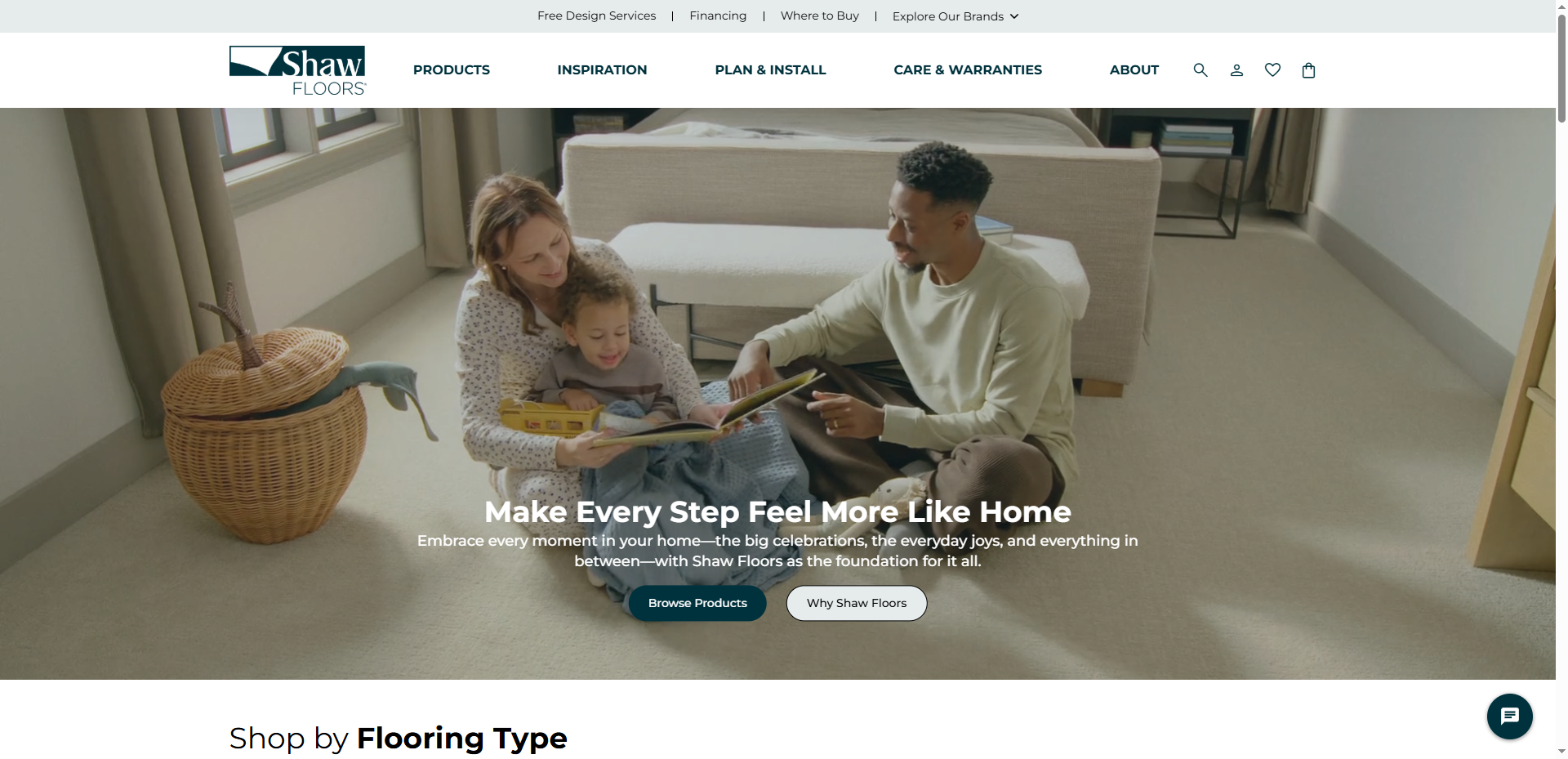
Berkshire Hathaway Inc. owns Shaw Industries Group. The company runs from 616 East Walnut Ave, Dalton, Georgia 30720, USA. Shaw started in 1967. Today, it’s America’s top flooring maker across many product types.
Revenue Scale and Financial Strength
Shaw Industries pulls in $6–7 billion in annual sales. The company hit a record $7 billion revenue in 2022. The Shaw Floors residential division brings in $4.7–4.9 billion of this total. This size supports 18,000 to 25,000 workers worldwide. Worker count shifts with seasons and needs.
Shaw put $0.5 billion into its Aiken yarn and fiber plant. This big investment boosted Shaw’s carpet making power. Consumers now prefer hard floors over carpet. Shaw invested anyway.
Market Dominance and Competitive Position
Shaw owns the biggest U.S. share in wood flooring making at 26.8% of total industry revenue. The company holds strong spots in carpet mills and home furnishing wholesale. Top rivals are Mohawk Industries, Milliken, Floor & Decor, SYNLawn, and Stonhard.
Shaw runs three main business units: Residential, Commercial, and Turf. The residential part splits into retail, multifamily, and single-family builder markets. This setup helps Shaw reach different buyers with the right products.
Product Innovation and Consumer Insights
Shaw’s COREtec brand changed rigid LVT/WPC installation. The product line makes setup easier. Installers finish faster. Buyers deal with less hassle. Shaw found a big problem through Ernst & Young research: 40% of consumers put off flooring buys because picking and buying feels too hard.
Sustainability Commitment in Non-Toxic Laminate Flooring
Shaw cut water use by 43% from its 2010 baseline. In 2022, the company checked over 2 billion pounds of materials for safety. These checks shape product makeup and green certifications for Shaw’s non-toxic laminate flooring in Afghanistan and worldwide.
Tarkett SA – Sustainable Flooring Solutions for Premium Middle East Projects
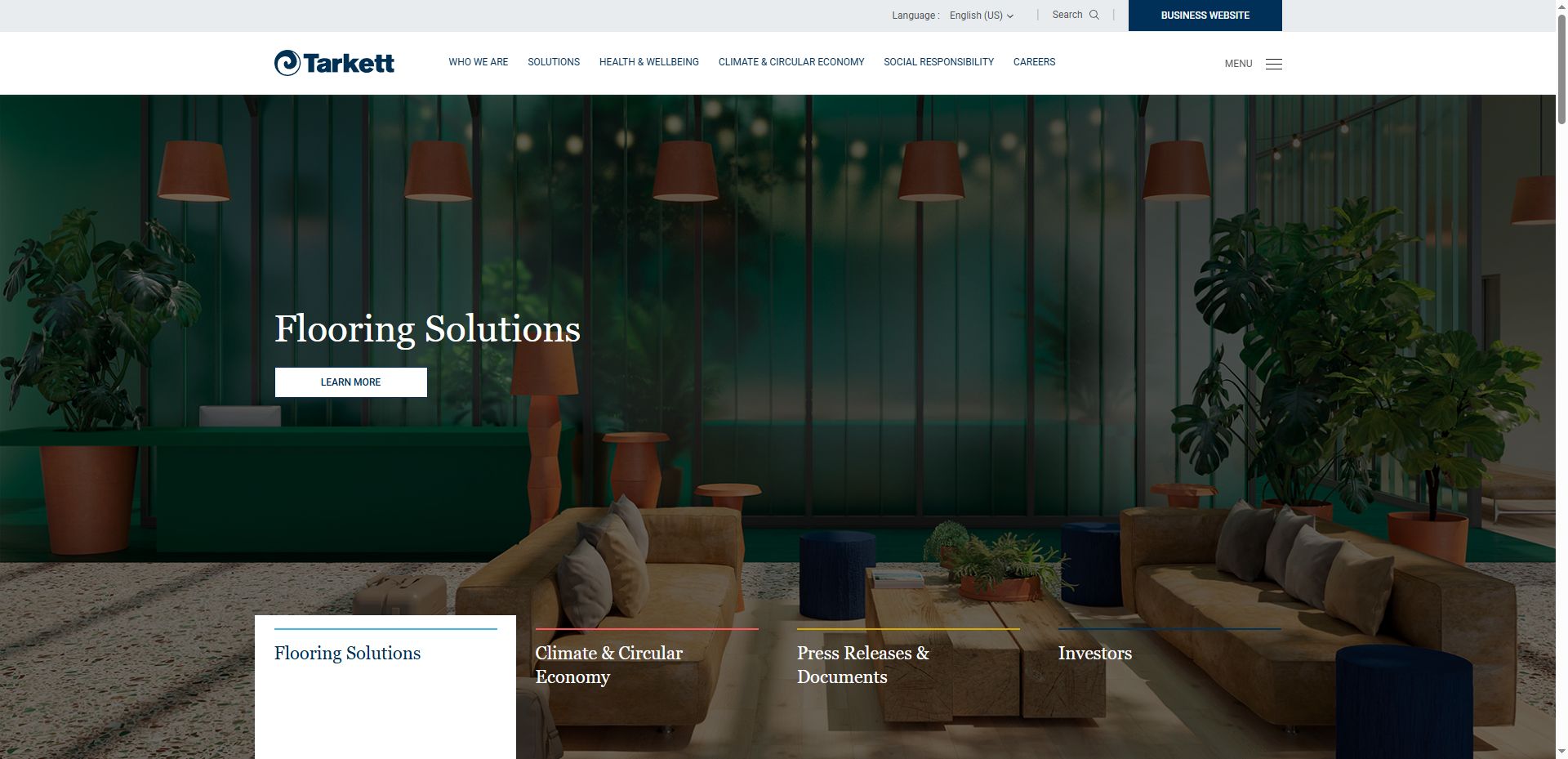
Tarkett SA runs from France. The company makes flooring and sports surfaces for global markets. Tarkett Participation manages funding at the group level. Recent numbers show modest growth despite tough market conditions.
Revenue Performance and Market Headwinds
H1 2025 net revenue hit €1,573.5 million. That’s +0.9% reported growth from €1,558.7 million in H1 2024. Organic sales fell -0.2% after adjusting for currency and acquisitions.
Q2 2025 performed better. Revenue climbed +1.5% reported and +0.9% like-for-like versus Q2 2024. Then Q3 brought worse conditions. Organic sales dropped -1.6% year-over-year. Demand weakened across key segments.
Profit Metrics and Margin Analysis
Gross profit reached €366.4 million for H1 2025. This fell from €375.6 million the prior year. Gross margin came in at 23.3% of net sales. After one-time items, the adjusted figure hit 24.2%.
Adjusted EBITDA landed at €154.9 million in H1 2025. This topped H1 2024’s €148.2 million by +4.5%. The EBITDA margin rose to 9.8% from 9.5% a year earlier. Reported EBITDA (unadjusted) was €121.6 million at a 7.7% margin.
Adjusted operating income totaled €83.9 million. This grew +2.6% from €81.8 million in H1 2024. The margin stayed at 5.3% of revenue. Reported EBIT fell -14.0% to €51.5 million. The EBIT margin dropped from 3.8% to 3.3%.
Cash Flow and Debt Position
Net income for shareholders turned negative at -€0.2 million. H1 2024 had a profit of €18.0 million. Diluted EPS fell to €0.00 from €0.27.
Free cash flow was -€134.2 million versus -€75.9 million the year before. Working capital rose €164.8 million. This ran €43.2 million higher than H1 2024.
Net debt stood at €616.5 million on June 30, 2025. This dipped from €620.4 million a year earlier but rose from €434.7 million at December 31, 2024. The leverage ratio measured 1.8x net debt to adjusted EBITDA. Tarkett makes non-toxic laminate flooring products. These products benefit from stable finances even as markets shift.
Liberty Home – Residential Network & Distribution Channel for Eco-Friendly Flooring
Liberty Home shows up across several Liberty-branded divisions. It’s not a standalone flooring maker. The closest link to non-toxic laminate flooring comes through Liberty Global’s home infrastructure services. By Q3 2025, they reached 18,675,100 homes serviceable.
Service Infrastructure and Market Reach
Liberty Global added 139,300 homes to its network in Q3 2025 alone. They kept 5,807,800 fixed-line customer relationships across their regions. This setup supports home service delivery. It includes possible flooring solutions through partner networks.
Consumer revenue hit £1,946.2 million in Q3 2025. Performance dropped -0.1% year-over-year. Market competition got tougher. New players put pricing pressure on the residential telecom segment.
Residential Revenue Performance
GCI Liberty’s consumer division pulled in $120 million revenue in Q3 2025. Direct costs ran $38 million. That left $82 million gross margin. Consumer operations showed a strong 68.3% margin rate.
The business revenue segment brought in $142 million during the same period. Consumer and business operations held steady. This happened despite market challenges hitting Liberty-branded residential services.
Liberty Home doesn’t make laminate flooring itself. But the Liberty network reaches millions of homes. This puts it in position as a distribution channel for non-toxic Laminate Flooring Brands. Brands can access markets in Afghanistan and other emerging regions. The company has strong customer ties and service networks. These could help with flooring product delivery and installation. Demand for eco-friendly home improvement solutions keeps growing.
Dream Home Builds – Cost Analysis & Flooring Choices for Middle East and Afghanistan
Building a dream home feels out of reach for most Americans. Survey data reveals 28% of Americans believe they could afford their dream home today. Even more concerning, 43% think they will never afford it. The biggest roadblock? Cost and affordability, cited by the majority of respondents.
What Does a Dream Home Look Like?
Most buyers picture a home between 2,000 and 3,000 square feet. Popular features include an open floor plan, large kitchen, primary suite, outdoor living space, and a 2–3 car garage. These aren’t luxury mansions. They’re comfortable, well-designed homes for families. Yet even these moderate dreams come with hefty price tags.
Construction Costs Break the Budget
A standard 2,000 sq ft home costs an average of $323,026 to build in 2025 (land not included). Custom dream homes push costs 50–100% higher than production builds. The typical range sits at $158–$400 per square foot. Location and materials drive the difference.
Every extra 100 square feet adds $15,800–$40,000 to your bill. Foundations vary a lot too. A 2,000 sq ft slab foundation runs $6,000–$12,000.
Regional differences hit hard. Hawaii leads at $205/sq ft. California follows at $195/sq ft. Massachusetts comes in at $190/sq ft. Midwest states like Mississippi ($120/sq ft) and South Dakota ($118/sq ft) offer more affordable building costs.
For a 2,500 sq ft dream home with upgraded finishes at $200/sq ft, expect $500,000 in construction costs alone. Go bigger—3,000 sq ft at $250/sq ft—and you’re looking at $750,000. Then add land costs. Suburban areas run $75,000–$150,000. Coastal premium locations? $350,000–$1 million+.
Non-toxic laminate flooring becomes a smart choice in dream home builds. It cuts material costs. Plus, it keeps quality and health standards high. Every dollar counts toward making dreams affordable.
Conclusion: Best Non-Toxic Laminate Flooring for the Middle East & Afghanistan
When selecting non-toxic laminate flooring for residential or commercial projects in the Middle East and Afghanistan, it’s essential to balance durability, environmental performance, and regional availability.
Baier Flooring stands out for its ready export capability, eco-friendly certifications, and competitive pricing, making it a top choice for projects across Afghanistan and the broader Middle East. Its portfolio of laminate, SPC, and LVT flooring suits both residential and Commercial Applications while supporting sustainability goals.
Mohawk and Shaw offer globally recognized brands with high durability and premium performance, ideal for high-traffic commercial spaces. However, they rely on regional distributors, which may impact delivery speed, Installation Support, and overall project cost.
Mannington and Tarkett provide strong certifications and product performance, perfect for premium developments, government contracts, or luxury residential projects. Their higher price points reflect extensive quality control and compliance with international environmental standards.
Across all brands, buyers can expect basic eco-friendly standards, wear resistance, and formaldehyde compliance. Yet, for the Middle East and Afghanistan, climate adaptation, regional logistics, and reliable local supply become critical decision factors.
Bottom Line: For sustainable, high-quality, and locally feasible flooring solutions, evaluate your project’s traffic requirements, budget, and environmental priorities. Choosing the right non-toxic laminate flooring today ensures healthier indoor spaces and longer-lasting installations for the unique conditions of the Middle East and Afghanistan.