
A warped panel. A rejected shipment. A supplier dispute that drags on for weeks — these aren’t rare incidents in MDF sourcing. They’re the direct result of one overlooked variable: moisture content.
For export buyers, MDF doesn’t fail in the factory. It fails after loading — inside containers, at port warehouses, or after installation in a different climate zone. That’s when swelling, delamination, and structural loss show up — and by then, the supplier has already been paid.
Here’s what this guide covers — and why each section matters to your sourcing decision:
1. What “moisture content” means for MDF — It’s more than a percentage. It’s a stability indicator tied to your destination climate and end-use environment.
2. Accepted moisture content ranges by application:
– Indoor export furniture: 8–12% MC (kiln-dried and metered pre-shipment)
– Outdoor applications: 12–15% MC
– Industry benchmarks sit between 4–10%, varying by manufacturer and density
3. Moisture resistance grades — Standard, MR, and HMR MDF perform in very distinct ways in humid conditions. Know which grade your supplier is shipping. Check this before the container leaves port.
4. Pre-shipment testing protocols — oven-dry method, final meter readings, and storage conditions between drying and packaging.
5. Certification checkpoints — CARB Phase 2, EPA TSCA Title VI, EN 622-5. Each one has specific requirements your supplier must meet. Know what those are before you approve a shipment.
6. What goes wrong when moisture is ignored — swelling, mold, binder breakdown. MDF damage is non-repairable. There’s no fixing it after the fact.
Each section comes back to one question: what do you need to verify before you sign off on a shipment?
This guide focuses on one thing:
what you must verify before shipment to ensure MDF moisture content matches your destination environment — and doesn’t turn into a claim. For buyers sourcing panels for interior applications, understanding how moisture-related risks during MDF shipping impact product stability is just as critical as choosing the right specifications.
Why Moisture Content in MDF Fails Across Supply Chains
Moisture content in MDF is a percentage — the ratio of water weight to dry wood weight in a finished panel. Standard MDF targets 5.5% MC. That number isn’t random. It’s set to match real-world interior environments where relative humidity runs between 40–46%. This keeps the panel’s equilibrium moisture content at a stable 8%.
Here’s what that stability means in practice.
MDF is an engineered product — wood fibers, resin binders, and pressure. Water disrupts all three. MC above 8–9% causes fibers to expand at different rates. The back of a panel absorbs moisture faster than a laminated face can. That gap causes warping. Not over time. Right away.
Push MC past 14%, and the damage picks up speed:
- Fastener corrosion — screws and hardware break down from the inside out
- Fungal growth — mold takes hold at moisture levels panels can’t release on their own
- Strength reduction — face and edge screw-hold specs drop by a clear margin. At 20%+ MC, structural integrity becomes flat-out unreliable
The manufacturing target of 6–8% MC isn’t just a quality benchmark — it’s a match requirement. MDF dried to 6% and installed in a 50% RH environment will pull in moisture until it hits equilibrium. Your supplier dried to 9%? Your destination climate runs dry? The panel shrinks, bows, or cups after installation.
The spec your supplier cites at the factory means nothing if storage or transit conditions shift it before delivery.
That’s the core reason moisture content in MDF defines product quality. It’s not locked in at manufacture. It’s a live variable — and it shifts with every environment the panel passes through on its way to your customer.
What Moisture Content Range Is Actually Acceptable for Your Application
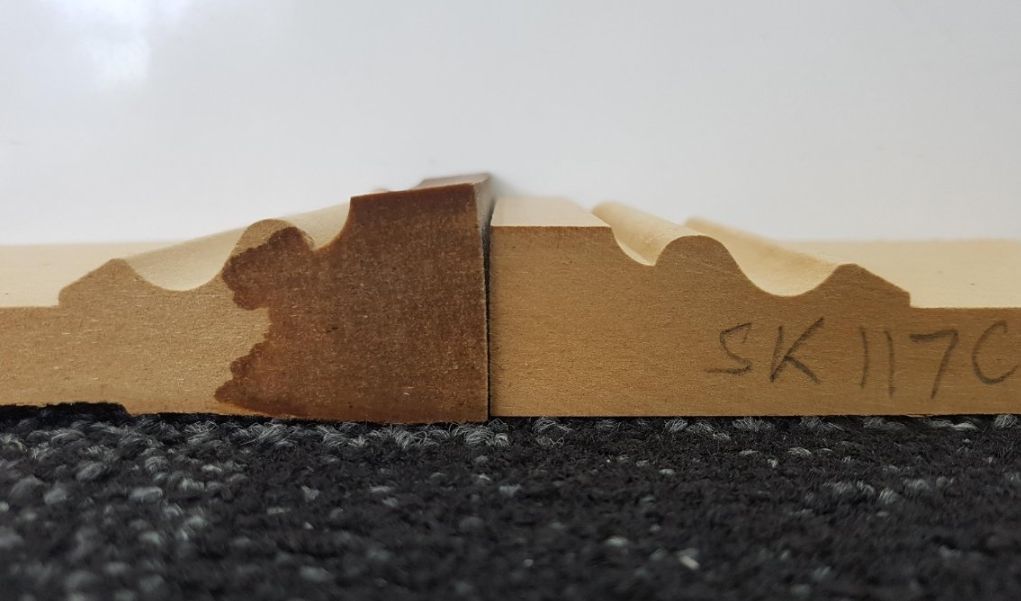
Grade matters. Density matters even more — and most buyers don’t realize that. The two work together to control how much moisture your MDF absorbs, holds, and releases over its life. This is especially important when evaluating MDF supplier drying and storage capability, which directly determines consistency across batches.
Start with the density classifications. Everything else follows from there:
Light density — below 40 lb/ft³ (640 kg/m³). Used for molding and millwork. Standard interior moisture handling. No special treatment included.
Medium density — 40–50 lb/ft³ (640–800 kg/m³). The workhorse range. Moisture-resistant variants exist at this tier, but you have to ask for them by name. They are not the default.
High density — above 50 lb/ft³ (800 kg/m³). Harder, denser, and better suited for machined finishes. MR versions cut down on swell, but “reduced” is doing a lot of work there — these are still interior-only panels. Full stop.
Now look at what actual testing shows. Multiple manufacturers built 155-grade MDF panels and tested them under ANSI A208.2-2009 standards. Moisture content ranged from 8.9% to 10.7%. That is not a small gap. Manufacturer consistency spread just as wide — coefficient of variation ran from 1.9% all the way to 13.7%. One supplier ships tight, predictable panels. Another ships a lottery.
Water absorption data tells the same story. In 24-hour absorption tests, 155-grade panels ranged between 10.2% and 19.3%. That is close to double the absorption at the high end. Two panels, same grade label, very different behavior.
Here is the part that deserves attention: none of the full-size panels tested met recommended thickness swell values across all plants. Not one.
Standard vs. MR MDF: What You’re Paying For
MR-grade MDF carries a clear label — the grade identifier, a hyphen, then “MR” (e.g., 155-MR). The treatment uses a wax emulsion coating on the fibers, plus hydrophobic resins that fight swelling under humidity exposure.
In projects where surface stability is critical, comparing MDF with alternatives like laminate flooring performance in stable indoor environments can help buyers make better material decisions.
Here is what you get for the cost premium — up to 50% higher than standard MDF:
| Property | Standard MDF | MR MDF |
|---|---|---|
| Moisture resistance | Baseline | Wax/resin treated; handles humidity and short-term water contact |
| Thickness swell | Higher | Reduced |
| Applications | Painted interiors, general millwork | Kitchens, bathrooms, laundry rooms |
One rule with no exceptions: seal the edges. MR MDF blocks moisture through the face. Cut edges are raw, exposed fiber — they pull in water fast. An unsealed edge in a bathroom cabinet wipes out the MR treatment right where you need it most.
For high-moisture environments, HDHMR (High Density High Moisture Resistance) is the better choice. It is not exterior-grade waterproofing. But it is the closest option available once your application goes past what standard MR panels can handle.
How to Match MDF Moisture Content to Your Destination Climate
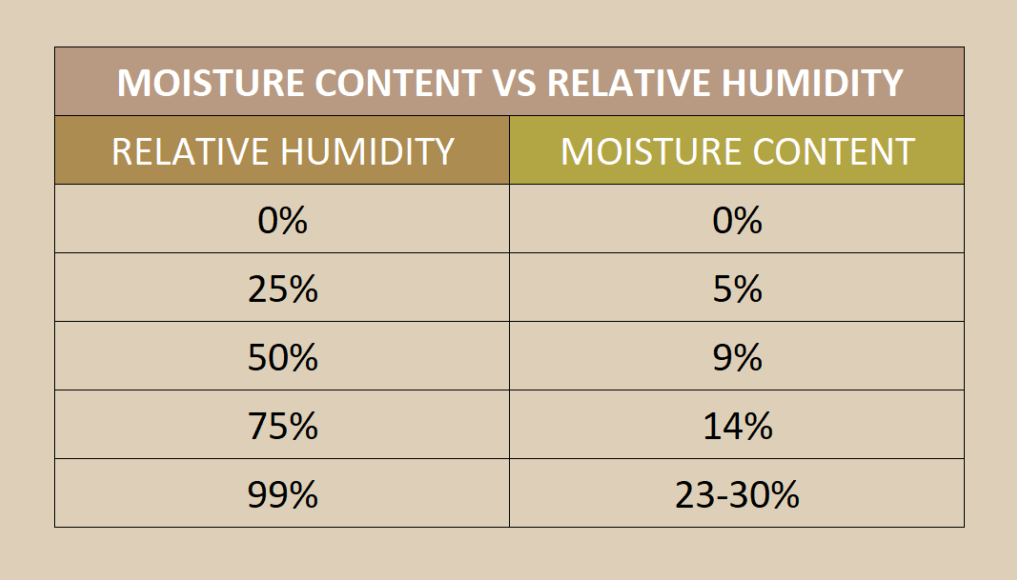
Your destination climate is a spec requirement. Treat it like one.
MDF doesn’t arrive at its final moisture content and stay there. It moves toward equilibrium with the air around it. Take a panel dried to 6% and ship it into a Southeast Asian warehouse at 80% RH. That panel will climb to 12–14% before it reaches your customer. The math doesn’t care about your purchase order.
Start with the climate. Then work backward to your MC target.
Relative humidity drives equilibrium moisture content in a straight line:
30% RH → target MC: 6–8%
45% RH → target MC: 7–9%
Air-conditioned interiors → target MC: 10–12%
Uncontrolled building environments → acceptable range: 6–14%, based on local humidity season
Northern European suppliers already build this in. Their delivery standard is 9 ±2% MC — set to match the ambient RH those markets run at. Southern European destinations need lower equilibrium targets. That gap is a real problem. Source from one factory and distribute across multiple regions, and you’ll feel it.
Acclimation Is Not Optional
The number your supplier prints on the moisture report shows factory conditions. It does not show what the panel will read after three weeks in a shipping container, a port warehouse, or a non-climate-controlled distribution facility.
MDF must acclimate to the destination environment before installation. Moisture shifts from the outside in. Exposed edges and top layers move first. Then the effect spreads through stacked boards over time. Pull panels into a conditioned space. Give them enough time before machining or assembly.
Don’t skip this step. MDF machined before acclimation carries dimensional movement into the finished product. That movement shows up as gaps, misaligned joints, or surface telegraph after installation.
One firm rule: never store MDF in garages, on exterior patios, or in any space where humidity is uncontrolled. Even brief exposure during acclimation can shift edge MC enough to hurt downstream performance.
Match the panel to the place it’s going. Everything else follows from that.
How to Test MDF Moisture Content Before Shipment Approval

Testing moisture content in MDF before acceptance isn’t a formality. It’s the last line of defense between a clean shipment and an expensive dispute. If you’re unsure how testing ties into purchasing decisions, this aligns with MDF specifications guide density glue emission class explained for full evaluation.
Your acceptance target is 6–13% MC. That range ties to the relative humidity your panels will face. Dry climate warehouses and heated buildings sit at the low end (~6%). Damp storage facilities and new construction environments push toward the upper limit (~13%). For air-conditioned end-use spaces, tighten that window to 10–12%. Anything outside 6–14% is a rejection trigger — full stop. Testing standards such as ANSI A208.2 MDF standard requirements define acceptable moisture and thickness swell limits.
The Testing Methods That Work
Weigh-and-dry (oven method) is your ground truth. Cut a sample, weigh it, oven-dry it at the specified temperature, then calculate:
%MC = [(wet weight − dry weight) ÷ dry weight] × 100
It’s slow. It’s also the method you use to verify everything else.
Electric moisture meter is your field tool. A calibrated handheld probe gives you fast surface and core readings across multiple panels. Use it for speed — but cross-check against the oven method any time results look borderline.
NIR online sensors (such as the IR-3000) work for high-volume inspection. Mount them 4–12 inches above the panels. The non-contact near-infrared measurement sends data straight to a control system. It works over free-fall chutes and conveyor gaps alike.
The Pre-Acceptance Protocol
Don’t test one panel and call it done. Work through this sequence:
Sample 5–10% of panels — pull from shipment edges and center, not just the accessible top stack
Record initial weight and thickness before any conditioning
Spot-check MC with an electric meter or NIR sensor — flag anything outside 6–13%
Condition a subset at 35% RH and 85% RH — linear expansion must stay within your specified tolerance
Run the 24-hour soak test on 50×50mm pieces — thickness swell must stay at or below 5.5% (ANSI A208.2 standard for interior moisture-resistant MDF). Reject anything above that.
Cross-reference density — standard MDF runs 650–850 kg/m³. Panels outside that range don’t behave reliably under moisture stress.
One number worth keeping visible:
| RH (%) | MDF MC (%) | Risk Level |
|---|---|---|
| 35 | ~6% | Dry/hot environments — acceptable |
| 65 | ~10% | Ideal acceptance window |
| 85 | ~13% | Damp storage ceiling — do not exceed |
A panel hitting your facility at 15% MC means the damage is already done. You can’t dry your way back to spec once thickness swell has started. Test before the container is unloaded — not after. Buyers managing multi-region projects should also review reduce batch inconsistency risks in MDF orders to understand similar material behavior across shipments.
What Happens When Moisture Content Is Out of Spec (Real Buyer Consequences)
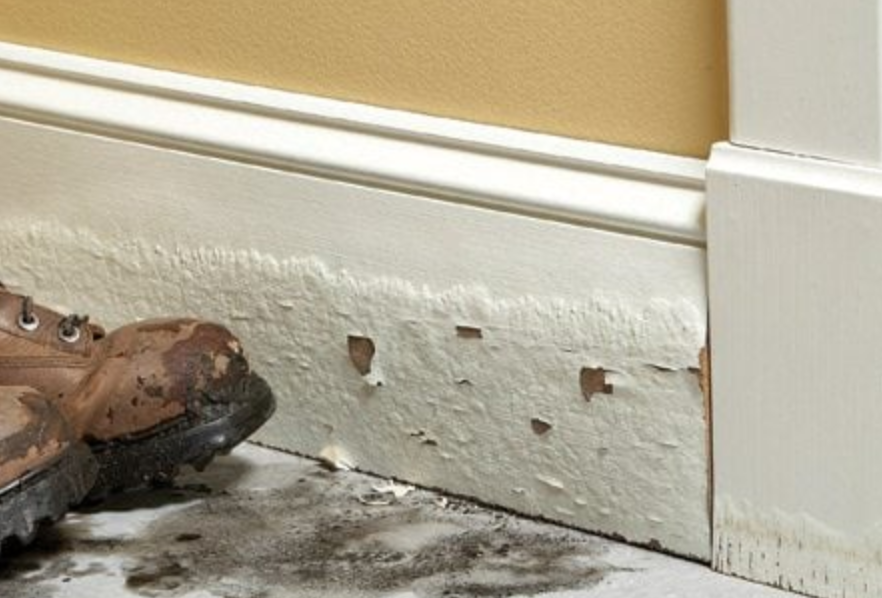
Out-of-range moisture content in MDF gives no warning. You don’t see it on the production floor. You see it later — a cabinet door that won’t close, a tabletop that bows six weeks after delivery, a shipment turned away at the customer’s dock with no easy fix. These failures often mirror issues discussed in avoid MDF damage during shipping buyer guide, where moisture and handling risks combine.
The damage follows a clear pattern. Here’s what happens when MC runs outside spec:
Swelling and dimensional failure hit first. Thickness swell beyond 5.5% is the visible sign — panels buckle at joints, laminates lift at edges, and assembled furniture arrives the wrong size. There’s no fix at that point. You cannot press a swollen MDF panel back to flat.
Binder breakdown comes next. The resin holding wood fibers together loses strength under prolonged moisture exposure. Internal bond strength drops. Screw-hold values fall with it — the same fastener that held firm at 8% MC pulls out under load at 14%. That’s a structural failure, not a surface one.
Mold and microbial growth close the loop. Fungal activity speeds up above 13% MC. Moisture trapped inside a panel stack — in non-climate-controlled containers or port warehouses — lets microbial growth begin before the shipment clears customs. A 2022 textile factory case recorded $2M in losses from faulty meters that gave readings 9% too high. The moisture was there. The data just didn’t show it.
The numbers behind misread moisture are stark:
A 0.5% MC measurement error can trigger serious density and consistency failures across a full batch
Unmonitored moisture in industrial supply chains drives $740,000 in average annual losses from material rejection and production halts
Monitoring and testing cuts those costs by 41%
For MDF export buyers, the lesson is straightforward. Test early. Test across the full shipment — not just the top stack. Any reading above 13% is a rejection, not a starting point for negotiation.
What Documents and Certifications You Must Verify Before Shipping
Documentation is where deals fall apart. A supplier quotes perfect moisture content numbers. They pass a phone inspection. Then panels arrive damaged — because nobody asked for proof before the container shipped.
Here’s what you need in hand before approving any MDF shipment:
Core shipping documents — non-negotiable on every order:
– Commercial invoice — buyer, seller, product specs, and declared value
– Packing list — exact shipment contents, panel counts, and batch references
– Bill of lading (BOL) or air waybill (AWB) — your transport contract and legal title document
– Certificate of origin — shows where the product was made. This affects your duty rates and trade agreement eligibility
Compliance certifications tied to moisture content in MDF:
– CARB Phase 2 / EPA TSCA Title VI — formaldehyde emission compliance, mandatory for U.S. market entry
– EN 622-5 — the European standard for MDF physical and mechanical properties. It covers moisture resistance grades too
– Third-party lab test reports — results from an accredited, independent lab showing actual MC readings at production. A supplier’s own declaration does not count as proof.
Before every order, check your supplier has:
– ECCN and HTS classification on file
– Country of origin clearly declared
– Restricted party screening done against the Consolidated Screening List (CSL) and logged
– All records kept for at least five years
One number worth knowing: 95% of U.S. exports need no special license. But that 5% is real — and MDF going to certain destinations can land in it. Check your classification first. Don’t assume you’re clear.
Get the documents before you sign the purchase order. Not after.
MDF Moisture Content vs Environment Risk Table
| Relative Humidity (RH) | Expected MDF MC (%) | Risk Level | Buyer Action |
|---|---|---|---|
| 30% RH | 6–8% | Low risk | Acceptable for indoor furniture export |
| 45–60% RH | 8–10% | Stable zone | Ideal procurement range |
| 65–75% RH | 10–12% | Moderate risk | Require MR MDF + sealed edges |
| 80%+ RH | 12–14% | High risk | Strict inspection + packaging control |
| Above 14% | >14% | Failure zone | Reject shipment immediately |
Pre-Order Checklist: MDF Moisture Content Verification for Export Buyers
Every rejected shipment has a paper trail that could have stopped it. The gap between “supplier says it’s fine” and “panels arrived damaged” is almost always a missing verification step. That step takes less time to complete than filing a dispute claim.
Run through this before any order gets approved.
Seven steps. No shortcuts.
Confirm kiln drying — ask for documented process records. A verbal confirmation is not enough. Precision moisture meters should be part of their standard workflow.
Verify post-drying storage — humidity-controlled environments are required. A panel dried to spec and then stored in an open warehouse will absorb moisture before it reaches your dock.
Require final MC readings before assembly or packaging starts. Factory conditions and pre-ship conditions are two different numbers. Don’t treat them as the same.
Check emission certifications — know which market you’re shipping to, then match the right standard:
| Standard | Limit | Region |
|---|---|---|
| E1 | ≤0.124 mg/m³ | Europe |
| CARB Phase 2 | ≤0.05 ppm | USA |
| F★★★★ | ≤0.03 mg/m³ | Japan |
| E0/ENF | ≤0.1 ppm | Ultra-low/Europe |
| GREENGUARD Gold | <360 VOCs tested | Global sensitive environments |
-
Validate structural standards — EN 316:2010, EN 622-1:2010, and EN 622-5 each cover a specific area. Together they address fiber board construction, density, and moisture resistance grades.
-
Inspect via third-party testing — check density, moisture resistance, and structural integrity. Supplier declarations are not independent verification. They don’t replace it.
-
Audit export packaging — check for vapor barrier films, edge sealants, and desiccants inside each package. Also confirm dry cargo holds before loading begins.
This list doesn’t replace documentation. It runs alongside it.
Conclusion
Moisture content in MDF isn’t a footnote on a spec sheet. It’s the difference between furniture that arrives ready to sell and a container full of warped, swollen boards. Fix that problem after the fact, and you’re looking at months of back-and-forth with a supplier who’s already been paid.
The buyers who get this right aren’t the ones with the most experience. They’re the ones who ask harder questions before the order ships:
- What grade?
- What climate?
- What testing method?
- What documentation backs it up?
You now have the framework to ask those questions — and to spot a bad answer when you hear one.
Before your next order, run through the pre-order checklist. Confirm your supplier can provide third-party moisture test results. Then check that their stated moisture content in MDF lines up with your destination’s humidity conditions. These are three separate steps, and each one matters.
One overlooked number on a technical datasheet can undo everything else you did right.
Don’t let it.