
Batch inconsistency rarely announces itself. It creeps into your production line through rejected panels, recalibrated machinery, and labor hours spent fixing tolerances that should have been right from the start.
For anyone managing high-volume plywood purchases, real costs hide in one place — the gap between what a supplier promises and what arrives across multiple shipments.
Example: Batch Variation Impact
| Variation Type | Typical Tolerance | Production Impact |
|---|---|---|
| Thickness deviation | ±0.3mm | CNC misalignment |
| Moisture variation | 6–12% | panel warping |
| Glue spread variation | ±10% | delamination |
| Veneer density variation | ±5% | structural instability |
This guide skips the surface-level advice. Instead, it gets into the specifics:
How to read a manufacturer’s QC system before you commit
Which tolerance standards matter at scale
How to structure contracts and supplier criteria that protect your operation long after the first order ships
What Batch Consistency Means in Industrial Plywood Supply
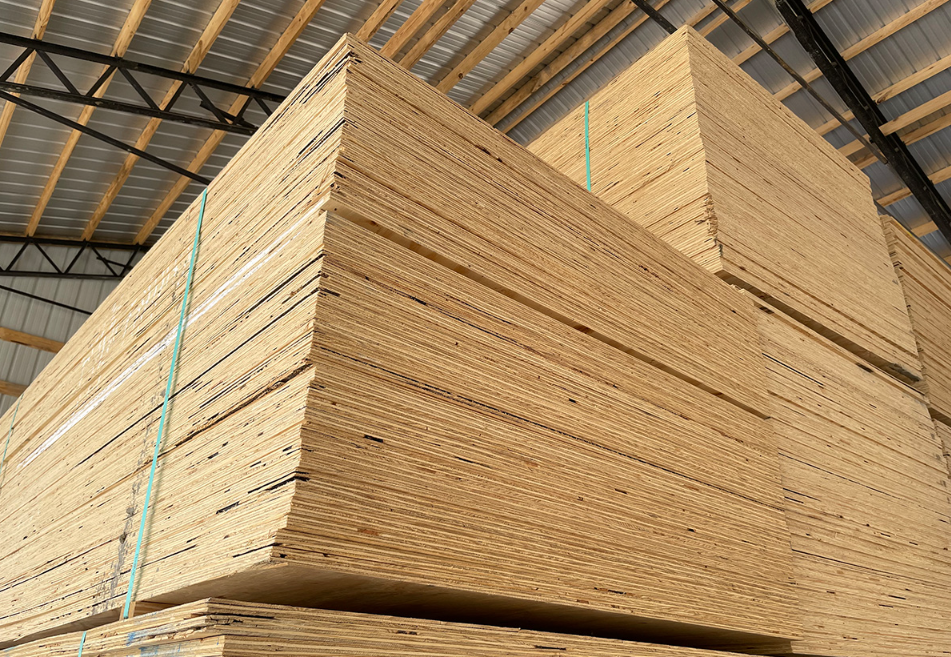
Here’s a number worth sitting with: a 10,000-sheet plywood purchase with just 3% inconsistency produces 300 rejected panels. That’s $15,000 gone — before you add $5,000 more in CNC downtime and labor.
That’s not a worst-case scenario. That’s a routine outcome when batch variation goes unmanaged.
Batch consistency means every panel across every shipment holds the same measurable properties — thickness, veneer uniformity, adhesive performance, plywood strength variation — within tight tolerances. Let those tolerances drift, and the damage adds up fast:
Thickness variance of just 0.3mm across 1,000+ sheets triggers 10x the rework volume
Adhesive viscosity shifts of 5–15% drive delamination in 2–5% of panels
Multi-mill sourcing introduces up to 12% total variance — that’s an 18% effective cost increase versus single-batch supply
The yield math is brutal. High-grade operations target above 90% yield. Veneer thickness inconsistency alone cuts 20% of that yield. Add rework labor at 15% of total costs, and you’re looking at 15–25% hidden losses on a standard bulk order. Mixed batches push that past 30%.
Multi-batch sourcing is where bulk plywood purchases quietly bleed money. The losses don’t show up on the invoice — they show up on your shop floor.
The 5 Root Causes of Batch Inconsistency in Plywood Manufacturing
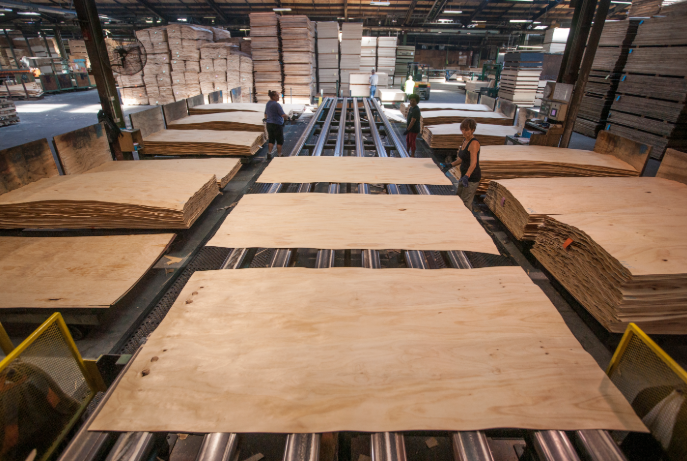
Factory studies break it down clearly: raw materials cause 40% of batch inconsistency, manufacturing errors cause 35%, and environmental or moisture exposure accounts for the remaining 25%. Fix the right problem first — that means knowing where it starts.
1. Raw Material Selection (40% of Failures)
Low-grade veneer is the root of most plywood problems. Knots, irregular grain, and density variation of ±5–10% create internal voids and core gaps before a single sheet reaches the press. The damage hits your operation hard. Grain misalignment beyond 1/32″ triggers CNC registration errors above 0.5mm. Color inconsistency makes panel-matching a near-impossible task at scale.
2. Improper Drying and Moisture Content
Moisture content above 12% is a slow disaster waiting to happen. The safe target range is 6–8%. Go past that, and you get warping during storage — up to 2–5% dimensional change — plus delamination under load. Poor kiln monitoring is usually the culprit. Factories can control this. But once panels ship into humid environments, that control is gone.
3. Faulty Adhesive Application
Uneven glue spread creates voids 1–2mm in diameter. Press time or pressure that falls off-target drops shear strength by 20–50 psi. The failure pattern is consistent: delamination, blistering, and wood failure rates below 62% in bond tests. None of this shows up until the panel carries real load.
4. Veneer Stacking and Alignment Errors
Misaligned core veneers cause thickness deviation of up to 0.8mm. That’s enough to break CNC registration and push cut error rates to 15% across a full production run. Poor jaw alignment during testing drops measured shear strength by 92–210 psi. That’s a steep price for what is, at its core, an assembly control failure.
5. Inconsistent Hot-Pressing
Press temperature below 120°C — or uneven pressure — leaves layers loose. Air pockets of 2–5mm form between layers. Density variation reaches ±15%. Span-to-depth ratio problems cut structural strength by 30%. The end result is warping and delamination. It often doesn’t appear until panels sit in humid storage for a while.
The key takeaway: 85% of these failure causes are factory-controllable — raw material selection, adhesive application, stacking, pressing, and drying. Suppliers using Statistical Process Control (SPC) monitoring cut batch variation by 50%. The remaining 15% ties to shipping and storage exposure. Sealed packaging handles that part.
Evaluating plywood purchases at volume? These five causes are your diagnostic framework. A supplier who can’t explain how they control each one isn’t ready for a serious bulk relationship.
How to Evaluate a Plywood Manufacturer’s QC System
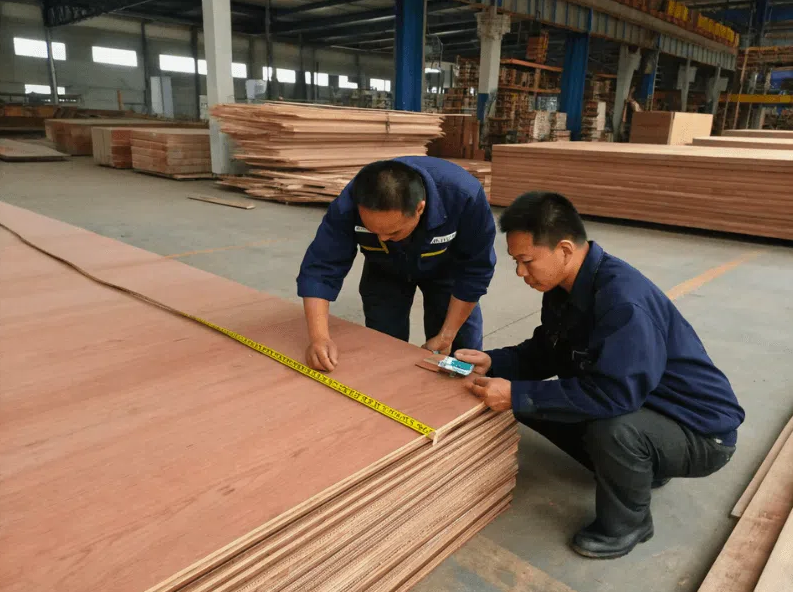
Most suppliers hand you a quality certificate without hesitation. The document looks official. On its own, it means almost nothing.
The real test is the system behind the certificate — the inspection logs, calibration records, and process parameter data collected from the first raw sheet to the final stacked pallet. That’s where real quality control either exists or doesn’t.
Here’s how to read it.
Ask for Documentation Across Three Specific Stages
A credible QC system isn’t a single checkpoint at the end of production. It runs across three distinct stages — and you want paper evidence from each one.
Stage 1 — Pre-Production Raw Material Screening
Request incoming inspection logs, material certifications, and full traceability records: batch numbers, SKU codes, and supplier details. Also ask for moisture meter calibration records. Missing records are a problem. Moisture content control starts before a single veneer gets pressed. No tracking at intake means no real control over moisture — full stop.
Stage 2 — In-Process Monitoring
This stage tells you whether the factory runs a controlled environment or guesses. Ask for process parameter logs. Temperature should stay within 20–25°C and humidity within 40–60% RH — both need to be documented. Equipment calibration certificates matter here too. Real-time logs checked every day show a factory that runs with discipline. Digital checklists with confirmed lockout procedures on temperature controls show something better: a factory that has built accountability into its workflow from the ground up, not added it as an afterthought.
Stage 3 — Final Verification
Dimensional accuracy reports should show tolerances within ±0.1mm. Visual inspection data should cover surface defects, color consistency, and scratch rates. Functional test results must confirm performance under real load conditions. Also ask for AQL defect thresholds. The industry benchmark is 1.5% for critical defects and 2.5% for major ones. A supplier who can’t tell you their AQL isn’t measuring to any standard.
Manual QC vs. Automated SPC — Know the Difference
Not all QC systems carry the same capability. The gap between them grows large at scale.
Manual QC relies on operators running visual and dimensional checks at set intervals. The output is checklists with batch numbers and inspector signatures. For smaller orders, this can work fine. For high-volume plywood purchases, gaps appear — human attention drifts, intervals stretch, and defect patterns build up before anyone spots them.
Automated SPC (Statistical Process Control) works differently. Sensors — thermocouples accurate to ±0.5°C, laser micrometers to ±0.01mm, load cells for shear — collect data in real time. The output is control charts, Cp/Cpk values, and outlier alerts. Ask for a CpK ≥1.33. That number confirms genuine high-volume process capability.
One detail worth probing: German-engineered calibration equipment — Mahr or Hoffer gauges calibrated to DIN ISO 9001 — cuts batch variation by 50% compared to generic alternatives. Check whether calibration logs get updated each year. Suppliers who offer this information without being prompted know what precision manufacturing demands.
Red Flags That Tell You to Walk Away
Some documentation gaps are minor. Others signal that a supplier’s QC system is pure performance with nothing behind it.
Vague batch tracking — no SKU, lot, or PO numbers means no real traceability. Something goes wrong across your shipments, and you’ll have no way to isolate the source.
Missing moisture meter calibration records — these need updating every month, with a tolerance of ±2% RH. No logs means moisture risk goes unmanaged.
No shear or peel test reports — adhesion strength data (minimum >5N/cm peel) is non-negotiable for any glue-intensive process.
No non-conformance records — every serious factory produces them. A supplier showing zero non-conformities isn’t running a clean operation. They’re hiding problems, not solving them.
Look for a supplier who resolves more than 95% of logged defects within 30 days and keeps root cause analysis on file. That’s the baseline. Anything short of that means problems cycle back into production without a fix.
Before committing to any large plywood purchase, run through this checklist: batch and date identification, material traceability, calibration status, dimensional tolerances, AQL thresholds, and corrective action records. A manufacturer with nothing to hide will have all of it ready. One who stalls at the first documentation request is already giving you an answer.
Calibrated Plywood and Thickness Tolerance Standards

Tolerance numbers on a spec sheet look simple. In practice, they separate a production line that runs smoothly from one that burns through rework hours.
Calibrated plywood gets its consistency through wide-belt sanding — up to 0.5mm removed per pass, across two passes: a heavy calibration pass followed by an 80/100-grit finish. The result is a thickness tolerance of ±0.1–0.2mm. That’s a different product from standard sanded plywood (±0.3–0.5mm) or unsanded stock (±0.5–1.0mm). For CNC routing and flat-pack assembly, that gap is huge. It’s what separates clean cuts from wasted panels and precise joints from panels that won’t sit flat.
Match Tolerance to Application — Not to Price
Not every plywood purchase needs the tightest spec. The right tolerance depends on what the panel does in use.
Premium furniture and cabinet interiors (birch, EV, Okoume): ±0.2mm — the Japan precision standard, essential for modular kitchens. On an 18mm sheet, that means 17.8–18.2mm, every time.
Standard furniture and flat-pack (bintangor, pine A/B): ±0.3mm — the European baseline, workable for most production environments.
Cabinet carcassing and shopfitting (B/C grade): ±0.3–0.4mm — enough for structural consistency without premium cost.
Construction formwork and film-faced panels (BB grade): ±0.5mm — built for 15–25 reuse cycles, not precision joinery. CC grade opens to ±1.0mm.
Know the Standard Behind the Number
Tolerance claims without a named standard can’t be verified. The compliance framework behind the spec determines how it’s measured and enforced.
| Market | Standard | Sanded Tolerance | Unsanded Tolerance |
|---|---|---|---|
| Europe | EN 315 | ±0.3mm (≤12mm) | ±0.5mm |
| Japan | JAS 1453 | ±0.2mm | ±0.2mm |
| South Korea | KS F 3113 | ±0.3mm | ±0.5mm |
| ASEAN/India | ISO 12465 | ±0.3–0.5mm | ±0.5–0.8mm |
EN 315 plywood tolerance standard requires measurement at five points per sheet — four corners plus center — taken at least 50mm from edges using a digital caliper with 0.01mm resolution. That measurement protocol is non-negotiable. A supplier citing EN 315 compliance but sampling one or two points per sheet isn’t meeting the standard. They’re cutting corners.
Write Tolerance Into the Contract — In Full Detail
Vague purchase orders create inconsistency. For high-volume plywood purchases, your spec language needs to be tight and clear:
Thickness: 18mm ±0.3mm (calibration grade, 2-pass sanded)
Measurement: 5-point per EN 315 (4 corners + center), digital caliper 0.01mm resolution
Rejection threshold: Any sheet exceeding ±0.3mm; any batch where >5% of sheets fall outside ±0.3mm
QC requirement: Minimum 10 measurement points per representative sheet pre-load; all readings logged
Specify tolerance, standard, and measurement method together — all three. “±0.2mm per JAS 1453” is a solid contractual anchor. “±0.2mm” on its own leaves room for interpretation.
One more thing — pallet averages mean nothing here. Each sheet must meet the stated tolerance on its own. A batch average of ±0.2mm that includes sheets ranging from ±0.05mm to ±0.45mm is a batch with a consistency problem. It did not pass.
Incoming Inspection Protocol for Bulk Shipments
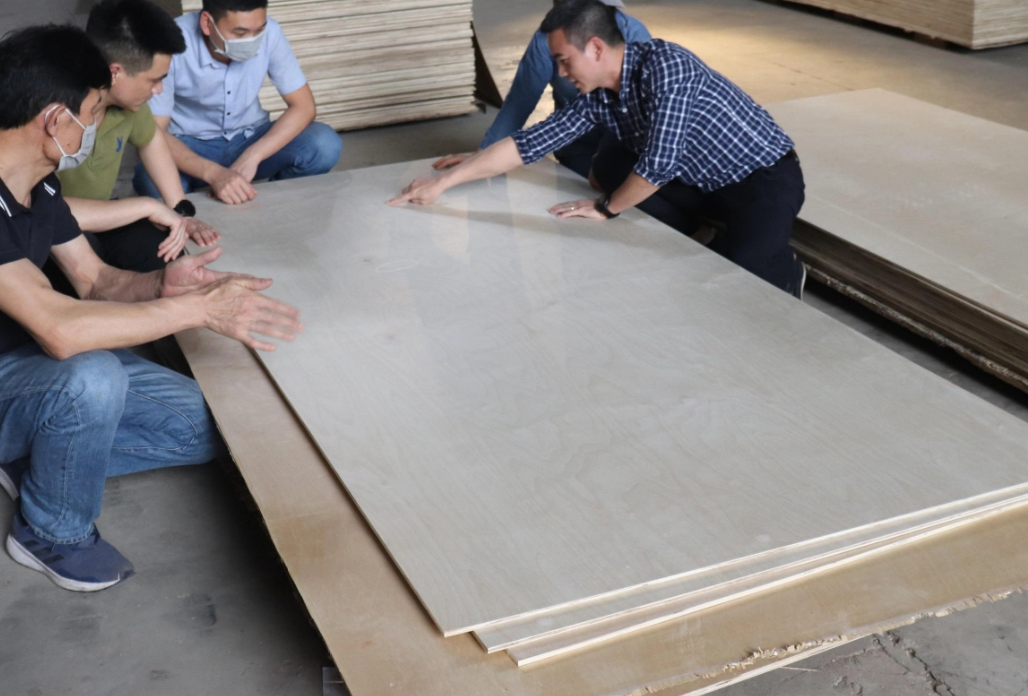
A shipment on your dock is not yet inventory. It’s a hypothesis waiting to be tested.
Every bulk plywood purchase carries whatever variance the factory built in. You have one moment of control — the one before it enters your stock. Miss that window, and the inconsistency is yours to absorb.
Here’s how to run the process.
Start with Sampling — Done Right
Random doesn’t mean casual. For orders exceeding 500 sheets, lock the sample size into the contract before the shipment moves. Pull 5–10% of total volume. Do it with purpose: edge lots and center stack — not just whatever’s easiest to reach.
Edge panels absorb the most moisture and handling stress in transit. Center stack hides press-run variation. You need both.
Sort every defect you find into one of three categories — minor, major, or critical — against your pre-agreed tolerance levels. That classification drives the final decision.
On-Site Checks: What You Can Confirm Without a Lab
Run these the day the shipment arrives:
Moisture readings: Target 8–12%. Anything below 7% or above 13% is a reject. Don’t negotiate on this. Moisture outside that band enters your production as a delayed failure.
Dimensional verification: Use calipers, not tape measures. Cross-reference against your contract spec and your EN 315 or JAS measurement protocol. Check multiple points per panel — not just one.
Visual delamination and surface color: Scan panels across the full batch. Color drift between panels points to multi-mill sourcing or inconsistent press cycles.
Quantity count and packaging integrity: Verify count per carton. Check seals, markings, and barcode legibility. Damaged packaging isn’t a cosmetic issue — it’s evidence of how the goods were handled in transit.
Decision Thresholds: Pass, Hold, or Dispute
| Check | Pass | Hold | Reject |
|---|---|---|---|
| Moisture | 8–12% | 7–13% | <7% or >13% |
| Dimensions | Within ±spec tolerance | Minor variance | Exceeds tolerance |
| AQL Defects | Within limits | Minor limit breached | Major/critical exceeded |
| Quantity | Matches spec | Short <5% | >5% variance |
| Packaging | Secure and labeled | Minor mislabel | Regulatory risk |
A “hold” is not a pass. Part of the shipment needs rework or re-inspection before it goes into production. Don’t let it slip into stock on a handshake.
Close the Loop with Documentation
Every inspection ends with a written report. That means defect photos, test outcomes, and a clear pass/fail/hold designation tied to your contract specs. For regulated goods, get a PSI (Pre-Shipment Inspection) certificate before release.
Timing matters too. Run your inspection at 80–100% production completion — 1–2 weeks before the ship date works best. That gap exists so corrections can happen. Use it.
Contract Clauses That Protect Batch Consistency
A contract that skips batch behavior details isn’t protecting your operation. It’s just recording a transaction.
Most bulk plywood purchase agreements fall short at this point. They cover price, volume, and delivery windows. Nothing gets said about how the material is made. That gap is where inconsistency creeps in.
Here’s how to fix it.
Lock Down Three Core Clauses
Single-batch run requirements come first. Every unit in your order should come from one continuous production run. No inter-batch blending. No mill mixing. Put it in plain writing: “All 500 units of Product A produced from a single batch run; no inter-batch blending permitted.” That one sentence cuts out one of the most common sources of hidden variance.
Batch code traceability comes next. Assign a unique code — formatted as YYYYMMDD-001 — to every production run. That code ties raw veneer specs to hot-press output. It creates a chain-of-custody log you can audit two years after delivery. Something goes wrong? You’ll know which run, which press, which raw material lot.
Agreed moisture content at delivery closes the loop. Set the range — 6–8% is the right target for panels. Test at the delivery point, not the factory door. Anything outside that band gets rejected. Write that language into the contract before signing. Don’t wait until a shipment shows up short of spec.
Require Documentation With Every Shipment
Four documents should arrive with every bulk plywood purchase:
Batch test reports: Independent lab results covering moisture (7.2% average is a solid benchmark), density, and defect rates below 1% voids
Hot-press cycle logs: Temperature (180–200°C), pressure (10–15 MPa), and cycle time (5–10 minutes per panel), operator-signed
Calibration certificates: Equipment certified within the past six months, traceable to ISO standards
Veneer origin specs: Species, thickness (1.5mm ±0.1mm), and moisture at receipt (8–10%)
A supplier who can’t hand over these documents before unloading isn’t running a traceable operation. Hold the shipment until the paperwork clears.
Define Liability in Measurable Terms
Vague penalty clauses get argued over. Specific ones get enforced.
Your pass/fail criteria need hard numbers. Moisture: 6–8%. Defect rate: below 0.5%. Bond strength: above 50 MPa. Use third-party testing to confirm results. A batch fails — say, more than 2% of panels exceed 8% moisture — the supplier replaces the full batch within seven calendar days at no cost. Plus a 20% penalty on order value.
For rework costs, write in 150% reimbursement on labor and materials. Add downtime losses capped at 10% of order value. That cap keeps the clause enforceable. Neither side ends up with open-ended exposure.
Add a termination trigger too. Three non-conforming batches within twelve months, and either party exits on 30 days’ notice. That single clause shifts how much attention a supplier pays to your account.
| Clause | Standard Term | Target Metric |
|---|---|---|
| MOQ | 500–1,000 units | 500 units minimum |
| Replacement window | 7–14 days | 7 calendar days, full batch |
| Penalty | 10–20% order value | 20% for moisture non-conformance |
| Inspection window | 3–7 days post-delivery | 5 days for batch testing |
| Traceability audit trail | 1–2 years | 2 years post-delivery |
Structure your plywood purchase contracts this way. The burden of consistency lands where it belongs — on the supplier’s production floor, not yours.
How to Identify Consistent vs High-Volume Plywood Mills
Two plywood mills can offer identical specifications on paper — same thickness, same veneer species, even the same nominal grade. Yet over several shipments, their panels behave very differently on the production floor.
The difference usually comes down to manufacturing philosophy.
High-volume mills focus primarily on output. Their objective is to maximize press utilization and shorten production cycles. Consistency-focused manufacturers prioritize repeatability, even if it means slower throughput.
For bulk plywood buyers, recognizing this difference early can prevent costly batch variation later.
Ask These Questions Before Choosing a Supplier
The fastest way to identify a consistency-focused manufacturer is to ask operational questions that reveal how the mill handles process deviation.
Key questions include:
What happens if press temperature drifts during production?
A volume-focused mill typically continues the run and logs the deviation.
A consistency-focused manufacturer pauses the press cycle, resets the parameters, and resumes production only after stability is restored.
What is the mill’s defect rate in PPM (parts per million)?
Reliable manufacturers usually maintain defect rates below 100 PPM for calibrated plywood.
What is the on-time delivery rate across the past 12 months?
Consistency-focused mills generally maintain ≥95% on-time delivery, which indicates stable production planning.
What percentage of shipments receive customer complaints?
A complaint rate above 0.5% of shipments may signal underlying quality instability.
Manufacturers who manage batch consistency typically answer these questions with documented numbers rather than general assurances.
Production Structure Reveals the Real Capability
Documentation can confirm whether a supplier operates a controlled manufacturing environment.
Buyers should request:
Batch traceability records linking veneer intake to press output
Corrective action reports documenting how defects were resolved
Equipment calibration certificates showing inspection frequency
Capacity utilization data confirming the mill is not running at full load
A factory operating continuously at 100% capacity leaves no room to correct defective runs. If a batch fails inspection, the mill must either delay shipments or ship imperfect panels.
Consistency-focused manufacturers usually maintain production buffer capacity, allowing them to re-run defective batches without disrupting delivery schedules.
For buyers managing recurring plywood purchases, this structural difference often determines whether quality remains stable over multiple orders.
FAQ
What is batch consistency in plywood manufacturing?
Batch consistency refers to the ability of a manufacturer to produce plywood panels with uniform thickness, moisture content, veneer structure, and adhesive performance across multiple production runs.
Consistent batches ensure that panels behave predictably during machining, assembly, and installation. Without consistent manufacturing control, even panels that meet nominal specifications can perform differently in production.
What thickness tolerance is acceptable for plywood?
Acceptable plywood thickness tolerance depends on the application.
Typical benchmarks include:
| Application | Common Tolerance |
|---|---|
| Furniture and cabinetry | ±0.2–0.3 mm |
| General furniture panels | ±0.3 mm |
| Shopfitting and structural panels | ±0.4–0.5 mm |
| Construction formwork | ±0.5–1.0 mm |
High-precision manufacturing environments such as CNC furniture production often require calibrated plywood with tolerance below ±0.3 mm.
Why do plywood batches vary between shipments?
Batch variation usually results from differences in manufacturing conditions or raw material inputs.
Common causes include:
-
variation in veneer density or grain structure
-
inconsistent moisture levels during veneer drying
-
uneven adhesive application
-
press temperature or pressure fluctuation
-
multi-mill sourcing within a single order
When these factors change between production runs, panel properties can shift enough to affect machining accuracy and assembly quality.
How can buyers verify plywood batch consistency?
Buyers can confirm batch consistency through several verification steps:
-
request batch test reports covering moisture content and density
-
inspect thickness tolerance using digital calipers at multiple points
-
check veneer alignment and surface uniformity across sampled panels
-
review supplier traceability records linking batches to production dates
For large orders, many buyers also require third-party inspection reports before shipment to confirm that the batch meets contract specifications.
Does calibrated plywood improve batch consistency?
Yes. Calibrated plywood undergoes controlled sanding after pressing to remove thickness variation and improve panel uniformity.
This process typically reduces thickness tolerance to ±0.1–0.2 mm, which helps stabilize CNC machining accuracy and assembly fit in furniture production.
However, calibration alone does not eliminate all variation. Moisture control, veneer quality, and adhesive performance must still be managed throughout the manufacturing process.
Conclusion
Batch inconsistency doesn’t announce itself. It bleeds out through rework hours, rejected panels, and production delays that drain margins you’ve already committed.
The buyers who win on bulk plywood purchases aren’t buying better wood. They’re buying smarter. That means tighter specs, stronger contracts, careful supplier vetting, and a testing protocol that catches problems at the dock — not mid-fabrication.
Three things decide whether your next large order helps or hurts your operation:
The quality system behind your supplier
The tolerance standards written into your agreement
Your team’s ability to inspect and act before material hits the floor
Start there. Audit your current supplier against the criteria outlined here. Can they answer your questions with confidence? If not, that silence tells you everything.
Consistency compounds. Get this right once, and the 20–30% waste reduction stops being theoretical — it shows up in your numbers.