
Planning renovations in Austria for 2026? You face a clear choice. Traditional flooring materials strain environmental resources. Or you can choose WPC composites that deliver durability without compromise.
Sustainable residential design has grown fast across Austria. But finding WPC flooring suppliers in Austria who truly prioritize eco-credentials alongside performance? That’s harder than it should be.
This guide profiles four leading suppliers. You’ll see specialized Austrian manufacturers and globally-recognized brands with European distribution networks. We evaluate each against strict sustainability benchmarks, residential application suitability, and long-term value.
Are you a homeowner tackling your first sustainable renovation? Or maybe you’re a specifier balancing client expectations with environmental responsibility? Either way, you’ll discover which WPC flooring suppliers deserve serious consideration for projects starting this year.
Selection Criteria for “Leading Sustainable WPC Suppliers”
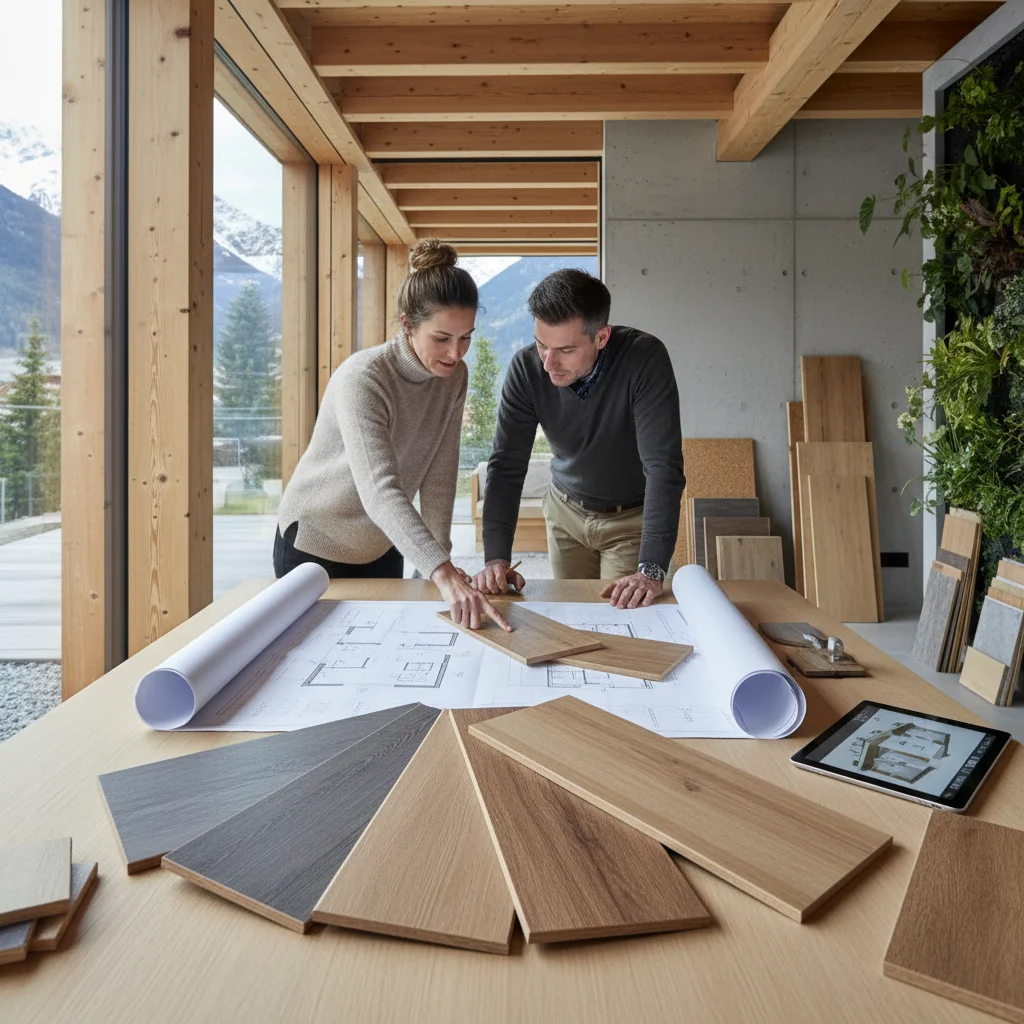
Not all WPC flooring suppliers in Austria meet real sustainability standards. The composite flooring market attracts operators who put speed before green practices. You need a clear selection process. Set benchmarks that separate real manufacturers from those hiding poor practices behind vague claims.
Core Certification Framework
Start with must-haves. ISO 9001 proves quality management systems exist. ISO 14001 shows environmental care. CE marking confirms European compliance—required for home installations across Austria. Ask for physical copies of these documents in your first talks. Real suppliers hand them over without delay.
Add FSC certification to your list. This checks that wood fiber sourcing follows responsible forestry rules. GreenGuard or GRS (Global Recycled Standard) credentials confirm low emissions and recycled content claims. For green building projects, pick suppliers with LEED and BREEAM acknowledgment. These certifications affect home renovation credits under Austria’s changing sustainability rules.
SGS testing reports and ASTM D7032 papers validate how the product performs. ICC-ES evaluation reports prove building code compliance. Get this paperwork early. Missing documents signal operational gaps or deliberate avoidance of outside checks.
Material Composition and Sourcing Transparency
Check where raw materials come from. High-quality Wood Plastic Composite flooring uses clean wood fiber—sawdust from certified mills or repurposed crop straw. Skip suppliers using industrial wood flour contaminated with chemicals, dyes, or heavy metals. These pollutants harm indoor air quality in homes.
Ask for wood-to-plastic ratios upfront. Quality suppliers share exact composition percentages. The plastic component must come from high-grade recycled sources with documented testing. Low-quality recycled plastics hurt durability and strength. Austrian home projects need products that handle decades of foot traffic without breaking down.
Sustainability goes beyond recycled content. Check Formaldehyde and benzene emission levels through outside testing. Ask for end-of-life recyclability papers. Suppliers aligned with circular economy principles design products for material recovery after use—not landfill disposal.
Operational Capacity and Performance Standards
Review factory credentials step by step. Production facilities should show several years of continuous operation. Look at equipment quality, tech capabilities, and ability to scale for large home developments. Minimum orders usually start at 500 meters. Delivery takes about 15 working days for standard specs.
Performance testing separates okay products from great ones. Ask for proof of UV radiation resistance, moisture resistance, and impact resistance testing. Austria’s climate puts materials through temperature swings and humidity changes. Fire resistance ratings matter for apartment building compliance. Anti-scratch and anti-aging test results predict long-term appearance.
Product warranties show manufacturer confidence. Terms over 15 years indicate strong quality control and material selection. Shorter warranty periods suggest doubt about durability claims.
Warning Signals and Value Assessment
Watch for red flags during supplier checks. Pricing well below market averages without clear reasons indicates material shortcuts or hidden costs. Reluctance to provide certification papers reveals non-compliance. Absence of outside audits from Intertek or similar organizations removes independent checks.
“Greenwashing” shows up often in composite flooring marketing. Vague sustainability claims without supporting data or certification mean nothing. Real WPC flooring suppliers provide recycled content papers, emissions testing results, and ongoing audit records.
Balance local and global options with care. Austrian suppliers offer shorter lead times, easier communication, and lower transportation emissions. Global manufacturers bring specialized know-how and broader production capacity. Neither choice guarantees sustainability—verification remains key regardless of origin.
1. Baier Floor(China)
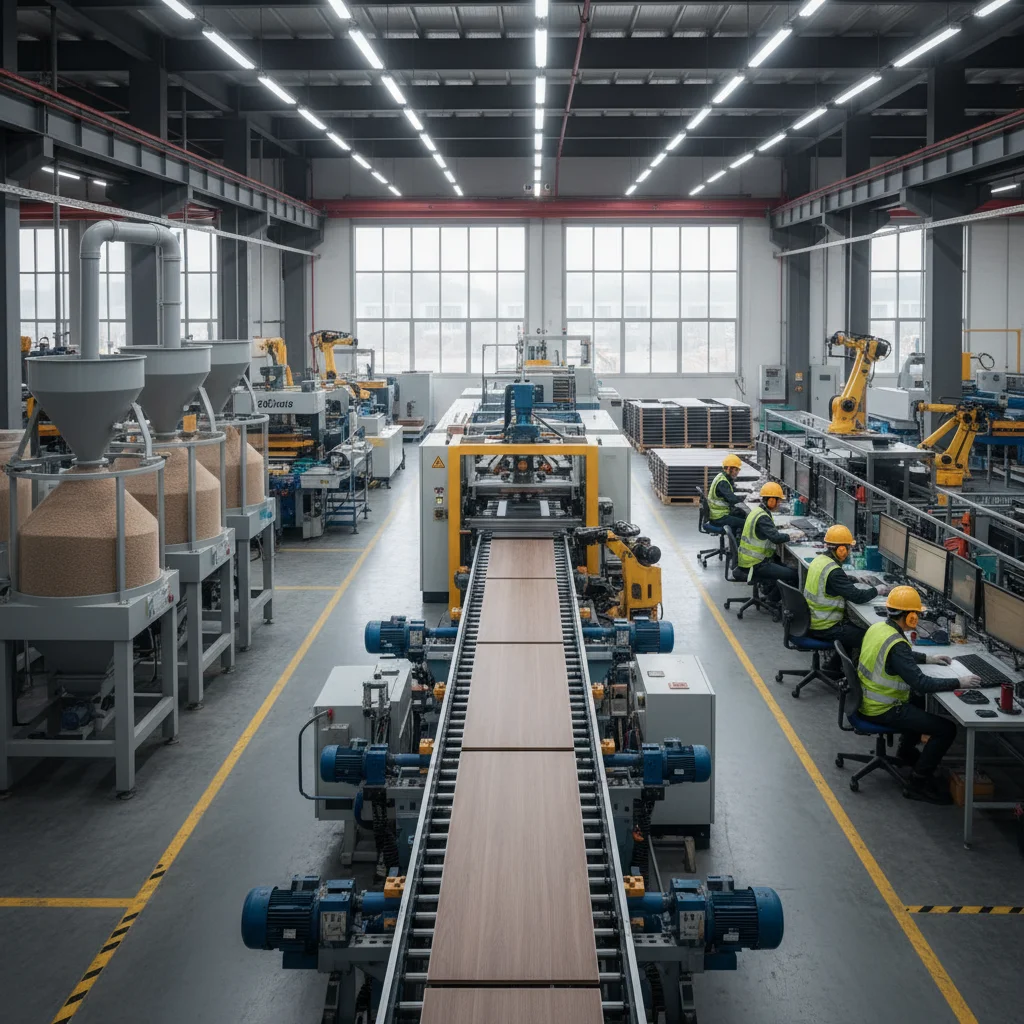
Baier Group started making hydraulic torque wrenches and industrial lifting equipment in September 2000. That built their reputation. They later moved into flooring production. A dedicated 300,000-square-meter facility in Hubei Province handles this work. This puts them in an odd spot among WPC flooring suppliers in Austria—they bring industrial manufacturing discipline to residential building materials.
Baier – Sustainable WPC Flooring Solutions for Austrian Homes
Baier is a leading sustainable WPC flooring supplier serving residential projects across Austria. The company manufactures high-performance wood-plastic composite (WPC) boards that combine eco-friendly materials, durability, and low maintenance, making them ideal for modern Austrian homes.
Sustainable Material Composition
65% recycled wood fibers from certified sources
35% high-density polyethylene (HDPE)
Non-toxic, low-VOC formulation, meeting European indoor air quality standards
This blend ensures boards resist moisture, UV exposure, and temperature fluctuations, while supporting sustainable construction goals in compliance with Austrian green building practices.
Residential Performance & Design
Suitable for indoor and outdoor residential areas, including terraces, balconies, and garden walkways
Available in hollow, solid, and capped co-extruded profiles
Multiple textures and natural wood-inspired colors for aesthetic integration into Austrian home interiors
Practical Advantages
Low maintenance: no staining, sanding, or annual sealing required
Long service life: up to 25-year performance warranty
Integrated indoor-outdoor visual consistency: interior flooring and exterior decking match in tone and texture
Project Support for Austria
Flexible board sizes and surface finishes tailored to residential layouts
Complete installation systems, including clips, fasteners, and trims
Direct manufacturer support for architects, developers, and installers
For Austrian homeowners and developers seeking sustainable, low-maintenance WPC flooring with long-term reliability, Baier offers a trusted solution backed by proven manufacturing and global export experience.
2. Trex (Global Brand – Available via European Distribution)
Trex owns 13% of the $8 billion global composite decking market. No other manufacturer comes close. You can see their lead in consumer searches, website visits, and social media activity. For WPC flooring suppliers in Austria, this matters. You’re not looking at a small European player. You’re checking if America’s top brand works for Austrian homes.
Their market lead tells a clear story. Every 1% shift from wood to composite materials brings in about $80 million in annual Trex sales. They’ve built their growth plan around this switch. Europe is their next big target. Composite use here runs far below U.S. levels in Austria, Germany, and nearby markets.
Trex hits sustainability goals head-on. They make decking and railing systems using 95% recycled wood and plastic. This isn’t marketing talk. It’s real material specs. The wood comes from reclaimed sawdust. Plastic comes from recycled shopping bags and packaging film. Austrian homeowners chasing green building credits? This recycled content meets most requirements. No extra paperwork needed.
You reach Trex through European distribution partners. They work in the UK, Germany, France, and Australia via regional networks. Austria falls under the German zone. Lead times and stock depend on your German distributor. Contact Trex’s European office for current Austrian supplier lists. Distribution partners change as they grow.
The timing looks good. Europe’s composite decking and railing market hit $754.8 million in 2024. By 2033? $2.2 billion. That’s a 13.1% growth rate each year. Austria grows with larger EU markets. Green consumer demand and tighter building rules push adoption higher yearly.
Germany leads European composite installations at 25% of regional volume in 2024. Austrian projects gain from being close. German installers know Trex systems well. Expertise crosses borders easily. German markets focus on premium durability. Austrian homeowners think the same way. Both value long-term performance over cheap upfront costs.
Capped composite is Trex’s biggest European earner. This category grabbed 61.46% market share in 2024. Largest product format in the region. Capped composites have a protective polymer shell over the wood-plastic core. You get top stain resistance, fade protection, and moisture defense. Austrian weather—temperature shifts, heavy rain sometimes—fits capped composite specs well.
European composite decking grows at 10.91% CAGR from 2025 to 2031. Trex aims to grab a big chunk of this growth. Their edge? Wood conversion targeting. They convince timber deck buyers to switch to composite. Marketing talks about no maintenance and lifetime cost benefits. Austrian home renovations respond to this. Homeowners sick of yearly deck staining and sealing see the appeal fast.
UK markets show strong city household adoption. France grows steadily through building code rules. These patterns hint at Austria’s path. Vienna and Salzburg push sustainability rules for home construction. Composite flooring gets help from regulations, not just buyer choice.
Here’s what matters for Austrian homes. Trex makes premium, low-maintenance decking and railing systems. Their products target outdoor use—decks, patios, porch flooring. Indoor wood plastic composite flooring? Not their thing. Got a 2026 Austrian project with outdoor spaces? Trex deserves a close look. Kitchen floors and bathrooms? Check other suppliers on this list.
Getting Trex takes extra steps. They don’t sell direct to consumers. They use regional partners. You contact distributors for quotes, lead times, and minimum orders. This means more communication than manufacturers who sell straight to Austrian contractors. Plan on 3-5 business days for quotes. Delivery runs 2-4 weeks based on product and German warehouse stock.
Trex prices at premium level. No public price lists. They don’t compete on low cost. Their pitch? Lifecycle economics. Higher cost upfront, zero maintenance, 25+ year warranties. Austrian homeowners comparing composite quotes? Expect Trex to run 15-25% above mid-tier WPC flooring suppliers in Austria. That premium gets you brand trust and proven performance in European weather.
Sustainability proof comes built-in. Trex publishes full environmental product statements. Recycled content shows in product specs, not vague claims. Third-party test results for slip resistance, mold resistance, and structural strength? On their website. Austrian projects needing LEED or BREEAM papers? Trex supplies them without asking twice.
The “global brand via European distribution” setup has upsides and downsides. Upsides: proven performance across millions of installs, strong technical support, solid warranty terms. Downsides: longer communication chains, possible stock shortages during peak European building season, hard to customize orders for small Austrian home projects.
For 2026 Austrian outdoor projects: Trex brings top expertise and proven green credentials. Their 95% recycled content meets green building needs. European distribution now covers Austria through German partners. Growth forecasts show more availability and installer knowledge.
Know the limits though. Trex does exterior composite decking, not interior floors. Your Austrian project mix decides if they fit. Roof terraces, balconies, garden decks? Put Trex on your shortlist. Living rooms and bedrooms? Go to suppliers doing indoor WPC flooring.
For outdoor sustainable composite work in Austrian homes, Trex’s market lead and European growth make them worth serious thought. Just check your distributor’s stock and lead times before you lock in 2026 project dates.
3. TimberTech (Europe-Available WPC Systems)
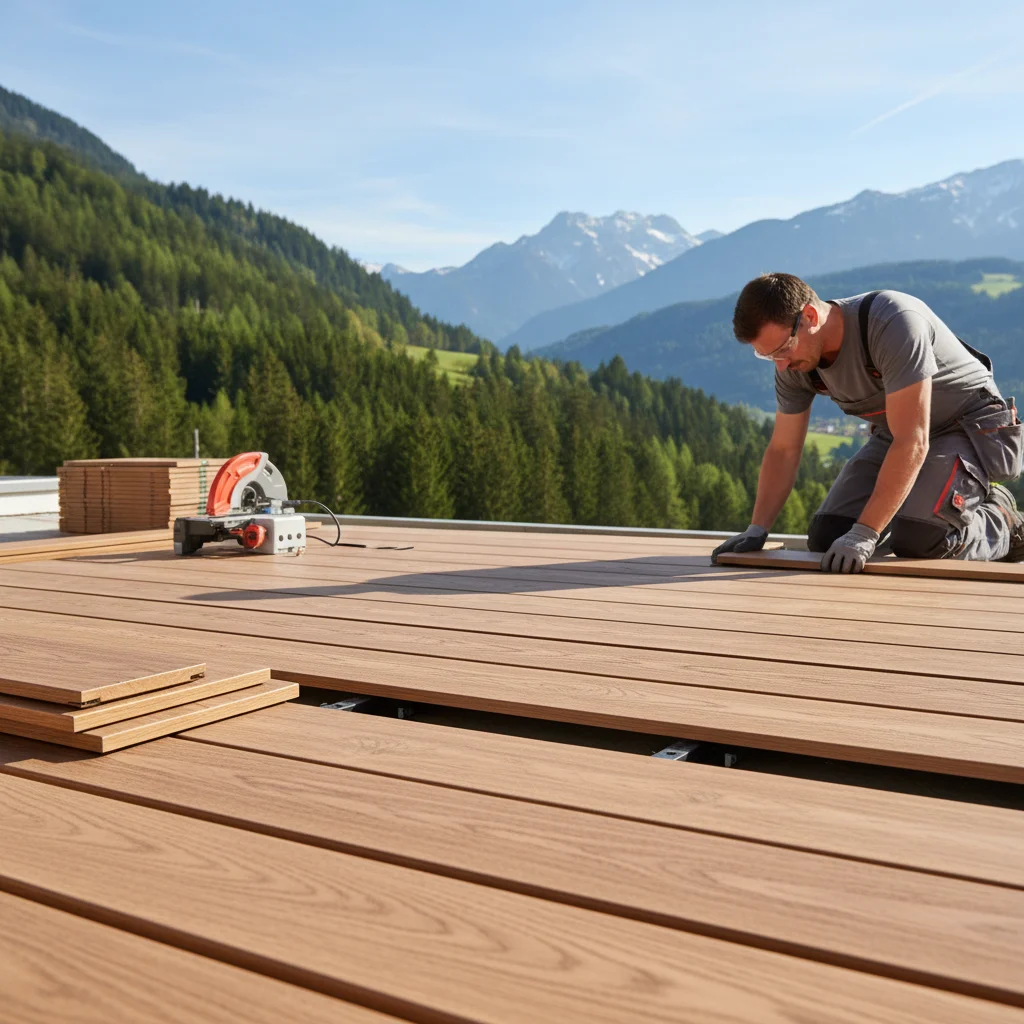
The AZEK Company launched TimberTech in 1997 with one focus: composite decking that looks like real wood. Twenty-seven years later, they’ve perfected polymer-capping technology. This makes wood plastic composite flooring last decades without maintenance headaches. For WPC flooring suppliers in Austria, TimberTech brings something different. European offices. Nordic climate engineering. Recycled content pushing 80% in specific product lines.
Here’s what sets them apart from typical composite makers. Most suppliers cap only the visible board surface. Then they call it done. TimberTech runs their polymer shell on all four sides, including the grooves. This matters in Austrian climates. Moisture creeps into exposed edges during freeze-thaw cycles. Mold finds gaps in poorly-sealed composites. TimberTech’s SmartCap™ technology blocks both problems before they start.
Recycled content varies across their collections. PRO and EDGE lines hit 80% recycled materials. The premium AZEK line drops to 50%. They prioritize performance over maximum recycled content here. Terrain+ collections reach about 85% recycled content through better material recovery. All wood fiber carries FSC certification. Plastic comes from post-consumer and post-industrial sources. Chain-of-custody tracking is documented.
Austrian residential projects get five main collection choices:
- Legacy – Hand-scraped surface mimics artisan hardwood. Works for homeowners wanting indoor flooring aesthetics on outdoor decks.
- Tropical – Multi-color streaking creates sun-soaked richness. Embossed texture follows real wood grain patterns down to the knot details.
- Terrain/Terrain+ – Earthy tones match sanded white oak and walnut finishes. Scalloped board profiles cut weight by 15% versus solid composites. Easier handling during setup.
- TwinFinish – Double-sided boards (like the Piazza range) give you two color options per plank. Flip it during setup for design flexibility.
- ReliaBoard – Budget-friendly entry point. Lower recycled content and simpler capping. But it still beats traditional timber on maintenance needs.
Board dimensions show unusual flexibility. Most WPC flooring suppliers in Austria stick to one or two width standards. TimberTech offers narrow (89mm), standard (140mm), and wide (184mm) profiles. You can mix widths in the same setup. This creates visual interest that uniform-width decking can’t match. Standard lengths run 12 feet. Custom lengths are available through European distribution partners for large residential projects.
Heat retention separates TimberTech from cheaper composites. Their polymer formula reflects more sunlight than standard WPC blends. Surface temperatures run up to 30°C cooler than competing products. This is after two-plus hours of direct sun exposure. Dark colors still get hot—physics doesn’t change. But the gap between TimberTech and alternatives becomes obvious on Vienna summer afternoons. Decking that’s safe for bare feet matters to Austrian families with kids.
The warranty structure reveals manufacturing confidence. Residential setups get 25-year limited coverage against fade and stain damage. Commercial projects qualify for the same terms under higher traffic conditions. Some premium lines carry 50-year warranties with proper setup. Compare this to 10-15 year terms from mid-tier suppliers. TimberTech’s warranty length reflects real lifecycle testing, not marketing hype.
European compliance runs deep. TimberTech holds CTB WPC certification. This validates both quality control and performance claims through independent testing. FSC wood sourcing meets EU timber regulations without extra steps. Their parent company (AZEK) appears on the Dow Jones Sustainability Index. PEFC certification covers forest management practices. Austrian projects targeting LEED or BREEAM credits? TimberTech’s documentation package handles the paperwork. No custom requests needed.
Durability testing addresses Nordic climate challenges head-on. Products undergo UV exposure cycles. These mimic Austrian alpine sun intensity. Moisture resistance testing includes freeze-thaw repetition. Critical for homes in Innsbruck or Salzburg mountain areas. Scratch resistance matters for high-traffic spaces. Rot and insect resistance eliminates the wood-deck problems Austrian homeowners know too well.
European distribution gives TimberTech an edge over pure U.S. brands. They run dedicated European offices. Stock moves through regional warehouses in Germany and nearby markets. Lead times for Austrian residential projects? Typically 2-3 weeks versus 6-8 weeks for trans-Atlantic shipments. Setup support comes from installers who’ve worked with the product across similar Central European climates.
Pricing sits at premium levels. TimberTech positions above Trex in most European markets. Expect costs running 20-30% higher than mid-range WPC suppliers in Austria. You’re paying for the four-sided capping. Higher recycled content verification. Longer warranty terms. Lifecycle cost calculations favor TimberTech with zero maintenance over 25 years. Tight budget? ReliaBoard brings TimberTech quality at accessible entry pricing.
For 2026 Austrian outdoor home projects: TimberTech delivers proven sustainable WPC flooring with European logistics backing. Their recycled content credentials satisfy green building needs. Nordic climate engineering means products work in Austrian temperature swings. Multi-width options and realistic wood aesthetics solve design challenges cheap composites can’t handle.
Know the trade-offs. Premium pricing rules out some budget-conscious homeowners. Indoor flooring isn’t TimberTech’s specialty. Stick to outdoor decks, patios, and balconies. Color-matching across multiple board batches needs careful planning with your distributor.
TimberTech belongs on every Austrian residential specifier’s shortlist for outdoor composite work. Their mix of sustainability proof, European presence, and climate-smart engineering makes them a leading choice among WPC flooring suppliers in Austria for 2026 projects.
4. Scheucher Parkett (Austria)
Scheucher Holzindustrie GmbH started as a sawmill in 1920. This Styrian business has run for 104 years. It grew into Austria’s top engineered hardwood maker. They’re not a WPC Flooring Supplier—they make parquet. But they show up in WPC flooring suppliers in Austria talks. Makes sense. Homeowners compare sustainable flooring. They look at WPC versus premium wood. Scheucher is the high-end timber pick.
The facility is in Mettersdorf am Saßbach, Styria. One spot does it all—product design, making, sales, shipping. Top WPC makers work the same way. The difference? Scheucher uses 100% real wood instead of wood-plastic mix. Their 250 workers make millions of square meters each year. By 2000, they hit 1 million m² capacity in engineered floors. They’ve expanded several times since then. Output keeps growing.
New products drive Scheucher’s growth. They launched NOVOLOC in 2002—a click-lock setup for parquet. Sound familiar? WPC suppliers use similar systems. Stairbox came in 2012. It made stair installs easier. RELOC showed up in 2015 with faster, no-tool floor setup. MULTIflor NOVOLOC® 5G arrived in 2016. By 2022, PUROtec brought oiled surfaces that fight water and stains. No factory finishes needed.
Chevron flooring shows their skill. Scheucher made the world’s first simple Chevron install. Old Chevron patterns need exact cuts and skilled workers. Scheucher’s system works for home projects. Austrian homes want high-end looks without craftsman prices. This fix opened doors.
Their green credentials beat most WPC claims. Scheucher put in Austria’s biggest solar roof in 2018. They run on 100% solar energy. WPC makers ship materials across the world. Scheucher gets wood close by. PEFC papers prove responsible forest work. They got EU Ecolabel status. One of the first parquet makers in Europe to do so. Zero emissions. Smart resource use. These aren’t just marketing words. They’re checked standards.
BILAflor® and MULTIflor lines lead their home range. BILAflor® 500, 1000, 1200, and 1500 give different thicknesses and wood types. MULTIflor 700 and NOVOLOC® 5G work for modern owners who want fast setup. The Elevation line brings top looks—wide planks, natural oil finish, European oak. Steirer Parkett Sport handles busy commercial spots. Also works for active homes.
Scheucher costs more than WPC options. Expect prices 40-60% higher than premium WPC flooring. You’re buying real European oak or ash. Engineered build gives stability WPC can’t match. You can refinish parquet. This gives it a 50+ year life versus WPC’s 25-year guarantees. The math shifts. Your floor lasts through two WPC swaps.
For 2026 Austrian home projects: Scheucher offers the local, solar-run, premium wood pick over composite floors. Tight budget renovations? Scheucher won’t work. But owners who want real materials, local making, and verified zero-emission work? Check them out.
The pick isn’t Scheucher versus WPC. It’s knowing where real wood wins—and where it doesn’t. Bathrooms with moisture? WPC works better. Living rooms, bedrooms, dining rooms? Places where looks and refinishing count? Scheucher’s parquet wins. Austrian projects using both materials get the best results in different rooms.
Key Insights for 2026
Sustainable building materials keep growing. Mixed economic signals won’t stop this. The WPC flooring suppliers in Austria market connects three major trends: moderate GDP growth across Europe, rising home renovation spending, and tougher environmental rules.
European construction markets face opposing forces. The eurozone GDP growth forecast sits at 1.3-1.4%. This looks modest. But different sectors tell different stories. Retail and financial services sectors show 6.7% growth potential. These sectors drive commercial fit-outs. They need sustainable flooring. Austrian home projects gain from this activity. Supplier networks and installer skills flow between sectors.
Inflation drops to 3.1% worldwide. This creates better buying conditions. Raw material costs for wood plastic composite flooring have leveled off. Recycled plastics, wood fiber, and polymer resins stabilized after 2023-2024 price swings. Planning a 2026 renovation? You can lock in material quotes now. Price changes pose less risk than in previous years. Suppliers report normal lead times again: 2-3 weeks for European stock, 4-6 weeks for custom orders.
US market forces shape what’s available in Austria through two paths. First, American suppliers like Trex and TimberTech push into Europe. They want growth beyond their saturated home markets. US GDP growth of 2.0-2.6% drives them to faster-growing regions. Austria looks more attractive now. Second, AI adoption speeds up business investment in construction tech. WPC flooring suppliers in Austria use American software platforms. This brings better online configurators, faster quote systems, and improved package tracking.
China’s 4.5-4.6% growth hits Austrian WPC markets hard. Chinese makers like Baier target European exports more. Domestic construction slows there. Property sector problems push them toward stable Western markets. Austrian projects get more competitive pricing. But you need stronger checks on sustainability certifications.
The 35% recession chance shifts how people buy. Smart Austrian homeowners and contractors break 2026 projects into stages. Lock in essential flooring during Q1-Q2. Supplier capacity stays strong then. Installer availability remains high. Hold off on secondary spaces if the economy weakens in H2. WPC flooring fits phased work well. Click-lock systems let you expand room-by-room. No visible transitions show.
Regional differences create chances. South Asia’s 5.6% growth and Africa’s 4.0% expansion don’t touch Austrian home markets much. But they draw manufacturing capacity to those regions. European WPC flooring suppliers with Austrian operations win here. Proximity helps. Shorter transport routes matter. Local production shields Austrian projects from global shipping problems like those in 2022-2023.
Policy moves beat headline numbers. China’s fiscal stimulus and US tax cuts affect raw material costs. They shape supplier financial health. Austrian projects gain through better manufacturer cash flow. R&D investment in sustainable formulas increases. Watch for new WPC products in Q1 2026. Suppliers with solid finances launch innovations during moderate-growth times.
Tariff risks hit budget renovations hardest. US trade fights and global uncertainty could slap unexpected duties on imported WPC materials. Austrian homeowners buying from non-EU suppliers face this risk. The fix: Choose European-made options like Scheucher’s parquet alternative. Or pick global brands with EU factories, like TimberTech’s German warehouses.
The 2026 Austrian WPC market rewards planning over bargain hunting. Lock in supplier relationships now. Check sustainability credentials before economic stress tempts corner-cutting. Break projects into phases. Match this to your comfort with recession risks. Pick WPC flooring suppliers in Austria with strong European networks. They’ll handle global uncertainty better than import-only operations.
Conclusion

Austria’s residential WPC flooring market in 2026 rewards smart choices. The suppliers we’ve covered here—from Baier’s innovation-driven manufacturing to Scheucher’s local Austrian expertise—offer more than product catalogs. They’re partners in creating durable, sustainable living spaces. These floors perform across alpine winters and humid summers alike.
Your next move? Clarify your project’s non-negotiables first. Is fire resistance critical for your apartment building? Does your client need verified carbon-neutral production? Match these priorities against what suppliers can deliver. Don’t just chase the lowest quote.
Request physical samples from at least two WPC flooring suppliers in Austria. Compare texture, weight, and finish quality in person. Digital swatches never tell the full story.
The real edge in 2026 isn’t just finding sustainable WPC flooring suppliers in Austria. It’s partnering with those whose product plans align with changing EU rules and homeowner needs. Choose suppliers who treat sustainability as an engineering challenge, not a marketing tactic. Your residential projects will stand the test of both time and scrutiny.