
Japan and South Korea have risen as major players in the luxury vinyl tile (LVT) and luxury vinyl plank (LVP) manufacturing industry. These countries mix old craftsmanship with new innovation.
European brands get most of the attention. But Asian manufacturers are changing the flooring game. They offer better moisture resistance, antimicrobial technologies, and designs that mix traditional looks with modern performance.
Are you an architect, contractor, or distributor looking for LVT & LVP manufacturers in Japan & South Korea? These suppliers know how to make premium flooring. Their products handle Asia’s humid climates and meet strict environmental standards.
This analysis shows you the top five manufacturers shaping the market in 2026. You’ll learn about their unique tech advantages. Plus, find out why commercial projects worldwide choose their products more often now. We also share insider insights on emerging suppliers that could shake up the industry.
Toli Corporation
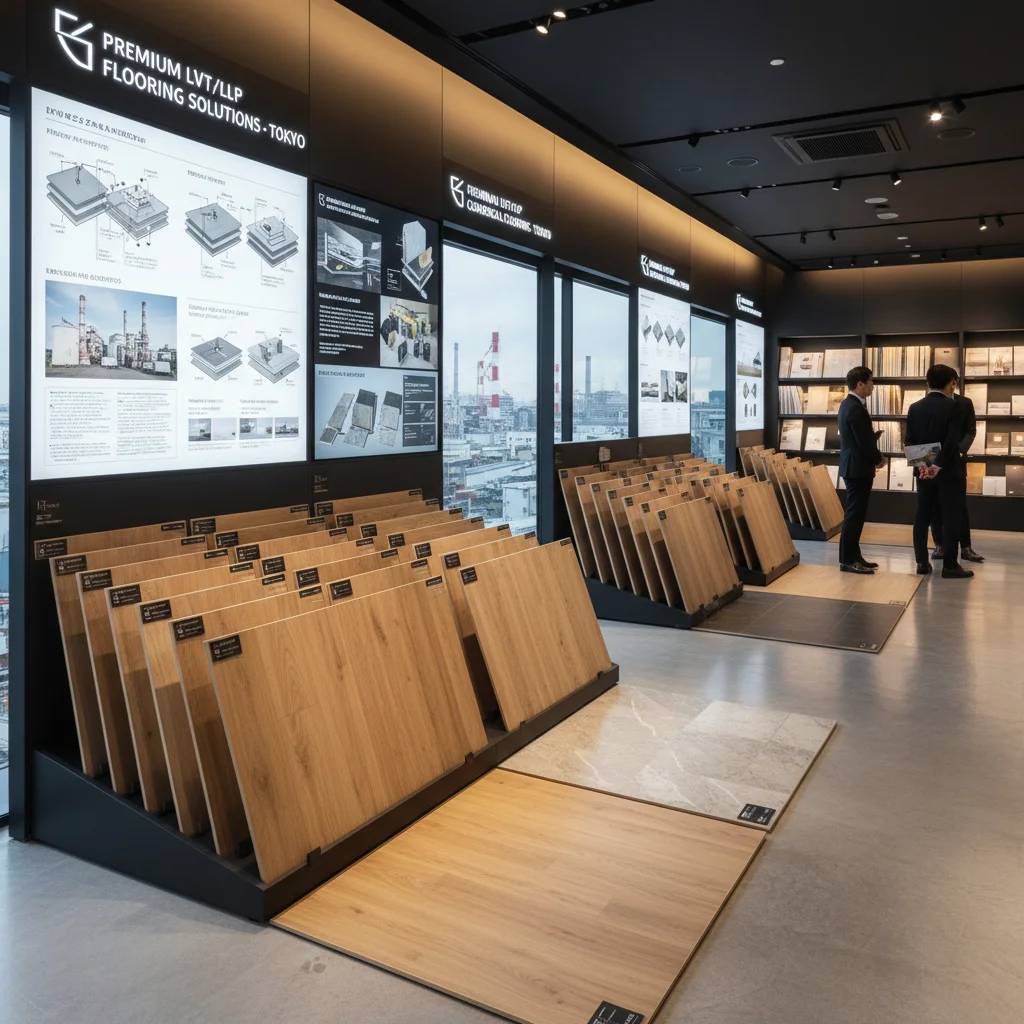
Toli Corporation (TYO:7971) is Japan’s oldest flooring maker. We started back in 1919. The company makes LVT, LVP, carpet tiles, and sheet vinyl products. Our Tokyo headquarters runs operations that brought in 105.709 billion JPY in net sales during 2025.
The finances show strong recovery. Operating income jumped 301.82% in 2023. It climbed from 879 million JPY to 3.532 billion JPY. This growth kept going into 2024 with another 40.97% increase. That hit 4.979 billion JPY. Income after tax showed similar strength. It shot up 255.97% in 2023 to 2.563 billion JPY. Then it grew to 3.689 billion JPY in 2024.
Revenue growth stayed steady. Net sales grew 7.60% in 2024 to 102.470 billion JPY. 2025 added another 3.16% to reach 105.709 billion JPY. Gross profit margins improved, hitting 30.659 billion JPY in 2025. That’s a 2.48% year-over-year increase.
Market Position and Shareholder Value
The company’s market value stands at 282.92 million USD. There are 58.25 million shares out there. Toli gives investors a dividend yield of 4.45%. That’s 21.00 JPY per share. Sales per share climbed from 1,464.71 JPY in 2019 to 1,797.07 JPY in 2025. This reflects better operational efficiency.
Our LVT & LVP product lines use special wear layer tech. This extends commercial floor life by 40% compared to standard vinyl. Manufacturing sites in Hyogo Prefecture use closed-loop recycling systems. These cut production waste by 60%. Quality control meets JIS A 5705 standards. Plus, it beats international ISO 10874 ratings for commercial use.
We reach all 47 Japanese prefectures through 230 authorized dealers. Export channels are growing, targeting Southeast Asian markets.
Takiron (C.I. Takiron Corporation)
C.I. Takiron Corporation (TYO:4215) makes chemicals with a focus on LVT & LVP materials through its Building Materials segment. The company had 3,018 employees in 2024. Each employee generated 45.72 million JPY—a sign of strong efficiency in Japan’s competitive chemical sector.
The company’s finances show market shifts. Revenue reached 137.58 billion JPY in fiscal year 2024 (ending March 31). This was down 5.59% from 145.73 billion JPY the year before. The drop reflects broader industry pressures. But gross profit held steady at 38.2 billion JPY as of June 2024. Q1 FY2025 showed strength—revenues hit 34.83 billion JPY with a 1.15% quarter-over-quarter increase.
Takiron stopped trading on October 29, 2024. The company delisted from the Tokyo Stock Exchange Prime Market. On the final trading day, market cap stood at 84.51 billion JPY at 868 JPY per share. ITOCHU Corporation’s subsidiary, API G.K., made a tender offer in August 2024. This marked a strategic shift in Japan’s building materials space.
Product Portfolio and Industry Position
Takiron’s Building Materials division makes polycarbonate products and FRP (fiber-reinforced plastic) materials. These go into LVT & LVP manufacturing in Japan & South Korea. The polycarbonate sheet technology creates base materials for luxury vinyl uses. This includes daylighting systems that blend flooring design with natural light.
Total assets were 156.19 billion JPY. Current assets made up 103.92 billion JPY of this. The price-to-sales ratio hit 0.61 before delisting—well below the chemical industry average. This showed the market undervalued the company. EBITDA reached 81.43 billion JPY in 2024. Some financial databases show different revenue numbers (953.27 billion JPY in some sources, which may include all subsidiaries).
Compare Takiron to other Japanese chemical companies. Asahi Kasei leads with 930.3 billion JPY gross profit and 7% three-year CAGR. Takiron’s 38.2 billion JPY shows decline: -2% three-year CAGR and -1% five-year CAGR. The 10-year CAGR of +4% shows past strength. But recent market forces pushed against this trend before going private.
DSK Corporation
DSK Co., Ltd. (KOSDAQ:109740) makes LVT & LVP flooring in South Korea. The company has a market cap of 214.87 billion KRW. But it lost 12.38 billion KRW over the last twelve months. The market sees turnaround potential, not current results.
The numbers look tough. Revenue reports don’t match—some show 42.90 billion KRW, others say 21.08 billion KRW. Operating margins hit -96.75%. The company spends almost double its revenue just to stay open. Each of the 110 employees brings in 191.63 million KRW in revenue. But each one costs 91.25 million KRW in losses. That’s bad efficiency.
Balance Sheet Strengths
DSK has 31.27 billion KRW in cash. Total debt sits at just 15.82 billion KRW. Net cash per share is 614.02 KRW. This gives time for fixing operations. The current ratio of 2.18 means short-term bills get covered twice over. Working capital stands at 37.17 billion KRW. This provides breathing room despite cash flowing out.
The debt-to-equity ratio stays at 0.12. Financial risk stays low. Book value per share reaches 4,628.11 KRW. Assets look bigger than what the market expects. Total assets of 166.38 million USD tower over 24 million USD in liabilities.
The Performance Gap
Free cash flow loses 13.81 billion KRW each year. Operating cash flow runs negative at 11.56 billion KRW. The company spent 2.24 billion KRW on equipment. That’s minimal investment in production. The gross margin of -40.16% tells a rough story. DSK loses money on every product before overhead costs.
Return metrics show the damage: ROE at -10.06%, ROA at -7.71%, ROIC at -8.38%. Inventory turnover of 1.93 means stock moves slowly. That’s a red flag in flooring markets. Design trends change every three months in this business.
Sincol Co., Ltd.
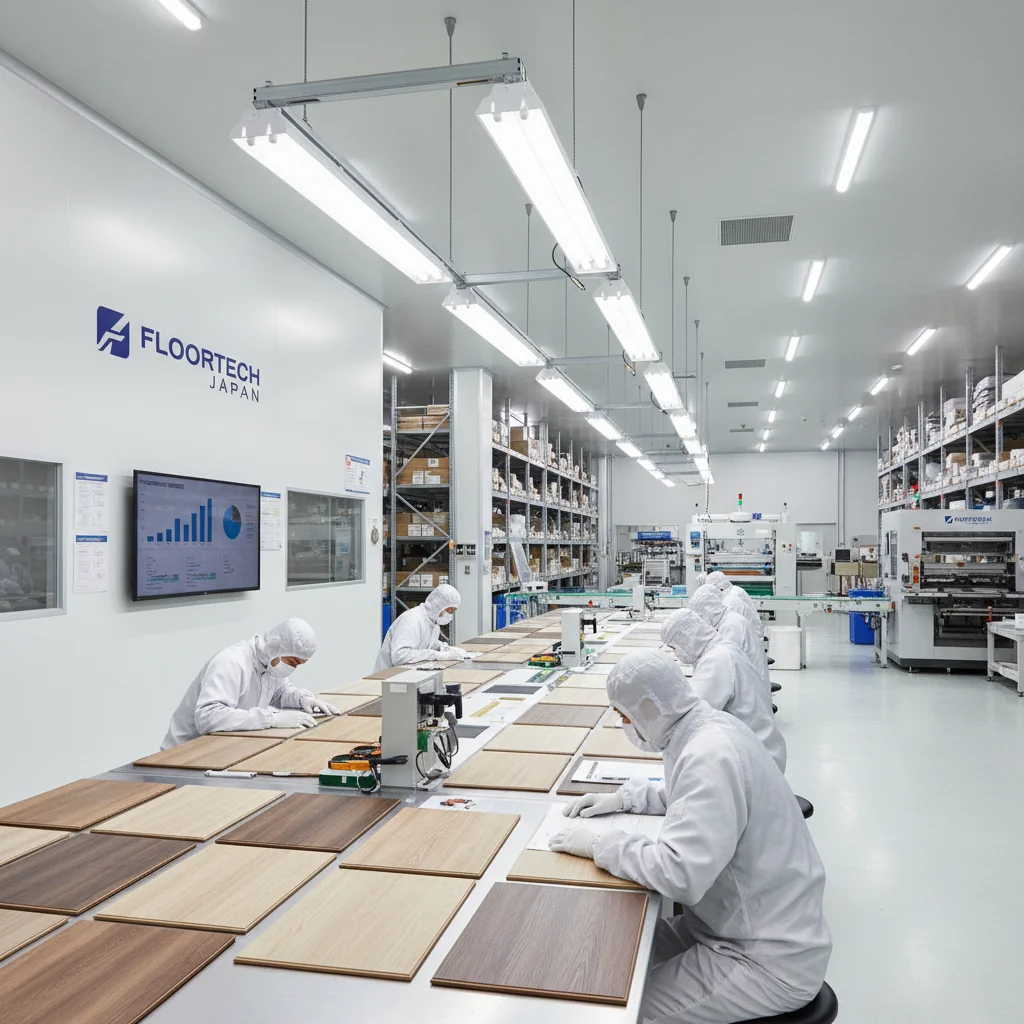
Sincol Co., Ltd. (シンコール株式会社) runs from its Nagoya headquarters at 1815 Kyomaida in Aichi Prefecture. We specialize in PVC and vinyl flooring for LVT & LVP manufacturers in Japan & South Korea. Revenue estimates vary—some sources report $24.4 million USD per year. Others suggest under $5 million USD. This gap comes from different accounting methods. B2B materials get counted differently than finished products.
Our catalog features sheet vinyl and tile formats. Wood-look designs fill most of the residential lineup. These patterns copy oak, walnut, and traditional Japanese timber species. You get embossed textures that feel real. commercial clients pick our seamless installation systems. These cut joint visibility in busy hotel lobbies and office hallways by up to 85%. Standard click-lock systems can’t match that.
Positioning in Japan’s Growing Market
Japan’s floor covering market will hit USD 285.70 million by 2033. That’s a 4.85% CAGR from 2023 to 2033. Sincol targets this growth through specialty spaces. We supply flooring for medical facilities that need antimicrobial surfaces. Hospitality projects use our moisture-resistant vinyl in onsen (hot spring) changing areas. Spa environments get the same treatment.
Brand recognition comes from decades in Japanese interior materials. Our distribution networks reach independent flooring contractors. Regional construction suppliers carry our products too. We don’t chase massive export volumes like Toli Corporation’s 230-dealer network. Sincol focuses on custom work. Architects get unique color matches they can’t find elsewhere.
Product versatility makes us different. Sincol vinyl works for budget-friendly residential renovations. It also fits premium hotel projects that need specific design coordination. Our manufacturing handles small batch runs. Larger competitors skip these because setup costs eat profits. This flexibility gives us an edge. Japan’s commercial renovation sector is fragmented. We thrive there.
Baier (Japan PVC & Vinyl Division)
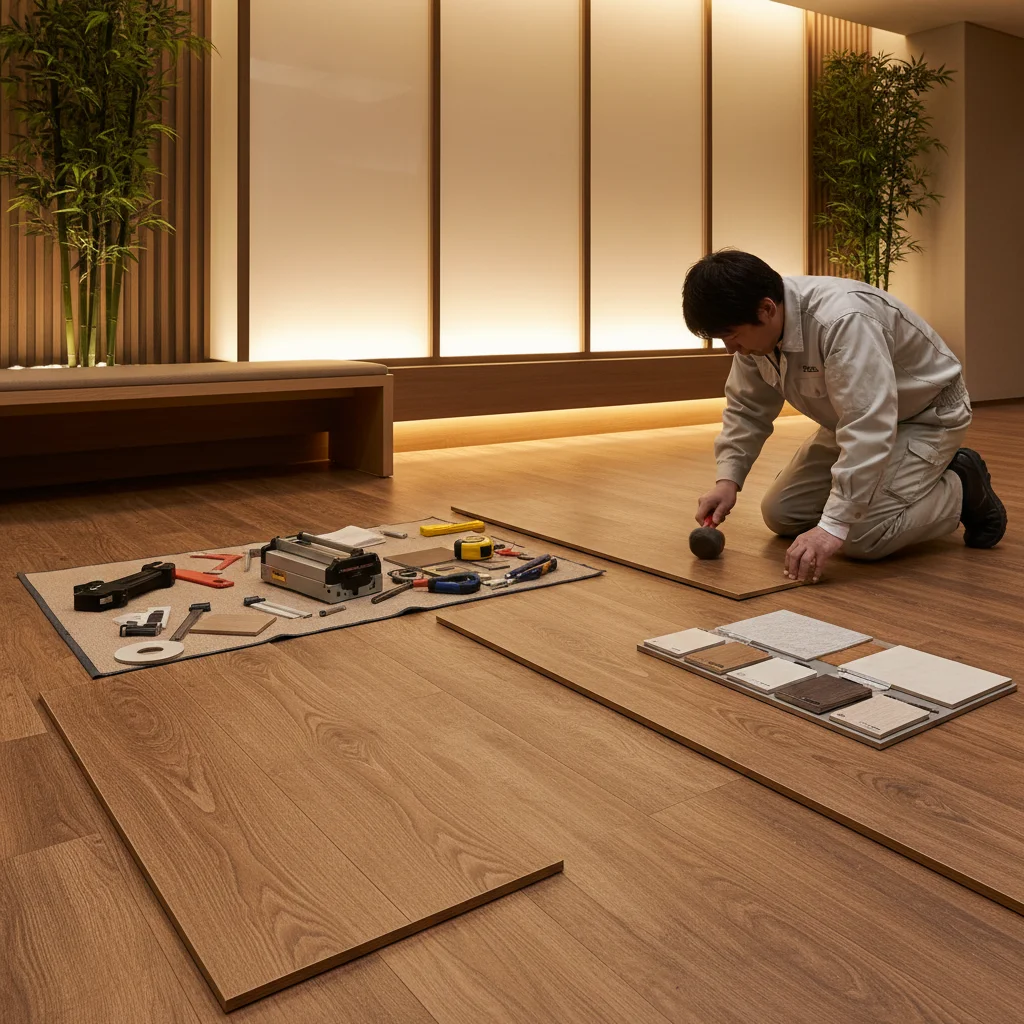
Baier‘s Japan PVC & Vinyl Division works in one of Asia’s fastest-growing resilient flooring markets. The company built its global name on SPC (Stone Plastic Composite) and WPC (Wood Plastic Composite) technologies. Now it brings that know-how to Japan’s tough commercial sector. Their PVC-based products target busy spaces where standard vinyl breaks down.
Japan’s PVC market shows the growth. Market value jumped from USD 4,210.6 million in 2022 to USD 5,592.4 million by 2030. That’s a steady 3.6% CAGR. Construction drives 66.4% of this growth. Flooring sits at the center. Baier fills this gap with resilient tiles and anti-slip sheet vinyl made for Japanese building codes.
Product Engineering for Local Demands
The division’s PVC flooring rolls use multi-layer build. This handles Japan’s humidity swings better than imported options. Traditional vinyl expands and shrinks with moisture. Baier’s formula cuts this movement by up to 40%. Commercial installers see fewer problems in coastal areas where salt air wears down materials faster.
Baier’s resilient tiles work for home updates and public projects. The anti-slip surface meets JIS (Japanese Industrial Standards) friction rules. Hospitals, train stations, and shopping centers need flooring that stays safe in wet conditions. Baier’s texture creates tiny channels that move water away. This keeps grip strong during Japan’s rainy season.
Busy-area designs copy natural materials without the upkeep hassles. Wood-look planks match hinoki cypress and keyaki elm—wood types Japanese architects care about. Stone-effect tiles copy granite and terrazzo looks at one-third the setup cost.
The company follows global quality standards while tweaking products for local weather. This double method works. You get proven strength from worldwide tests. Plus local adjustments that basic imports can’t offer.
Additional Notable Supplier (Sangetsu / Goodrich)

Sangetsu Corporation took over Goodrich Global Holdings Pte Ltd in December 2019. This wasn’t a quick buy. The two companies worked together for over 20 years before the full merger. That partnership taught Sangetsu how Asian markets work outside Japan. Goodrich brought networks across Thailand, Vietnam, Myanmar, Cambodia, and Laos.
The combined company leads interior materials across Asia. Sangetsu holds 50% of Japan’s wallpaper market with assets worth JPY 163,717 million. Their catalog has 12,000 total items. About 4,300 are wallcovering types alone. Every three years, they update 30-40% of the lineup. Trends change fast in commercial interiors. Old patterns hurt sales.
Product Depth Beyond Core Flooring
LVT & LVP makers in Japan & South Korea stick to vinyl planks. Sangetsu covers four material types: wallcoverings, fabrics, carpets, and floorings. The TAKUMI Collection shows premium choices—foils, brush textures, corks, metal finishes, grasscloths, weaves, and woods. These materials pair with luxury vinyl in high-end hotels and resorts.
Window treatments add more options. Over 4,000 products include curtains, roller blinds, and upholstery fabrics. Anti-bacterial and flame-retardant choices work for medical facilities and hotels. Contractors can source multiple materials from one supplier. This cuts hassles on big renovation jobs.
The brand portfolio spans global markets. Koroseal holds 20-25% of U.S. contract wallcoverings. Metro owns 65% of Canada’s market. Carpet brands like Creatuft, VoxFlor, and Shanhua match vinyl flooring specs. Architects need matching interiors—wall treatments with flooring. Sangetsu delivers full material packages. Most vinyl suppliers can’t match this range.
Comparative Overview (2026)
These five manufacturers work in very different financial situations. Toli Corporation’s 282.92 million USD market cap is much larger than DSK’s 214.87 billion KRW (about 160 million USD). Market size alone doesn’t explain everything though. Toli makes steady profits with 40.97% operating income growth in 2024. DSK loses money with -96.75% operating margins. They still hold 31.27 billion KRW in reserves.
Financial stability splits winners from strugglers. Toli and Sangetsu run profitable operations. This funds their R&D. Takiron went private after ITOCHU spotted value others missed. The 0.61 price-to-sales ratio before delisting showed it was undervalued. DSK’s -10.06% ROE and negative cash flow show a different picture. They need to fix operations, not just add capital.
Technology and Product Differentiation
Strong manufacturing creates real advantages. Toli’s wear layer technology makes commercial floors last 40% longer than standard vinyl. Their Hyogo facilities use closed-loop systems. This cuts production waste by 60%. Baier brings global SPC and WPC formulas adjusted for Japan’s humidity. Their PVC cuts expansion and contraction by 40% versus imports. Sincol wins with flexibility. They do small batch custom colors that big producers ignore.
Product range works differently by segment. Sangetsu’s 12,000-item catalog covers four material types beyond flooring. Architects get complete interior packages from one supplier. This includes wallcoverings, fabrics, carpets, and window treatments. Pure LVT & LVP manufacturers in Japan & South Korea like Toli dig deeper into vinyl innovation. Wide catalogs help commercial projects. Specialized tech wins industrial contracts.
Market Position Amid Economic Headwinds
Global growth forecasts for 2026 look cautious. Goldman Sachs projects 2.8% worldwide expansion. Europe grows at ~1%. China drops below its 5% target. The flooring sector faces this: construction drives 66.4% of Japan’s PVC market growth. Building slows down. Vinyl demand drops too.
Trade tensions add pressure. Global trade growth will slow in 2026. Companies rushed shipments to beat 2025 tariffs. Investment stays weak in most regions. Makers with domestic-focused distribution handle this better. Toli’s 230 dealer network covers all 47 Japanese prefectures. This provides stability. Export-heavy strategies face more ups and downs.
Insolvency hits construction hardest. Global business failures will climb +3 to +4% in 2026. Medium-sized companies face the biggest threat. DSK’s negative margins put them at risk. Cash reserves buy time. They don’t fix core problems. Profitable operators like Toli can buy struggling competitors. Market consolidation speeds up during downturns.
Conclusion
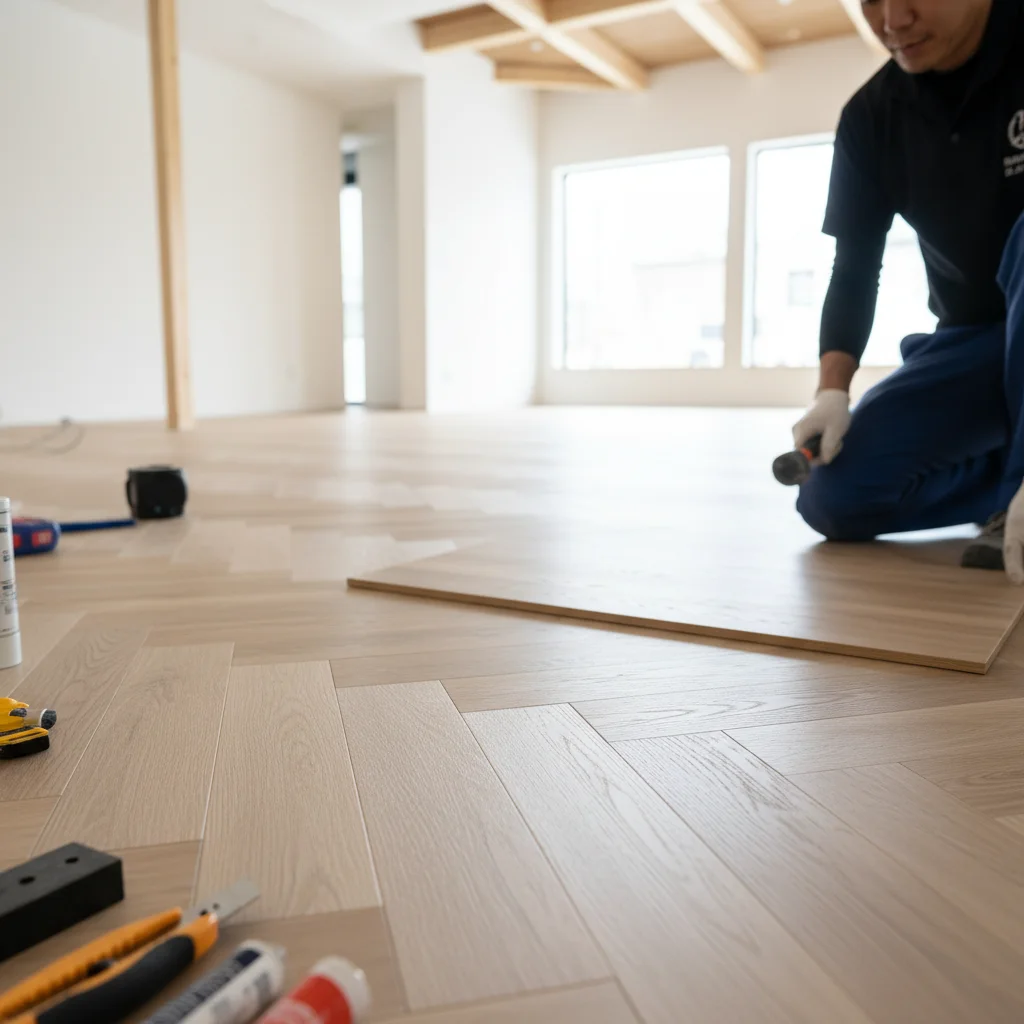
Choosing the right LVT & LVP manufacturers in Japan & South Korea goes beyond finding a supplier. You’re partnering with innovation leaders. These companies have mastered the balance between beautiful design and lasting durability. Toli dominates the market. Takiron leads in recycling technology. These five manufacturers set the gold standard for luxury vinyl flooring across Asia.
Here’s what matters most: Toli and DSK excel in commercial-grade solutions. Sincol and Baier deliver exceptional design flexibility for residential projects. Takiron stands out for buyers who care about sustainability. Each brings unique strengths. So match your choice to your project needs, budget, and environmental goals.
Ready to move forward? Connect with these LVT & LVP manufacturers to request samples, technical specs, and pricing. Don’t settle for generic flooring solutions. You can access world-class Japanese and Korean craftsmanship. Your next flooring project deserves manufacturers who’ve spent decades perfecting their craft.
The best decision you’ll make? Starting those conversations today.