
2026 Canadian Laminate Flooring Manufacturer Buying Guide
Choosing the right laminate flooring manufacturer in Canada can make or break your project’s quality, cost, and long-term performance. This guide outlines 7 key evaluation criteria—manufacturer reputation, product durability, water and climate resistance, sustainability certifications, logistics capabilities, cost efficiency, and risk management—to help buyers quickly identify reliable partners and ensure every project is delivered on time and built to last.
1. Manufacturer Reputation & Canadian Market Presence
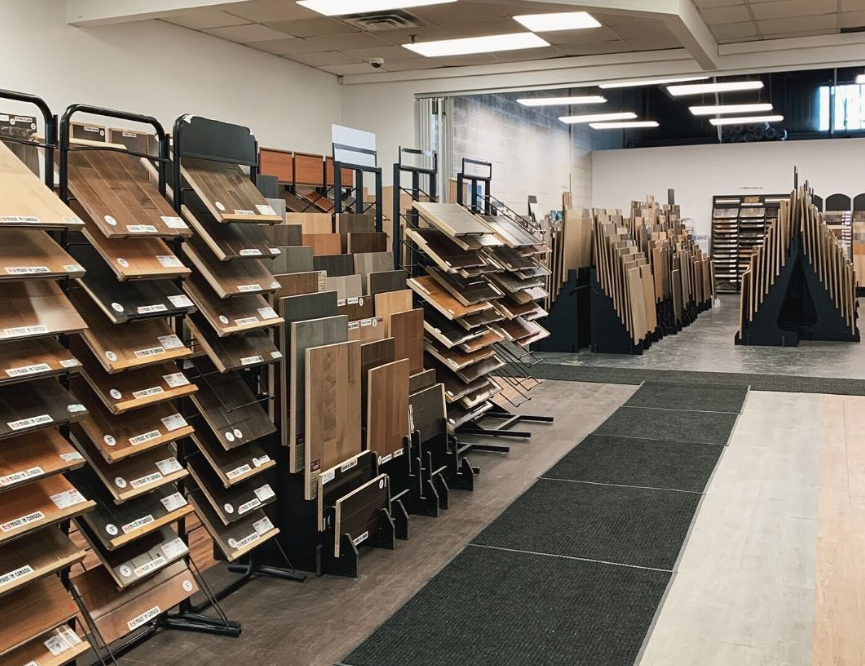
A manufacturer’s Canada footprint shows their real commitment and ability. Good Canadian presence means less trouble, faster deliveries, and solid support during problems.
Track record counts most. Find manufacturers with at least 5+ years of Canadian Laminate flooring manufacturer 2026. This shows they’ve handled customs, know our climate needs, and built stable shipping networks. Brands with short histories often fail at shipping or vanish during problems.
Check these solid signs of real Canadian commitment:
Retail coverage: Good manufacturers stock ≥100 Canadian retail locations or sell in 3+ national chains (Home Depot, Lowe’s, Rona, Canadian Tire)
Distribution setup: At least one Canadian warehouse or distribution centre for 48-72 hour delivery to big cities like Toronto, Vancouver, Calgary, and Montreal
Volume commitment: Small-to-medium brands should import ≥50-100 containers each year into Canada; big players move 200+ containers per year
Sales growth: Request Canadian sales data for 3-5 years. Steady growth shows market trust
The Liberty Home benchmark shows what good presence looks like. They stock 120+ Canadian stores with 48-hour delivery service to main regions. Their import process, customs work, and inventory systems run smooth for Canada. You won’t see stockouts or month-long waits.
Pergo (part of Mohawk Industries) shows top-level reputation. Their decades-long North American track record, ties with major distributors, and solid warranty setup cut your risk big time. Look for manufacturers holding 1-2% category market share across the continent.
Check manufacturer claims yourself. Ask for:
List of Canadian distributors with store counts and contact details
On-time delivery rates to Canada (aim for >95% over 12 months)
Claim and return rates (good: <1-2% of volume)
Proof of Canadian product liability insurance
French/English packaging and CSA, CARB, or floorscore certifications
Manufacturers with real Canadian presence give these details fast. Delays mean weak setup or false claims.
2. Product Quality & Durability
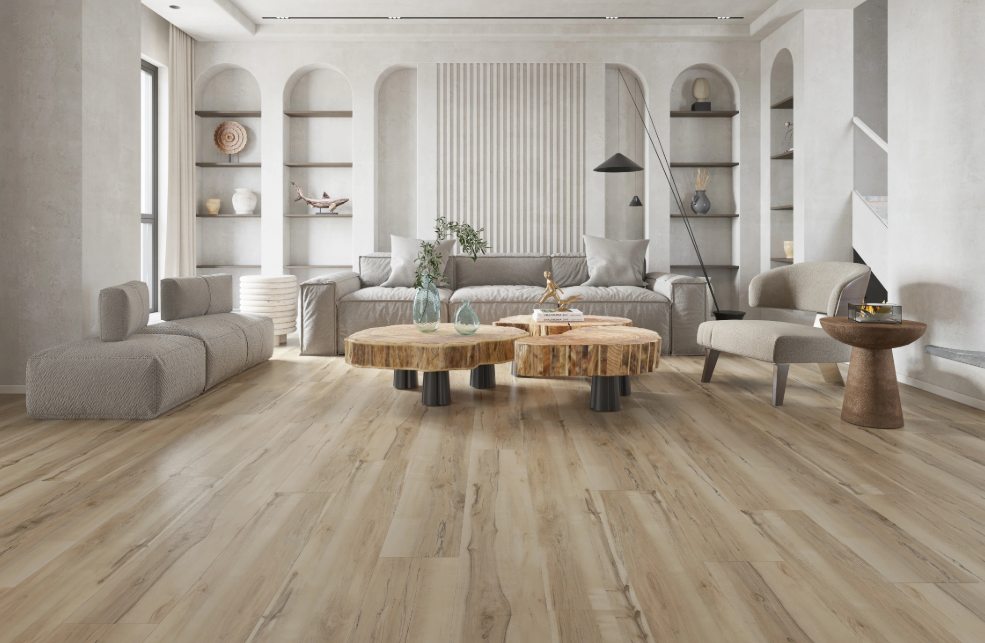
Stone Plastic Composite (SPC) cores make the difference. They separate average flooring from products that last decades. The composition matters more than marketing claims. A proper SPC core contains 60-70% stone powder mixed with stabilizers. This ratio creates stability you won’t find in cheaper options.
Core density impacts performance. Target density sits between 1,900-2,100 kg/m³. Higher density gives you better impact resistance. Your floor won’t show every subfloor bump. It won’t crack under heavy furniture. Lower density cores? They show damage within months in busy areas.
Total plank thickness ranges from 4.0-6.5 mm across the market. Here’s what different thicknesses handle:
4.0-4.5 mm: Budget option for light-traffic bedrooms. Skip this for kitchens or hallways.
5.0 mm and above: Proper choice for main living areas. You get better acoustics. You get improved stability. The quality under foot feels higher.
The click system quality decides long-term joint strength. Premium Canadian laminate flooring manufacturers maintain gap tolerances of ≤0.15-0.20 mm in their locking mechanisms. Loose tolerances let moisture seep between planks. This causes swelling. This causes gaps. This leads to failure.
Wear Layer Thickness Standards
Wear layer thickness decides how long your floor looks new. Think of it as armor against abuse—scratches, scuffs, pet claws, chair movement.
For residential high-traffic zones (kitchens, hallways, rooms):
– 0.5 mm (20 mil) wear layer minimum
– Handles heavy foot traffic, spills, pet activity
– Standard warranty: 25-year to lifetime residential, plus 5-10 year light commercial
For commercial use (retail stores, busy offices, restaurants):
– 0.7 mm (28 mil) or thicker required
– Resists rolling carts, constant foot traffic, furniture movement
– Commercial warranty: 10-20 years depending on traffic level
Skip 0.3 mm (12 mil) wear layers unless you’re doing a spare bedroom. These thin layers show wear patterns fast in active spaces. You’ll see traffic lanes within 2-3 years in kitchens.
Surface Coating Technology
The top coating sets scratch and stain resistance beyond just wear layer thickness. UV-cured polyurethane forms the base. Better manufacturers add ceramic beads, aluminum oxide, or diamond particles to this coating.
Check technical spec sheets for these additives. Generic “scratch-resistant coating” claims mean nothing without specifics. Ceramic bead technology cuts visible scratching by 40-60% compared to plain polyurethane.
Gloss level affects long-term appearance. Low-matte finishes (5-10 gloss units) hide micro-scratches. High-gloss surfaces show them. Your floor looks newer longer with matte finishes.
Stain resistance testing should prove no visible change after 24 hours exposure to coffee, wine, iodine, and rubber marks. Good manufacturers provide test results. Missing data signals weak performance.
Performance Testing and Certifications
Numbers beat marketing every time. Request these specific test results from any Canadian laminate flooring manufacturer:
Abrasion resistance classes: – AC4 rating: Heavy residential, moderate commercial use – AC5 rating: Heavy commercial traffic – Based on EN 13329 or ASTM F1700 testing standards
Stability metrics:
– Maximum 0.15-0.20% linear variation after heat/humidity cycling
– Shows the floor won’t cup, bow, or gap in Canadian climate swings
Indentation resistance (ASTM F1914):
– Residual indentation under 0.10-0.15 mm after load testing
– Prevents furniture dents and rolling chair damage
Slip resistance:
– R9-R10 classification or coefficient of friction ≥0.3-0.4
– Critical for wet areas like entryways, kitchens, bathrooms
For commercial installations, verify Bfl-s1 fire performance rating or equivalent. This European classification proves limited flame spread and low smoke production. Building codes often require it.
Manufacturers who can’t produce these test reports lack quality control. Move on.
3. Water Resistance & Climate Suitability
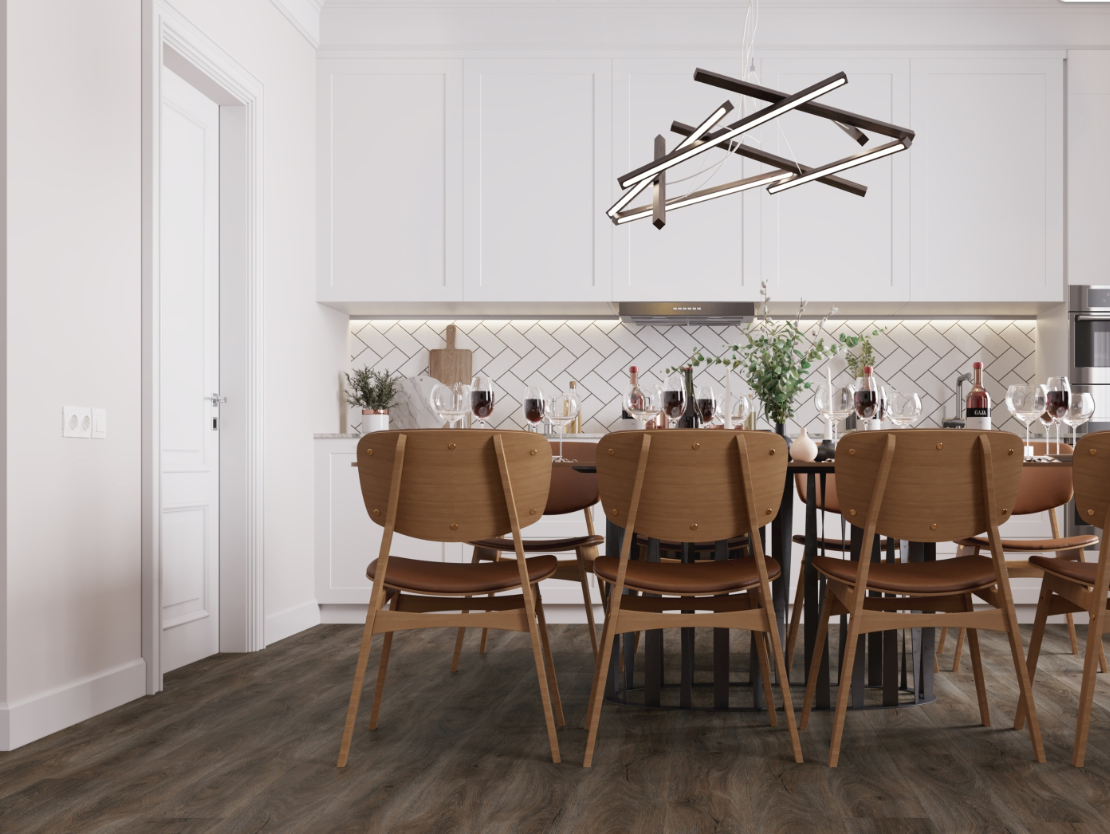
Canada throws everything at your floor. Winters bring meltwater pooling in entryways for hours. Basements swing from bone-dry 20% humidity in January to sticky 70% in August. Snow belt cities like Ottawa and Montreal cycle through 100+ freeze-thaw events each year. Each cycle stresses joints. Micro-gaps open up. Moisture sneaks in.
Standard laminate fails here. You need flooring built for punishment.
Core Water Resistance Performance
True waterproof cores show 0% swelling after 24-hour full immersion. Not “water resistant.” Not “moisture tolerant.” Zero expansion you can measure. Ask any Canadian laminate flooring manufacturer for lab data proving this.
Stability matters just as much. Quality SPC cores expand less than 0.1-0.2% in length and width under these conditions:
– 80-90% relative humidity
– 35-40°C sustained temperature
– Combined exposure over multiple days
Cheap cores swell 0.5% or more. That sounds small. Calculate it across a 20-foot run though. You get visible gaps. You get buckling. You get warranty denials.
Freeze-Thaw Cycle Tolerance
Canadian winters need specific testing. Most manufacturers skip it. Get performance data from at least 20-25 freeze-thaw cycles between:
– Low temperature: -20°C to -30°C
– High temperature: +40°C to +50°C
– With moisture present on surfaces and in locking joints
Good results show:
– Joint opening stays under 0.2-0.3 mm
– Curling remains below 0.3-0.5 mm
– Zero core cracking or layer separation
Products failing these tests crack in mudrooms. They gap near patio doors. They come apart around floor drains.
Entry Zone & Basement Specific Requirements
High-risk areas need extreme water tolerance. Your entryway sees 1-3 mm standing meltwater films for several hours each day during peak snow season. Road salt and sand grind into joints with every footstep.
Ask for proof of:
– 24-72 hour standing water exposure with no visible swelling and thickness change under 0.1-0.2 mm
– 5,000-10,000 abrasion cycles with wet, salty conditions without locking failure
– Joint systems holding tight after repeated wet-dry cycles
Basements bring different problems. Concrete slabs often exceed 85-95% relative humidity. Vapor emissions can hit 8-10 pounds per 1,000 square feet per 24 hours. Surface temperatures drop to 10-12°C in winter.
Standard flooring cups. It gaps. It fails within two years.
Look for products tested over concrete at these extreme conditions. Check that performance includes:
– No edge swelling
– Maintained click strength
– Zero discoloration or structural softening
– Contraction stays controlled at low temps
BAIER FLOOR shows proper engineering for Canadian basements. Their core build and backing system handle high concrete moisture without breaking down. The install stays stable across Canada’s full humidity range.
Missing manufacturer data on these points? Walk away. Climate-ready flooring needs real proof, not sales talk.
4. Sustainability & Certifications
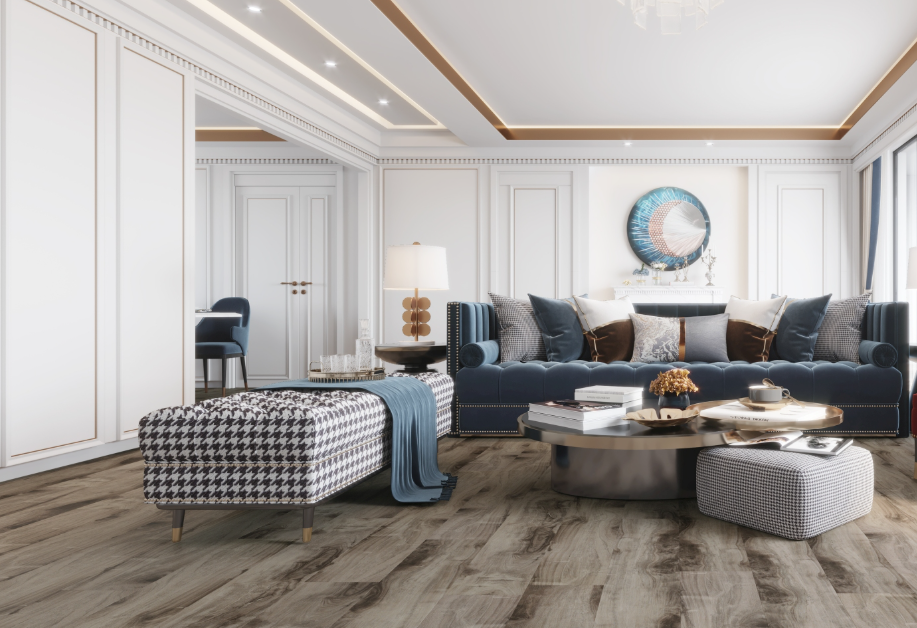
Green certifications affect real project approvals and client choices. The global sustainability certification market hit USD 3.33 billion in 2025. It’s climbing to USD 5.49 billion by 2032. This growth shows green standards now control major building specs across North America.
Environmental certifications hold 45.3% market share in 2025. They prove what counts: carbon cuts, waste control, and eco-friendly sourcing through ISO 14001, FSC, and LEED systems. Energy and emissions certifications grab another 35.3% through ISO 50001 and Green-e programs. North America leads with 34.7% regional share. LEED, SGS, Intertek, and UL run the show here. ESG rules and green bonds need proof.
Key Low-VOC and Formaldehyde Standards
Indoor air quality certifications split safe products from health risks. Canadian laminate flooring makers need these exact benchmarks:
Formaldehyde emission limits: – E0 standard: Under 0.5 mg/L formaldehyde release – CARB Phase 2: Maximum 0.05 ppm formaldehyde emissions – FloorScore certification: Under 0.01 ppm TVOC and 0.005 ppm formaldehyde, verified by IAPMO testing
SGS testing sets tougher limits—under 0.03 ppm formaldehyde with low-VOC glues below 50 g/L. Hit these numbers. Get LEED project approvals.
BAIER FLOOR delivers E0/E1 formaldehyde safety with SGS proof. Pergo keeps CARB2 rules plus FloorScore stamps across all product lines. Floordi carries FloorScore marks showing low-VOC results. Newton uses zero-VOC glues with recycled content in all products.
Project Approval Impact
LEED-certified buildings need proven low-emission materials. Quality stamps earn you 10-15 LEED points under Materials and Resources credits. Toronto Green Standard and NECB codes require these proofs for permits.
Market data supports this. 70% of eco-conscious clients across North America now ask for certified products before buying. No FloorScore or CARB2 stamp? You lose contracts. Green building specs reject you. Commercial projects go to competitors.
Get certification copies from makers. Check issue dates are current. Make sure certification scope covers the exact product lines you’re buying. Company-wide stamps don’t prove individual product safety.
5. Logistics & Supply Chain Capabilities
Strong logistics separate manufacturers who deliver on time from those who make you wait months for stock. The flooring industry faces constant disruption. Global shipping delays pushed raw material delivery to 81 days average by October 2024. That’s 25% longer than the pre-pandemic norm of 65 days.
Canadian laminate flooring manufacturers with solid logistics protect you from these delays. They keep extra inventory. They use different shipping routes. They control what happens between factory and your job site.
Inventory Management & Stock Availability
Smart manufacturers use buffer inventory strategies. Industry data shows 78% of chain leaders now keep safety stock plus diversified sourcing by 2025. This cuts stockout risks during demand spikes or shipping problems.
Container capacity grew 9% worldwide with 2.62 million TEU added through May 2025. Better manufacturers use this expanded capacity. They lock in dedicated shipping spots. They skip the scramble for space that hits smaller importers.
Ask potential suppliers these questions:
- Safety stock levels: Do they keep 30-60 days inventory in Canadian warehouses for top-selling SKUs?
- Reorder frequency: How often do they refill Canadian stock? Once a week? Once a month? Four times a year?
- Stock visibility: Can you check real-time inventory through dealer portals or direct access?
- Allocation policies: During shortages, do regular customers get priority over new accounts?
BAIER FLOOR keeps dedicated Canadian inventory buffers. Their multi-sourcing strategy combines production facilities across Asia with North American hubs. This setup delivers consistent 48-72 hour fulfillment even when single factories face delays.
Automation & Efficiency Investments
Warehouse automation drives faster order processing and fewer errors. The logistics automation market grows at 14.7% CAGR from 2024-2030. Leading manufacturers deploy robotics at scale. Over 4 million robots now operate in 50,000+ warehouses worldwide. This creates a $12 billion market for automated fulfillment.
AI adoption accelerates even faster at 45.6% CAGR through 2025. Smart manufacturers using AI systems cut:
– Logistics costs by 15%
– Inventory waste by 35%
– Service efficiency improvements of 65%
These gains help your bottom line. Faster picking means quicker truck loading. Better inventory forecasting prevents backorders. Better route planning cuts freight costs passed to buyers.
Check if manufacturers invest in these technologies: – Warehouse Management Systems (WMS) with real-time tracking – Automated Storage and Retrieval Systems (AS/rs) for high-volume SKUs – AI-powered demand forecasting to predict Canadian market needs – IoT sensors monitoring container locations during ocean transit
74% of chain executives plan increased automation and IoT investments in 2025. This addresses talent shortages. 90% of logistics leaders report skill gaps blocking digital efforts. Automation makes up for the 177,000 driver shortage hitting North American shipping.
Transportation Reliability Metrics
The Logistics Manager’s Index (LMI) for August 2025 shows key chain health indicators:
- Overall LMI: 59.3 (expansion territory above 50)
- Transportation Capacity: 57.3 (+4.7 points) showing better truck/container availability
- Transportation Prices: 56.1 (-6.9 points) showing freight cost stability
- Warehousing Capacity: 50.5 (-0.6 points) showing tight storage markets
Future LMI prediction: 63.9 over the next 12 months signals sustained expansion. Good manufacturers adapt to these conditions. They lock long-term carrier contracts. They secure warehouse space ahead of needs.
North American shipping volumes tell the growth story. 69.73% of shippers expect increased volume versus 2024. Manufacturers without strong carrier ties face capacity shortages during peak seasons.
Check these transportation capabilities:
Carrier partnerships: Do they use 3+ established trucking lines for Canadian delivery?
On-time performance: Request delivery tracking data showing >95% on-time rates
Freight options: Can they offer LTL (less-than-truckload) for smaller orders without huge minimums?
Cross-border expertise: Do they handle customs clearance well with established brokerage ties?
Cost Structure Transparency
US logistics costs hit $2.3 trillion representing 8.7% of GDP. These expenses flow through to product pricing. Manufacturers with efficient chains pass savings to customers.
Tariff impacts affect 82% of chain operations. Trade duties influence 20-40% of business activity for cross-border manufacturers. Smart companies structure sourcing to minimize tariff exposure. They use free trade agreements. They classify products right for lower duty rates.
Ask manufacturers to explain:
– Landed cost breakdowns: What percentage goes to product versus freight, duties, warehousing?
– Price stability: How often do they adjust pricing due to logistics cost changes?
– Freight surcharge policies: Do they add fuel surcharges or shipping fees on top?
Clear manufacturers share these details upfront. Hidden costs signal poor chain management or profit-padding through logistics markups.
Multi-shoring strategies boost reliability by 10% on average according to 2026 projections. 50% of firms now use balanced production across multiple countries. This protects against single-country disruptions from natural disasters, labor strikes, or political instability.
Quality Canadian laminate flooring manufacturers show chain strength through real data. They track metrics. They invest in technology. They keep backup plans. These capabilities keep your projects on schedule regardless of global shipping chaos.
6. Cost, Value & Project Fit
| Category | Details / Data |
|---|---|
| Manufacturer Price Range (Canada) | $1.50 to $6.50 per square foot |
| Material Costs (40-60% of total spend) |
Entry-level SPC: $1.50-$2.50/sq ft (AC3 rating, 0.3mm wear layer) Mid-range quality: $2.50-$4.00/sq ft (AC4 rating, 0.5mm wear layer, better click systems) Premium products: $4.00-$6.50/sq ft (AC5 rating, 0.7mm wear layer, better waterproofing) |
| Installation Labor |
$2.00-$4.50/sq ft base Subfloor grinding/leveling: $1.50-$3.00/sq ft Diagonal patterns: 15-25% more Furniture removal/reinstallation: $200-$500 per room |
| Underlayment Options |
Basic foam: $0.40-$0.60/sq ft Moisture barrier combo: $0.75-$1.00/sq ft Premium acoustic (IIC 55+): $1.00-$1.20/sq ft (condos/apartments) |
| Transition Profiles & Trim | $15-$45 per piece (doorways, edges) |
| Value Metrics: ROI Example (Budget Product) |
Material cost: $2.00/sq ft Initial cost for 1,000 sq ft: $2,000 Expected lifespan: 10-12 years Annual cost: $167-$200/year |
| Value Metrics: ROI Example (Premium Product) |
Material cost: $5.00/sq ft Initial cost for 1,000 sq ft: $5,000 Expected lifespan: 25-30 years Annual cost: $167-$200/year |
| Premium Product Advantage | Same annual cost as budget but longer lifespan, fewer replacements, better appearance |
| Cost Performance Index (CPI) |
Formula: budgeted costs / actual costs CPI > 1.0: under budget CPI < 1.0: over budget |
| Cost Variance (CV) |
Formula: budgeted cost – actual cost Positive CV: savings Negative CV: consider changes in scope/materials |
Project Fit Assessment
Match flooring specs to usage intensity:
Light residential (bedrooms, low-traffic areas):
– AC3 rating works fine
– 4.0-4.5mm thickness is good
– 0.3mm wear layer does the job
– Budget: $1.50-$2.50/sq ft material cost
Heavy residential (kitchens, hallways, common rooms):
– AC4 minimum needed
– 5.0mm+ thickness works best
– 0.5mm wear layer required
– Budget: $2.50-$4.50/sq ft material cost
Light commercial (offices, boutiques, low-traffic retail):
– AC4-AC5 rating a must
– 5.5mm+ thickness required
– 0.7mm wear layer needed
– Budget: $4.00-$6.00/sq ft material cost
Heavy commercial (restaurants, high-traffic retail, institutional):
– AC5 rating required
– 6.0mm+ thickness critical
– 0.7mm+ wear layer with ceramic reinforcement
– Budget: $5.00-$6.50/sq ft material cost
Budget Optimization Strategies
Use bottom-up estimation for accurate project costing. Price each room based on:
– Exact square footage measurements
– Subfloor conditions that need prep
– Moisture testing results
– Installation challenges per space
Parametric estimation works for multi-unit projects. Calculate average costs from 3-5 completed units. Use these benchmarks across remaining installations with ±10% variance allowance.
Use three-point estimation for uncertain variables:
– Best case scenario (ideal conditions, no delays)
– Most probable outcome (typical issues, normal timeline)
– Worst case scenario (major prep needs, material delays)
Average these three estimates. This gives realistic budget ranges that account for risk.
Cost control procedures stop overruns:
Lock material pricing with 90-day price guarantees from manufacturers before starting large projects
Phase purchases for multi-room projects to get volume discounts without excess stock
Track actual versus budgeted costs each week using simple spreadsheets or project management software
Set change order protocols that require written approval for any scope additions over $500
BAIER FLOOR offers project pricing with locked costs for orders over 500 square meters. This stops mid-project price increases on large commercial jobs.
TrafficMaster provides tiered volume discounts through Home Depot: 5-10% off for 500+ sq ft purchases, 10-15% off for 1,000+ sq ft orders.
Hidden Cost Considerations
Factor these often-missed expenses:
Waste allowance: Add 8-12% to material orders for cutting waste, damaged pieces, and future repairs. Complex layouts need the higher percentage.
Disposal fees: Budget $100-$300 for old flooring removal and haul-away based on volume and material type.
Tool rentals (if DIY): $50-$150 for saws, spacers, tapping blocks, and pull bars if buying instead of renting.
Acclimation time: Schedule 48-72 hours for materials to adjust to room temperature and humidity. Rush this step and you’ll get expansion problems and void warranties.
Moisture testing: professional testing costs $200-$500 per project but stops $5,000-$15,000 in failure costs from installing over wet subfloors.
Quality Canadian laminate flooring manufacturers give detailed cost breakdowns. They explain price differences through specs, not vague quality claims. This helps you match budget to performance needs without overpaying or choosing the wrong specs for your project.
7. Risk Management
Picking a Canadian laminate flooring manufacturer brings risks beyond just product quality. Supply chain breakdowns can stop your project halfway through installation. New regulations can make certifications worthless overnight. A vendor going bankrupt leaves you with warranties that mean nothing. Build partnerships that handle these threats before they turn into disasters.
Understanding Partnership Risk Exposure
98.3% of organizations work with vendors who have breach histories, per Cyentia Institute analysis. The flooring industry works the same way. Manufacturers get hit by cyber attacks. Quality problems happen. Financial trouble strikes. Your project takes the hit unless you set up protections first.
Third-party risk management became a top priority for 64% of organizations. Among these companies, 81% measure the value of controlling supplier risks. They track numbers. They check processes. They set standards that keep operations running.
The flooring sector faces focused risk exposure:
Regulatory compliance shifts: 30% of executives rank rule changes as their top near-term risk through 2027
Technology disruption: Another 30% point to new innovations and tech as main threats
Cyber vulnerabilities: 31% of businesses see cyber threats as the top operational risk extending to 2035
41% of organizations hit three or more critical risk events in recent years. These problems create direct hits to projects—late shipments, product recalls, quality failures, denied warranties.
Diversification Strategies
Don’t rely on just one Canadian laminate flooring manufacturer for big projects. Putting all your eggs in one basket multiplies your exposure. One supplier’s factory fire becomes your project nightmare. Their shipping delay hits you with penalty fees.
PartnerStack 2025 research says spread your partnerships across multiple vendors. This builds strength. Set up your manufacturer relationships like this:
Primary supplier (60-70% of volume):
– Handles standard products and high-volume SKUs
– Gives best pricing through volume deals
– Keeps dedicated inventory for your account
Secondary supplier (20-30% of volume):
– Covers specialty products or premium lines
– Serves as backup during primary supplier problems
– Creates pricing competition and pushes innovation
Tertiary options (10% testing allocation):
– Tests new manufacturers for future partnerships
– Checks out new technologies and product innovations
– Keeps you informed on pricing and trends
BAIER FLOOR works well as a primary partner with their stable Canadian supply chain. Add TrafficMaster through Home Depot for backup stock and quick access. Test smaller specialty manufacturers for unique design needs.
Contract Structures & Performance Metrics
Strong contracts create accountability beyond just handshakes. 48% of companies still use spreadsheets for third-party checks. This casual method breaks down under pressure. Build formal agreements that cover these key elements:
Performance guarantees:
– On-time delivery rates ≥95% measured every three months
– Product defect rates <1-2% across shipments
– Warranty claim response within 48-72 hours
– Inventory accuracy ≥98% for quoted stock
Financial stability requirements:
– Financial statements each year proving they’re solvent
– Product liability insurance ≥$2-5 million coverage
– Performance bonds for orders >$50,000 on commercial projects
– Notice of ownership changes or bankruptcy filings
Quality assurance protocols:
– Third-party testing reports updated each year
– Factory audit rights with 30-day notice
– Batch tracking systems for recall handling
– Certification renewals (CARB2, FloorScore, etc.) shared ahead of time
Communication standards:
– Dedicated account manager contact
– Business reviews every three months for volume accounts
– 24-48 hour response to technical questions
– 45-60 days advance notice for product discontinuations
Set clear Objectives and Key Results (OKRs) that match manufacturer goals with your project success. Tracking each month shows performance trends before problems grow.
Conclusion
Picking the right Canadian laminate flooring manufacturer goes beyond comparing prices. You need a solid foundation for project success and happy clients over time. Top manufacturers in 2026 balance proven durability with climate-smart engineering. They show clear sustainability practices. Plus, their reliable supply chains keep your projects on track.
Your next step? Build a shortlist using the eight criteria we covered. Request samples and case studies from manufacturers who’ve worked on projects like yours. Check their warranty terms and post-Installation Support closely. These details show how much confidence they have in their products.
The cheapest option today can turn into your biggest headache tomorrow. Strong Canadian laminate flooring manufacturer partnerships share values around quality, reliability, and mutual growth. Find a manufacturer who treats you as a partner, not just another order number. This gives you an edge that lasts well past 2026.
Ready to start? Contact at least three manufacturers this week.